Bisogna vedere quel che non si è visto, vedere di nuovo quel che si è già visto, vedere in primavera quel che si era visto in estate, vedere di giorno quel che si era visto di notte, con il sole dove la prima volta pioveva, vedere le messi verdi, il frutto maturo, la pietra che ha cambiato posto, l’ombra che non c’era. Bisogna ritornare sui passi già dati, per ripeterli, e per tracciarvi a fianco nuovi cammini. Bisogna ricominciare il viaggio. Sempre.
(José Saramago, 16 novembre 1922 – 18 giugno 2010).
Gustav Mahler (7 luglio 1860 - 1911): Das Lied von der Erde, ciclo di Lieder per 2 voci soliste (tenore e contralto oppure baritono) e orchestra (1908-09); testi desunti dalla raccolta Die chinesische Flöte (1907) di Hans Bethge, con varie modifiche e interpolazioni del compositore. Kathleen Ferrier, contralto; Set Svanholm, tenore; New York Philharmonic, dir. Bruno Walter. Registrato nel 1948.
I. Das Trinklied vom Jammer der Erde (da Li Bai, 701 - 762)
Schon winkt der Wein im goldnen Pokale, Doch trinkt noch nicht, erst sing ich euch ein Lied! Das Lied vom Kummer soll auflachend in die Seele euch klingen. Wenn der Kummer naht, liegen wüst die Gärten der Seele, Welkt hin und stirbt die Freude, der Gesang. Dunkel ist das Leben, ist der Tod.
Herr dieses Hauses! Dein Keller birgt die Fülle des goldenen Weins! Hier, diese Laute nenn’ ich mein! Die Laute schlagen und die Gläser leeren, Das sind die Dinge, die zusammen passen. Ein voller Becher Weins zur rechten Zeit Ist mehr wert als alle Reiche dieser Erde! Dunkel is das Leben, ist der Tod.
Das Firmament blaut ewig und die Erde Wird lange fest stehen und aufblühn im Lenz. Du aber, Mensch, wie lang lebst denn du? Nicht hundert Jahre darfst du dich ergötzen An all dem morschen Tande dieser Erde!
Seht dort hinab! Im Mondschein auf den Gräbern hockt eine wildgespenstische Gestalt – Ein Aff ist’s! Hört ihr, wie sein Heulen hinausgellt in den süßen Duft des Lebens! Jetzt nehm den Wein! Jetzt ist es Zeit, Genossen! Leert eure goldnen Becher zu Grund! Dunkel ist das Leben, ist der Tod!
II. Der Einsame im Herbst (da Qian Qi, 710 - 782) [8:31]
Herbstnebel wallen bläulich überm See; Vom Reif bezogen stehen alle Gräser; Man meint’, ein Künstler habe Staub vom Jade Über die feinen Blüten ausgestreut.
Der süße Duft der Blumen is verflogen; Ein kalter Wind beugt ihre Stengel nieder. Bald werden die verwelkten, goldnen Blätter Der Lotosblüten auf dem Wasser ziehn.
Mein Herz ist müde. Meine kleine Lampe Erlosch mit Knistern; es gemahnt mich an den Schlaf. Ich komm zu dir, traute Ruhestätte! Ja, gib mir Ruh, ich hab Erquickung not!
Ich weine viel in meinen Einsamkeiten. Der Herbst in meinem Herzen währt zu lange. Sonne der Liebe, willst du nie mehr scheinen, Um meine bittern Tränen mild aufzutrocknen?
III. Von der Jugend (forse da Li Bai) [17:27]
Mitten in dem kleinen Teiche Steht ein Pavillon aus grünem Und aus weißem Porzellan.
Wie der Rücken eines Tigers Wölbt die Brücke sich aus Jade Zu dem Pavillon hinüber.
In dem Häuschen sitzen Freunde, Schön gekleidet, trinken, plaudern, Manche schreiben Verse nieder.
Ihre seidnen Ärmel gleiten Rückwärts, ihre seidnen Mützen Hocken lustig tief im Nacken.
Auf des kleinen Teiches stiller Wasserfläche zeigt sich alles Wunderlich im Spiegelbilde,
Alles auf dem Kopfe stehend In dem Pavillon aus grünem Und aus weißem Porzellan;
Wie ein Halbmond steht die Brücke, Umgekehrt der Bogen. Freunde, Schön gekleidet, trinken, plaudern.
IV. Von der Schönheit (da Li Bai) [20:24]
Junge Mädchen pflücken Blumen, Pflücken Lotosblumen an dem Uferrande. Zwischen Büschen und Blättern sitzen sie, Sammeln Blüten in den Schoß und rufen Sich einander Neckereien zu.
Goldne Sonne webt um die Gestalten, Spiegelt sie im blanken Wasser wider. Sonne spiegelt ihre schlanken Glieder, Ihre süßen Augen wider, Und der Zephyr hebt mit Schmeichelkosen das Gewebe Ihrer Ärmel auf, führt den Zauber Ihrer Wohlgerüche durch die Luft.
O sieh, was tummeln sich für schöne Knaben Dort an dem Uferrand auf mut’gen Rossen, Weithin glänzend wie die Sonnenstrahlen; Schon zwischen dem Geäst der grünen Weiden Trabt das jungfrische Volk einher! Das Roß des einen wiehert fröhlich auf Und scheut und saust dahin; Über Blumen, Gräser, wanken hin die Hufe, Sie zerstampfen jäh im Sturm die hingesunknen Blüten. Hei! Wie flattern im Taumel seine Mähnen, Dampfen heiß die Nüstern! Goldne Sonne webt um die Gestalten, Spiegelt sie im blanken Wasser wider.
Und die schönste von den Jungfraun sendet Lange Blicke ihm der Sehnsucht nach. Ihre stolze Haltung is nur Verstellung. In dem Funkeln ihrer großen Augen, In dem Dunkel ihres heißen Blicks Schwingt klagend noch die Erregung ihres Herzens nach.
V. Der Trunkene im Frühling (da Li Bai) [26:45]
Wenn nur ein Traum das Leben ist, Warum denn Müh und Plag? Ich trinke, bis ich nicht mehr kann, Den ganzen, lieben Tag!
Und wenn ich nicht mehr trinken kann, Weil Kehl und Seele voll, So tauml’ ich bis zu meiner Tür Und schlafe wundervoll!
Was hör ich beim Erwachen? Horch! Ein Vogel singt im Baum. Ich frag ihn, ob schon Frühling sei, Mir ist als wie im Traum.
Der Vogel zwitschert: “Ja! Der Lenz Ist da, sei kommen über Nacht!” Aus tiefstem Schauen lausch ich auf, Der Vogel singt und lacht!
Ich fülle mir den Becher neu Und leer ihn bis zum Grund Und singe, bis der Mond erglänzt Am schwarzen Firmament!
Und wenn ich nicht mehr singen kann, So schlaf ich wieder ein, Was geht mich denn der Frühling an!? Laßt mich betrunken sein!
VI. Der Abschied (da Meng Haoran, 689 - 740, e Wang Wei, 699 - 759) [30:56]
Die Sonne scheidet hinter dem Gebirge. In alle Taeler steigt der Abend nieder Mit seinen Schatten, die voll Kuehlung sind. O sieh! Wie eine Silberbarke schwebt Der Mond am blauen Himmelssee herauf. Ich spuere eines feinen Windes Weh’n Hinter den dunklen Fichten!
Der Bach singt voller Wohllaut durch das Dunkel. Die Blumen blassen im Daemmerschein. Die Erde atmet voll von Ruh’ und Schlaf, Alle Sehnsucht will nun traeumen. Die mueden Menschen geh’n heimwaerts, Um im Schlaf vergess’nes Glueck Und Jugend neu zu lernen! Die Voegel hocken still in ihren Zweigen. Die Welt schlaft ein!
Es wehet kuehl im Schatten meiner Fichten. Ich stehe hier und harre meines Freundes; Ich harre sein zum letzten Lebewohl. Ich sehne mich, o Freund, an deiner Seite Die Schoenheit dieses Abends zu geniessen. Wo bleibst du? Du laesst mich lang allein! Ich wandle auf und nieder mit meiner Laute Auf Wegen, die vom weichen Grase schwellen. O Schoenheit! O ewigen Liebens – Lebens – Trunk’ne welt!
Er stieg vom Pferd und reichte ihm Den Trunk des Abschieds dar. Er fragte ihn, wohin er fuehre Und auch warum es muesste sein. Er sprach, seine Stimme war umflort: Du, mein Freund, Mir war auf dieser Welt das Glueck nicht hold! Wohin ich geh’? Ich geh’, ich wand’re in die Berge. Ich suche Ruhe fuer mein einsam Herz. Ich wandle nach der Heimat, meiner Staette. Ich werde niemals in die Ferne schweifen. Still ist mein Herz und harret seiner Stunde! Die liebe Erde allueberall Blueht auf im Lenz und gruent aufs neu! Allueberall und ewig blauen licht die Fernen! Ewig… ewig…
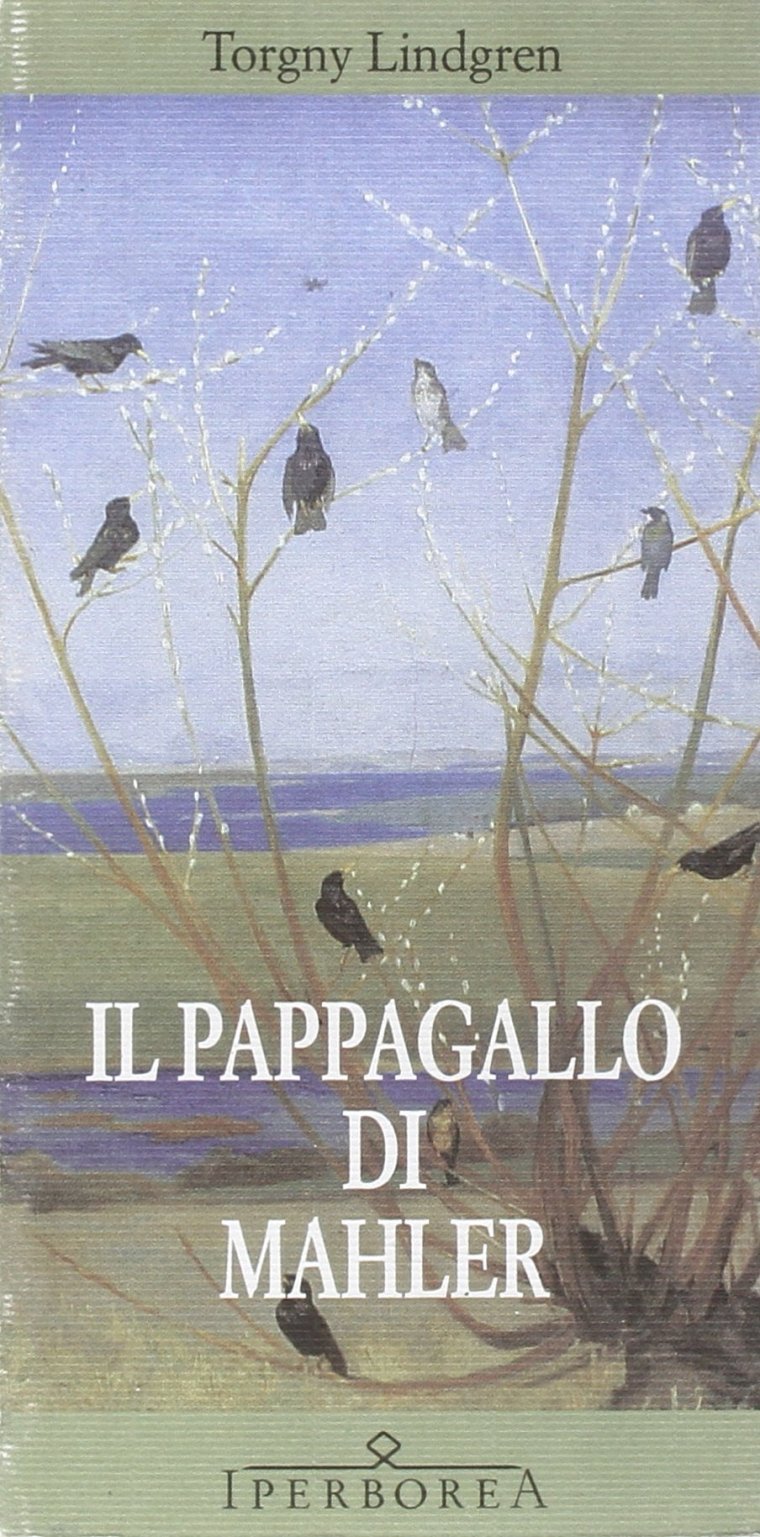
Mahler allora aveva composto otto sinfonie e messo in musica un gran numero di poesie. Si era mosso dalla composizione polifonica a quella a voci diverse, talvolta sonorità e forme senza architettura nascondevano un anelito inquieto verso qualcosa di ancora proibito: la cacofonia. Quando componeva, lasciava pendere all’angolo della bocca un sigaro spento; si isolava in un piccolo chalet sul pendio della montagna sovrastante la loro dimora estiva.
Le sue sinfonie le scriveva sempre partendo dalla fine, sì, era il motivo per cui in generale era diventato compositore: per scoprire come avesse effettivamente inizio la musica. E nemmeno pensava seguendo un percorso piano e orizzontale come tutti gli altri, ma procedendo a grandi balzi.
[…]
Quella sera Alma lesse ad alta voce da Die chinesische Flöte per Mahler, che aveva trascorso tutta la giornata chiuso nel piccolo chalet sul pendio a lavorare a un andante comodo in re maggiore, una sequenza di suoni che potevano costituire il finale di un’ulteriore opera sinfonica.
Sì, quelle poesie le conosceva fin troppo bene da tempo. Talvolta ne era rimasto profondamente toccato. Era stato perfino convinto di avere il dovere di metterle in musica. […] Però non aveva mai trovato la via giusta per affrontare quel lavoro.
[…]
Il mattino seguente, mentre era in cammino verso il suo quaderno di musica e il suo pianoforte, Mahler si imbatté in uno dei contadini del villaggio. Grüss Gott, dissero entrambi. Poi Mahler sentì il contadino fischiettare un motivetto dall’angolo della bocca.
Si fermò ad ascoltare.
Curioso, disse fra sé. Curioso.
Mentre il contadino ripeteva instancabilmente la sua piccola melodia, Mahler si voltò e lo raggiunse di corsa. Ansimava pesantemente quando si fermò davanti al contadino fischiettante, il cuore di Mahler era già allora affetto da qualcosa di sconosciuto e ineluttabile. E domandò:
Mio ottimo signor coltivatore, dove avete preso quella melodia?
Melodia? disse il contadino.
Sì, disse Mahler, voi stavate fischiettando una melodia dall’angolo della bocca.
Non lo sapevo, disse il contadino.
No, disse Mahler, così è la musica, quasi sempre.
Volete dire questo pezzetto? disse il contadino. E nell’angolo sinistro della bocca fischiettò le cinque note do - re - mi - sol - la.
Proprio quello, disse Mahler. Proprio quello.
Ah, disse il contadino. Era un uccello. Un uccello variopinto dentro una gabbia, dei signori di Vienna si erano stancati di averlo, dicevano che era un’ara, e cantava a questo modo ogni giorno e notte. Se non gli mettevamo sopra la coperta.
Grazie, disse Mahler. Vi sono infinitamente grato.
Oh, fece il contadino. Di niente.
Fu ciò che diede l’avvio al lavoro. Per la prima volta in vita sua, Mahler scrisse con il pensiero rivolto tutto il tempo verso la fine, adesso sapeva come tutto avesse avuto inizio, il canto della miseria sulla terra.
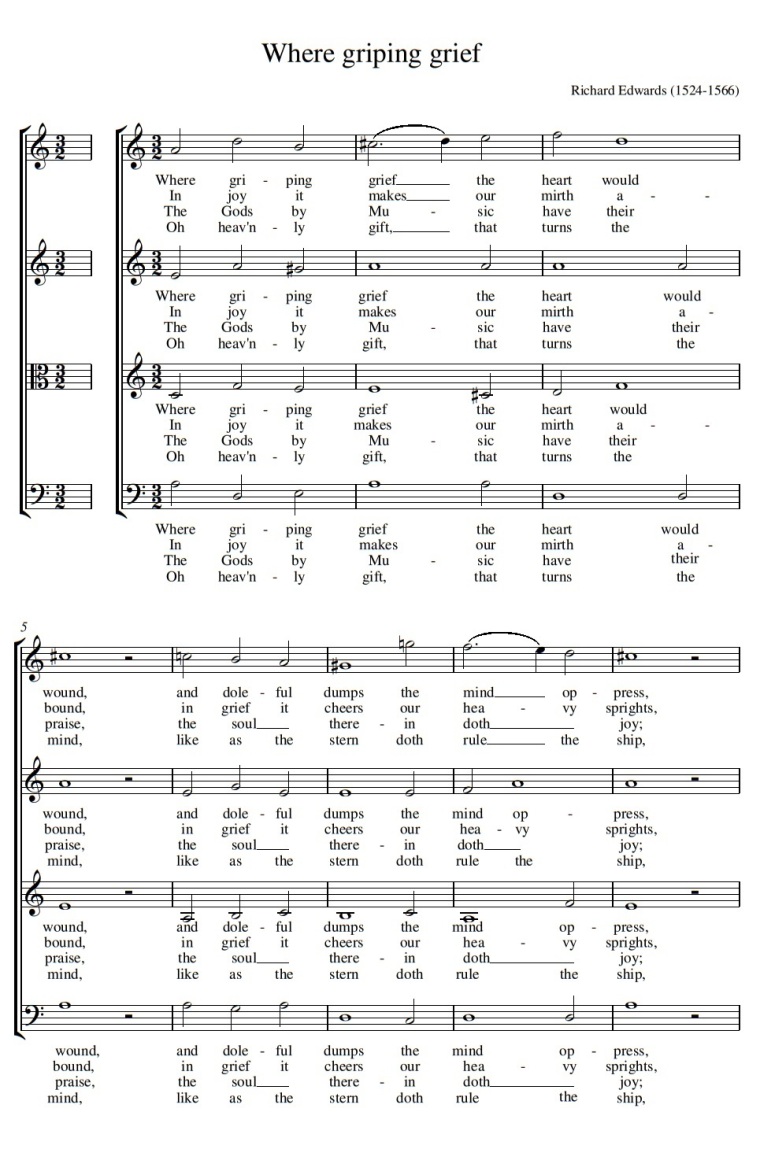
Anonimo (probabilmente Richard Edwardes, 1525 - 1566): Where griping grief. Versione per voce (soprano) e liuto: Emma Kirkby e Anthony Rooley. Versione a 4 voci: Deller Consort.
Where griping grief the heart would wound
And doleful dumps the mind oppress,
There music with her silver sound
Is wont with speed to give redress
Of troubled minds, for ev’ry sore,
Sweet music hath a salve in store.
In joy it makes our mirth abound,
In grief it cheers our heavy sprites,
The careful head relief hath found,
By music’s pleasant sweet delights;
Our senses, what should I say more,
Are subject unto Music’s law.
The gods by music have their praise,
The soul therein doth joy;
For as the Roman poets say,
In seas whom pirates would destroy,
A dolphin saved from death most sharp,
Arion playing on his harp.
O heavenly gift, that turns the mind,
Like as the stern doth rule the ship,
Of music whom the gods assigned,
To comfort man whom cares would nip,
Since thou both man and beast doth move,
What wise man then will thee reprove.
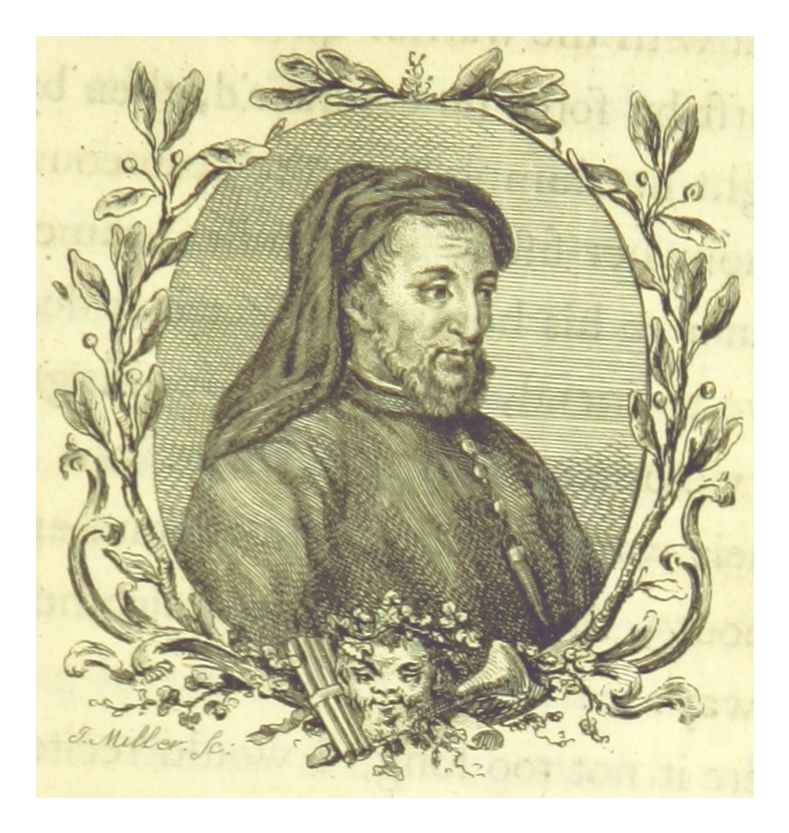
Forse figlio illegittimo di Enrico VIII, Richard Edwardes fu poeta, autore drammatico, gentiluomo della Chapel Royal e maestro del coro di voci bianche della medesima istituzione sotto le regine Maria e Elisabetta I. Nei suoi ultimi anni compilò un’ampia silloge di testi poetici di autori diversi, cui aggiunse, firmandoli, alcuni componimenti propri, e fra questi appunto Where gripyng grief, con il titolo In commendation of Musick. La raccolta, intitolata The Paradise of Dainty Devices, fu pubblicata postuma nel 1576, a cura di Henry Disle; dei molti volumi miscellanei dati alle stampe in quel periodo fu il più fortunato, tant’è vero che fu ristampato nove volte nei successivi trent’anni.
Del testo si trovano, anche nel web, numerose varianti, quasi tutte di poco conto, a cominciare da «When… Then…» invece di «Where… There…» nella prima strofa; ma è chiaramente un errore l’«Anon» che non di rado sostituisce «Arion» all’inizio dell’ultimo verso della terza strofa: Edwardes fa infatti riferimento a Arione di Métimna, l’antico citaredo che secondo Erodoto inventò il ditirambo e che, racconta il mito, si salvò da sicura morte in mare lasciandosi portare a riva da un delfino che aveva ammaliato con il canto.
Albrecht Dürer: Arion (c1514)
Le due fonti manoscritte che ci hanno tramandato la musica di Where griping grief (il Mulliner Book, raccolta di composizioni per strumento a tastiera databile fra il 1550 e il 1585 circa; e il Brogyntyn Lute Book, c1595) non riportano né il testo né il nome dell’autore: si ritiene probabile che anche la musica sia dello stesso Edwardes. La melodia è finemente cesellata; pur procedendo prevalentemente per gradi congiunti, presenta non pochi intervalli più ampi, fra cui un’insolita (per l’epoca) ottava diminuita — sulle parole «dumps the» nel secondo verso della prima strofa.
Il brano doveva essere abbastanza noto all’epoca di Shakespeare, perché questi lo cita in una scena di Romeo e Giulietta. Alla fine del IV atto, dopo che la Nutrice ha rinvenuto il corpo esanime della giovane Capuleti e un cupo inatteso dolore strazia i suoi familiari, alcuni musicisti, che erano stati convocati per allietare la festa delle nozze di Giulietta con il conte Paride, ripongono mestamente gli strumenti e stanno per andarsene quando sopraggiunge Pietro (servitore della Nutrice) e chiede ai musici di suonare per lui; gli altri rispondono che non è il momento adatto per far musica, sicché Pietro inizia a battibeccare con loro e infine, citando Where griping grief, trova il modo di insolentirli. La scena consiste in una lunga serie di giochi di parole a sfondo musicale, da alcuni critici considerati di bassa lega — tanto che qualche traduttore italiano ha pensato bene di omettere l’intero passo. Ma secondo me la scena non è affatto priva di interesse, ragion per cui la riporto qui di seguito: a sinistra l’originale inglese, a destra non esattamente una traduzione, ma piuttosto una reinterpretazione, con alcune esplicite allusioni a musiche famose ai tempi del Bardo e già note ai frequentatori di questo blog.
PETER
Musicians, O musicians, Heart’s Ease, Heart’s Ease. O, an you will have me live, play Heart’s Ease.
PIETRO
Musici, o musici, Chi passa, Chi passa. Se volete ch’io viva, suonate Chi passa.
FIRST MUSICIAN
Why Heart’s ease?
1° MUSICO
Perché Chi passa?
PETER
O musicians, because my heart itself plays My Heart is Full. O, play me some merry dump to comfort me.
PIETRO
O musici, perché il mio cuore sta danzando un passamezzo che non passa. Prego, suonate qualche allegro lamento per confortarmi.
FIRST MUSICIAN
Not a dump, we. ‘Tis no time to play now.
1° MUSICO
No, niente lamenti. Non è il momento di suonare.
PETER
You will not then?
PIETRO
Non volete suonare?
FIRST MUSICIAN
No.
1° MUSICO
No.
PETER
I will then give it you soundly.
PIETRO
Allora ve le suonerò io, sentirete.
FIRST MUSICIAN
What will you give us?
1° MUSICO
Che cosa sentiremo?
PETER
No money, on my faith, but the gleek. I will give you the minstrel.
PIETRO
Oh, non un tintinnar di monete, ve l’assicuro, ma piuttosto una canzon…atura. Ecco, vi tratterò da menestrelli.
FIRST MUSICIAN
Then I will give you the serving creature.
1° MUSICO
E allora noi ti tratteremo da giullare.
PETER
Then will I lay the serving creature’s dagger on your pate. I will carry no crotchets. I’ll re you, I’ll fa you. Do you note me?
PIETRO
E allora riceverete la sonagliera del giullare sulla zucca. Vi avevo chiesto lamenti e mi date capricci. Così ve le suonerò: prendete nota.
FIRST MUSICIAN
An you re us and fa us, you note us.
1° MUSICO
Se ce le suoni, prenderemo davvero le tue note.
SECOND MUSICIAN
Pray you, put up your dagger and put out your wit.
2° MUSICO
Per favore, riponi la tua sonagliera e va’ adagio.
PETER
Then have at you with my wit. I will dry-beat you with an iron wit and put up my iron dagger. Answer me like men.
(sings)
When griping grief the heart doth wound
And doleful dumps the mind oppress,
Then Music with her silver sound—
Why «silver sound»? Why «Music with her silver sound»? What say you, Simon Catling?
PIETRO
Andrò a mio agio e vi metterò a disagio. I miei adagi non sono meno pesanti della sonagliera. Rispondete dunque, da uomini, ai miei colpi.
(canta)
Quando ferisce il cuore arduo tormento
E la mente grava penoso tedio,
Allora Musica dal suon d’argento…
Perché «suon d’argento»? Perché dice «Musica dal suon d’argento»? Tu che ne dici, Simon Cantino?
FIRST MUSICIAN
Marry, sir, because silver hath a sweet sound.
1° MUSICO
Diamine, signore, perché l’argento ha un dolce suono.
PETER
Prates. What say you, Hugh Rebeck?
PIETRO
Ciance. E tu che dici, Ugo Ribeca?
SECOND MUSICIAN
I say, «silver sound» because musicians sound for silver.
2° MUSICO
Dico: «suon d’argento» perché i musicisti suonano per guadagnarsi dell’argento.
PETER
Prates too. What say you, James Soundpost?
PIETRO
Ciance anche queste. E tu, Giaco Bischero?
THIRD MUSICIAN
Faith, I know not what to say.
3° MUSICO
In fede mia, non so che dire.
PETER
Oh, I cry you mercy, you are the singer. I will say for you. It is «Music with her silver sound» because musicians have no gold for sounding.
(sings)
Then Music with her silver sound
With speedy help doth lend redress.
(exit)
PIETRO
Oh, ti chiedo scusa: tu sei quello che canta. Be’, risponderò io per te: dice «Musica col suon d’argento» perché i musicisti non hanno mai oro da far risonare.
(canta)
Allora Musica dal suon d’argento
Con lesto soccorso pone rimedio.
(esce)
FIRST MUSICIAN
What a pestilent knave is this same!
1° MUSICO
Che pestifero furfante è costui!
SECOND MUSICIAN
Hang him, Jack! Come, we’ll in here, tarry for the mourners and stay dinner.
(exeunt)
2° MUSICO
Lascialo perdere! Venite, entriamo: aspetteremo quelli che verranno per il funerale e ci fermeremo a pranzo.
(escono)
Anonymous (probably Richard Edwardes, 1525 - 1566): Where griping grief. Two versions:
– as a song for 1 voice (soprano) and lute: Emma Kirkby and Anthony Rooley.
– as a partsong for 4 voices: the Deller Consort.
Where griping grief the heart would wound
And doleful dumps the mind oppress,
There music with her silver sound
Is wont with speed to give redress
Of troubled minds, for ev’ry sore,
Sweet music hath a salve in store.
In joy it makes our mirth abound,
In grief it cheers our heavy sprites,
The careful head relief hath found,
By music’s pleasant sweet delights;
Our senses, what should I say more,
Are subject unto Music’s law.
The gods by music have their praise,
The soul therein doth joy;
For as the Roman poets say,
In seas whom pirates would destroy,
A dolphin saved from death most sharp,
Arion playing on his harp.
O heavenly gift, that turns the mind,
Like as the stern doth rule the ship,
Of music whom the gods assigned,
To comfort man whom cares would nip,
Since thou both man and beast doth move,
What wise man then will thee reprove.
Richard Edwardes, possibly an illegitimate son of Henry VIII, was a poet, playwright, gentleman of the Chapel Royal and choirmaster of the same institution in the reigns of Mary and Elizabeth I. In his later years he compiled an extensive anthology of poems by various authors, adding his own, including Where griping grief (under the title In commendation of Musick). The anthology, titled The Paradise of Dainty Devices, appeared posthumously in 1576, edited by Henry Disle; it was the most successful of the numerous miscellaneous books printed at the end of the sixteenth century: it was in fact reprinted nine times in the following thirty years.
There are, even on the Internet, many variants of Where griping grief, almost all of little importance, such as for example «When… Then…» instead of «Where… There…» in the first line; but the «Anon» which often replaces «Arion» at the beginning of the last line of the third stanza is clearly a mistake: Edwardes in fact refers to Arion of Methymna, a kitharode in ancient Greece credited with inventing the dithyramb: according to the myth, Arion was saved from certain death at sea by being carried ashore by a dolphin that he had enchanted with his own singing.
Albrecht Dürer: Arion (c1514)
The two manuscript sources that have handed down the music of Where griping grief (the Mulliner Book, a collection of pieces for keyboard instrument dating between about 1550 and 1585; and the Brogyntyn Lute Book, c1595) do not bear neither the text nor the name of the composer: the music is thought to be probably by Edwardes himself. Where griping grief has a finely chiseled tune; though proceeding mainly in joint degrees, it has several larger intervals, including an unusual (at that time) diminished octave — to the words «dumps the» in the second line of the first stanza.
Where griping grief must have been quite well known in Shakespeare’s time, so much so that its first stanza is quoted in a scene from Romeo and Juliet, at the end of the fourth act, after the Nurse has found the lifeless body of the young Capulet and a gloomy unexpected pain torments his relatives; the news also saddens some musicians, who had been summoned to cheer Juliet’s wedding party: they are putting away their instruments before leaving when Peter (the Nurse’s servant) asks them to play for him; since the musicians have no intention of pleasing him, Peter begins to argue with them and finally, quoting Where griping grief, finds a way to insult them.
PETER
Answer me like men.
(sings)
When griping grief the heart doth wound
And doleful dumps the mind oppress,
Then Music with her silver sound—
Why «silver sound»? Why «Music with her silver sound»? What say you, Simon Catling?
FIRST MUSICIAN
Marry, sir, because silver hath a sweet sound.
PETER
Prates. What say you, Hugh Rebeck?
SECOND MUSICIAN
I say, «silver sound» because musicians sound for silver.
PETER
Prates too. What say you, James Soundpost?
THIRD MUSICIAN
Faith, I know not what to say.
PETER
Oh, I cry you mercy, you are the singer. I will say for you. It is «Music with her silver sound» because musicians have no gold for sounding.
(sings)
Then Music with her silver sound
With speedy help doth lend redress.
(exit)


 Fabio Rizza: Barocking Bach
 English translation: please
  Forse figlio illegittimo di Enrico VIII, Richard Edwardes fu poeta, autore drammatico, gentiluomo della Chapel Royal e maestro del coro di voci bianche della medesima istituzione sotto le regine Maria e Elisabetta I. Nei suoi ultimi anni compilò un’ampia silloge di testi poetici di autori diversi, cui aggiunse, firmandoli, alcuni componimenti propri, e fra questi appunto Where gripyng grief, con il titolo In commendation of Musick. La raccolta, intitolata The Paradise of Dainty Devices, fu pubblicata postuma nel 1576, a cura di Henry Disle; dei molti volumi miscellanei dati alle stampe in quel periodo fu il più fortunato, tant’è vero che fu ristampato nove volte nei successivi trent’anni.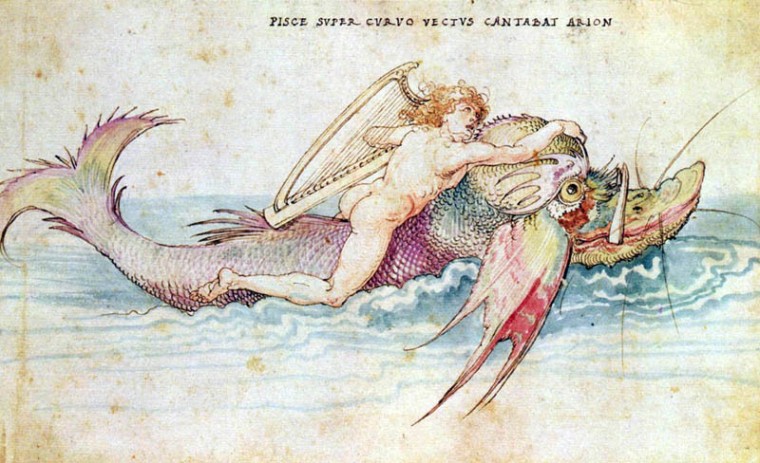
 la regina gioiosa