With carols and songs


Anonimo (sec. XVI): All Hail to the Days, carol natalizio inglese, noto anche come Drive the Cold Winter Away e In Praise of Christmas. The Baltimore Consort (strumentale); The Sixteen, dir. Harry Christophers.

All hail to the days
  that merit more praise
Than all the rest of the year,
And welcome the nights
  that double delights,
As well for the poor as the peer!
Good fortune attend
  each merry man’s friend,
That doth but the best that he may;
Forgetting old wrongs,
  with carols and songs,
To drive the cold winter away.

This time of the year
  is spent in good cheer,
And neighbours together do meet,
To sit by the fire,
  with friendly desire,
Each other in love do greet;
Old grudges forgot,
  are put in the pot,
All sorrows aside they lay,
The old and the young
  doth carol his song,
To drive the cold winter away.

To mask and to mum
  kind neighbours will come
With wassails of nut-brown ale,
To drink and carouse
  to all in the house,
As merry as bucks in the dale;
Where cake, bread and cheese
  is brought for your fees,
To make you the longer stay;
At the fire to warm
  will do you no harm,
To drive the cold winter away.

Felice inverno a tutti 🙂
Bethlehem Down

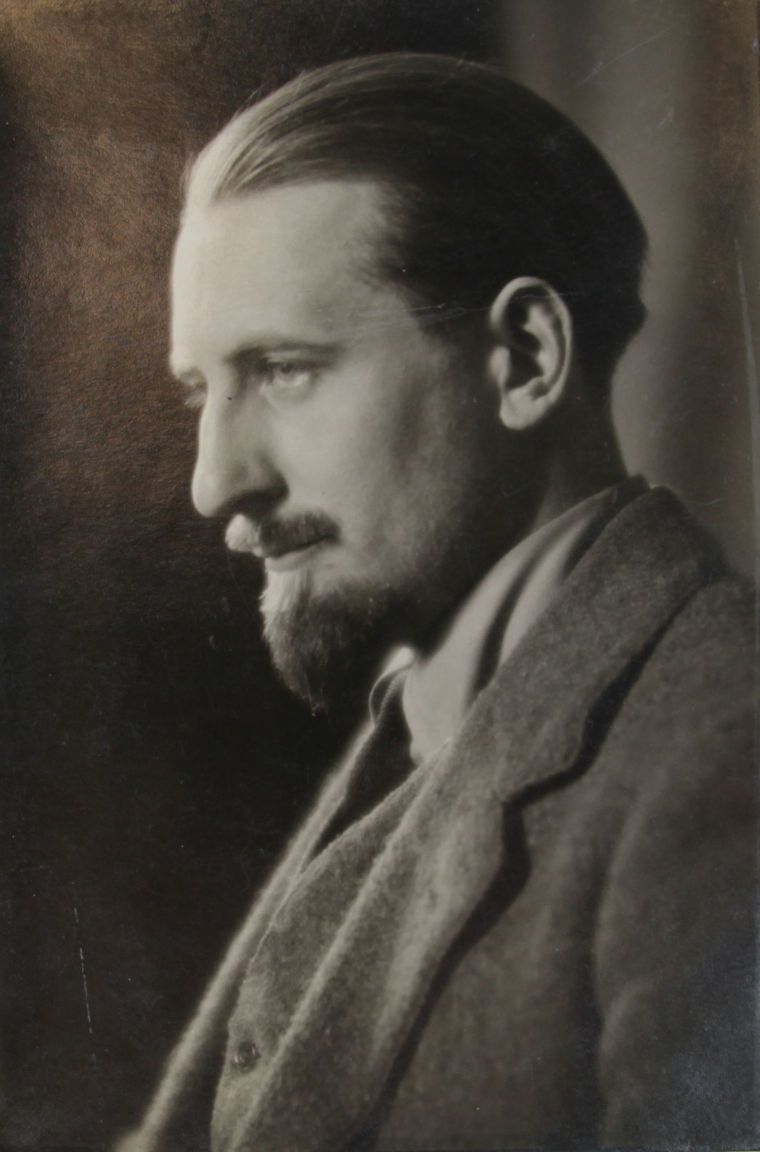
Peter Warlock (pseudonimo di Philip Heseltine; 1894 – 17 dicembre 1930): Bethlehem Down, carol per coro a 4 voci (1927) su testo Bruce Blunt (1899 – 1957). Coro del King’s College di Cambridge.

«When He is King we will give Him a King’s gifts,
Myrrh for its sweetness, and gold for a crown,
Beautiful robes», said the young girl to Joseph,
Fair with her first-born on Bethlehem Down.

Bethlehem Down is full of the starlight,
Winds for the spices, and stars for the gold,
Mary for sleep, and for lullaby music,
Songs of a shepherd by Bethlehem fold.

When He is King they will clothe Him in grave-sheets,
Myrrh for embalming, and wood for a crown,
He that lies now in the white arms of Mary,
Sleeping so lightly on Bethlehem Down.

Here He has peace and a short while for dreaming,
Close-huddled oxen to keep him from cold,
Mary for love, and for lullaby music,
Songs of a shepherd by Bethlehem Down.


Lo stesso brano nella trascrizione per orchestra d’archi realizzata nel 2002 da Philip Lane (1950-). Royal Ballet Sinfonia, dir. Gavin Sutherland.


Dopo Azincourt (25 ottobre 1415)

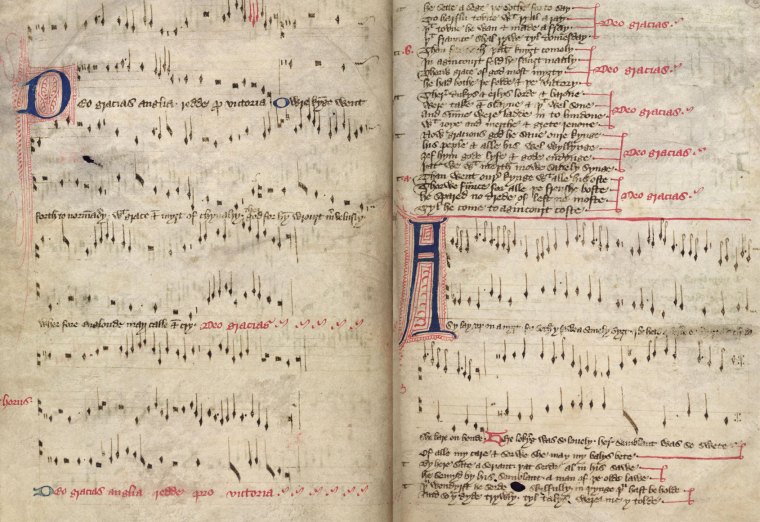
Anonimo (XV secolo): The Agincourt Carol. Fauvel Consort.

Deo gracias Anglia redde pro victoria!

Owre Kynge went forth to Normandy
With grace and myght of chyvalry
Ther God for hym wrought mervelusly;
Wherefore Englonde may call and cry:

Deo gracias Anglia redde pro victoria!

He sette sege, forsothe to say,
To Harflu towne with ryal aray;
That toune he wan and made afray
That Fraunce shal rewe tyl domesday.

Deo gracias Anglia redde pro victoria!

Then went hym forth, owre king comely,
In Agincourt feld he faught manly;
Throw grace of God most marvelsuly,
He had both feld and victory.

Deo gracias Anglia redde pro victoria!

Ther lordys, erles and barone
Were slayne and taken and that full soon,
Ans summe were broght into Lundone
With joye and blisse and gret renone.

Deo gracias Anglia redde pro victoria!

Almighty God he keep owre kynge,
His peple, and alle his well-wyllynge,
And give them grace wythoute endyng;
Then may we call and savely syng:

Deo gracias Anglia redde pro victoria!