Athanasius Kircher (1602 - 1680): Tarantella napoletana, tono hypodorico (dal trattato Magnes, sive De arte magnetica, 1641). Ensemble L’Arpeggiata, diretto da Christina Pluhar.
Johann Sebastian Bach (1685 - 1750): Toccata e fuga in re minore (detta Dorica) BWV 538. Ton Koopman, organo.
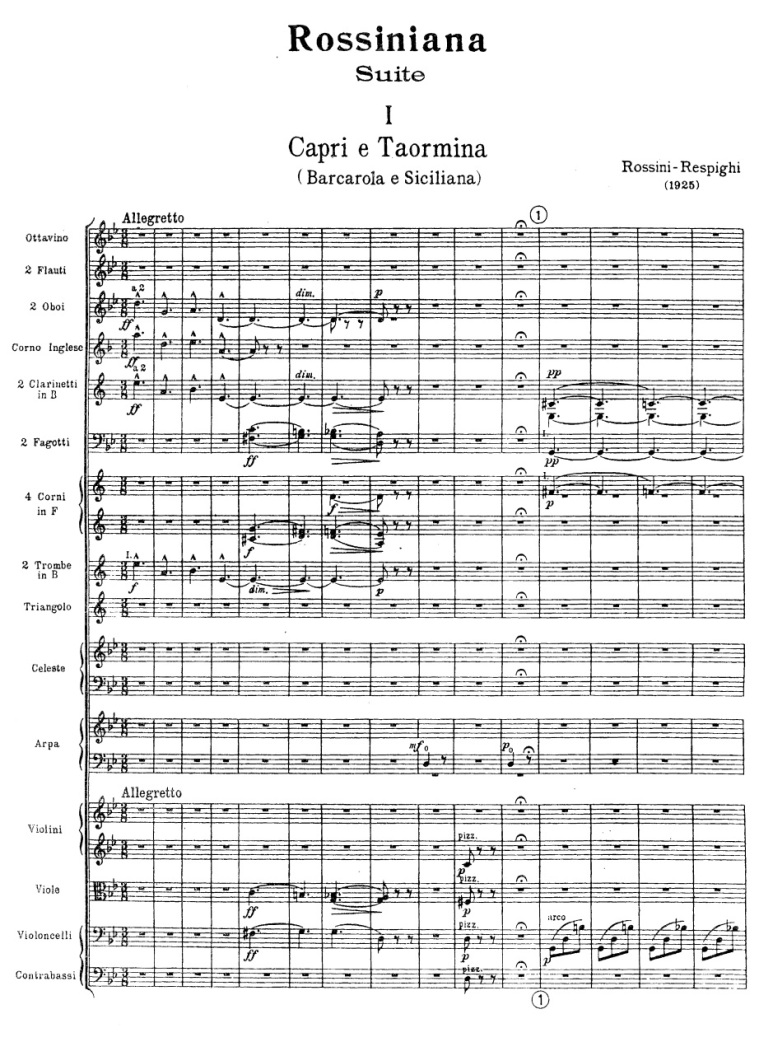
Ottorino Respighi (9 luglio 1879 - 1936): Rossiniana, suite sinfonica (1925) su temi di Gioachino Rossini (tratti da Quelques rien pour album per pianoforte). Orchestre de la Suisse Romande, dir. Ernest Ansermet.
Capri e Taormina (Barcarola e Siciliana)
Lamento [6:37]
Intermezzo [13:43]
Tarantella “puro sangue” (con passaggio della processione) [15:41]
John Corigliano (16 febbraio 1938):
I. Of Rage and Remembrance, ciaccona (composta sulla base del III movimento della Sinfonia n. 1) per voci e orchestra su testo di William M. Hoffman (1991).
This is the season of stone:
Dead leaves on a garden wall,
Dried berries in bone-cold air,
A brittle moon,
An ashen sun.
Bear it,
Bear it, you tell me.
This is the season of stone.
Was there a time before the sorrow –
Days of double darkness,
Nights of blinding light?
Is there life outside the terror –
Waking from an airless dream
To the silence of an empty room?
This is the season of stone,
You tell me,
When dead leaves lace the garden wall,
And berries dry in the bone-cold air.
And the brittle moon rules
The ashen sun.
Bear it,
Bear it, you tell me.
This is the season of stone.
But remember the crack of the ice-locked lake,
And the fog on the hyacinth roads.
Remember the breeze through the fields at dawn,
Cascading the trees and our youth-dark hair.
I remember, I remember.
Remember.
Giulio Sorrentino, cellist,
You were the radiance of my youth.
Freddy. Fortunato Arico,
Giulio’s teacher,
goodbye.
Paul Jacobs, brilliant pianist and dry wit,
Farewell.
J. J. Mitchell, muse of poets and painters,
60
Adieu.
Jacques Chwat, a cabalist and agnostic,
You walked among the living,
Guided by the dead.
Maya zhizn, maya maledost,
Prashchai, prashchai.1
Mark Pearson and Jim Moses: friends, lovers, died in ’88.
Shalom.
Robert Jacobson:
A tall, kind man with a dazzling smile
Opera was his passion.
Adios.
Nikos Kafkalis: I’ll never forget you!
Goodbye. Farewell.
Anthony Holland: man of the theatre,
Oh, Tony, I miss you so!
Lebewohl.
Farewell.
Adios.
Goodbye.
This is the season of stone.
Bear it, bear it, you tell me:
But remember the crack of the ice-locked lake,
And the fog on the hyacinth roads.
Remember the breeze through the fields at dawn,
Cascading the trees and our youth-dark hair.
I remember the scent of mint and thyme,
I remember the heat,
I remember the wine.
I remember the joy.
Remember.
Though I live to be a thousand years,
I’ll never forget you.
Gahm kee-aylaykh b’gay tzahlmohvess
Loh-eeraw raw kee-ahtaw eemodee
II. Sinfonia n. 1 (1988-89):
1. Apologue: Of Rage and Remembrance (Ferocious) [13:07]
2. Tarantella [26:46]
3. Chaconne: Giulio’s Song (Adagio) [35:00] – attacca:
4. Epilogue (Adagio) [48:50]
Michelle DeYoung, mezzosoprano; Michael Accinno, voce bianca; Robert P. Baker e Michael Forest, tenori; Jason Stearns e James Shaffran, baritoni; National Symphony Orchestra, dir. Leonard Slatkin.
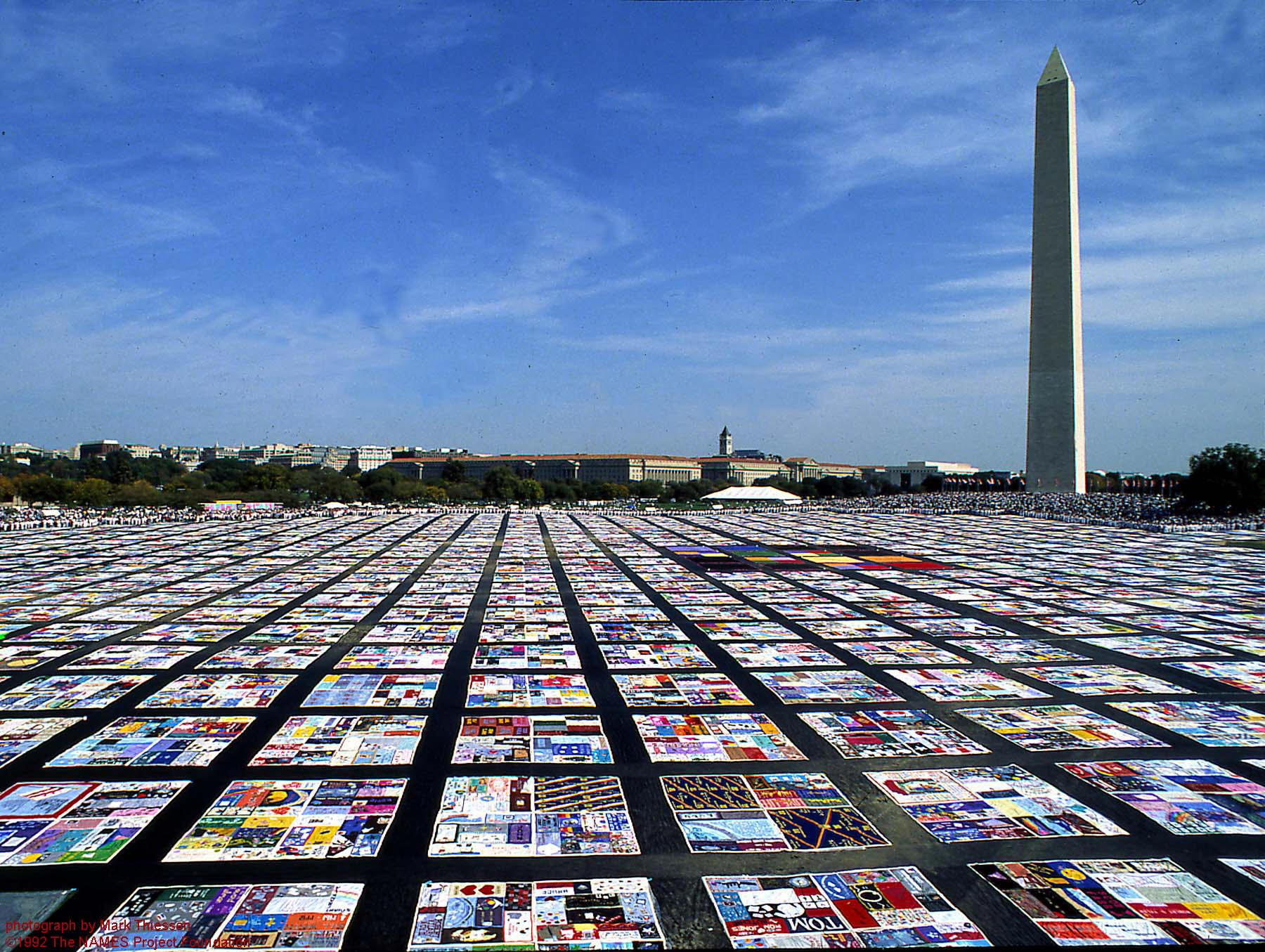
Ispirata, in parte, dal NAMES Project AIDS Memorial Quilt, la Sinfonia è dedicata alla memoria di amici del compositore morti di AIDS. Alcune annotazioni di John Corigliano e la partitura completa si trovano qui.
Sigismond Thalberg (8 gennaio 1812 - 1871): Tarantella in do minore per pianoforte op. 65 (1848). Ian Hominick.
Oggi il nome di Thalberg è noto solo ai melomani, ma ai suoi tempi era conosciutissimo. Figlio illegittimo di un principe, Moritz von Dietrichstein, e di una baronessa, Maria Julia Wetzlar von Plankenstern, divenne un grande virtuoso del pianoforte, capace di gareggiare in bravura con Liszt. Oltre alle sue composizioni originali, come questa Tarantella, erano particolarmente apprezzate le sue rielaborazioni pianistiche di temi tratti dalle opere liriche di successo.
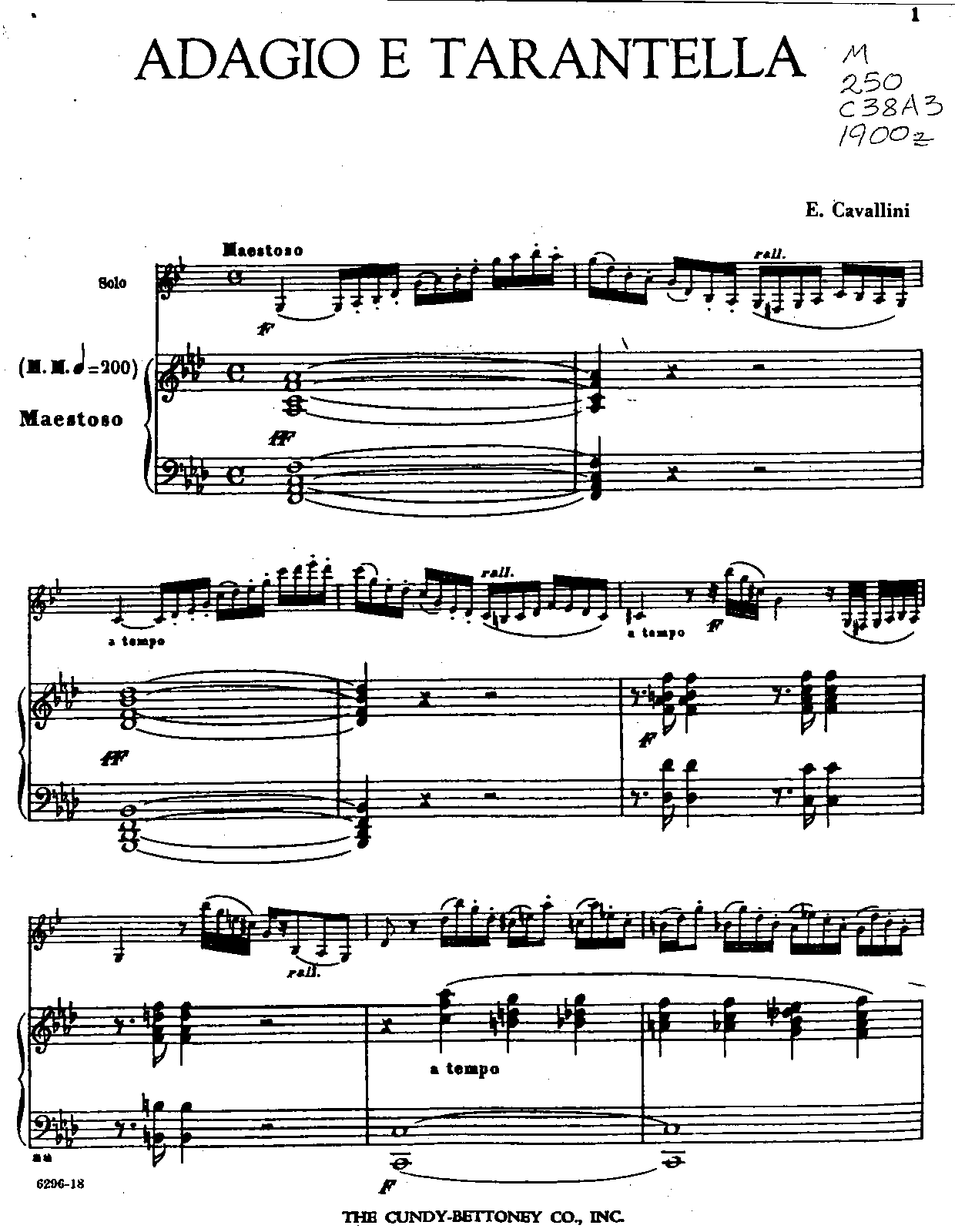
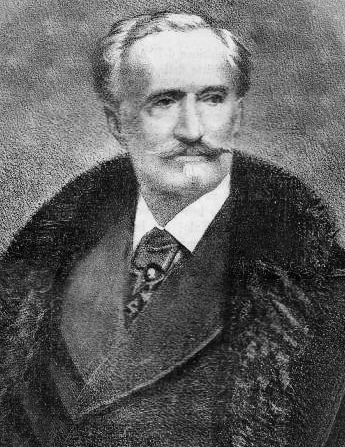
Ernesto Cavallini (30 agosto 1807 - 1874): Adagio e Tarantella per clarinetto e pianoforte. Sergio Bosi, clarinetto; Riccardo Bartoli, pianoforte.
Acclamato virtuoso, Cavallini fu soprannominato «il Paganini del clarinetto». Verdi scrisse per lui l’assolo del Preludio al III atto della Forza del destino, qui in una riduzione per clarinetto (Corrado Giuffredi) e pianoforte (Federico Nicoletta):
Una delle composizioni musicali che, secondo Athanasius Kircher (1602 - 1680), erano suonate nell’Italia meridionale, segnatamente in Puglia, al fine di curare i tarantolati; Kircher trascrisse il brano, adattato a 3 voci, nel trattato Magnes, sive De arte magnetica (1641) al f. 874, riprodotto qui sotto. Esegue l’ensemble Atrium Musicae de Madrid diretto da Gregório Paniagua.



.jpg)

 la regina gioiosa