
Cyril Scott (27 settembre 1879 - 1970): Early One Morning, poema per pianoforte e orchestra (1930–31, rev. 1962). Howard Shelley, pianoforte; BBC Philharmonic Orchestra, dir. Martyn Brabbins.

Cyril Scott (27 settembre 1879 - 1970): Early One Morning, poema per pianoforte e orchestra (1930–31, rev. 1962). Howard Shelley, pianoforte; BBC Philharmonic Orchestra, dir. Martyn Brabbins.
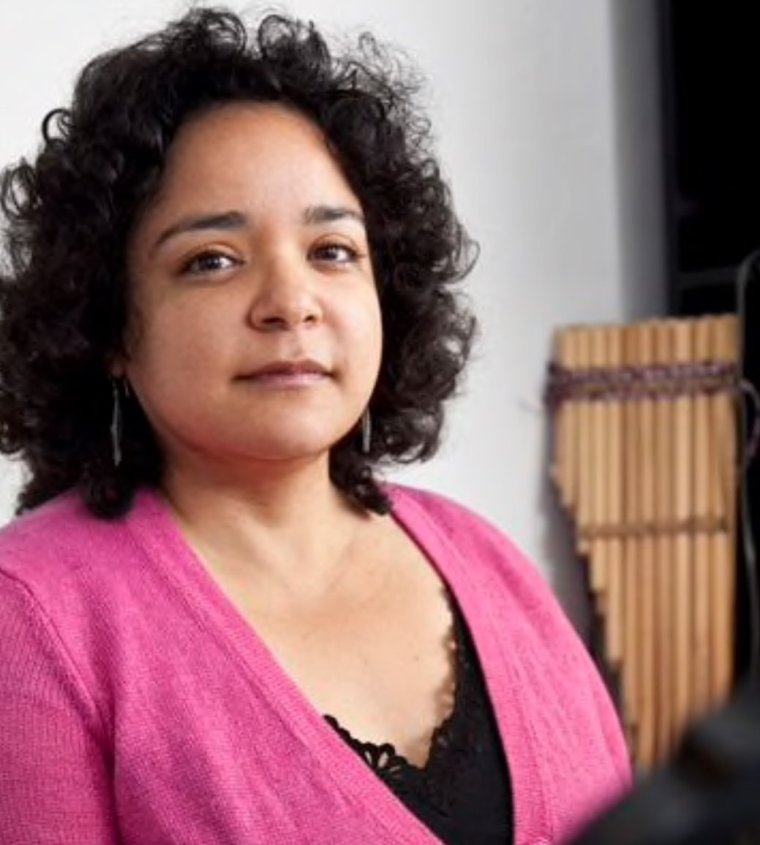
Gabriela Lena Frank (26 settembre 1972): Apu, poema sinfonico (2017). Lavoro commissionato dal Carnegie Hall per la National Youth Orchestra of the United States of America (NYO-USA), che qui l’esegue sotto la direzione di Marin Alsop.
Gabriela Lena Frank è nata a Berkeley, California, da padre americano di origine ebraica lituana e madre peruviana di origine cinese.
Nelle tradizioni andine, risalenti ai tempi dell’impero incaico, l’apu è uno spirito benigno che protegge coloro che si avventurano sulle montagne.
Mikalojus Konstantinas Čjurlënis (22 settembre 1875 - 1911): Jūra (Il mare), poema sinfonico (1903-07). Lietuvos Velztybinis Simfoninis Orkestras, dir. Gintaras Rinkevičius.

Sonata del mare: Finale, dipinto di M. K. Čjurlënis (1908)
Charles Tomlinson Griffes (17 settembre 1884 – 1920): The Pleasure-Dome of Kubla Khan, poema sinfonico op. 8, da Coleridge (1912-15, orchestrazione 1917). Seattle Symphony Orchestra, dir. Gerard Schwarz.

Siegfried Wagner (1869 - 4 agosto 1930): Sehnsucht, poema sinfonico, da Schiller (1895). Philharmonisches Staatsorchester Hamburg, dir. Werner Andreas Albert.
Scritta a 26 anni dal figlio di Richard Wagner e Cosima Liszt, questa composizione fu ritrovata solo nel 1979.

Alberto Franchetti (1860 - 4 agosto 1942): Nella Foresta Nera, impressione sinfonica (1902). Orchestra Sinfonica Moldava, dir. Silvano Frontalini.

Modést Petròvič Mùsorgskij (1839 - 1881): Una notte sul Monte Calvo (Ночь на лысой горе), poema sinfonico, rielaborazione (1886) di Nikolaj Andreevič Rimskij-Korsakov (1844 - 1908). New York Philharmonic Orchestra, dir. Leonard Bernstein.
E questa è la versione più nota.
Musorgskij: La notte di san Giovanni sul Monte Calvo (versione originale, 1866-67). Berliner Philharmoniker, dir. Claudio Abbado.

Luis Ricardo Falero, duca di Labranzano (1851 - 1896): Partenza delle streghe per il sabba (1878)
Frederick Delius (1862 - 10 giugno 1934): Spring Morning, terzo dei Three Small Tone Poems (c1898). Royal Scottish National Orchestra, dir. David Lloyd Jones.

Max d’Ollone (1875 - 15 maggio 1959): Le Ménétrier, poema sinfonico per violino e orchestra (1910). Mark Kaplan, violino; Orquestra sinfònica de Barcelona i nacional de Catalunya, dir. Lawrence Foster.
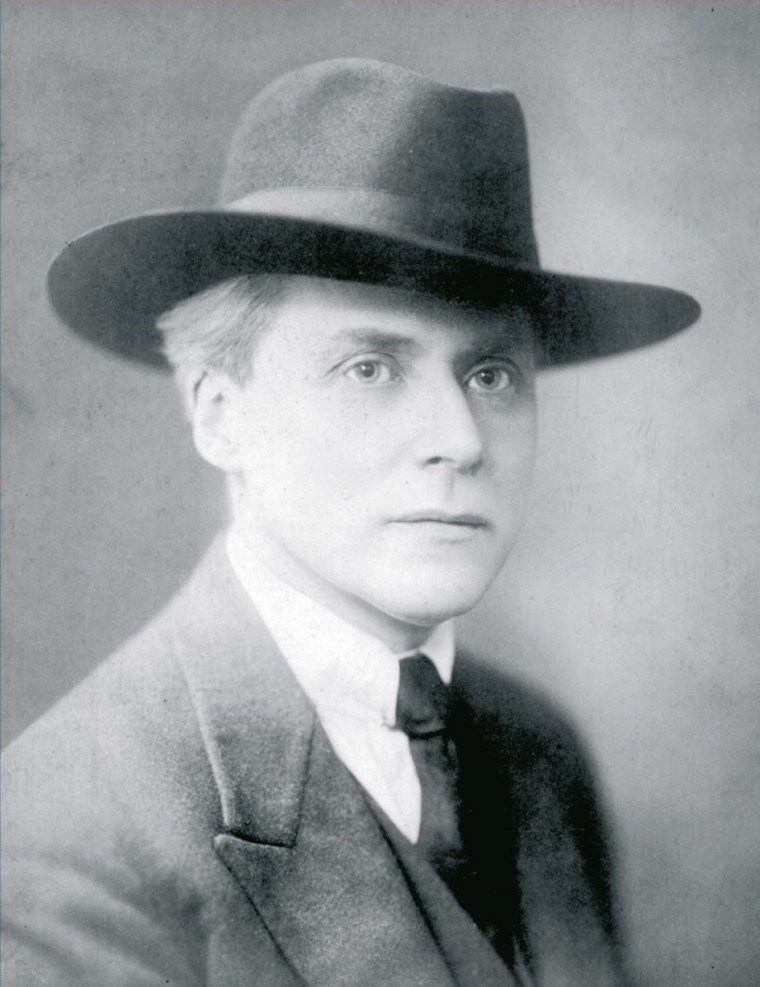
August Enna (13 maggio 1859 - 1939): Märchen, quadri sinfonici (1905). NDR Radiophilharmonie Hannover, dir. Michael Hofstetter.

Stanisław Moniuszko (5 maggio 1819 - 1872): Bajka. Opowieść zimowa (Una favola. Racconto d’inverno), ouverture-fantasia in la minore per orchestra (1848). Sinfonia Varsovia, dir. Marc Minkowski.

Evgenij Svetlanov (1928 - 3 maggio 2002): La Daugava, poema sinfonico (1952). Orchestra sinfonica di Stato dell’URSS diretta dall’autore (in concerto, 1976).
La Daugava o Dvina occidentale è un fiume lungo 1020 km: nasce nel Rialto del Valdaj, attraversa Russia, Bielorussia e Lettonia, e infine sfocia nel golfo di Riga, nel Mar Baltico.

Maurice Emmanuel (2 maggio 1862 - 1938): Le Poème du Rhône, poema sinfonico op. 30 ispirato da Frédéric Mistral (1938); rimasta incompiuta alla morte del compositore, l’orchestrazione è stata ultimata da Marguerite Béclard d’Harcourt. Staatsorchester Rheinische Philharmonie, dir. Gilles Nopre.

Sir Alexander Mackenzie (1847 - 28 aprile 1935): La Belle Dame sans Merci, ballata sinfonica op. 29 (1883) ispirata dall’omonima ballata di John Keats. Orchestra filarmonica di Malta, dir. Michael Laus.
O what can ail thee, knight-at-arms,
Alone and palely loitering?
The sedge has withered from the lake,
And no birds sing.
O what can ail thee, knight-at-arms,
So haggard and so woe-begone?
The squirrel’s granary is full,
And the harvest’s done.
I see a lily on thy brow,
With anguish moist and fever-dew,
And on thy cheeks a fading rose
Fast withereth too.
I met a lady in the meads,
Full beautiful — a faery’s child,
Her hair was long, her foot was light,
And her eyes were wild.
I made a garland for her head,
And bracelets too, and fragrant zone;
She looked at me as she did love,
And made sweet moan.
I set her on my pacing steed,
And nothing else saw all day long,
For sidelong would she bend, and sing
A faery’s song.
She found me roots of relish sweet,
And honey wild, and manna-dew,
And sure in language strange she said —
‘I love thee true’.
She took me to her Elfin grot,
And there she wept and sighed full sore,
And there I shut her wild wild eyes
With kisses four.
And there she lullèd me asleep,
And there I dreamed — Ah! woe betide! —
The latest dream I ever dreamt
On the cold hill side.
I saw pale kings and princes too,
Pale warriors, death-pale were they all;
They cried — ‘La Belle Dame sans Merci
Thee hath in thrall!’
I saw their starved lips in the gloam,
With horrid warning gapèd wide,
And I awoke and found me here,
On the cold hill’s side.
And this is why I sojourn here,
Alone and palely loitering,
Though the sedge is withered from the lake,
And no birds sing.


«Dove c’è musica non ci può essere cosa cattiva» (Cervantes)
Miguel de Cervantes Saavedra morì il 22 aprile 1616.
Sul suo capolavoro immortale è già stato scritto tutto, anche l’impossibile e l’inimmaginabile: ragion per cui oggi, celebrando la ricorrenza, mi limiterò a segnalare un interessante articolo di José Saramago pubblicato nel 2005 sul «País» e, in italiano, sulla «Repubblica» (leggibile online a questo indirizzo). Inoltre, com’è consuetudine in questo blog, proporrò l’ascolto di alcune composizioni musicali ispirate da Cervantes.
Alla «presenza di Don Chisciotte nella musica» dedicò una dissertazione, nel 1984, la studiosa statunitense Susan Jane Flynn: il suo lavoro è disponibile in rete (The Presence of Don Quixote in Music, University of Tennessee).
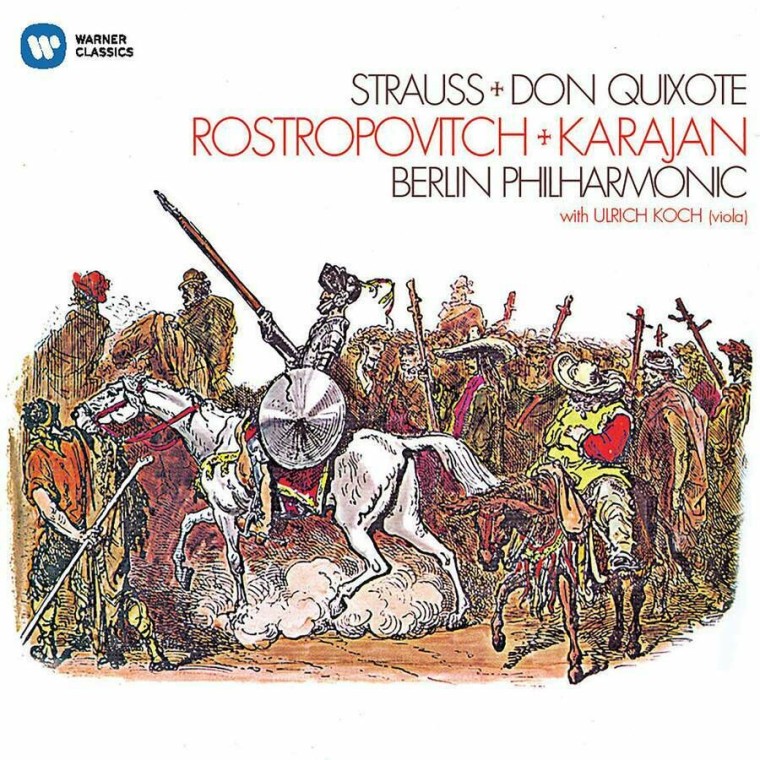
Richard Strauss (1864 - 1949): Don Quixote, poema sinfonico op. 35 in forma di phantastische Variationen über ein Thema ritterlichen Charakters (variazioni fantastiche sopra un tema cavalleresco; 1897). Mstislav Rostropovič, violoncello; Berliner Philharmoniker, dir. Herbert von Karajan. Illustrazioni di Gustave Doré.
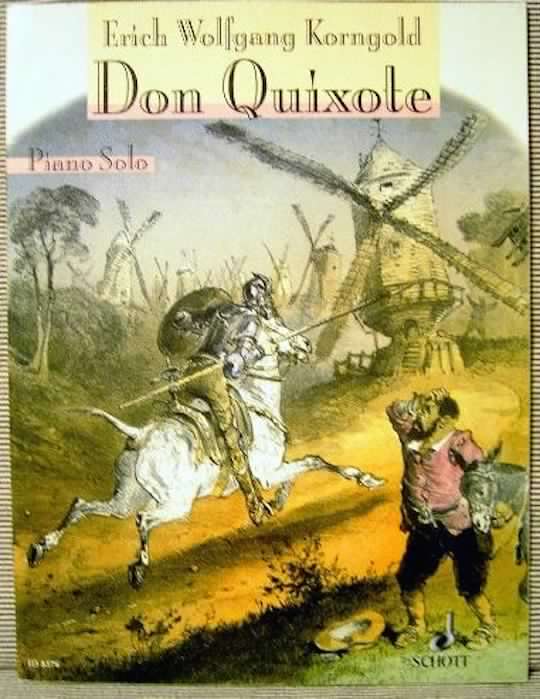
Erich Korngold (1897 - 1957): Don Quixote, 6 pezzi per pianoforte (1907-09). Mara Jaubert.
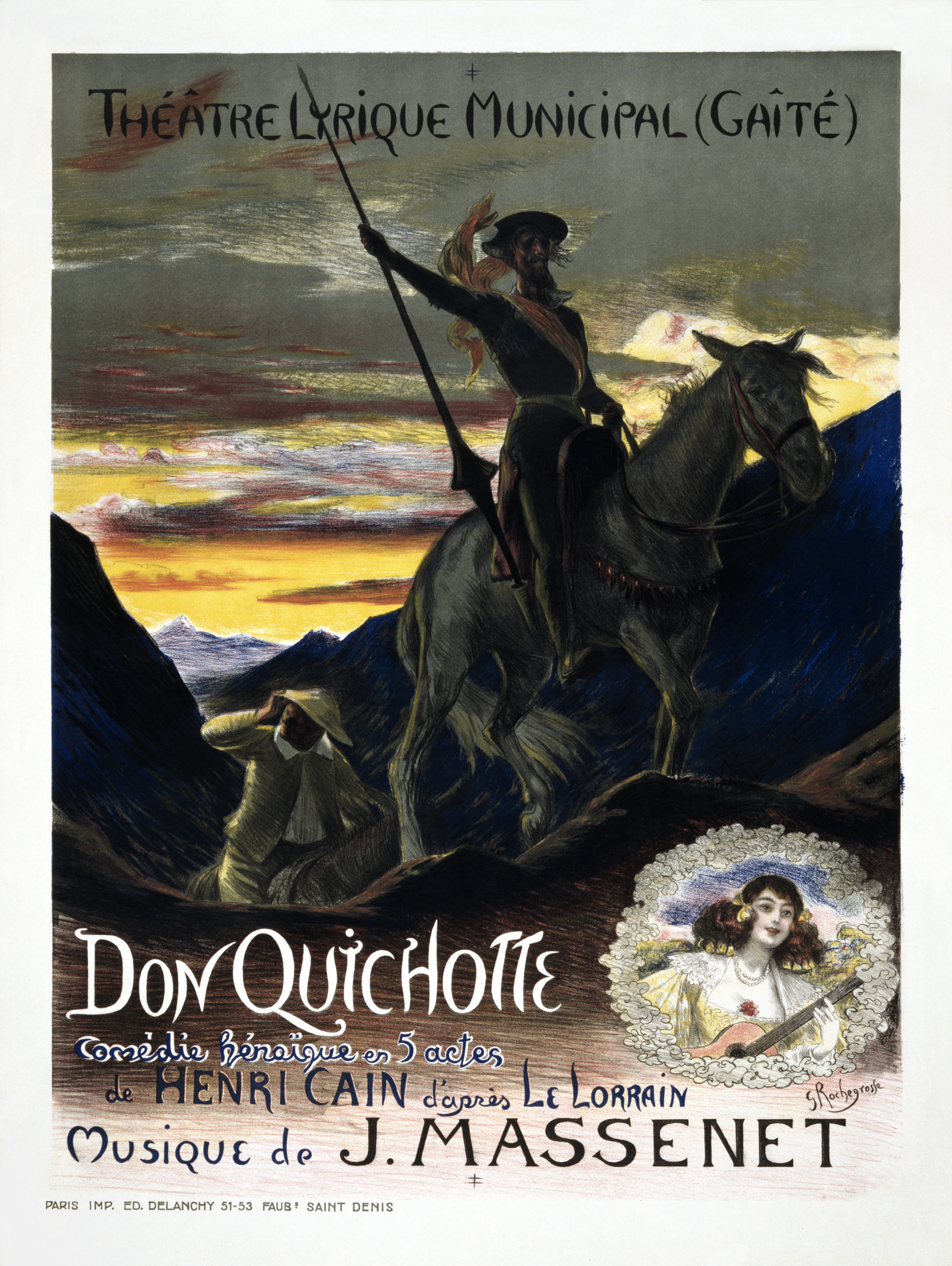
Jules Massenet (1842 - 1912): scena finale di Don Quichotte, comédie héroïque in 5 atti, libretto di Henri Cain (1910). Don Quichotte: José van Dam; Sancho Panza: Werner van Mettelen; voce di Dulcinée: Silvia Tro Santafé. Bruxelles, Théâtre La Monnaie, 2010.
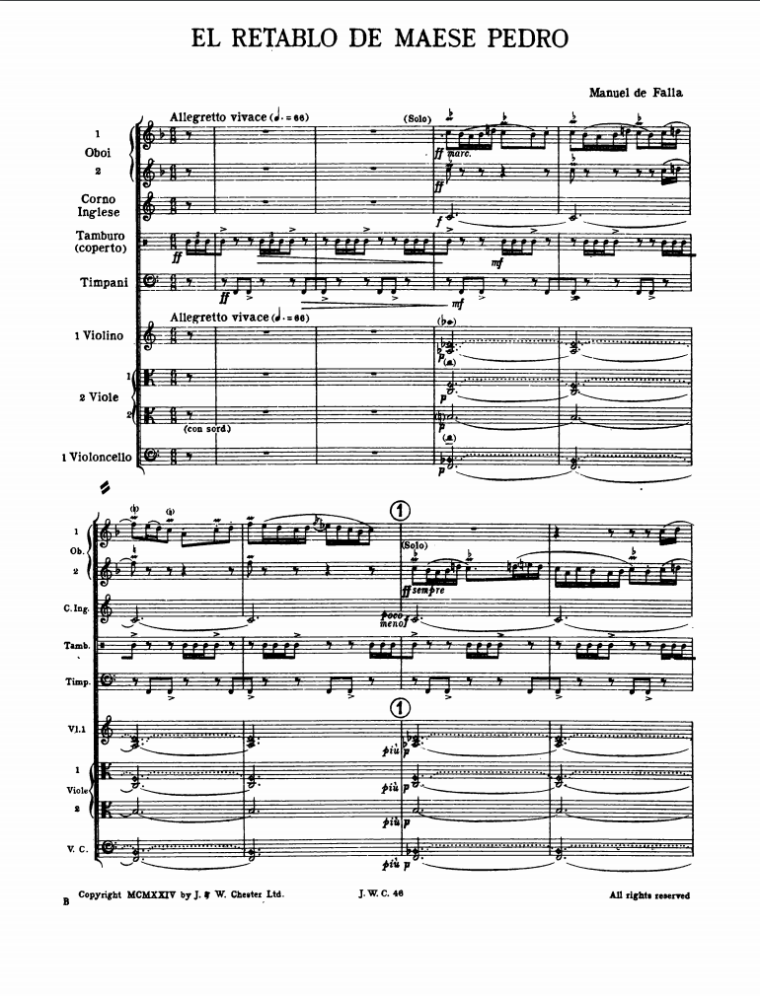
Manuel de Falla (1876 - 1946): El retablo de Maese Pedro, opera per marionette in 1 atto (6 scene) su libretto proprio (1923). Don Quijote: Justino Díaz; Pedro: Joan Cabero; narratore: Xavier Cabero; Orchestre Symphonique de Montréal, dir. Charles Dutoit.
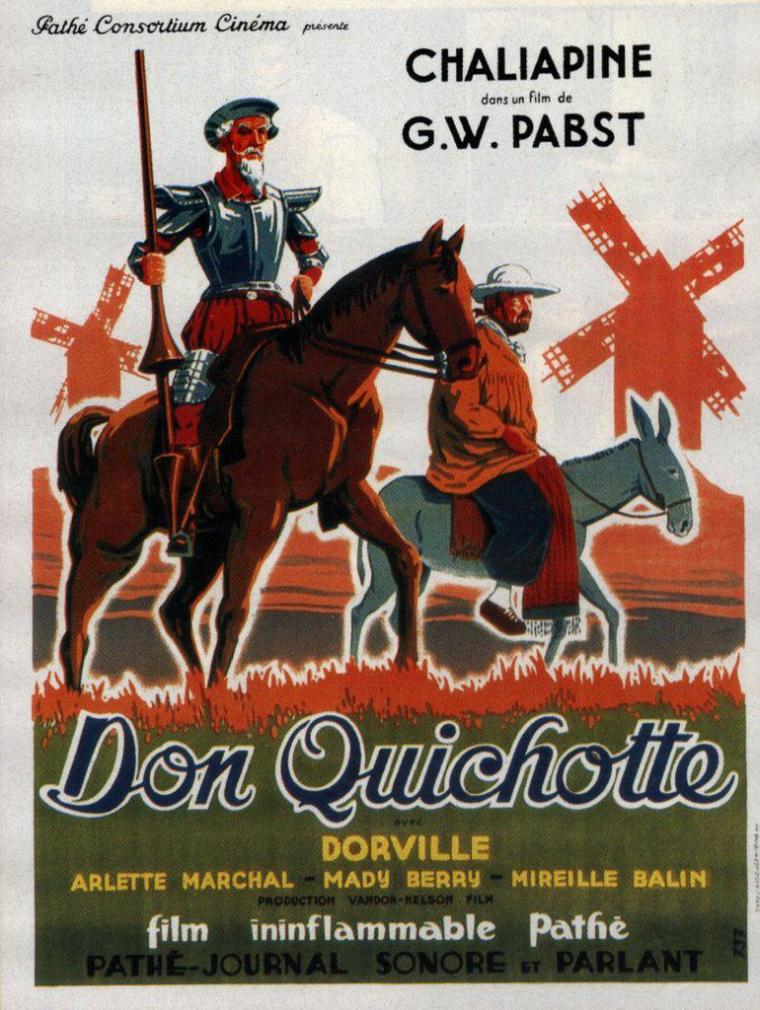
Maurice Ravel (1875 - 1937): Don Quichotte à Dulcinée, 3 chansons per baritono e pianoforte su testo di Paul Morand (1932-33); originariamente composte per il film Don Quichotte (con Fëdor Šaljapin) di Georg Wilhelm Pabst. Dietrich Fischer-Dieskau, baritono; Karl Engel, pianoforte.
Roberto Gerhard (1896 - 1970): Don Quijote, balletto (1940-41, rev. 1947-49). Orquesta Sinfónica de Tenerife, dir. Victor Pablo Pérez.
Scena 1a
Scena 2a [7:28]
Scena 3a [16:41]
Scena 4a [27:32]
Scena 5a [31:17]
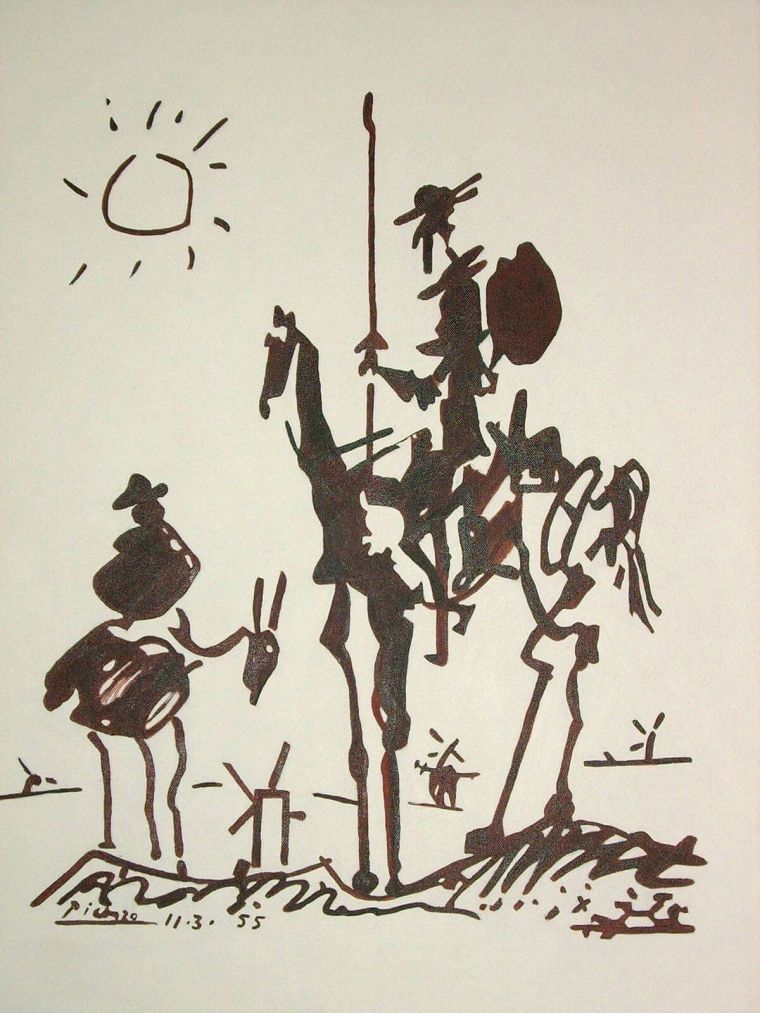
Litografia di Pablo Picasso, 1955
[pubblicato originariamente il 22 aprile 2016]
Adolf Wiklund (1879 - 2 aprile 1950): Sommarnatt och soluppgång, poema sinfonico op. 19 (1919). Göteborgs Symfoniker, dir. Jorma Panula.

 Ruperto Chapí Lorente (27 marzo 1851 - 25 marzo 1909): Escenas de capa y espada, poema sinfonico (1876). Orquesta sinfónica de Radio Televisión Española, dir. Adrian Leaper.
Max Reger (1873 – 1916): Vier Tondichtungen nach Arnold Böcklin op. 128 (1913). Koninklijk Concertgebouworkest, dir. Neeme Järvi.
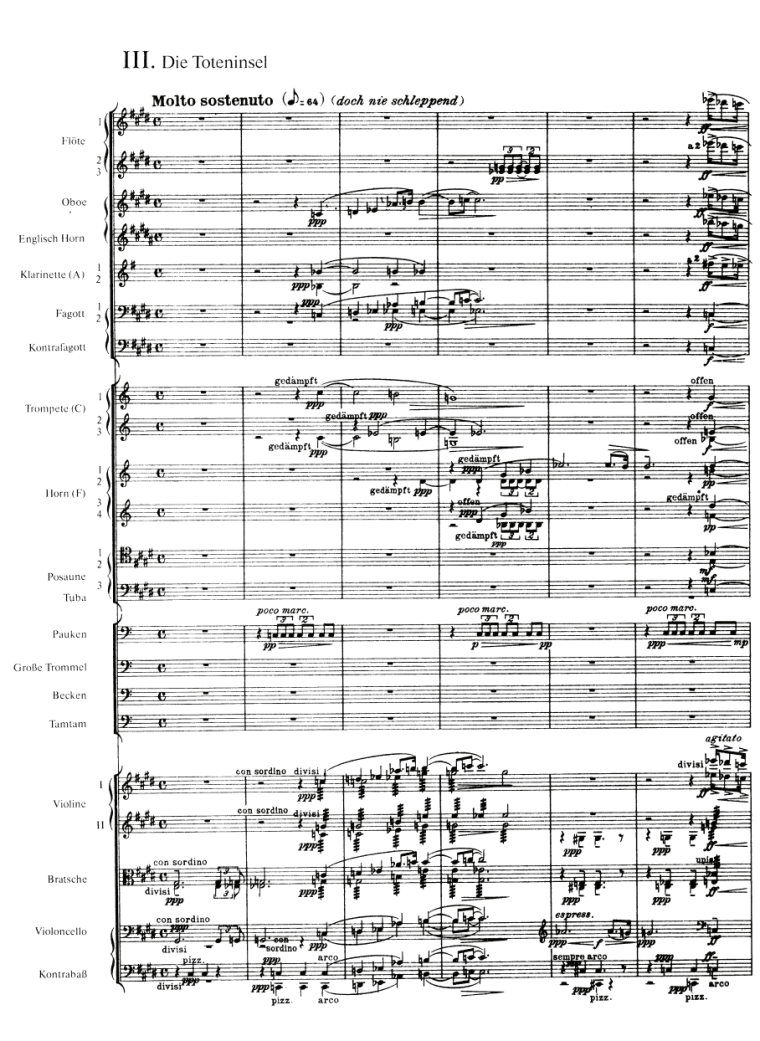
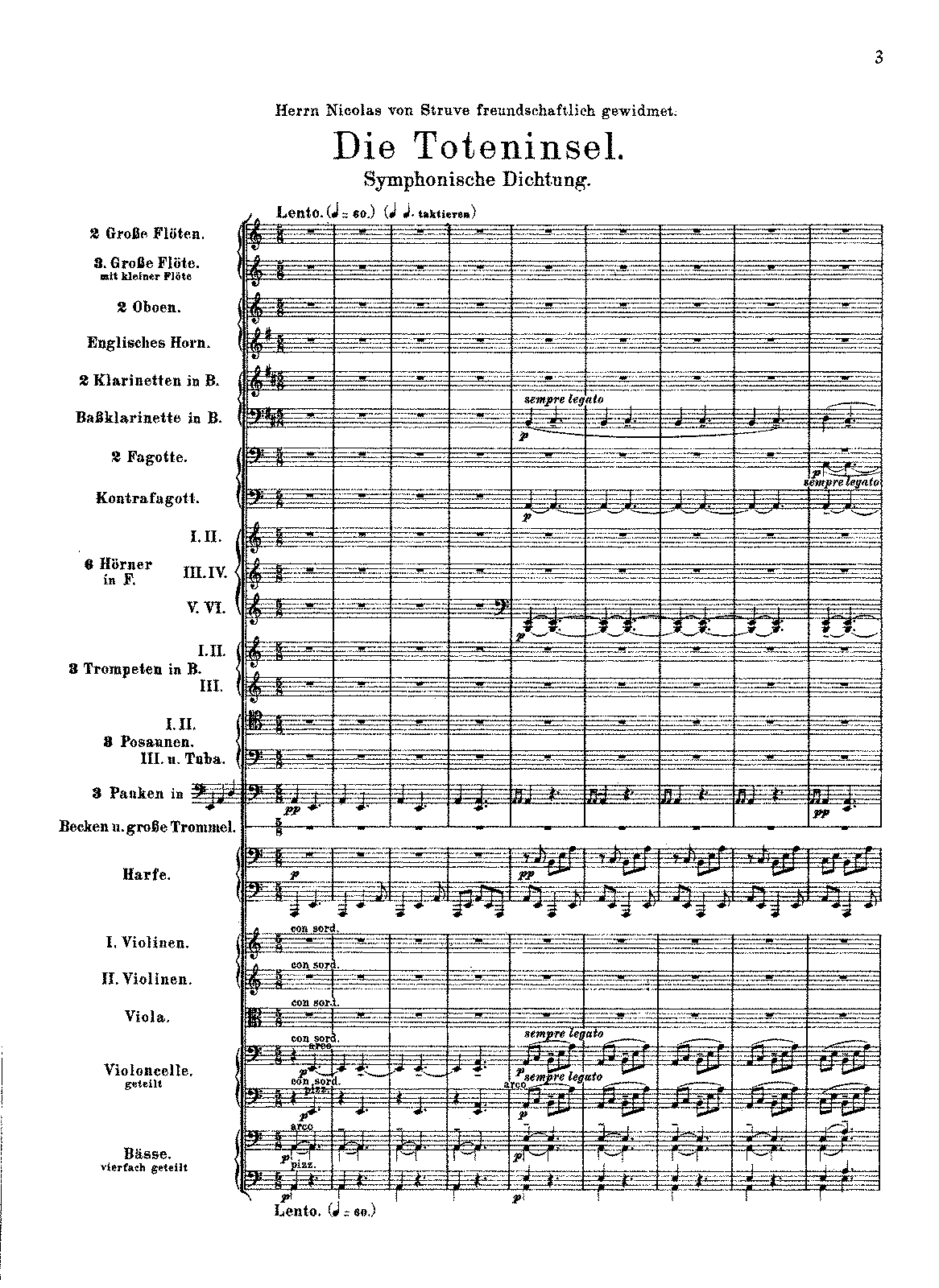
Sergej Vasil’evič Rachmaninov (1873 – 1943): Die Toteninsel, poema sinfonico op. 29 (1909) ispirato dall’omonimo dipinto di Arnold Böcklin. Orchestra sinfonica di Stato della Federazione russa, dir. Evgenij Fëdorovič Svetlanov.
Nel video si alternano le cinque versioni note del dipinto:
1a versione, 1880, oggi nella Öffentliche Kunstsammlung del Kunstmuseum di Basilea;
2a versione, 1880, Metropolitan Museum of Art di New York;
3a versione, 1883, Alte Nationalgalerie di Berlino;
4a versione, 1884, distrutta nel corso della seconda guerra mondiale;
5a versione, 1886, Museum der bildenden Künste, Lipsia.
 Andrés Gaos (1874 – 13 marzo 1959): Granada — Un atardecer en la Alhambra, poema sinfonico (1916). Orquesta Ciudad de Granada, dir. Maximino Zumalave.
Heinrich Schulz-Beuthen (1838 – 12 marzo 1915): Die Toteninsel, poema sinfonico (1909) ispirato dall’omonimo dipinto (1880-86) di Arnold Böcklin. Orchestra sinfonica di Mosca, dir. Adriano.

Andreas Hallén (1846 – 11 marzo 1925): Die Todteninsel, poema sinfonico op. 45 (1898) ispirato dall’omonimo dipinto (1880-86) di Arnold Böcklin. Helsingborgs Symfoniorkester, dir. Hans-Peter Frank.

Steven Stucky (1949 – 14 febbraio 2016): Silent Spring, poema sinfonico (2011). Pittsburgh Symphony Orchestra, dir. Manfred Honeck.
Il brano fu composto per celebrare il cinquantenario della pubblicazione del celebre saggio omonimo di Rachel Carson, saggio che diede origine al movimento ambientalista.

John Luther Adams (1953): Become Ocean per orchestra (2013). Seattle Symphony Orchestra, dir. Ludovic Morlot.
Questa composizione, cui è stato assegnato il Premio Pulitzer per la musica nel 2014, è stata definita dal critico statunitense Alex Ross « the loveliest apocalypse in musical history ».

Henri Duparc (21 gennaio 1848 - 1933): Aux étoiles, «poème nocturne» per orchestra (1874, rev. 1911). Orchestre du Capitole de Toulouse, dir. Michel Plasson.
La lumière sidérale des nuits!
Qui peut savoir les vertus secrètes
de cette lumière si humble, mais
venant de l’immensité?
(Alphonse-Joseph-Auguste Gratry)

 la regina gioiosa