
:format(jpeg):mode_rgb():quality(40)/discogs-images/A-309898-1267718760.jpeg.jpg) Gian Paolo Chiti (22 gennaio 1939): Spleen per flauto dolce, violoncello e pianoforte (1973). Nuova Accademia Italiana.
Gian Paolo Chiti (22 gennaio 1939): Spleen per flauto dolce, violoncello e pianoforte (1973). Nuova Accademia Italiana.
Categoria: pianoforte
Canzon triste
Henri Duparc (21 gennaio 1848 - 1933): Chanson triste (1868) su testo di Jean Lahor alias Henri Cazalis. Jessye Norman, soprano; Dalton Baldwin, pianoforte.
Dans ton cœur dort un clair de lune
Un doux clair de lune d’été
Et pour fuir la vie importune
Je me noierai dans ta clarté.
J’oublierai les douleurs passées,
Mon amour, quand tu berceras
Mon triste coeur et mes pensées
Dans le calme aimant de tes bras.
Tu prendras ma tête malade,
Oh! quelquefois sur tes genoux,
Et lui diras une ballade
Qui semblera parler de nous,
Et dans tes yeux pleins de tristesse,
Dans tes yeux alors je boirai
Tant de baisers et de tendresses
Que peut-être je guérirai.

Étude de concert
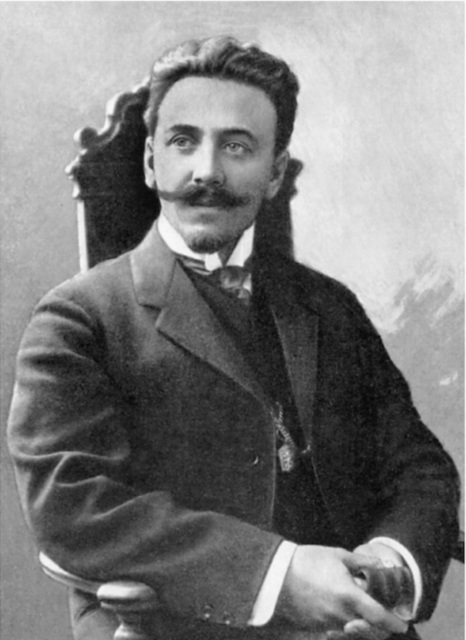
Feliks Michajlovič Blumenfel’d (1863 - 21 gennaio 1931): Étude de concert in fa diesis minore op. 24 (1897). Jouni Somero, pianoforte.
Otto Pezzi
Aleksandr Nikolaevič Čerepnin (21 gennaio 1899 - 1977): 8 Pezzi per pianoforte op. 88 (1954-55). Paula Ropuš.
- Méditation
- Intermezzo
- Rêverie
- Impromptu
- Invocation
- La Chasse
- Étude
- Burlesque

Allegro maestoso – II
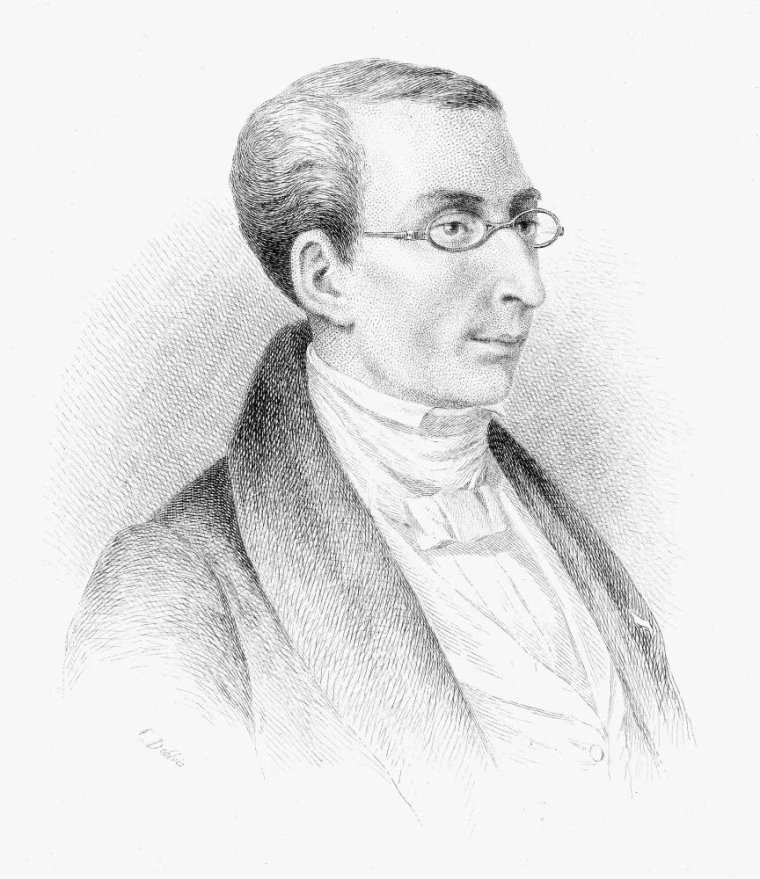
Ferdinand Hérold (1791 - 19 gennaio 1833): Concerto per pianoforte e orchestra n. 3 in la maggiore (1813). Jean-Frédéric Neuburger, pianoforte; Sinfonia Varsovia, dir. Hervé Niquet.
- Allegro maestoso
- Andante con violino obligato
- Rondò: Moderato
Variazioni nel sogno
Luciano Chailly (19 gennaio 1920 - 2002): Variazioni nel sogno per pianoforte (1974). Alfonso Alberti.

Sacre a quattro mani
Igor’ Fëdorovič Stravinskij (1882 - 1971): Le Sacre du printemps trascritto dall’autore per pianoforte a 4 mani (1914). Vladimir Aškenazij e Andrej Gavrilov.
1er tableau: L’adoration de la Terre
– Introduction
– Augures printaniers — Danses des adolescentes [3:58]
– Jeu du rapt [7:19]
– Rondes printanières [8:30]
– Jeu des cités rivales [12:22]
– Cortège du Sage [14:02]
– L’Adoration de la Terre (Le Sage) — Danse de la terre [14:40]
2ème tableau: Le sacrifice
– Introduction [16:15]
– Cercles mystérieux des adolescentes [20:44]
– Glorification de l’élue [24:14]
– Évocation des ancêtres [25:38]
– Action rituelle des ancêtres [26:17]
– Danse sacrale [29:44]

Apparizioni molteplici di una pulce
|
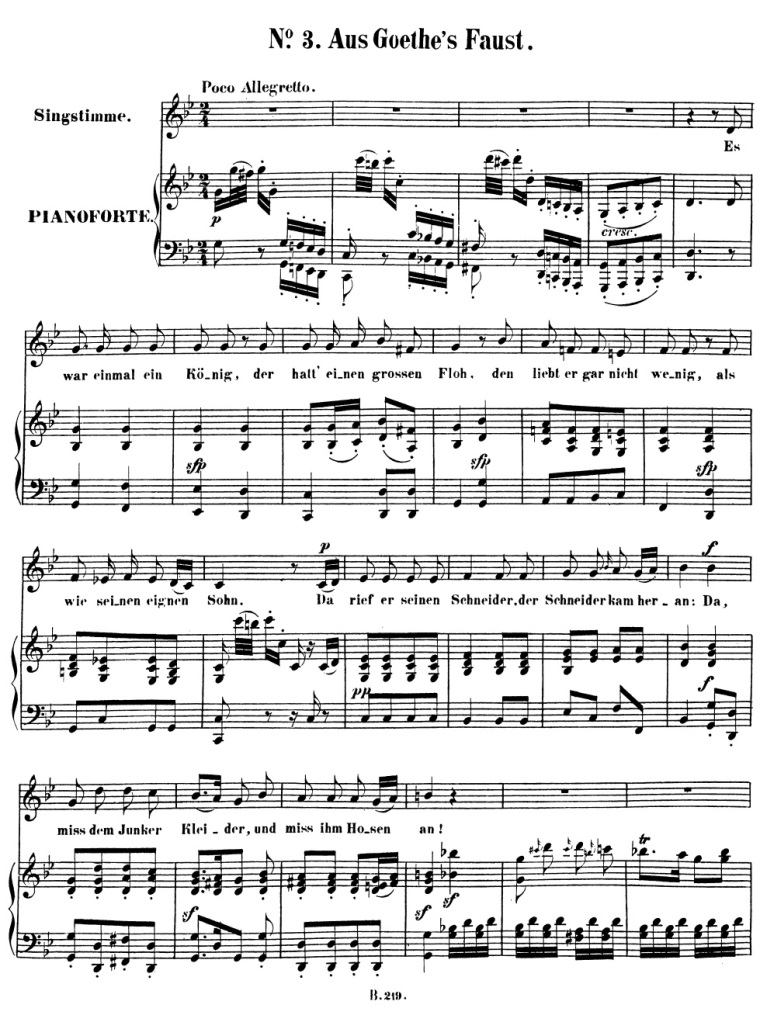
Es war einmal ein König, In Sammet und in Seide Und Herrn und Frau’n am Hofe, (Wolfgang Goethe, Faust. Erster Teil ) |
C’era una volta un re Di velluto e di seta E dame a cavalieri a corte |
Ludwig van Beethoven (1770 - 1827): Aus Goethes Faust («Es war einmal ein König»), Lied op. 75 n. 3 (1809). Dietrich Fischer-Dieskau, baritono; Gerald Moore, pianoforte.
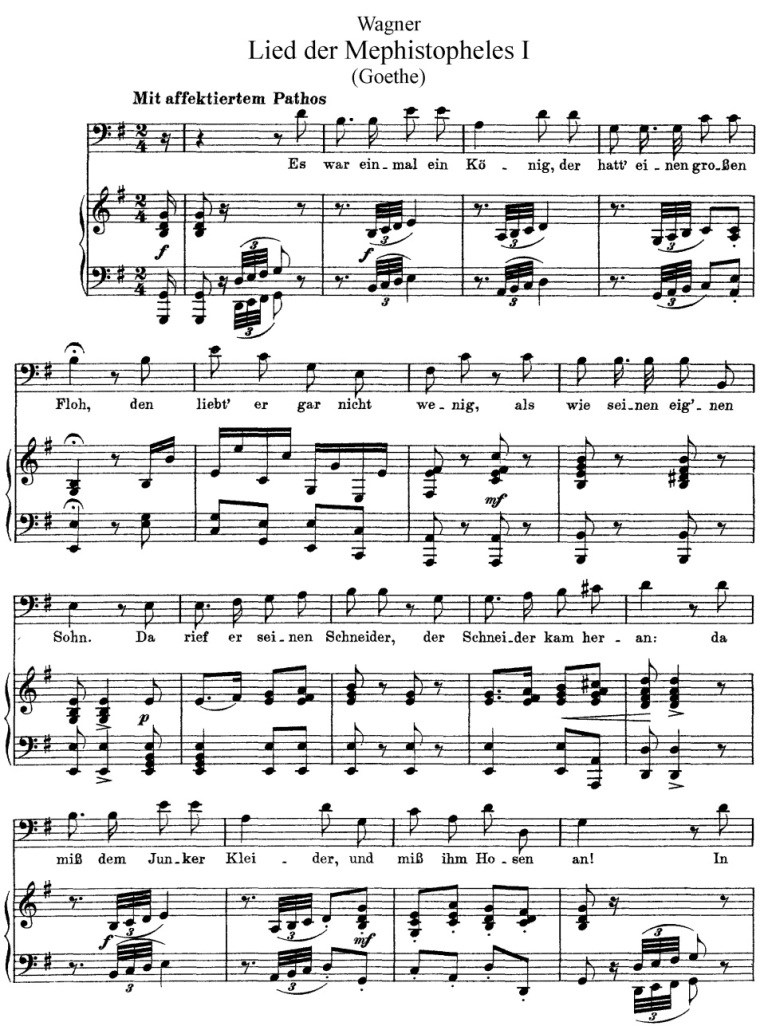
Richard Wagner (1813 - 1883): Lieder des Mephistopheles I («Es war einmal ein König»), n. 4 delle Sieben Kompositionen zu Goethes „Faust“ WWV 15 (1831). Thomas Hampson, baritono; Geoffrey Parsons, pianoforte.
Ferruccio Busoni (1866 - 1924): Lied des Mephistopheles op. 9 no. 2, versione per baritono e pianoforte (1918). Dietrich Fischer-Dieskau, baritono; Jörg Demus, pianoforte.
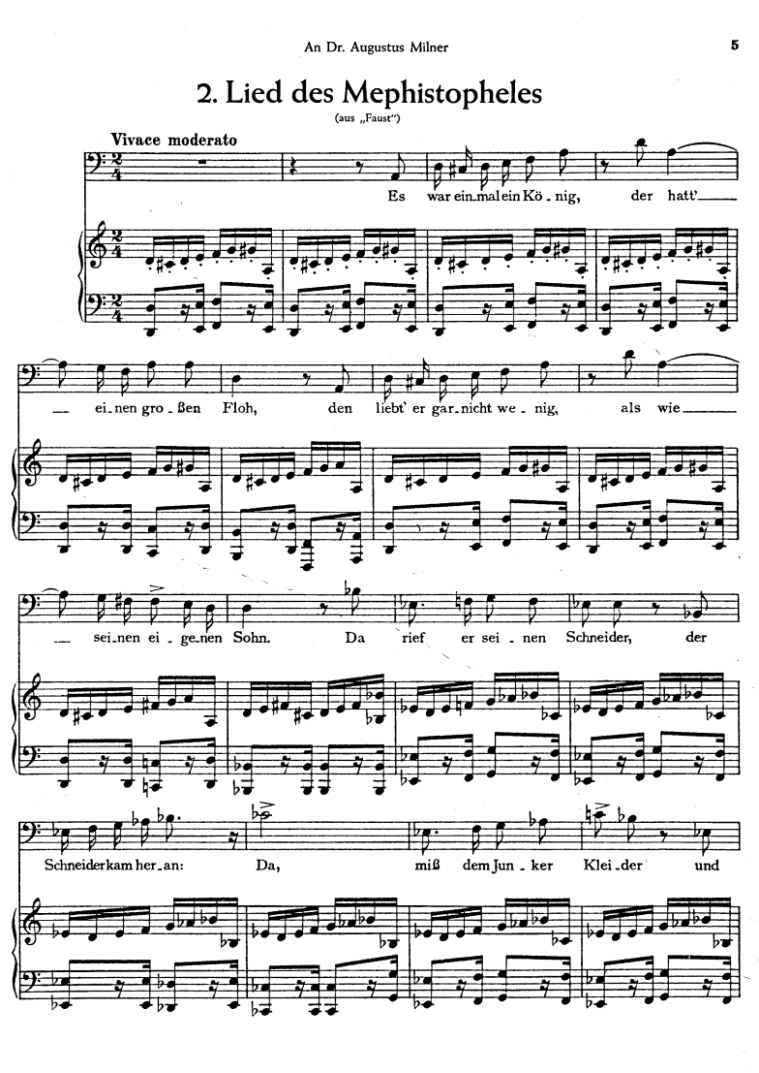
Modest Petrovič Musorgskij (1839 - 1881): Canzone di Mefistofele nella cantina di Auerbach (Песня Мефистофеля в погребке Ауэрбаха, 1879); testo di Aleksandr Nikolaevič Strugoščikov, da Goethe. Sergej Lejferkus, baritono; Semën Skigin, pianoforte.
Жил был король когда-то,
При нём блоха жила,
Блоха… блоха!
Милей родного брата она ему была;
Блоха… ха, ха, ха! блоха?
Ха, ха, ха, ха, ха!… Блоха!
Зовёт король портного: ,,Послушай ты, чурбан!
Для друга дорогого
Сшей бархатный кафтан!“
Блохе кафтан? Ха, ха! Блохе?
Ха, ха, ха, ха, ха!
Кафтан? Ха, ха, ха!
Блохе кафтан?
Вот в золото и бархат
Блоха наряжена,
И полная свобода ей при дворе дана. Ха, ха!
Ха, ха! Блохе!
Король ей сан министра
И с ним звезду даёт,
За нею и другие пошли все блохи в ход.
Ха, ха!
И самой королеве,
И фрейлинам ея,
От блох не стало мочи,
Не стало и житья. Ха, ха!
И тронуть-то боятся,
Не то чтобы их бить.
А мы, кто стал кусаться,
Тотчас давай душить!

Sei Studi
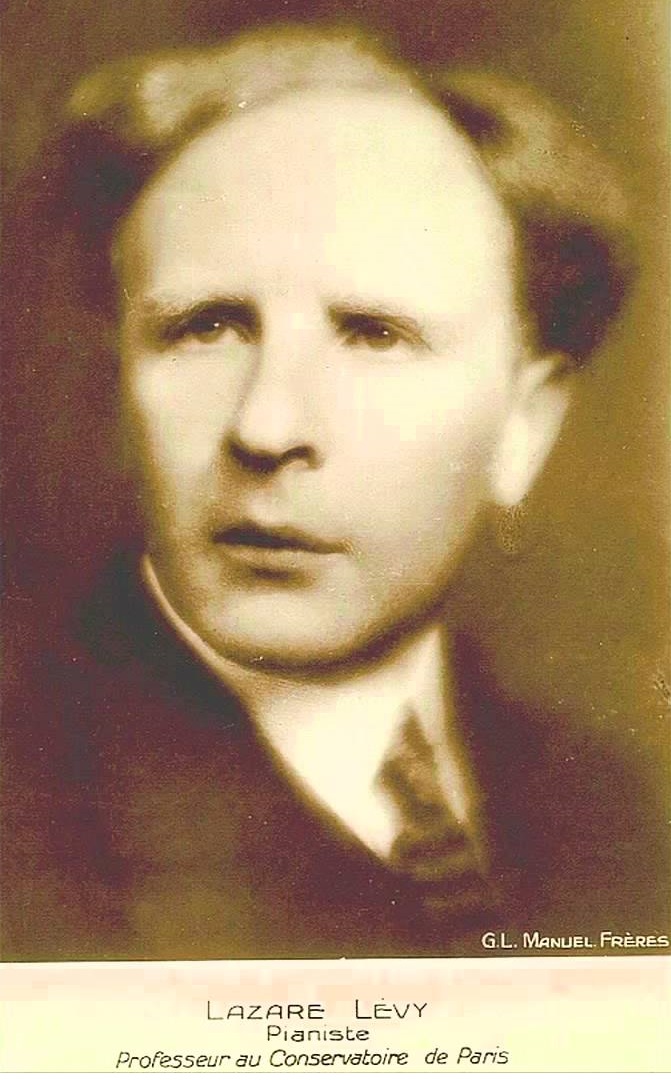
Lazare Lévy (18 gennaio 1882 - 1964): Sei Studi per pianoforte, dedicati a Juliette Meerovitch (1920). Danielle Laval.
- Do maggiore
- La minore [1:33]
- Sol maggiore [3:20]
- Si maggiore [4:31]
- Si bemolle maggiore [5:51]
- Fa diesis maggiore [7:30]
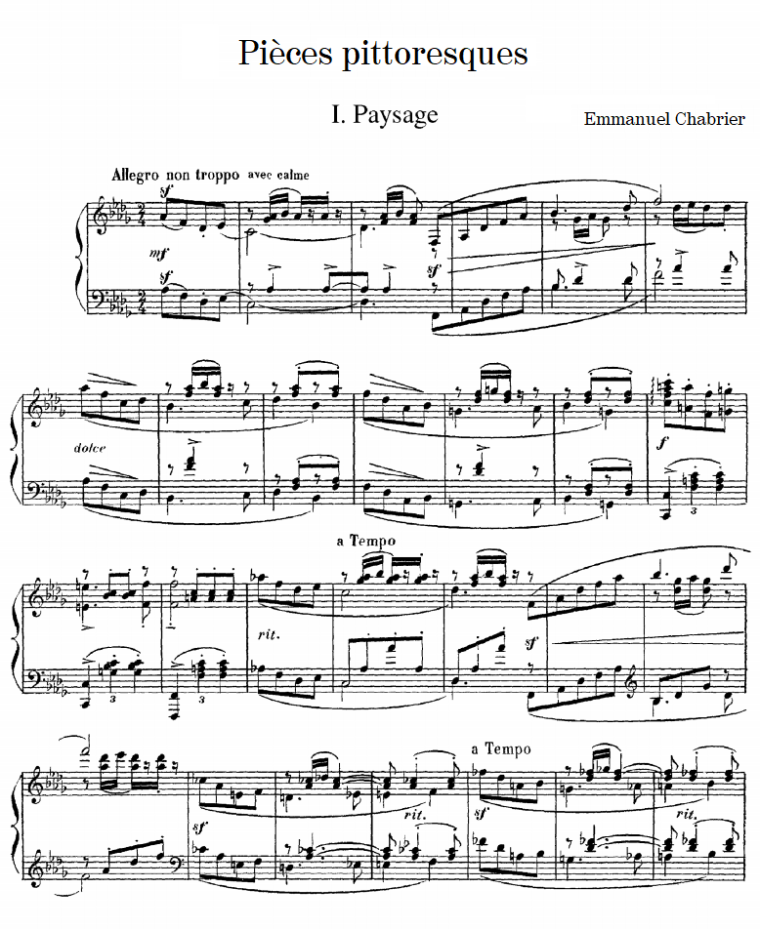
Pièces pittoresques & Suite pastorale
Emmanuel Chabrier (18 gennaio 1841 - 1894): Pièces pittoresques per pianoforte (1880-81). Rena Kyriakou.
- Paysage: Allegro non troppo
- Mélancolie: Ben moderato [5:46]
- Tourbillon: Allegro con fuoco [7:59]
- Sous-Bois: Andantino [9:23]
- Mauresque: Moderato [14:00]
- Idylle: Allegretto [17:12]
- Danse villageoise: Allegro risoluto [22:24]
- Improvisation: Andantino [26:35]
- Menuet pompeux: Allegro franco [31:07]
- Scherzo-Valse: Vivo [37:51]
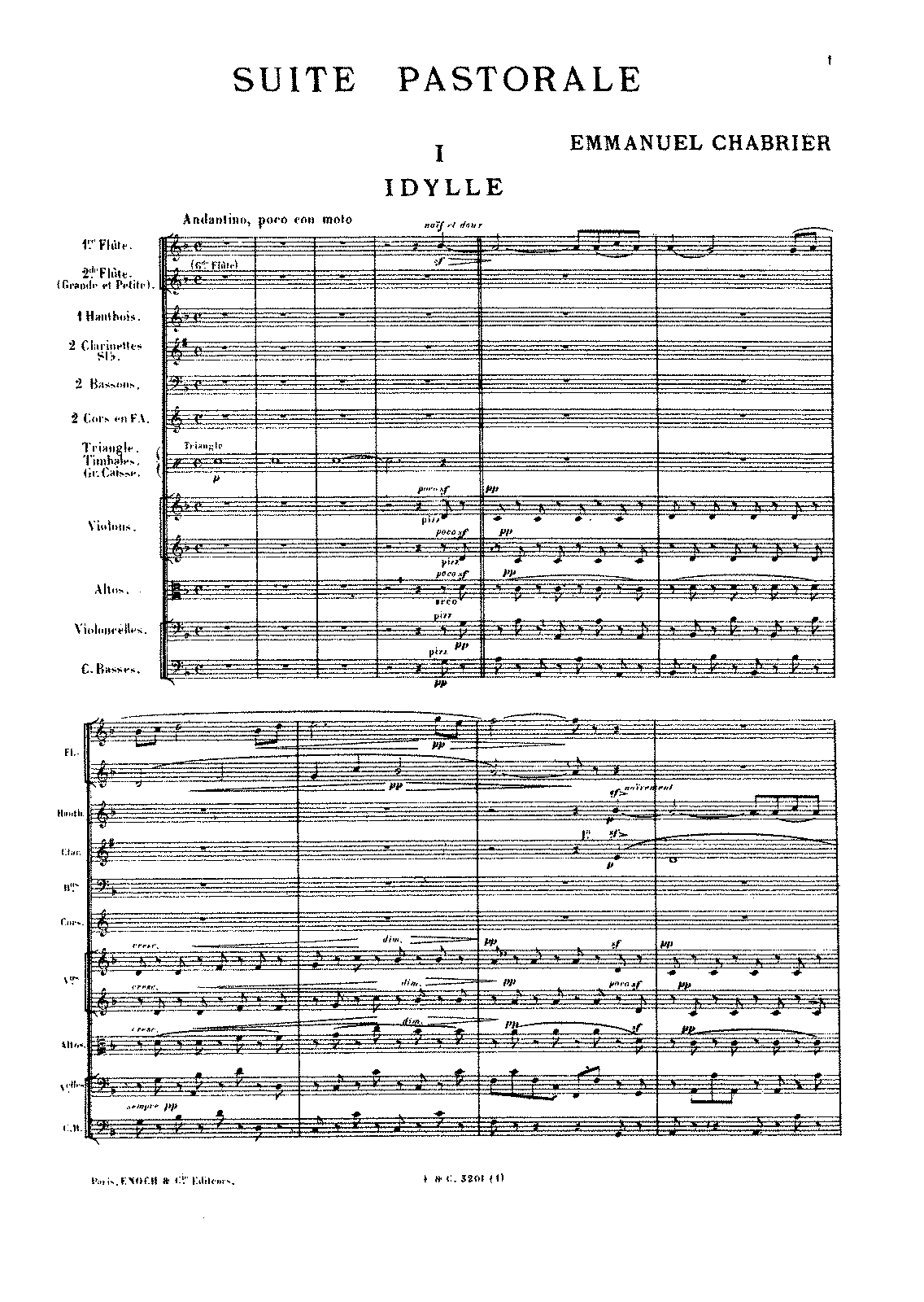
Chabrier: Suite pastorale, orchestrazione delle Pièces pittoresques n. 6, 7, 4 e 10 (1888). Wiener Philharmoniker, dir. John Eliot Gardiner.
Capriccio – VI
Amilcare Ponchielli (1834 - 16 gennaio 1886): Capriccio in fa minore-maggiore per oboe e pianoforte (c1856). Gianfranco Bortolato, oboe; Riccardo Caramella, pianoforte.

The Solway Canal (Gavin Bryars 80)
Gavin Bryars (16 gennaio 1943): Concerto per pianoforte, coro maschile e orchestra, The Solway Canal (2010); testi di Edwin Morgan (1920 - 2010). Ralph van Raat, pianoforte; Cappella Amsterdam, Nederlands Radio Kamer Filharmonie, dir. Otto Tausk.
The Solway Canal
Slowly through the Cheviot Hills at dawn
we sailed. The high steel bridge at Carter Bar
passed over us in fog with not a car
in its broad lanes. Our hydrofoil slid on,
vibrating quietly through wet rock walls
and scarves of dim half-sparkling April mist;
a wizard with a falcon on his wrist
was stencilled on our bow. Rough waterfalls
flashed on that northern island of the Scotts
as the sun steadily came up and cast
red light along the uplands and the waves,
and gulls with open beaks tore out our thoughts
through the thick glass to where the Eildons massed,
or down to the Canal’s drowned borderers’ graves.
A Place of Many Waters
Infinitely variable water,
let seals bob in your silk or loll on Mull
where the lazy fringes rustle; let hull
and screw slew you round, blind heavy daughter
feeling for shores; keep kelpies in loch lairs,
eels gliding, malts mashing, salmon springing;
let the bullers roar to the terns winging
in from a North Sea’s German Ocean airs
of pressing crashing Prussian evening blue;
give linns long fall; bubble divers bravely
down to mend the cable you love to rust;
and slant at night through lamplit cities, true
as change is true, on gap-site pools, gravely
splintering the puckering of the gust.
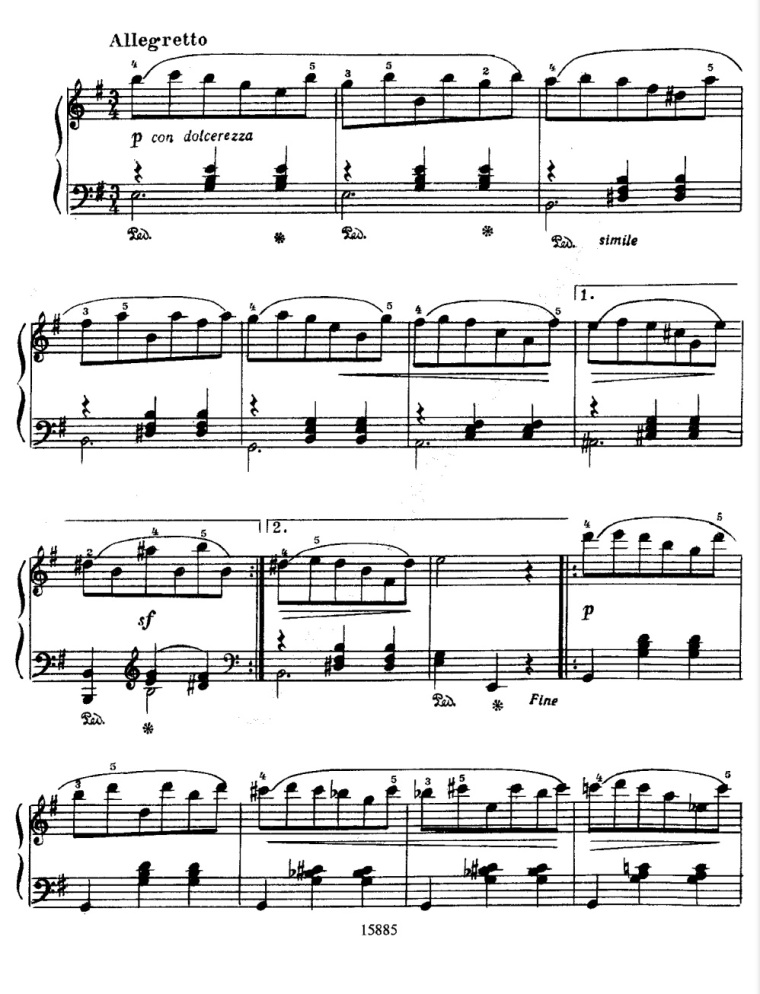
Con dolcerezza
Aleksandr Sergeevič Griboedov (15 gennaio 1795 - 1829): Valzer in mi minore per pianoforte. Grigorij Sokolov.
Griboedov fu musicista, poeta, drammaturgo (la sua opera più famosa è Che disgrazia l’ingegno!, una commedia in versi che mette impietosamente alla berlina la società moscovita dell’epoca postnapoleonica) e diplomatico; cadde ucciso dalla folla inferocita che aveva preso d’assalto l’ambasciata russa a Teheran, dove Griboedov si trovava per condurre i negoziati di pace con lo scià dopo la guerra russo-persiana del 1826-28.

Concerto-balletto
André Bloch (14 gennaio 1873 - 1960): Concerto-ballet per pianoforte e orchestra (1947). Sondra Bianca, pianoforte; Philharmonisches Staatsorchester Hamburg, dir. Hans-Jürgen Walther.

Tre Pezzi per pianoforte
Felix Otto Dessoff (14 gennaio 1835 - 1892): Drei Clavierstücke op. 2 (1878). Sontraud Speidel.
- Novelette in sol maggiore
- Scherzo in la minore
- Minuetto in la maggiore

Berceuses e Bagattelle
Franco Oppo (1935 - 14 gennaio 2016): Tre Berceuses e Tre Bagattelle per pianoforte. Samuel Tanca.

Ponteio n. 30
Mozart Camargo Guarnieri (1907 - 13 gennaio 1993): Ponteio n. 30, Sentido (1955). Miriam Di Pasquale Baumann, pianoforte.

Un Quartetto di Erik Gustaf Geijer
 Erik Gustaf Geijer (12 gennaio 1783 - 1847): Quartetto in mi minore per pianoforte e archi (1825). Anders Kilström, pianoforte; Klara Hellgren, violino; Ingegerd Kierkegaard, viola; Åsa Åkerberg, violoncello.
- Allegro molto
- Andante cantabile [10:50]
- Menuetto [16:26]
- Allegro [20:50]
La Luna e il bacio
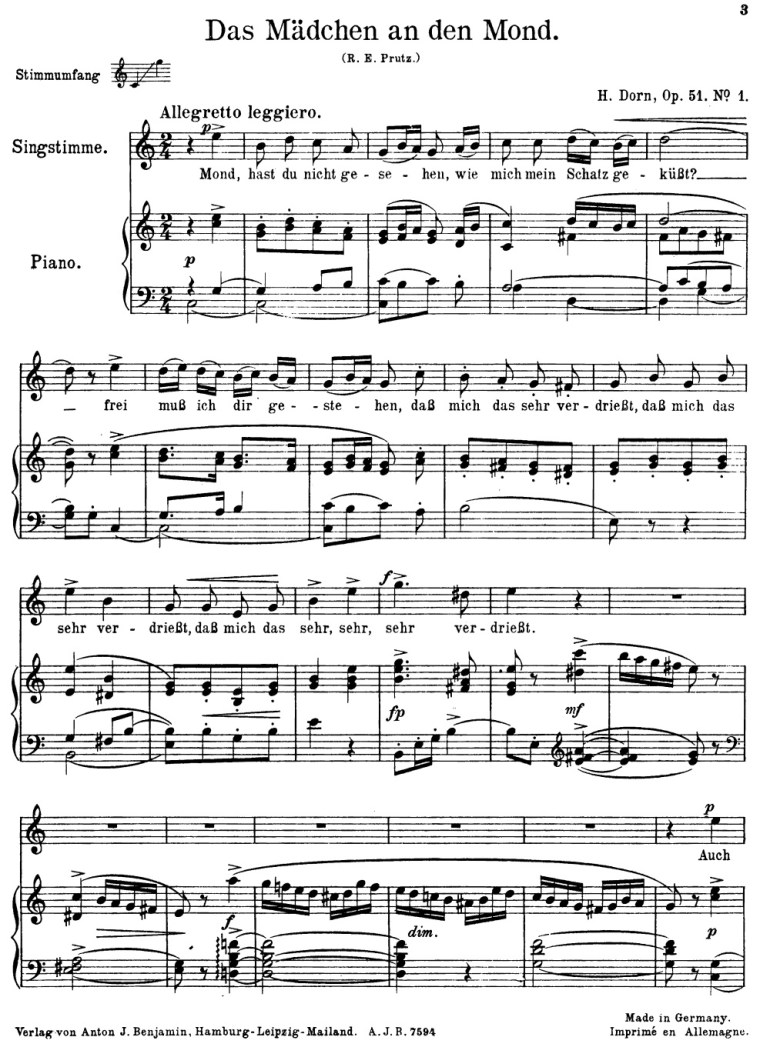
Heinrich Dorn (1804 - gennaio 1892): Das Mädchen an den Mond, Lied op. 51 n. 1 (c1850) su testo di Robert Prutz (1816 - 1872). Helene Lindqvist, soprano; Philipp Vogler, pianoforte.
Mond, hast du auch gesehen,
Wie mich mein Schatz geküßt?
Frei muß ich dir gestehen,
Daß mich das sehr verdrießt.
Auch weiß ich nicht, wie eben
Es gestern Abend kam,
Ob ich ihn ihm gegeben,
Ob er den Kuß sich nahm.
Du mußt’s nicht weiter sagen,
Ich bitte dich darum,
Wenn dich die Leute fragen,
O lieber Mond, sei stumm!
(Luna, hai visto anche tu come mi ha baciata il mio tesoro? Francamente devo confessare che la cosa mi infastidisce molto.
Inoltre non so bene come sia successo, ieri sera, se io abbia baciato lui o lui abbia baciato me.
Non devi dirlo, ti prego: se la gente te lo chiede, o cara Luna, taci!)
Musique en forme de sonate
Jean Martinon (10 gennaio 1910 - 1976): Duo, «musique en forme de sonate» per violino e pianoforte op. 47 (1959). William Steck, violino; Lambert Orkis, pianoforte.
- Allegro espressivo
- Molto vivace [6:40]
- Lento [10:30]
- Finale: Allegro molto vivace [16:45]

Danze austriache
Julius Bittner (1874 - 9 gennaio 1939): Österreichische Tänze per pianoforte a 4 mani (1917). HMH Piano Duo: Heghine Rapyan e Min-Hao Tsai.
- Nicht rasch
- Polka-Rhythmus [2:31]
- Ruhiges Ländler-Zeitmaß [4:24]
- Flott und feurig [6:39]
- Geschwind [10:24]
- Ziemlich langsam – Walzertempo [12:35]

Per flauto e pianoforte – VIII
Jules Demersseman (9 gennaio 1833 - 1866): Solo de concert n. 6 per flauto e pianoforte op. 82 (Concert italien). Paolo Dalmoro, flauto; Valentina Lombardo, pianoforte.

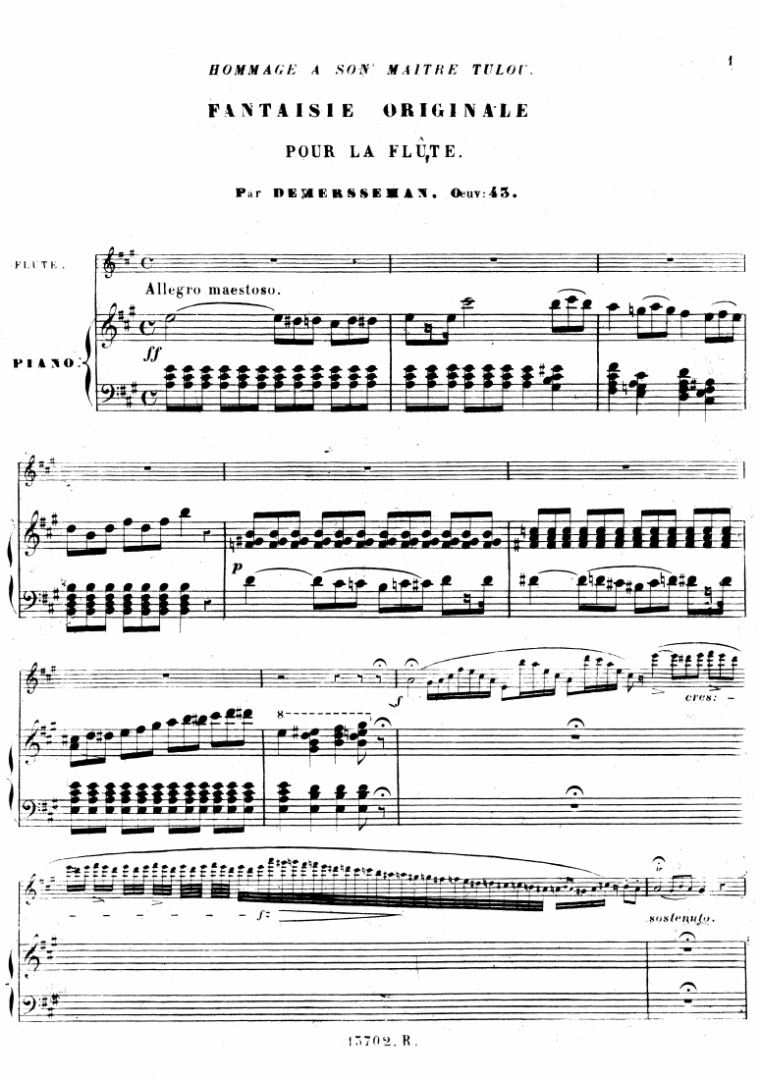
Jules Demersseman: Fantaisie originale per flauto e pianoforte op. 43 (c1863). stessi interpreti.
Concerto romantico – I
Kazimierz Serocki (1922 - 9 gennaio 1981): Concerto per pianoforte e orchestra, Koncert romantyczny (1951). Bogdan Czepiewski, pianoforte; Polska orkiestra radiowa, dir. Krzysztof Słowinski.
- Allegro molto ritmico
- Lento assai delicamente – Cantabile [11:07]
- Allegro vivace [17:12]

Tarantella Biedermeier
Sigismond Thalberg (8 gennaio 1812 - 1871): Tarantella in do minore per pianoforte op. 65 (1848). Ian Hominick.
Oggi il nome di Thalberg è noto solo ai melomani, ma ai suoi tempi era conosciutissimo. Figlio illegittimo di un principe, Moritz von Dietrichstein, e di una baronessa, Maria Julia Wetzlar von Plankenstern, divenne un grande virtuoso del pianoforte, capace di gareggiare in bravura con Liszt. Oltre alle sue composizioni originali, come questa Tarantella, erano particolarmente apprezzate le sue rielaborazioni pianistiche di temi tratti dalle opere liriche di successo.

Studio elegiaco
Carlo Andreoli (8 gennaio 1840 - 1908): Studio elegiaco per pianoforte, composto per l’album Alla memoria di Vincenzo Bellini (1884). Francesco Nicolosi.

Adagio sostenuto
Ernesto Cavallini (1807 - 7 gennaio 1874): Élégie in si bemolle minore-maggiore per clarinetto e pianoforte (c1850). Sergio Bosi, clarinetto; Riccardo Bartoli, pianoforte.

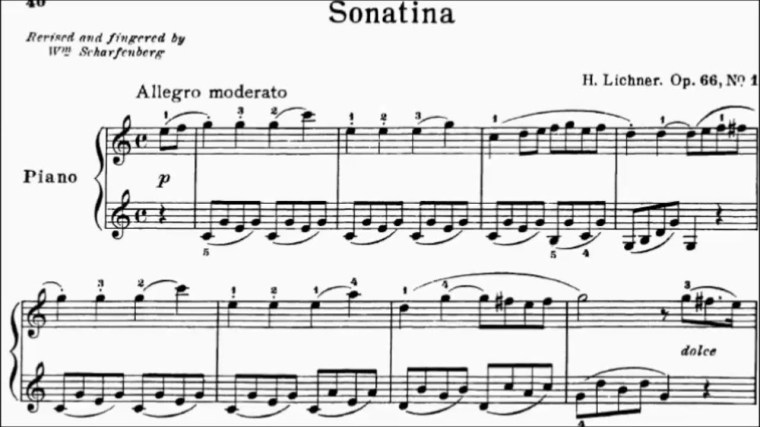
Sonatina in do
Heinrich Lichner (1829 - 7 gennaio 1898): Sonatina in do maggiore per pianoforte op. 66 n. 1. Hans Boepple.
- Allegro moderato
- Andante
- Rondò: Allegro ma non troppo
John Joubert, Concerto opus 25
John Joubert (1927 - 7 gennaio 2019): Concerto per pianoforte e orchestra op. 25 (1958). Martin Jones, pianoforte; BBC National Orchestra of Wales, dir. William Boughton.
- Allegro
- Lento
- Lento – Allegro vivace

Allegro patetico – II
Xaver Scharwenka (6 gennaio 1850 - 1924): Concerto n. 1 in si bemolle minore per pianoforte e orchestra op. 32 (1876). Aleksandr Markovič, pianoforte; Eesti Riiklik Sümfooniaorkester, dir. Neeme Järvi.
- Allegro patetico
- Allegro assai [10:44]
- Allegro non tanto [17:53]

Il Primo Concerto per pianoforte di Martucci
Giuseppe Martucci (6 gennaio 1856 - 1909): Concerto per pianoforte e orchestra n. 1 in re minore op. 40 (1878). Francesco Caramiello, pianoforte; Philharmonia Orchestra, dir. Francesco D’Avalos.
- Allegro
- Andante [15:31]
- Allegro [26:21]

 la regina gioiosa