
Erich Wolfgang Korngold (29 maggio 1897 - 1957): Concerto in re maggiore per violino e orchestra op. 35 (1945). Gil Shaham, violino; London Symphony Orchestra, dir. André Previn.
- Moderato nobile
- Romanze [9:02]
- Finale: Allegro assai vivace [17:43]
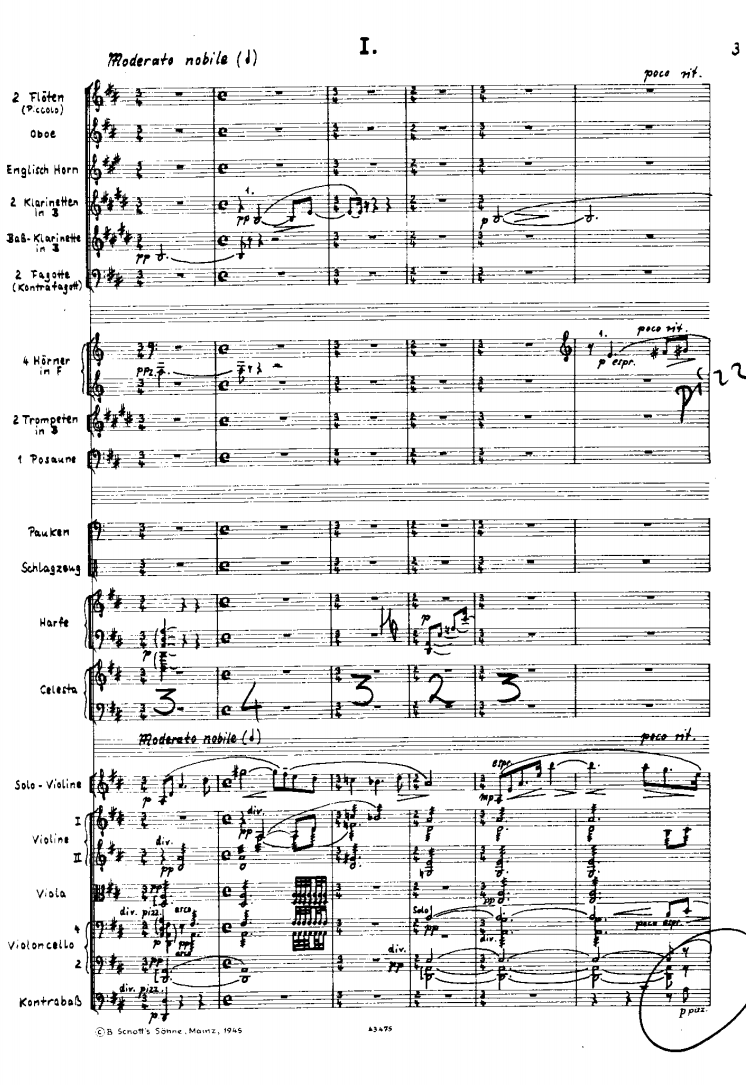
Erich Wolfgang Korngold (29 maggio 1897 - 1957): Concerto in re maggiore per violino e orchestra op. 35 (1945). Gil Shaham, violino; London Symphony Orchestra, dir. André Previn.
John Harbison (20 dicembre 1938): Ulysses’ Bow, II atto del balletto Ulysses (1983). Pittsburgh Symphony Orchestra, dir. André Previn.

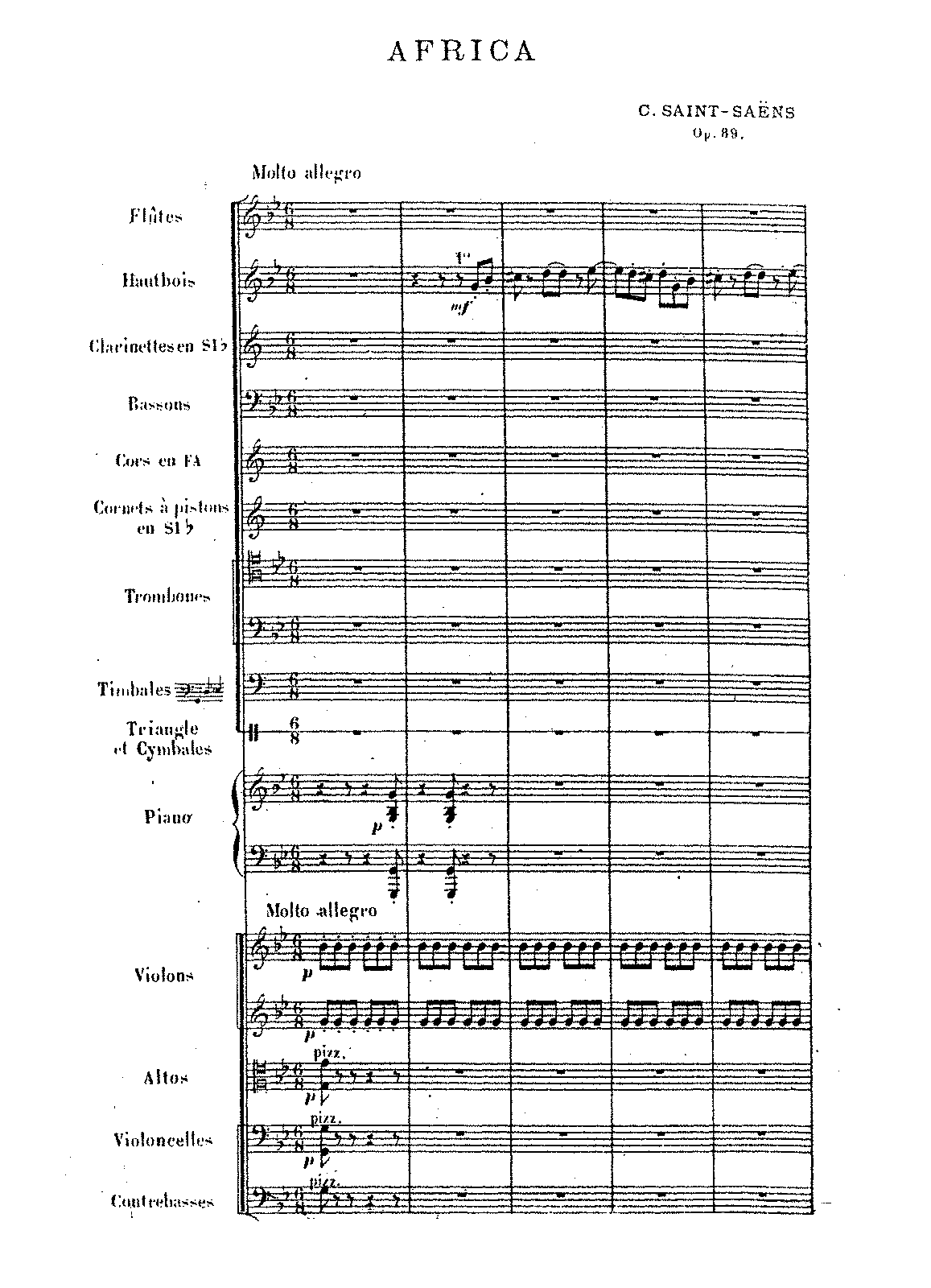
Camille Saint-Saëns (1835 - 1921): Africa, fantasia in sol minore per pianoforte e orchestra op. 89 (1891). Jean Philippe-Collard, pianoforte; Royal Philharmonic Orchestra, dir. André Previn (1929 - 28 febbraio 2019).
Christian Sinding (11 gennaio 1856 - 1941): Suite im alten Stil per violino e orchestra op. 10 (1889). Itzhak Perlman, violino; Pittsburgh Symphony Orchestra, dir. André Previn.

Aaron Copland (14 novembre 1900 - 1990): Twelve Poems of Emily Dickinson (1950). Barbara Bonney, soprano; André Previn, pianoforte.
Nature, the gentlest mother
Impatient of no child,
The feeblest or the waywardest, —
Her admonition mild
In forest and the hill
By traveller is heard,
Restraining rampant squirrel
Or too impetuous bird.
How fair her conversation,
A summer afternoon, —
Her household, her assembly;
And when the sun goes down
Her voice among the aisles
Incites the timid prayer
Of the minutest cricket,
The most unworthy flower.
When all the children sleep
She turns as long away
As will suffice to light her lamps;
Then, bending from the sky,
With infinite affection
And infiniter care,
Her golden finger on her lip,
Wills silence everywhere.
There came a wind like a bugle;
It quivered through the grass,
And a green chill upon the heat
So ominous did pass
We barred the windows and the doors
As from an emerald ghost;
The doom’s electric moccasin
That very instant passed.
On a strange mob of panting trees,
And fences fled away,
And rivers where the houses ran
The living looked that day,
The bell within the steeple wild
The flying tidings whirled.
How much can come and much can go,
And yet abide the world!
Why do they shut Me out of Heaven?
Did I sing too loud?
But I can say a little “Minor”
Timid as a Bird!
Wouldn’t the Angels try me
Just once more
Just see if I troubled them
But don’t shut the door!
Oh, if I were the Gentleman
In the “White Robe”
And they were the little Hand that knocked
Would I forbid?
[Why do they shut Me out of Heaven?
Did I sing too loud?]
The World feels Dusty
When We stop to Die
We want the Dew then
Honors taste dry
Flags vex a Dying face
But the least Fan
Stirred by a friend’s Hand
Cools like the Rain
Mine be the Ministry
When they Thirst comes
Dews of Thyself to fetch
And Holy Balms
Heart, we will forget him
You and I, tonight.
You may forget the warmth he gave,
I will forget the light.
When you have done, pray tell me,
That I my thoughts may dim;
Haste! lest while you’re lagging,
I may remember him!
Dear March, come in!
How glad I am!
I looked for you before.
Put down your hat –
You must have walked –
How out of breath you are!
Dear March, how are you?
And the rest?
Did you leave Nature well?
Oh, March, come right upstairs with me,
I have so much to tell!
I got your letter, and the bird’s;
The maples never knew
That you were coming, – I declare,
How red their faces grew!
But, March, forgive me –
And all those hills
You left for me to hue,
There was no purple suitable,
You took it all with you.
Who knocks? that April?
Lock the door!
I will not be pursued!
He stayed away a year, to call
When I am occupied.
But trifles look so trivial
As soon as you have come,
And blame is just as dear as praise
And praise as mere as blame.
Sleep is supposed to be,
By souls of sanity,
The shutting of the eye.
Sleep is the station grand
Down which on either hand
The hosts of witness stand!
Morn is supposed to be,
By people of degree,
The breaking of the day.
Morning has not occurred!
That shall aurora be
East of Eternity;
One with the banner gay,
One in the red array, –
That is the break of day.
When they come back if Blossoms do
I always feel a doubt
If Blossoms can be born again
When once the Art is out
When they begin, if Robins may,
I always had a fear
I did not tell, it was their last Experiment
Last Year,
When it is May, if May return,
Had nobody a pang
Lest in a Face so beautiful
He might not look again?
If I am there,
One does not know
What Party one may be
Tomorrow, but if I am there
I take back all I say
I felt a funeral in my brain,
And mourners to and fro,
Kept treading, treading, till it seemed
That sense was breaking through.
And when they all were seated
A service like a drum
Kept beating, beating, till I thought
My mind was going numb.
And then I heard them lift a box,
And creak across my soul
With those same boots of lead, again.
Then space began to toll
As all the heavens were a bell,
And Being but an ear,
And I and silence some strange race,
Wrecked, solitary, here.
I’ve heard an Organ talk, sometimes
In a Cathedral Aisle,
And understood no word it said
Yet held my breath, the while
And risen up and gone away,
A more Berdardine Girl
Yet know not what was done to me
In that old Hallowed Aisle.
Going to Heaven!
I don’t know when,
Pray do not ask me how, –
Indeed I’m too astonished
To think of answering you!
Going to Heaven! –
How dim it sounds!
And yet it will be done
As sure as flocks go home at night
Unto the shepherd’s arm!
Perhaps you’re going too!
Who knows?
If you should get there first
Save just a little place for me
Close to the two I lost!
The smallest “robe” will fit me,
And just a bit of “crown”;
For you know we do not mind our dress
When we are going home.
Going to Heaven!
I’m glad I don’t believe it
For it would stop my breath,
And I’d like to look a little more
At such a curious earth!
I am glad they did believe it
Whom I have never found
Since the mighty autumn afternoon
I left them in the ground.
Because I could not stop for Death —
He kindly stopped for me —
The carriage held but just ourselves —
and Immortality.
We slowly drove — he knew no haste,
And I had put away
My labour, and my leisure too
For His Civility —
We passed the school, where children played,
Their lessons scarcely done.
We passed the fields of gazing grain,
We passed the setting sun.
We paused before a house that seemed
a swelling of the ground;
The roof was scarcely visible,
The cornice but a mound.
Since then ’tis centuries; but each
Feels shorter than the day
I first surmised the horses’ heads
Were toward eternity.

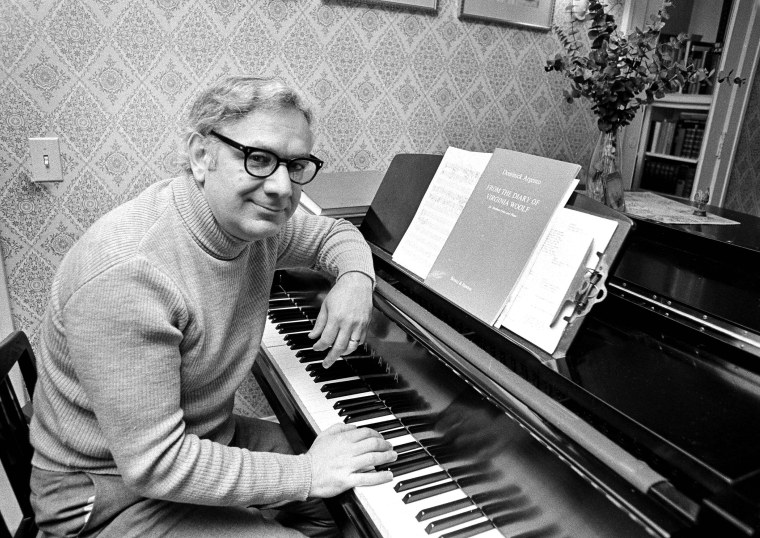
Dominick Argento (27 ottobre 1927 - 2019): Six Elizabethan Songs (1958). Barbara Bonney, soprano; André Previn, pianoforte.
Spring (Thomas Nashe, 1567-1601: da Summer’s Last Will and Testament, 1592)
Spring, the sweet Spring, is the year’s pleasant king;
Then blooms each thing, then maids dance in a ring,
Cold doth not sting, the pretty birds do sing,
Cuckoo, jug-jug, pu-we, to-witta-woo!
The palm and may make country houses gay,
Lambs frisk and play, the shepherd pipes all day,
And we hear aye birds tune this merry lay,
Cuckoo, jug-jug, pu-we, to-witta-woo!
The fields breathe sweet, the daisies kiss our feet,
Young lovers meet, old wives a-sunning sit,
In every street these tunes our ears do greet,
Cuckoo, jug-jug, pu-we, to-witta-woo!
Spring! The sweet Spring!
Sleep (Samuel Daniel, 1562-1619: da Delia, 1592)
Care-charmer Sleep, son of the sable Night,
Brother to Death, in silent darkness born,
Relieve my anguish and restore thy light,
With dark forgetting of my cares, return;
And let the day be time enough to mourn
The shipwreck of my ill-adventur’d youth:
Let waking eyes suffice to wail their scorn,
Without the torment of the night’s untruth.
Cease, dreams, th’ images of day-desires
To model forth the passions of the morrow;
Never let rising sun approve you liars,
To add more grief to aggravate my sorrow.
Still let me sleep, embracing clouds in vain;
And never wake to feel the day’s disdain.
Winter (William Shakespeare, 1564-1616: da Love’s Labour’s Lost V/2, 1597)
When icicles hang by the wall
And Dick the shepherd blows his nail,
And Tom bears logs into the hall,
And milk comes frozen home in pail;
When blood is nipt and ways be foul,
Then nightly sings the staring owl:
Tu-who!
Tu-whit! Tu-who! — A merry note!
While greasy Joan doth keel the pot.
When all aloud the wind doth blow,
And coughing drowns the parson’s saw,
And birds sit brooding in the snow,
And Marian’s nose looks red and raw;
When roasted crabs hiss in the bowl
Then nightly sings the staring owl:
Tu-who!
Tu-whit! Tu-who! — A merry note!
While greasy Joan doth keel the pot.
Dirge (Shakespeare: da Twelfth Night II/4, 1602)
Come away, come away, death,
And in sad cypress let me be laid;
Fly away, fly away, breath;
I am slain by a fair cruel maid.
My shroud of white, stuck all with yew,
O prepare it!
My part of death, no one so true
Did share it.
Not a flower, not a flower sweet,
On my black coffin let there be strown;
Not a friend, not a friend greet
My poor corpse, where my bones shall be thrown:
[A thousand, thousand sighs to save,]
Lay me, O where
Sad true lover never find my grave,
To weep there!
Diaphenia (Henry Constable, 1562-1613: Damelus’ Song to his Diaphenia, c1600)
Diaphenia, like the daffadowndilly,
White as the sun, fair as the lily,
Heigh ho, how I do love thee!
I do love thee as my lambs
Are belovèd of their dams:
How blest were I if thou would’st prove me.
Diaphenia, like the spreading roses,
That in thy sweets all sweets encloses,
Fair sweet, how I do love thee!
I do love thee as each flower
Loves the sun’s life-giving power;
For dead, thy breath to life might move me.
Diaphenia, like to all things blessèd,
When all thy praises are expressèd,
Dear joy, how I do love thee!
As the birds do love the spring,
Or the bees their careful king, —
Then in requite, sweet virgin, love me!
Hymn (Ben Jonson, 1572-1637: Hymn to Diana)
Queen and huntress, chaste and fair,
Now the sun is laid to sleep,
Seated in thy silver chair,
State in wonted manner keep:
Hesperus entreats thy light,
Goddess excellently bright.
Earth, let not thy envious shade
Dare itself to interpose;
Cynthia’s shining orb was made
Heav’n to clear when day did close;
Bless us then with wishèd sight,
Goddess excellently bright.
Lay thy bow of pearl apart,
And thy crystal shining quiver;
Give unto the flying hart
Space to breathe, how short so-ever:
Thou that mak’st a day of night,
Goddess excellently bright.
Constant Lambert (23 agosto 1905 - 21 agosto 1951): The Rio Grande, cantata per voce solista, coro, pianoforte, ottoni, archi e percussione (1927) su testo di Sacheverell Sitwell. Jean Temperley, mezzosoprano; London Madrigal Singers, dir. Christopher Bishop; London Symphony Orchestra, dir. André Previn.
By the Rio Grande
They dance no sarabande
On level banks like lawns above the glassy, lolling tide;
Nor sing they forlorn madrigals
Whose sad note stirs the sleeping gales
Till they wake among the trees and shake the boughs,
And fright the nightingales;
But they dance in the city, down the public squares,
On the marble pavers with each colour laid in shares,
At the open church doors loud with light within.
At the bell’s huge tolling,
By the river music, gurgling, thin
Through the soft Brazilian air.
The Comendador and Alguacil are there
On horseback, hid with feathers, loud and shrill
Blowing orders on their trumpets like a bird’s sharp bill
Through boughs, like a bitter wind, calling
They shine like steady starlight while those other sparks are failing
In burnished armour, with their plumes of fire,
Tireless while all others tire.
The noisy streets are empty and hushed is the town
To where, in the square, they dance and the band is playing;
Such a space of silence through the town to the river
That the water murmurs loud –
Above the band and crowd together;
And the strains of the sarabande,
More lively than a madrigal,
Go hand in hand
Like the river and its waterfall
As the great Rio Grande rolls down to the sea.
Loud is the marimba’s note
Above these half -salt waves,
And louder still the tympanum,
The plectrum, and the kettle-drum,
Sullen and menacing
Do these brazen voices ring.
They ride outside,
Above the salt-sea’s tide.
Till the ships at anchor there
Hear this enchantment,
Of the soft Brazilian air,
By those Southern winds wafted,
Slow and gentle,
Their fierceness tempered
By the air that flows between.

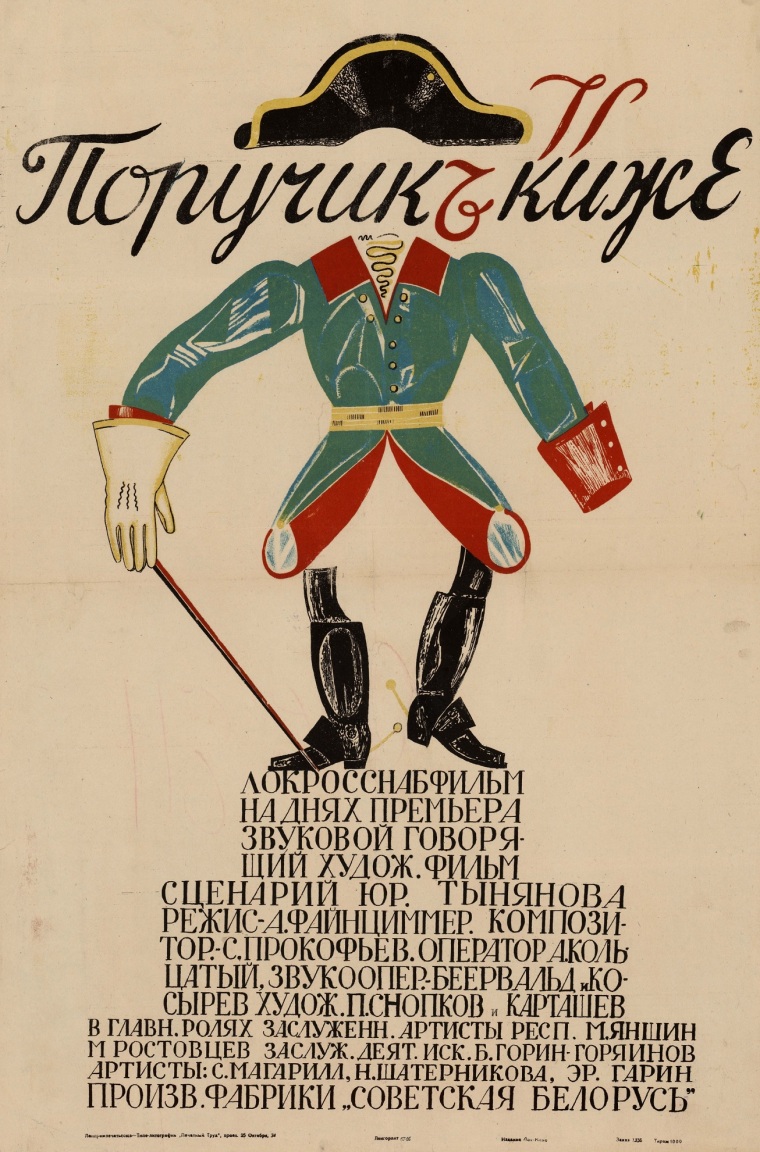
Sergej Sergeevič Prokof’ev (1891 - 1953): Поручик Киже (Il tenente Kižé), suite op. 60 tratta dalla colonna sonora del film omonimo di Aleksandr Fajncimmer (1934). London Symphony Orchestra, dir. André Previn.
La sceneggiatura del film è ricavata da un racconto di Jurij Tynjanov (1894-1943) in cui si mette alla berlina l’assurda burocrazia militare dell’epoca di Paolo I, alla fine del XVIII secolo. In sostanza succede questo: copiando un ordine del giorno, un cancelliere del reggimento Preobraženskij incappa in un errore di trascrizione, invece di scrivere Подпоручики же…, «Per quanto riguarda i tenenti…», gli sfugge un Подпоручик Киже che letteralmente significa «Il sottotenente Kižé»: e così dà nome a un sottufficiale che non esiste. Prima che ci si accorga dell’errore, il documento finisce nelle mani dell’imperatore, il quale vuole sapere chi sia questo militare e che cosa abbia fatto di tanto rilevante da finire per essere citato in un ordine del giorno. Prova tu a dire a uno zar che si è sbagliato, se ne hai il coraggio… Superfluo dire che nessuno osa, anzi: si decide di inventare ipso facto il curriculum di Kižé. Favorevolmente colpito, il sovrano stabilisce che il valoroso soldato venga promosso e chiede di essere poi costantemente informato su di lui e sulle sue azioni. E così gli si racconta di volta in volta che Kižé, caduto in disgrazia, è stato esiliato in Siberia, ma poi ottiene il perdono, viene reintegrato nell’esercito, è promosso capitano, poi colonnello e infine generale. A questo punto lo zar vuole conoscerlo di persona: impossibile, si è ammalato, sta tanto male e non può muoversi. Allora l’imperatore si recherà di persona al suo capezzale: troppo tardi, maestà, Kižé è morto. Sinceramente addolorato, lo zar fa predisporre grandiosi funerali di stato.
Per chi volesse vederlo, il film è disponibile su YouTube. Il racconto di Tynjanov è stato pubblicato da Sellerio con il titolo Il sottotenente Summenzionato.
Questo post è dedicato a Luisella del blog Tra Italia e Finlandia, che ha pubblicato un articolo sulla composizione di Prokof’ev, sottolineando il fatto che fra la «Romanza», II movimento della suite, e la canzone di Sting Russians vi sia una singolare somiglianza 🙂

 la regina gioiosa