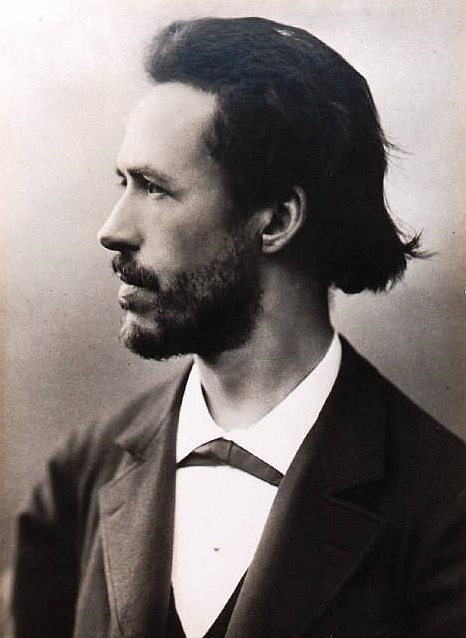
Hans Georg Nägeli (1773 - 26 dicembre 1836): Toccata n. 1 (Adagio – Allegro). Quentin Tièche, fortepiano.
![]()
Hans Georg Nägeli (1773 - 26 dicembre 1836): Toccata n. 1 (Adagio – Allegro). Quentin Tièche, fortepiano.
![]()
Johann Sebastian Bach (1685-1750): Darzu ist erschienen der Sohn Gottes, cantata BWV 40 per la Feria II Nativitatis (Vangelo: Luca 2, 15-20: i pastori a Betlemme), eseguita per la prima volta a Lipsia il 26 dicembre 1723. René Jacobs, contraltista; Marius van Altena, tenore; Max van Egmond, basso; Knabenchor Hannover, dir. Heinz Hennig; Leonhardt-Consort, dir. Gustav Leonhardt.
L’ignoto autore del testo ha utilizzato nel n. 1 un passo del Vangelo secondo san Giovanni (3, 8), nel n. 3 la terza strofe del Lied natalizio Wir Christenleut di Kaspar Füger (1592), nel n. 6 la seconda strofe di Schwingt dich auf zu deinem Gott di Paul Gerhardt (1653) e nel n. 8 la quarta strofe di Freut euch, ihr Christen alle di Christian Keimann (1646).

Anonimo (tradizionale): Dors, ma colombe, noël. La Maîtrise de Dijon.
Dors, ma colombe,
dors, le soir tombe,
chante la vierge à l’enfant Dieu.
Dors: moi, je veille.
Quand on sommeille
on voit s’ouvrir le grand ciel bleu.
Chantez, beaux anges,
bercez l’enfant
qui, dans ses langes,
rit en rêvant.
Dors, il fait sombre
à travers l’ombre,
Souffle un grand vent qui meut le toit.
Dors tout de même,
Jésus que j’aime:
L’âne et le boeuf sont près de toi.
Chantez, beaux anges,
bercez l’enfant
qui, dans ses langes,
rit en rêvant.
Pietro Cattaneo (1998): Variations sur un noël alsacien per organo (2018). Carson Cooman.

Jan Pieterszoon Sweelinck (1562 - 1621): Hodie Christus natus est, mottetto a 5 voci (dalla raccolta di Cantiones sacrae del 1619). L’esegue un ensemble virtuale formato da cinque cantanti, titolari di altrettanti canali di YouTube: Wei Jiang, soprano I; Julie Gaulke, soprano II; Simone Lo Castro, contralto; Stefan Wyatt, tenore; Patrick Williams, basso.
Hodie Christus natus est
hodie Salvator apparuit:
hodie in terra canunt Angeli,
laetantur Archangeli:
hodie exsultant justi, dicentes:
Gloria in excelsis Deo, alleluja.

Josquin des Prez (c1450 - 1521): Praeter rerum seriem, mottetto a 6 voci (pubblicato in Motetti de la corona, Libro III, 1519). Lumina Ensemble, dir. Anna Pope.
Præter rerum seriem
parit Deum hominem
virgo mater.
Nec vir tangit virginem
nec prolis originem
novit pater.
Virtus Sancti Spiritus
opus illud cœlitus
operatur.
Initus et exitus
partus tui penitus
quis scrutatur?
Dei providentia
quæ disponit omnia
tam suave.
Tua puerperia
transfer in mysteria.
Mater ave.

Sethus Calvisius (Seth Kalwitz; 1556 - 1615): Praeter rerum seriem, mottetto a 6 voci, parode ad Josquini (pubblicato in Florilegium selectissimarum cantionum, 1603, n. 85). Kaleidos Ensemble.
Praeter rerum seriem
Parit Deum et hominem
Virgo mater.
Nec vir tangit virginem,
Nec prolis originem
Novit pater.
Virtus Sancti Spiritus
Opus illud caelitus
Operatur.
Initus et exitus
Partus tui penitus
Quis scrutatur?
Dei providentia
Haec disponit omnia
Tam suave,
Et pios caelestia
Transfert in mysteria.
Puer ave.

Alban Berg (1885 - 24 dicembre 1935): Tre Pezzi per orchestra d’archi (1928), dalla Lyrische Suite. Orchestre philharmonique de Radio France, dir. Daniel Harding.
La Lyrische Suite risale agli anni 1925-26, è per quartetto d’archi ed è suddivisa in 6 movimenti; di questi, Berg ha adattato per orchestra il II, il III e il IV.

John Dunstable (o Dunstaple; c1390 - 24 dicembre 1453): Speciosa facta es, mottetto a 3 voci. Gothic Voices, dir. Christopher Page.
Speciosa facta es et suavis in delitiis virginitatis
sancta Dei genitrix quam videntes filiae Syon
vernantem in floribus rosarum et liliis convalium.
Beatissimam praedicaverunt et regine laudaverunt eam.

Richard Flury (1896 - 23 dicembre 1967): Sinfonia n. 4 in re maggiore, Liechtensteinische-Sinfonie (1950-51). BBC Symphony Orchestra, dir. Paul Mann.

Michele Novaro (23 dicembre 1818 - 1885): Roma e Venezia, gran polka nazionale in fa maggiore per pianoforte (c1864). Vito Maggiolino.
Questa vivace danza contiene citazioni del Canto degli italiani, composto dallo stesso Novaro sul celebre testo di Mameli, e della Marcia reale d’ordinanza di Giuseppe Gabetti, inno della monarchia sabauda.

Carl Friedrich Abel (22 dicembre 1723 - 1787): Sinfonia in re maggiore op. 17 n. 3, WK 33 (1783). The Hanover Band, dir. Anthony Halstead.

María Teresa Carreño García de Sena (22 dicembre 1853 - 1917): Ballade per pianoforte op. 15. Alexandra Oehler.

Eric Coates (1886 - 21 dicembre 1957): London ovvero London Every Day, suite sinfonica (1933). The East of England Orchestra, dir. Malcolm Nabarro.

Anonimo (sec. XVI): All Hail to the Days, carol natalizio inglese, noto anche come Drive the Cold Winter Away e In Praise of Christmas. The Baltimore Consort (strumentale); The Sixteen, dir. Harry Christophers.
All hail to the days
that merit more praise
Than all the rest of the year,
And welcome the nights
that double delights,
As well for the poor as the peer!
Good fortune attend
each merry man’s friend,
That doth but the best that he may;
Forgetting old wrongs,
with carols and songs,
To drive the cold winter away.
This time of the year
is spent in good cheer,
And neighbours together do meet,
To sit by the fire,
with friendly desire,
Each other in love do greet;
Old grudges forgot,
are put in the pot,
All sorrows aside they lay,
The old and the young
doth carol his song,
To drive the cold winter away.
To mask and to mum
kind neighbours will come
With wassails of nut-brown ale,
To drink and carouse
to all in the house,
As merry as bucks in the dale;
Where cake, bread and cheese
is brought for your fees,
To make you the longer stay;
At the fire to warm
will do you no harm,
To drive the cold winter away.

Felice inverno a tutti 🙂
André Jolivet (1905 - 20 dicembre 1974): Concerto per strumenti a percussione e orchestra. Masako Iguchi, percussione; San Francisco Conservatory of Music Orchestra, dir. Alasdair Neale.
Per Jolivet — che ha una concezione molto beethoveniana della figura del compositore, il quale deve assumersi il compito di fare da vera e propria guida morale — la musica è prima di tutto comunione: fra compositore e natura nel momento della composizione, fra compositore e pubblico nel momento dell’esecuzione. Fare musica è “far leva sul sentimento dell’umano”, dando all’arte musicale “il suo senso originale antico, quando era l’espressione magica e incantatrice della religiosità degli uomini”. Jolivet cerca costantemente, lungo l’intero arco della sua attività creativa, di ampliare il linguaggio musicale, senza però perdere mai i profondi agganci con il “sistema cosmico universale”.

John Harbison (20 dicembre 1938): Ulysses’ Bow, II atto del balletto Ulysses (1983). Pittsburgh Symphony Orchestra, dir. André Previn.

Rebecca Saunders (19 dicembre 1967): Dust per 1 percussionista (2017-2018). Rebecca Lloyd-Jones.

Francesco Antonio Bonporti (1672 - 19 dicembre 1749): Serenata IV in la minore (c1720). Luigi Mangiocavallo, violino; Claudio Ronco, violoncello; Marco Mencoboni, clavicembalo.
Horatio Parker (1863 - 18 dicembre 1919): A Northern Ballad, poema sinfonico op. 46 (c1899). Royal Philharmonic Orchestra, dir. Karl Krueger.

Christopher Theofanidis (18 dicembre 1967): Rainbow Body per orchestra (2000). Atlanta Symphony Orchesta, dir. Robert Spano.
Peter Warlock (pseudonimo di Philip Heseltine; 1894 – 17 dicembre 1930): Bethlehem Down, carol per coro a 4 voci (1927) su testo Bruce Blunt (1899 – 1957). Coro del King’s College di Cambridge.
«When He is King we will give Him a King’s gifts,
Myrrh for its sweetness, and gold for a crown,
Beautiful robes», said the young girl to Joseph,
Fair with her first-born on Bethlehem Down.
Bethlehem Down is full of the starlight,
Winds for the spices, and stars for the gold,
Mary for sleep, and for lullaby music,
Songs of a shepherd by Bethlehem fold.
When He is King they will clothe Him in grave-sheets,
Myrrh for embalming, and wood for a crown,
He that lies now in the white arms of Mary,
Sleeping so lightly on Bethlehem Down.
Here He has peace and a short while for dreaming,
Close-huddled oxen to keep him from cold,
Mary for love, and for lullaby music,
Songs of a shepherd by Bethlehem Down.
Lo stesso brano nella trascrizione per orchestra d’archi realizzata nel 2002 da Philip Lane (1950-). Royal Ballet Sinfonia, dir. Gavin Sutherland.

Urmas Sisask (1960 - 17 dicembre 2022): Andromeda, sonata per 2 pianoforti a 8 mani (1991). Origami Ensemble.

Ludwig van Beethoven (circa 16 dicembre 1770 - 1827): Fantasia in sol minore-si bemolle maggiore per pianoforte op. 77 (1809). Edwin Fischer (1952).
Ai suoi tempi Beethoven era considerato un grande improvvisatore: con la sua maestria in questo campo conquistò i salotti aristocratici viennesi, procurandosi amicizie e mecenatismo. Secondo Carl Czerny, che di Beethoven fu allievo, la Fantasia op. 77 dà un’idea esatta dell’arte improvvisatoria beethoveniana.

Georgij Vasil’evič Sviridov (16 dicembre 1915 - 1998): La tormenta (Метель), suite sinfonica tratta dalla colonna sonora del film omonimo, diretto nel 1964 da Vladimir Basov su sceneggiatura ispirata dal racconto breve di Puškin che reca il medesimo titolo (dalle Novelle del compianto Ivan Petrovič Belkin, 1831). Orchestra filarmonica di Mosca, dir. Igor’ Manašerov.
Joseph Martin Kraus (1756 - 15 dicembre 1792): Sinfonia in do minore VB 142 (?1783). Concerto Köln, dir. Werner Ehrhardt.
È forse questa la sinfonia eseguita a Eszterháza nell’ottobre 1783 e dedicata a Haydn, il quale ne diede un giudizio assai lusinghiero.

Michel-Richard Delalande (15 dicembre 1657 - 1726): Te Deum, grand motet per soli, coro e orchestra S.32 (1684). Emmanuelle de Negri e Dagmar Šaškova, soprani; Sean Clayton, haute-contre; Cyril Auvity, tenore; André Morsch, basso; Le Poème Harmonique e Ensemble Aedes, dir. Vincent Dumestre.

Joseph Jongen (14 dicembre 1873 - 1953): Sonata Eroïca per organo op. 94 (1930). Gabriel Dessauer.

Maria Szymanowska (14 dicembre 1789 - 1831): Notturno in si bemolle maggiore per pianoforte. Roberto Piana.

George Stephănescu (13 dicembre 1843 - 1925): Sinfonia in la maggiore (1869). Orchestra simfonică a filarmonicii din Arad, dir. Eliodor Rau.

Alvin Curran (13 dicembre 1938): For Cornelius per pianoforte (1981-94). Eve Egoyan.
« For Cornelius was written in December 1981 just after my hearing the news of the accidental and tragic death of the English composer Cornelius Cardew. Cornelius was a visionary and his humane, prophetic powers affected everyone around him. Since my first meeting with him in Rome in 1965 and later through the many collaborations of MEV (Musica Elettronica Viva) and Cardew’s AMM group, his subtle influence has remained with me. For Cornelius is structured simply in three sections — a song, a thundering study on slowly changing harmonies, and a chorale. Though not intentionally made so, this piece may be seen as a tribute to Cardew’s own utopian dreams of making “elitist” music popular » (Alvin Curran).

Lodovico Giustini (12 dicembre 1685 - 1743): Sonata in do maggiore per pianoforte op. 1 n. 9 (1732). Andrea Coen.