Ignaz Moscheles (23 maggio 1794 - 1870): Concerto n. 3 in sol minore per pianoforte e orchestra op. 58/60 (1820). Michael Ponti, pianoforte; Philharmonica Hungarica, dir. Othmar Maga.
Elegante e assai gradevole la versione per due voci e liuto di Rómulo Vega-González, che l’interpreta insieme con Munia Cabal-Jiménez: i due pronunciano le parole come inglesi del tardo Cinquecento 🙂
Hans Pfitzner (5 maggio 1869 - 22 maggio 1949): Quartetto per archi n. 3 in do diesis minore op. 36 (1925). »Franz Schubert« Quartett: Florian Zwiauer e Helge Rosenkranz, violini; Hartmut Pascher, viola; Vincent Stadlmair, violoncello.
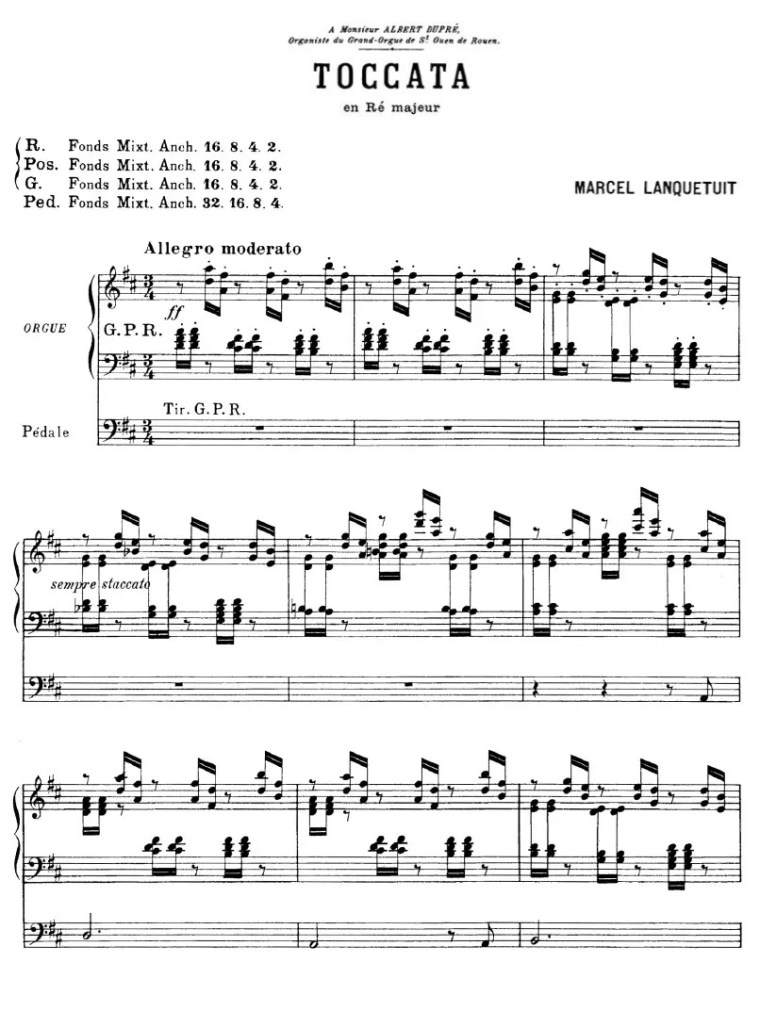
Marcel Lanquetuit (1894 - 21 maggio 1985): Toccata in re maggiore per organo (1926). Jane Parker-Smith all’organo Goll della Chiesa di Sankt Martin in Memmingen (Baviera).
Francesco Ezechiele Ermenegildo, cavaliere di Suppé-Demelli ovvero Franz von Suppé (1819 - 21 maggio 1895): Ouverture per l’operetta Pique Dame (1864). Dresden Staatskapelle, dir. Otmar Suitner.
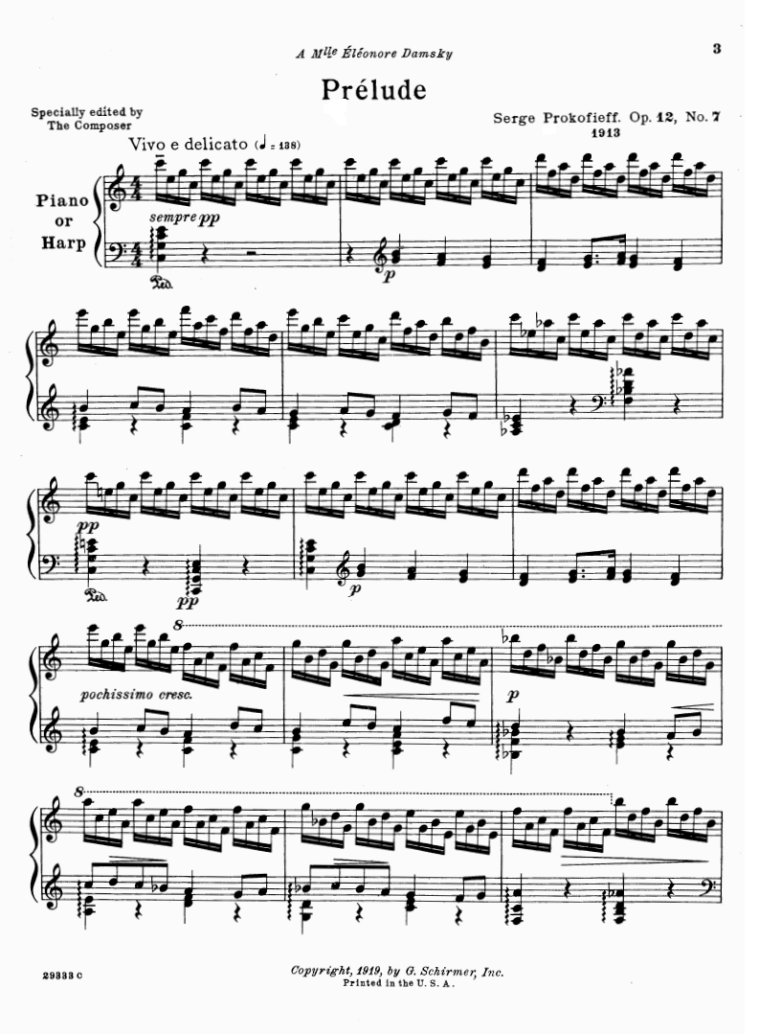
Sergej Sergeevič Prokof’ev (1892 - 1953): Preludio in do maggiore per pianoforte o arpa op. 12 n. 7 (c1910). Alexandra Luiceanu, arpa, e S. Prokof’ev, pianoforte.
Paweł Mykietyn (20 maggio 1971): Concerto per pianoforte e orchestra (1997). Anna Stempin-Jasnowska, pianoforte; Orkiestra Symfoniczna Polskiego Radia, dir. Szymon Bywalec.
Anonimo (sec. XVI-XVII): When that I was, canzone di Feste che conclude La dodicesima notte (1599-1601) di William Shakespeare. Alfred Deller, haute-contre.
When that I was and a little tiny boy,
With hey, ho, the wind and the rain,
A foolish thing was but a toy,
For the rain it raineth every day.
But when I came to man’s estate,
’Gainst knaves and thieves men shut their gate.
But when I came, alas!, to wive,
By swaggering I could never thrive.
[But when I came unto my beds,
With toss-pots still had drunken heads.]
A great while ago the world begun,
With hey, ho, the wind and the rain,
But that’s all one, our play is done,
And we’ll strive to please you every day.
Henri Sauguet (pseudonimo di Jean-Pierre Poupard; 18 maggio 1901 - 1989): la Chatte, balletto (1927). Deutsche Radio Philharmonie Saarbrücken Kaiserslautern, dir. Robert Reimer.
Ouverture
Jeux des garçons: Allegro [2:32]
Invocation à Aphrodite: Andante ma non troppo [6:23]
« Un tout petit enfant dort dans son petit lit. Son très vieux grand-père lui fait journellement une sorte d’étrange tout petit cours d’Histoire générale, puisée dans ses vagues souvenirs. Souvent il lui parle du célèbre roi Dagobert, de Monsieur le Duc de Marlborough et du grand général romain Marius. En rêve, le tout petit enfant voit ces héros combattant les Cimbres, à la journée de Mons-en-Puelle (1304). »
Werner Egk (17 maggio 1901 - 1983): Französische Suite nach Rameau per orchestra (1949). SWR Sinfonieorchester Baden-Baden und Freiburg, dir. Leopold Stokowski.
Satz I.
Satz II. [5:00]
Satz III. [7:14]
Satz IV. [12:42]
Satz V. [13:53]
Friedrich Kuhlau (1786 - 1832): Ouverture dalle musiche di scena op. 74 per il dramma William Shakespeare di Caspar Johannes Boye (1826). Sønderjyllands Symfoniorkester, dir. Vladimir Ziva.
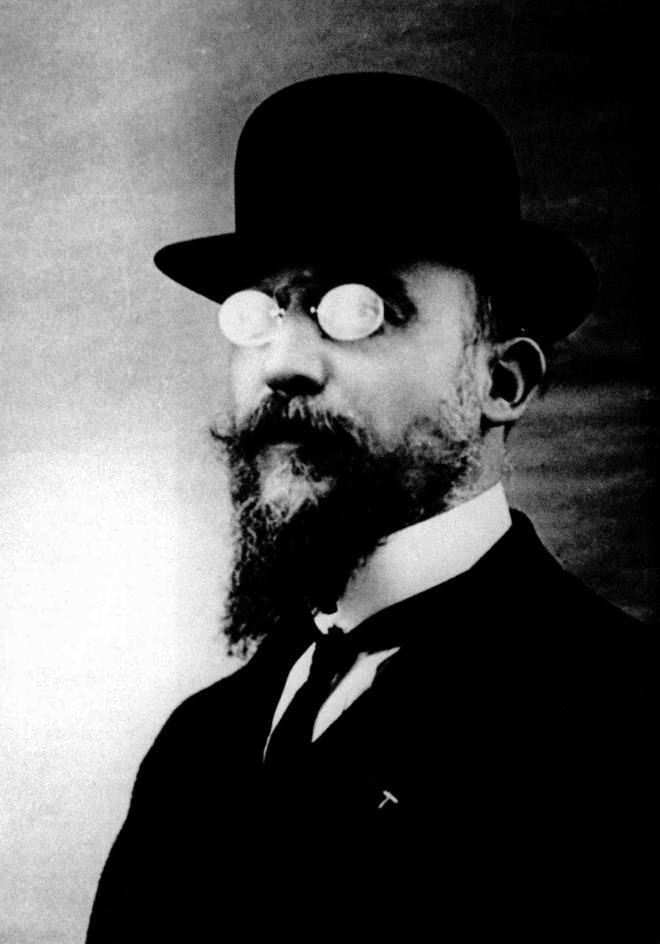
Marian Sawa (1937 - 2005): Quarto Concerto per organo e archi (1997-2000). Dariusz Perendyk, organo; Orchestra della Scuola statale di musica «K. Szymanowski» di Varsavia, dir. Grzegorz Kos.
All’epoca di questa esecuzione (2004), Dariusz Perendyk aveva 19 anni ed era, al pari degli orchestrali, allievo della Scuola «Szymanowski».
I movimento
II movimento [7:05]
III movimento [11:26]
Donald Martino (16 maggio 1931 - 2005): Notturno per ensemble da camera (1973). New Millennium Ensemble, dir. Brad Lubman.
Questa composizione vinse il Premio Pulitzer per la musica nel 1974.
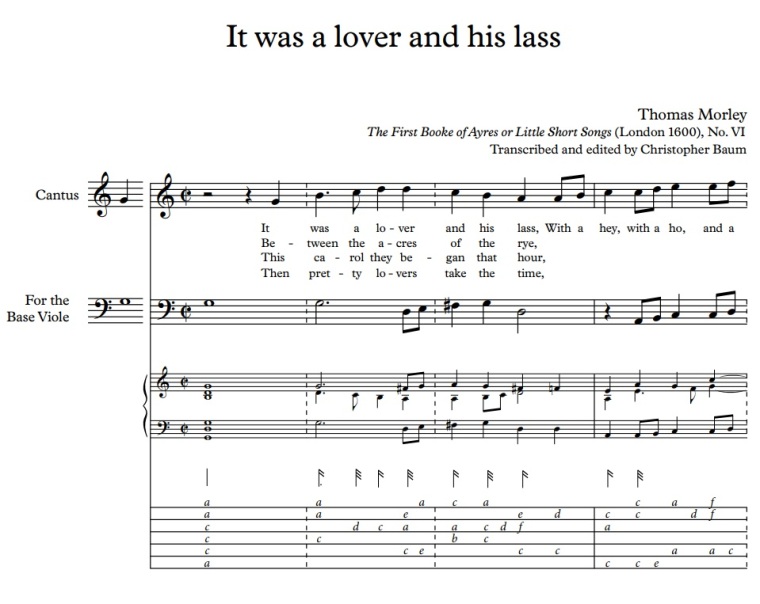
Thomas Morley (c1557 - 1602): It was a lover and his lass, ayre (pubblicato nel First Book of Ayres or Little Short Songs, 1600, n. 6) su testo di William Shakespeare (da Come vi piace, atto V, scena 3ª). Alfred Deller, haute-contre; Desmond Dupré, liuto.
It was a lover and his lass,
With a hey, and a ho, and a hey-nonny-no,
That o’er the green corn-field did pass
In spring-time, the only pretty ring-time,
When birds do sing, hey ding-a-ding ding:
Sweet lovers love the spring.
Between the acres of the rye,
These pretty country folks would lie.
This carol they began that hour,
How that a life was but a flower.
And therefore take the present time,
For love is crowned with the prime.
Thomas Morley è uno dei più importanti compositori di musica profana dell’Inghilterra elisabettiana; insieme con Robert Johnson (c1583-c1634) è autore delle uniche composizioni coeve su versi di Shakespeare che ci siano pervenute. Morley è ricordato, oltre che per le sue composizioni, per aver pubblicato un trattato musicale (A Plain and Easie Introduction to Practicall Musicke, 1597) che ebbe vasta popolarità per oltre duecento anni e che tuttora è considerato fondamentale perché contiene preziose informazioni sulla musica dell’epoca.
Thomas Morley is one of the most important composers of secular music in Elizabethan England; he and Robert Johnson (c1583-c1634) are the authors of the only surviving contemporary musical settings on lyrics by Shakespeare. Morley is remembered, as well as for his compositions, for a musical treatise (A Plain and Easie Introduction to Practicall Musicke, 1597) which had large popularity for almost two centuries and even today is an important reference for information about sixteenth century music.
Maria Theresia von Paradis (15 maggio 1759 - 1824): Sicilienne in mi bemolle maggiore per violino e pianoforte. Katerina Chatzinikolau, violino; Ani Ter-Martirosyan, pianoforte.
Nikolaj Nikolaevič Čerepnin (15 maggio 1873 - 1945): La Princesse lointaine, preludio sinfonico op. 4 (1896) alla commedia omonima di Edmond Rostand. Orchestra nazionale russa, dir. Michail Pletnëv.
Joan Manén i Planas (14 maggio 1883 - 1971): Concerto espagnol in re maggiore per violino e orchestra op. A7. Mark Kaplan, violino; Orquesta Sinfónica de Barcelona y Nacional de Cataluña, dir. Lawrence Foster.
Johan Peter Emilius Hartmann (14 maggio 1805 - 1900): Seconda Sinfonia in mi maggiore op. 48b (1848). Danmarks Radio SymfoniOrkestret, dir. Thomas Dausgaard.
Praeludium: Moderato sostenuto – Allegro non troppo, grazioso
Johannes Matthias Sperger (1750 - 13 maggio 1812): Concerto per tromba e orchestra n. 2 in re maggiore. Krisztián Kováts, tromba; L’Arpa Festante, dir. Rien Voskuilen.
Oleg Ejges (13 maggio 1905 - 1992): Sonata per pianoforte n. 4 in fa diesis minore-mi maggiore op. 15, Sonata-Toccata (1945). Edvard Sëmin, pianoforte.
Grave – L’istesso tempo [2:54] – Allegro moderato [5:55]





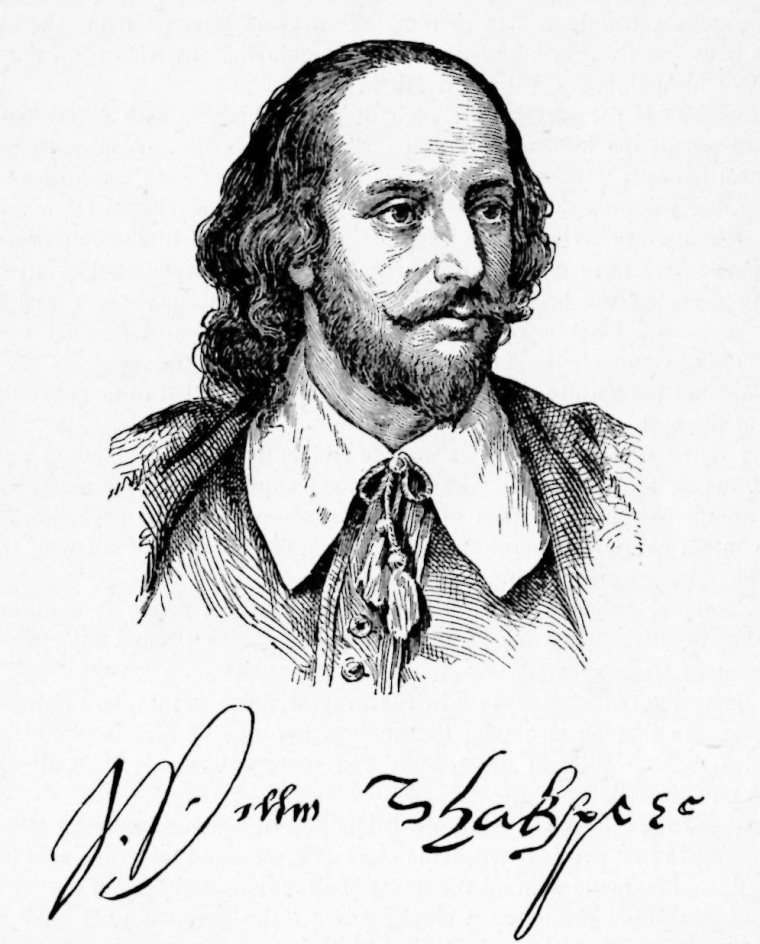



 Friedrich Kuhlau (1786 - 1832): Ouverture dalle musiche di scena op. 74 per il dramma William Shakespeare di Caspar Johannes Boye (1826). Sønderjyllands Symfoniorkester, dir. Vladimir Ziva.
 Marian Sawa (1937 - 2005): Quarto Concerto per organo e archi (1997-2000). Dariusz Perendyk, organo; Orchestra della Scuola statale di musica «K. Szymanowski» di Varsavia, dir. Grzegorz Kos.
 Donald Martino (16 maggio 1931 - 2005): Notturno per ensemble da camera (1973). New Millennium Ensemble, dir. Brad Lubman.
 Thomas Morley è uno dei più importanti compositori di musica profana dell’Inghilterra elisabettiana; insieme con Robert Johnson (c1583-c1634) è autore delle uniche composizioni coeve su versi di Shakespeare che ci siano pervenute. Morley è ricordato, oltre che per le sue composizioni, per aver pubblicato un trattato musicale (A Plain and Easie Introduction to Practicall Musicke, 1597) che ebbe vasta popolarità per oltre duecento anni e che tuttora è considerato fondamentale perché contiene preziose informazioni sulla musica dell’epoca.
 Thomas Morley is one of the most important composers of secular music in Elizabethan England; he and Robert Johnson (c1583-c1634) are the authors of the only surviving contemporary musical settings on lyrics by Shakespeare. Morley is remembered, as well as for his compositions, for a musical treatise (A Plain and Easie Introduction to Practicall Musicke, 1597) which had large popularity for almost two centuries and even today is an important reference for information about sixteenth century music.
 Maria Theresia von Paradis (15 maggio 1759 - 1824): Sicilienne in mi bemolle maggiore per violino e pianoforte. Katerina Chatzinikolau, violino; Ani Ter-Martirosyan, pianoforte.


 Joan Manén i Planas (14 maggio 1883 - 1971): Concerto espagnol in re maggiore per violino e orchestra op. A7. Mark Kaplan, violino; Orquesta Sinfónica de Barcelona y Nacional de Cataluña, dir. Lawrence Foster.


