
Gaspard Fritz (18 febbraio 1716 - 1783): Sinfonia in sol maggiore op. 6 n. 3 (c1770). Orchestre baroque de la Haute école de musique de Genève, dir. Florence Malgoire.
- Allegro
- Andante allegretto [5:19]
- Presto [9:09]

Gaspard Fritz (18 febbraio 1716 - 1783): Sinfonia in sol maggiore op. 6 n. 3 (c1770). Orchestre baroque de la Haute école de musique de Genève, dir. Florence Malgoire.
Henri Vieuxtemps (17 febbraio 1820 - 1881): Concerto per violino e orchestra n. 1 in mi maggiore op. 10 (1840). Misha Keylin, violino; Janáčkova filharmonie Ostrava, dir. Dennis Burkh.
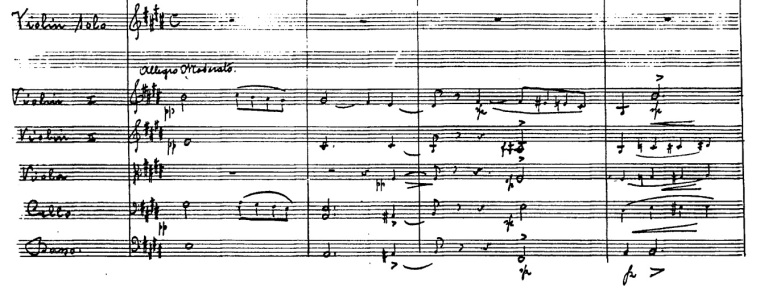
Sir Edward German (17 febbraio 1862 - 1936): Sinfonia n. 2 in la minore, Norwich (1893). National Symphony Orchestra of Ireland, dir. Andrew Penny.
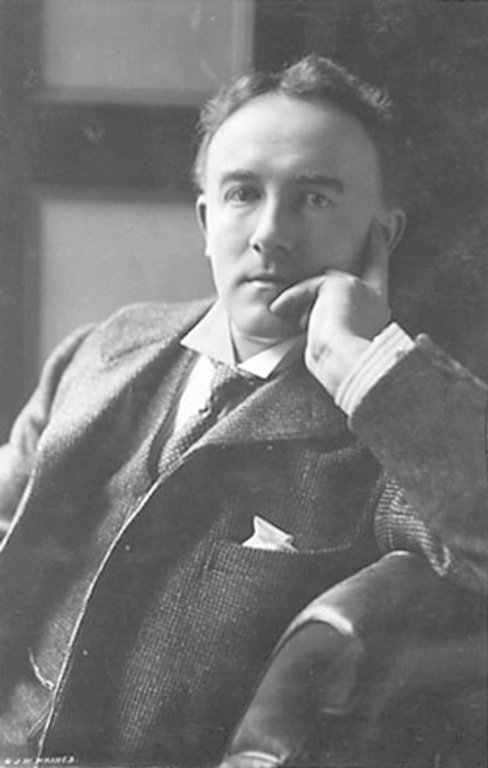
Leevi Madetoja (17 febbraio 1887 - 1947): Sinfonia n. 3 in la maggiore op. 55 (1922-26). Orchestra sinfonica islandese, dir. Petri Sakari.
L’uomo senza passato è il titolo di un film diretto da Aki Kaurismäki nel 2002: la colonna sonora comprende brani tratti dal III e dal IV movimento della Terza Sinfonia di Madetoja.
Pierre Rode (16 febbraio 1774 - 1830): Concerto n. 10 in si minore per violino e orchestra op. 19 (c1811). Friedemann Eichhorn, violino; Südwestrundfunk-Orchester Kaiserslautern, dir. Nicolás Pasquet.

 Evgenij Kirillovič Golubev (16 febbraio 1910 - 1988): Sinfonia n. 5 in la minore op. 45 (1960). Orchestra sinfonica della Radio di Mosca, dir. Gennadij Provatorov.
John Corigliano (16 febbraio 1938):
I. Of Rage and Remembrance, ciaccona (composta sulla base del III movimento della Sinfonia n. 1) per voci e orchestra su testo di William M. Hoffman (1991).
II. Sinfonia n. 1 (1988-89):
1. Apologue: Of Rage and Remembrance (Ferocious) [13:07]
2. Tarantella [26:46]
3. Chaconne: Giulio’s Song (Adagio) [35:00] – attacca:
4. Epilogue (Adagio) [48:50]
Michelle DeYoung, mezzosoprano; Michael Accinno, voce bianca; Robert P. Baker e Michael Forest, tenori; Jason Stearns e James Shaffran, baritoni; National Symphony Orchestra, dir. Leonard Slatkin.
Ispirata, in parte, dal NAMES Project AIDS Memorial Quilt, la Sinfonia è dedicata alla memoria di amici del compositore morti di AIDS. Alcune annotazioni di John Corigliano e la partitura completa si trovano qui.
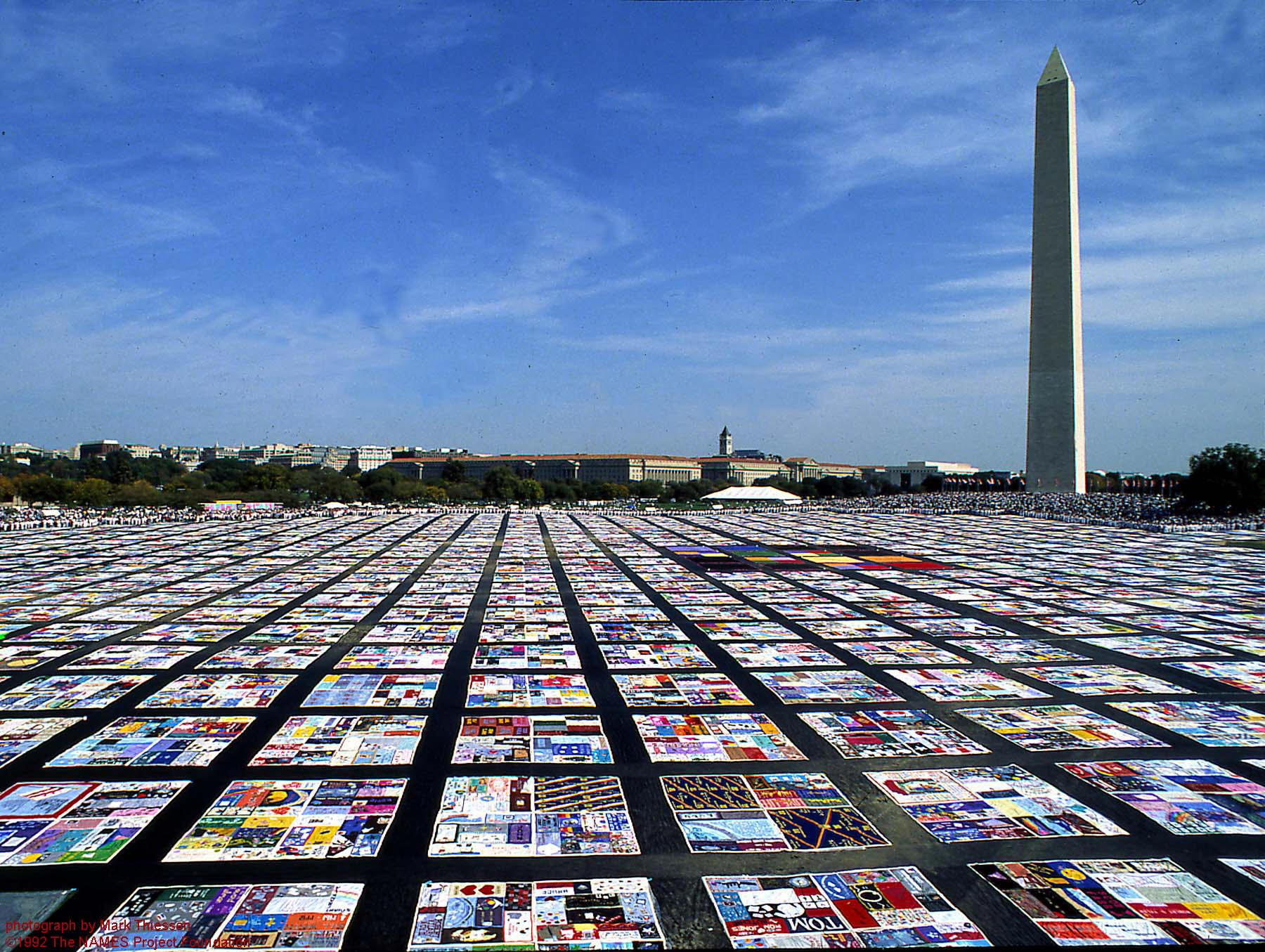
L’AIDS Memorial Quilt
John Adams (15 febbraio 1947): Lollapalooza (1995); composto come regalo per il 40° compleanno del direttore d’orchestra Simon Rattle. Hallé Orchestra, dir. Kent Nagano.
Lollapalooza: a slang term meaning something or someone striking or unusual (Urban Dictionary ).

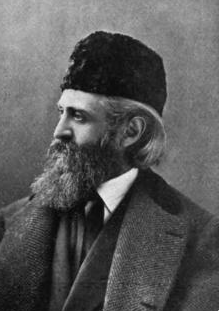 Leopold Damrosch (1832 - 15 febbraio 1885): Sinfonia in la maggiore (1878). Azusa Pacific University Symphony Orchestra, dir. Christopher Russell.
Ernst Eichner (15 febbraio 1740 - 1777): Concerto in do maggiore per oboe e orchestra (c1770). Kurt Meier, oboe; Royal Northern Sinfonia, dir. Howard Griffiths.

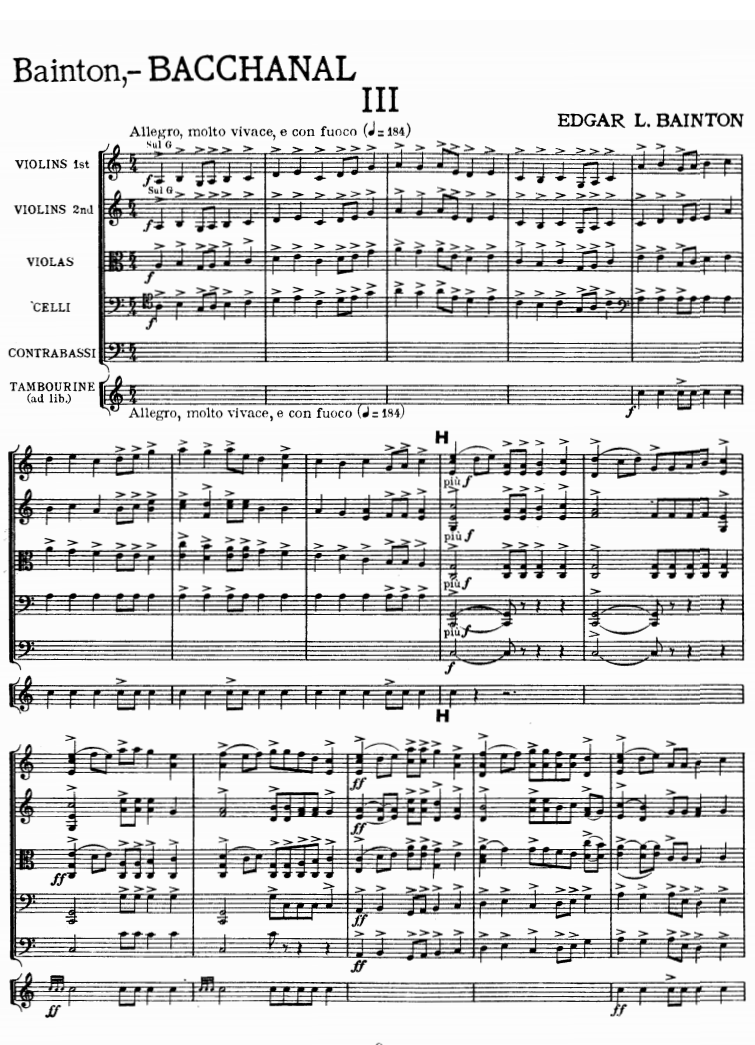
Edgar Bainton (14 febbraio 1880 - 1956): Pavane, Idyll and Bacchanal per archi, con flauto e tamburo basco ad libitum (1925). BBC Philharmonic Orchestra, dir. Paul Daniel.
 Erkki Melartin (2 febbraio 1875 - 14 febbraio 1937): Quarta Sinfonia in mi maggiore op. 80, Kesäsinfonia (Sinfonia d’estate, 1912). Pia Freund, soprano; Lilli Paasikivi, mezzosoprano; Laura Nykänen, contralto; Tampere Filharmonia, dir. Leonid Grin.
Aleksandr Sergeevič Dargomyžskij (14 febbraio 1813 - 1869): Baba-Jagà, ovvero Dalla Volga a Riga, scherzo-fantasia per orchestra (1862). Orchestra sinfonica di Stato dell’URSS, dir. Evgenij Svetlanov.

Béla Kéler (alias Adalbert Paul von Kéler; 13 febbraio 1820 - 1882): Bártfai Emlék («Ricordo di Bártfa», ossia Bardejov, la città natale di Kéler), csárdás op. 31. NOVA filharmonija, dir. Simon Perčič.
Quando Brahms compose la quinta delle sue Danze ungheresi era convinto che questa csárdás di Kéler fosse un brano tradizionale.

Ildebrando Pizzetti (1880 - 13 febbraio 1968): Sinfonia del fuoco per baritono, coro e orchestra su testo di Gabriele d’Annunzio, composta per la scena del sacrificio nel film Cabiria (1914) di Giovanni Pastrone. Boris Statsenko, baritono; Städtischer Opernchor Chemnitz, Robert-Schumann-Philharmonie, dir. Oleg Caetani.
Invocazione a Moloch
IL PONTEFICE:
Re delle due zone, t’invoco,
respiro del fuoco profondo,
gènito di te, primo nato!
IL CORO:
Eccoti i cento puri fanciulli,
inghiotti! Divora! Sii sazio!
Karthada ti dona il suo fiore.
IL PONTEFICE:
Odimi, creatore vorace,
che tutto generi e struggi,
fame insaziabile, m’odi!
IL CORO:
Eccoti la carne più pura!
Eccoti il sangue più mite!
Karthada ti dona il suo fiore.
IL PONTEFICE:
Consuma il sacrificio tu stesso
nelle tue fauci di fiamma,
o padre e madre, o tu dio e dea!
IL CORO:
O padre e madre, o padre e figlio,
o tu dio e dea! Creatore vorace!
Fame ardente, ruggente…
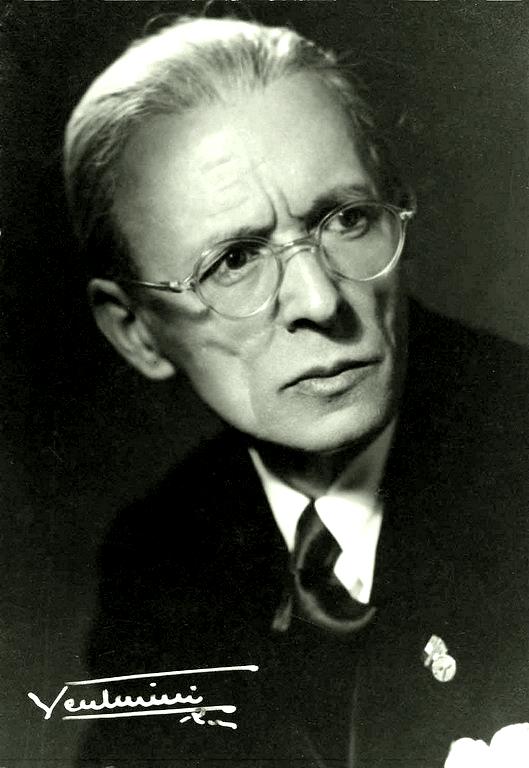
Émile Waldteufel (1837 - 12 febbraio 1915): Les Patineurs, valzer op. 183 (1882). Slovenská filharmónia, dir. Alfred Walter.

Josef Rejcha (12 febbraio 1752 - 1795): Concerto in la maggiore per violoncello e orchestra op. 4 n. 1. Mikael Ericsson, violoncello; Český komorní orchestr (Orchestra da camera ceca), dir. Ondrej Kukal.

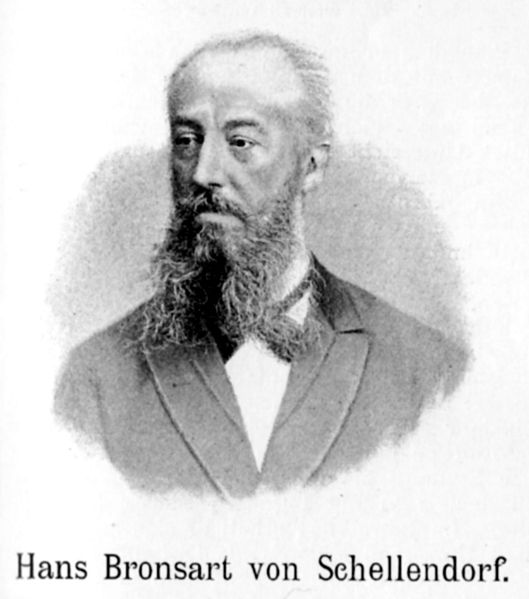
Hans Bronsart von Schellendorff (11 febbraio 1830 - 1913): Concerto in fa diesis minore per pianoforte e orchestra op. 10 (1872). Michael Ponti, pianoforte; Westfälisches Sinfonieorchester, dir. Richard Kapp.
Questo Concerto, che si conclude con una vigorosa tarantella, fu assai apprezzato da Hans von Bülow, il quale lo definì «il Concerto più significativo della cosiddetta Scuola di Weimar».
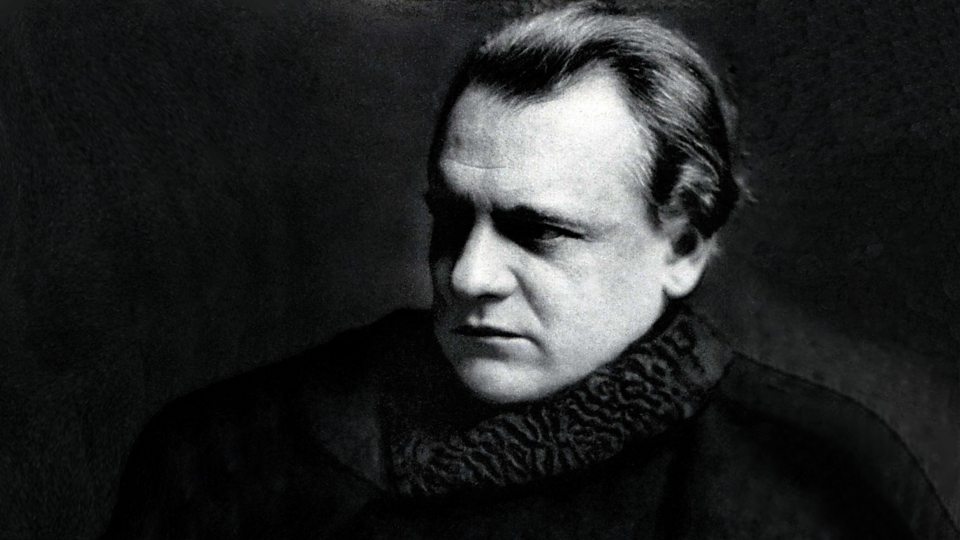
Paul von Klenau (11 febbraio 1883 - 1946): Sinfonia n. 7, Sturmsymphonie (1941). Odense Symfoniorkester, dir. Jan Wagner.
Peter Arnold Heise (11 febbraio 1830 - 1879): Sinfonia in re minore (1868). Aalborg Symfoniorkester, dir. Jens Schrøder.

Johann Peter Pixis (10 febbraio 1788 - 1874): Concerto in fa diesis minore per pianoforte, violino e archi. Mary Louise Boehm, pianoforte; Kees Kooper, violino; Westfälisches Sinfonie-Orchester, dir. Siegfried Landau.

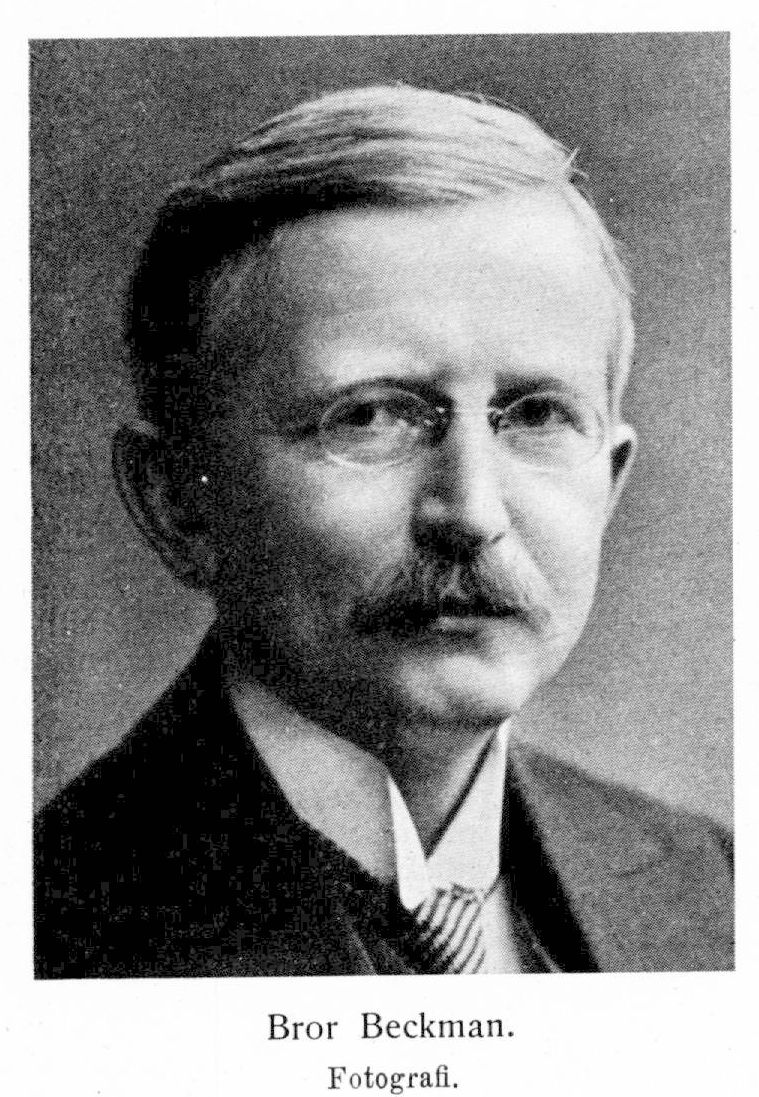
Bror Beckman (10 febbraio 1866 - 1929): Sinfonia in fa maggiore op. 6 (1895). Göteborgs Symfoniker, dir. Göran W. Nilson.
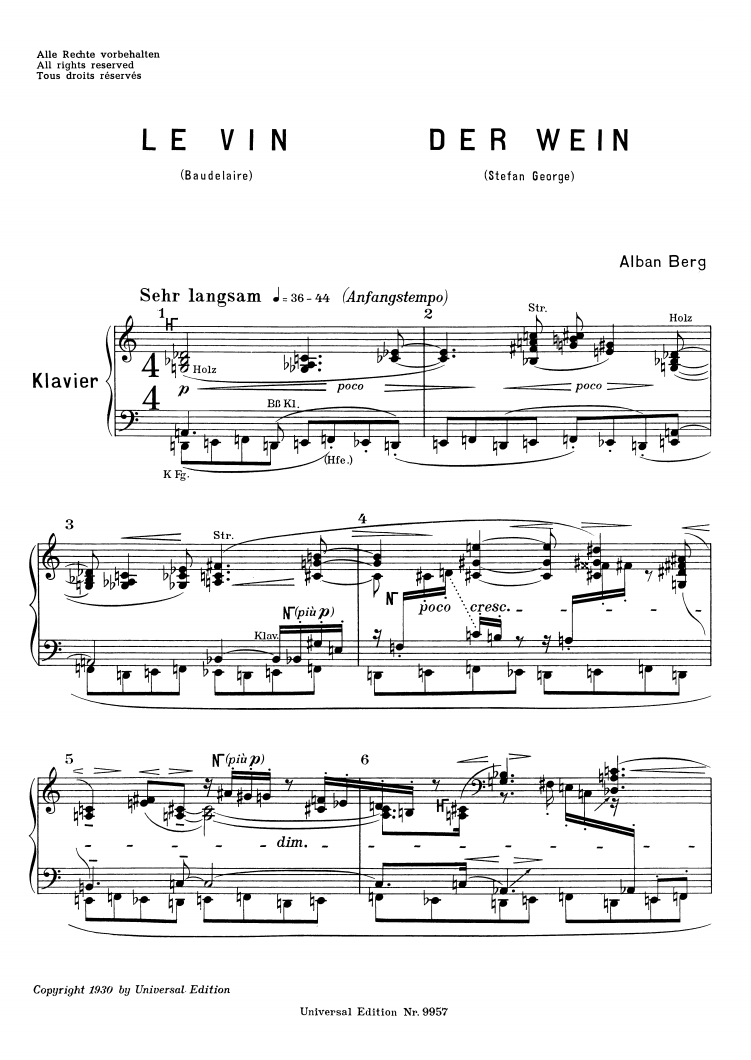
Alban Berg (9 febbraio 1885 - 1935): Der Wein / Le Vin, aria da concerto per soprano e orchestra (1929) su poesie di Charles Baudelaire nella traduzione di Stefan George. Dorothy Dorow, soprano; Wiener Philharmoniker, dir. Karl Böhm.
Berg scelse di musicare la prima e le ultime due delle cinque poesie di Baudelaire che costituiscono il ciclo Le Vin, inserito nella raccolta Les Fleurs du mal (1857). La musica è adattata sia ai versi francesi sia alla traduzione tedesca che ne diede Stefan George nel 1901. Invertendo l’ordine originale delle due ultime poesie, Berg crea una forma tripartita ad arco, nella quale elementi e modi espressivi che caratterizzano la prima lirica tornano nella terza, mentre la seconda a sua volta è in forma di scherzo tripartito.
1. Die Seele des Weines ‒ L’Âme du vin
|
Des Weines Geist begann im Faß zu singen: Ich weiß: am sengend heißen Bergeshange Und dies bereitet mir die größte Labe, Hörst du den Sonntagsgesang aus frohem Schwarme? Ich mache deines Weibes Augen heiter, Und du erhältst von diesem Pflanzenseime, |
Un soir, l’âme du vin chantait dans les bouteilles: Je sais combien il faut, sur la colline en flamme, Car j’éprouve une joie immense quand je tombe Entends-tu retentir les refrains des dimanches J’allumerai les yeux de ta femme ravie; En toi je tomberai, végétale ambroisie, |
2. Der Wein der Liebenden ‒ Le Vin des amants
|
Prächtig ist heute die Weite − Engel für ewige Dauer Wir lehnen uns weich auf den Flügel Laß Schwester uns Brust an Brust |
Aujourd’hui l’espace est splendide! Comme deux anges que torture Mollement balancés sur l’aile Ma soeur, côte à côte nageant, |
3. Der Wein des Einsamen ‒ Le Vin du solitaire
|
Der sonderbare Blick der leichten Frauen Der lezte Taler an dem Spielertisch Mehr als dies alles schätz ich, tiefe Flasche, Du giebst ihm Hoffnung, Liebe, Jugendkraft |
Le regard singulier d’une femme galante Le dernier sac d’écus dans les doigts d’un joueur; Tout cela ne vaut pas, ô bouteille profonde, Tu lui verses l’espoir, la jeunesse et la vie, |
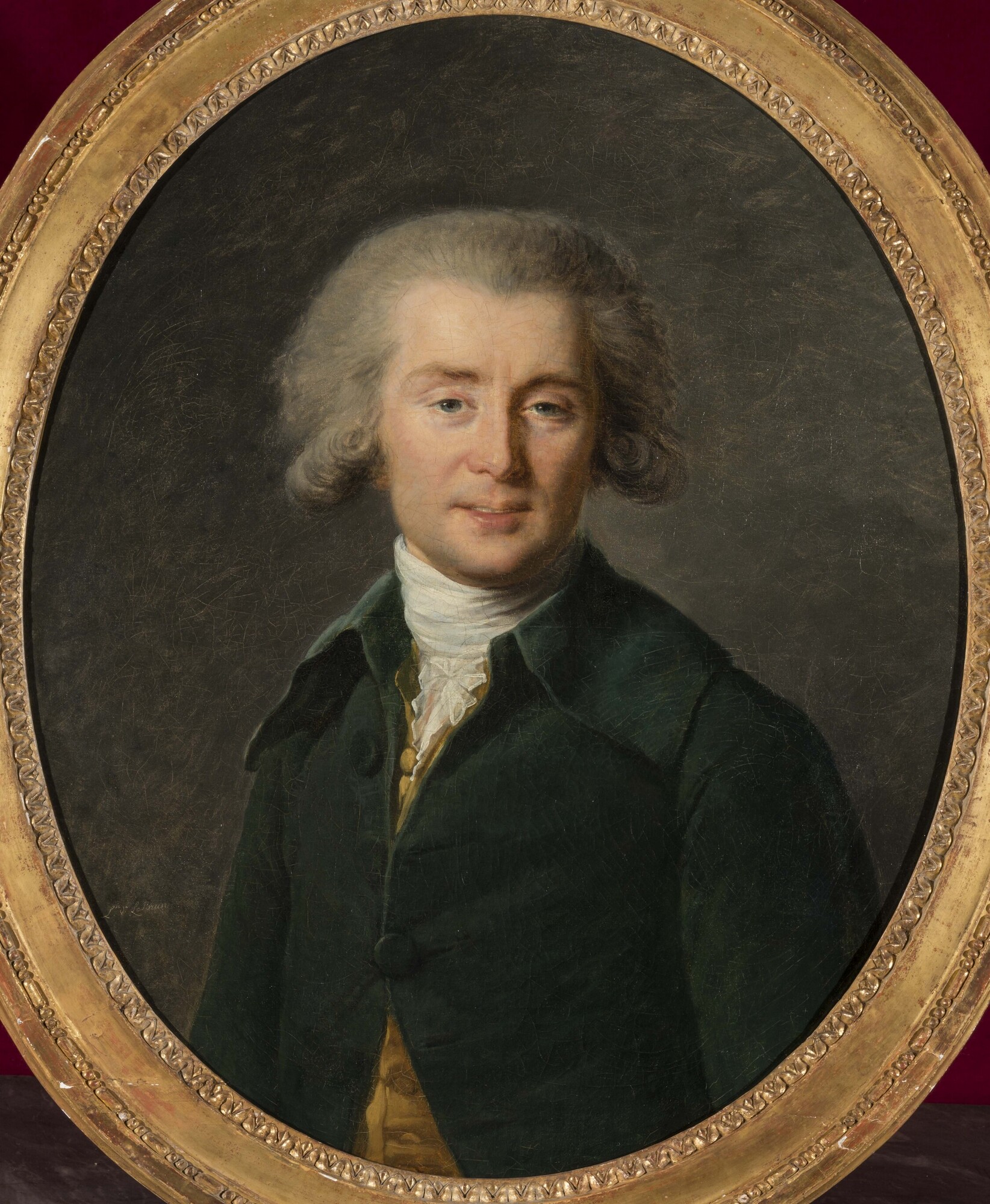
Franz Anton Hoffmeister (1754 - 9 febbraio 1812): Sinfonia n. 4 in sol maggiore, La festa della pace (1791). London Mozart Players, dir. Matthias Bamert.

 Natanael Berg (9 febbraio 1879 - 1957): Sinfonia n. 4, Pezzo sinfonico (1918). Sveriges Radios Symfoniorkester, dir. Mats Rondin.
 Karel Blažej Kopřiva (9 febbraio 1756 - 1785): Concerto in mi bemolle maggiore per organo e orchestra. Milan Šlechta, organo; Orchestra da camera di Praga, dir. František Vajnar.
André Grétry (8 febbraio 1741 - 1813): «Ballet des Nymphes de Diane», dal I atto di Céphale et Procris, ou l’Amour conjugal, ballet héroïque su libretto di Jean-François Marmontel (1773). Les Agrémens. dir. Guy van Waas.
Mieczysław Karłowicz (1876 - 8 febbraio 1909): Sinfonia in mi minore op. 7, Odrodzenie (Rinascita, 1902). Narodowa Orkiestra Symfoniczna Polskiego Radia z siedzibą w Katowicach (Orchestra sinfonica della Radio polacca di Katowice), dir. Lukasz Borowicz.

Appassionato di alpinismo e di fotografia, Karłowicz morì travolto da una valanga durante un’escursione sui Tatra.
Giuseppe Torelli (1658 - 8 febbraio 1709): Concerto in do minore per violino e archi op. 8 n. 8 (1709). Liz Gormley, violino solista; Sydney Camerata, dir. Mathisha Panagoda.

Aleksandr Sergeevič Taneev (1850 - 7 febbraio 1918): Suite per orchestra n. 2 in fa maggiore op. 14 (c1900). Philharmonia Hungarica, dir. Werner Andreas Albert.


 la regina gioiosa