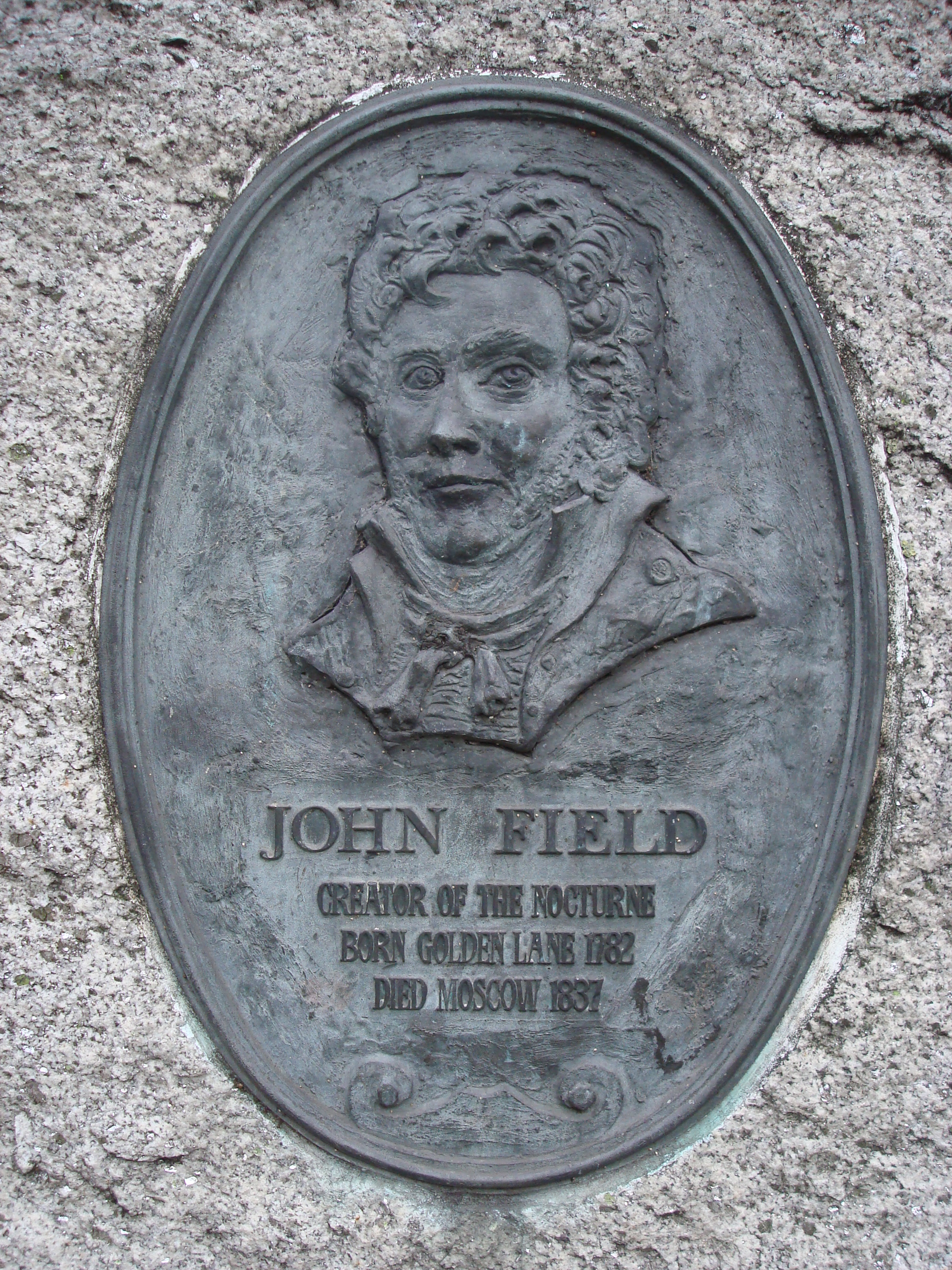
John Field (26 luglio 1782 - 1837): Notturno per pianoforte n. 9 in do minore H 30. John O’Conor.
Stelle cadenti – I
Marco Betta (25 luglio 1964): Cadentia sidera, fantasia per pianoforte e archi (1990). Stefano Micheletti, pianoforte; Orchestra Sinfonica Abruzzese, dir. Flavio Emilio Scogna.
…et iam nox umida caelo praecipitat suadentque cadentia sidera somnos (Virgilio).

Folk songs: 16. Bushes and Briars
Anonimo: Bushes and Briars, canto tradizionale inglese. Alfred Deller, controtenore; Desmond Dupré, liuto.
La «scoperta» di questo brano si deve a Ralph Vaughan Williams, che l’udì cantare da un pastore nell’Essex e ne pubblicò un arrangiamento per coro maschile a 4 voci a cappella nel 1908.
Through bushes and through briars,
I lately took my way;
All for to hear the small birds sing,
And the lambs to skip and play.
I overheard my own true love,
Her voice it was so clear;
Long time I have been waiting
For the coming of my dear.
Sometimes I am uneasy
And troubled in my mind;
Sometimes I think I’ll go to my love
And tell to him my mind.
And if I should go to my love,
My love he will say «Nay»;
If I show to him my boldness,
He’ll ne’er love me again.
L’arrangiamento di Vaughan Williams eseguito da The Gentlemen of St. John’s.

Il soverchio dolor non fa morire
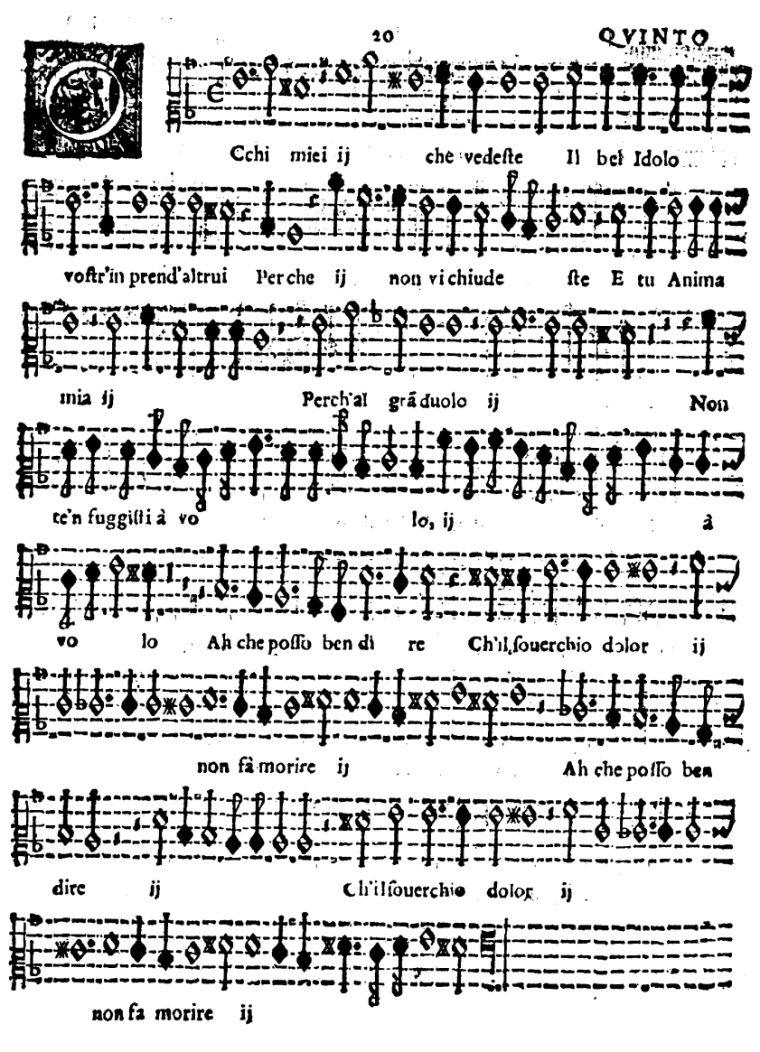
Pomponio Nenna (1556 - 25 luglio 1608): Occhi miei che vedeste, madrigale a 5 voci (pubblicato nel Quarto Libro de madrigali a cinque voci, 1609, n. 20); testo di Battista Guarini. Concerto Italiano, dir. Rinaldo Alessandrini.
Occhi miei che vedeste
Il bell’idolo vostro in preda altrui
Perché non vi chiudeste?
E tu, Anima mia,
Perché al gran duolo
Non t’en fuggisti a volo?
Ah, che posso ben dire
Che il soverchio dolor
Non fa morire.

Allegro energico – II
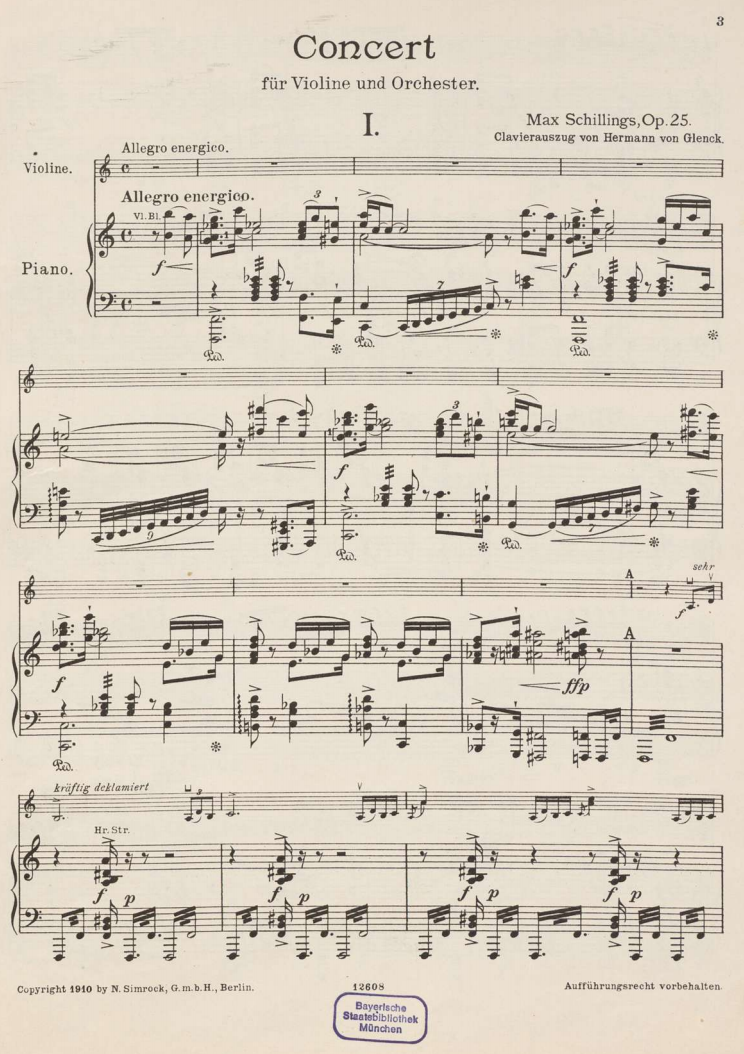
Max von Schillings (1868 - 24 luglio 1933): Primo Concerto in la maggiore per violino e orchestra op. 25 (1910). Ernő Rózsa, violino; Slovenská filharmónia, dir. Alfred Walter.
- Allegro energico
- Andante con espressione [23:17]
- Allegro con brio [35:04]

Rondò alla turca (un altro)
Joseph Eybler (1765 - 24 luglio 1846): Concerto in si bemolle maggiore per clarinetto e orchestra (1798). Dieter Klöcker, clarinetto; English Chamber Orchestra.
- Allegro maestoso
- Adagio [11:22]
- Rondò alla turca: Allegro [17:04]

Dialogo
Max von Schillings (1868 – 24 luglio 1933): Ein Zwiegespräch per violino, violoncello e piccola orchestra op. 8 (1897). Elisabeth Glass, violino; Alban Gerhardt, violoncello; Kölner Rundfunkorchester, dir. Jan Stulen.

Gran Sinfonia
Padre Davide da Bergamo O.F.M.Ref. (al secolo Felice Moretti; 1791 - 24 luglio 1863): Gran Sinfonia in do minore. Arturo Sacchetti all’organo Serassi della Chiesa conventuale di San Domenico in Trino Vercellese.
Night Song
Leith Stevens (1909 - 23 luglio 1970): Concerto in do minore per pianoforte e orchestra, dalla colonna sonora del film L’amore senza volto (Night Song), diretto nel 1947 da John Cromwell. Artur Rubinstein, pianoforte; New York Philharmonic Orchestra, dir. Eugene Ormandy.
Il film, incredibilmente melenso e del tutto inverosimile, racconta l’amore di una ricca ragazza di San Francisco (Merle Oberon) per un povero pianista di nightclub (Dana Andrews) diventato cieco in seguito a un incidente automobilistico. La donna organizza un concorso di composizione mettendo in palio 5000 dollari per il miglior concerto per pianoforte e orchestra, sicura che il suo amato trionferà. Così in effetti avviene: il brano premiato viene eseguito al Carnegie Hall da Rubinstein sotto la bacchetta di Ormandy, e il felice vincitore usa il denaro del premio per farsi operare e riacquistare la vista. L’amore trionfa.
Superfluo aggiungere che il film fu un fiasco. Il critico del «New York Times» Bosley Crowther scrisse fra l’altro che « è proprio il concerto-premio a rivelare impietosamente la sfacciata e totale falsità di Night Song. Perché la musica sciatta e insignificante di Leith Stevens serve solo come pretesto per infilare nelle inquadrature violini, timpani e quartetti di corni. E se il signor Rubinstein e il signor Ormandy possono ingoiare, insieme con il proprio orgoglio, una robaccia del genere, vuol dire che hanno stomaci alquanto robusti ».

Allegro molto agitato
Richard Hol (23 luglio 1825 - 1904): Seconda Sinfonia in re minore op. 44 (1866). Radio Symfonie Orkest, dir. Ed Spanjaard.
- Lento – Allegro molto agitato
- Preghiera: Adagio [14:21]
- Scherzo: Presto [23:41]
- Allegro con brio [29:04]

Andante con rubato
Ben Weber (23 luglio 1916 - 1979): Concerto per pianoforte e orchestra op. 52 (1961). William Masselos, pianoforte; Royal Philharmonic Orchestra, dir. Gerhard Samuel.
- Deciso, non tanto allegro
- Andante con rubato
- Allegro
La strana vita di Ben Weber, articolo di Roger Tréfousse.

Allegro fuocoso
Franz Berwald (23 luglio 1796 - 1868): Sinfonia n. 3 do maggiore, Sinfonie singulière (1845). Kölner Rundfunk-sinfonieorchester, dir. Herbert Blomstedt.
- Allegro fuocoso
- Adagio – Scherzo: Allegro assai – Adagio [10:49]
- Finale: Presto [20:36]

Folk songs: 15. Dulcina
Anonimo (sec. XVII): As at noon Dulcina rested, ballad su testo attribuito erroneamente a sir Walter Raleigh (1554? - 1618). Ellen Hargis, soprano; Paul O’Dette, cittern; The King’s Noyse, dir. David Douglass.
As att noone Dulcina rested
In her sweete & shadie bower;
Came a sheppard, & requested
In her lap to sleepe an houre.
But from her looke
A wound hee tooke
Soe deepe, that for a farther boone
The Nimphe hee pray’d,
Whereto she say’d,
Forgoe mee nowe, come to mee soone.
But in vaine shee did conjure him
For to leave her presence soe,
Havinge a Thousand meanes t’alure him,
& but one to lett him goe.
Where lipps delighte,
& eyes invite,
& cheeks as fresh as rose in June,
Persuade to staie,
What boots to saye
Forgoe mee nowe, come to mee soone.
Hee demaunds what time or leisure
Can there be more fitt then nowe:
She saies, night gives love that pleasure,
Which the day cannot alowe.
The sunns clere light
Shyneth more bright
Quoth hee more fairer then the moone
For her to praise
Hee love, shee saies,
Forgoe mee nowe, come to mee soone.
With greife of heart this shepheard hasted
Up the mountaine to his flocks,
Then hee tooke a reed and piped
Th’echo sounded through the rocks,
Thus did hee plaie
& wishe the day
Were spent, & night were come ere noone,
For silent night
Is loves delight
Ile goe to faire Dulcina soone.
Beauties Darling faire Dulcina
Like to Venus for her love
Spent the day away in passion
Mourninge like the Turtle Dove,
Melodiouslie,
Notes lowe & highe
Shee farbled forth this dolefull tune,
O come againe,
Sweete sheppard swaine,
Thou canst not be with mee to soone.
When as Thetis in her pallace
Had receiv’d the prince of light
Came in Coridon the shepheard,
To his love and hearts delight.
The Pan did plaie
The wood Nimphes they
Did skip & daunce to heare the tune,
Hymen did saie
T’was holidaie,
Forgoe mee nowe, come to mee soone.
Sweete, hee say’d, as I did promise
I am nowe return’d againe,
Longe delaie you knowe breeds daunger
& to lov’rs breedeth paine.
The Nimph say’d then
Above all men
Still welcome shepheard morne & noone,
The shepheard praies,
Dulcina saies,
Shepheard, I doubt y’are come to soone.
Come you nowe to overthrowe mee,
Out alas I am betray’d,
Deare, is this the love you shewe mee
To betraie a silly maide.
Helpe, helpe, ay mee,
I dare not speake
I dare not crie, my heart will breake.
What, all alone?
Nay, then I finde
Men are to stronge for woemen kinde.
O sillie foole, whie doubt I tellinge
When I doubted not to truste.
If my bellie fall a swellinge
There’s noe helpe but out it must.
Ay mee, the greife,
Ay mee, the shame,
When I shall beare the common name.
Yet att the worst
Of my disgrace
I am not first, nor shal be laste.
La prima menzione di As at noon Dulcina rested risale al 1690, mentre la prima pubblicazione nota è del 1707 e si deve a Thomas D’Urfey, che l’inserì nella sua monumentale silloge intitolata Wit and Mirth, or Pills to Purge Melancholy (1698-1720). La musica è caratterizzata da un brusco cambio di ritmo e andamento al 5° verso della strofe: a una prima parte fluente, in ritmo binario, fa seguito una seconda parte saltellante, in ritmo ternario. Questo particolare induce a pensare che la musica fosse in origine destinata alla danza e che il brano con molta probabilità facesse parte di un masque, un genere di rappresentazione teatrale che andava molto in voga in Inghilterra ai tempi di Giacomo I.
Ebbe vita propria come composizione soltanto strumentale, mantenendo perlopiù il titolo di Dulcina derivatole dal testo dello pseudo-Raleigh. Purtuttavia, in precedenza William Brade (un inglese attivo a Amburgo: l’abbiamo già incontrato, per esempio qui) l’aveva rielaborato a cinque parti strumentali e pubblicato con il titolo di Turkische Intrada; qui è interpretato dai Musicians of the Globe diretti da Philip Pickett:
RV 580 & BWV 1065
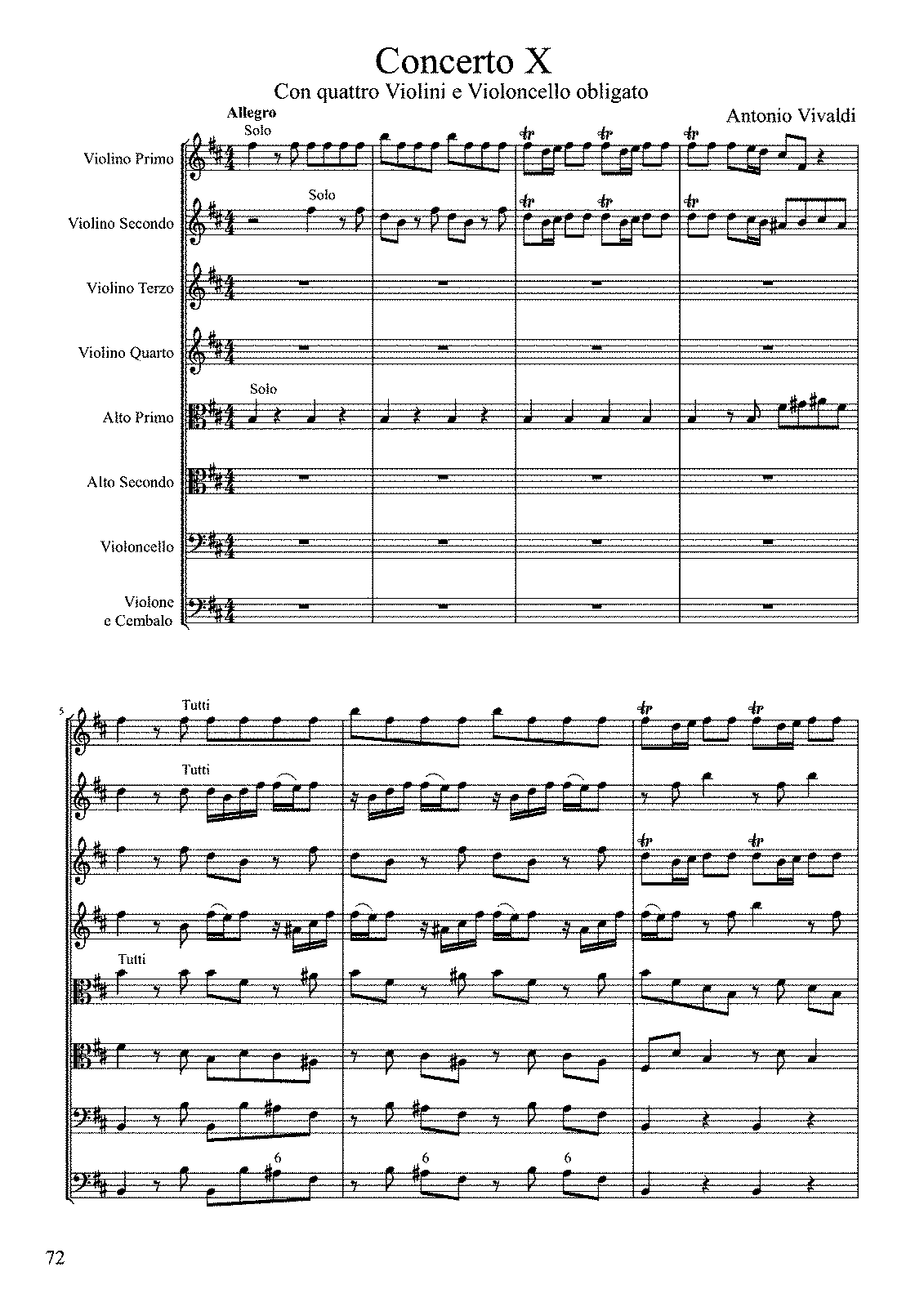
Antonio Vivaldi (1678 - 1741): Concerto in si minore per quattro violini, violoncello, archi e basso continuo op. 3 (L’estro armonico, 1711) n. 10, RV 580. Il Giardino Armonico, dir. Giovanni Antonini.
- Allegro
- Largo [3:35]
- Larghetto – Adagio – Largo – Allegro [4:32]
![]()
Johann Sebastian Bach (1685 - 1750): Concerto in la minore per 4 clavicembali e archi BWV 1065 (c1730), trascrizione del Concerto RV 580 di Vivaldi, trasposto un tono sotto. Versione per 4 pianoforti e archi, con interpreti di grande rilievo: Martha Argerich, Evgenij Kisin, James Levine e Michail Pletnëv ai pianoforti; l’orchestra d’archi è costituita da Renaud Capuçon, Sarah Chang, Ilja Gringol’c, Gidon Kremer, Vadim Repin, Dmitrij Sitkoveckij, Christian Tetzlaff e Nikolaj Znaider, violini; Jurij Bašmet e Nobuko Imai, viole; Mischa Maisky e Boris Pergamenščikov, violoncelli; Patrick de Los Santos, contrabbasso. Registrato a Verbier, Canton Vallese, il 22 luglio 2002.
- (Allegro) [0:50]
- Adagio [4:56]
- Allegro [8:35]

Es
Mauro Cardi (22 luglio 1955): Es per flauto e pianoforte (2016). Tommaso Bisiak, flauto; Reana De Luca, pianoforte.

Valzer delle sfere
Josef Strauß (1827 - 22 luglio 1870): Sphärenklänge, valzer op. 235 (1868). Wiener Philharmoniker, dir. Christian Thielemann.
Josef Strauß, chiamato Pepi da familiari e amici, fu un musicista particolarmente sensibile e raffinato: a mio parere, i suoi valzer sono i migliori fra i tanti composti dagli Strauß viennesi. Lo stesso Johann II, suo fratello maggiore, disse una volta: « Fra me e Pepi, è lui quello che ha più talento, io sono solo quello più famoso ».
Eppure Josef non era nato per fare il musicista. Il padre intendeva avviarlo alla carriera militare, che Josef aborriva; quando il genitore abbandonò la famiglia, nel 1844, il ragazzo si sentì libero di dedicarsi agli amati studi scientifici. Nel 1851 dirigeva la costruzione di un acquedotto, e due anni più tardi brevettò una macchina per la pulizia stradale che fu adottata dalla città di Vienna.
Alla musica si dedicò con riluttanza e solo per accontentare la madre, la quale lo aveva pregato con insistenza affinché prendesse il posto di Johann II, che si era ammalato, quale direttore dell’orchestra di famiglia. Esordì a fine agosto 1853; le sue composizioni furono accolte con favore crescente, e Josef fu presto soprannominato « lo Schubert del valzer ». Quando morì, per le conseguenze di una caduta dal podio, non aveva ancora compiuto 43 anni.

Microtoni – III
Ben Johnston (Benjamin Burwell Johnston jr; 1926 - 21 luglio 2019): Quartetto per archi n. 4, Amazing Grace (1973). Kronos Quartet.

Folk songs: 14. The Tailor and the Mouse
Anonimo: The Tailor and the Mouse. Alfred Deller, controtenore; Desmond Dupré, liuto.
There was a tailor had a mouse,
Hi diddle um come feed-al,
They lived together in one house,
Hi diddle um come feed-al.
Chorus :
Hi diddle um come tarum tantrum,
Through the town of Ramsey,
Hi diddle um come over the lea,
Hi diddle um come feed-al.
The tailor thought his mouse was ill,
He gave him part of a blue pill.
The tailor thought the mouse would die,
He baked him in an apple pie.
The pie was cut, the mouse ran out,
The tailor followed him all about.
The tailor found his mouse was dead,
So he bought another one in his stead.

In the early morphing
Vincenzo Palermo (21 luglio 1967): In the early morphing sopra un tema di Cimarosa per flauto, chitarra e ensemble (2002). Salvatore Lombardi, flauto; Piero Viti, chitarra; Alaria Chamber Ensemble.
Edward
Una famosa ballata tradizionale scozzese nella non meno famosa versione tedesca di Johann Gottfried Herder (1744 - 1803):
|
Dein Schwert, wie ist’s von Blut so rot? Ich hab geschlagen meinen Geier tot, Deines Geiers Blut ist nicht so rot, Ich hab geschlagen mein Rotroß tot, Dein Roß war alt und hast’s nicht not, Ich hab geschlagen meinen Vater tot! Und was wirst du nun an dir tun, Auf Erden soll mein Fuß nicht ruhn, Und was soll werden dein Hof und Hall, Ach immer steh’s und sink und fall! Und was soll werden aus Weib und Kind, Die Welt ist groß, laß sie betteln drin, Und was soll deine Mutter tun, Der Fluch der Hölle soll auf euch ruhn, |
Perché la tua spada è così rossa di sangue, Ho colpito il mio falco a morte, Il sangue del tuo falco non è così rosso, Ho ucciso il mio cavallo roano, Il tuo cavallo era vecchio e non ne avevi bisogno, Ho colpito a morte mio padre! E quale pena ne vuoi portare, I miei piedi mai riposeranno sulla terra, E che ne sarà della tua casa, Andrà in rovina e infine crollerà, E che sarà della tua donna e di tuo figlio, Il mondo è grande, che vaghino mendichi, E che sarà di tua madre, La maledizione dell’inferno cada su di te, |
Carl Loewe (1796 - 1869): Edward, ballata op. 1 n. 1 (1818). Dietrich Fischer-Dieskau, baritono; Jörg Demus, pianoforte.

Franz Schubert (1797 - 1828): Eine altschotthche Ballade, Lied, 2a versione, op. 165 n. 5 (posth.), D 923 (1827). Martha Guth, soprano; Penelope Crawford, pianoforte.

Johannes Brahms (1833 - 1897): Edward, duetto op. 75 n. 1 (1878). Brigitte Fassbaender, mezzosoprano; Peter Schreier, tenore; Karl Engel, pianoforte.

Stanze per la favorita
Déodat de Séverac (20 luglio 1872 - 1921): Stances à Madame de Pompadour (1907). Aldo Ciccolini, pianoforte

Folk songs: 13. A wooing song of a yeoman of Kent’s son
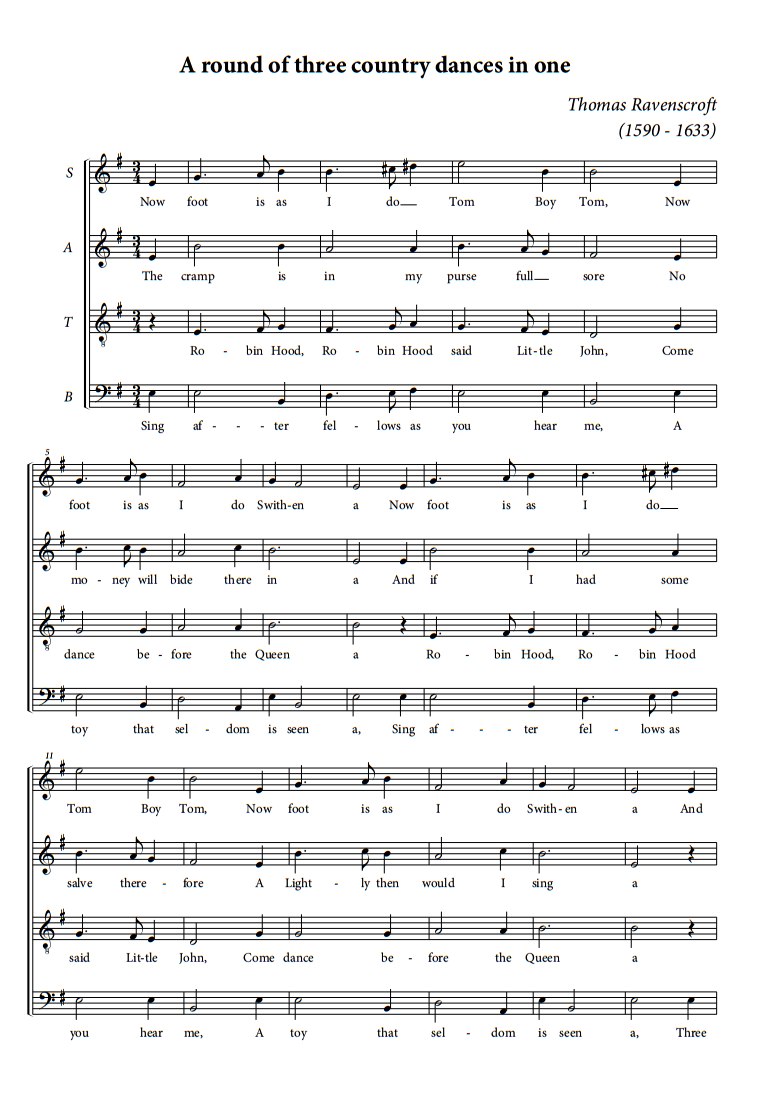
Thomas Ravenscroft (c1582 - c1633): A wooing song of a yeoman of Kent’s son, partsong a 1-4 voci (da Melismata, 1611, n. 22). Pro Cantione Antiqua.
I have house and land in Kent,
And if you’ll love me, love me now;
Twopence-halfpenny is my rent,
I cannot come every day to woo.
Twopence-halfpenny is his rent,
And he cannot come every day to woo.
Ich am my vather’s eldest zonne,
My mother eke doth love me well,
For ich can bravely clout my shoone,
And ich full well can ring a bell.
For he can bravely clout his shoone,
And he full well can ring a bell.
My vather he gave me a hog,
My mouther she gave me a zow;
I have a God-vather dwels thereby,
And he on me bestowed a plow.
He has a God-vather dwells thereby,
And he on him bestowed a plough.
One time I gave thee a paper of pins,
Another time a tawdry-lace;
And if thou wilt not grant me love,
In truth ich die bevore thy face.
And if thou wilt not grant his love,
In truth he’ll die bevore thy vace.
Ich have been twice our Whitson-lord,
Ich have had ladies many vair,
And eke thou hast my heart in hold
And in my mind zeems passing rare.
And eke thou hast his heart in hold
And in his mind seems passing rare.
Ich will put on my best white slops
And ich will wear my yellow hose,
And on my head a good grey hat,
And in’t ich stick a lovely rose.
And on his head a good grey hat,
And in’t he’ll stick a lovely rose.
Wherefore cease off, make no delay,
And if you’ll love me, love me now;
Or else ich zeek zome oderwhere,
For I cannot come every day to woo.
Or else he’ll zeek zome oderwhere,
For he cannot come every day to woo.
La melodia è, nella parte iniziale, molto simile a quella di The Three Ravens, i versi portano a tutt’altro contesto. Anche in questo caso Ravenscroft dimostra di essere un musicista di vaglia, la sua armonizzazione è elegante e moderna, e la bravura degli interpreti fa il resto.

Čajkovskij: Le Stagioni – 7
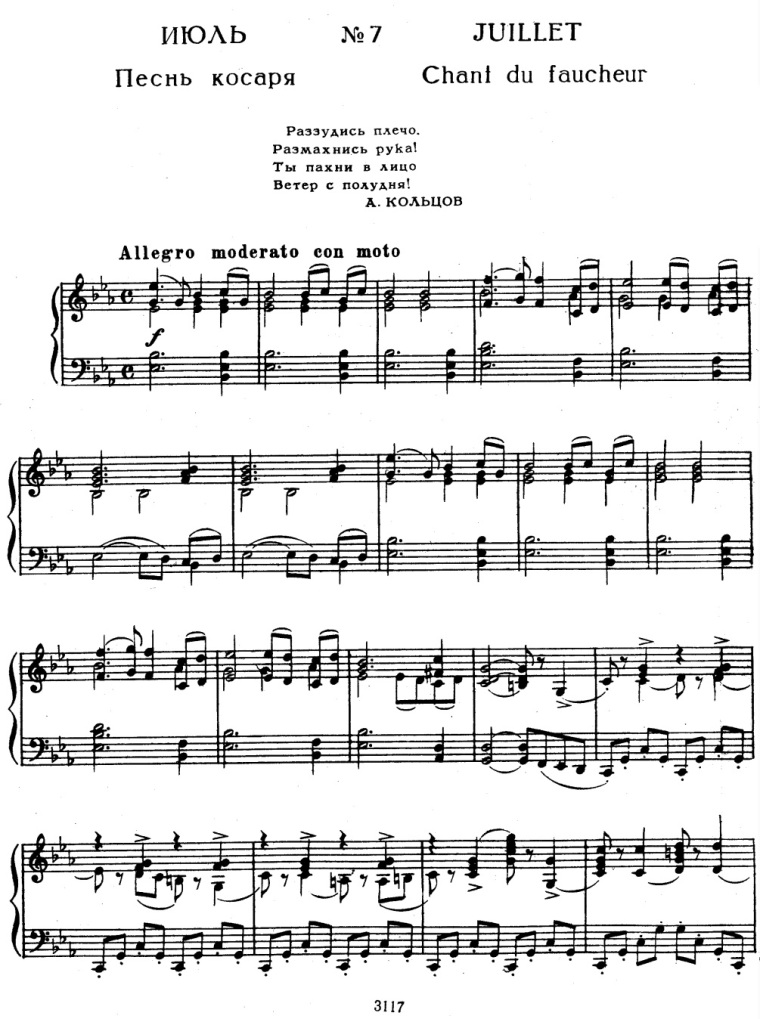
Pëtr Il’ič Čajkovskij (1840 - 1893): Времена года / Les Saisons op. 37a (1875-76), 7. Июль: Песня косаря / Juillet: Chant du faucheur. Versione originale: Valentyna Lysycja, pianoforte. Trascrizione per orchestra di Aleksandr Gauk (1893 - 1963): Orchestra da camera di Mosca, dir. Constantine Orbelian.
Sul periodico sanpietroburghese «Нувеллист» (Nuvellist), ove il brano fu originariamente pubblicato nel luglio 1876, questo Chant du faucheur venne associato a versi di Aleksej Vasil’evič Kol’cov (da Косарь, Il falciatore, 1836):
|
Раззудись, плечо! Размахнись, рука! Ты пахни в лицо, Ветер с полудня! |
Distenditi, spalla! Slànciati, braccio! Soffiami in faccia, vento del Sud! |

Concerto per tromba – I
Henri Hamal (20 luglio 1744 - 1820): Concerto in re maggiore per tromba e orchestra. Maurice André, tromba; Les Solistes de Liège, dir. Géry Lemaire.
- Allegro
- Largo [3:56]
- Allegro [8:30]

Concertino – VIII
Ferdinand David (1810 - 19 luglio 1873): Concertino per trombone basso e orchestra op. 4 (1837). Branimir Slokar, trombone; Orchestre de Chambre de Lausanne, dir. Jean-Marie Auberson.
- Allegro maestoso
- Marcia funebre: Andante
- Allegro maestoso

Folk songs: 12. Garyone
È possibile far sì che in un breve articoletto siano menzionati Ludwig van Beethoven, grande compositore tedesco nato a Bonn nel 1770, e George Armstrong Custer, famoso militare statunitense caduto in battaglia oltre cent’anni più tardi? Sì, è possibile se l’articolo è dedicato a Garyone, una canzone tradizionale irlandese (in Italia è però diffusa l’erronea convinzione che sia scozzese) le cui origini risalgono alla seconda metà del XVIII secolo.
Esperti linguisti assicurano che il titolo Garyone (anche Garyowen, Garryowen, Garry Owen, Garry Owens) sia derivato dalla locuzione irlandese garrai Eóins, ossia «il giardino di Eóin» (variante gaelica di John).
Intorno al 1810, di Garyone Beethoven eseguì due diverse elaborazioni per canto, violino, violoncello e pianoforte, scritte su commissione di George Thomson (1757 – 1851), compositore e stampatore attivo a Edimburgo: questi aveva avviato un vasto progetto editoriale che prevedeva la pubblicazione di melodie tradizionali irlandesi, scozzesi e gallesi armonizzate e arrangiate da alcuni fra i più celebri musicisti dell’epoca: oltre a Beethoven, parteciparono all’impresa anche Franz Joseph Haydn e Johann Nepomuk Hummel.
Le due versioni beethoveniane di Garyone adottano un testo di tal Trevor Toms, From Garyone, my happy home ; edite a stampa nel 1814 e nel 1816, sono comprese nel catalogo delle opere di Beethoven fra le composizioni prive di numero d’opus (WoO = Werke ohne Opuszahl ) rispettivamente come WoO 152/22 e WoO 154/7.
WoO 152/22. Interpreti: Juliette Allen, soprano; Alessandro Fagiuoli, violino; Andrea Musto, violoncello; Jean-Pierre Armengaud, pianoforte.
WoO 154/7. Interpreti: Kerstin Wagner, contralto; Sachiko Kobayashi, violino; Chihiro Saito, violoncello; Michael Wagner, pianoforte.
From Garyone, my happy home,
Full many a weary mile I’ve come,
To sound of fife and beat of drum,
And more shall see it never.
‘Twas there I turn’d my wheel so gay,
Could laugh, and dance, and sing, and play,
And wear the circling hours away
In mirth or peace for ever.
But Harry came, a blithesome boy,
He told me I was all his joy,
That love was sweet, and ne’er could cloy,
And he would leave me never:
His coat was scarlet tipp’d with blue,
With gay cockade and feather too,
A comely lad he was to view;
And won my heart for ever.
My mother cried, dear Rosa, stay,
Ah! Do not from your parents stray;
My father sigh’d, and nought would say,
For he could chide me never:
Yet cruel, I farewell could take,
I left them for my sweetheart’s sake,
And came, ‘twas near my heart to break
From Garyone for ever.
Buit poverty is hard to bear,
And love is but a summer’s wear,
And men deceive us when they swear
They’ll love and leave us never:
Now sad I wander through the day,
No more I laugh, or dance, or play,
But mourn the hour I came away
From Garyone for ever.
Garyone ispirò anche Mauro Giuliani (1781 – 1829), che ne fece la prima delle sue 6 Arie nazionali irlandesi variate per chitarra op. 125 (c1827); qui è eseguita da William Carroll:
Diffusasi a Limerick nel tardo Settecento come canzone conviviale, Garyone ottenne rapidamente successo tra le file dell’esercito britannico, per il tramite del 5° Reggimento di lancieri (Royal Irish Lancers). Da allora fu adottata quale emblema musicale da numerose altre unità militari, suonata e cantata durante le guerre napoleoniche e poi in Crimea. Attraversò anche l’Oceano Atlantico e giunse negli Stati Uniti, dove nel 1851 fu scelta come canto di marcia dal 2° Reggimento di volontari irlandesi e più tardi dal 7° Reggimento di cavalleria, creato per affrontare le guerre indiane e affidato, fra gli altri, proprio a George Armstrong Custer. Una scena del film agiografico dedicato da Hollywood a questo discusso personaggio (They Died with Their Boots On, 1941, in Italia La storia del generale Custer ; la regia è di Raoul Walsh, protagonista Errol Flynn) racconta in modo romanzato l’episodio — come, del resto, tutta la storia:
We can dare or we can do
United men and brothers too
Their gallant footsteps to pursue
And change our country’s story.
Our hearts so stout have got us fame
For soon tis’ known from whence we came
Where’er we go they dread the name
Of Garryowen in glory.
And when the mighty day comes round
We still shall hear their voices sound
Our clans shall roar along the ground
For Garryowen in glory.
To emulate their high renown
To strike our false oppressor down
And stir the old triumphant sound
With Garryowen in glory.

Sinfonia piccola – II
Günter Bialas (19 luglio 1907 - 18 luglio 1995): Sinfonia piccola per orchestra da camera (1960). Folkwang Kammerorchester di Essen, dir. Heinz Dressel.
- Allegro
- Romanze: Andantino [4:10]
- Menuett: Gemächlich [7:30]
- Rondino: Allegro giocoso [9:30]

Concerto per oboe – IV
Wolfgang Amadeus Mozart (1756 - 1791): Concerto in do maggiore per oboe e orchestra K 314 (1777). François Leleux, oboe; hr-Sinfonieorchester, dir. Andrés Orozco-Estrada.
- Allegro aperto [0:42]
- Adagio non troppo [8:03]
- Rondò: Allegretto [15:34]

Serenata – VI
Emil Hartmann (1836 - 18 luglio 1898): Serenata in la maggiore-minore per clarinetto, violoncello e pianoforte op. 24 (1877). Trio Aurora.
- Idylle: Andante – Allegro
- Romance: Andante – Allegretto scherzando – Tempo I
- Rondò-finale: Allegro

Ballerine e gladiatori (Fučík 150)
Julius Fučík (18 luglio 1872 - 1916): Baletky (Scarpette da ballo), valzer da concerto op. 226 (1909). Orchestra filarmonica ceca, dir. Václav Neumann.
Julius Fučík: Vjezd gladiátorů / Einzug der Gladiatoren (Entrata dei gladiatori), marcia trionfale op. 68 (1897). Il Philip Jones Ensemble l’esegue correttamente in tempo moderato, cioè non troppo veloce.
Com’è potuto succedere che una marcia militare sia diventata la musica da circo per eccellenza? Nel 1910 un musicista canadese, Louis-Philippe Laurendeau (1861-1916), arrangiò la composizione di Fučík per una piccola formazione bandistica e pubblicò il lavoro con il titolo Thunder and Blazes: in questa forma il brano si diffuse attraverso il Nord-America e iniziò a essere associato a spettacoli circensi.
Le marce da circo hanno in genere andamento più rapido di quelle militari; nei Paesi di lingua inglese sono chiamate screamers.