Henry Purcell (1659 - 1695): Once, twice, thrice I Julia try’d, catch a 3 voci Z 265 (pubblicato postumo in The Second Book of the Catch Club or Merry Companions, c1700). Deller Consort, dir. Alfred Deller.
Once, twice, thrice I Julia try’d:
the scornfull puss as oft deny’d;
and since I can no better thrive
I’ll cringe to ne’er a bitch alive.
So kiss my arse, disdainfull sow!
Good claret is my mistress, now.
Henry Purcell (1659 - 1695): «Thy hand, Belinda», recitativo, e «When I am laid in earth», aria di Didone, dal III atto dell’opera Dido and Aeneas (1688). Jessye Norman (1945 - 30 settembre 2019), soprano; English Chamber Orchestra, dir. Raymond Leppard.
Thy hand, Belinda, darkness shades me,
On thy bosom let me rest,
More I would, but Death invades me;
Death is now a welcome guest.
When I am laid in earth,
May my wrongs create
No trouble in thy breast;
Remember me, but ah! forget my fate.
John Bull (c1562 - 1628): In nomine a 3, dal Fitzwilliam Virginal Book (n. XXXVII). Christopher Hogwood, organo.
Henry Purcell (1659 - 1695): Abdelazer or The Moor’s Revenge, musiche di scena composte nel 1695 per una rappresentazione del dramma omonimo (1676) di Aphra Behn. Joy Roberts, soprano; The Academy of Ancient Music, dir. Christopher Hogwood.
Henry Purcell (10 settembre 1659 - 1695): Close thine eyes and sleep secure, devotional song per soprano, basso e continuo Z 184 (pubblicato in Harmonia Sacra, 1688) su testo di Francis Quarles. Hana Blažíková, soprano; Peter Kooij, basso; L’Armonia Sonora, dir. e viola da gamba Mieneke van der Velden.
Close thine eyes and sleep secure;
Thy soul is safe, thy body sure;
He that guards thee, He thee keeps,
Who never slumbers, never sleeps.
A quiet conscience in a quiet breast
Has only peace, has only rest:
The music and the mirth of kings
Are out of tune unless she sings;
Then close thine eyes in peace and rest secure,
No sleep so sweet as thine, no rest so sure.
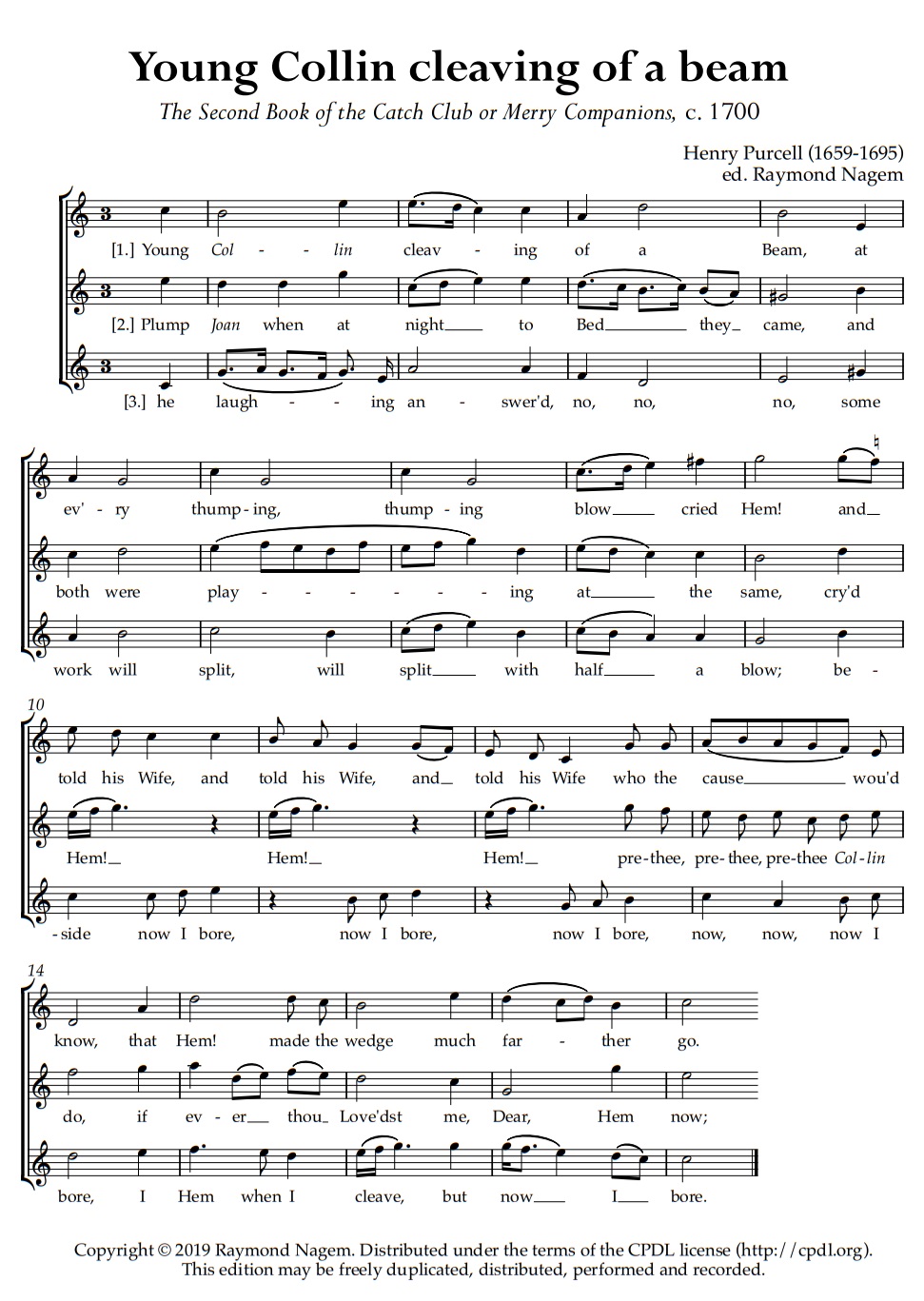
Henry Purcell (1659 - 1695): Young Collin, cleaving of a beam, catch a 3 voci Z 291. The City Waites.
Young Collin, cleaving of a beam,
At ev’ry thumping blow cry’d «Hem!»
And told his wife, who the cause would know,
That hem made the wedge much further go.
Plump Joan, when at night to bed they came,
And both were playing at that same,
Cry’d: «Hem, prithee Collin do,
If ever thou lov’st me, dear, hem now.»
He laughing answer’d: «No, no, no,
Some work will split with half a blow;
Besides now I bore:
I hem when I cleave, but now I bore.»
Libera traduzione: c’è un giovane, Collin, impegnato a spaccare un grosso ceppo di legno; a ogni colpo che dà con la mazza esclama hem! A Joan, la mogliettina cicciottella (plump) che gli chiede perché quell’hem!, risponde che hem! serve a far andare il cuneo molto più a fondo.
La notte dopo, a letto, mentre fanno un gioco assai simile, Joan grida: «Oh, Collin, tipregotipregotiprego, se mi ami fa’ hem! adesso.»
Collin ridendo risponde: «Nononò, per certi lavori basta un colpetto: faccio hem! quando devo darci dentro davvero, ma adesso è routine.»
C’è un gioco di parole intraducibile con cleave e bore : entrambi i verbi significano, fra l’altro, “penetrare”, ma cleave vale anche “spaccare”, mentre bore sta per “annoiarsi”.
Anonimo (Richard Motley, sec. XVII - XVIII): The Emperor of the Moon, country dance. Paul O’Dette, cittern; The King’s Noyse, dir. David Douglass.
Danza e melodia prendono il titolo dall’omonima farsa di Aphra Behn (1640 - 1689), rappresentata al Duke’s Theatre di Londra nel 1687. L’autore della musica è stato recentemente identificato in tal Richard Motley, musicista e maestro di danza attivo fra il 1688 circa e il 1710. Pubblicata per la prima volta in appendice al II volume dell’antologia Vinculum societatis, or The tie of good company being a choice collection of the newest songs now in use (1688), la composizione fu poi rielaborata da Henry Purcell per essere inserita nell’8a edizione (1690) della raccolta The English Dancing Master, curata da Henry Playford, figlio e erede di John.
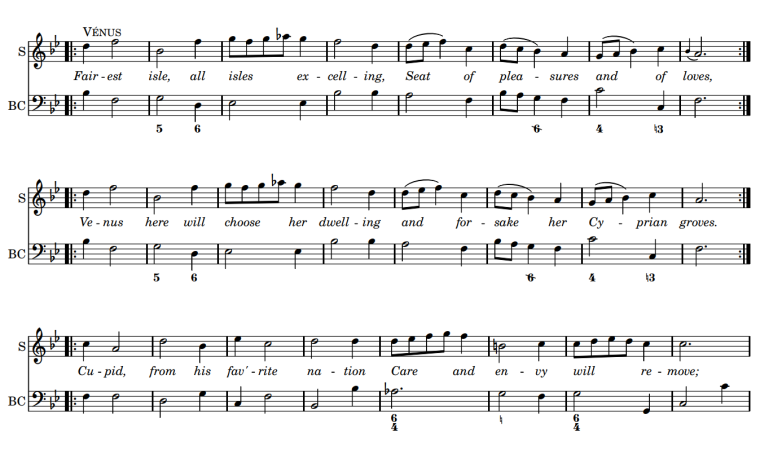
Henry Purcell (1659 - 21 novembre 1695): «Fairest isle», aria per soprano (Venere) dal V atto della semi-opera King Arthur Z 628 (1691); testo di John Dryden. Anna Dennis, soprano; Voices of Music.
Fairest isle, all isles excelling,
Seat of pleasure and of love,
Venus here will choose her dwelling,
And forsake her Cyprian grove.
Cupid from his fav’rite nation
Care and envy will remove;
Jealousy that poisons passion,
And despair that dies for love.
Gentle murmurs, sweet complaining,
Sighs that blow the fire of love,
Soft repulses, kind disdaining,
Shall be all the pains you prove.
Ev’ry swain shall pay his duty,
Grateful ev’ry nymph shall prove;
And as these excel in beauty,
Those shall be renown’d for love.
Henry Purcell (1659 - 1695): Rondeau dalle musiche di scena composte nel 1695 per una rappresentazione del dramma Abdelazer or The Moor’s Revenge (1676) di Aphra Behn. Taverner Consort Players, dir. Andrew Parrott.
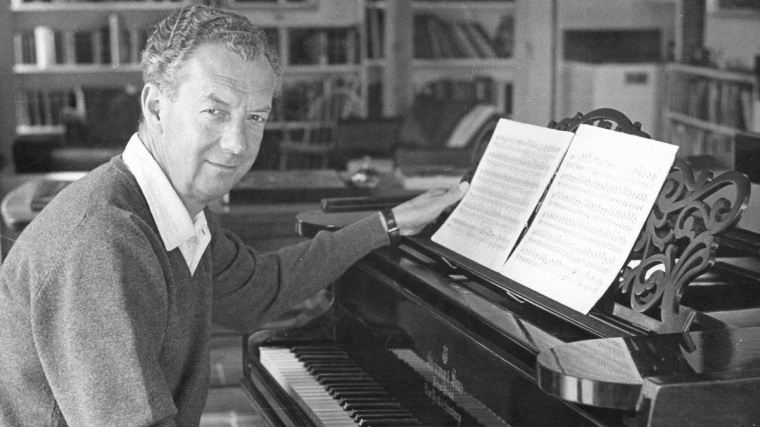
Benjamin Britten (1913 - 4 dicembre 1976): The Young Person’s Guide to the Orchestra, Variations and Fugue on a Theme of Purcell op. 34 (1946). YouTube Symphony Orchestra 2011, dir. Michael Tilson Thomas.
Una celebre e magistrale composizione didattica.
Georg Muffat (1653 - 1704): Impatientia, suite in si bemolle maggiore per orchestra (da Florilegium secundum, 1698, Fasciculus I, n. 4). Orchestra da camera della Società filarmonica di Budapest, dir. Tamás Sulyok.
Symphonie
Balet
Canaries
Gigue
Sarabande
Bourrée
Chaconne
Henry Purcell (1659 - 21 novembre 1695): «Canaries», dal V e ultimo atto della semi-opera tragicomica The Prophetess, or The History of Dioclesian (1695). Tafelmusik, dir. Jeanne Lamon.
Alcuni catches (canoni) a 3 e a 4 voci di Henry Purcell (10 settembre 1659 - 1695) interpretati da Alfred Deller con il suo Consort.
Come, let us drink,
’Tis in vain to think
Like fools on grief or sadness:
Let our money fly,
And our sorrows dye,
All worldly care is madness.
But wine and good cheer
Will in spight of our fear
Inspire our hearts with mirth, boys;
The time we live
To wine let us give,
Since all must turn to Earth, boys.
Hand about the bowl
The delight of my soul,
And to my hand commend it;
A fig for chink
’Twas made to buy drink,
And before we go hence we’ll spend it.
Prithee hen’t so sad and serious,
Nothing’s got by grief or cares;
Melancholy’s too imperious,
When it comes, still domineers.
But if bus’ness, love or sorrow
That possesses thus thy mind,
Bid ’em come again tomorrow,
We are now to mirth inclin’d.
Let the glass run its round
And each good fellow keep his ground,
And if there be any flincher found
We’ll have his soul new coin’d.
I gave her cakes and I gave her ale,
I gave her sack and sherry;
I kiss’d her once and I kiss’d her twice,
And we were wondrous merry.
I gave her beads and bracelets fine,
I gave her dold down-derry;
I thought she was a-fear’d till she strok’d my beard,
And we were wondrous merry.
Merry my heart, merry my cocks,
Merry my sprites, hey down-derry;
I kiss’d her once and I kiss’d her twice,
And we were wondrous merry.
’Tis women makes us love,
’Tis love that makes us sad,
’Tis sadness makes us drink,
And drinking makes us mad.
Segnalo che anche Enzo Martinelli ha voluto ricordare Henry Purcell nel suo genetliaco 🙂
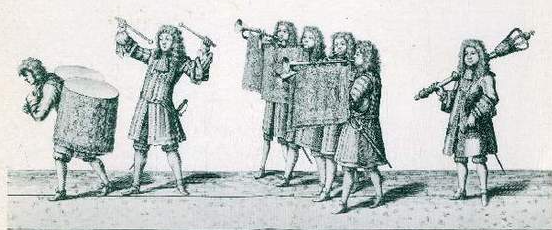
Henry Purcell (1659 - 1695): March per 4 flat trumpets (trombe da tirarsi). Baroque Brass of London; Robert Howes, tamburo.
(La partitura originale non prevede il tamburo: la parte venne aggiunta dal musicologo britannico Thurston Dart quando curò un’edizione pratica delle musiche composte da Purcell per i funerali della regina Maria.)
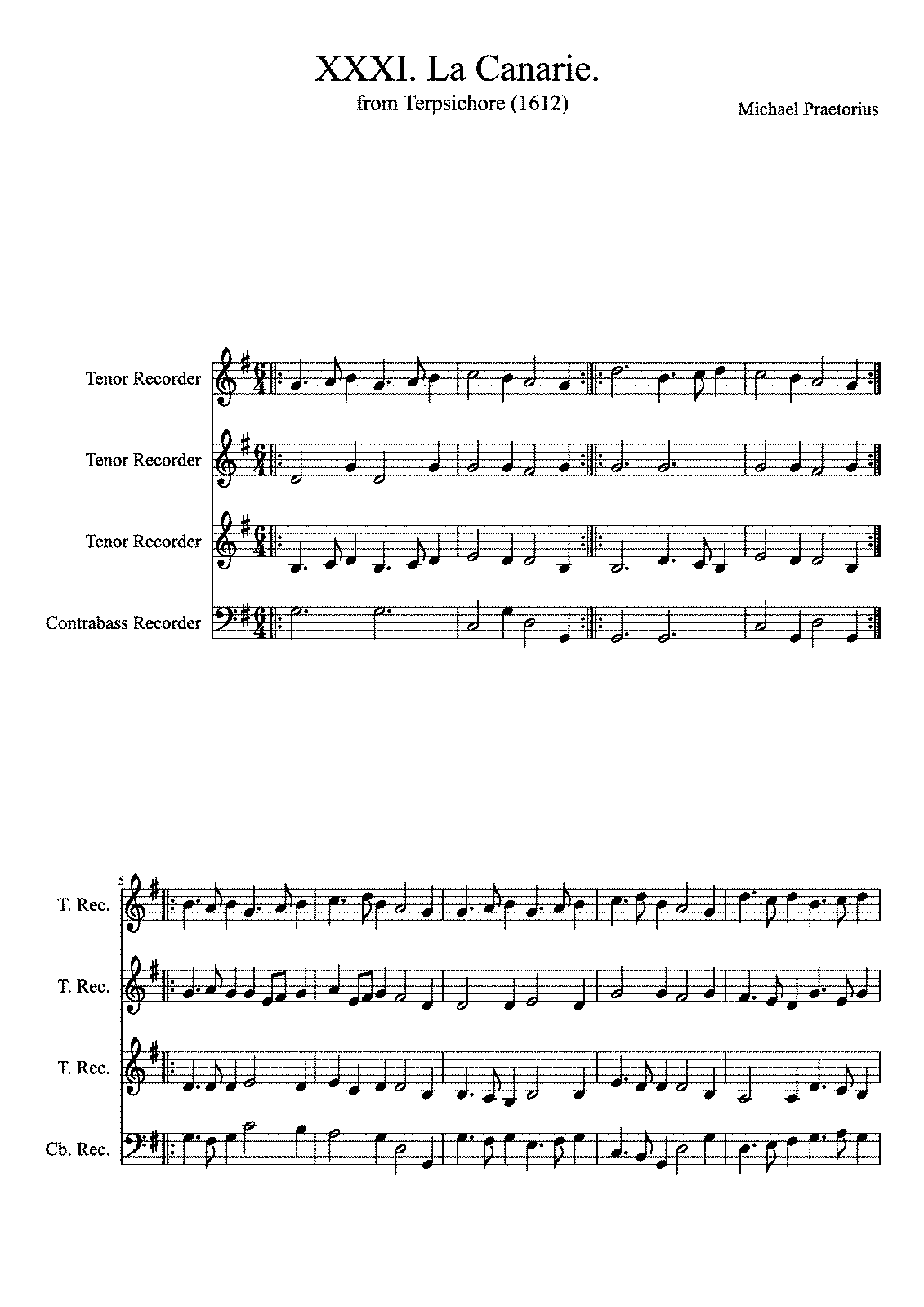
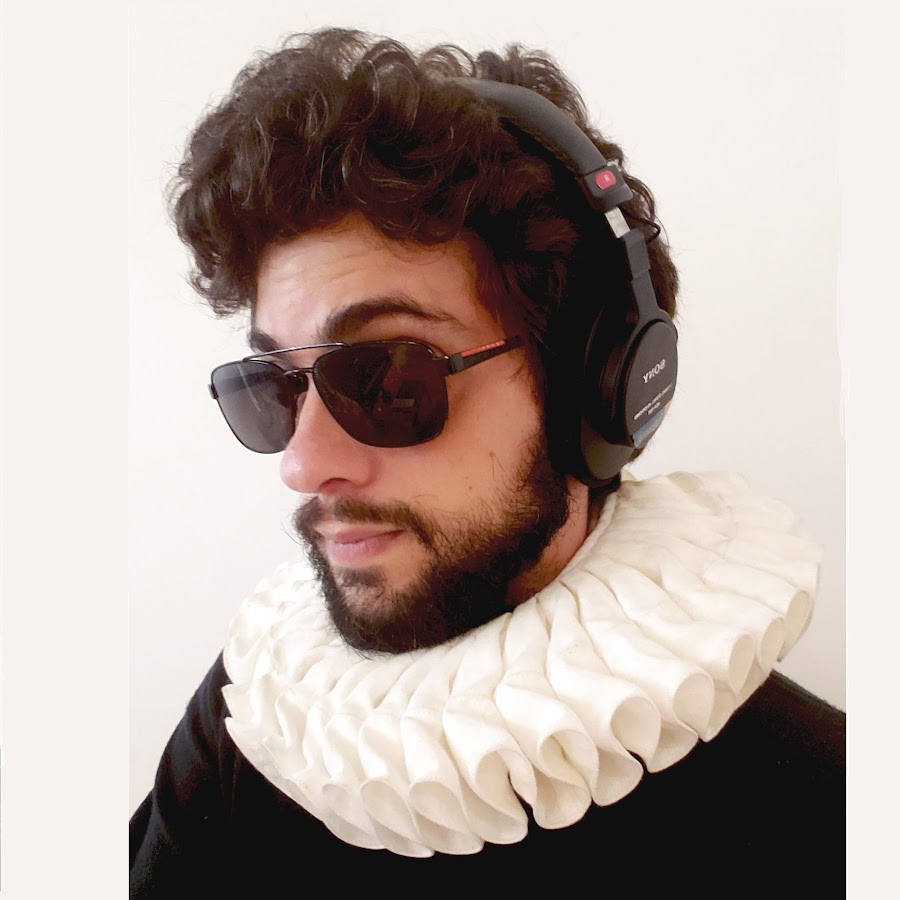
Michael Praetorius (ovvero Schultheiß; 1571 - 15 febbraio 1621): La Canarie (da Terpsichore, Musarum Aoniarum, 1612, n. 31). Eduardo Antonello esegue tutte le parti.
Canaria o canario (anche canarie, canary) è una danza rinascimentale ispirata da una forma tradizionale propria delle isole Canarie, probabilmente quella nota come tajaraste. Era molto diffusa in Europa fra Cinque e Seicento, tanto che venne menzionata anche da Shakespeare (in Pene d’amor perdute, in Tutto è bene quel che finisce bene e nelle Allegre comari di Windsor). Di andamento rapido, in ritmo ternario o doppio ternario, soddisfaceva la tendenza esotizzante della società del tempo con la bizzarria dei suoi movimenti, che alternavano saltelli e passi martellati (tacco e punta).
Viene menzionata per la prima volta nel Libro de Música de vihuela (1552) di Diego Pisador, che però non la descrive come una danza bensì come un canto funebre (endecha de canario). I più antichi esempi musicali si trovano nei trattati di danza della fine del Cinquecento. Nel Ballarino (1588) Fabrizio Caroso la pone a conclusione della coppia gagliarda-saltarello (o rotta); ne dà inoltre una descrizione completa, come danza autonoma, articolata in sei mutanze (serie di figure). Tanto Thoinot Arbeau nell’Orchésographie (1588) quanto padre Marin Mersenne nell’Harmonie universelle (1636) ne sottolineano il carattere selvaggio. Compare anche nelle Nuove inventioni di balli (1604) di Cesare Negri.
Caduta in disuso, come danza, nella seconda metà del Seicento, entrò tuttavia a far parte della suite strumentale e fu accolta anche nell’opera: se ne possono trovare esempi in composizioni di Jacques Champion de Chambonnières e di François Couperin, nelle Pièces de clavessin op. II (1669) di Johann Caspar Ferdinand Fischer, nel Suavioris harmoniae instrumentalis hyporchematicae Florilegium (1ª parte, 1695) di Georg Muffat e ancora in lavori di Jean-Baptiste Lully, Johann Kusser, Georg Philipp Telemann e Jan Dismas Zelenka, e inoltre nella semi-opera tragicomica in cinque atti di Henry Purcell The Prophetess, or The History of Dioclesian (1695).
Occasionalmente, il ritmo e l’andamento propri di questa danza si trovano in composizioni più recenti, come per esempio la suite Ballet de cour (1901-04) di Gabriel Pierné.
(Testo tratto dal Dizionario di musica della Utet [DEUMM], riveduto e ampliato.)





 la regina gioiosa