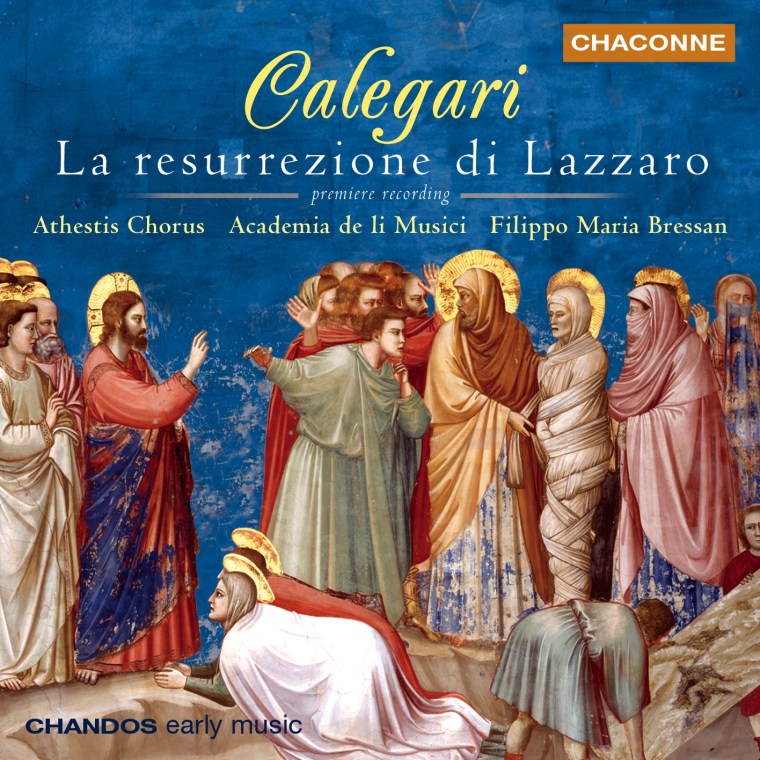
Antonio Calegari (1757 - 22 luglio 1828): La resurrezione di Lazzaro, oratorio (1779). Cristo: Roberta Giua, soprano; Tommaso: Luca Dordolo, tenore; Maddalena: Rosita Frisani, soprano; Marta: Manuela Custer, contralto; Lazzaro: Salvo Vitale, basso; coro Athestis; Academia de li Musici, dir. Filippo Maria Bressan.
Concertone
Coro e duetto: «Morte, morte» (coro, Maddalena, Marta) [7:38]
Franz Schubert (1797 - 1828): An Silvia, Lied for voice and piano op. 106 n. 4, D 891 (1826); lyrics by William Shakespeare (from The Two Gentlemen of Verona, act 4, scene 2), German translation by Eduard von Bauernfeld. Fritz Wunderlich, tenor; Hubert Giesen, piano.
Was ist Silvia, saget an,
Dass sie die weite Flur preist?
Schön und zart seh’ ich sie nah’n,
Auf Himmels Gunst und Spur weist,
Dass ihr alles untertan.
Ist sie schön und gut dazu?
Reiz labt wie milde Kindheit;
Ihrem Aug’ eilt Amor zu,
Dort heilt er seine Blindheit,
Und verweilt in süsser Ruh’.
Darum Silvia, tön’, o Sang,
Der holden Silvia Ehren;
Jeden Reiz besiegt sie lang,
Den Erde kann gewähren:
Kränze ihr und Saitenklang!
Who is Silvia? what is she,
That all our swains commend her?
Holy, fair, and wise is she;
The heaven such grace did lend her,
That she might admirèd be.
Is she kind as she is fair?
For beauty lives with kindness.
Love doth to her eyes repair,
To help him of his blindness;
And, being helped, inhabits there.
Then to Silvia let us sing,
That Silvia is excelling;
She excels each mortal thing
Upon the dull earth dwelling;
To her let us garlands bring
Charles E. Ives (1874-1954): Central Park in the Dark (1906). New York Philharmonic Orchestra, dir. Leonard Bernstein.
Charles E. Ives: The Unanswered Question (1908; revisione 1930-35). Stessi interpreti.
I due brani originariamente costituivano un’unica composizione in due parti con il titolo complessivo di Two Contemplations e quelli rispettivi di A Contemplation of Nothing Serious or Central Park in the Dark in «The Good Old Summer Time» e A Contemplation of a Serious Matter or The Unanswered Perennial Question.
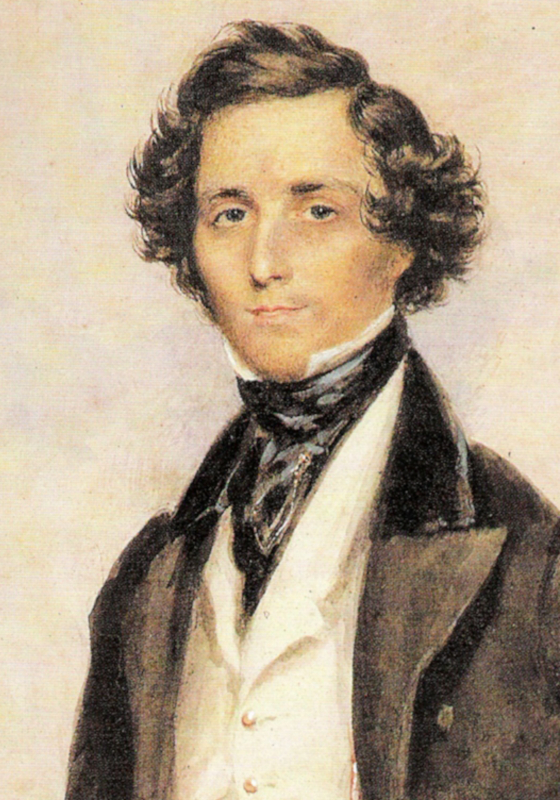
Felix Mendelssohn-Bartholdy (1809 - 1847): Ein Sommernachtstraum, ouverture op. 21 (1826) and incidental music op. 61 (1842) for William Shakespeare’s play A Midsummer Night’s Dream. Edith Mathis and Ursula Boese, sopranos; Chor des Bayerischen Rundfunks and Symphonieorchester des Bayerischen Rundfunks conducted by Rafael Kubelík.
(In published scores, Overture and Finale are usually not numbered.)
Ouvertüre: Allegro vivace
Scherzo: Allegro molto vivace [11:48]
L’istesso tempo [16:33]
Bunte Schlangen (Lied mit Chor): Allegro non troppo [17:49]
ERSTER ELFE
Bunte Schlangen, zweigezüngt!
Igel, Molche, fort von hier!
Dass ihr euren Gift nicht bringt
In der Königin Revier!
Fort von hier!
ERSTER ELFE, ZWEITER ELFE UND CHOR
Nachtigall, mit Melodei
Sing in unser Eya popey!
Eya popey! Eya popey!
Dass kein Spruch,
Kein Zauberfluch,
Der holden Herrin schädlich sei.
Nun gute Nacht mit Eya popey!
ZWEITER ELFE
Schwarze Käfer,
Uns umgebt nicht mit Summen,
Macht euch fort!
Spinnen die ihr künstlich webt,
Webt an einem andern Ort!
ERSTER ELFE
Alles gut! Nun auf und fort!
Einer halte Wache dort!
Ein Tanz von Rüpeln (A dance of clowns): Allegro molto [35:37]
Finale mit Chor: Allegro vivace [37:15]
CHOR DER ELFEN
Bei des Feuers mattem Flimmern,
Geister, Elfen, stellt euch ein!
Tanzet in den bunten Zimmern
Manchen leichten Ringelreihn!
Singt nach seiner Lieder Weise!
Singet! hüpfet lose, leise!
ERSTER ELFE (Solo)
Wirbelt mir mit zarter Kunst
Eine Not auf jedes Wort,
Hand in Hand, mit Feeengunst,
Singt und segnet diesen Ort!
CHOR DER ELFEN
Bei des Feuers mattem Flimmern,
Geister, Elfen, stellt euch ein!
Tanzet in den bunten Zimmern
Manchen leichten Ringelreihn!
Singt nach seiner Lieder Weise!
Singet! hüpfet lose, leise!
Nun genung,
Fort im Sprung,
Trefft ihn in der Dämmerung!
Carlo Boccadoro (20 luglio 1963): Soul Brother n. 1 per vibrafono, flauto, clarinetto basso, pianoforte, violino e violoncello (2011). Ensemble Sentieri selvaggi diretto dall’autore.
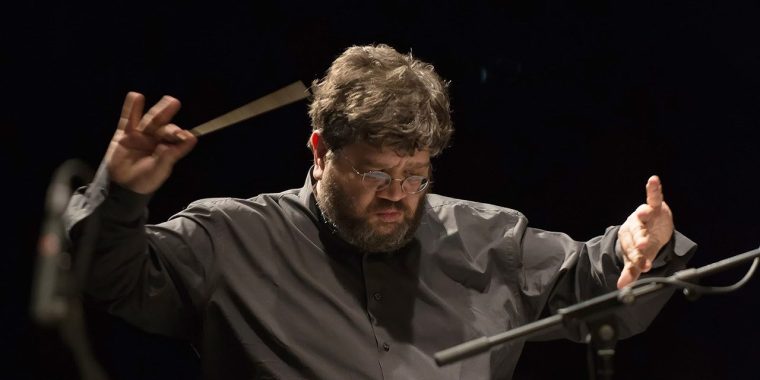
Witold Maliszewski (20 luglio 1873 - 18 luglio 1939): Sinfonia n. 1 in sol minore op. 8 (1904). Polska orkiestra radiowa, dir. Łukasz Borowicz.
Allegro sostenuto
Andante [11:18]
Scherzo: Allegro giocoso [20:18]
Thème populaire : Allegro grazioso [28:29]
Un altro compositore poco conosciuto ma oltremodo interessante. Stabilitosi in Polonia nel 1921, Maliszewski era nato in Ucraina (con il nomr di Vitol’d Osipovič Mališevskij) e si era diplomato al Conservatorio di San Pietroburgo; nel 1913 fu tra i fondatori del Conservatorio di Odessa.
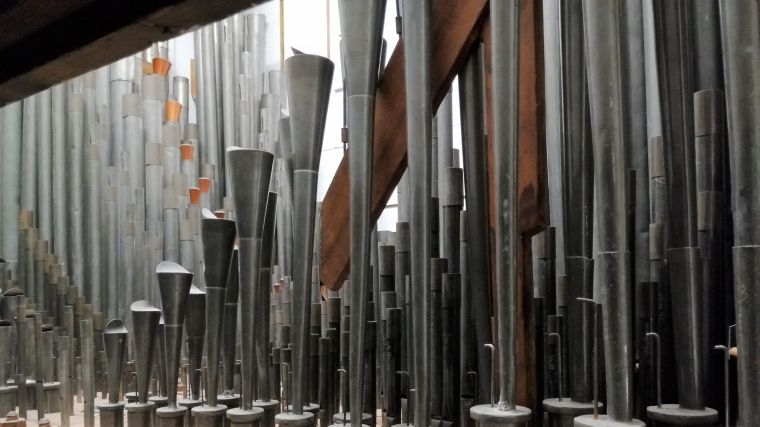
Gabriele Agrimonti (1995): Improvisation on «Greensleeves». Performed by the composer on the Lewis Organ in Sotto il Monte Giovanni XXIII (Bergamo, Italy).
Günter Bialas (19 luglio 1907 - 18 luglio 1995): Introitus – Exodus per organo e orchestra (1976). Edgar Krapp, organo; Symphonieorchester des Bayerischen Rundfunks, dir. Rafael Kubelík.
Alessio Prati (19 luglio 1750 - 1788): Concerto in la maggiore per fortepiano e archi. Antonella Cristiano, pianoforte; I Solisti Partenopei, dir. Ivano Caiazza.
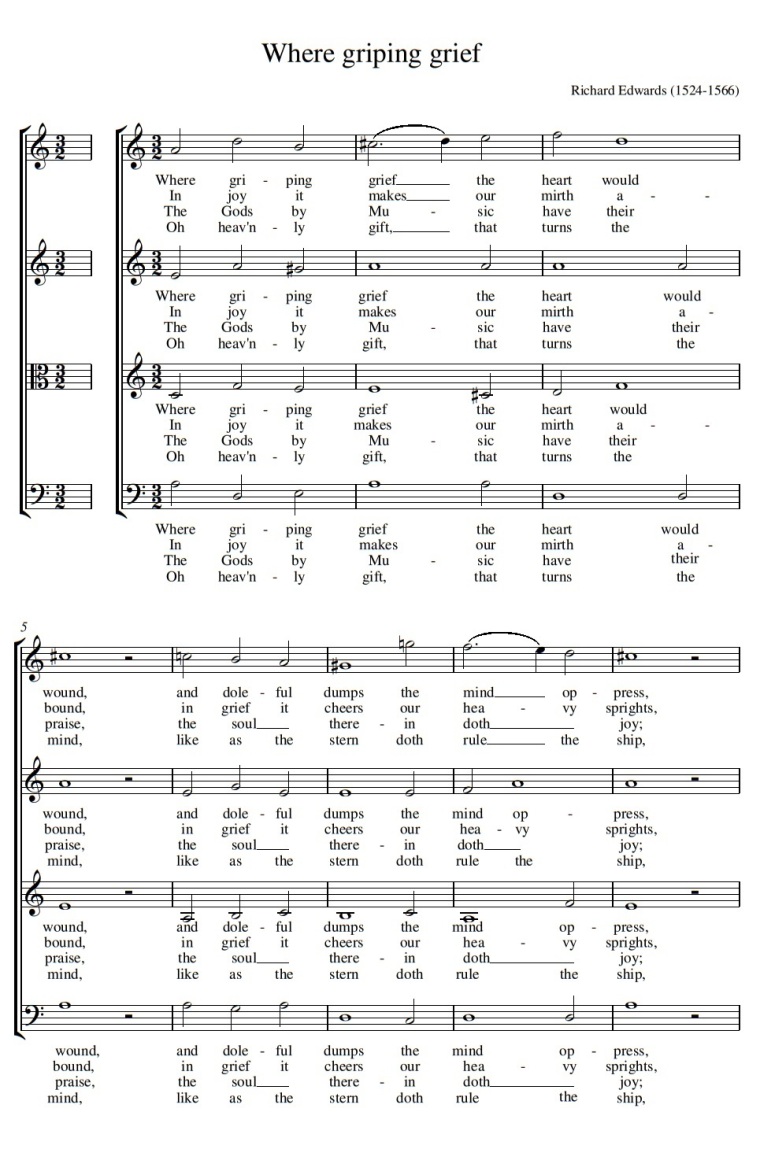
Anonimo (probabilmente Richard Edwardes, 1525 - 1566): Where griping grief. Versione per voce (soprano) e liuto: Emma Kirkby e Anthony Rooley. Versione a 4 voci: Deller Consort.
Where griping grief the heart would wound
And doleful dumps the mind oppress,
There music with her silver sound
Is wont with speed to give redress
Of troubled minds, for ev’ry sore,
Sweet music hath a salve in store.
In joy it makes our mirth abound,
In grief it cheers our heavy sprites,
The careful head relief hath found,
By music’s pleasant sweet delights;
Our senses, what should I say more,
Are subject unto Music’s law.
The gods by music have their praise,
The soul therein doth joy;
For as the Roman poets say,
In seas whom pirates would destroy,
A dolphin saved from death most sharp,
Arion playing on his harp.
O heavenly gift, that turns the mind,
Like as the stern doth rule the ship,
Of music whom the gods assigned,
To comfort man whom cares would nip,
Since thou both man and beast doth move,
What wise man then will thee reprove.
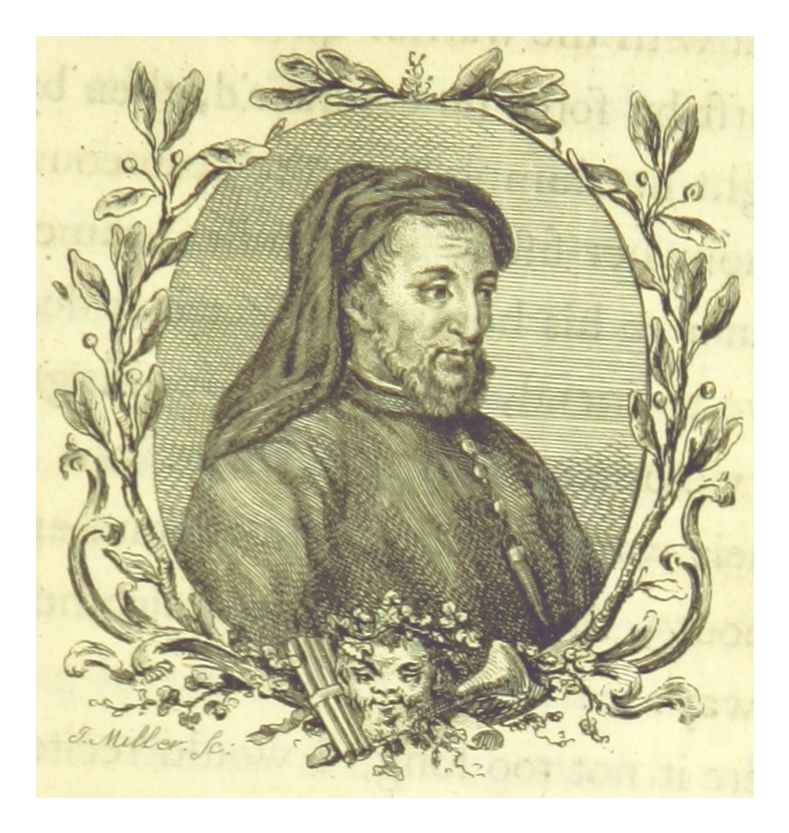
Forse figlio illegittimo di Enrico VIII, Richard Edwardes fu poeta, autore drammatico, gentiluomo della Chapel Royal e maestro del coro di voci bianche della medesima istituzione sotto le regine Maria e Elisabetta I. Nei suoi ultimi anni compilò un’ampia silloge di testi poetici di autori diversi, cui aggiunse, firmandoli, alcuni componimenti propri, e fra questi appunto Where gripyng grief, con il titolo In commendation of Musick. La raccolta, intitolata The Paradise of Dainty Devices, fu pubblicata postuma nel 1576, a cura di Henry Disle; dei molti volumi miscellanei dati alle stampe in quel periodo fu il più fortunato, tant’è vero che fu ristampato nove volte nei successivi trent’anni.
Del testo si trovano, anche nel web, numerose varianti, quasi tutte di poco conto, a cominciare da «When… Then…» invece di «Where… There…» nella prima strofa; ma è chiaramente un errore l’«Anon» che non di rado sostituisce «Arion» all’inizio dell’ultimo verso della terza strofa: Edwardes fa infatti riferimento a Arione di Métimna, l’antico citaredo che secondo Erodoto inventò il ditirambo e che, racconta il mito, si salvò da sicura morte in mare lasciandosi portare a riva da un delfino che aveva ammaliato con il canto.
Albrecht Dürer: Arion (c1514)
Le due fonti manoscritte che ci hanno tramandato la musica di Where griping grief (il Mulliner Book, raccolta di composizioni per strumento a tastiera databile fra il 1550 e il 1585 circa; e il Brogyntyn Lute Book, c1595) non riportano né il testo né il nome dell’autore: si ritiene probabile che anche la musica sia dello stesso Edwardes. La melodia è finemente cesellata; pur procedendo prevalentemente per gradi congiunti, presenta non pochi intervalli più ampi, fra cui un’insolita (per l’epoca) ottava diminuita — sulle parole «dumps the» nel secondo verso della prima strofa.
Il brano doveva essere abbastanza noto all’epoca di Shakespeare, perché questi lo cita in una scena di Romeo e Giulietta. Alla fine del IV atto, dopo che la Nutrice ha rinvenuto il corpo esanime della giovane Capuleti e un cupo inatteso dolore strazia i suoi familiari, alcuni musicisti, che erano stati convocati per allietare la festa delle nozze di Giulietta con il conte Paride, ripongono mestamente gli strumenti e stanno per andarsene quando sopraggiunge Pietro (servitore della Nutrice) e chiede ai musici di suonare per lui; gli altri rispondono che non è il momento adatto per far musica, sicché Pietro inizia a battibeccare con loro e infine, citando Where griping grief, trova il modo di insolentirli. La scena consiste in una lunga serie di giochi di parole a sfondo musicale, da alcuni critici considerati di bassa lega — tanto che qualche traduttore italiano ha pensato bene di omettere l’intero passo. Ma secondo me la scena non è affatto priva di interesse, ragion per cui la riporto qui di seguito: a sinistra l’originale inglese, a destra non esattamente una traduzione, ma piuttosto una reinterpretazione, con alcune esplicite allusioni a musiche famose ai tempi del Bardo e già note ai frequentatori di questo blog.
PETER
Musicians, O musicians, Heart’s Ease, Heart’s Ease. O, an you will have me live, play Heart’s Ease.
PIETRO
Musici, o musici, Chi passa, Chi passa. Se volete ch’io viva, suonate Chi passa.
FIRST MUSICIAN
Why Heart’s ease?
1° MUSICO
Perché Chi passa?
PETER
O musicians, because my heart itself plays My Heart is Full. O, play me some merry dump to comfort me.
PIETRO
O musici, perché il mio cuore sta danzando un passamezzo che non passa. Prego, suonate qualche allegro lamento per confortarmi.
FIRST MUSICIAN
Not a dump, we. ‘Tis no time to play now.
1° MUSICO
No, niente lamenti. Non è il momento di suonare.
PETER
You will not then?
PIETRO
Non volete suonare?
FIRST MUSICIAN
No.
1° MUSICO
No.
PETER
I will then give it you soundly.
PIETRO
Allora ve le suonerò io, sentirete.
FIRST MUSICIAN
What will you give us?
1° MUSICO
Che cosa sentiremo?
PETER
No money, on my faith, but the gleek. I will give you the minstrel.
PIETRO
Oh, non un tintinnar di monete, ve l’assicuro, ma piuttosto una canzon…atura. Ecco, vi tratterò da menestrelli.
FIRST MUSICIAN
Then I will give you the serving creature.
1° MUSICO
E allora noi ti tratteremo da giullare.
PETER
Then will I lay the serving creature’s dagger on your pate. I will carry no crotchets. I’ll re you, I’ll fa you. Do you note me?
PIETRO
E allora riceverete la sonagliera del giullare sulla zucca. Vi avevo chiesto lamenti e mi date capricci. Così ve le suonerò: prendete nota.
FIRST MUSICIAN
An you re us and fa us, you note us.
1° MUSICO
Se ce le suoni, prenderemo davvero le tue note.
SECOND MUSICIAN
Pray you, put up your dagger and put out your wit.
2° MUSICO
Per favore, riponi la tua sonagliera e va’ adagio.
PETER
Then have at you with my wit. I will dry-beat you with an iron wit and put up my iron dagger. Answer me like men.
(sings)
When griping grief the heart doth wound
And doleful dumps the mind oppress,
Then Music with her silver sound—
Why «silver sound»? Why «Music with her silver sound»? What say you, Simon Catling?
PIETRO
Andrò a mio agio e vi metterò a disagio. I miei adagi non sono meno pesanti della sonagliera. Rispondete dunque, da uomini, ai miei colpi.
(canta)
Quando ferisce il cuore arduo tormento
E la mente grava penoso tedio,
Allora Musica dal suon d’argento…
Perché «suon d’argento»? Perché dice «Musica dal suon d’argento»? Tu che ne dici, Simon Cantino?
FIRST MUSICIAN
Marry, sir, because silver hath a sweet sound.
1° MUSICO
Diamine, signore, perché l’argento ha un dolce suono.
PETER
Prates. What say you, Hugh Rebeck?
PIETRO
Ciance. E tu che dici, Ugo Ribeca?
SECOND MUSICIAN
I say, «silver sound» because musicians sound for silver.
2° MUSICO
Dico: «suon d’argento» perché i musicisti suonano per guadagnarsi dell’argento.
PETER
Prates too. What say you, James Soundpost?
PIETRO
Ciance anche queste. E tu, Giaco Bischero?
THIRD MUSICIAN
Faith, I know not what to say.
3° MUSICO
In fede mia, non so che dire.
PETER
Oh, I cry you mercy, you are the singer. I will say for you. It is «Music with her silver sound» because musicians have no gold for sounding.
(sings)
Then Music with her silver sound
With speedy help doth lend redress.
(exit)
PIETRO
Oh, ti chiedo scusa: tu sei quello che canta. Be’, risponderò io per te: dice «Musica col suon d’argento» perché i musicisti non hanno mai oro da far risonare.
(canta)
Allora Musica dal suon d’argento
Con lesto soccorso pone rimedio.
(esce)
FIRST MUSICIAN
What a pestilent knave is this same!
1° MUSICO
Che pestifero furfante è costui!
SECOND MUSICIAN
Hang him, Jack! Come, we’ll in here, tarry for the mourners and stay dinner.
(exeunt)
2° MUSICO
Lascialo perdere! Venite, entriamo: aspetteremo quelli che verranno per il funerale e ci fermeremo a pranzo.
(escono)
Anonymous (probably Richard Edwardes, 1525 - 1566): Where griping grief. Two versions:
– as a song for 1 voice (soprano) and lute: Emma Kirkby and Anthony Rooley.
– as a partsong for 4 voices: the Deller Consort.
Where griping grief the heart would wound
And doleful dumps the mind oppress,
There music with her silver sound
Is wont with speed to give redress
Of troubled minds, for ev’ry sore,
Sweet music hath a salve in store.
In joy it makes our mirth abound,
In grief it cheers our heavy sprites,
The careful head relief hath found,
By music’s pleasant sweet delights;
Our senses, what should I say more,
Are subject unto Music’s law.
The gods by music have their praise,
The soul therein doth joy;
For as the Roman poets say,
In seas whom pirates would destroy,
A dolphin saved from death most sharp,
Arion playing on his harp.
O heavenly gift, that turns the mind,
Like as the stern doth rule the ship,
Of music whom the gods assigned,
To comfort man whom cares would nip,
Since thou both man and beast doth move,
What wise man then will thee reprove.
Richard Edwardes, possibly an illegitimate son of Henry VIII, was a poet, playwright, gentleman of the Chapel Royal and choirmaster of the same institution in the reigns of Mary and Elizabeth I. In his later years he compiled an extensive anthology of poems by various authors, adding his own, including Where griping grief (under the title In commendation of Musick). The anthology, titled The Paradise of Dainty Devices, appeared posthumously in 1576, edited by Henry Disle; it was the most successful of the numerous miscellaneous books printed at the end of the sixteenth century: it was in fact reprinted nine times in the following thirty years.
There are, even on the Internet, many variants of Where griping grief, almost all of little importance, such as for example «When… Then…» instead of «Where… There…» in the first line; but the «Anon» which often replaces «Arion» at the beginning of the last line of the third stanza is clearly a mistake: Edwardes in fact refers to Arion of Methymna, a kitharode in ancient Greece credited with inventing the dithyramb: according to the myth, Arion was saved from certain death at sea by being carried ashore by a dolphin that he had enchanted with his own singing.
Albrecht Dürer: Arion (c1514)
The two manuscript sources that have handed down the music of Where griping grief (the Mulliner Book, a collection of pieces for keyboard instrument dating between about 1550 and 1585; and the Brogyntyn Lute Book, c1595) do not bear neither the text nor the name of the composer: the music is thought to be probably by Edwardes himself. Where griping grief has a finely chiseled tune; though proceeding mainly in joint degrees, it has several larger intervals, including an unusual (at that time) diminished octave — to the words «dumps the» in the second line of the first stanza.
Where griping grief must have been quite well known in Shakespeare’s time, so much so that its first stanza is quoted in a scene from Romeo and Juliet, at the end of the fourth act, after the Nurse has found the lifeless body of the young Capulet and a gloomy unexpected pain torments his relatives; the news also saddens some musicians, who had been summoned to cheer Juliet’s wedding party: they are putting away their instruments before leaving when Peter (the Nurse’s servant) asks them to play for him; since the musicians have no intention of pleasing him, Peter begins to argue with them and finally, quoting Where griping grief, finds a way to insult them.
PETER
Answer me like men.
(sings)
When griping grief the heart doth wound
And doleful dumps the mind oppress,
Then Music with her silver sound—
Why «silver sound»? Why «Music with her silver sound»? What say you, Simon Catling?
FIRST MUSICIAN
Marry, sir, because silver hath a sweet sound.
PETER
Prates. What say you, Hugh Rebeck?
SECOND MUSICIAN
I say, «silver sound» because musicians sound for silver.
PETER
Prates too. What say you, James Soundpost?
THIRD MUSICIAN
Faith, I know not what to say.
PETER
Oh, I cry you mercy, you are the singer. I will say for you. It is «Music with her silver sound» because musicians have no gold for sounding.
(sings)
Then Music with her silver sound
With speedy help doth lend redress.
(exit)
Fryderyk Chopin (1810 - 1849): Mazurka in fa diesis minore op. 6 n. 1 (1830-31). Arthur Rubinstein, pianoforte.
Il tono popolareggiante è posto subito in evidenza, con la caratteristica terzina che inizia ciascuna semifrase del primo tema; questo consiste di due periodi, uguali nella prima metà e differenti nella seconda, ed è ripetuto cinque volte: la prima ripetizione è immediata, mentre alle successive sono intercalati altri tre episodi, il secondo dei quali è una variante del primo. La struttura complessiva segue dunque lo schema AABAB’ACA. Nel tema A, all’inizio del secondo periodo è posta la didascalia «rubato»: questa indicazione ricorre in tutte le Mazurche delle prime raccolte, fino al secondo brano dell’op. 24.
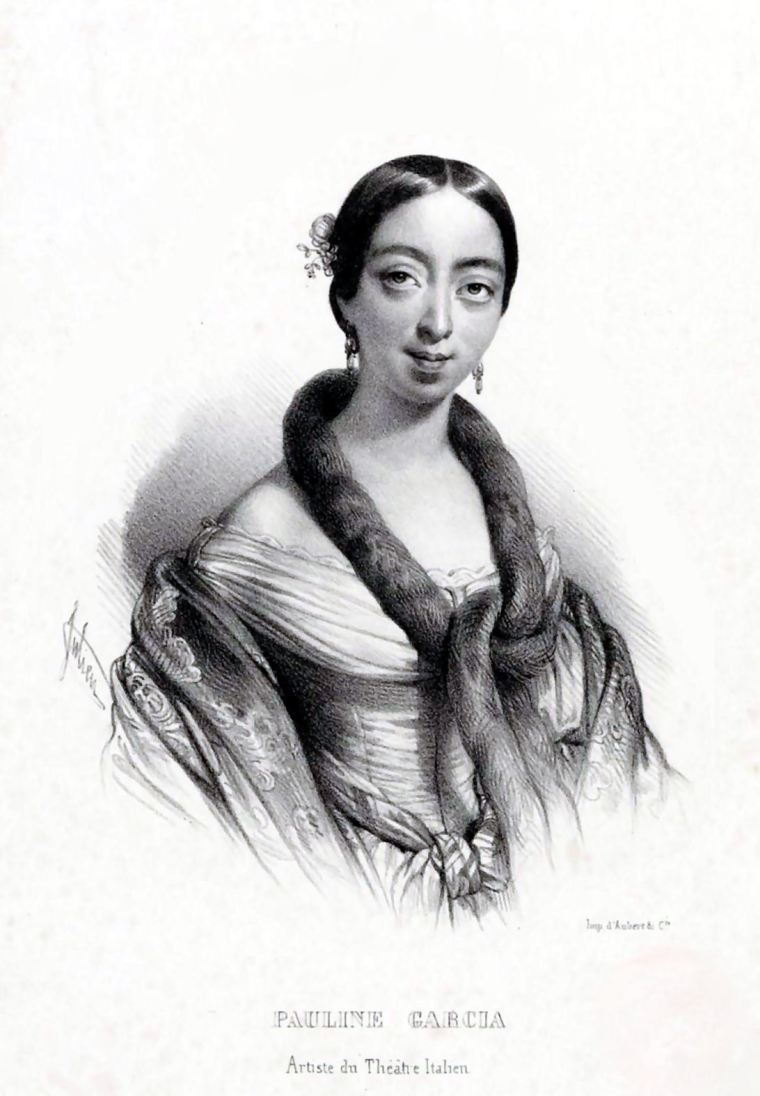
Pauline Viardot-García (18 luglio 1821 - 1910): Plainte d’amour, sulla Mazurca op. 6 n. 1 di Chopin; testo di Louis Pomey. Marina Comparato, mezzosoprano; Elisa Triulzi, pianoforte.
Chère âme, sans toi j’expire,
Pourquoi taire ma douleur?
Mes lèvres veulent sourire
Mes yeux disent mon malheur.
Hélas! Loin de toi j’expire.
Que ma cruelle peine,
De ton âme hautaine
Désarme la rigueur.
Cette nuit dans un rêve,
Je croyais te voir;
Ah, soudain la nuit s’achève,
Et s’enfuit l’espoir.
Je veux sourire
Hélas! La mort est dans mon coeur.
Celebre mezzosoprano e compositrice, sorella della non meno famosa Maria Malibran, la Viardot fu allieva e amica di Chopin, che per lei nutrì sempre profonda stima e simpatia. Sembra che Fryderyk non disprezzasse affatto quel tipo di elaborazioni delle sue opere: alla Viardot espresse anzi il proprio gradimento. Pauline Viardot pubblicò due raccolte di Mazourkas de Chopin arrangées pour la voix, in tutto 12 brani, nel 1848.
NB: salvo diversa indicazione, i testi inseriti negli articoli dedicati a Chopin nel presente blog sono tratti dal volume Chopin: Signori il catalogo è questo di C. C. e Giorgio Dolza, Einaudi, Torino 2001.
Giovanni Bononcini (18 luglio 1670 - 1747): Il lamento d’Olimpia, cantata da camera per 1 voce, 2 violini e basso continuo (pubblicata in Cantate e duetti dedicati alla Sacra Maestà di Giorgio, re della Gran Bretagna, Londra 1721). Gloria Banditelli, contralto; Ensemble Aurora, dir. Enrico Gatti.
I. Preludio: Affettuoso – Allegro
II. Recitativo [3:32]
Le tenui rugiade
scotea dal carro d’or sull’erbe e i fiori
la rubiconda Aurora
allor ch’Olimpia, non ben desta ancora,
dell’amante infedele
vedova a un tratto ritrovò le piume.
Sciolse la tema dell’incerto danno
le reliquie del sonno in su i bei lumi;
e sospesa e tremante
dal lido al letto e dalla selva al lido,
chiamando il nome infido,
poiché più volte riportò le piante,
su la cima d’un sasso,
il guardo fisse entro l’aere dubbioso,
e, fra mille lamenti,
queste all’aure spiegò voci dolenti.
III. Aria: Affettuoso [4:48]
Vasto mar,
balze romite
deh mi dite,
il mio bene
ov’è, che fa.
Onde quiete,
aure serene
erbe, fiori,
ombrose piante,
il mio bene
se sapete,
rispondete
per pietà.
IV. Recitativo [8:47]
Lassa, che son la luce
la mia doglia s’avanza.
Io veggio, oh Dio, le gonfie
ingannatrici vele
dello sposo infedele
fuggir per l’acque, e portar lunge il vento
colla nave spergiura il mio lamento
Queste, Bireno ingrato,
son le promesse, il fido amore è questo?
Quanti, quanti pur dinanzi,
sotto il silenzio dell’ombrosa notte
e il tremolar delle invocate stelle,
giuramenti non fe’ d’esser costante!
Misera Olimpia, abbandonata amante,
in qual mente, in qual seno
più luogo avrà la vereconda fede,
s’io son schernita e m’ingannò Bireno?
V. Aria: Con spirito [10:20]
Quando dicea d’amarmi
allor volea lasciarmi
e mi tradiva allor.
Di mille inganni fabro
fede giurava il labro,
ed era infido il cor .
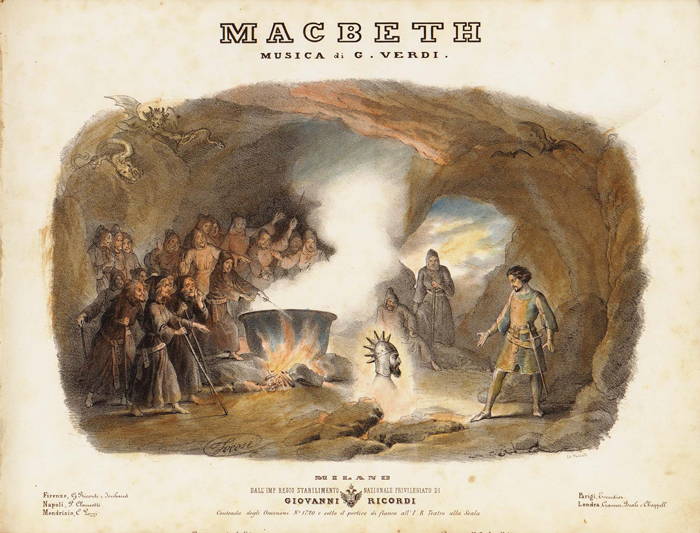
Giuseppe Verdi (1813 - 1901): Ballet music from Macbeth (1865). WDR Rundfunkorchester, dir. Massimo Zanetti.
Based on Shakespeare’s play of the same name, Verdi’s Macbeth was premiered on March 14th, 1847. The ballet scene was added to Verdi’s special Paris debut: the new version of the opera was first performed on April 21st, 1865.
Niccolò Castiglioni (17 luglio 1932 - 1996): Hymne per 12 voci a cappella (1989) su testo tratto dallo Stabat mater di Jacopone da Todi. Schola Cantorum Stuttgart, dir. Clytus Gottwald.
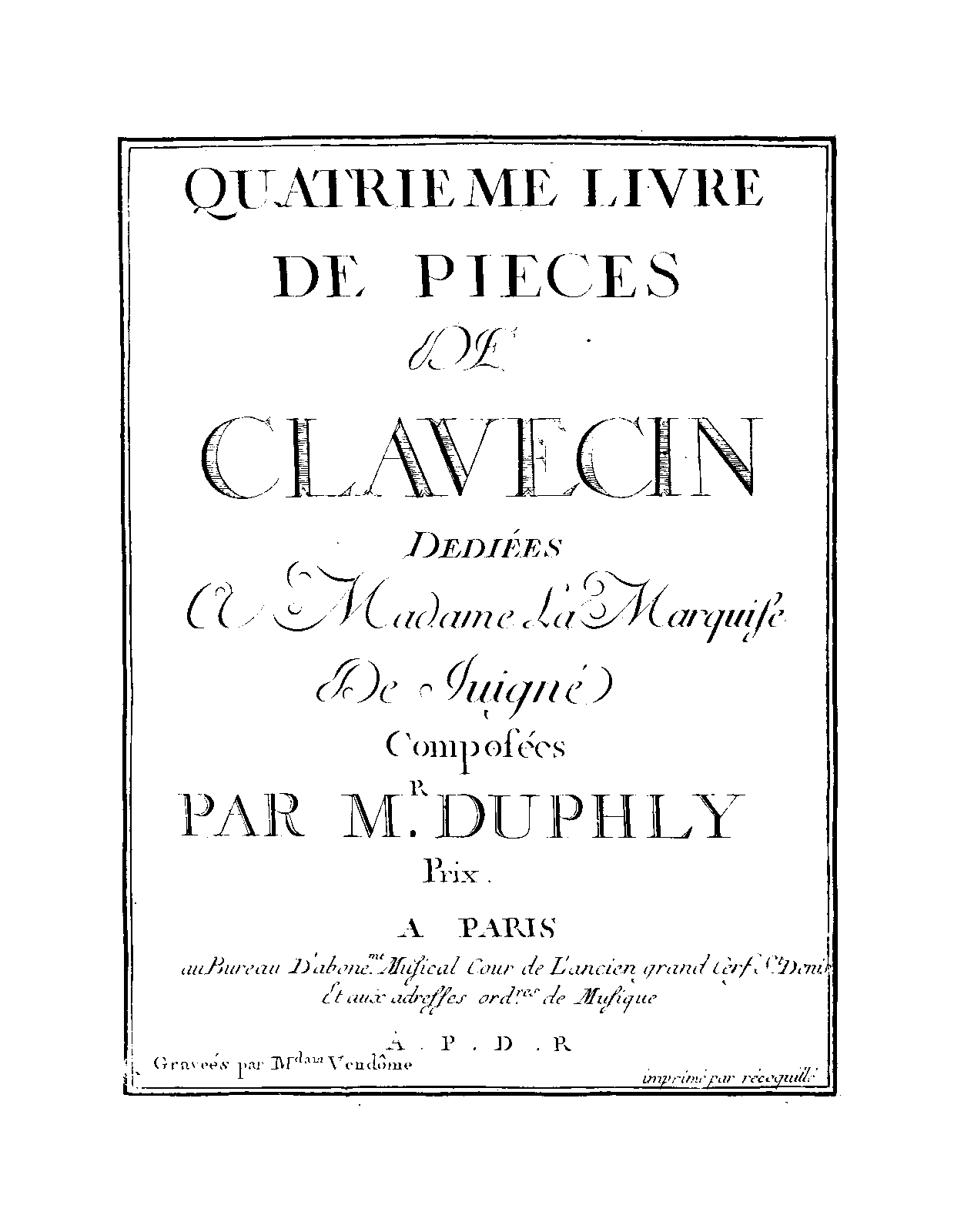
Jean-Frédéric Edelmann (1749 - ghigliottinato il 17 luglio 1794): Sonata in do minore op. 2 n. 1 (1775). Sylvie Pécot-Douatte (1957 - 2004), clavicembalo.
Fiorenzo Maschera (1541 - 16 luglio 1584): Canzon alla francese «La Capriola» a 4 voci (pubblicata in Libro Primo de canzoni da sonare, 1582, n. 1). Liuwe Tamminga, organo.
Goffredo Petrassi (16 luglio 1904 - 2003): Sonata da camera per clavicembalo e 10 strumenti (1948). Francesco Massimi, clavicembalo; Ensemble OTLIS, dir. Carlo Palleschi.
Sir James MacMillan (16 luglio 1959): The Gallant Weaver per coro a cappella (1997) su testo di Robert Burns. The Sixteen, dir. Harry Christophers
Where Cart rins rowin’ to the sea,
By mony a flower and spreading tree,
There lives a lad, the lad for me,
He is a gallant Weaver.
O, I had wooers aught or nine,
They gied me rings and ribbons fine;
And I was fear’d my heart wad tine,
And I gied it to the Weaver.
My daddie sign’d my tocher-band,
To gie the lad that has the land,
But to my heart I’ll add my hand,
And give it to the Weaver.
While birds rejoice in leafy bowers,
While bees delight in opening flowers,
While corn grows green in summer showers,
I love my gallant Weaver.
Giovanni Buonaventura Viviani (15 luglio 1638 - p1692): Beatus vir (Salmo 111) per basso e strumenti (pubblicato in Salmi, Mottetti e Litanie della B. V. a 1. 2. 3. voci op. V, 1688). Markus Flaig, basso; ensemble Vita & Anima, dir. Peter Waldner.
Jane Vieu (15 luglio 1781 - 1955): Sérénade japonaise, mélodie (1903) su testo di Serge Rello. Katherine Eberle, mezzosoprano; Robin Guy, pianoforte.
Mets ta robe d’azur,
Chausse tes pieds fragiles.
Près du bambou flexible
Une source frémit:
Les étoiles s’y mirent,
En des sursauts fébriles,
Comme des yeux de femme
Aux yeux de leur ami!
Viens, Taïmu, descends,
La rosée est divine,
Clair joyau sous la lune
A l’opalin baiser;
Je voudrais l’accrocher
A ta blonde poitrine
Et la prendre à tes cils,
Pour aller m’en griser.
Mets ta robe d’azur…
La lune de cristal
Fait la nature bléme,
C’est l’heure du silence ému!
Le cœur s’écoute mieux!
Il semble que tout s’aime!
Aimons nous! douce Taïmu!
Diego Ortiz (c1510 - c1570): Recercada quinta sobre el passamezzo antiguo: Zarabanda, dal Tratado de glosas (trattato sulle variazioni, 1553). Hespèrion XXI, dir. e viola da gamba Jordi Savall.
Diego Ortiz: Recercada VII sobre la romanesca. Stessi interpreti.
Forse, ascoltando queste recercadas vi sarà venuta in mente Greensleeves: una ragione c’è, ora vedremo di che si tratta.
Passamezzo e romanesca sono danze in voga nel Cinquecento e nei primi anni del secolo successivo. Il passamezzo, di origine italiana, ha andamento lievemente mosso e ritmo binario; sotto il profilo coreutico è molto affine alla pavana, tanto che non di rado, all’epoca, viene con questa identificato: nell’Orchésographie (1588), Thoinot Arbeau scrive che il passamezzo è «une pavane moins pesamment et d’une mesure plus légière». La musica del passamezzo si fonda sopra uno schema armonico caratteristico, non molto dissimile da quello della follia; i musicisti europei tardorinascimentali se ne innamorano e l’impiegano quale base di serie di variazioni e di composizioni vocali: fra gli esempi più celebri vi sono The Oak and the Ash e, appunto, Greensleeves.
Intorno alla metà del Cinquecento, lo schema armonico del passamezzo dà origine a una variante destinata a avere altrettanta fortuna: viene chiamata passamezzo moderno per distinguerla dall’altra, detta conseguentemente passamezzo antico. Nella seconda parte del secolo, a fianco di passamezzo antico e passamezzo moderno entrano nell’uso altre formule armoniche stilizzate, come per esempio quella detta romanesca, dal nome di una danza affine alla gagliarda, di origine forse italiana o forse spagnola. Lo schema della romanesca è quasi identico a quello del passamezzo antico, da cui differisce solo per l’accordo iniziale.
La più antica versione nota di Greensleeves, che risale agli anni ’80 del XVI secolo, si fonda sul passamezzo antico, ma nel volgere di breve tempo viene soppiantata da una variante che adotta il basso della romanesca. Quasi certamente è quest’ultima la versione conosciuta da Shakespeare, il quale per due volte fa riferimento alla «melodia di Greensleeves» nella commedia Le allegre comari di Windsor (ce ne occuperemo presto). La versione originale, identificata nell’Ottocento dal musicografo inglese William Chappell (cui si deve la raccolta Popular Music of the Olden Time, 1855-59), è oggi la più nota e diffusa.
Listening to these recercadas, perhaps Greensleeves will have come to your mind: there’s a reason, now we’ll see what it’s about.
Passamezzo and romanesca were popular dances in the sixteenth and early seventeenth centuries. The passamezzo has Italian origins, slightly fast movement and binary rhythm; the dance is very similar to the pavana, so that in 16th century it was often identified with it: in his treatise Orchésographie (1588) Thoinot Arbeau asserts that the passamezzo is «une pavane moins pesamment et d’une mesure plus légière». The music of the passamezzo is based on a characteristic harmonic pattern, similar to that of the follia; late Renaissance European musicians fell in love with it and used it as a ground for sets of variations and for singing poetry: among the most famous examples are The Oak and the Ash and, precisely, Greensleeves.
Around the middle of the sixteenth century, the harmonic formula of the passamezzo gave rise to a variant that was equally successful: it was called passamezzo moderno to distinguish it from the other, consequently called passamezzo antico. During the second half of the century, alongside the passamezzo antico and moderno, other stylized harmonic formulas came into use, such as for example the romanesca, which took its name from a dance similar to the gagliarda, of Italian or perhaps Spanish origin. The pattern of the romanesca is almost identical to that of the passamezzo antico, from which it differs only in the first chord.
The earliest known version of Greensleeves, dating from about 1580, is based on the passamezzo antico ground, but was soon superseded by a variant adopting the harmonic formula of the romanesca. The latter is almost certainly the version known from Shakespeare, who refers twice to «the tune of Greensleeves» in the play The Merry Wives of Windsor (which we will deal with soon). The original version, identified in the 19th century by the English musicographer William Chappell (who published the collection Popular Music of the Olden Time, 1855-59), is today the best known and most widespread.
Unsuk Chin (14 luglio 1961): Allegro ma non troppo per percussionista e nastro magnetico (1994-98). Solista Ying-Hsueh Chen.
Unsuk Chin: Toccata (Studio per pianoforte n. 5, 2003). Mei Yi Foo, pianoforte.
Unsuk Chin: Mad Tea-Party Ouverture dall’opera Alice in Wonderland (libretto di David Henry Hwang, da Lewis Carroll; 2007). Orchestra Filarmonica di Seul, dir. Myung-Whun Chung.
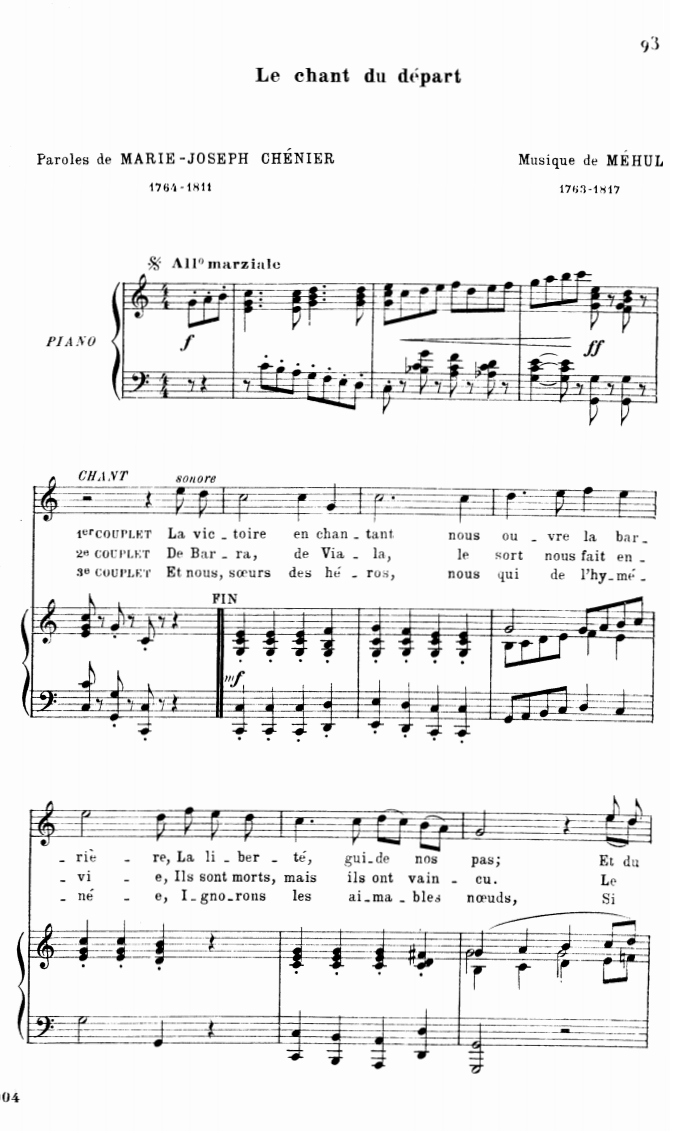
Étienne-Nicolas Méhul (1763 - 1817): Le Chant du départ (originariamente Hymne de la liberté) per voci soliste, coro e orchestra (1794) su testo di Marie-Joseph Chénier (1764 - 1811). Versione con orchestra di strumenti a fiato e timpani: Antonella Balducci, soprano; Dennis Hall, baritono; Coro e Orchestra della Radiotelevisione della Svizzera italiana, dir. Herbert Handt.
Le Chant du départ (testo completo)
La victoire en chantant nous ouvre la barrière.
La liberté guide nos pas.
Et du Nord au Midi, la trompette guerrière
A sonné l’heure des combats.
Tremblez, ennemis de la France,
Rois ivres de sang et d’orgueil!
Le Peuple souverain s’avance;
Tyrans descendez au cercueil.
Chant des guerriers (refrain):
La République nous appelle:
Sachons vaincre ou sachons périr.
Un Français doit vivre pour elle,
Pour elle un Français doit mourir.
Une mère de famille :
De nos yeux maternels ne craignez pas les larmes:
Loin de nous de lâches douleurs!
Nous devons triompher quand vous prenez les armes:
C’est aux rois à verser des pleurs.
Nous vous avons donné la vie,
Guerriers, elle n’est plus à vous;
Tous vos jours sont à la patrie:
Elle est votre mère avant nous.
(refrain)
Deux vieillards :
Que le fer paternel arme la main des braves;
Songez à nous au champ de Mars;
Consacrez dans le sang des rois et des esclaves
Le fer béni par vos vieillards;
Et, rapportant sous la chaumière
Des blessures et des vertus,
Venez fermer notre paupière
Quand les tyrans ne seront plus.
(refrain)
Un enfant :
De Barra, de Viala le sort nous fait envie;
Ils sont morts, mais ils ont vaincu.
Le lâche accablé d’ans n’a point connu la vie:
Qui meurt pour le peuple a vécu.
Vous êtes vaillants, nous le sommes:
Guidez-nous contre les tyrans;
Les républicains sont des hommes,
Les esclaves sont des enfants.
(refrain)
Une épouse :
Partez, vaillants époux: les combats sont vos fêtes.
Partez, modèles des guerriers:
Nous cueillerons des fleurs pour en ceindre vos têtes.
Nos mains tresseront vos lauriers.
Et, si le temple de mémoire
S’ouvrait à vos mânes vainqueurs,
Nos voix chanteront votre gloire,
Nos flancs porteront vos vengeurs.
(refrain)
Une jeune fille :
Et nous, sœurs des héros, nous qui de l’hyménée
Ignorons les aimables nœuds,
Si, pour s’unir un jour à notre destinée,
Les citoyens forment des vœux,
Qu’ils reviennent dans nos murailles
Beaux de gloire et de liberté,
Et que leur sang, dans les batailles,
Ait coulé pour l’égalité.
(refrain)
Trois guerriers :
Sur le fer devant Dieu, nous jurons à nos pères,
À nos épouses, à nos sœurs,
À nos représentants, à nos fils, à nos mères,
D’anéantir les oppresseurs:
En tous lieux, dans la nuit profonde,
Plongeant l’infâme royauté,
Les Français donneront au monde
Et la paix et la liberté.
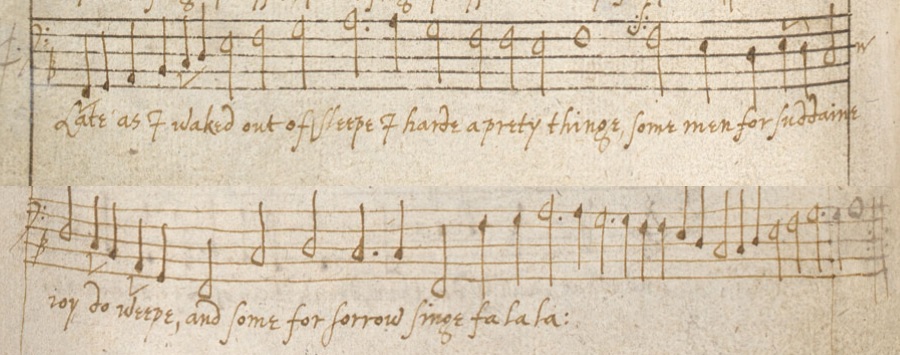
Anonymous (16th century): Then they for sudden joy did weep, Fool’s song from the 1st act, scene 4, of Shakespeare’s King Lear (1605-06). The Deller Consort.
Then they for sudden joy did weep
And I for sorrow sung.
Asger Hamerik (1843 - 13 luglio 1923): Quinta Sinfonia in sol minore op. 36, Symphonie sérieuse (1889–91). Helsingborgs Symfoniorkester, dir. Thomas Dausgaard.
Oscar van Hemel (1892 - 1981): Four Shakespeare sonnets for mixed choir (1961). Vocaal Ensemble PANiek.
Music to hear (Sonnet 8)
Music to hear, why hear’st thou music sadly?
Sweets with sweets war not, joy delights in joy.
Why lovest thou that which thou receivest not gladly,
Or else receivest with pleasure thine annoy?
If the true concord of well-tunèd sounds,
By unions married, do offend thine ear,
They do but sweetly chide thee, who confounds
In singleness the parts that thou shouldst bear.
Mark how one string, sweet husband to another,
Strikes each in each by mutual ordering,
Resembling sire and child and happy mother,
Who, all in one, one pleasing note do sing.
Whose speechless song, being many, seeming one,
Sings this to thee: «Thou single wilt prove none».
No longer mourn (Sonnet 71) [1:32]
No longer mourn for me when I am dead
Than you shall hear the surly sullen bell
Give warning to the world that I am fled
From this vile world with vilest worms to dwell;
Nay, if you read this line, remember not
The hand that writ it; for I love you so,
That I in your sweet thoughts would be forgot,
If thinking on me then should make you woe.
O, if (I say) you look upon this verse,
When I (perhaps) compounded am with clay,
Do not so much as my poor name rehearse,
But let your love even with my life decay,
Lest the wise world should look into your moan,
And mock you with me after I am gone.
The little love-god (Sonnet 154) [3:34]
The little Love-god lying once asleep,
Laid by his side his heart-inflaming brand,
Whilst many nymphs that vowed chaste life to keep
Came tripping by; but in her maiden hand
The fairest votary took up that fire
Which many legions of true hearts had warmed;
And so the General of hot desire
Was, sleeping, by a virgin hand disarmed.
This brand she quenched in a cool well by,
Which from Love’s fire took heat perpetual,
Growing a bath and healthful remedy,
For men diseased; but I, my mistress’ thrall,
Came there for cure and this by that I prove,
Love’s fire heats water, water cools not love.
When my love swears (Sonnet 138) [5:09]
When my love swears that she is made of truth,
I do believe her, though I know she lies,
That she might think me some untutored youth,
Unlearnèd in the world’s false subtleties.
Thus vainly thinking that she thinks me young,
Although she knows my days are past the best,
Simply I credit her false-speaking tongue:
On both sides thus is simple truth suppressed.
But wherefore says she not she is unjust?
And wherefore say not I that I am old?
Oh, love’s best habit is in seeming trust,
And age in love loves not to have years told.
Therefore I lie with her and she with me,
And in our faults by lies we flattered be.






 English translation: please
  Forse figlio illegittimo di Enrico VIII, Richard Edwardes fu poeta, autore drammatico, gentiluomo della Chapel Royal e maestro del coro di voci bianche della medesima istituzione sotto le regine Maria e Elisabetta I. Nei suoi ultimi anni compilò un’ampia silloge di testi poetici di autori diversi, cui aggiunse, firmandoli, alcuni componimenti propri, e fra questi appunto Where gripyng grief, con il titolo In commendation of Musick. La raccolta, intitolata The Paradise of Dainty Devices, fu pubblicata postuma nel 1576, a cura di Henry Disle; dei molti volumi miscellanei dati alle stampe in quel periodo fu il più fortunato, tant’è vero che fu ristampato nove volte nei successivi trent’anni.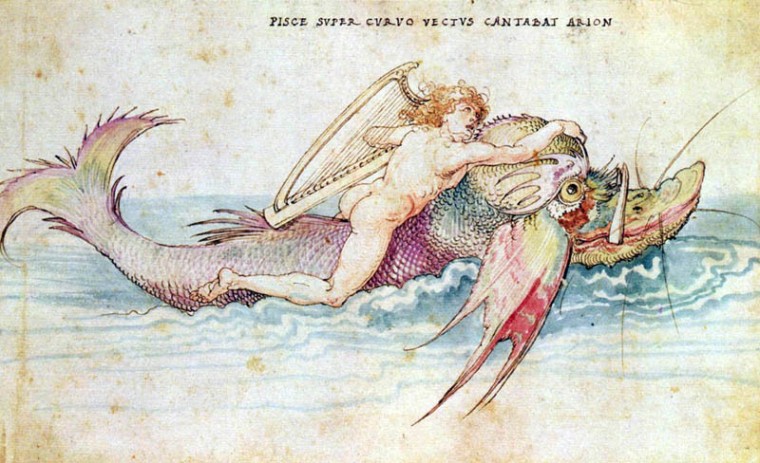



 Forse, ascoltando queste recercadas vi sarà venuta in mente Greensleeves: una ragione c’è, ora vedremo di che si tratta.
  Listening to these recercadas, perhaps Greensleeves will have come to your mind: there’s a reason, now we’ll see what it’s about.


 Asger Hamerik (1843 - 13 luglio 1923): Quinta Sinfonia in sol minore op. 36, Symphonie sérieuse (1889–91). Helsingborgs Symfoniorkester, dir. Thomas Dausgaard.
 la regina gioiosa