
Wilhelm Middelschulte (1863 - 4 maggio 1943): Kanonische Fantasie über B A C H (1906). Brink Bush all’organo della St. Anne Church in Rochester (NY).
B A C H nella nomenclatura anglosassone corrispondono a SI♭ LA DO SI♮.

Wilhelm Middelschulte (1863 - 4 maggio 1943): Kanonische Fantasie über B A C H (1906). Brink Bush all’organo della St. Anne Church in Rochester (NY).
B A C H nella nomenclatura anglosassone corrispondono a SI♭ LA DO SI♮.
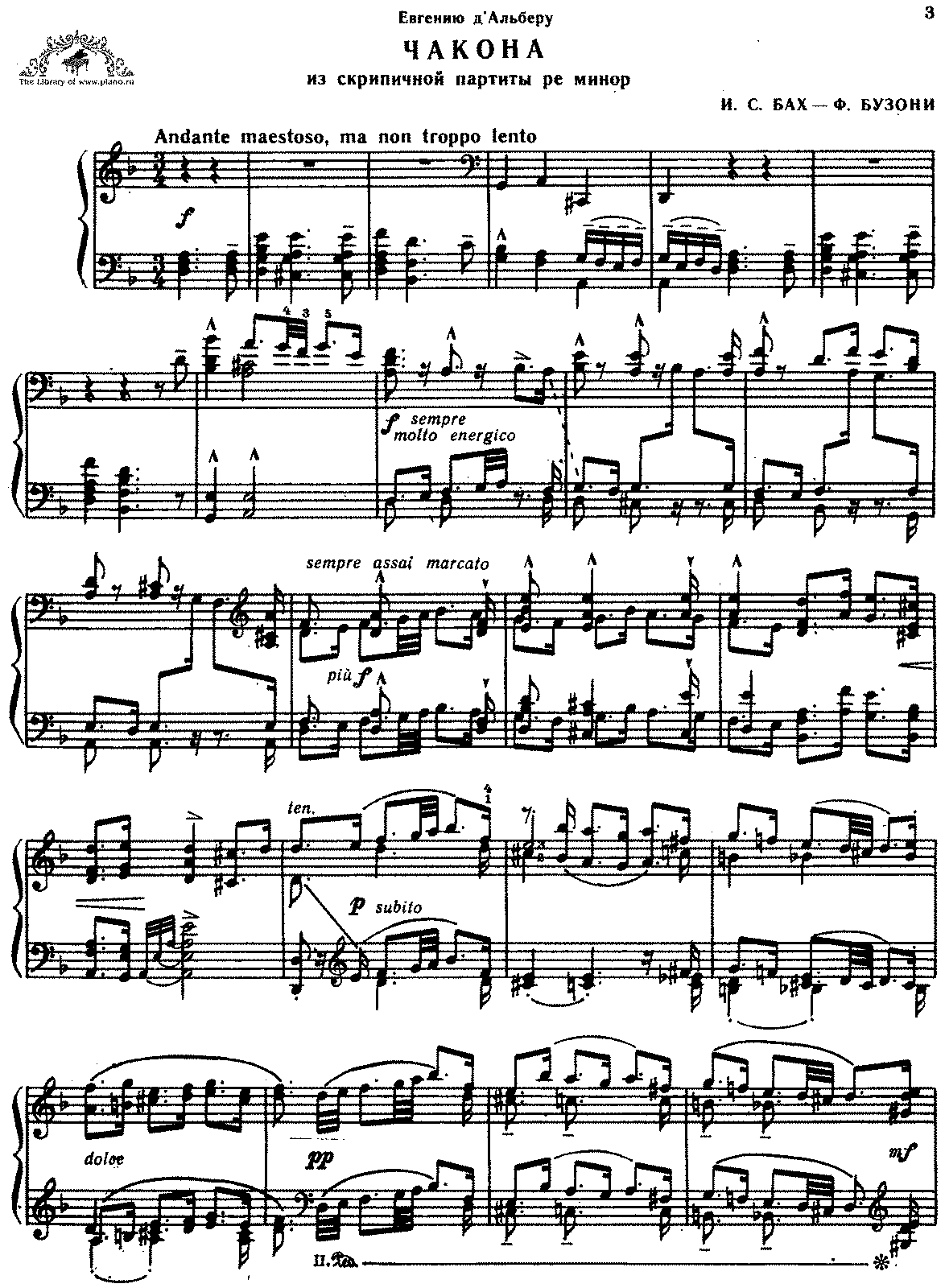
Tat’jana Nikolaeva (4 maggio 1924 - 1993) interpreta la Ciaccona dalla Partita in re minore per violino (BWV 1004) di Johann Sebastian Bach nella celebre trascrizione di Ferruccio Busoni.
Heinrich Ignaz Franz von Biber (3 maggio 1644 - 1704): Sonata in mi minore per violino e basso continuo C 142 (n. 5 delle 8 Sonatæ, violino solo, … ab Henrico I. F. Biber … Anno M.DC.LXXXI ). Ensemble Voices of Music: Elizabeth Blumenstock, violino: William Skeen, viola da gamba; David Tayler, arciliuto; Hanneke van Proosdij, clavicembalo.


Ernest John Moeran (1894 - 1950): On a May Morning per pianoforte (1921). Una Hunt.

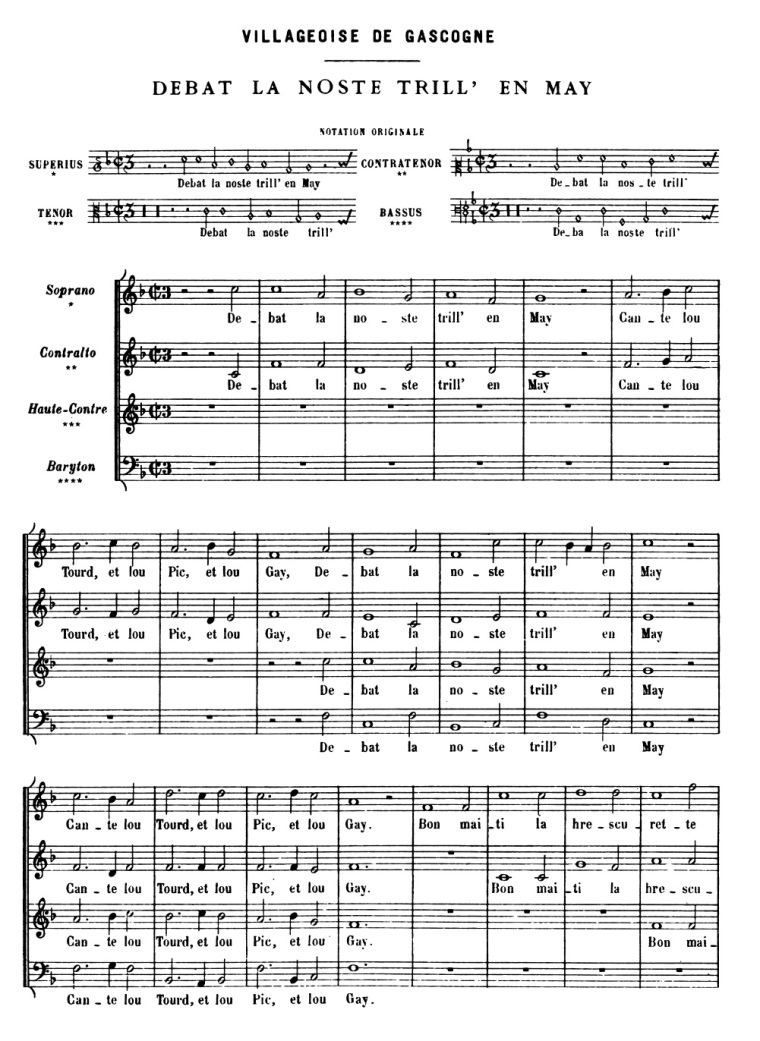
Claude Le Jeune (c1530 - 1600): Debat la noste trill’ en may, chanson a 4 voci e 4 viole (1585). Ensemble «Clément Janequin», Ensemble Les Eléments.
|
Testo originale in dialetto guascone |
Traduzione in francese moderno |
|
Debat la noste trill’ en May |
Sous notre treille en mai |
Vicente Martín y Soler (2 maggio 1754 - 1806): La costanza, canzonetta (pubblicata in XII Canzonette italiane accompagnate col cembalo o arpa o chitarra, c1788, n. 7). Teresa Berganza, mezzosoprano; José Miguel Moreno, chitarra.
No che lasciar non posso
il caro mio tesoro,
per lui languisco e moro,
fedel ognor sarò.
L’idolo mio diletto
che m’ha ferito il petto
lasciar d’amar non so.

Antonín Dvořák (1841 - 1° maggio 1904): Polednice (La strega di mezzodì), poema sinfonico op. 108, B 196 (1896), ispirato dall’omonima poesia di Karel Erben. Česká filharmonie, dir. Václav Talich.
|
U lavice dítě stálo, Poledne v tom okamžení, Mlč, hle husar a kočárek – A zas do hrozného křiku – Pojď si proň, ty polednice, Malá, hnědá, tváři divé „Dej sem dítě!“ – „Kriste Pane, Ke stolu se plíží tiše A vinouc je, zpět pohlíží – Již vztahuje po něm ruku – Tu slyš: jedna – druhá – třetí – Ve mdlobách tu matka leží, Karel Erben |
Vicino al banco il bambino Tra poco è mezzogiorno, Zitto! hai i soldatini – La madre allora esclama: Vieni a prenderlo, o strega, Un fazzoletto in testa, „Dammi il bambino!“ – „O Cristo! La strega come un’ombra Lo stringe a sé, indietreggia – Già allunga la sua mano, Ora suona la campana La madre giace svenuta, traduzione di Paolo Statuti |

 Rolf Martinsson (1° maggio 1956): Concerto per contrabbasso e orchestra (2011). Edicson Ruiz, contrabbasso; Göteborgs Symfoniorkester, dir. Manuel López-Gómez.
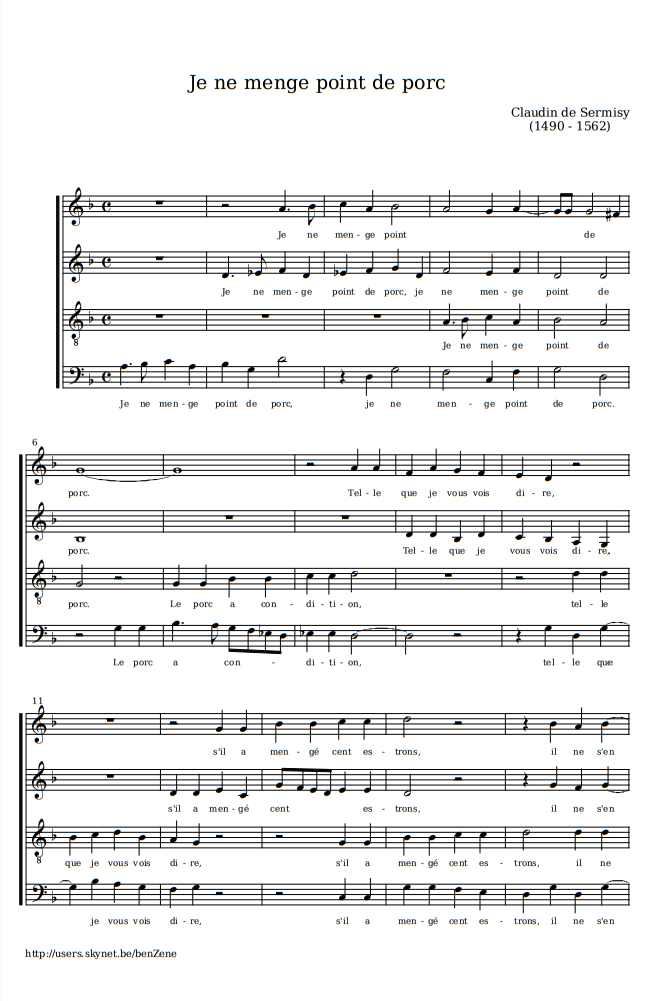
Claudin de Sermisy (c1490 - 1562): Je ne menge point de porc, chanson a 4 voci (1538). Molto bravo Simone Lo Castro, il quale canta tutte e quattro le parti.
Sermisy non mangia carne di maiale e ci spiega perché:
Je ne menge point de porc,
telle que je vois dire:
s’il a mengé cent estrons,
il ne s’en fera que rire.
Il les tourne, il les vire,
il leur rit et puis les mort.
Je ne menge point de porc.
Le porc s’en alloit jouant
tout au long d’une rivière;
il veit ung estron nouant,
il luy print a faire chere
disant en ceste maniere:
« Estron nouant en riviere,
rend toy ou tu es mort. »
Je ne menge point de porc.
Ellen Taaffe Zwilich (30 aprile 1939): Prologue and Variations per orchestra d’archi (1983). Indianapolis Symphony Orchestra, dir. John Nelson.
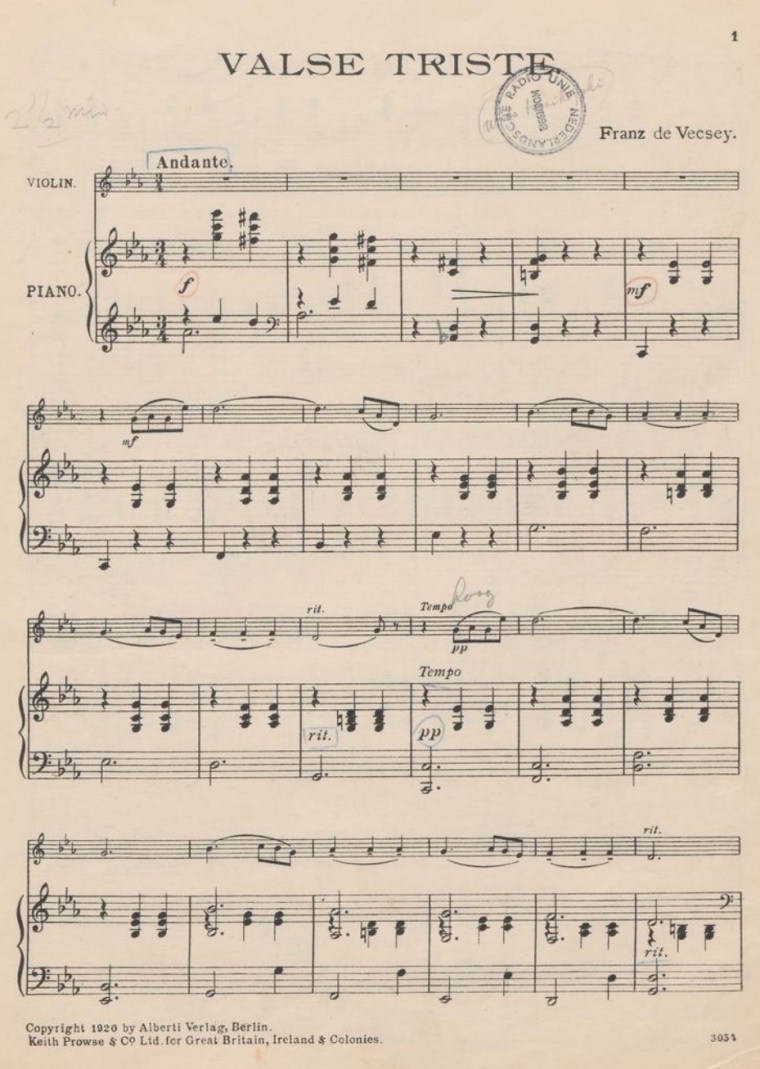
Franz von Vecsey (1893 - 1935): Valse triste in do minore per violino e pianoforte (1913). Svetlin Roussev, violino; Yeol Eum Son, pianoforte.
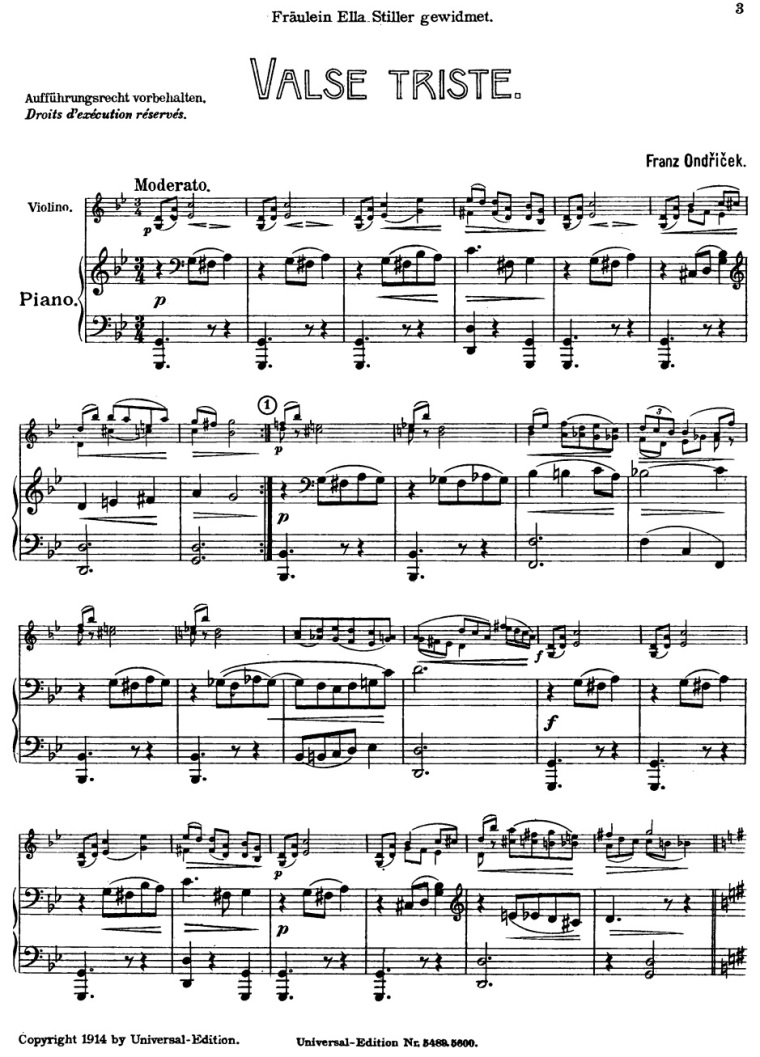
František Ondříček (29 aprile 1857 - 1922): Valse triste in sol minore per violino e pianoforte (1914). Václav Snítil, violino; Josef Hála, pianoforte.
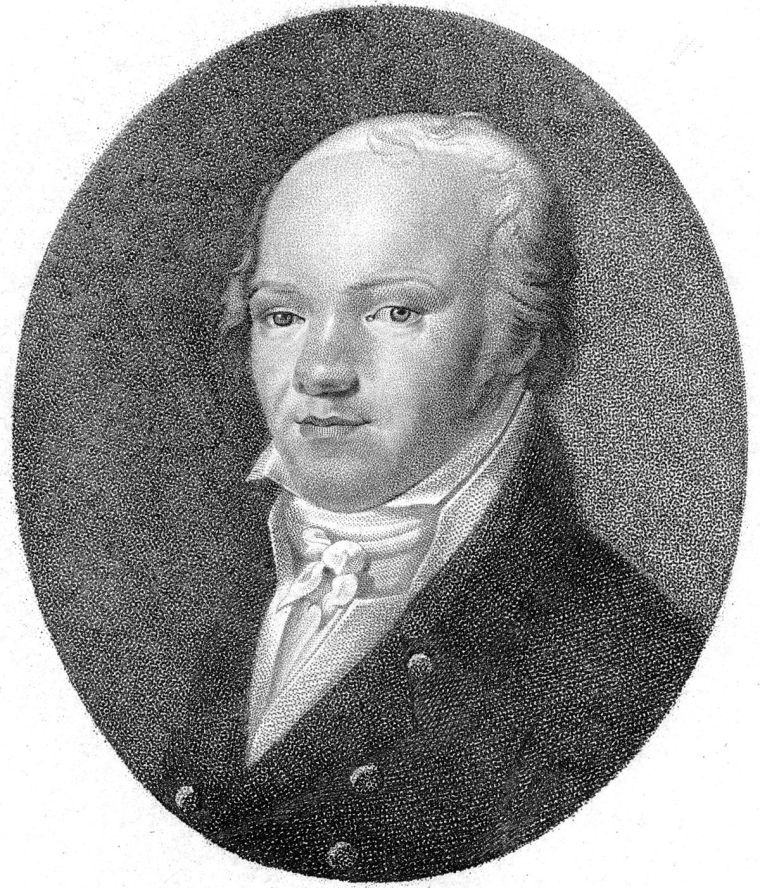
Craig Armstrong (29 aprile 1959) e altri: Far from the Madding Crowd, musiche per il film diretto nel 2015 da Thomas Vinterberg, 4° adattamento cinematografico dell’omonimo romanzo di Thomas Hardy.

Anonimo (sec. XIV): Saltarello. Studio der frühen Musik, dir. Thomas Binkley.
Nato a Cleveland il 26 dicembre 1931, Thomas Binkley studiò musica e musicologia presso le Università dell’Illinois e di Monaco; nel capoluogo bavarese si stabilì nel 1959, e l’anno seguente vi fondò lo «Studio der frühen Musik», destinato a diventare uno dei più famosi ensemble di musica medievale e rinascimentale. Docente alla Schola Cantorum Basiliensis dal 1973 al ’77, Binkley rientrò poi negli Stati Uniti: insegnò per due anni alla Stanford University e nel 1979 fondò l’Early Music Institute presso l’Università dell’Indiana, a Bloomington; in questa città morì il 28 aprile 1995.
Assai cospicua è la produzione discografica dello «Studio der frühen Musik». Il brano che sottopongo alla vostra attenzione fu originariamente pubblicato in un disco del 1970 (etichetta Telefunken) interamente dedicato alla musica dei trovatori; è costituito dall’accostamento di due danze diverse ma affini, la prima in ritmo binario, la seconda in ritmo ternario: si tratta di due dei quattro saltarelli trascritti in un manoscritto trecentesco di origine toscana, oggi conservato nella British Library con la segnatura Add. 29987, la più antica fonte pervenutaci per quanto riguarda le danze di questo genere.

Michael Daugherty (28 aprile 1954): Metropolis Symphony (1988–93). Nashville Symphony Orchestra, dir. Giancarlo Guerrero.
I began composing my Metropolis Symphony in 1988, inspired by the celebration in Cleveland of the fiftieth anniversary of Superman’s first appearance in the comics. When I completed the score in 1993, I dedicated it to the conductor David Zinman, who had encouraged me to compose the work, and to the Baltimore Symphony Orchestra. The Metropolis Symphony evokes an American mythology that I discovered as an avid reader of comic books in the fifties and sixties. Each movement of the symphony — which may be performed separately — is a musical response to the myth of Superman. I have used Superman as a compositional metaphor in order to create an independent musical world that appeals to the imagination. The symphony is a rigorously structured, non-programmatic work, expressing the energies, ambiguities, paradoxes, and wit of American popular culture. Like Charles Ives, whose music recalls small-town America early in our century, I draw on my eclectic musical background to reflect on late-twentieth-century urban America. Through complex orchestration, timbral exploration, and rhythmic polyphony, I combine the idioms of jazz, rock, and funk with symphonic and avant-garde composition.
I. Lex
« Lex » derives its title from one of Superman’s most vexing foes, the supervillain and business tycoon Lex Luthor. Marked “Diabolical” in the score, this movement features a virtuoso violin soloist (Lex) who plays a fiendishly difficult fast triplet motive in perpetual motion, pursued by the orchestration and a percussion section that includes four referee whistles placed quadraphonically on stage.
II. Krypton
« Krypton » refers to the exploding planet from which the infant Superman escaped. A dark, microtonal soundworld is created by glissandi in the strings, trombone, and siren. Two percussionists play antiphonal fire bells throughout the movement, as it evolves from a recurring solo motive in the cellos into ominous calls from the brass section. Gradually the movement builds toward an apocalyptic conclusion.
III. Mxyzptlk
« Mxyzptlk » is named after a mischievous imp from the fifth dimension who regularly wreaks havoc on Metropolis. This brightly orchestrated movement is the scherzo of the symphony, emphasizing the upper register of the orchestra. It features two dueling flute soloists who are positioned stereophonically on either side of the conductor. Rapidly descending and ascending flute runs are echoed throughout the orchestra, while open-stringed pizzicato patterns, moving strobe-like throughout the orchestra, are precisely choreographed to create a spatial effect.
IV. Oh, Lois!
« Oh, Lois! » invokes Lois Lane, news reporter at the Daily Planet alongside Clark Kent (alias Superman). Marked with the tempo “faster than a speeding bullet,” this five-minute concerto for the orchestra uses flexatone and whip to provide a lively polyrhythmic counterpoint that suggests a cartoon history of mishaps, screams, dialogue, crashes, and disasters, all in rapid motion.
V. Red Cape Tango
« Red Cape Tango » was composed after Superman’s fight to the death with Doomsday, and is my final musical work based on the Superman mythology. The principal melody, first heard in the bassoon, is derived from the medieval Latin death chant “Dies irae.” This dance of death is conceived as a tango, presented at times like a concertino comprising string quintet, brass trio, bassoon, chimes, and castanets. The tango rhythm, introduced by the castanets and heard later in the finger cymbals, undergoes a gradual timbral transformation, concluding dramatically with crash cymbals, brake drum, and timpani. The orchestra alternates between legato and staccato sections to suggest a musical bullfight.
Michael Daugherty

Hyacinthe Jadin (27 aprile 1776 - 1800): Quartetto per archi in la maggiore op. 1 n. 2 (1795). Quatuor Franz Joseph.

Andreas Jakob Romberg (27 aprile 1767 - 1821): Quintetto in fa maggiore per flauto, violino, 2 viole e violoncello op. 41 n. 3 (1811). Vladislav Brunner, flauto; Viktor Šimčisko, violino; Milan Telecký e Ján Cút, viole; Juraj Alexander, violoncello.
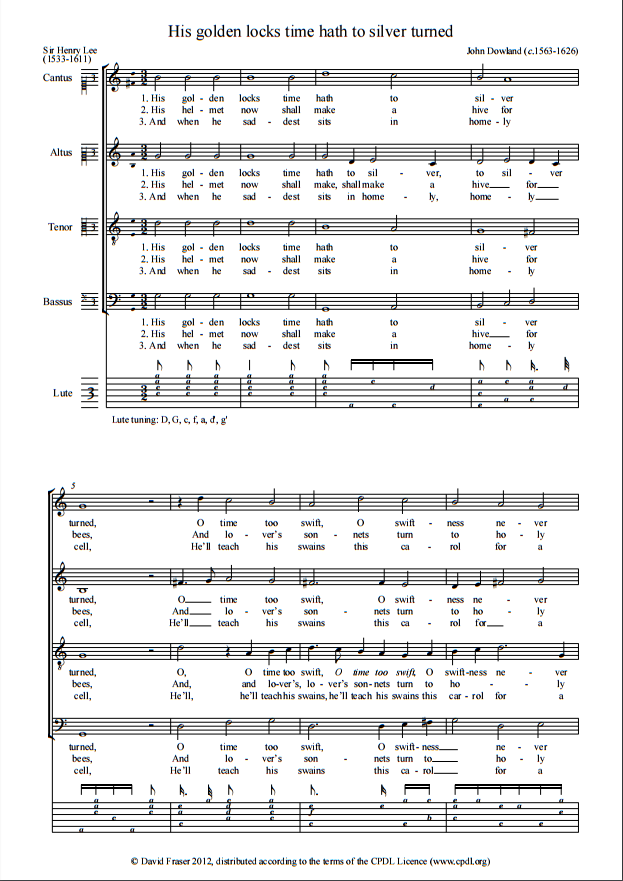
John Dowland (1563 - 1626): His golden locks, dal First Booke of Songes (1597), n. 18. Emma Kirkby, soprano; Anthony Rooley, liuto.
His golden locks Time hath to silver turned.
O Time too swift, O swiftness never ceasing:
His youth ‘gainst Time and Age hath ever spurned,
But spurned in vain; youth waneth by increasing.
Beauty, strength, youth are flowers but fading seen;
Duty, faith, love are roots, and ever green.
His helmet now shall make a hive for bees,
And lovers’ sonnets turn to holy psalms.
A man at arms must now serve on his knees,
And feed on prayers which are Age’s alms.
But though from Court to cottage he depart,
His Saint is sure of his unspotted heart.
And when he saddest sits in homely cell,
He’ll teach his swains this carol for a song:
Blest be the hearts that wish my Sov’reign well.
Curst be the soul that think her [him] any wrong.
Goddess [Ye gods], allow this aged man his right
To be your beadsman now, that was your knight.
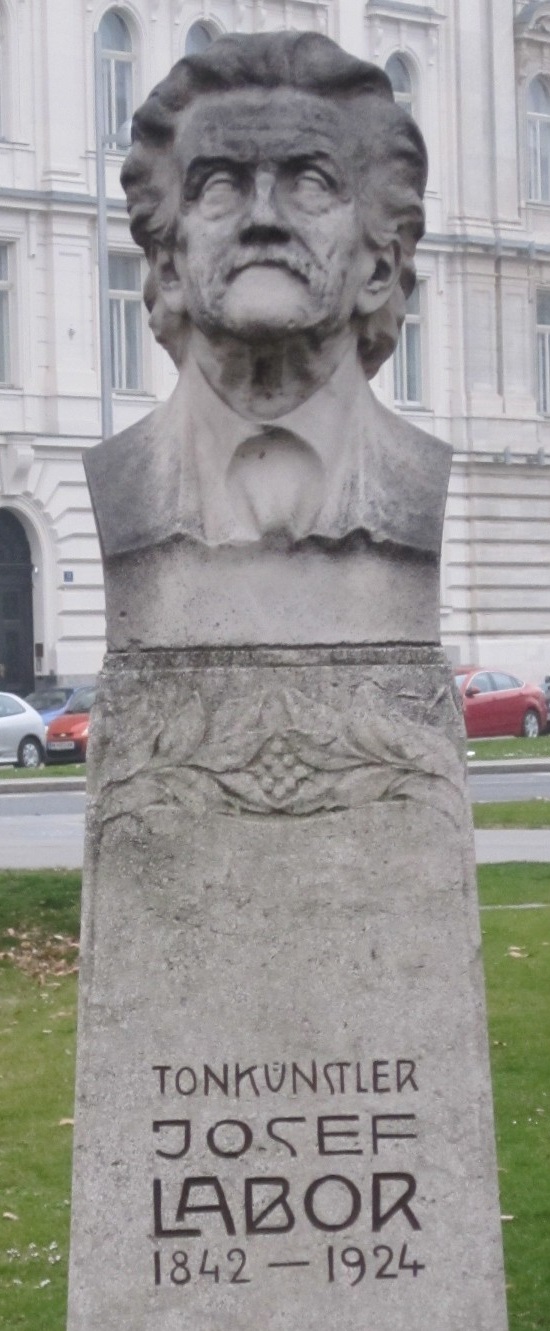
Josef Labor (1842 - 26 aprile 1924): Tema e variazioni per corno e pianoforte op. 10 (c1899). Přemysl Vojta, corno; Oliver Triendl, pianoforte.
 Ernst Widmer (25 aprile 1927 - 1990): Rondo mobile per pianoforte op. 145 (1984). Carol Murta Ribeiro.
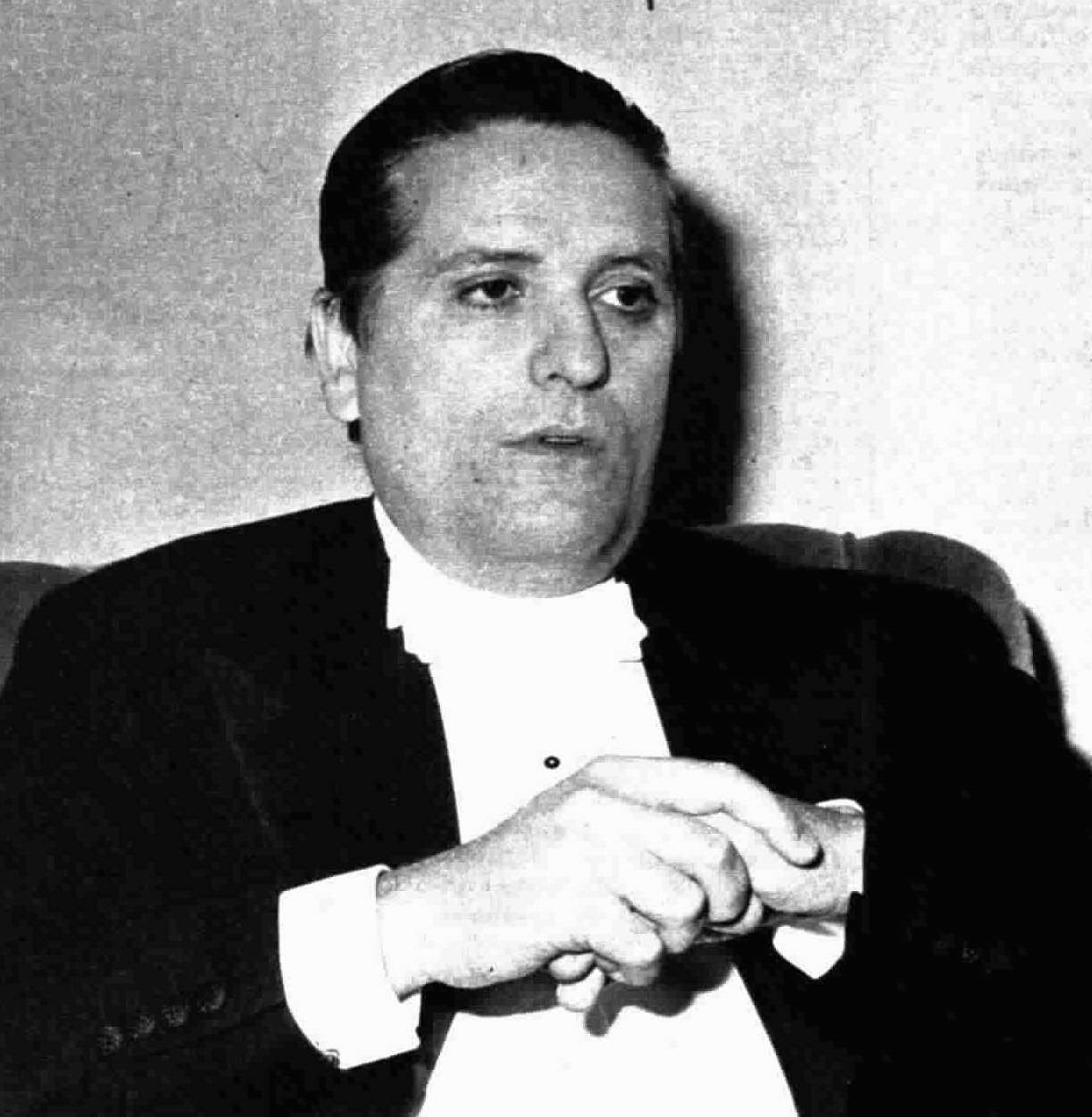
Franco Mannino (25 aprile 1924 - 2005): Concerto per violino e orchestra n. 2 op. 447 (1993). Francesco Manara, violino; Orchestra da camera Gli Armonici, dir. Umberto Bruno.
Alessandro Speranza (24 aprile 1724 - 1797): Divertimento per cembalo in cui si esprime una uccellaja in sol maggiore. Falerno Ducande alias Fernando De Luca.


Augusta Read Thomas (24 aprile 1964): Capricious; toccata-like da Two Thoughts About The Piano (2017). Daniel Pesca, pianoforte.
Arthur Frackenpohl (23 aprile 1924 - 2019): Pop Suite per ottoni (1974); adattamento per 4 tube. The British Tuba Quartet.

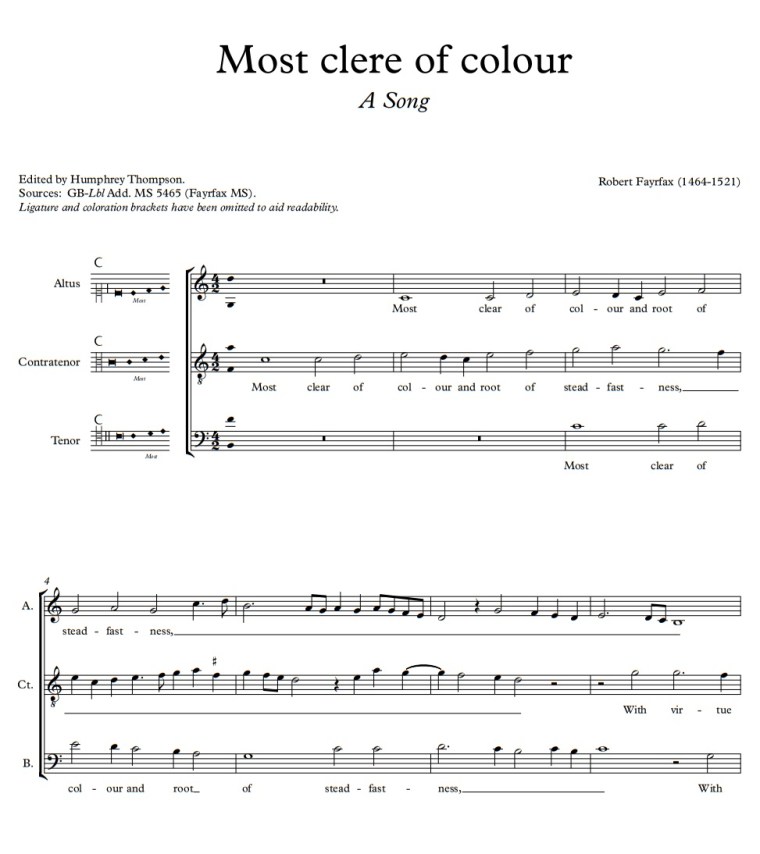
Robert Fayrfax (23 aprile 1464 - 1521): Most clere of colour per 3 voci a cappella. The Hilliard Ensemble.
Most clere of colour and rote of stedfastness,
With vertu connyng her maner is lede,
Which that passyth my mynde for to express
Of her bounte, beaute and womanhode;
The bryghtest myrrour and floure of goodlyhed,
Which that all men knowith, both more and less;
Thes vertues byn pryntyd in her doutless.
Johann Sebastian Bach (1685 - 1750): Weinen, Klagen, Sorgen, Zagen, cantata BWV 12 su testo di Salomo Franck (forse) e Samuel Rodigast (n. 7); eseguita per la prima volta a Weimar il 22 aprile 1714. Paul Esswood, contraltista; Kurt Equiluz, tenore; Max van Egmond, basso; Tölzer Knabenchor, dir. Gerhard Schmidt-Gaden; King’s College Choir Cambridge, dir. David Willcocks; Leonhardt-Consort, dir. Gustav Leonhardt.
Il basso ostinato del coro (n. 2) della cantata bachiana è costituito da una successione cromatica discendente di quattro note (passus duriusculus : secondo le convenzioni della retorica musicale, i cromatismi ascendenti o discendenti esprimono dolore). Su questo basso ostinato Franz Liszt compose un Präludium per pianoforte (R 23, 1859; dedicato a Anton Grigor’evič Rubinštejn) che qui possiamo ascoltare nell’interpretazione di Vladimir Horowitz:
In seguito, Liszt scrisse una serie di Variationen über den Basso continuo von J. S. Bachs Kantate «Weinen, Klagen, Sorgen, Zagen» (R 24, anch’esse dedicate a A. G. Rubinštejn), composte sotto l’impressione della morte di Blandine Ollivier, la figlia che il musicista ungherese aveva avuto da Catherine-Adelaide Méran e che era defunta a Saint-Tropez l’11 settembre 1862. L’esecuzione che vi propongo è di Artur Aksenov:
Liszt rielaborò poi le variazioni in una versione organistica (R 382, dedicata a Alexander Wilhelm Gottschalg, organista e Kantor di Tiefurt), qui eseguita da Thibaut Duret all’organo Michel-Merklin-Kuyhn di Saint Louis de la Guillotière, a Lione:

Édouard Lalo (1823 - 22 aprile 1892): Trio n. 3 in la minore per violino, violoncello e pianoforte op. 26 (1880). Trio Parnassus.
Édouard Lalo: Scherzo in re minore per orchestra (1884); trascrizione del II movimento dell’op. 26. Orchestre de la Suisse Romande, dir. Ernest Ansermet.

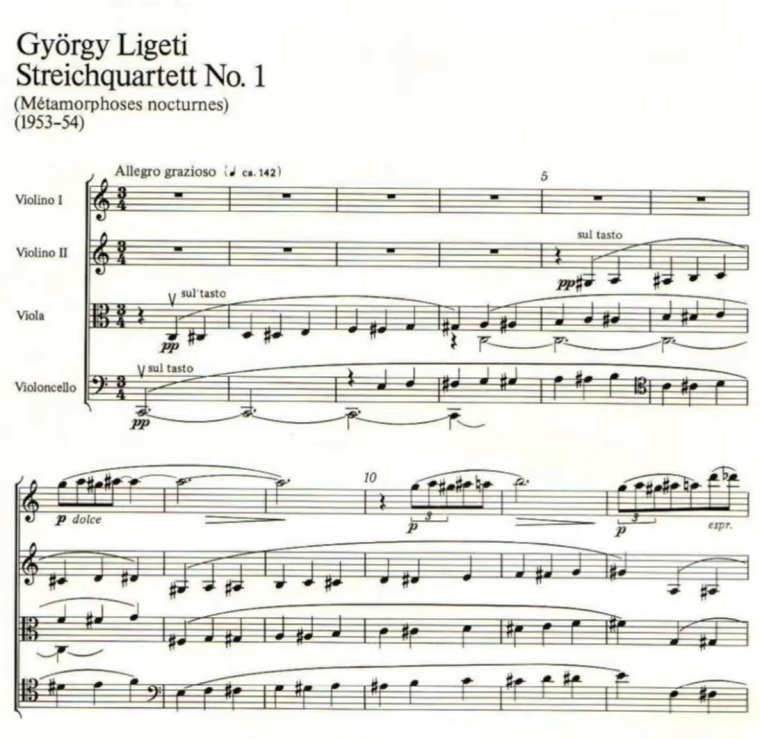
György Ligeti (1923 - 2006): Quartetto per archi n. 1, Metamorphoses nocturnes (1953-54). Kodak String Quartet.
Clément d’Hooghe (21 aprile 1899 - 1951): Concerto per pianoforte e orchestra, Romantisch Concerto (1949). Jozef de Beenhouwer, pianoforte; BRT filharmonisch orkest, dir. Sylveer van den Broeck.

Paul Hindemith (1895 - 1963): Symphonic Metamorphosis of Themes by Carl Maria von Weber (1943). SWR Symphonieorchester, dir. Dima Slobodeniouk.
Un’accurata guida all’ascolto delle Symphonic Metamorphosis, firmata da Sergio Sablich, si trova nel sito l’Orchestra Virtuale del Flaminio.
Di questa composizione avevamo già incontrato il II movimento nell’ambito della ricerca sulle «melodie itineranti», nella fattispecie quando ci siamo occupati dell’air chinois citato nel Dictionnaire de musique di Jean-Jacques Rousseau.

Sem Dresden (20 aprile 1881 – 1957): Dansflitsen, suite per orchestra (1951). Residentie Orkest, dir. Willem van Otterloo.


 la regina gioiosa