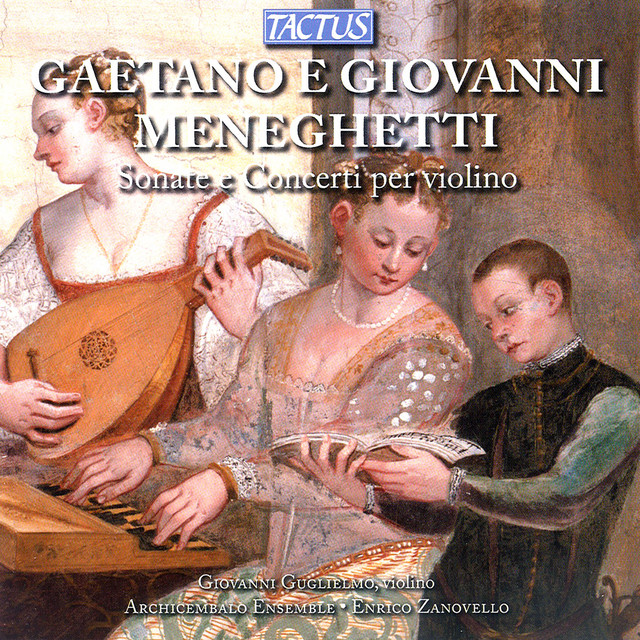
Giovanni Meneghetti (1731 - 4 dicembre 1794): Concerto in la maggiore per violino, archi e basso continuo (1722). Giovanni Guglielmo, violino; Archicembalo Ensemble, dir. Enrico Zanovello.
- Allegro
- Adagio [5:00]
- Allegro [7:02]

Giovanni Meneghetti (1731 - 4 dicembre 1794): Concerto in la maggiore per violino, archi e basso continuo (1722). Giovanni Guglielmo, violino; Archicembalo Ensemble, dir. Enrico Zanovello.

Henry Purcell (1659 - 1695): Rondeau dalle musiche di scena composte nel 1695 per una rappresentazione del dramma Abdelazer or The Moor’s Revenge (1676) di Aphra Behn. Taverner Consort Players, dir. Andrew Parrott.
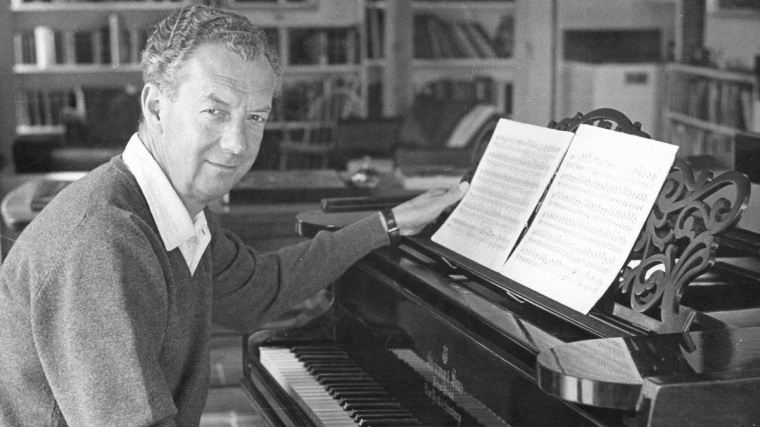
Benjamin Britten (1913 - 4 dicembre 1976): The Young Person’s Guide to the Orchestra, Variations and Fugue on a Theme of Purcell op. 34 (1946). YouTube Symphony Orchestra 2011, dir. Michael Tilson Thomas.
Una celebre e magistrale composizione didattica.

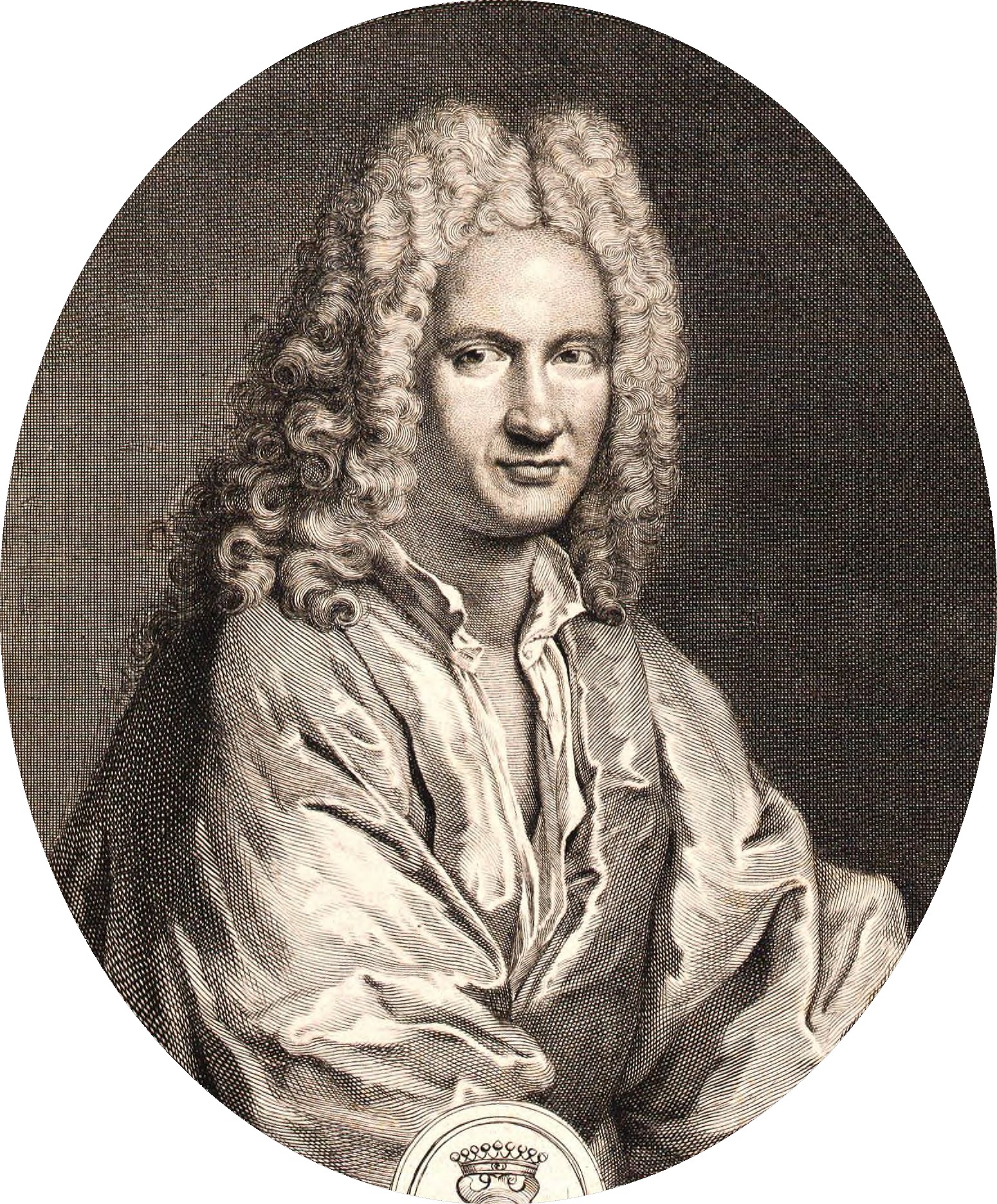
André Campra (4 dicembre 1660 - 1744): suite dall’opéra-ballet les Festes vénitiennes (1710). Ensemble baroque de Limoges, dir. Jean-Michel Hasler.

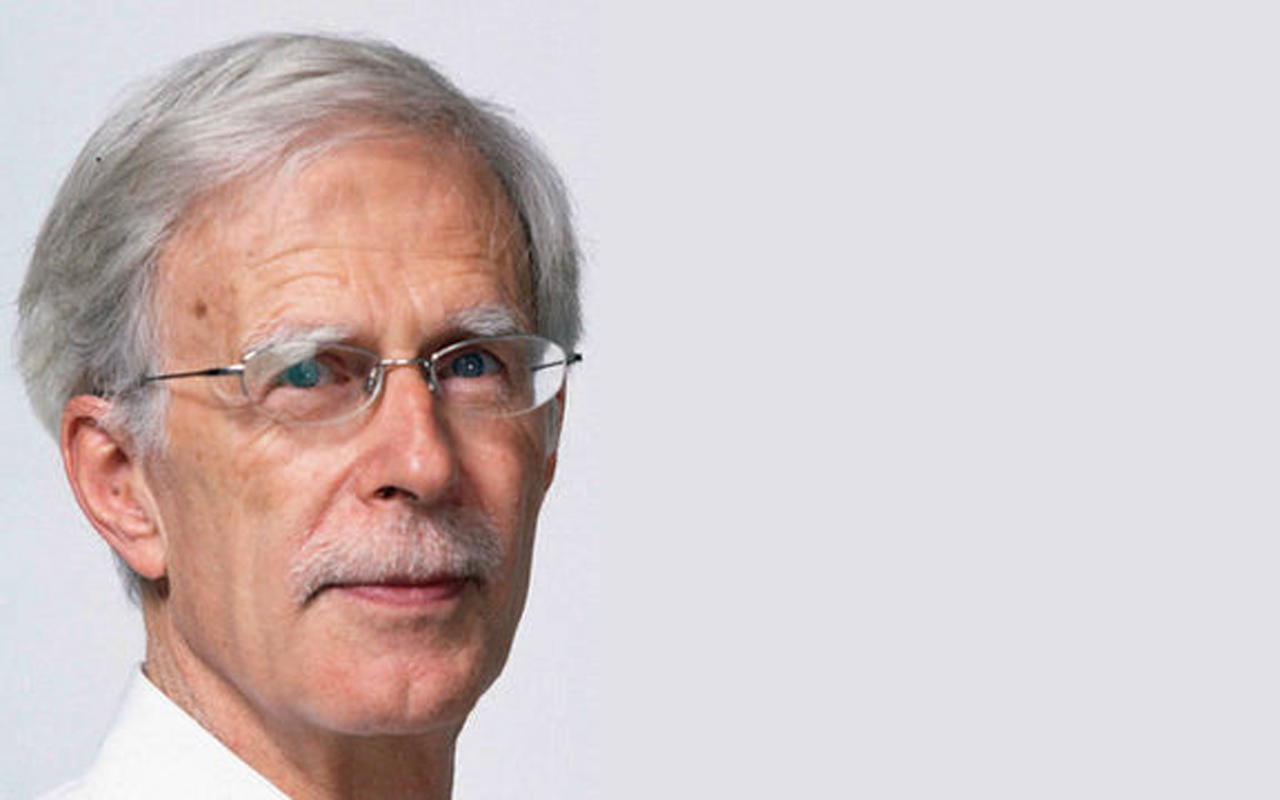
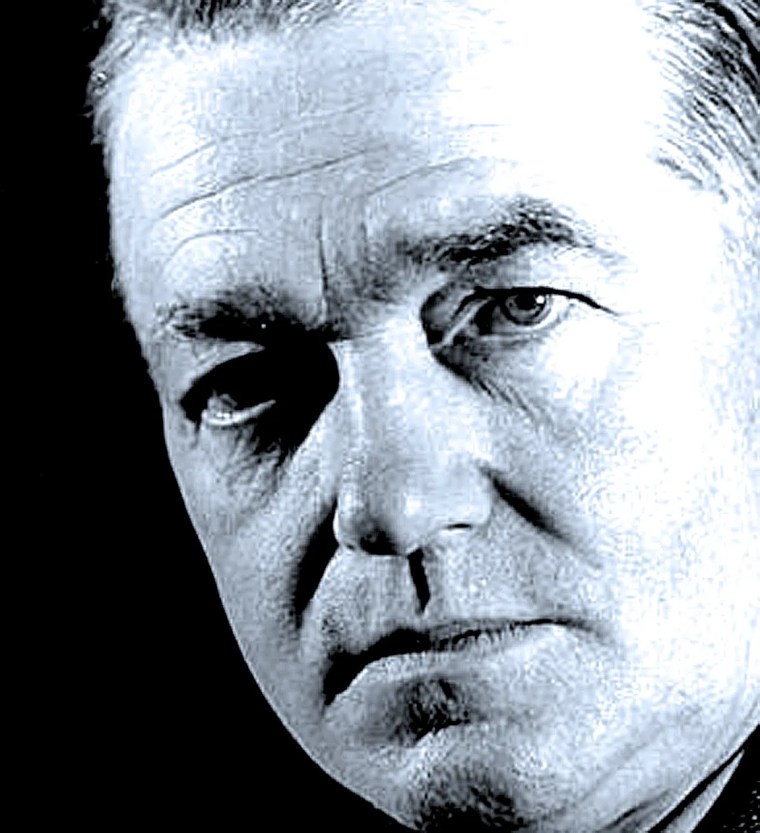
Jonathan Harvey (1939 - 4 dicembre 2012): …towards a pure land per orchestra (2005). Orchestre du Conservatoire de Paris e Ensemble intercontemporain, dir. Matthias Pintscher.

Sir Hamilton Harty (4 dicembre 1879 - 1941): The Children of Lir, poema sinfonico (1938). Heather Harper, soprano; Ulster Orchestra, dir. Bryden Thomson.

Nino Rota (3 dicembre 1911 - 1979): Sinfonia sopra una canzone d’amore (1947). Orchestra sinfonica del Teatro Massimo di Palermo, dir. Marzio Conti.

Jan Křtitel Václav Kalivoda (Johann Baptist Wenzel Kalliwoda; 1801 - 3 dicembre 1866): Sinfonia n. 7 in sol minore WoO 1 (c1865). Das Neue Orchester, dir. Christoph Spering.

Johann Franz Xaver Sterkel (3 dicembre 1750 - 1817): Ouverture à grand orchestre in fa maggiore StWV 130 (c1812). Orchestra L’Arte del Mondo, dir. Werner Ehrhardt.

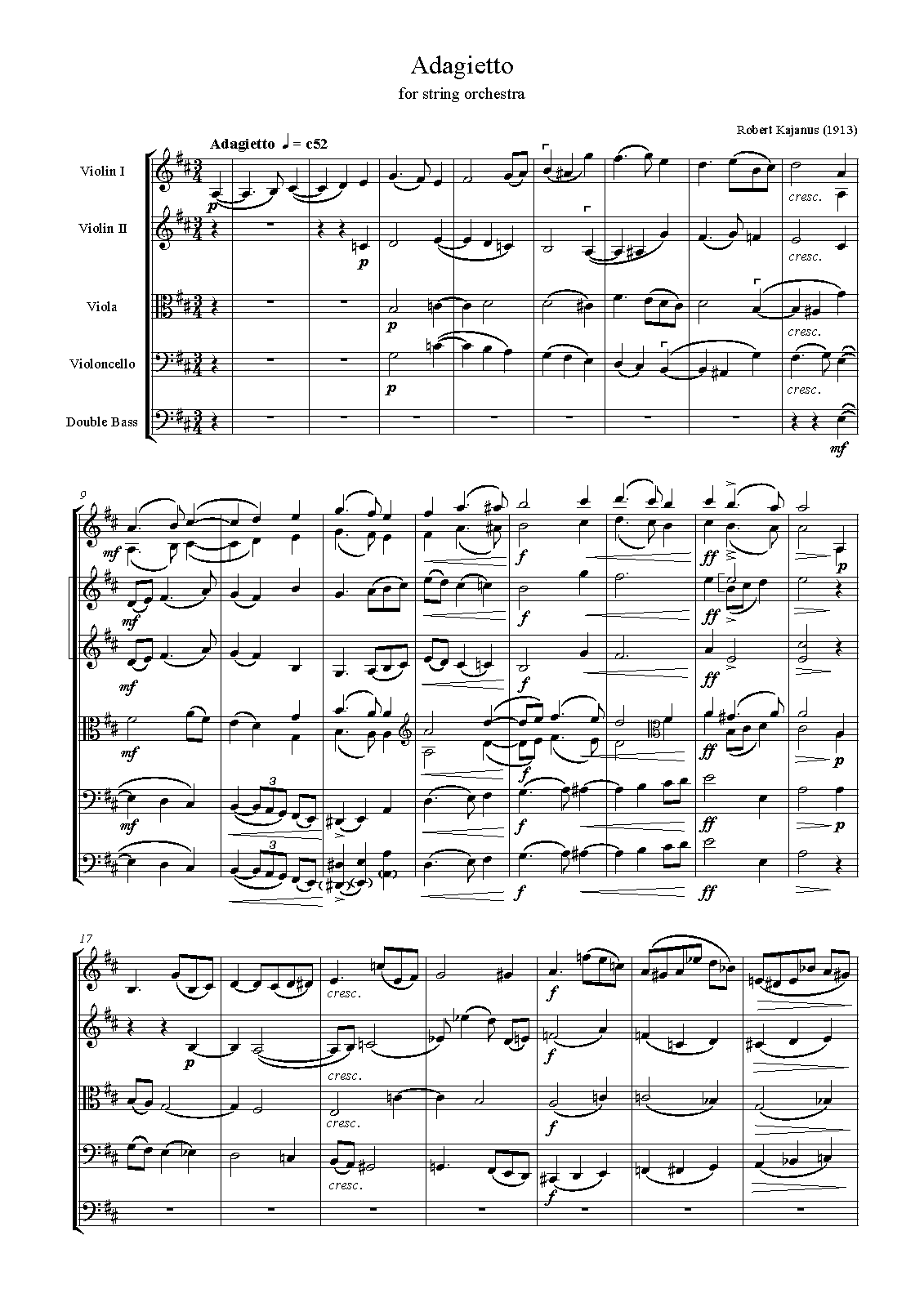
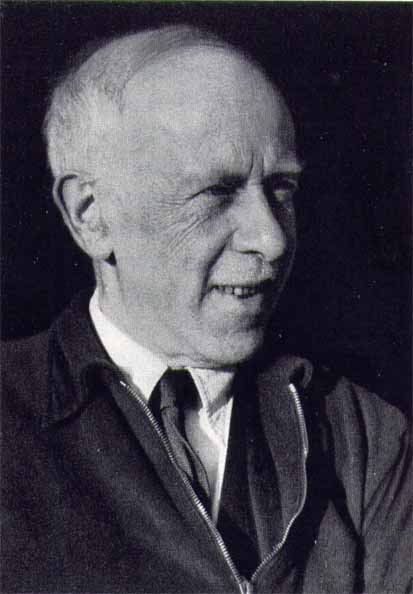
Robert Kajanus (2 dicembre 1856 - 1933): Adagietto per archi (1913). Keski-Pohjanmaan Kamariorkesteri, dir Juha Kangas.
![]()
Giuseppe Sarti (battezzato il 1° dicembre 1729 - 1802): «Come un agnello», aria di Mingone (basso) dal I atto del dramma giocoso Fra i due litiganti il terzo gode (1782). Roberto Scaltriti, basso; Les Talens Lyriques, dir. Christophe Rousset.
Come un agnello
Che va al macello
Belando andrai
Per la città.
Io colla bella
Mia rondinella
Andrò rondando
Di qua, di là.
Io già m’aspetto
Sentirmi dire:
Guarda che amabile
Sposo perfetto!
Di là ripetere:
Viva 1a sposa.
O incomparable,
O impareggiabile
Coppia vezzosa,
Il ciel concedavi
Felicità.
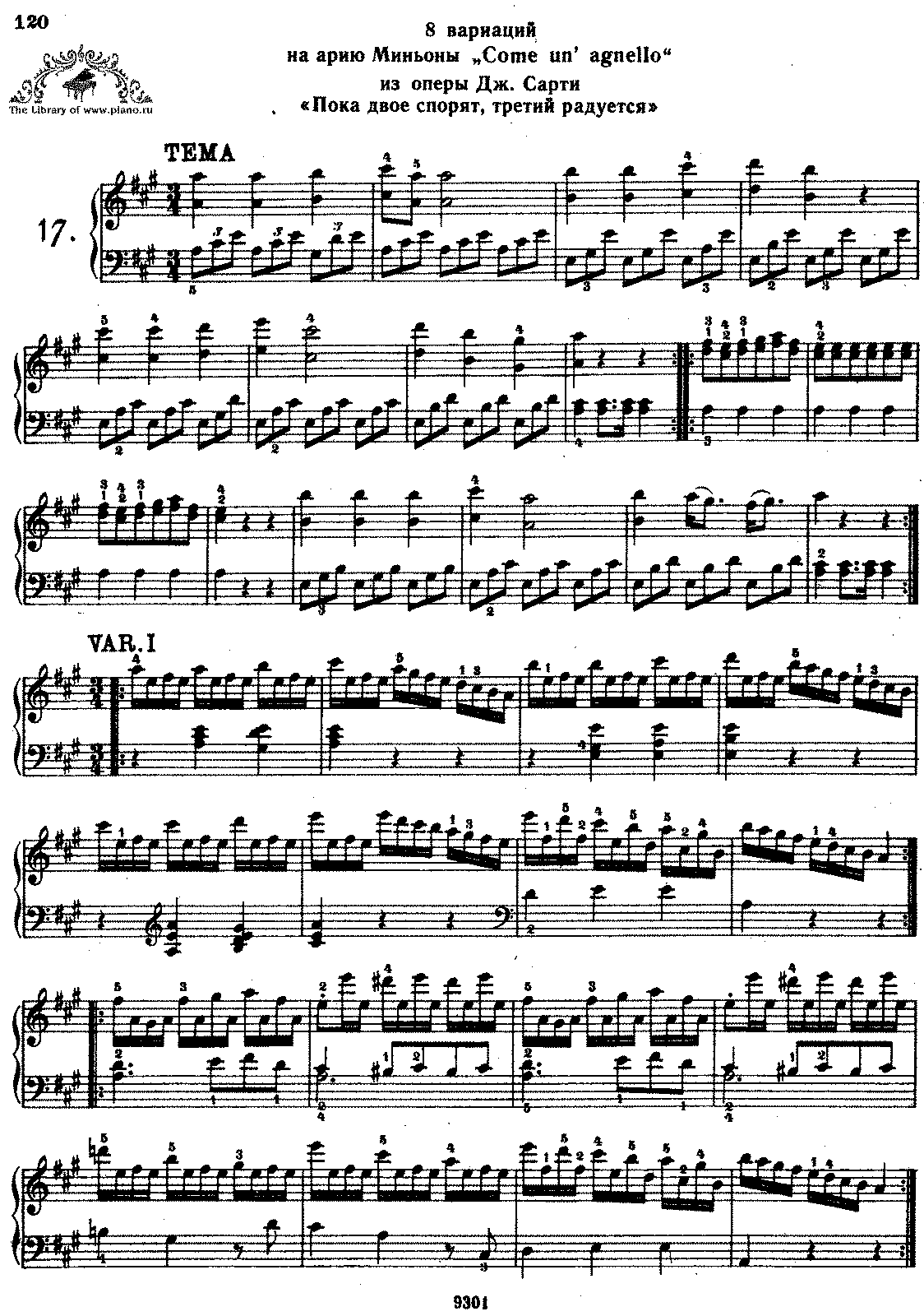
Anonimo: 8 Variazioni su «Come un agnello» per pianoforte, attribuite a Wolfgang Amadeus Mozart (K 460, K6 454a). Rosemary Thomas.
È molto improbabile che questa serie di variazioni sia opera del salisburghese; i curatori dell’ultima edizione delle opere complete mozartiane la considerano infatti spuria. Tuttavia, il tema di Sarti era ben noto a Mozart, che lo cita nella seconda delle Danze tedesche per orchestra K 509 e nel Don Giovanni. In effetti, i due musicisti si erano conosciuti di persona: Wolfgang ne scrive in una lettera al padre datata 9-12 giugno 1784, raccontando fra l’altro di aver composto alcune variazioni sopra un’aria di Sarti e aggiungendo che quest’ultimo le aveva gradite molto.
Un manoscritto conservato presso una collezione privata elvetica contiene due variazioni su «Come un agnello», quasi certamente di Mozart, ma stilisticamente molto diverse dalle Variazioni K 460.
![]()
Ernest John Moeran (1894 - 1° dicembre 1950): Lonely Waters, n. 1 dei Due Pezzi per piccola orchestra (1931). Ulster Orchestra, dir. JoAnn Falletta.

Franz Xaver Richter (1° dicembre 1709 - 1789): Sinfonia in re maggiore VB 53, Trompeten-Sinfonie. London Mozart Players, dir. Matthias Bamert.

Ture Rangström (30 novembre 1884 - 1947): Sinfonia n. 3 in re bemolle maggiore, Sång under stjärnorna (Canto sotto le stelle, 1929). Helsingborgs Symfoniorkester, dir. Janos Fürst.

Fritz Brun (1878 - 29 novembre 1959): Seconda Sinfonia in si bemolle maggiore (1911). AML Luzerner Sinfonieorchester, dir. Olaf Henzold.

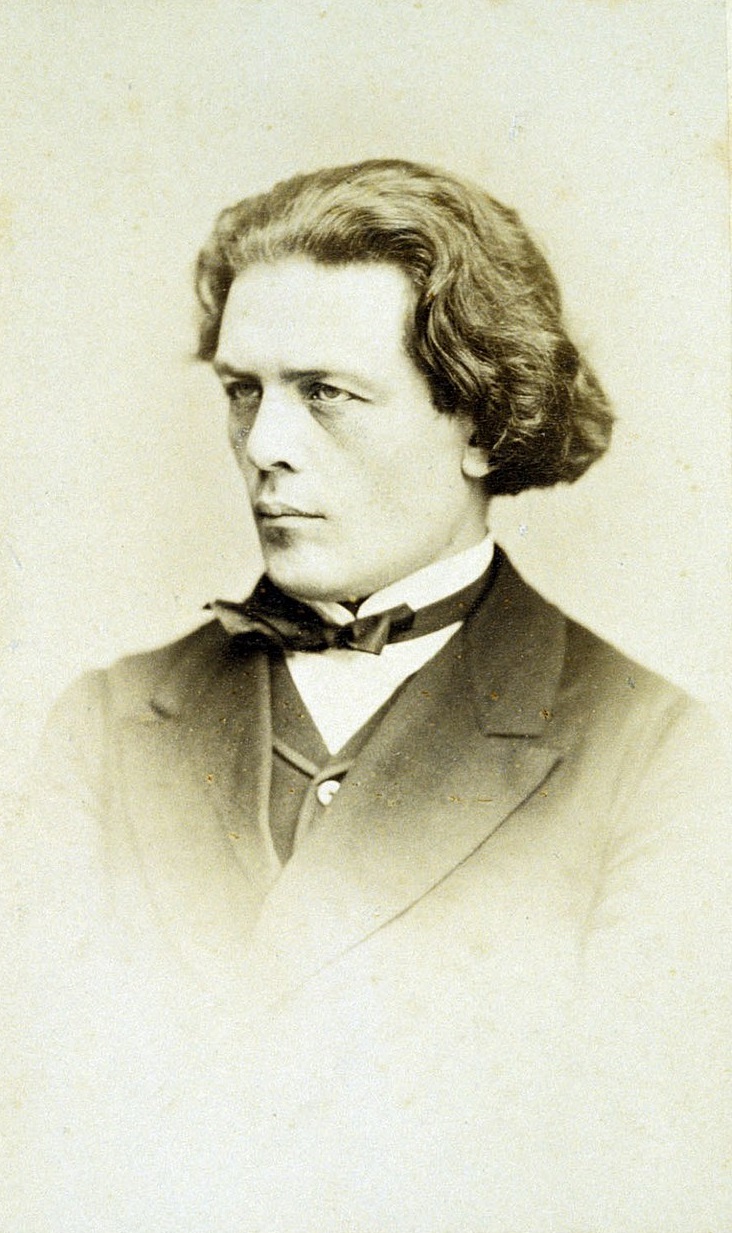
Anton Grigor’evič Rubinštejn (28 novembre 1829 - 20 novembre 1894): Sinfonia n. 2 in do maggiore op. 42, L’Oceano (versione del 1851). Orchestra sinfonica di Stato della Federazione russa, dir. Igor’ Golovščin.

Demetrios Lialios (28 novembre 1869 - 1940): Ανατολική εισαγωγή (Ouverture orientale). Orchestra filarmonica di Atene, dir. Byron Fidetzés.

Havergal Brian (1876 - 28 novembre 1972): Sinfonia n. 1, Gothic Symphony (1919-27). Eva Jenisová, soprano; Dagmar Pecková, mezzosoprano; Peter Mikulas, tenore; Vladimir Dolezal, basso. Orchestra sinfonica, Orchestra filarmonica e Coro della Radio slovacca di Bratislava, dir. Ondrej Lenárd.
La Gotica di Havergal Brian è la più lunga sinfonia che sia mai stata scritta (e anche una delle più complesse e tecnicamente difficili da eseguirsi), come attesta il Guinness dei primati. Sembra inoltre che su questa composizione aleggi una sorta di maledizione: così racconta un grazioso documentario australiano di pochi anni fa. Ma noi, donne e uomini del XXI secolo, a queste cose ovviamente non crediamo 😉
Parte 1a:
Parte 2a:

Gaetano Pugnani (27 novembre 1731 - 1798): Sinfonia in sol maggiore. Orchestre des Pays de Savoie, dir. Reinhard Goebel.
Nota personale. Negli anni ’70 un musicologo torinese e un musicista lombardo ma attivo da sempre a Torino ricostruirono e diedero alle stampe un melologo composto da Pugnani sul testo del Werther di Goethe. Il musicista era Ruggero Maghini, Alberto Basso il musicologo: all’uno e all’altro sono riconoscente per quanto mi hanno insegnato.

Sir Julius Benedict (27 novembre 1804 - 1885): Sinfonia in sol minore op. 101 (1874). Ulster Orchestra, dir. Myer Fredman.

Albert Ketèlbey (1875 - 26 novembre 1959): In a Persian Market, intermezzo-scene for chorus and orchestra (1920). Orchestra sinfonica e Coro della Radio slovacca di Bratislava, dir. Adrian Leaper.

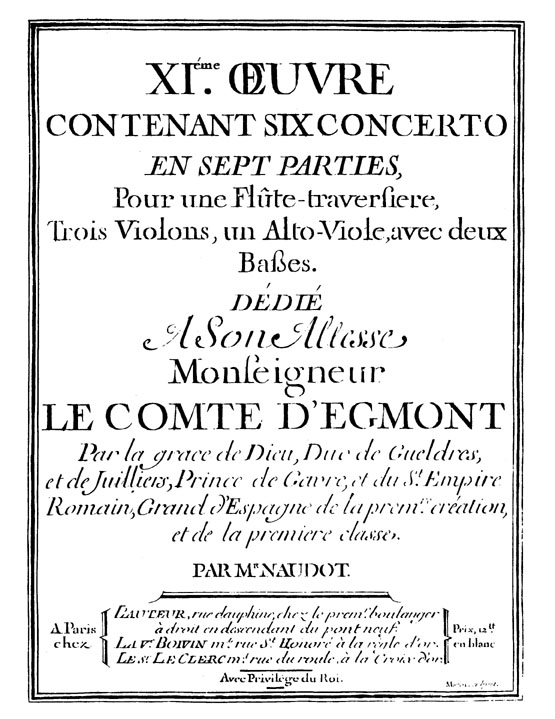
Jacques-Christophe Naudot (c1690 - 26 novembre 1762): Concerto in mi minore per flauto e archi op. 11 n. 5 (1737). Pál Németh, flauto e direzione; Capella Savaria.

Pierre Rode (1774 - 25 novembre 1830): Concerto n. 7 in la minore per violino e orchestra op. 9 (c1803). Friedemann Eichhorn, violino; Südwestrundfunk-Orchester Kaiserslautern, dir. Nicolás Pasquet.

Joseph Gabriel Rheinberger (1839 - 25 novembre 1901): Sinfonia n. 2 in fa maggiore op. 87, Florentine (1875). Nordwestdeutsche Philharmonie, dir. Alun Francis.
Al’fred Šnitke (Alfred Schnittke; 24 novembre 1934 - 1998): Sinfonia n. 3 (1981). Kungliga Filharmoniska Orkestern, dir. Eri Klas.

Benjamin Britten (22 novembre 1913 - 1976): Serenade per tenore, corno e archi op. 31 (1943). Peter Pears, tenore; Dennis Brain, corno; BBC Symphony Orchestra, direttore John Hollingsworth.
testo di Charles Cotton (1630-1687): quattro strofe da The Evening Quatrains
The day’s grown old; the fainting sun
Has but a little way to run,
And yet his steeds, with all his skill,
Scarce lug the chariot down the hill.
The shadows now so long do grow,
That brambles like tall cedars show;
Mole hills seem mountains, and the ant
Appears a monstrous elephant.
A very little, little flock
Shades thrice the ground that it would stock;
Whilst the small stripling following them
Appears a mighty Polypheme.
And now on benches all are sat,
In the cool air to sit and chat,
Till Phoebus, dipping in the west,
Shall lead the world the way to rest.
testo di Alfred Tennyson (1809-1892): Blow, bugle, blow
The splendour falls on castle walls
And snowy summits old in story:
The long light shakes across the lakes,
And the wild cataract leaps in glory:
Blow, bugle, blow, set the wild echoes flying,
Bugle blow; answer, echoes, dying, dying, dying.
O hark, O hear! how thin and clear,
And thinner, clearer, farther going!
O sweet and far from cliff and scar
The horns of Elfland faintly blowing!
Blow, let us hear the purple glens replying:
Blow, bugle; answer, echoes, dying, dying, dying.
O love, they die in yon rich sky,
They faint on hill or field or river:
Our echoes roll from soul to soul,
And grow for ever and for ever.
Blow, bugle, blow, set the wild echoes flying,
And answer, echoes, answer, dying, dying, dying.
testo di William Blake (1757-1827): The Sick Rose)
O Rose, thou art sick!
The invisible worm,
That flies in the night
In the howling storm,
Has found out thy bed
Of crimson joy:
And his dark, secret love
Does thy life destroy.
testo di autore anonimo del secolo XV, noto come Lyke-Wake Dirge
This ae nighte, this ae nighte,
Every nighte and alle,
Fire and fleet and candle‑lighte,
And Christe receive thy saule.
When thou from hence away art past,
Every nighte and alle,
To Whinny‑muir thou com’st at last;
And Christe receive thy saule.
If ever thou gavest hosen and shoon,
Every nighte and alle,
Sit thee down and put them on;
And Christe receive thy saule.
If hosen and shoon thou ne’er gav’st nane
Every nighte and alle,
The whinnes sall prick thee to the bare bane;
And Christe receive thy saule.
From Whinny‑muir when thou may’st pass,
Every nighte and alle,
To Brig o’ Dread thou com’st at last;
And Christe receive thy saule.
From Brig o’ Dread when thou may’st pass,
Every nighte and alle,
To Purgatory fire thou com’st at last;
And Christe receive thy saule.
If ever thou gavest meat or drink,
Every nighte and alle,
The fire sall never make thee shrink;
And Christe receive thy saule.
If meat or drink thou ne’er gav’st nane,
Every nighte and alle,
The fire will burn thee to the bare bane;
And Christe receive thy saule.
This ae nighte, this ae nighte,
Every nighte and alle,
Fire and fleet and candle‑lighte,
And Christe receive thy saule.
testo di Ben Jonson (1572-1637): Hymn to Diana (dalla commedia satirica Cynthia’s Revels, or The Fountain of Self-Love, 1600)
Queen and huntress, chaste and fair,
Now the sun is laid to sleep,
Seated in thy silver chair,
State in wonted manner keep:
Hesperus entreats thy light,
Goddess excellently bright.
Earth, let not thy envious shade
Dare itself to interpose;
Cynthia’s shining orb was made
Heav’n to clear when day did close:
Bless us then with wishèd sight,
Goddess excellently bright.
Lay thy bow of pearl apart,
And thy crystal shining quiver;
Give unto the flying hart
Space to breathe, how short so-ever:
Thou that mak’st a day of night,
Goddess excellently bright.
testo di John Keats (1795-1821): Sonnet To Sleep
O soft embalmer of the still midnight!
Shutting, with careful fingers and benign,
Our gloom-pleas’d eyes, embower’d from the light,
Enshaded in forgetfulness divine;
O soothest Sleep! if so it please thee, close,
In midst of this thine hymn, my willing eyes.
Or wait the Amen, ere thy poppy throws
Around my bed its lulling charities;
Then save me, or the passed day will shine
Upon my pillow, breeding many woes;
Save me from curious conscience, that still hoards
Its strength for darkness, burrowing like a mole;
Turn the key deftly in the oiled wards,
And seal the hushed casket of my soul.

Heinrich Joseph Baermann (1784 - 1847): Concertino in do minore per clarinetto e orchestra op. 29 (1818); strumentazione di Peter Joseph von Lindpaintner (1791 - 1856). Dieter Klöcker, clarinetto; Pražský komorní orchestr, dir. Milan Lajčík.

André Waignein (1942 - 22 novembre 2015): Rapsodia per sassofono contralto e orchestra (2010). Simon Diricq, sassofono; Het Kamerorkest Brugge, dir. Ivan Meylemans.

Gaspar Sanz (alias Francisco Bartolomé Sanz Celma, 1640 - 1710): Canarios (da Instrucción de música sobre la guitarra española, vol. I, Saragozza 1674). Diogo Rodrigues, chitarra barocca.
Joaquín Rodrigo (22 novembre 1901 - 1999): Fantasia para un gentilhombre (1954): IV. Canario (rielaborazione del brano di Sanz). John Williams, chitarra; English Chamber Orchestra, dir. sir Charles Groves.
![]()
František (Franz) Benda (22 novembre 1709 - 1786): Sinfonia in do maggiore L I:1 (c1740-55). Ars Rediviva, dir. Milan Munclinger.