Max d’Ollone (1875 - 15 maggio 1959): Le Ménétrier, poema sinfonico per violino e orchestra (1910). Mark Kaplan, violino; Orquestra sinfònica de Barcelona i nacional de Catalunya, dir. Lawrence Foster.
Au pays natal: Andante molto tranquillo
Chez les Bohémiens: Mouvement de valse [9:04]
Le retour au pays: Modéré, large, mais avec chaleur et mouvement [13:26]
Questo articolo è stato ispirato da Antartica e perciò a lei dedicato.
Passacaglia è il nome generico di una danza secentesca di origine spagnola e della forma musicale tradizionalmente associata alla danza stessa, in ritmo ternario e di andamento lento. Fra Seicento e Settecento la passacaglia si affermò nella musica d’arte assumendo la forma di variazioni sopra un tema, sopra uno schema armonico o sopra un basso ostinato; sotto il profilo musicale, la passacaglia è di fatto simile alla ciaccona, tanto che a lungo i due termini furono considerati equivalenti.
Numerosi musicisti si sono dedicati alla composizione di passacaglie; uno dei primi è Girolamo Frescobaldi:
Nell’ambito della musica teatrale, una passacaglia assai nota si trova nel V atto dell’Armide di Lully:
La Passacaglia con Fuga BWV 582 di Bach è uno dei più grandi capolavori della musica organistica d’ogni tempo:
Fra le passacaglie più celebri va annoverata quella in sol minore di Georg Friedrich Händel; fa parte di una Suite per clavicembalo (la n. 7, HWV 432) ed è una passacaglia sui generis perché ha ritmo binario anziché ternario. La versione originale suona così:
Nel 1897, quasi centoquarant’anni dopo la morte di Händel, il compositore norvegese Johan Halvorsen elaborò un adattamento per violino e viola della Passacaglia in sol minore:
Tanto della versione originale di Händel quanto della rielaborazione di Halvorsen esistono vari arrangiamenti per strumenti diversi. Fino a qualche anno fa, un adattamento per arpa (eseguito da Anna Palomba Contadino) era ben noto agli abbonati Rai:
Un’altra famosa passacaglia si trova nel IV movimento del Quintettino op. 30 n. 6 di Luigi Boccherini, noto anche come Musica notturna delle strade di Madrid:
È una passacaglia il Finale della Quarta Sinfonia di Brahms, costituito da una serie di 32 variazioni sopra il tema del coro conclusivo («Meine Tage in dem Leide») della cantata Nach dir, Herr, verlanget mich BWV 150 di Bach.
La passacaglia che costituisce il III movimento del Trio per violino, violoncello e pianoforte di Ravel è un brano di straordinaria intensità:
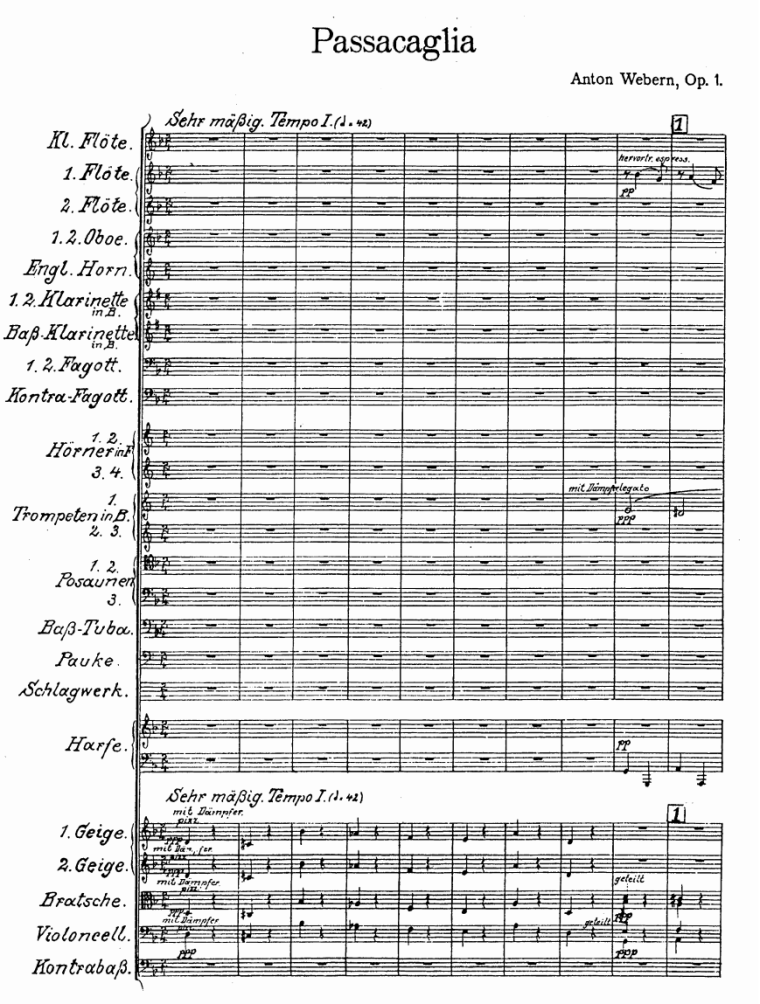
Troviamo una passacaglia, poi, fra i capolavori della musica del Novecento: è l’opus 1 di Anton Webern:
Adolf von Henselt (12 maggio 1814 - 1889): Concerto in fa minore per pianoforte e orchestra op. 16 (1847). Michael Ponti, pianoforte; Philharmonia Hungarica, dir. Othmar Mága.
Giovanni Battista Viotti (12 maggio 1755 - 1824): Tema e variazioni in do maggiore per violino e orchestra (1781?). Camerata Ducale, dir. e solista Guido Rimonda.
Pare, ma non è certo, che questa composizione abbia poi ispirato Claude-Joseph Rouget de Lisle.
Jules Massenet (12 maggio 1842 - 1912): musica di balletto dall’opera Cendrillon (1899). Academy of St Martin in the Fields, dir. sir Neville Marriner.
Charles Avison (1709 - 10 maggio 1770): Concerto grosso in re minore per archi e basso continuo, n. 3 dei Concertos in Seven Parts Done from the Lessons of Domenico Scarlatti. Café Zimmermann, dir. Pablo Valetti.
Christoph Graupner (1683 - 10 maggio 1760): Concerto in sol maggiore a 2 corni e timpani, 2 violini, viola e cembalo GWV 332. Ensemble Antichi Strumenti.
Bernhard Molique (1802 - 10 maggio 1869): Concertino in sol minore per oboe e orchestra (1829). Heinz Holliger, oboe; Radio-Symphonie Orchester Frankfurt, dir. Eliahu Inbal.
Carl Heinrich Graun (7 maggio 1704 - 1759): Concerto in do minore per clavicembalo e orchestra. Waldemar Döling, clavicembalo; orchestra da camera Sofia Soloists, dir. Emil Tabakov.
Allegro
Larghetto [3:38]
Allegro [7:45]
Karel Filip Stamic (Carl Philipp Stamitz; 7 maggio 1745 - 1801): Concerto in fa maggiore per pianoforte e orchestra. Felicja Blumental, pianoforte; Württembergisches Kammerorchester Heilbronn, dir. Jörg Faerber.
Allegro
Andante moderato [10:16]
Rondò: Allegro [16:12]
Johannes Brahms (7 maggio 1833 - 1897): Secondo Concerto in si bemolle maggiore per pianoforte e orchestra op. 83 (1881). Emil Gilels, pianoforte; Chicago Symphony Orchestra, dir. Fritz Reiner.
Allegro non troppo
Allegro appassionato [16:04]
Andante [24:17]
Allegretto grazioso [36:21]
Pëtr Il’ič Čajkovskij (7 maggio 1840 - 1893): Secondo Concerto in sol maggiore per pianoforte e orchestra op. 44 (1880). Michail Pletnëv, pianoforte; Orchestra sinfonica della Radio di Mosca, dir. Vladimir Fedoseev.
Stanisław Moniuszko (5 maggio 1819 - 1872): Bajka. Opowieść zimowa (Una favola. Racconto d’inverno), ouverture-fantasia in la minore per orchestra (1848). Sinfonia Varsovia, dir. Marc Minkowski.
Evgenij Svetlanov (1928 - 3 maggio 2002): La Daugava, poema sinfonico (1952). Orchestra sinfonica di Stato dell’URSS diretta dall’autore (in concerto, 1976).
La Daugava o Dvina occidentale è un fiume lungo 1020 km: nasce nel Rialto del Valdaj, attraversa Russia, Bielorussia e Lettonia, e infine sfocia nel golfo di Riga, nel Mar Baltico.
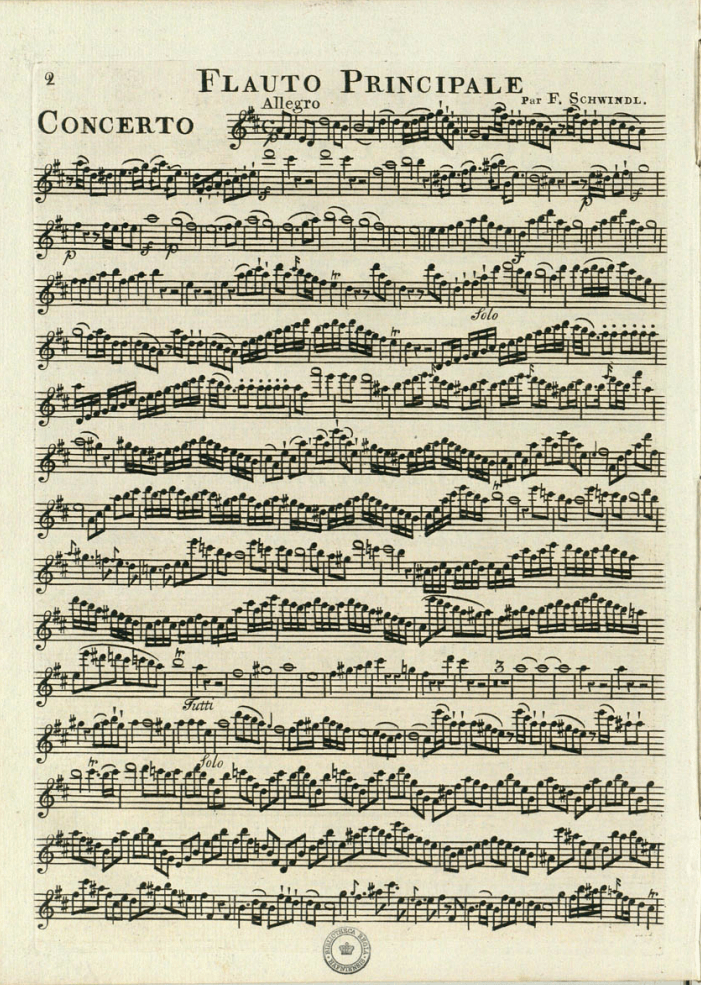
Friedrich Schwindl (3 maggio 1737 - 1786): Concerto in re maggiore per flauto e orchestra. Ricards Bröhl, flauto; Rheinisches Kammerorchester Köln, dir. Jan Corazolla.
Maurice Emmanuel (2 maggio 1862 - 1938): Le Poème du Rhône, poema sinfonico op. 30 ispirato da Frédéric Mistral (1938); rimasta incompiuta alla morte del compositore, l’orchestrazione è stata ultimata da Marguerite Béclard d’Harcourt. Staatsorchester Rheinische Philharmonie, dir. Gilles Nopre.
Maurice Emmanuel (2 maggio 1862 - 1938): Seconda Sinfonia in la maggiore op. 25, Bretonne (1930-31). Staatsorchester Rheinische Philharmonie, dir. James Lockhart.
Milij Alekseevič Balakirev (1837 - 1910): Quasi Valse, II movimento della Suite in si minore per orchestra (1901-08). Orchestra Sinfonica Accademica di Stato dell’URSS, dir. Evgenij Svetlanov.
Giulio Ricordi (1840 - 1912): Quasi valzer, n. 12 (Dicembre) dell’Almanacco musicale per pianoforte (1885). Roberto Piana.
Aleksandr Nikolaevič Skrjabin (1872 - 1915): Quasi-valse op. 47 (1905). Joseph Moog, pianoforte.
Nikolaj Metner (o Medtner; 1880 - 1951): Allegro con grazia (quasi valse), ultimo degli 8 Stimmungsbilder op. 1 (1896-97). Ekaterina Deržavina, pianoforte.
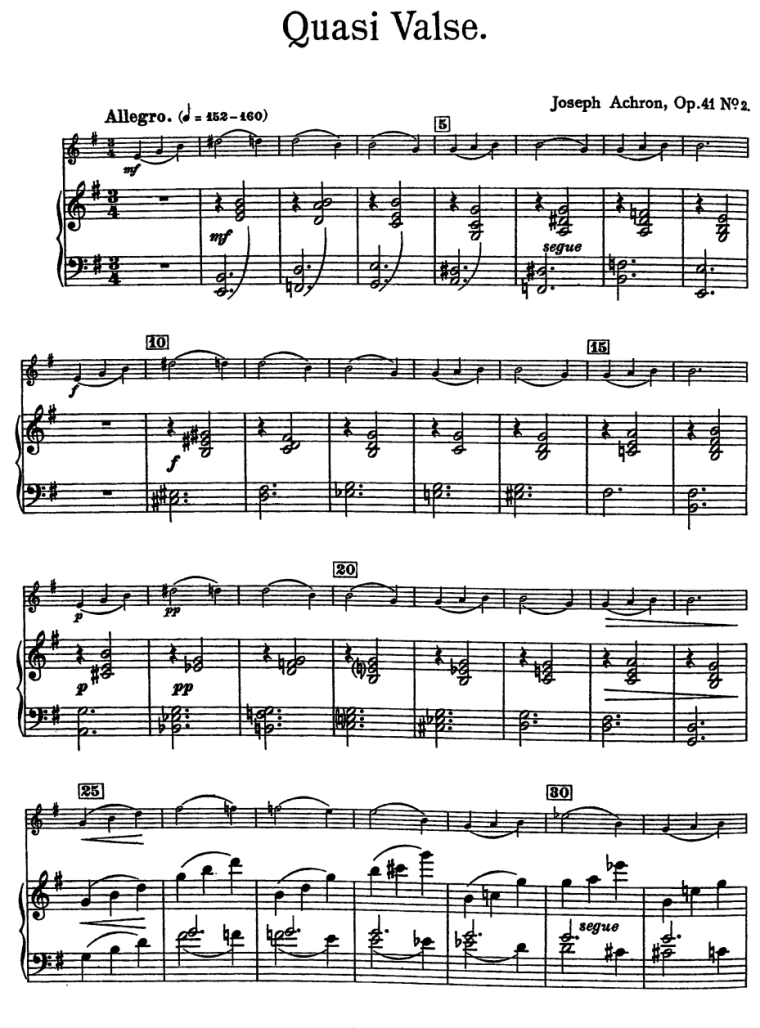
Iosif Jul’evič Achron (1º maggio 1886 - 1943): Quasi Valse, II movimento della Suite bizarre per violino e pianoforte op. 41 (c1917). Ingolf Turban, violino; Jaša Nemcov, pianoforte.
Hugo Alfvén (1º maggio 1872 - 8 maggio 1960): Rapsodia svedese n. 1 op. 19, Midsommarvaka (Veglia di mezza estate, 1903). Sinfóníuhljómsveit Íslands (Orchestra sinfonica nazionale islandese), dir. Petri Sakari.
Ellen Taaffe Zwilich (30 aprile 1939): Sinfonia n. 3 (1992), composta per il 150° anniversario della New York Philharmonic Orchestra, che qui esegue la sinfonia sotto la direzione di Jahja Ling.
Maestoso e cantabile – Allegro giocoso
Molto vivace
Largo
Zwilich ha ottenuto numerosi riconoscimenti fra cui, nel 1983, il Pulitzer Prize for Music — prima compositrice cui il prestigioso premio sia stato conferito.
Johann Christian Fischer (c1733 - 29 aprile 1800): Concerto per oboe e orchestra n. 2 in mi bemolle maggiore. Michael Niesemann, oboe; Kölner Akademie, dir. Michael Alexander Willens.
Sir Alexander Mackenzie (1847 - 28 aprile 1935): La Belle Dame sans Merci, ballata sinfonica op. 29 (1883) ispirata dall’omonima ballata di John Keats. Orchestra filarmonica di Malta, dir. Michael Laus.
O what can ail thee, knight-at-arms,
Alone and palely loitering?
The sedge has withered from the lake,
And no birds sing.
O what can ail thee, knight-at-arms,
So haggard and so woe-begone?
The squirrel’s granary is full,
And the harvest’s done.
I see a lily on thy brow,
With anguish moist and fever-dew,
And on thy cheeks a fading rose
Fast withereth too.
I met a lady in the meads,
Full beautiful — a faery’s child,
Her hair was long, her foot was light,
And her eyes were wild.
I made a garland for her head,
And bracelets too, and fragrant zone;
She looked at me as she did love,
And made sweet moan.
I set her on my pacing steed,
And nothing else saw all day long,
For sidelong would she bend, and sing
A faery’s song.
She found me roots of relish sweet,
And honey wild, and manna-dew,
And sure in language strange she said —
‘I love thee true’.
She took me to her Elfin grot,
And there she wept and sighed full sore,
And there I shut her wild wild eyes
With kisses four.
And there she lullèd me asleep,
And there I dreamed — Ah! woe betide! —
The latest dream I ever dreamt
On the cold hill side.
I saw pale kings and princes too,
Pale warriors, death-pale were they all;
They cried — ‘La Belle Dame sans Merci
Thee hath in thrall!’
I saw their starved lips in the gloam,
With horrid warning gapèd wide,
And I awoke and found me here,
On the cold hill’s side.
And this is why I sojourn here,
Alone and palely loitering,
Though the sedge is withered from the lake,
And no birds sing.
.
Aleksandr Nikolaevič Skrjabin (1872 - 27 aprile 1915): Sinfonia n. 5, Prométhée ou le Poème du feu op. 60 (1910). Chicago Symphony Orchestra & Chorus, dir. Pierre Boulez. .
Edison Denisov (26 aprile 1929 - 1996): Prima Sinfonia (1987). Orchestra sinfonica di Stato del Ministero della cultura dell’URSS, dir. Gennadij Roždestvenskij.




 Charles Avison (1709 - 10 maggio 1770): Concerto grosso in re minore per archi e basso continuo, n. 3 dei Concertos in Seven Parts Done from the Lessons of Domenico Scarlatti. Café Zimmermann, dir. Pablo Valetti.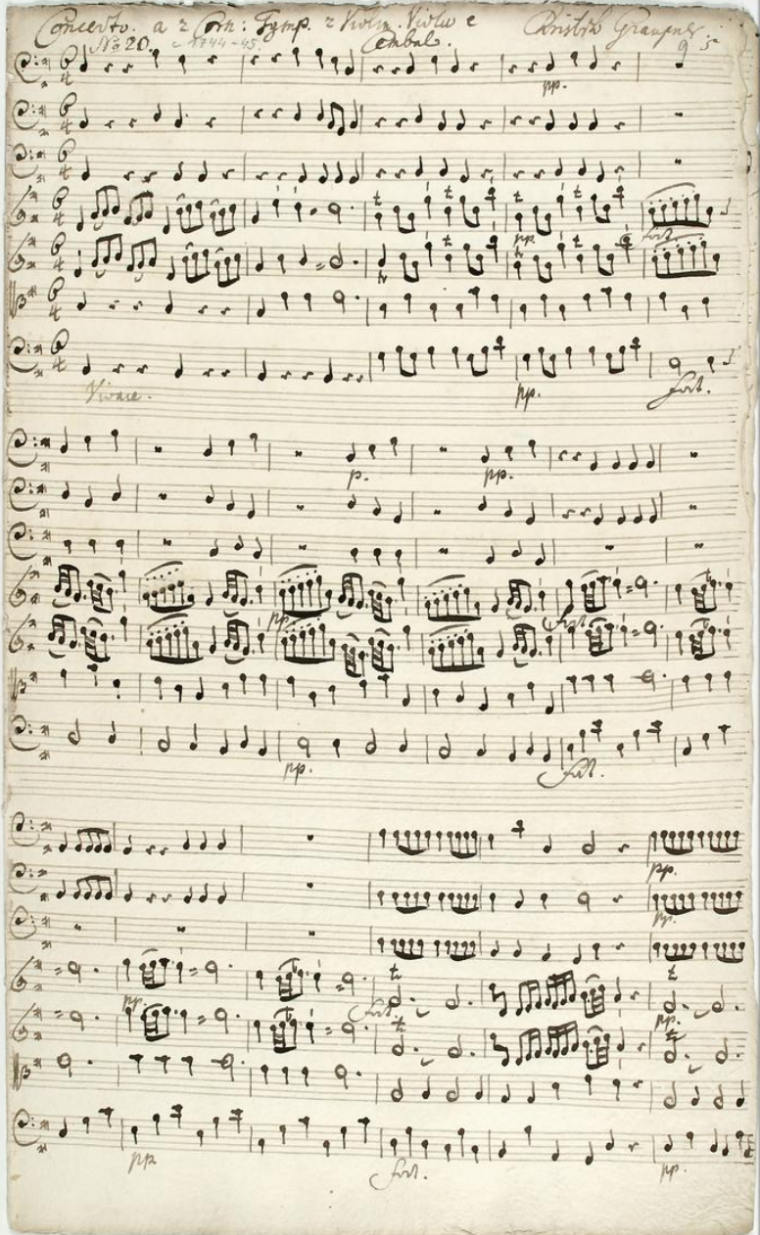




 Vilém Blodek (1834 - 1° maggio 1874): Sinfonia in re minore (1859). Plzeňský rozhlasový orchestr, dir. Bohumír Liška.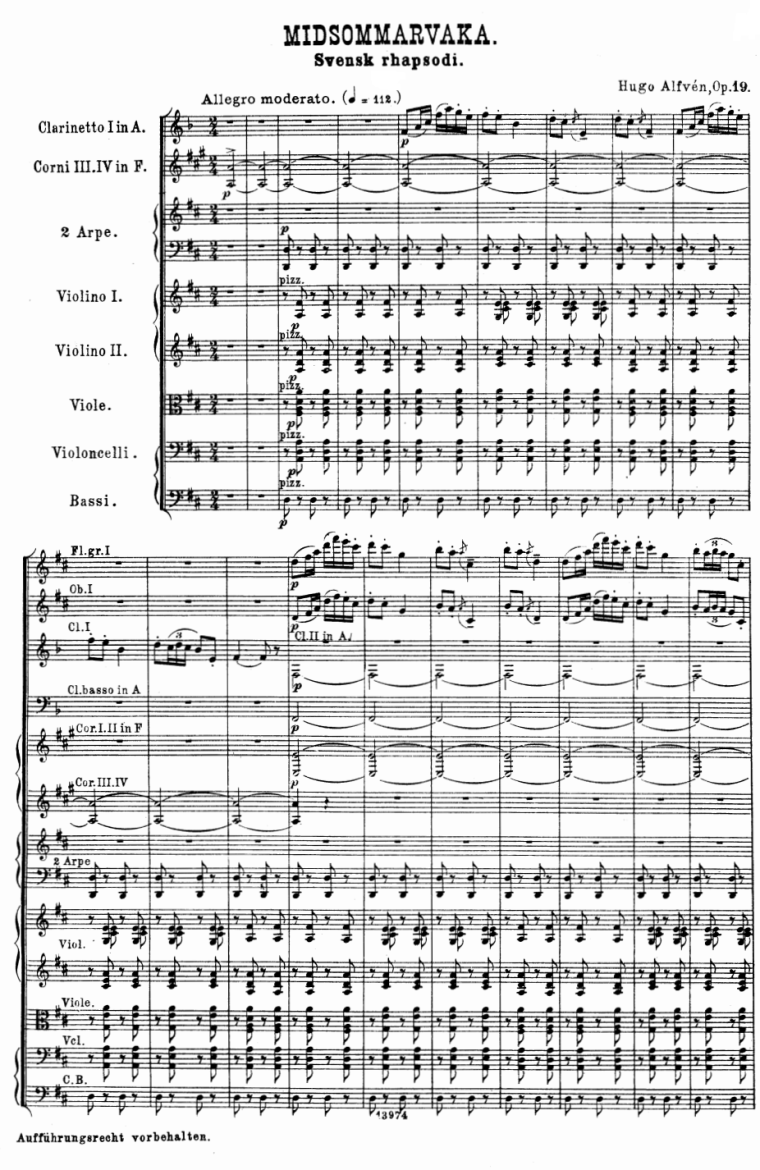
 Johann Ludwig Bach (1677 - 30 aprile 1731): Suite in sol maggiore per archi e basso continuo JLB 20. Ensemble Continuum Wien.


 Il medesimo brano nella trascrizione per violino e archi di Jerker Johansson. Jan Stigmer, violino; Camerata Romana, dir. Thord Svedlund.