
Maurice Ravel (7 marzo 1875 - 1937): Quartetto per archi in fa maggiore (1902-03). Quatuor Ébène.
- Allegro moderato. Très doux [1:20]
- Assez vif. Très rythmé [11:20]
- Très lent [19:13]
- Vif et agité [30:08]
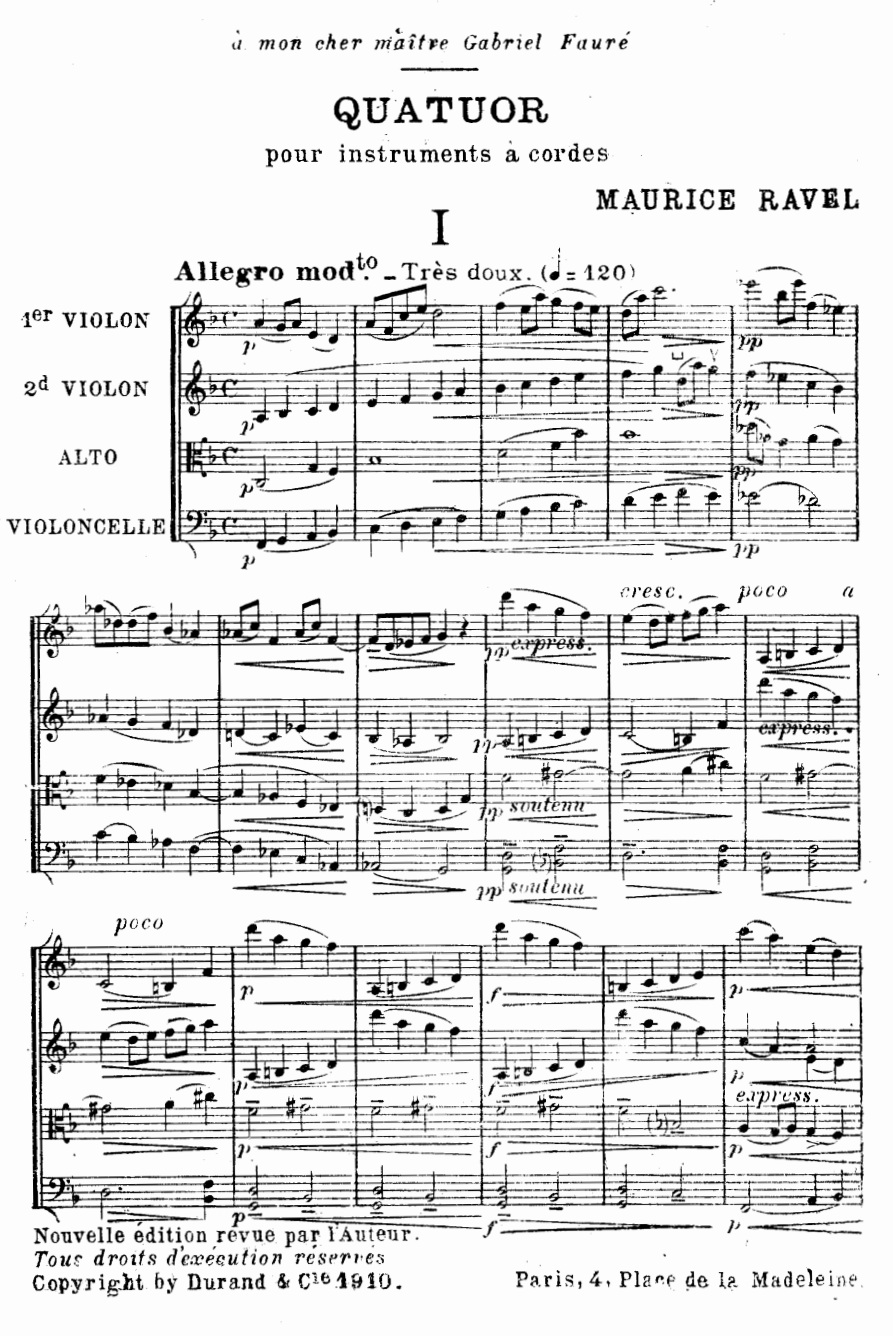
Maurice Ravel (7 marzo 1875 - 1937): Quartetto per archi in fa maggiore (1902-03). Quatuor Ébène.
Maurice Ravel (7 marzo 1875 - 1937): Jeux d’eau (1901). Jean-Yves Thibaudet, pianoforte.
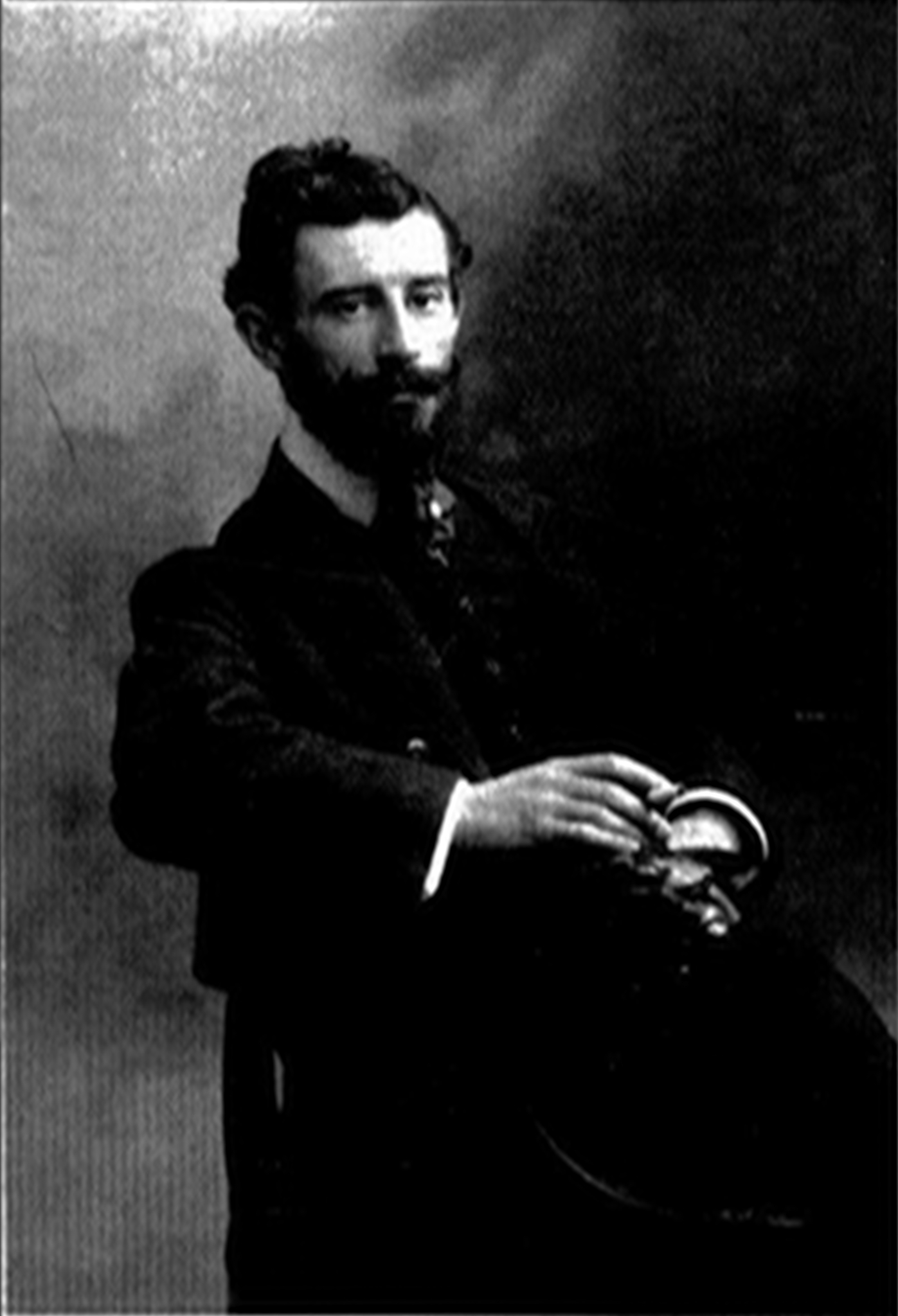
Maurice Ravel (7 marzo 1875 - 1937): Menuet antique per pianoforte (1895). Samson François.
Lo stesso brano nella trascrizione orchestrale completata da Ravel nel 1929. Orchestre symphonique de Montréal, dir. Charles Dutoit.

Karol Kurpiński (6 marzo 1785 – 1857): VI variations per pianoforte (1814). Tomasz Lupa.

 Kurt Weill (1900 - 1950): Suite panaméenne, tratta dalle musiche di scena per Marie Galante (1934) di Jacques Deval; arrangiamento di David Drew (1989). Ensemble Modern, dir. HK Gruber.
Moritz Moszkowski (1854 - 4 marzo 1925): Concerto per pianoforte e orchestra n. 2 in mi maggiore op. 59, MoszWV 162 (1898). Michael Ponti, pianoforte; Philharmonia Hungarica, dir. Hans Richard Stracke.
Nicolas Siret (3 marzo 1663 - 1754): Suite (n. 3) in la minore, dal II Libro delle Pièces de clavecin (1719). Fernando De Luca, clavicembalo.

Sir George Macfarren (2 marzo 1813 - 1887): Sinfonia n. 7 in do diesis minore (1839-40). Queensland Symphony Orchestra, dir. Werner Andreas Albert.

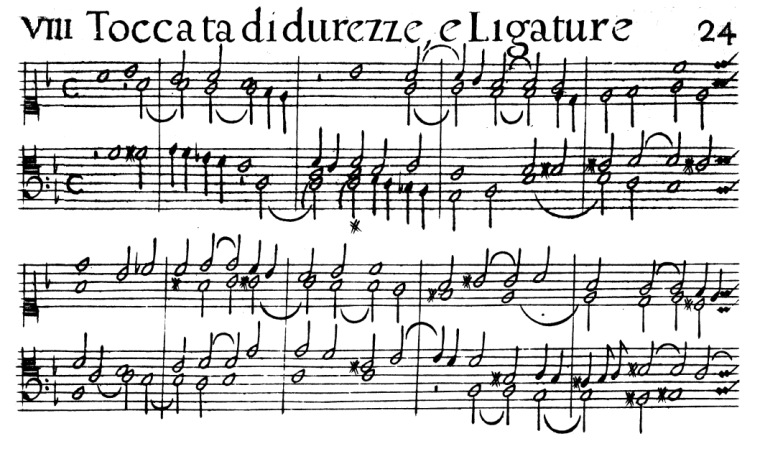
Girolamo Frescobaldi (1583 - 1° marzo 1643): Toccata VIII (dal Secondo Libro di toccate, canzone, versi d’hinni, Magnificat, gagliarde, correnti et altre partite d’intavolatura di cimbalo et organo, 1627). Francesco Cera, clavicembalo.
Mrs H. H. A. Beach (Amy Marcy Cheney Beach, 1867 - 1944): Sinfonia in mi minore op. 32, Gaelic (1896). Detroit Symphony Orchestra, dir. Neeme Järvi.

Ancora un arrangiamento per complesso di strumenti moderni di alcune danze tratte dal Terzo libriccino di musica… (Het derde musyck boexken…) pubblicato da Tielman Susato nel 1551; questa volta si tratta di una gradevole trascrizione per banda, opera di Patrick Dunnigan. University Of Texas Wind Ensemble, dir. Jerry Junkin.

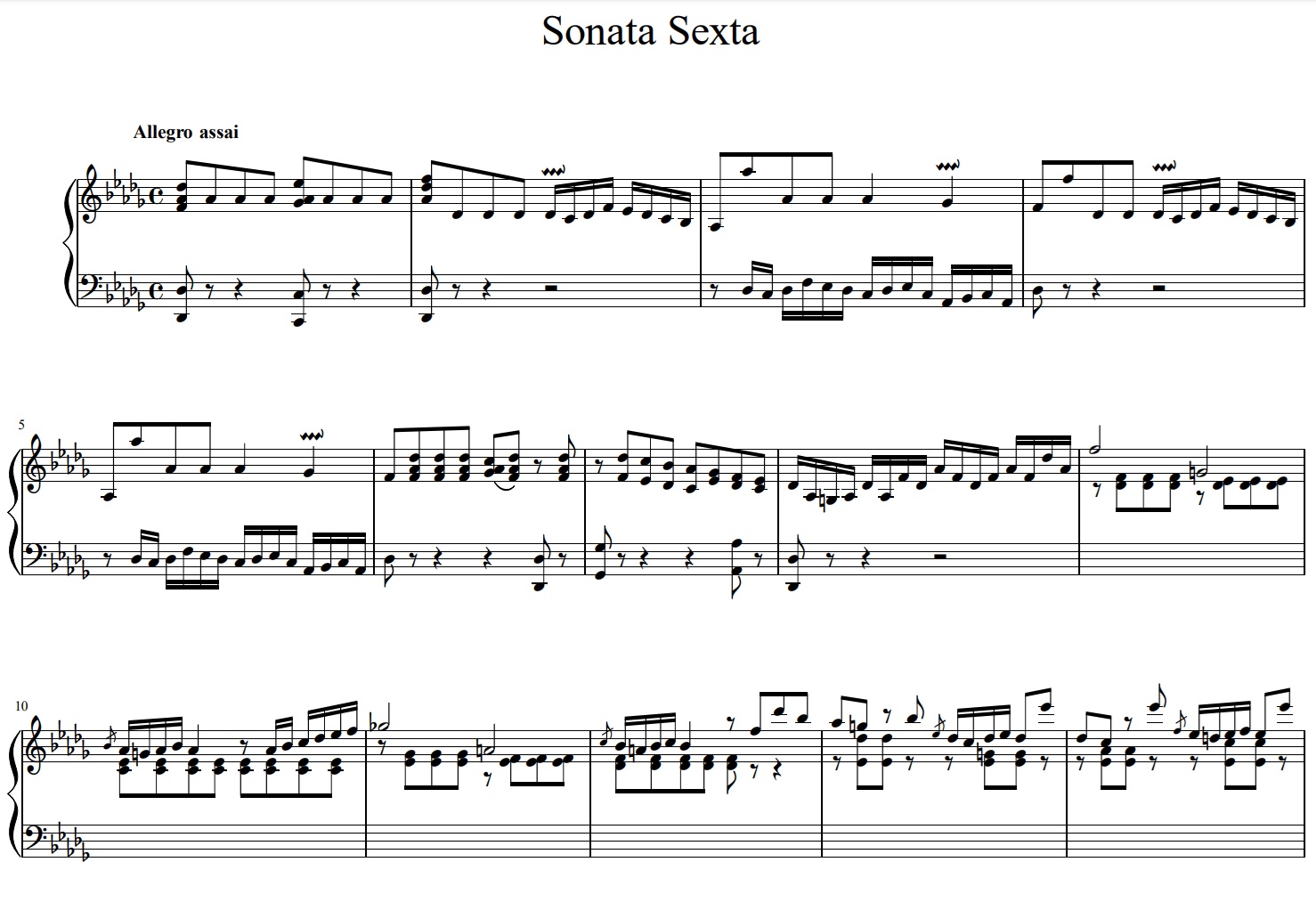
Ferdinando Gasparo Turrini (26 febbraio 1745 - c1820): Sonata VI in re bemolle maggiore (c1780). Fernando De Luca, clavicembalo.
 Robert Allworth (1943 - 26 febbraio 2017): Miracle in the rain per organo (1990). Luca Massaglia.
Louis Moreau Gottschalk (1829 - 1869): Le Mancenillier, «West Indian Serenade» per pianoforte op. 11 (1849). Alan Marks.

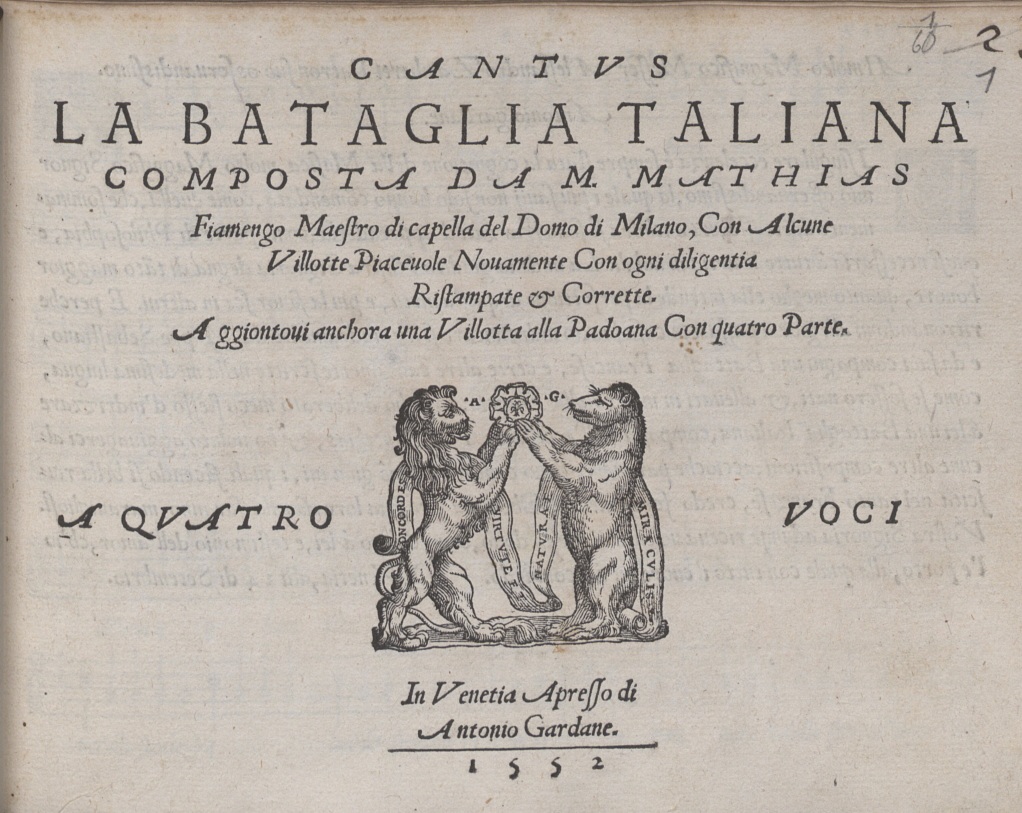
Matthias Hermann Werrecore (c1500 - p1574): La bataglia taliana (Die Schlacht vor Pavia) a 4 voci (pubblicata per la prima volta nel 1544). Il Terzo Suono, dir. Gian Paolo Fagotto.
Signori e cavalieri d’ingegn’e forza,
Udite la vittoria del Duca
De Milan Francesco Sforza.
All’arm o trombetti, o tamburini,
Li inimici son vicini.
All’arm, butte selle a caval.
Monta a caval.
Tutt’alli stendard inant.
Avant tous gentilz compagnons.
Gente d’arm’a li stendardi.
Su su, fanti, alle bandiere.
Gl’adversari vengon gagliardi.
Via via, caval leggieri.
Gente d’arm’all’ordinieri
Stat’in quella prataria
Capitan e buon guerrieri
De la nobil fantaria.
Da man manch’ardit’ e fieri
In battaglia ciascun stia.
Vivandieri carriazzi saccomani, su via.
Non passate quei sentieri,
Stati strett’in compagnia.
Fulminate cannonieri
Con la vostr’artigliеria.
Scampe da li francois.
Mazza, tocca, dagli o valent’homini milanesi.
Mazza, tocca, dagli Duca.
El gran Duca milanеse
Guard’il ponte
Con la sua gente lombarda.
Sta ben fort’alle contese
Contra si gross’antiguarda
D’assai compagnia francese.
Compagnons, avant, donnes dedans
Frappes dedans, tues ces vilains
France, Marco, gentilz compagnons.
Duca, Italia, mazza francois.
Su, bottiglioni, mazza francois.
Su schiopetti, su archibusi.
Su, su, ché son confusi li francois.
A più non pos passat’il fos.
A dos, mazza, ahi canaglia.
O Nostre Dame, O bon Jesu
Astur nous sommes tous perdus.
Hai poltroni, hai bottiglioni,
Gl’han pur persa la giornata.
Su la peverata, ahi miseri francois.
Scampe da li francois.
O signor’italiani, su ogni alemano
A voi vien la furia amara
D’ogni sguizaro villano.
Scopettier, su spara
Non scargate colp’in vano.
Har, har, raube
Da vir de vir villen latin ruben
Myrher, myrher, perausche
Vir villen chuden rubel binden.
Su alabardieri, urta spezza maglia
Hai vil canaglia
La si sbaraglia mazza taglia.
A los villiacos qui viene a ellos
Qui son rotos hides hechios.
L’è pur vinta la bataglia.
Vittoria, Italia.
Viva il Duca
Con tutta la Italia.
La battaglia di Pavia fu combattuta esattamente cinquecento anni fa, il 24 febbraio 1525. Dopo la rovinosa disfatta, Francesco I di Francia scrisse alla madre Luisa di Savoia: « Madame, de toutes choses ne m’est demeuré que l’honneur et la vie qui est sauve ».

Georg Friedrich Händel (23 febbraio 1685 - 1759): Suite in re minore HWV 448. Fernando De Luca, clavicembalo.

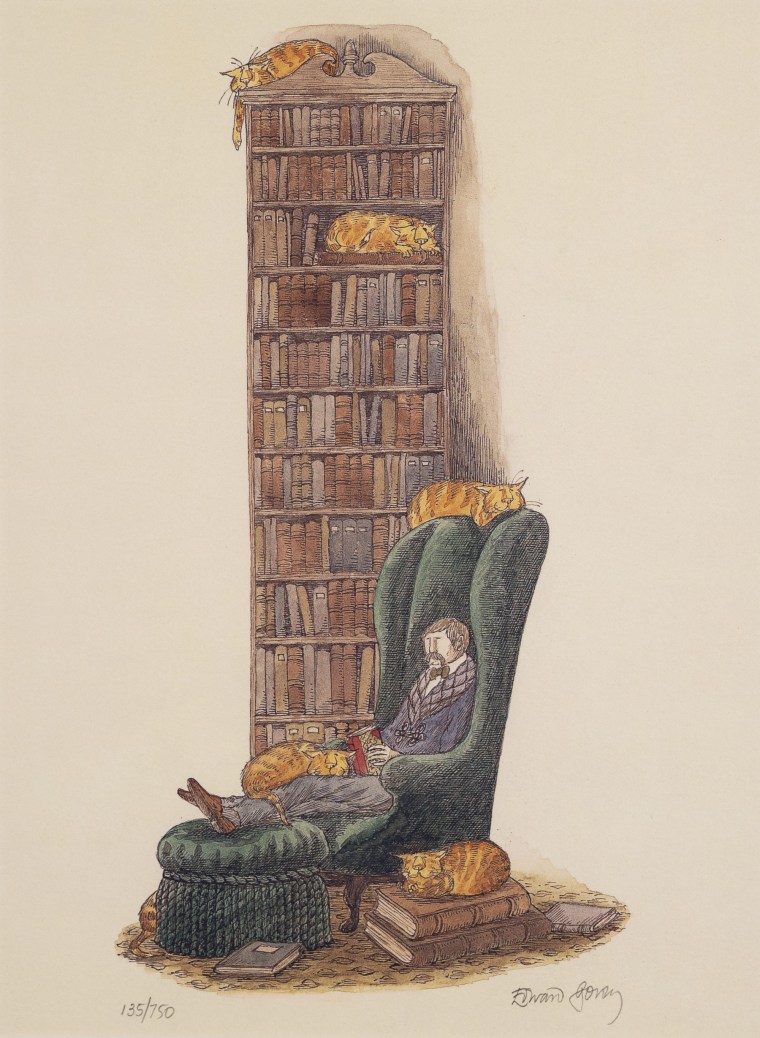
Disegno di Edward Gorey (22 febbraio 1925 - 2000)
Niels Gade (22 febbraio 1817 - 1890): Elverskud, cantata per soprano, mezzosoprano, baritono, coro e orchestra op. 30 (1851-54); testi di Hans Christian Andersen, Christian Knud, Fredrik Molbech e Gottlieb Siesbye, da una ballata tradizionale danese. La Figlia del re degli elfi (soprano): Lisbeth Balslev; la Madre di Oluf (mezzosoprano): Edith Guillaume; Oluf (baritono): Mikael Melbye; Canzone Choir & Collegium Musicum, dir. Frans Rasmussen.
Testo completo (v.o.): https://upload.wikimedia.org/wikipedia/commons/8/89/Elverskud_NW_Gade_tekst.pdf

Benedikt Anton Aufschnaiter (battezzato il 21 febbraio 1665 - 1742): Serenada della pace in do maggiore per 3 oboi, fagotto, 4 trombe, timpani, archi e basso continuo.

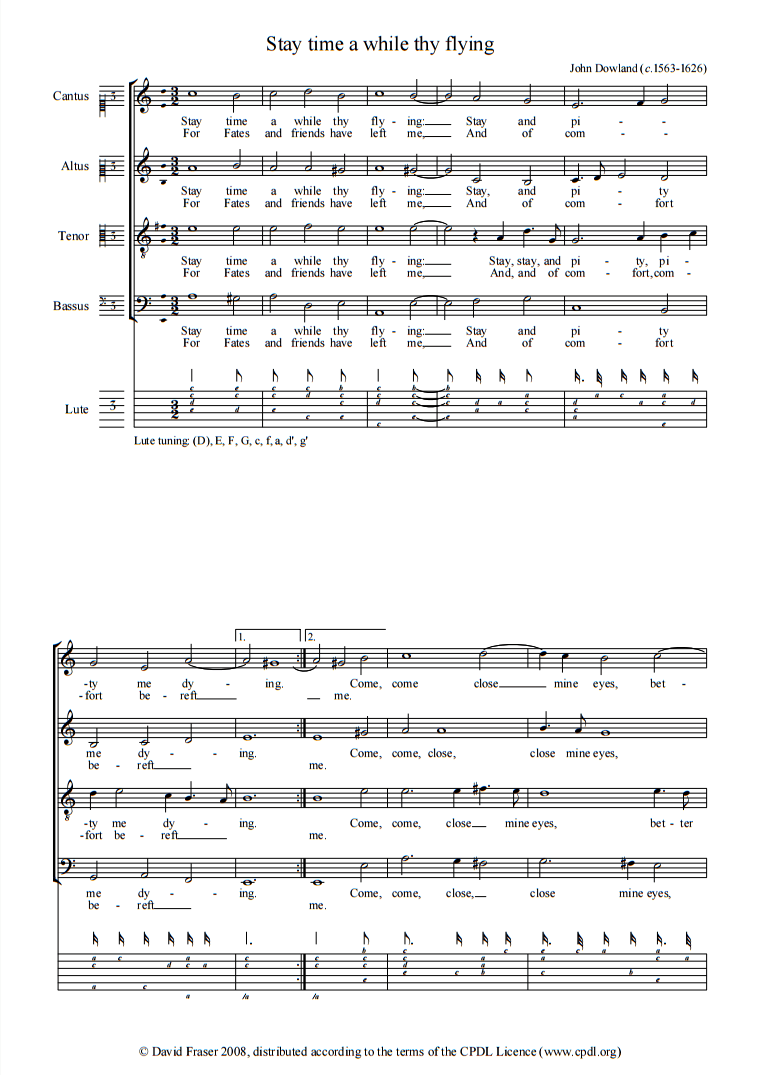
John Dowland (1563 - 20 febbraio 1626): Stay time a while thy flying, ayre (pubblicato in A Pilgrimes Solace. 1612, n. 7). Duo Mignarda: Donna Stewart, voce; Ron Andrico, liuto.
Stay time a while thy flying,
Stay and pittie me dying.
For Fates and friends have left mee,
And of comfort bereft mee.
Come, come close mine eyes, better to dye blessed,
Then to live thus distressed.
To whom shall I complaine me,
When thus friends doe disdaine mee?
T’is time that must befriend me,
Drown’d in sorrow to end mee.
Come, come close mine eyes, better to dye blessed,
Then to live thus distressed.
Teares but augment this fewell,
I feede by night (oh cruell),
Light griefes can speake their pleasure,
Mine are dumbe passing measure.
Quicke, quicke, close mine eyes, better to dye blessed,
Then here to live distressed.
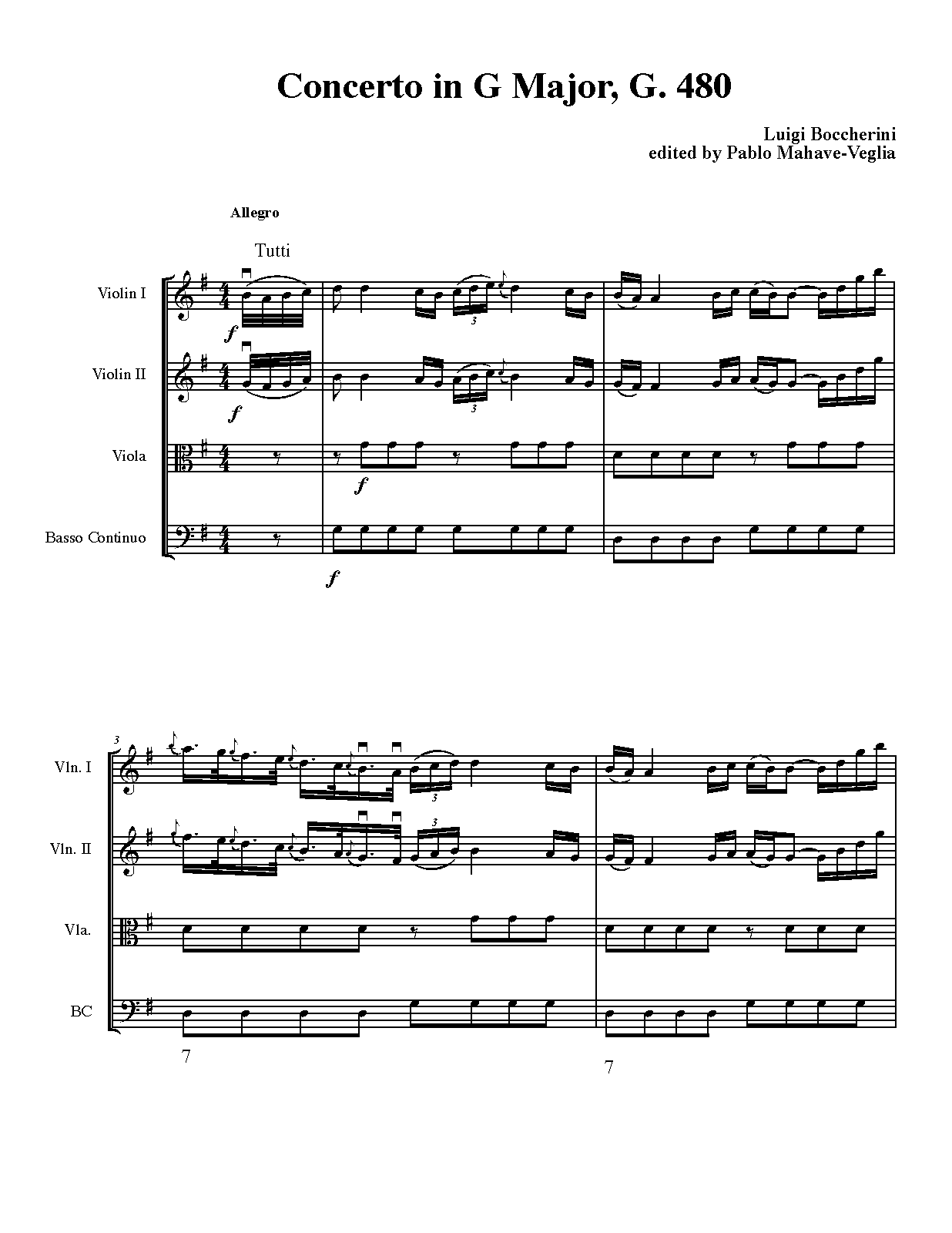
Luigi Boccherini (19 febbraio 1843 - 1805): Concerto per per violoncello e orchestra n. 7 in sol maggiore G 480 (1769c). Mischa Maisky, violoncello; Orpheus Chamber Orchestra.
Clément Janequin (c1485 - 1558): La meunière de Vernon, chanson a 4 voci (1551). Ensemble «Clément Janequin».
La meunière de Vernon,
tire tire tire ton,
don don don,
Elle est mignonne et gorrière,
Et si elle est, ce dit-on,
tire tire tire ton,
don don don,
De bien aimer coutumière.
Un jour tout à l’environ
d’une saussaie et rivière,
Un beau jeune compagnon
D’amour lui fit la prière.
Lors la baisant le mignon
Se prit à lui faire chère
Puis s’assit en son giron
De bonne grâce et manière.

Leevi Madetoja (17 febbraio 1887 - 1947): Shakkipeli (Partita a scacchi), musiche di scena op. 5 (1910) per l’omonimo dramma di Eino Leino. Oulu Sinfonia, dir. Arvo Volmer.

Józef Hofmann (1876 - 16 febbraio 1957): 4 Charakterskizzen per pianoforte op. 40 (1908). Artem Yasynskyy.
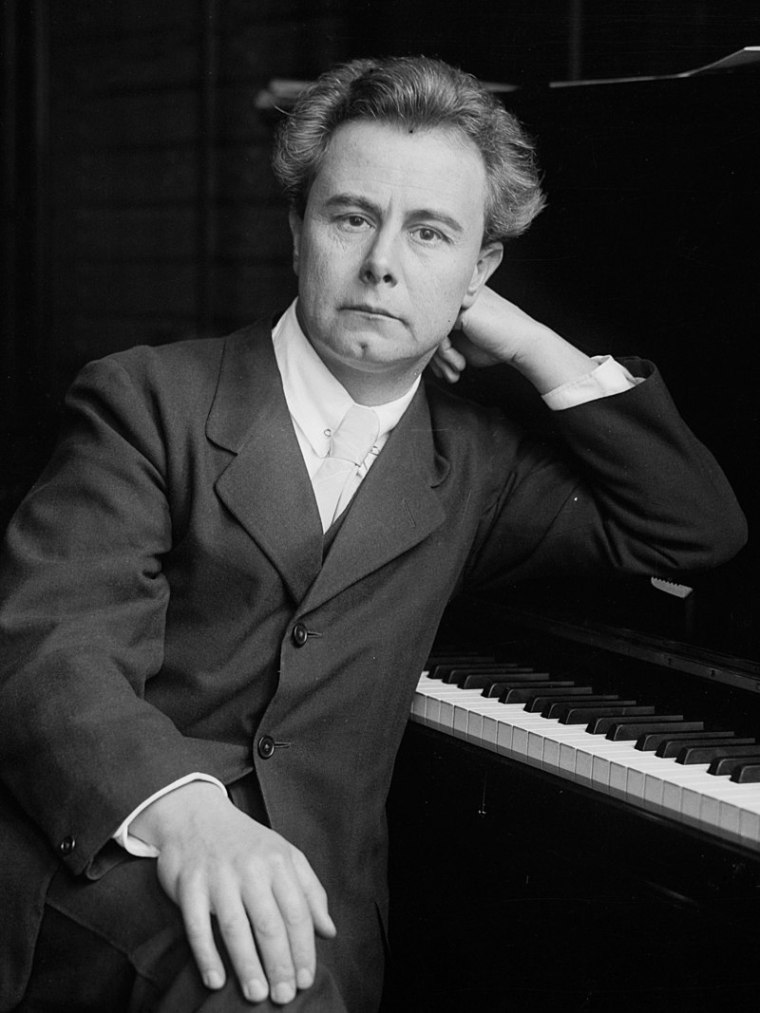
Michael Praetorius (1571 - 15 febbraio 1621): La Canarie (da Terpsichore, Musarum Aoniarum, 1612, n. 31). Capella de Ministrers, dir. Carles Magraner.
Tempo fa avevo proposto un’altra interpretazione di questo brano: potete ascoltare il simpatico Eduardo Antonello che ne esegue tutte le parti cliccando qui; nella medesima pagina troverete anche qualche notizia storica sul canario.
Jan Dismas Zelenka (1679 - 1745): dal Capriccio in la maggiore per orchestra ZWV 185 (1718): IV. In tempo di Canarie. The Bach Sinfonia, dir. Daniel E. Abraham.

Aleksandr Sergeevič Dargomyžskij (14 febbraio 1813 - 1869): Малороссійскій Козачёкъ (Kozačok piccolorusso), fantasia sopra una danza cosacca per orchestra (1868). Orchestra sinfonica di Stato dell’URSS, dir. Evgenij Svetlanov.

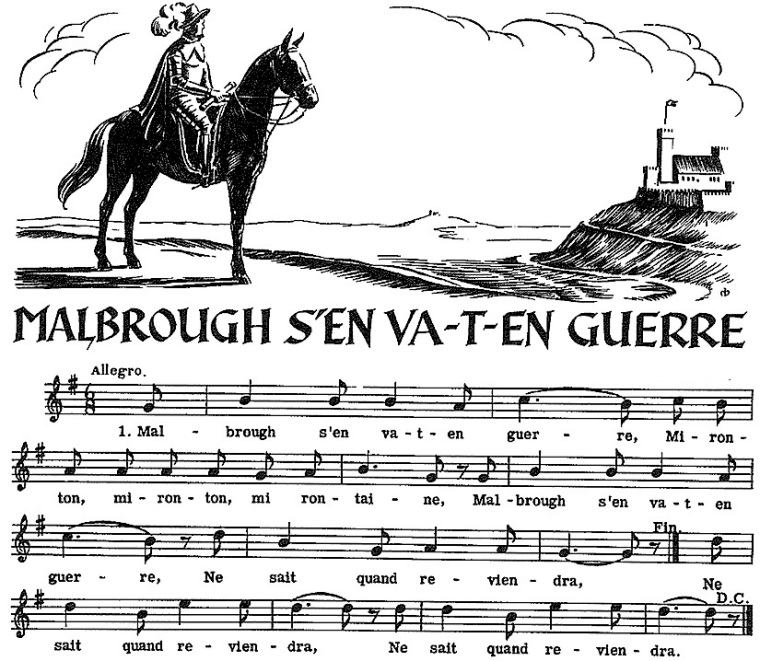
Anonimo: Mort et convoi de l’invincible Malbrough, ovvero Malbrough s’en va-t-en guerre. Le Poème Harmonique, dir. Vincent Dumestre.
Malbrough s’en va-t-en guerre,
mironton, mironton, mirontaine,
Malbrough s’en va-t-en guerre,
Ne sait quand reviendra.
Il reviendra-z-à Pâques,
ou à la Trinité.
La Trinité se passe,
Malbrough ne revient pas.
Madame à sa tour monte
si haut qu’elle peut monter.
Elle voit venir son page,
tout de noir habillé.
Beau page, ah!, mon beau page,
quell’ nouvell’ apportez?
Aux nouvelles que j’apporte,
vos beaux yeux vont pleurer!
[Quittez vos habits roses,
et vos satins brodés!
Prenez la robe noire
et les souliers cirés.]
Monsieur Malbrough est mort,
est mort et enterré.
L’ai vu porter en terre,
par quatre-z-officiers.
L’un portait sa cuirasse
l’autre son bouclier.
L’autre portait son grand sabre,
et l’autre ne portait rien.
A l’entour de sa tombe,
romarins l’on planta.
[Sur la plus haute branche
un rossignol chantait.]
On vit voler son âme
au travers des lauriers.
Chacun mit ventre à terre
et puis se releva
pour chanter les victoires
que Malbrough remporta.
La cérémonie faite,
chacun s’en fut coucher.
Les uns avec leurs femmes,
et les autres tout seuls!
Ce n’est pas qu’il en manque,
car j’en connais beaucoup
des blondes et des brunes
et des châtaignes aussi.
J’ n’en dis pas davantage,
car en voilà-z-assez.
Fernando Sor (13 febbraio 1778 - 1839): Introduction et variations sur l’air Malbroug op. 28 (1827). Anders Miolin, chitarra.
Thomas Campian (o Campion; 12 febbraio 1567 - 1620): Fair, if you expect admiring, ayre (pubblicato nel Third Booke of Ayres, 1617, n. 8). Nigel Rogers, tenore; Desmond Dupré, liuto.
Fair, if you expect admiring,
Sweet, if you provoke desiring,
Grace dear love with kind requiting.
Fond, but if thy light be blindness,
Fair, if thou affect unkindness,
Fly, both love and love’s delighting.
Then, when hope is lost and love is scorned,
I’ll bury my desires, and quench the fires that ever yet in vain have burned.
Fates, if you rule lovers’ fortune,
Stars, if men your powers importune,
Yield relief by your relenting.
Time, if sorrow be not endless,
Hope made vain, and pity friendless,
Help to ease my long lamenting.
But if griefs remain still unredressed,
I’ll fly to her again, and she for pity to renew my hopes distressed.

Peter Arnold Heise (11 febbraio 1830 - 1879): Trio in mi bemolle maggiore per violino, violoncello e pianoforte (1869). Eskar Trio.

Franz Liszt (1811-1886): Les Préludes, poema sinfonico n. 3 S 97 (1848-54), da Alphonse de Lamartine. Deutsches Symphonie-Orchester Berlin, dir. Ferenc Fricsay.
Il testo di Lamartine che ha ispirato Liszt:
http://www.poetes.com/lamartine/preludes.htm
Lo stesso brano nella trascrizione (di Liszt) per due pianoforti S 638. Tami Kanazawa & Yuval Admony.

Hai un account WordPress.com? Accedi ora.

