Bellerofonte Castaldi (c1581 - 27 settembre 1649): Hor che la notte ombrosa, aria per voce e basso continuo (pubblicata in Primo mazzetto di fiori musicalmente colti dal giardino bellerofonteo, 1623); testo del compositore. Allegoria Ensemble: Elisenda Pujals, soprano; Guzmán Ramos, arciliuto; Robert Cases, tiorba; Hen Goldsobel, violone.
Hor che la notte ombrosa
Con tacito silentio il mondo cuopre,
Tu sola mi rispondi, Echo amorosa.
Ma che? Se quell’empia e crudele,
Se sdegna d’ascoltar le mie querelle,
Dunque chi darà fine a tanti guai?
Tu con lamento mi rispondi
E par che vi nascondi
Che da lei pace non havro già mai.
Se tanto asprezza in lei s’aduna,
Altra dia fine a si crudel fortuna.
Pur troppo il so ch’altri che quella
Non parrà a gl’occhi miei donna più bella,
Onde’l pensier mi parla e dice:
Forse co’l tempo diverrai felice.
Ben lieta sorte ha l’amor mio
Se giunge al fin del suo dolce desio
Tu del mio ben presaga a Dio.
Béla Bartók (1881 - 26 settembre 1945): Concerto per viola e orchestra BB 128 (1945, incompiuto; completato da Tibor Serly). Timothy Ridout, viola; Sinfonieorchester Aachen, dir. Christopher Ward.
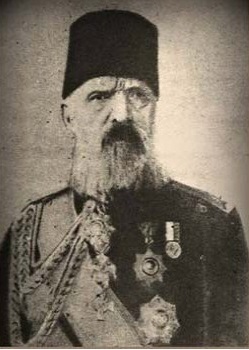
Callisto Guatelli (26 settembre 1819 - 1900): Aziziye marşı (Marcia di Abdul Aziz), inno imperiale ottomano dal 1861 al 1876. The London Academy of Ottoman Court Music, dir. Emre Aracı.
Dalla natia Parma, Guatelli si trasferì a İstanbul, dove nel 1856 succedette a Giuseppe Donizetti (fratello maggiore di Gaetano) nella carica di direttore della musica della corte imperiale. Il sultano Abdul Aziz gli conferì il grado di generale e il titolo di pascià.
Callisto Guatelli: Osmanlı sergi marşı (Marcia per una mostra ottomana). Stessi interpreti.
Composta in occasione di una esposizione, contiene due omaggi ai visitatori britannici: una citazione del loyal song God save the King [0:50] e una di Rule, Britannia! [2:11], seguite alla fine dalla Aziziye marşı [3:02].
Philip Cipriani Hambly Potter (1792 - 26 settembre 1871): Nona ovvero Settima oppure Quarta Sinfonia in re maggiore op. 29 (1834); è cronologicamente l’ultima delle dieci sinfonie di Potter, numerate dall’autore secondo criteri imperscrutabili. BBC Ulster Orchestra, dir. Hilary Davan Wetton.
I. Moderato assai – Allegro
II. Andante [7:34]
III. Scherzo: Allegro [15:48]
IV. Finale: Presto [20:01]
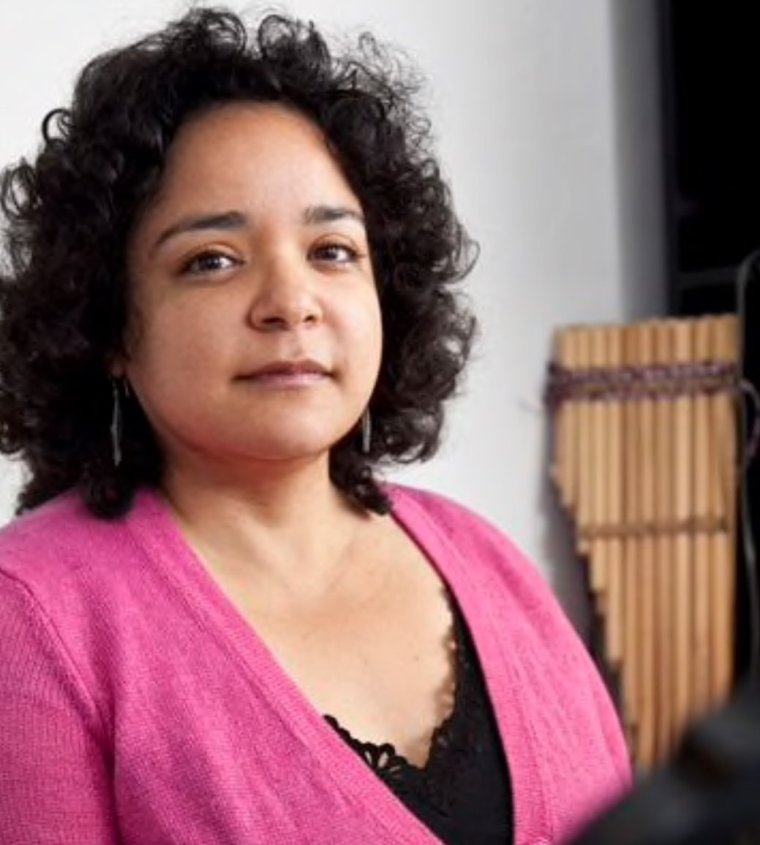
Gabriela Lena Frank (26 settembre 1972): Apu, poema sinfonico (2017). Lavoro commissionato dal Carnegie Hall per la National Youth Orchestra of the United States of America (NYO-USA), che qui l’esegue sotto la direzione di Marin Alsop.
Gabriela Lena Frank è nata a Berkeley, California, da padre americano di origine ebraica lituana e madre peruviana di origine cinese.
Nelle tradizioni andine, risalenti ai tempi dell’impero incaico, l’apu è uno spirito benigno che protegge coloro che si avventurano sulle montagne.
Henry F. Gilbert (26 settembre 1868 - 1928): Comedy Overture on Negro Tunes (1910). NBC Symphony Orchestra, dir. Arturo Toscanini (registrazione del 1943).
La biografia di Gilbert presenta diversi punti di contatto con quella di Charles Ives: anche Gilbert era un uomo d’affari (ma, a differenza di Ives, a un certo punto decise di dedicarsi interamente alla composizione), aveva problemi cardiaci (il suo medico scrisse addirittura un libro sul suo particolare caso clinico) e fu uno dei musicisti statunitensi che per primi scelsero di abbandonare i modelli della musica colta europea per cercare di esprimersi in un idioma più caratteristicamente americano.
Giacomo Manzoni (26 settembre 1932): Mercurio transita davanti al Sole per orchestra (2006). Orchestra Sinfonica Nazionale della RAI, dir. Johannes Debus.
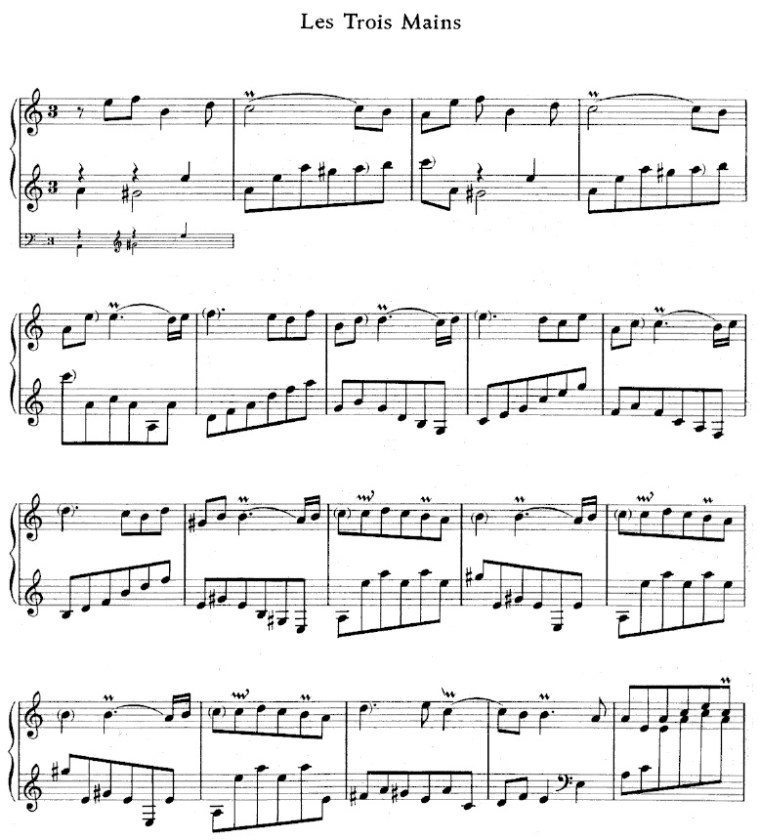
Jean-Philippe Rameau (25 settembre 1683 - 1764): Les Trois Mains (da Nouvelles Suites de Pièces de Clavecin, c1726-27: n. 4 della Suite in la minore). Alberto Chiari, clavicembalo, e Clément Lefebvre, pianoforte.
Forse bisognerebbe avere una terza mano per eseguire questo brano di Rameau, che ricorda un po’, nello spirito frizzante, le sonate di Domenico Scarlatti 🙂
William Lawes (1602 - 24 settembre 1645): Gather ye rosebuds, song su testo di Robert Herrick. Anna Dennis, soprano; ensemble Voices of Music.
Gather ye rosebuds while ye may,
Old Time is still a-flying;
And this same flower that smiles today
Tomorrow will be dying.
The glorious lamp of heaven, the sun,
The higher he’s a-getting,
The sooner will his race be run,
And nearer he’s to setting.
That age is best which is the first,
When youth and blood are warmer;
But being spent, the worse, and worst
Times still succeed the former.
Then be not coy, but use your time,
And while ye may, go marry;
For, having lost but once your prime,
You may forever tarry.
John Keating-Robin Williams invita i propri allievi a meditare sui versi di Herrick:
Fiero sostenitore del partito realista, William Lawes cadde sul campo di battaglia di Rowton Heath, presso Chester. Carlo I dispose che gli fossero dedicate speciali onoranze funebri e gli conferì postumo il titolo di Father of Musick.
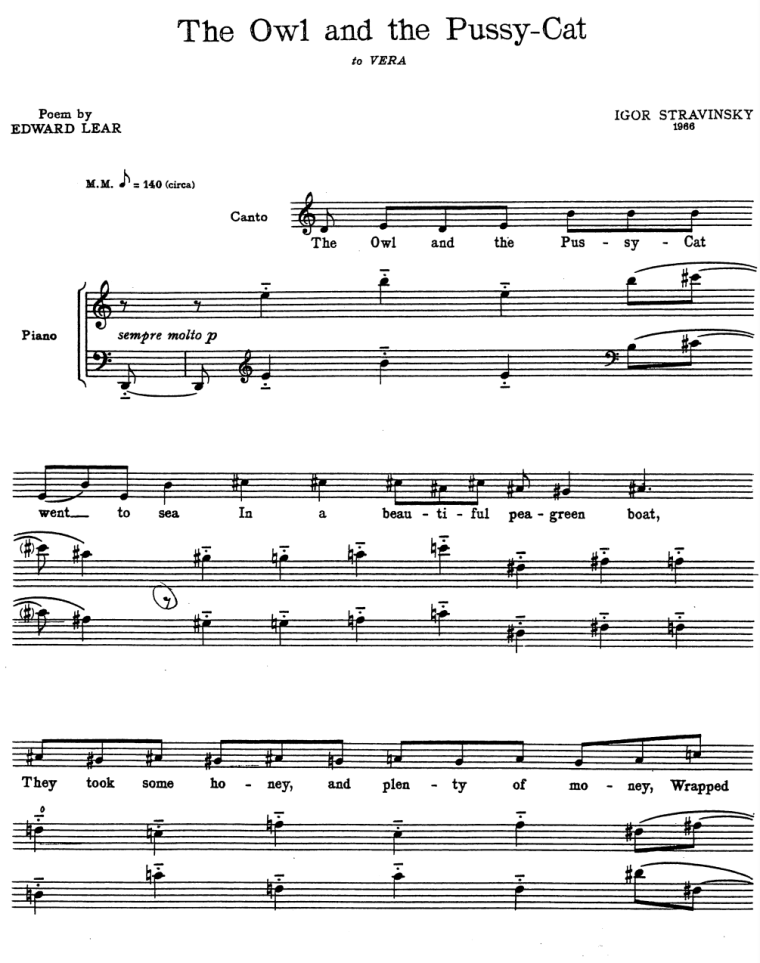
Igor’ Fëdorovič Stravinskij (1882-1971): The Owl and the Pussycat per voce e pianoforte (1966) su testo di Edward Lear. Adrienne Albert, mezzosoprano; Robert Craft, pianoforte.
The Owl and the Pussy-cat went to sea
In a beautiful pea-green boat,
They took some honey, and plenty of money,
Wrapped up in a five-pound note.
The Owl looked up to the stars above,
And sang to a small guitar,
‘O lovely Pussy! O Pussy my love,
What a beautiful Pussy you are,
You are,
You are!
What a beautiful Pussy you are!’
Pussy said to the Owl, ‘You elegant fowl!
How charmingly sweet you sing!
O let us be married! too long we have tarried:
But what shall we do for a ring?’
They sailed away, for a year and a day,
To the land where the Bong-tree grows
And there in a wood a Piggy-wig stood
With a ring at the end of his nose,
His nose,
His nose,
With a ring at the end of his nose.
‘Dear pig, are you willing to sell for one shilling
Your ring?’ Said the Piggy, ‘I will.’
So they took it away, and were married next day
By the Turkey who lives on the hill.
They dined on mince, and slices of quince,
Which they ate with a runcible spoon;
And hand in hand, on the edge of the sand,
They danced by the light of the moon,
The moon,
The moon,
They danced by the light of the moon.
Mátyás Seiber (1905 - 24 settembre 1960): The Owl and the Pussycat per voce, violino e chitarra (1956) su testo di Edward Lear. Beáta Máthé, mezzosoprano; Zoltán Benedekfi, violino; Dávid Pavlovits, chitarra.
The Owl and the Pussy-cat went to sea
In a beautiful pea-green boat,
They took some honey, and plenty of money,
Wrapped up in a five-pound note.
The Owl looked up to the stars above,
And sang to a small guitar,
‘O lovely Pussy! O Pussy my love,
What a beautiful Pussy you are,
You are,
You are!
What a beautiful Pussy you are!’
Pussy said to the Owl, ‘You elegant fowl!
How charmingly sweet you sing!
O let us be married! too long we have tarried:
But what shall we do for a ring?’
They sailed away, for a year and a day,
To the land where the Bong-tree grows
And there in a wood a Piggy-wig stood
With a ring at the end of his nose,
His nose,
His nose,
With a ring at the end of his nose.
‘Dear pig, are you willing to sell for one shilling
Your ring?’ Said the Piggy, ‘I will.’
So they took it away, and were married next day
By the Turkey who lives on the hill.
They dined on mince, and slices of quince,
Which they ate with a runcible spoon;
And hand in hand, on the edge of the sand,
They danced by the light of the moon,
The moon,
The moon,
They danced by the light of the moon.
Tōru Takemitsu (1930 - 1996): In an Autumn Garden per orchestra gagaku (1973-79). Kunaichō Gakubu.
Il gagaku è una tradizione musicale giapponese propria della corte imperiale di Kyōto; introdotta in Giappone dalla Cina nel VI secolo, divenne ufficiale circa duecento anni più tardi. L’orchestra gagaku comprende strumenti a fiato (ryūteki o in alternativa komabue, flauti traversi; hichiriki, oboe; shō, organo a bocca), a corda (biwa, liuto; gakusō e yamatogoto, cetre; kugo, arpa angolare) e a percussione (gong e tamburi di varie dimensioni).
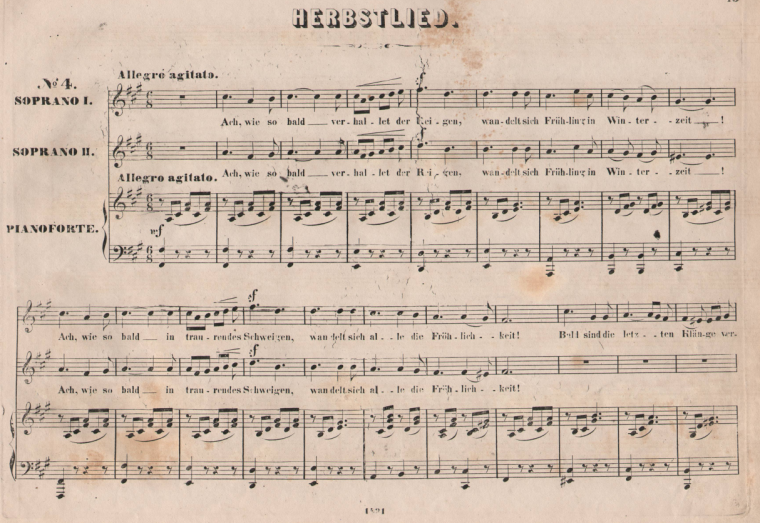
Felix Mendelssohn-Bartholdy (1809 - 1947): Herbstlied, duetto op. 63 n. 4 (1844); testo di Karl Klingemann (1798-1862). Barbara Bonney, soprano; Angelika Kirchschlager, mezzosoprano; Malcolm Martineau, pianoforte.
Ach, wie so bald verhallet der Reigen,
Wandelt sich Frühling in Winterzeit!
Ach, wie so bald in trauerndes Schweigen
Wandelt sich alle der Fröhlichkeit!
Bald sind die letzten Klänge verflogen!
Bald sind die letzten Sänger gezogen!
Bald ist das letzte Grün dahin!
Alle sie wollen heimwärts ziehn!
Ach, wie so bald verhallet der Reigen,
Wandelt sich Lust in sehnendes Leid.
Wart ihr ein Traum, ihr Liebesgedanken?
Süß wie der Lenz und schnell verweht?
Eines, nur eines will nimmer wanken:
Es ist das Sehnen, das nimmer vergeht.
Ach, wie so bald verhallet der Reigen!
Ach, wie so bald in trauerndes Schweigen
Wandelt sich alle die Fröhlichkeit!
(Oh, quanto presto s’arresta la danza, la primavera si tramuta in inverno; oh, quanto presto in doloroso silenzio si tramuta ogni allegria.
Presto si affievoliscono gli ultimi suoni! Presto se ne vanno gli ultimi alati cantori! Presto l’ultimo verde scompare! Tutti vogliono tornare a casa.
Oh, quanto presto s’arresta la danza e il piacere si trasforma in mesto dolore!
Eravate soltanto un sogno, voi, pensieri d’amore? Dolce come la primavera e presto svanito? Una cosa, solo una cosa non cambierà mai: la nostalgia, che mai se ne va.
Oh, quanto presto s’arresta la danza! Oh, quanto presto in doloroso silenzio si tramuta ogni allegria.)
Franz Schubert (1797 - 1828): Herbst, Lied D 945 (1828); testo di Ludwig Rellstab (1799 - 1860). Dietrich Fischer-Dieskau, baritono; Gerald Moore, pianoforte.
Es rauschen die Winde
So herbstlich und kalt;
Verödet die Fluren,
Entblättert der Wald.
Ihr blumigen Auen!
Du sonniges Grün!
So welken die Blüten
Des Lebens dahin.
Es ziehen die Wolken
So finster und grau;
Verschwunden die Sterne
Am himmlischen Blau!
Ach, wie die Gestirne
Am Himmel entflieh’n,
So sinket die Hoffnung
Des Lebens dahin!
Ihr Tage des Lenzes
Mit Rosen geschmückt,
Wo ich die Geliebte
Ans Herze gedrückt!
Kalt über den Hügel
Rauscht, Winde, dahin!
So sterben die Rosen
Des Lebens dahin.
(Soffiano i venti gelidi dell’autunno; la campagna si fa sterile, il bosco perde le foglie. Che ne è di voi, prati fioriti, e di te, verde solare? Così avvizziscono i fiori della vita.
Passano nuvole scure e grigie; scompaiono le stelle nel blu del cielo! Ah, come fuggono le stelle dal cielo, così svanisce la speranza dalla vita!
Dove siete, giornate primaverili adornate di rose, quando stringevo al cuore la mia amata? Scendete gelidi dalla collina, venti! Così muoiono le rose della vita.)
Gabriel Fauré (1845 - 1924): Automne, mélodie op. 18 n. 3 (1878), testo di Armand Silvestre (1837 - 1901). Janine Devost (1932 - 1985), soprano; David Selig, pianoforte.
Automne au ciel brumeux, aux horizons navrants,
Aux rapides couchants, aux aurores pâlies,
Je regarde couler, comme l’eau du torrent,
Tes jours faits de mélancolie.
Sur l’aile des regrets mes esprits emportés,
– Comme s’il se pouvait que notre âge renaisse! –
Parcourent, en rêvant, les coteaux enchantés,
Où jadis sourit ma jeunesse!
Je sens, au clair soleil du souvenir vainqueur,
Refleurir en bouquet les roses deliées,
Et monter à mes yeux des larmes, qu’en mon coeur,
Mes vingt ans avaient oubliées!
Michael Torke (22 settembre 1961): Time per 22 musicisti (2021). Michael Torke Orchestra diretta dall’autore.
Span 1
Span 2 [8:32]
Span 3 [17:33]
Span 4 [27:42]
Span 5 [35:50]
A span of time: as short as a nine-minute movement; or as long as a life.
The span of a day, a week, a month, or a year has imprinted in it recurrence and repetition. Recurrence in large scale mirrors recurrence in detail. Repetition can reset an unsettled heart, can calm the nerves, can even adjust brain chemistry. Rhythm itself divides up time and breathes life into time. Time slips away as we age, but music pins us down—it offers a kind of security against the ravages of time.
Time is the one thing money can’t buy. The rich and the poor have equal access to time—time is free but it’s priceless. You can’t own it but you can use it. You can’t save it but you can spend it.
Buddha says: « Life is swept along, next-to-nothing its span. For one swept to old age no shelters exist. Perceiving this danger in death, one should drop the world’s bait and look for peace » (Michael Torke).
Franco Petracchi (Pistoia, 22 settembre 1937): Valse oubliée per contrabbasso e orchestra. Alexandre Ritter, contrabbasso; Orquestra Sinfônica da Universidade de Caxias do Sul, dir. Manfredo Schmiedt.
Hans Werner Henze (1926 - 2012): Concerto per contrabbasso e orchestra (1966). Franco Petracchi, contrabbasso; Orchestra sinfonica della Rai di Roma.
Michel Pignolet de Montéclair (1667 - 22 settembre 1737): La mort de Didon, cantata per soprano, archi e basso continuo (c1709). Agnes Mellon, soprano; Les Arts Florissants, dir. William Christie.
I. Lent, marqué et détaché
«Je ne verrai donc plus Enée!»
S’écria tristement Didon abandonnée,
«Il est donc vrai qu’il part?
Il fuit loin de ces bords,
Dieux que j’étois crédule!
Ô Dieux qu’il est perfide!
L’inconstant plus leger que le vent qui le guide
Me quitte sans regrets, me trahit sans remords.
II. Air lent
«O Toi, Déesse de Cithère,
Tendre Vénus, es-tu la mère
De l’ingrat qui m’a su charmer?
Non, non, il ne sait pas aimer.
Helas! Helas! Helas!
Pourquoi sait-il trop plaire?
III. Récitatif
«Infidèle, pourquoi quittez-vous ce rivage?
Les plaisirs et les jeux y voloient sur vos pas!
Pourquoi vouloir régner dans de lointains climats
Quand ma main vous offroit le sceptre de Carthage?
Perfide amant, funeste jour!
Faut-il que je trouve un volage
Dans le frère du tendre Amour?
IV. Vivement
Tirans de l’empire de l’Onde,
Grondez. Volez, vents furieux.
Élevez les flots jusqu’aux cieux!
Que tout l’Univers se confonde!
Tonnez, vengez mes feux trahis!
Justes Dieux, vengez mon injure!
Tonnez, embrasez un parjure
Dans le sein même de Thétis!
V. Récitatif
«Non, arretez.
Grands Dieux, gardez vous d’exaucer
Mon courroux légitime!
Laissez moi choisir ma victime:
Énée est dans mon cœur et je vais l’y percer.»
Sur un bûcher fatal, théâtre de sa rage,
Didon en ce moment se livre à la fureur.
Un fer, triste present que lui laisse un volage,
Un fer cruel lui perce enfin le cœur:
Mourante elle tombe, et son âme
Chérit encore l’ingrat qu’elle n’a pu toucher;
Elle expire sur le bûcher,
Le flambeau de l’Amour en alume la flamme.
VI. Air gai
Qu’il est dangereux
De se rendre aux vœux
D’un objet volage!
Un sensible cœur
Risque son bonheur
Le jour qu’il s’engage.
Que les seuls plaisirs
Fixent nos désirs:
Evitons les peines!
Amour, si les jeux
N’en forment les nœuds,
Je brise mes chaînes.
Mikalojus Konstantinas Čjurlënis (22 settembre 1875 - 1911): Jūra (Il mare), poema sinfonico (1903-07). Lietuvos Velztybinis Simfoninis Orkestras, dir. Gintaras Rinkevičius.
Sonata del mare: Finale, dipinto di M. K. Čjurlënis (1908)
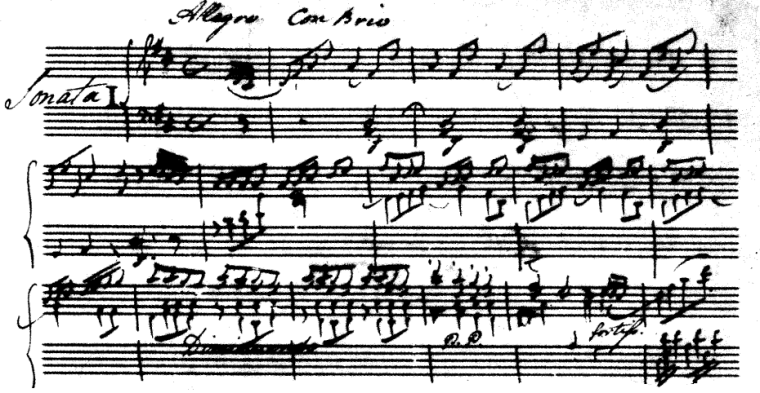
Alexander Reinagle (1756 - 21 settembre 1809): Sonata in re maggiore per pianoforte (c1790). William Grant Naboré.
Allegro con brio
Tema (di Haydn) con variazioni [7:54]
Allegro [14:09]
La famiglia di Reinagle annovera numerosi musicisti e pittori di vaglia. Figlio di Joseph Reinagle, un virtuoso di tromba austroungarico che si era stabilito a Portsmouth, e di Annie Laurie, scozzese, nel 1786 Alexander Reinagle si trasferì negli Stati Uniti, fissando la propria residenza prima a New York e poi a Filadelfia: quivi fu attivo come insegnante e concertista, influenzando profondamente la vita musicale cittadina. Fra i suoi ammiratori vi fu George Washington: quando questi morì, nel 1799, Reinagle compose una Monody on the Death of George Washington.
La Sonata in re maggiore, la prima di un gruppo di quattro talvolta chiamate Philadelphia Sonatas, comprende nel II movimento quattro variazioni sul tema dell’Andante della Sinfonia n. 53, L’Impériale, di Franz Joseph Haydn.







 Mátyás Seiber (1905 - 24 settembre 1960): The Owl and the Pussycat per voce, violino e chitarra (1956) su testo di Edward Lear. Beáta Máthé, mezzosoprano; Zoltán Benedekfi, violino; Dávid Pavlovits, chitarra.






 la regina gioiosa