Il catalogo è questo

Giuseppe Gazzaniga (1743 - 1º febbraio 1818): «Dell’Italia, ed Alemagna», aria di Pasquariello dal I atto del dramma giocoso Don Giovanni o sia Il convitato di pietra (1786) su libretto di Giovanni Bertati. Alfredo García, baritono; María Rodríguez, soprano; Real Orquesta Sinfónica de Sevilla, dir. Pablo González.

PASQUARIELLO
Per me… sentite… vi dirò… siccome…

DONNA ELVIRA
Non confonderti.

PASQUARIELLO
Oibò: non v’è pericolo.
Siccome io dico, che Alessandro il Grande…

DONNA ELVIRA
E che c’entra Alessandro!

PASQUARIELLO
C’entra; e statevi cheta.
Siccome, io dico, che Alessandro il Grande
non era giammai sazio
di far nuove conquiste, il mio padrone
se avesse ancora cento spose, e cento,
sazio non ne sarìa, né mai contento;
egli è il Grande Alessandro delle femmine;
onde per far le sue amorose imprese
spesso, spesso cangiar suol di paese.

DONNA ELVIRA
Dunque ha dell’altre femmine?

PASQUARIELLO
Ih, ih! Se voi volete averle in vista
ecco signora mia, quest’è la lista.
(getta una lista di alcuna braccia di carta)
Dell’Italia, ed Alemagna
ve n’ho scritte cento, e tante.
Della Francia, e della Spagna
ve ne sono non so quante:
fra madame, cittadine,
artigiane, contadine,
cameriere, cuoche, e guattere;
perché basta che sian femmine
per doverle amoreggiar.
Vi dirò ch’è un uomo tale,
se attendesse alle promesse,
che il marito universale
un dì avrebbe a diventar.
Vi dirò che egli ama tutte,
che sian belle, o che sian brutte:
delle vecchie solamente
non si sente ad infiammar.

PASQUARIELLO
Vi dirò…

DONNA ELVIRA
Tu m’hai seccata.

PASQUARIELLO
Vi dirò…

DONNA ELVIRA
Non più: va’ via.

(insieme)
PASQUARIELLO
Vi dirò che si potria
fin domani seguitar.

DONNA ELVIRA
Il mio cor da gelosia
tutto sento a lacerar.


Wolfgang Amadeus Mozart (1756 - 1791): «Mada­mina, il ca­talogo è que­sto», aria di Leporello dal I atto del dramma giocoso in 2 atti Il dissoluto punito ossia il Don Giovanni K 527 (1787) su libretto di Lorenzo Da Ponte. Ferruccio Furlanetto, basso; Orchester der Wiener Staatsoper, dir. Zubin Mehta.

Questo non picciol libro è tutto pieno
dei nomi di sue belle.
Ogni villa, ogni borgo, ogni paese
è testimon di sue donnesche imprese.

Madamina, il catalogo è questo
 delle belle che amò il padron mio;
 un catalogo egli è che ho fatt’io:
 osservate, leggete con me.
In Italia seicento e quaranta,
 in Lamagna duecento e trentuna,
 cento in Francia, in Turchia novantuna,
 ma in Ispagna son già mille e tre.
V’ha fra queste contadine,
 cameriere, cittadine,
 v’han contesse, baronesse,
 marchesane, principesse,
 e v’han donne d’ogni grado,
 d’ogni forma, d’ogni età.

Nella bionda egli ha l’usanza
 di lodar la gentilezza;
 nella bruna, la costanza;
 nella bianca, la dolcezza.
Vuol d’inverno la grassotta,
 vuol d’estate la magrotta;
 è la grande maestosa,
 la piccina è ognor vezzosa.
Delle vecchie fa conquista
 pe’l piacer di porle in lista:
 ma passion predominante
 è la giovin principiante.
Non si picca se sia ricca,
 se sia brutta, se sia bella:
 purché porti la gonnella,
 voi sapete quel che fa.

Songs from Liquid Days

Philip Glass (31 gennaio 1937): Songs from Liquid Days per voci e ensemble strumentale (1985) su testi di Paul Simon, Suzanne Vega, David Byrne e Laurie Anderson. Philip Glass Ensemble, dir. Michael Riesman.

  1. Changing Opinion, testo di Paul Simon. Con Bernard Fowler, voce
  2. Lightning, testo di Suzanne Vega. Con Janice Pendarvis, voce
  3. Freezing, testo di Suzanne Vega. Con The Kronos Quartet; Linda Ronstadt, voce
  4. Liquid Days (Part One), testo di David Byrne. Con The Roches, voci
  5. Open the Kingdom (Liquid Days, Part Two), testo di David Byrne. Con Douglas Perry, voce
  6. Forgetting, testo di Laurie Anderson. Con The Kronos Quartet; Linda Ronstadt e The Roches, voci

I. Changing opinion (Paul Simon)

Gradually
we became aware
of a hum in the room
an electrical hum in the room.
It went mmmmmm

We followed it from
corner to corner.
We pressed out ears
against the walls.
We crossed diagonals
and put our hands on the floor.
It went mmmmmm.

Sometimes it was
a murmur.
Sometimes it was
a pulse.
Sometimes it seemed
to disappear.
But then with a quarter-turn
of the head.
it would roll around the sofa.
A nimbus humming cloud
mmmmmm

Maybe it’s the hum
of a calm refrigerator
cooling on a big night.
Maybe it’s the hum
of our parents’ voices
long ago in a soft light
mmmmmm.
Maybe it’s the hum
of changing opinion
or a foreign language
in prayer.
Maybe it’s the mantra
of the walls and wiring.
Deep breathing
in soft air
mmmmmm

II. Lightning (Suzanne Vega)

Lightning struck a while ago
And it’s blazing much too fast
But give it rain of waiting time
And it will surely pass
Blow over
And it’s happening so quickly
As I feel the flaming time
And I grope about the embers
To relieve my stormy mind
Blow over

Shaken this has left me
And laughing and undone
With a blinding bolt of sleeplessness
That’s just begun
And a windy crazy running
Through the nights and through the days
And a crackling
Of the time burned away
Burned away

Now I feel it in my blood
All hot and sharp and white
With a whipcrack and a thunder
And a flash of flooding light
But there’ll be a thick and smoky
Silence in the air
When the fire finally dies
And I’m wondering who’ll be left there.

In the ashes of time
Burned away
Burned away

III. Freezing (Suzanne Vega)

If you had no name
If you had no history
If you have no books
If you had no family

If it were only you
Naked on the grass
Who would you be then?
This is what he asked
And I said I wasn’t really sure
But I would probably be
Cold

And now I’m freezing
Freezing

IV. Liquid Days (Part One) (David Byrne)

Oh Round Desire
Oh Red Delight
The River is Blood
The Time is Spent
Love likes me
Love takes it shoes off and sits on the couch
Love has an answer for everything
Love smiles gently…and crosses its legs well here we are well here we are

Sleep
Sleep

Sleep…Being in Air
Sleep…Turning to speak
Sleep…Losing our Way
Sleep…Pour it all Out

We are old Friends
I offer Love a Beer
Love watches Television
Love needs a bath
Love could use a shave
Love rolls out of the chair and wiggles on the floor
Jumps Up
I’m Laughing at Love
Drink Me
Drink Me
Drink Me
Drink Me

Drive…Why do You Ask?
Breaths…Still is the Night
Drive…It is much Further
Sleep…Than We Thought

In Liquid Days
Land Travel(s) Hard
Fly Home Daughter
Cover Your Ears

V. Open the Kingdom (Liquid Days, Part Two) (David Byrne)

Days of fishes
Distant roar
Turning to speak
Turning to hear

Open the Kingdom
Open the Kingdom
Open the Kingdom
Open the Kingdom…

In my way
In my way
Being most uncertain
And This Remains

Still for better
Birds of Voices
The Field of Living

I am Asking

I am Asking

I am Asking

Returning Love
Returning With Love
Then it was
Written with Love

VI. Forgetting (Laurie Anderson)

A man wakes up to the sound of rain
From a dream about his lovers
Who pass through his room.

They brush lightly by, these lovers.
They pass. Never touching.
These passing lovers move through his room.

The man is awake now
He can’t get to sleep again.
So he repeats these words
Over and over again:
Bravery. Kindness. Clarity.
Honesty. Compassion. Generosity.
Bravery. Honesty. Dignity.
Clarity. Kindness. Compassion.

At First Light

Sir George Benjamin (31 gennaio 1960): At First Light per orchestra da camera (1982). The Stony Brook Contemporary Chamber Players, dir. William Blank.

«&thinsp:In the Tate Gallery there is a late Turner oil painting, Norham Castle, Sunrise. The 12th century castle in this picture is silhouetted against a huge, golden sun. What struck me immediately about this beautiful image was the way in which solid objects – fields, cows and the castle itself – virtually appear to have melted under the intense sunlight. It is as if the paint were still wet. Abstractly, this observation has been important to the way I have composed the piece. A ‘solid object’ can be formed as a punctuated, clearly defined musical phrase. This can be ‘melted’ into a flowing, nebulous continuum of sound. There can be all manner of transformations and interactions between these two ways of writing. Equally important, however, this piece is a contemplation of dawn, a celebration of the colours and noises of daybreak. It is set in three movements: in the short, opening one, superimposed fanfares burst into hazy, undefined textures. After a pause the extended second movement follows, itself subdivided into several contrasted sections, full of abrupt changes in mood and tension. The concluding movement arrives without a break, and progresses in a continuous, flowing line illuminated with ever more resonant harmonies. At First Light, which is dedicated to Donald and Kathleen Mitchell, was commissioned by the London Sinfonietta with funds provided by the Arts Council of Great Britain. The première, under Simon Rattle, took place in November 1982&thinsp:» (George Benjamin).

GB

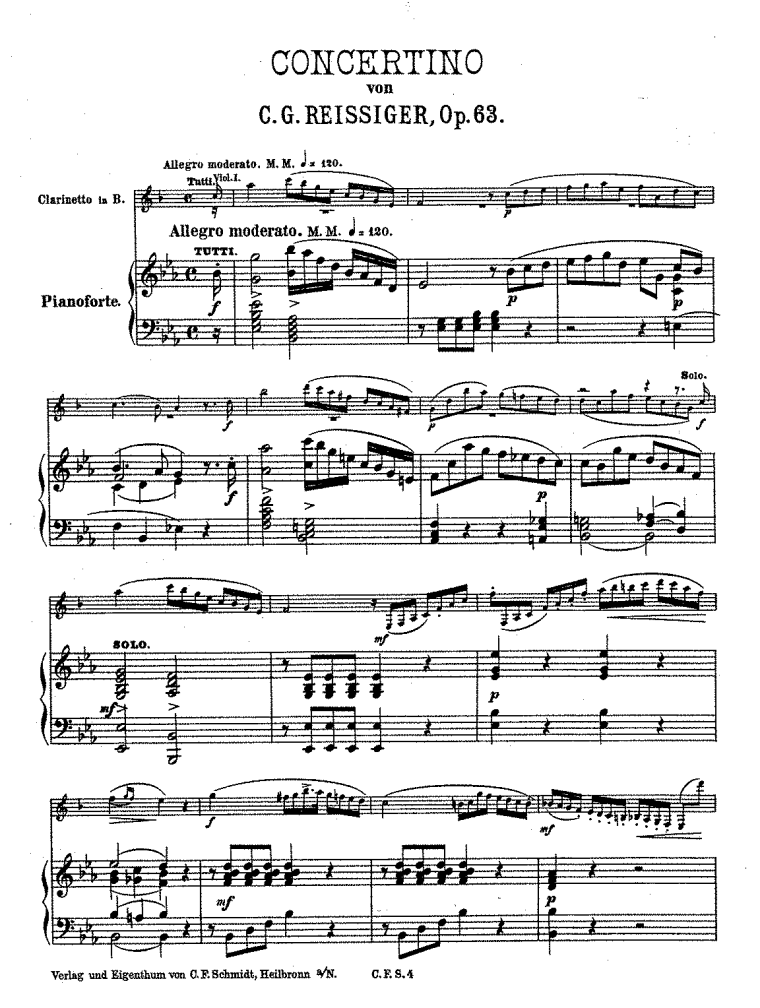
Concertino – XII

Carl Gottlieb Reißiger (31 gennaio 1798 - 1859): Concertino in mi bemolle maggiore per clarinetto e orchestra op. 63 (1830). Dieter Klöcker, clarinetto; Rundfunk-Sinfonie­orchester Berlin, dir. Jesús López Cobos.

  1. Moderato
  2. Andante con espressione [5:06]
  3. Rondò: Allegretto [9:24]

Reißiger, op. 63

Il leone d’inverno

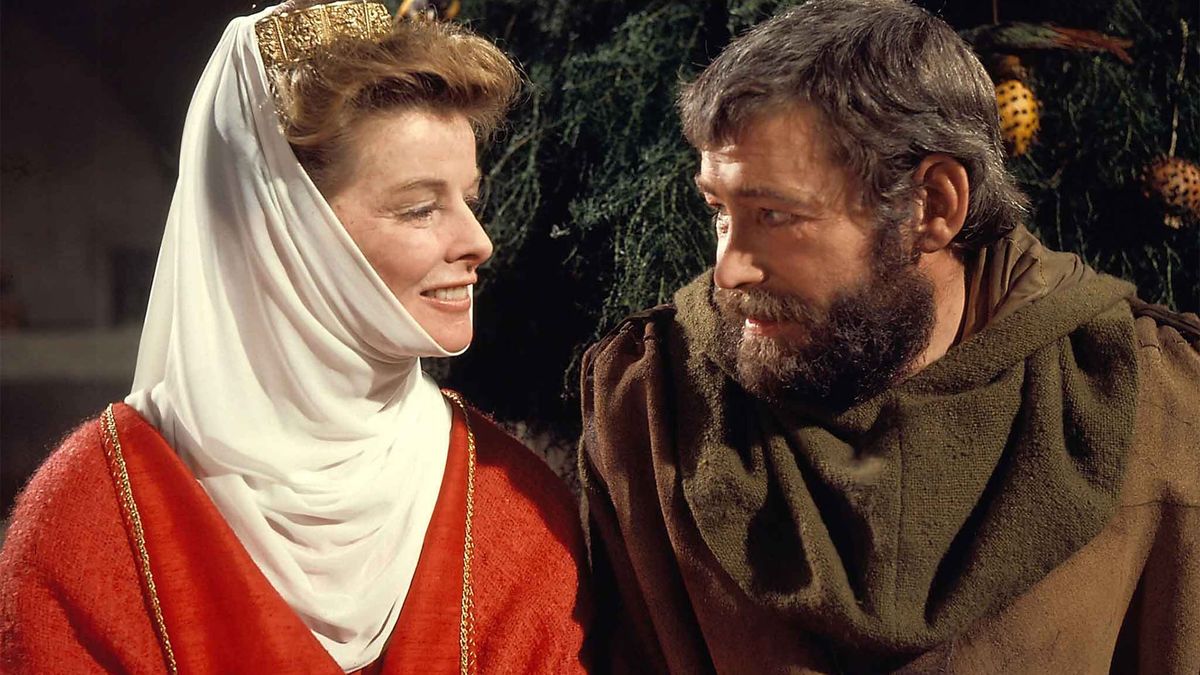
John Barry (1933 - 30 gennaio 2011): The lion in winter, suite sinfonica dalla colonna sonora dell’omonimo film (1968) di Anthony Harvey.
Nel 1969 al film furono assegnati tre premi Oscar: a Katharine Hepburn come miglior attrice protagonista, a James Goldman per la migliore sceneggiatura non originale (tratta da un lavoro teatrale dello stesso Goldman) e, appunto, a Barry per la miglior colonna sonora.

The lion in winter

Puro Poulenc

Francis Poulenc (1899 - 30 gennaio 1963): Concerto per due pianoforti e orchestra (1932), qui interpretato dal compositore insieme con Jacques Février (1959); l’Orchestre National de la Radio-Télévison Française è diretto da Georges Prêtre.

  1. Allegro ma non troppo
  2. Larghetto
  3. Allegro molto

Ispirato, in parte, dal Concerto in sol di Ravel, nel movimento centrale contiene un tenero omaggio a Mozart; tutto è comunque impregnato da un senso dell’ironia molto “francese”. Fu lo stesso autore a definire questo concerto «puro Poulenc».

Morte di Tintagiles

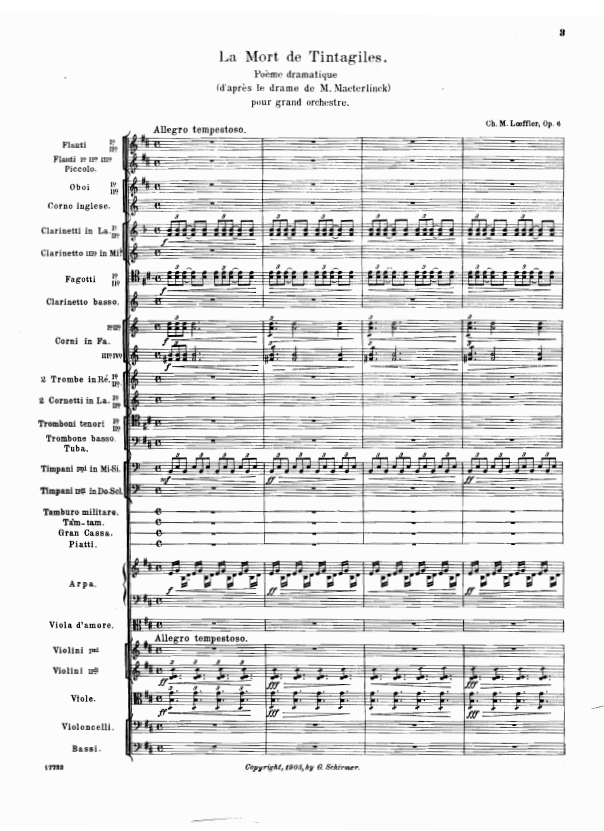
Charles Martin Loeffler (30 gennaio 1861 - 1935): La Mort de Tintagiles, poema sinfonico per viola d’amore (originariamente 2 viole d’amore) e orchestra op. 6 (1896–97, 1901), ispirato dall’o­mo­ni­mo dramma di Maurice Maeterlinck. Jennie Hansen, viola d’amore; Indianapolis Symphony Orchestra, dir. John Nelson.

La Mort de Tintagiles

La muta di Portici

Daniel Auber (29 gennaio 1782 - 1871): Ouverture per l’opera La Muette de Portici (1828). Symfonický orchester Slovenského rozhlasu v Bratislave (Orchestra sinfonica della Radio slovacca di Bratislava), dir. Ondrej Lenárd.

Per la composizione, Auber si avvalse inizialmente di un libretto di Germain Delavigne intitolato Masaniello, ou la Muette de Portici; il testo fu poi riscritto da Eugène Scribe. Rifiutata in un primo tempo dal «comitato di lettura» dell’Opéra di Parigi (che le preferì Masaniello ou le Pêcheur napolitaine di Michele Carafa), l’opera andò in scena il 28 febbraio 1828 riscuotendo grande successo: nel corso di quell’anno ebbe più di cento repliche.

Alta speranza mia

Scipione Dentice (29 gennaio 1560 - 1633): Vergine dolc’e pia, lauda a 4 voci (pubblicata in Nuove laudi ariose della Beatissima Vergine, 1600, n. 1). Ensemble Progetto Musica, dir. Giulio Monaco.

Vergine dolc’e pia,
alta speranza mia
a’ miei prieghi t’inchina
ben ch’io sia terra
e tu del ciel Regina.

Vergine da ch'io l'ami
n’altro mai che lui brami,
arda sempre il mio coro,
arda e sfavilli
del tuo santo amore.

Allegretto agevole

Ludolf Nielsen (29 gennaio 1876 - 1939): Sinfonia n. 3 in do maggiore op. 32 (1911-13). Bamberger Symphoniker, dir. Frank Cramer.

  1. Andante con moto – Poco più moto – Andante – Allegro energico – Più vivo – Maestoso
  2. Allegretto agevole – Andantino con moto – Tempo I – Presto – Tempo II – Presto
  3. Andante lento pastorale
  4. Andante lento – Allegro maestoso

Berceuse d’Armorique

Poldowski (pseudonimo di Régine Wieniawski; 1879 - 28 gennaio 1932): Berceuse d’Armorique (1914) su testo di Anatole Le Braz. Angelique Zuluaga, soprano; Gwendolyn Mok, pianoforte.

Dors, petit enfant, dans ton lit bien clos:
Dieu prenne en pitié les bons matelots!

  Chante ta chanson, chante, bonne vieille!
  La lune se lève et la mer s’éveille.

Au Pays du Froid, la houle des fjords
Chante sa berceuse en berçant les morts.

Dors, petit enfant, dans ton lit bien doux,
Car tu t’en iras comme ils s’en vont tous.

Tes yeux ont dèjà la couleur des flots.
Dieu prenne en pitié les bons matelots!

Allegretto con mot(t)o

Antonio Bartolomeo Bruni (28 gennaio 1757 - 1821): Sonata in mi bemolle maggiore per viola e basso continuo op. 27 n. 4. Antonello Farulli, viola; Francesco Dillon, violoncello; Gabriele Micheli, fortepiano.

  1. Allegro moderato
  2. Romance: Adagio [7:04]
  3. Allegretto con moto [8:44]

Elegia – VII

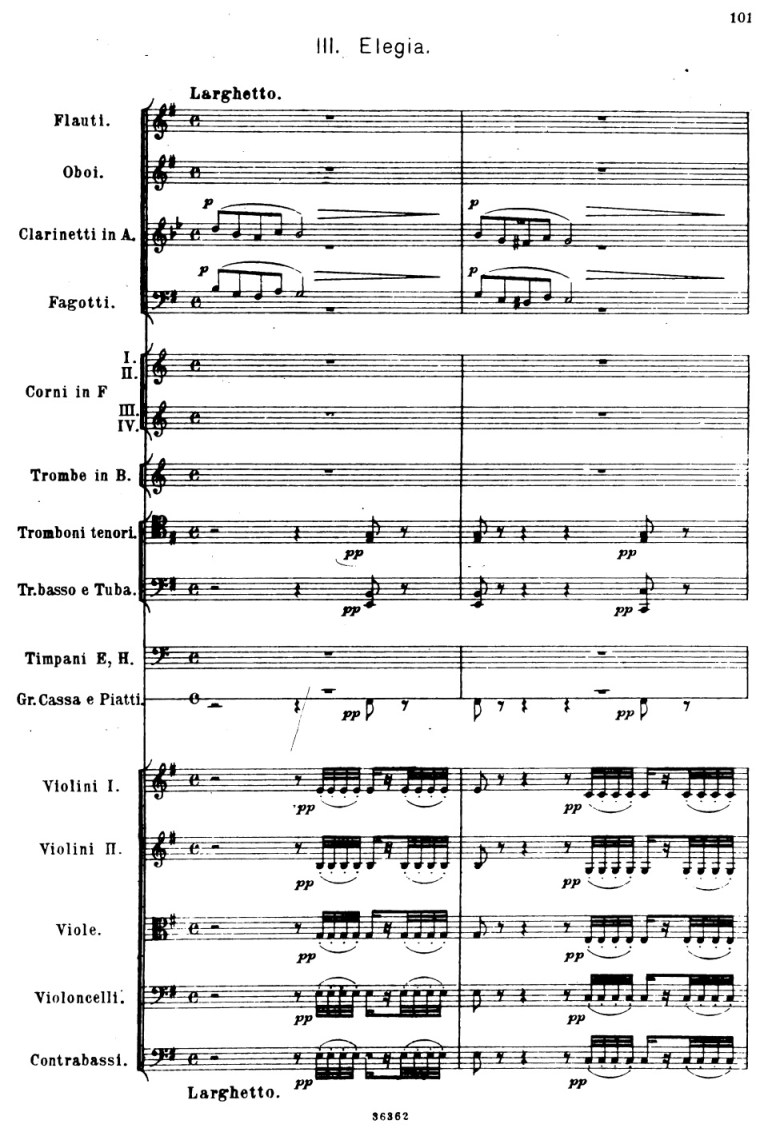
Michail Michajlovič Ippolìtov-Ivànov (1859 - 28 gennaio 1935): Sinfonia n. 1 in mi minore op. 46 (1907). Bamberger Symphoniker, dir. Gary Brain.

  1. Adagio – Allegro risoluto
  2. Scherzo: Moderato. Maestoso – Allegro [12:57]
  3. Elegia: Larghetto [18:51]
  4. Finale: Allegro moderato [25:48]

Song for Athene

John Tavener (28 gennaio 1944 - 2013): Song for Athene per coro a cappella (1993) su testo di madre Thekla (Marina Šarf, 1918 – 2011). King’s College Choir, Cambridge.

Alleluia
Alleluia
May flights of angels sing thee to thy rest
Alleluia
Alleluia
Remember me, O Lord, when you come into your kingdom
Alleluia
Alleluia
Give rest, O Lord, to your handmaid who has fallen asleep
Alleluia
Alleluia
The Choir of Saints have found the well-spring of life and door of paradise
Alleluia
Alleluia
Life: a shadow and a dream
Alleluia
Alleluia
Come, enjoy rewards and crowns I have prepared for you.
Alleluia
Alleluia.

Allegro moderato – V

Pavel Haas (1899 - 1944): Quartetto per archi n. 3 op. 15 (1937-38). Quartetto «Haas».

  1. Allegro moderato
  2. Lento ma non troppo e poco rubato [6:50]
  3. Tema con variazioni e fuga: Con moto [12:58]

Allievo di Leoš Janáček, Pavel Haas fu deportato nel 1941 a Theresienstadt e il 16 ottobre 1944 trasferito a Auschwitz, dove morì uno o due giorni dopo.

Mia colomba

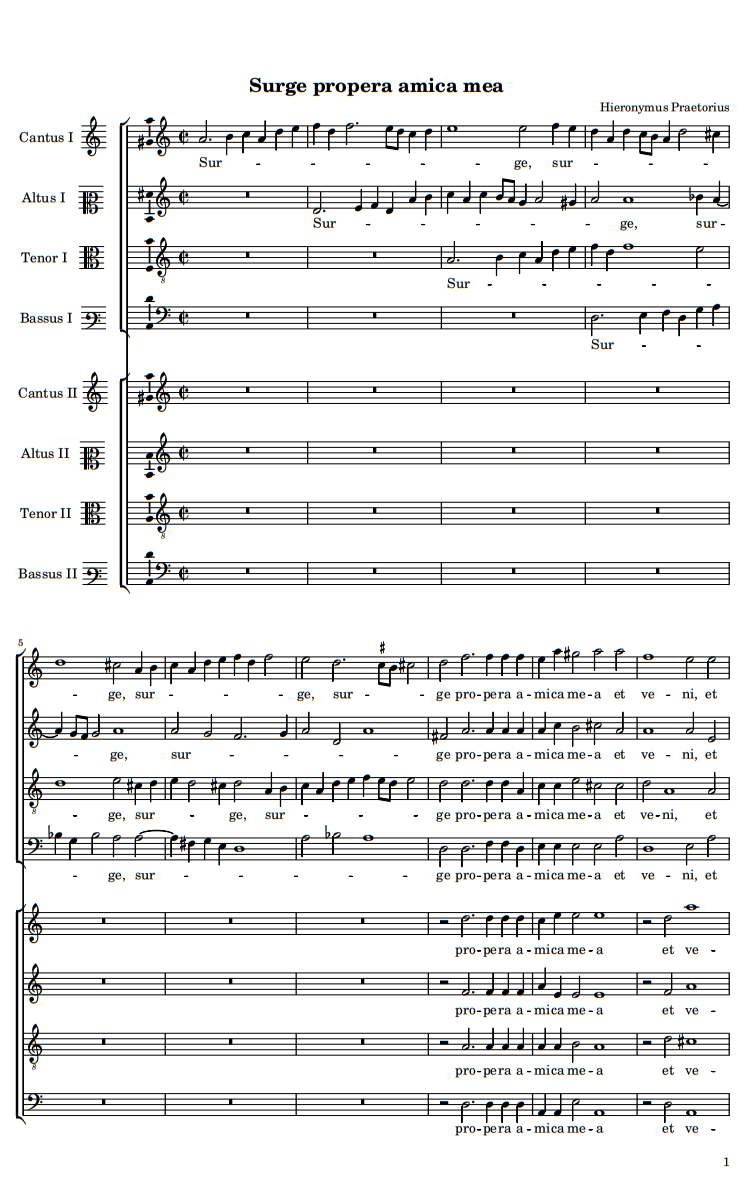
Hieronymus Praetorius (1560 - 27 gennaio 1629): Surge, propera, amica mea, mottetto per doppio coro a 8 voci (da Sacrae cantiones de praecipuis festis totius anni, 1599, n. 25), testo liberamente tratto dal Canticum canticorum II:10 passim. Balthasar-Neumann-Chor e Balthasar-Neumann-Ensemble, dir. Pablo Heras-Casado.

Surge, propera, amica mea, et veni.
Iam hiems transiit;
imber abiit et recessit.
Flores apparuerunt in terra nostra.
Tempus putationis advenit.

Surge, propera, speciosa mea, et veni,
formosa mea, columba mea,
in foraminibus petrae,
in caverna maceriae,
ostende mihi faciem tuam.
Sonet vox tua in auribus meis,
vox enim tua dulcis
et facies tua decora.

Concerto per violoncello – VIII: con banda

Friedrich Gulda (1930 - 27 gennaio 2000): Concerto in fa maggiore per violoncello e banda (1980). Alessandra Doninelli, violoncello; membri dell’Orchestra dell’Accademia di musica di Basilea, dir. Alexander Joel.

  1. Ouverture
  2. Idylle [5:11]
  3. Cadenza [11:24]
  4. Menuett [16:16]
  5. Finale: Alla marcia [20:08]

Rapsodia slava

Viktor Ullmann (1898 - 1944): Slawische Rhapsodie per orchestra con sassofono obbligato op. 23 (1940). John-Edward Kelly, sassofono; Deutsches Symphonieorchester Berlin, dir. Gerd Albrecht.

Ullmann morì nella camera a gas del campo di concentramento di Auschwitz, presu­mi­bil­mente il 18 ottobre 1944.