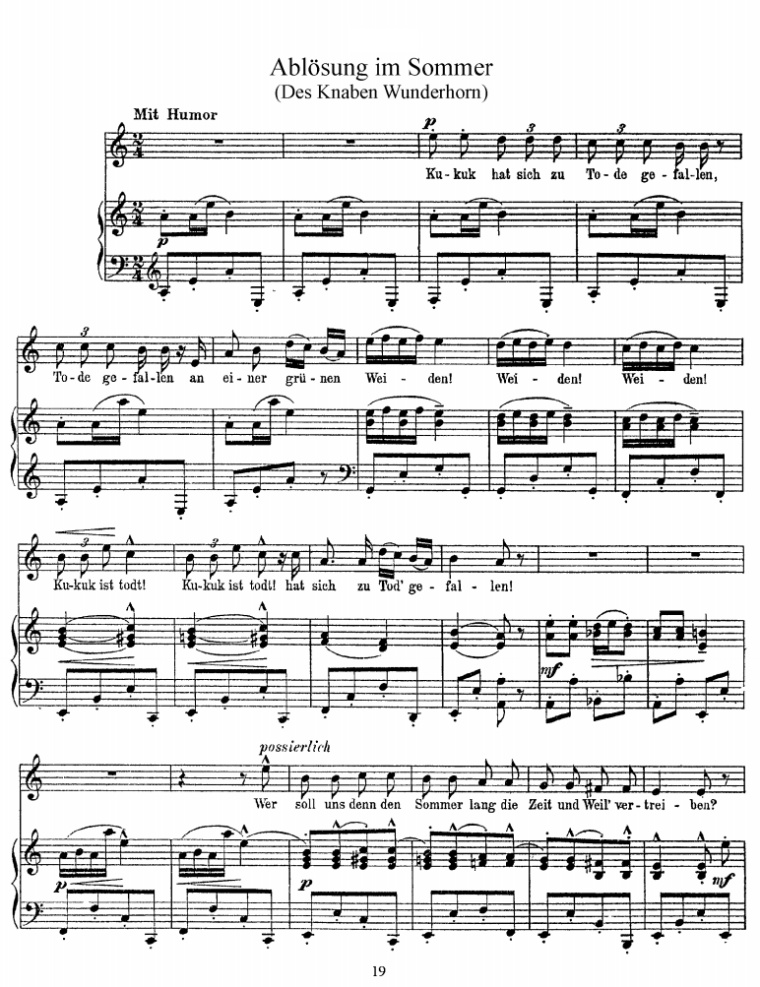
Gustav Mahler (7 luglio 1860 - 1911): Ablösung im Sommer (Cambio della guardia in estate), Lied in la minore per voce e pianoforte (c1887-90); testo tratto dalla raccolta Des Knaben Wunderhorn rielaborato da Mahler. Dietrich Fischer-Dieskau, baritono; Leonard Bernstein, pianoforte (registrazione dell’8 novembre 1968).
Lo stesso Lied nella versione orchestrale di Harold Byrns. Bernd Weikl, baritono; Philharmonia Orchestra, dir. Giuseppe Sinopoli.
Kuckuck hat sich zu Tode gefallen
An einer grünen Weiden,
Kuckuck ist tot! Kuckuck ist tot!
Hat sich zu Tod’ gefallen!
Wer soll uns denn den Sommer lang
Die Zeit und Weil vertreiben?
Ei! Das soll tun Frau Nachtigall,
Die sitzt auf grünem Zweige;
Die kleine, feine Nachtigall,
Die liebe, süße Nachtigall!
Sie singt und springt, ist allzeit froh,
Wenn andre Vögel schweigen.
Wir warten auf Frau Nachtigall,
Die wohnt im grünen Hage,
Und wenn der Kukuk zu Ende ist,
Dann fängt sie an zu schlagen!
Il cucù è caduto, morto,
ai piedi di un verde salice,
Il cucù è morto! Il cucù è morto!
È caduto, morto!
Chi mai, per tutta la lunga estate,
ci aiuterà a far passare il tempo?
Ah! Ci penserà il signor usignolo
che sta sopra un verde ramo;
il piccolo, gentile usignolo,
il caro, dolce usignolo!
Canta e saltella, sempre allegro,
quando gli altri uccelli tacciono.
Aspettiamo il signor usignolo,
che abita in mezzo al verde,
e quando il cucù se ne sarà andato
comincerà a cantare!
William Byrd (c1540 - 4 luglio 1623): Is Love a boy?, 2ª parte Boy pity me, partsong a 4 voci (pubblicato in Songs of sundrie natures, 1589, n. 15-16). The King’s Singers.
Part 1
Is Love a boy? What means he then to strike?
Or is he blind? Why will he be a guide?
Is he a man? Why doth he hurt his like?
Is he a God? Why doth he men deride?
No one of these, but one compact of all,
A wilful boy, a man still dealing blows,
Of purpose blind, to lead men to their thrall,
A God that rules unruly, God he knows.
Part 2
Boy, pity me that am a child again,
Blind be no more, my guide to make me stray,
Man, use thy might to force away my pain,
God, do me good, and lead me to my way:
And if thou be’st a power to me unknown,
Power of my life, let here thy grace be shown.
When as I view your comely grace
Calleno custure me,
Your golden hairs, your angel’s face,
Calleno custure me.
Your azure veins much like the skies
Your silver teeth, your crystal eyes.
Your coral lips, your crimson cheeks
That gods and men both love and leeks.
My soul with silence moving sense
Doth wish of God with reverence.
Long life and virtue you possess
To match the gifts of worthiness.
The recurring line (chorus) which gives the song its title is probably an adaptation to the English pronunciation of the Irish Cailín ó chois tSiúre mé, i.e. « I am a girl from the Suir-side » (Suir is a river in Ireland that flows into the Atlantic Ocean near Waterford): a harp composition with this title is mentioned in a seventeenth-century Irish poetic text.
The earliest known source for the tune (no text) is William Ballet’s Lute Book, a composite volume containing lute tablature dating back to the late 16th century and owned by the Library of Trinity College, Dublin. Here the piece is performed by Dorothy Linell:
On this tune William Byrd (c1540 - 1623) composed a short but flavorful set of variations for keyboard instrument, preserved in the Fitzwilliam Virginal Book under the title Callino Casturame (n. [CLVIII]). YouTube offers various performances: I chose those of David Clark Little on the virginal and Lorenzo Cipriani on the organ.
Calleno custure me often appears in anthologies of Shakespearean music: it is in fact mentioned in Henry V (act 4, scene 4) within a pun that sounds a bit silly today, but which bears witness to the song’s popularity in Shakespeare’s time.
The scene takes place before the battle of Azincourt: Pistol, the king’s old party companion, surprises a French soldier, Le Fer, who has infiltrated the English lines. Fearing that Pistol wants to kill him, the Frenchman tries to cajole him, however speaking to him in his own language:
« Je pense que vous êtes gentilhomme de bonne qualité. »
Unable to understand even a syllable, Pistol replies by mimicking Le Fer’s speech, the sound of whose words evidently reminds him of our song:
« Qualtitie calmie custure me! »
In short, he mimics it with a kind of “meh, meh, meh” but more elegant 🙂
Then Le Fer agrees with Pistol, who frees him for the price of two hundred crowns.
Anonimo del XVI secolo: Calleno custure me. Alfred Deller, controtenore; Desmond Dupré, liuto.
When as I view your comely grace
Calleno custure me,
Your golden hairs, your angel’s face,
Calleno custure me.
Your azure veins much like the skies
Your silver teeth, your crystal eyes.
Your coral lips, your crimson cheeks
That gods and men both love and leeks.
My soul with silence moving sense
Doth wish of God with reverence.
Long life and virtue you possess
To match the gifts of worthiness.
Il verso ricorrente che dà titolo alla composizione è probabilmente un adattamento alla pronuncia inglese della frase in gaelico irlandese Cailín ó chois tSiúre mé, ossia « Sono una ragazza delle rive del Suir » (fiume che sfocia nell’Atlantico in prossimità di Waterford): la frase compare quale titolo di una composizione per arpa in un testo poetico irlandese del XVII secolo.
La più antica fonte nota della melodia (priva di testo) è il William Ballet’s Lute Book, una raccolta manoscritta di composizioni intavolate per liuto, risalente al tardo Cinquecento e conservata nella Biblioteca del Trinity College di Dublino. Qui il brano è interpretato da Dorothy Linell:
La melodia è stata rielaborata da William Byrd (c1540 - 4 luglio 1623) in una breve ma saporita serie di variazioni per strumento a tastiera, tramandataci dal Fitzwilliam Virginal Book con il titolo Callino Casturame (n. [CLVIII]). YouTube ne offre numerose interpretazioni: ho scelto quelle di David Clark Little al virginale e Lorenzo Cipriani all’organo.
Resta da segnalare che Caleno custure me figura spesso nelle antologie di musiche scespiriane: è infatti citata nell’Enrico V (atto IV, scena 4a) in un gioco di parole che oggi suona alquanto insulso, ma che testimonia la popolarità della canzone all’epoca del Bardo.
La scena si svolge prima della battaglia di Azincourt: Pistol, vecchio compagno di bagordi del re, sorprende un soldato francese, Le Fer, infiltratosi fra le linee inglesi. Temendo che l’altro voglia ammazzarlo, il francese tenta di blandirlo, parlandogli però nella propria lingua:
« Je pense que vous êtes gentilhomme de bonne qualité. »
Non riuscendo a comprendere nemmeno una sillaba, Pistol risponde scimmiottando la parlata di Le Fer, il suono delle cui parole evidentemente gli rammenta il titolo della nostra canzone:
« Qualtitie calmie custure me! »
Gli fa insomma il verso, una specie di “gnegnegné” ma più raffinato 🙂
Le Fer poi si accorda con Pistol, che in cambio di duecento scudi lo lascia libero.
William Byrd (c1540 - 4 luglio 1623): Attollite portas, mottetto a 6 voci (pubblicato in Cantiones quae ab argumento sacrae vocantur, 1575, n. 11); testo: Salmo XXIV:7-8, 10 e dossologia. Ensemble Alamire, dir. David Skinner.
Attollite portas, principes, vestras, et elevamini, portæ æternales, et introibit rex gloriæ.
Quis est iste rex gloriæ? Dominus fortis et potens, Dominus potens in prælio.
Quis est iste rex gloriæ? Dominus virtutum ipse est rex gloriæ.
Gloria Patri et Filio et Spiritui Sancto,
Sicut erat in principio et nunc et semper,
Et in sæcula sæculorum. Amen.
Thomas Augustine Arne (1710 - 1778): When icicles hang by the wall, song of winter from Shakespeare’s play Love’s Labour’s Lost, act 5, scene 2. Julia Gooding, soprano; ensemble Passacaglia.
When icicles hang by the wall
And Dick the shepherd blows his nail
And Tom bears logs into the hall
And milk comes frozen home in pail,
When blood is nipp’d and ways be foul,
Then nightly sings the staring owl,
Tu-whit;
Tu-who, a merry note,
While greasy Joan doth keel the pot.
When all aloud the wind doth blow
And coughing drowns the parson’s saw
And birds sit brooding in the snow
And Marian’s nose looks red and raw,
When roasted crabs hiss in the bowl,
Then nightly sings the staring owl,
Tu-whit;
Tu-who, a merry note,
While greasy Joan doth keel the pot.
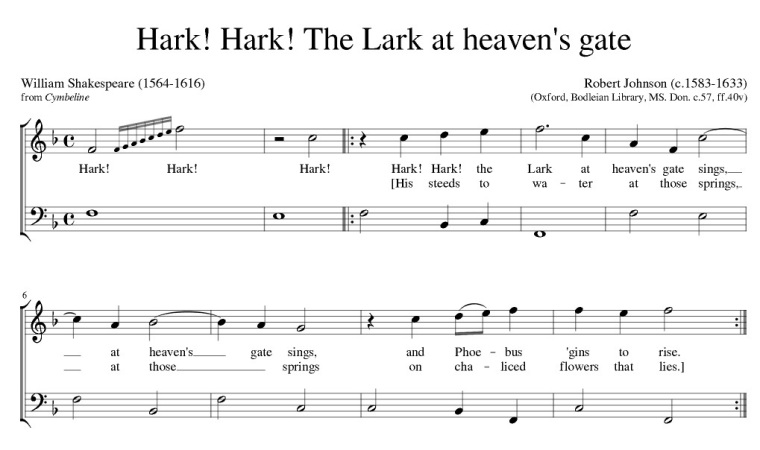
Hark! hark! the lark, Cloten’s song in Shakespeare’s play Cymbeline, King of Britain (c1609), act 2, scene 3. Emma Kirkby, soprano; Anthony Rooley, lute.
Hark! hark! the lark at heaven’s gate sings,
And Phoebus ’gins arise,
His steeds to water at those springs
On chalic’d flowers that lies;
And winking Mary-buds begin
To ope their golden eyes;
With everything that pretty is,
My lady sweet, arise:
Arise, arise!
This setting of Hark! hark! the lark survives in a music manuscript owned by the Bodleian Library, University of Oxford (MS Don. c.57, f. 40v), and has been attributed to Robert Johnson (c1583 - 1633). Johnson became lutenist to king James I in 1604 and was closely associated with Shakespeare’s company, to which he provided songs for various plays including The Winter’s Tale (1610) and The Tempest (1611).
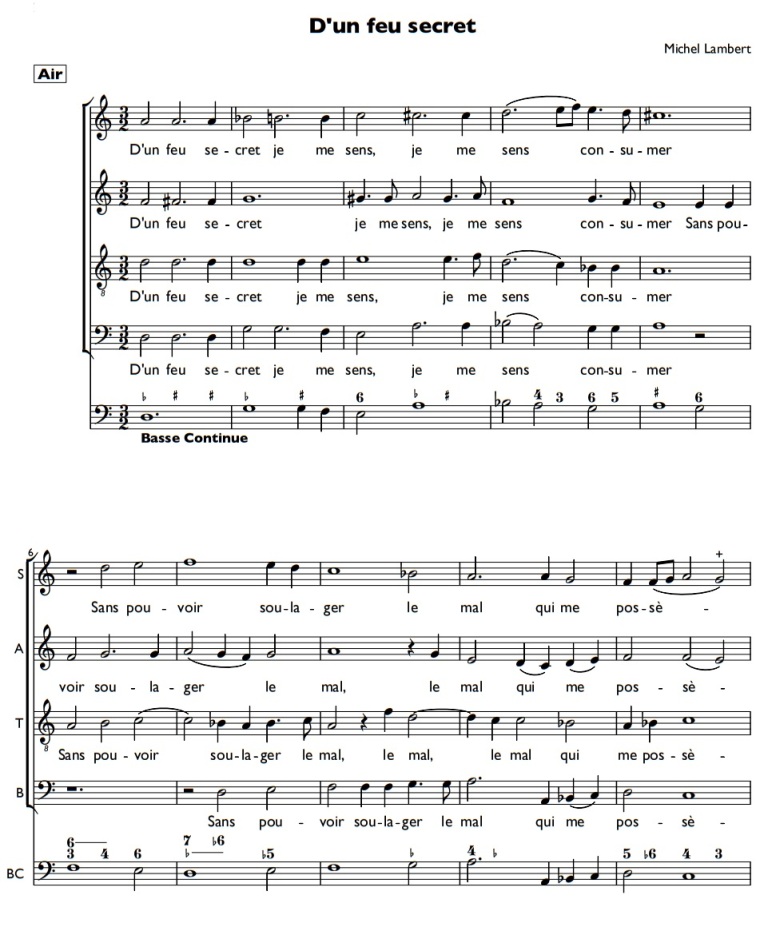
Michel Lambert (1610 - 29 giugno 1696): D’un feu secret je me sens consommer, air de cour (pubblicato in Airs à une, II. III. et IV. parties avec la basse-continue, 1689, p. 53). Les Arts Florissants, dir. William Christie.
D’un feu secret je me sens consommer
Sans pouvoir soulager le mal qui me possède;
Je pourrois bien guérir si je cessois d’aymer,
Mais j’ayme mieux le mal que le remède.
Quand je mourrois, pourroit-on me blasmer?
Qui commence d’ayme, ne doit-il pas poursuivre?
Quand on sçaura, Philis, que j’ay cessé d’aymer,
On sçaura bien que j’ay cessé de vivre.
The Beggar’s Opera, Air XXVII: Greensleeves. Roger Daltrey as Macheath.
Since Laws were made for ev’ry Degree,
To curb Vice in others, as well as me,
I wonder we han’t better Company,
Upon Tyburn Tree!
But Gold from Law can take out the Sting;
And if rich Men like us were to swing,
’Twould thin out the Land, such Numbers to string
Upon Tyburn Tree!
Nell’Opera del mendicante (The Beggar’s Opera, 1728), scritta da John Gay, con musiche tratte perlopiù dal repertorio popolare e adattate da Johann Christoph Pepusch, trova posto anche la melodia di Greensleeves. Il brano è intonato con rabbia e frustrazione da Macheath subito dopo aver appreso di essere stato condannato a morte. Per «Tyburn Tree» si intende la forca: Tyburn era il villaggio del Middlesex in cui si eseguivano le sentenze capitali.
In The Beggar’s Opera (1728), written by John Gay, with music drawn mostly from traditional repertoire and arranged by Johann Christoph Pepusch, the tune of Greensleeves also finds its place. This piece is sung in anger and frustration by Macheath soon after learning that he was sentenced to death. «Tyburn Tree» means the gallows: Tyburn was the Middlesex village where capital punishment was carried out.
Igor Stravinsky (Igor’ Fëdorovič Stravinskij; 1882 - 1971): Three Songs from William Shakespeare for mezzo-soprano, flute, clarinet and viola (1953). Anna Molnár, mezzo-soprano; Annamária Bán, flute; Csaba Pálfi, clarinet; Péter Tornyai, viola.
Musick to heare (Sonnet 8)
Musick to heare, why hear’st thou musick sadly?
Sweets with sweets warre not, ioy delights in ioy:
Why lou’st thou that which thou receaust not gladly,
Or else receau’st with pleasure thine annoy?
If the true concord of well tuned sounds,
By vnions married, do offend thine eare,
They do but sweetly chide thee, who confounds
In singlenesse the parts that thou should’st beare:
Marke how one string sweet husband to an other,
Strikes each in each by mutuall ordering;
Resembling sier, and child, and happy mother,
Who all in one, one pleasing note do sing:
Whose speechlesse song being many, seeming one,
Sings this to thee, thou single wilt proue none.
Full fadom five (Ariel’s song from The Tempest) [3:07]
Full fadom five thy Father lies,
Of his bones are Corrall made:
Those are pearles that were his eies,
Nothing of him that doth fade,
But doth suffer a Sea-change
Into something rich, & strange:
Sea-Nimphs hourly ring his knell.
Ding dong ding dong.
Harke now I heare them; ding dong bell.
Spring (cuckoo’s song from Love’s Labour’s Lost) [4:43]
When Daisies pied, and Violets blew,
And Cuckow-buds of yellow hew,
And Ladie-smockes all silver white,
Do paint the Medowes with delight,
The Cuckow then on everie tree
Mockes married men; for thus sings he,
Cuckow! Cuckow, Cuckow! O worde of feare,
Unpleasing to a married eare.
Leone Leoni (c1560 - 24 giugno 1627): Cor mio, deh, non languire, madrigale a 5 voci (pubblicato in Bell’Alba: quinto libro de madrigali a cinque voci, 1602, n. 9) su testo di Battista Guarini. The Consort of Musicke, dir. Anthony Rooley.
Cor mio, deh, non languire,
Che fai teco languir l’anima mia.
Odi i caldi sospiri: a te gl’invia,
La pietate e’l desire.
S’i’ ti potessi dar morendo aita,
Morrei per darti vita.
Ma vivi ohimé, ch’ingiustamente more,
Chi vivo tien ne l’altrui petto il core.
Tobias Michael (23 giugno 1592 - 1657): Das ist ein kostlich Ding per voce, flauto e basso continuo (pubblicato in Musikalische Seelenlust, vol. II, 1636). Ensemble Circa 1500, dir. Nancy Hadden.
Das ist ein köstlich Ding, dem Herren danken
und lobsingen deinem Namen, du Höchster.
Des Morgens deine Gnade und des Nachts deine Wahrheit verkündigen.
Auff den zehen Seiten und Psalter mit Spielen auff der Harffen.
Denn, Herr, du lässest mich frölich singen von deinen Wercken,
und ich rühme die Geschäffte deiner Hände.
Jacques Offenbach (20 giugno 1819 - 1880): Die Rheinnixen, ouverture (1864). The Gulbenkian Orchestra, dir. Michel Swierczewski.
Oltre alle operette per cui è famoso, Offenbach scrisse due opere «serie». La prima, Les Fées du Rhin, composta su libretto di Charles-Louis-Étienne Nuitter, Offenbach vivente fu rappresentata solo a Vienna nel 1864 con il titolo di Die Rheinnixen e libretto tradotto in tedesco da Alfred von Wolzogen; ma fu un allestimento poco fortunato: l’opera andò in scena in forma ridotta a causa di un’indisposizione del tenore Alois Ander, che vi avrebbe dovuto sostenere uno dei ruoli principali. La prima rappresentazione integrale, con il libretto originale francese, è del 2002.
Offenbach riutilizzò due brani delle Fées nella sua seconda e ultima opera, Les contes d’Hoffmann, rappresentata postuma nel 1881. Il più famoso dei due, lo «Chant des Elfes» citato anche nell’ouverture, diventò la barcarola («Belle nuit, ô nuit d’amour») cantata da Nicklausse e Giulietta all’inizio del IV atto, ambientato a Venezia.
Dopo il «Galop infernal» di Orphée aux enfers, questa barcarola è senz’altro la più celebre composizione di Offenbach. Qui è eseguita da Elīna Garanča e Anna Netrebko accompagnate dall’Orchestra filarmonica di Praga diretta da Emmanuel Villaume.
Belle nuit, ô nuit d’amour,
Souris à nos ivresses,
Nuit plus douce que le jour,
Ô belle nuit d’amour!
Le temps fuit et sans retour
Emporte nos tendresses
Loin de cet heureux séjour.
Le temps fuit sans retour.
Zéphyrs embrasés.
Versez-nous vos caresses.
Zéphyrs embrasés,
Donnez-nous vos baisers.
Anonimo (sec. XVI-XVII): The Willow Song. Duo Mignarda: Donna Stewart, voce; Ron Andrico, liuto.
The poor soul sat sighing by a sycamore tree,
Sing willow, willow, willow,
With his hand in his bosom and his head upon his knee,
O willow, willow, willow shall be my garland.
Sing all a green willow, willow, willow, willow;
Aye me, the green willow must be my garland!
He sighed to his singing, and made a great moan:
I am dead to all pleasure, my true love she is gone.
The mute bird sat by him was made tame by his moans,
The true tears fell from him would have melted the stones.
Come all you forsaken and mourn you with me.
Who speaks of a false love, mine’s falser than she.
Let love no more boast her in palace nor bower.
It buds, but it blasteth ere it be a flower.
Though fair and more false, I die with thy wound.
Thou hast lost the truest lover that goes upon the ground.
Let nobody chide her, her scorns I approve.
She was born to be false, and I to die for her love.
Take this for my farewell and latest adieu,
Write this on my tomb, that in love I was true.
Dopo aver ascoltato la versione di Rossini e quella di Verdi, ecco la Canzone del salice « originale », ossia il ballad cantato da Desdemona nella 3a scena dell’atto IV dell’Otello scespiriano, come ci è stato tramandato da un manoscritto conservato nella British Library (Add. 15117, databile intorno al 1615). È una bella canzone triste, nello stile malinconico che era di moda nell’Inghilterra elisabettiana. Nei primi versi è ben descritta una persona afflitta da profonda malinconia, in una postura non molto dissimile da quella dell’angelo in una celebre incisione di Dürer (Melencolia I, 1514).
Da sottolineare che il comportamento di Desdemona contravviene alle consuetudini teatrali dell’epoca: era infatti considerato disdicevole che un personaggio di rango elevato si producesse in esibizioni canore sulla scena. Ma Desdemona è in preda a una forte agitazione, teme per la propria vita e teme ancora di più che Otello possa considerarla infedele: per questo motivo il suo canto — come del resto quello di Ofelia impazzita (Amleto IV:5) — poteva essere tollerato.
Con la Canzone del salice Shakespeare ha trovato il modo più efficace di rappresentare il turbamento di Desdemona, pervasa da presentimenti di morte ma ancora profondamente innamorata di Otello: nell’armonia, il continuo alternarsi di modo minore e maggiore rende musicalmente il contrasto dei suoi sentimenti, mentre nel testo la ripetizione insistita della parola willow (il salice è da sempre simbolo della tristezza d’amore) dà l’idea del suo intimo tormento.
After listening to The Willow Song set to music by Rossini and by Verdi, here is now the « original » version, i.e. the ballad that Desdemona sings in Shakespeare’s Othello (act 4, scene 3): this piece has come down to us through a manuscript which is preserved in the British Library (Add. 15117, datable around 1615). It’s a beautiful sad song, in the melancholy style that was popular in Elizabethan England. The first stanza well describes a person afflicted by a profound melancholy, in a posture not unlike that took by the angel in a Dürer’s famous engraving (Melencolia I, 1514).
It should be noted that Desdemona’s behavior contravenes the theatrical customs of the time: it was in fact considered unbecoming for a high-ranking character to perform singing on stage. But Desdemona is in the throes of a strong agitation, she is in fear for her own life, and fears even more that Othello might believe her unfaithful: for this reason her singing — like that of Ophelia gone mad (Hamlet, act 4, scene 5) — can be tolerated.
With The Willow Song Shakespeare finds the most effective way of representing Desdemona’s turmoil, pervaded by forebodings of death but still deeply in love with Othello: the continuous alternation of minor and major modes musically renders the contrast of her feelings, while the insistent repetition of the word willow (a tree which has always been a symbol of love sadness) illustrates her inner torment.
Gioachino Rossini (1792 - 1868): «Assisa a pie’ d’un salice – Deh calma, o ciel, nel sonno», Canzone del salice e Preghiera dall’atto III di Otello, ossia Il moro di Venezia, dramma tragico in 3 atti su libretto di Francesco Berio di Salsa (1816). Montserrat Caballé, soprano (Desdemona); Corinna Vozza, mezzosoprano (Emilia); Orchestra della RCA Italiana, dir. Carlo Felice Cillario.
DESDEMONA:
Assisa a pie’ d’un salice,
immersa nel dolore,
gemea trafitta Isaura
dal più crudele amore:
l’aura tra i rami flebile
ne ripeteva il suon.
I ruscelletti limpidi
a’ caldi suoi sospiri,
il mormorio mesceano
de’ lor diversi giri:
l’aura fra i rami flebile
ne ripeteva il suon.
Salce, d’amor delizia!
Ombra pietosa appresta,
(di mie sciagure immemore)
all’urna mia funesta;
né più ripeta l’aura
de’ miei lamenti il suon.
Che dissi!… Ah m’ingannai!… Non è del canto
questo il lugubre fine. M’ascolta… Oh dio!
(un colpo di vento spezza alcuni vetri della finestra.)
EMILIA:
Non paventar; rimira:
impetuoso vento è quel che spira.
DESDEMONA:
Io credeva che alcuno… Oh come il cielo
s’unisce a’ miei lamenti!…
Ascolta il fin de’ dolorosi accenti.
Ma stanca alfin di spargere
mesti sospiri, e pianto,
morì l’afflitta vergine
ahi! di quel salce accanto.
Morì… che duol! l’ingrato…
Poté… ma il pianto oh Dio!
proseguir non mi fa. Parti, ricevi
da’ labbri dell’amica il bacio estremo.
EMILIA:
Oh che dici!… Ubbidisco… oh come io tremo!
DESDEMONA:
Deh calma, o ciel, nel sonno
per poco le mie pene,
fa, che l’amato bene
mi venga a consolar.
Se poi son vani i prieghi,
di mia breve urna in seno
venga di pianto almeno
il cenere a bagnar.
(ella cala la tendina e si getta sul letto.)
Giovanni Francesco Anerio (1569 - 11 giugno 1630): Torna la sera bruna, canzonetta spirituale (pubblicata nella raccolta Selva armonica dove si contengono motetti, madrigali, canzonette, dialogi, arie a una, doi, tre & quattro voci, 1617, n. 21) su testo di Agostino Manni. Concerto Romano, dir. Alessandro Quarta.
Torna la sera bruna
E in ciel luce la luna,
Che ’l mortal egro invita
Al sonno della vita.
Salva me, Signor forte,
Dal sonno della morte
E stammi sempre intorno,
Sinché ritorni il giorno.
Sia laude, gloria e canto
Al Padre, al Figlio e al santo
Spirto, che ’l ciel governa
Con legge sempiterna.
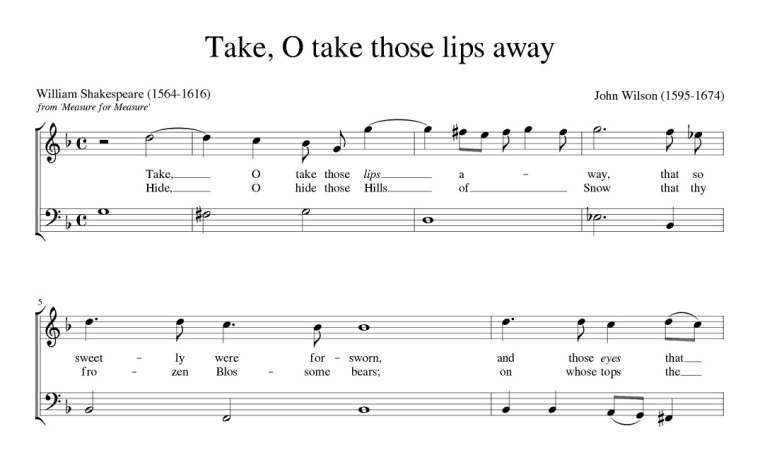
Take, O take those lips away,
That so sweetly were forsworn;
And those eyes, the break of day,
Lights that do mislead the morn:
But my kisses bring again
Seals of love, though seal’d in vain.
Hide, O hide those hills of snow
That thy frozen bosom bears,
On whose tops the pinks that grow
Are yet of those that April wears,
But first set my poor heart free,
Bound in those icy chains by thee.
La prima strofa si trova nella commedia di Shakespeare Misura per misura (atto IV, scena 1a), rappresentata per la prima volta nel 1604; non sappiamo su quale melodia fosse cantata. Prima e seconda strofa sono nel dramma Rollo Duke of Normandy, or The Bloody Brother, scritto in collaborazione da John Fletcher, Philip Massinger, Ben Jonson e George Chapman in data imprecisabile (comunque non prima del 1612). Non è dato di sapere se la seconda strofe sia un’aggiunta di Fletcher oppure se tanto Shakespeare quanto Fletcher si siano rifatti a una canzone popolare in voga ai loro tempi.
Il testo è stato musicato da diversi autori. Il primo in ordine cronologico fu John Wilson (1595 - 1674), il quale nel 1614 succedette a Robert Johnson quale primo compositore dei King’s Men, la compagnia teatrale cui apparteneva Shakespeare. Ascoltiamo il suo lavoro in… versione shakespeariana (ossia limitata alla sola prima strofa) interpretata da Alfred Deller (voce) e Desmond Dupré (liuto); e poi nella versione integrale cantata dal soprano Anna Dennis, accompagnata da Hanneke van Proosdij al clavicembalo, Elisabeth Reed alla viola da gamba e David Tayler all’arciliuto.
The first stanza is featured in Shakespeare’s play Measure for Measure (act 4, scene 1), first represented in 1604; we do not know to what tune it was sung. Both the stanzas feature in the play Rollo Duke of Normandy, or The Bloody Brother, co-written by John Fletcher, Philip Massinger, Ben Jonson and George Chapman and performed at an unspecified date (though not earlier than 1612). It is not known whether the second stanza is an addition by Fletcher or whether both Shakespeare and Fletcher drew on a popular song in vogue in their time.
These verses have been set to music by various composers. The first in chronological order was John Wilson (1595 - 1674), who in 1614 succeeded Robert Johnson as principal composer for the King’s Men, the theater company to which Shakespeare belonged. Let’s listen to his work in… a Shakespearean version (i.e. the first stanza only) performed by Alfred Deller (voice) and Desmond Dupré (lute); and then in the complete version sung by soprano Anna Dennis, accompanied by Hanneke van Proosdij on harpsichord, Elisabeth Reed on viola da gamba and David Tayler on archlute.
John Weldon (1676 - 1736): Take, O take those lips away per voce e continuo (c1707). Emma Kirkby, soprano; Anthony Rooley, liuto.
Robert Lucas de Pearsall (1795 - 1856), Take, O take those lips away per coro a 5 voci a cappella op. 6 (1830). Cantores Musicæ Antiquæ, dir. Jeffery Kite-Powell.
Mrs H. H. A. Beach (Amy Marcy Cheney Beach, 1867 - 1944): Take, O take those lips away per voce e pianoforte, n. 2 dei Three Shakespeare Songs op. 37 (1897). Virginia Mims, soprano.
Peter Warlock (pseudonimo di Philip Heseltine, 1894 - 1930): Take, O take those lips away per voce e pianoforte (1916-17). Benjamin Luxon, baritono; David Willison, pianoforte.
Roger Quilter (1877 - 1953): Take, O take those lips away per voce e pianoforte, n. 4 dei Five Shakespeare Songs op. 23 (1921). Philippe Sly, basso-baritono; Michael McMahon, pianoforte.
Madeleine Dring (1923 - 1977): Take, O take those lips away per voce e pianoforte (c1950). Michael Hancock-Child, tenore; Ro Hancock-Child, pianoforte.
Emma Lou Diemer (1927): Take, O take those lips away, da Three Madrigals per coro e pianoforte (1960). The Colorado Chorale, dir. Frank Eychaner.
Thomas Augustine Arne (1710 - 1778): Sigh no more, ladies, dalle musiche di scena (1748) per Much ado about nothing di W. Shakespeare (atto II, scena 3a).
– Versione per voce solista e orchestra d’archi: Alexander Young, tenore; Martin Isepp, clavicembalo; Wiener Rundfunkorchester, dir. Brian Priestman.
– Versione per 3 voci virili (TTB) a cappella: The Hilliard Ensemble.
Sigh no more, ladies, sigh no more.
Men were deceivers ever,
One foot in sea, and one on shore,
To one thing constant never.
Then sigh not so, but let them go,
And be you blithe and merry,
Converting all your sounds of woe
Into hey down derry.
Sing no more ditties, sing no more
Of dumps so dull and heavy.
The fraud of men was ever so
Since summer first was leavy.
Then sigh not so, but let them go,
And be you blithe and merry,
Converting all your sounds of woe
Into hey down derry.
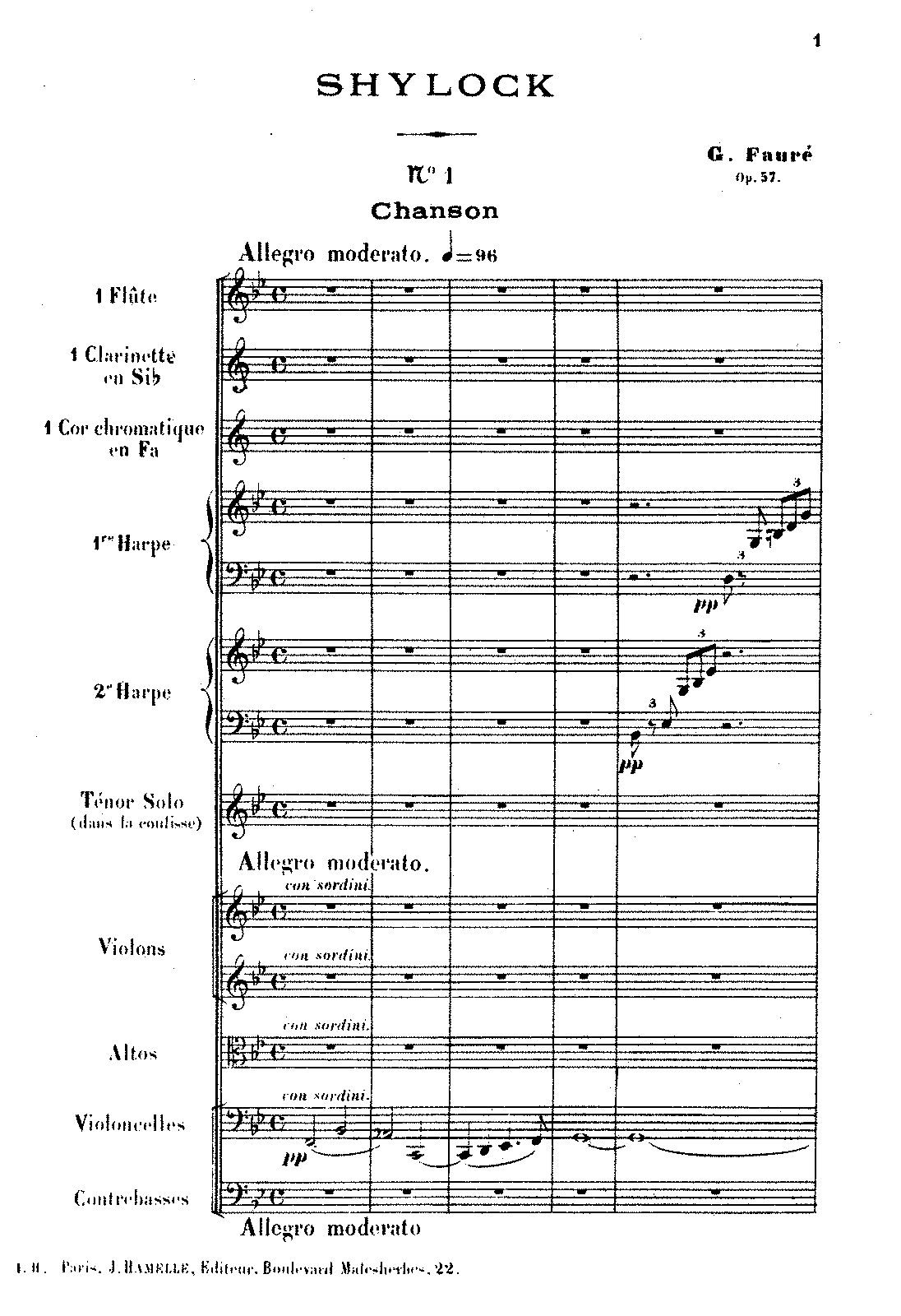
Gabriel Fauré (1845 - 1924): Shylock, suite per tenore e orchestra op. 57 (1889) dalle musiche di scena per la commedia omonima in 3 atti di Edmond Haraucourt (adattamento dal Mercante di Venezia di Shakespeare). Benjamin Bruns, tenore; Sinfonieorchester Basel, dir. Ivor Bolton.
Chanson: Allegro moderato
Oh! les filles! Venez, les filles aux voix douces!
C’est l’heure d’oublier l’orgueil et les vertus,
Et nous regarderons éclore dans le mousses,
La fleur des baisers défendus.
Les baisers défendus c’est Dieu qui les ordonne.
Oh! les filles! Il fait le printemps pour les nids,
Il fait votre beauté pour qu’elle nous soit bonne,
Nos désirs pour qu’ils soient unis.
Oh! filles! Hors l’amour rien n’est bon sur la terre,
Et depuis les soirs d’or jusqu’aux matin rosés
Les morts ne sont jaloux, dans leur paix solitaire,
Que du murmure des baisers!
Entr’acte: Andante moderato
Madrigal: Allegretto
Celle que j’aime a de beauté
Plus que Flore et plus que Pomone,
Et je sais pour l’avoir chanté
Que sa bouche est le soir d’automne
Et son regard la nuit d’été.
Pour marraine elle eut Astarté,
Pour patronne elle a la Madone,
Car elle est belle autant que bonne,
Celle que j’aime.
Elle écoute, rit et pardonne,
N’écoutant que par charité;
Elle écoute, mais sa fierté
N’écoute ni moi ni personne,
Et rien encore n’a tenté
Celle que j’aime.
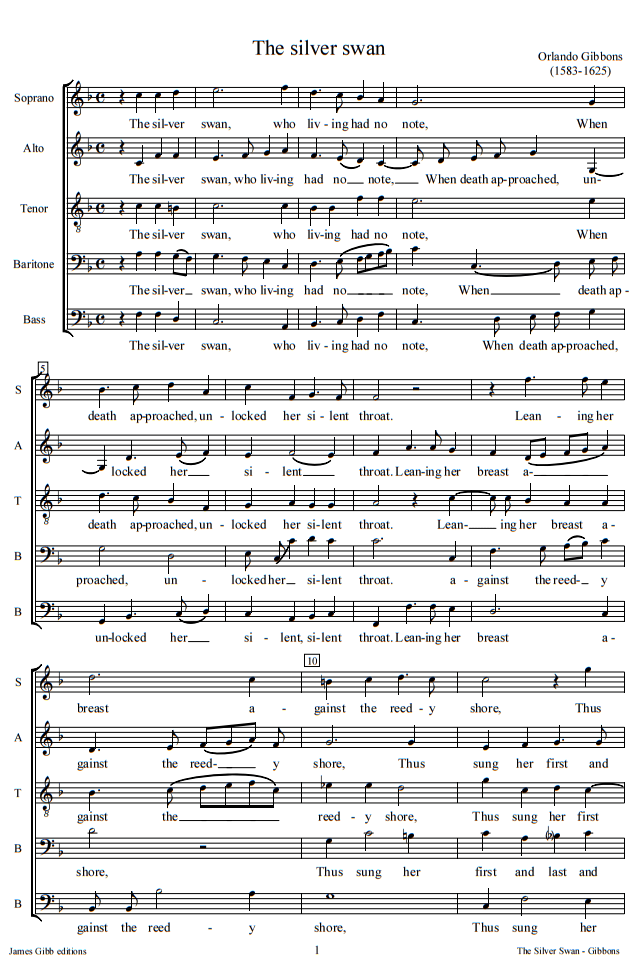
Orlando Gibbons (1583 - 5 giugno 1625): The Silver Swan, madrigale a 5 voci (pubblicato in The First Set of Madrigals and Mottets, 1612, n. 1) su testo probabilmente di sir Christopher Hatton (1581 - 1619). The Gesualdo Six.
The Silver Swan, who living had no note,
When death approached, unlocked her silent throat.
Leaning her breast against the reedy shore,
Thus sung her first and last, And sung no more:
«Farewell all joys, O death come close mine eyes.
More geese than swans now live, more fools than wise.»
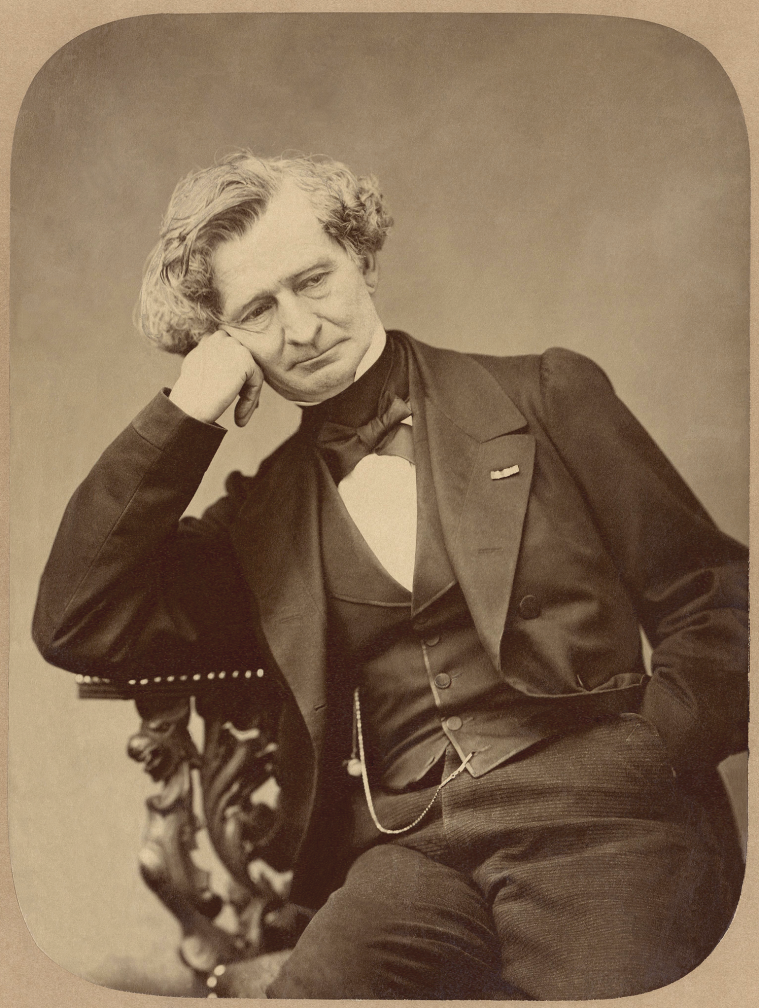
Hector Berlioz (1803 - 1869): La mort d’Ophélie, ballade op. 18 n. 2, H. 92 (1842); testo di Ernest Legouvé. Cecilia Bartoli, mezzosoprano; Myung-Whun Chung, pianoforte.
Auprès d’un torrent Ophélie
cueillait, tout en suivant le bord,
dans sa douce et tendre folie,
des pervenches, des boutons d’or,
des iris aux couleurs d’opale,
et de ces fleurs d’un rose pâle
qu’on appelle des doigts de mort.
Puis, élevant sur ses mains blanches
les riants trésors du matin,
elle les suspendait aux branches,
aux branches d’un saule voisin.
Mais trop faible le rameau plie,
se brise, et la pauvre Ophélie
tombe, sa guirlande à la main.
Quelques instants sa robe enflée
la tint encor sur le courant
et, comme une voile gonflée,
elle flottait toujours chantant,
chantant quelque vieille ballade,
chantant ainsi qu’une naïade
née au milieu de ce torrent.
Mais cette étrange mélodie
passa, rapide comme un son.
Par les flots la robe alourdie
bientôt dans l’abîme profond
entraîna la pauvre insensée,
laissant à peine commencée
sa mélodieuse chanson.
Elegante e assai gradevole la versione per due voci e liuto di Rómulo Vega-González, che l’interpreta insieme con Munia Cabal-Jiménez: i due pronunciano le parole come inglesi del tardo Cinquecento 🙂
Anonimo (sec. XVI-XVII): When that I was, canzone di Feste che conclude La dodicesima notte (1599-1601) di William Shakespeare. Alfred Deller, haute-contre.
When that I was and a little tiny boy,
With hey, ho, the wind and the rain,
A foolish thing was but a toy,
For the rain it raineth every day.
But when I came to man’s estate,
’Gainst knaves and thieves men shut their gate.
But when I came, alas!, to wive,
By swaggering I could never thrive.
[But when I came unto my beds,
With toss-pots still had drunken heads.]
A great while ago the world begun,
With hey, ho, the wind and the rain,
But that’s all one, our play is done,
And we’ll strive to please you every day.
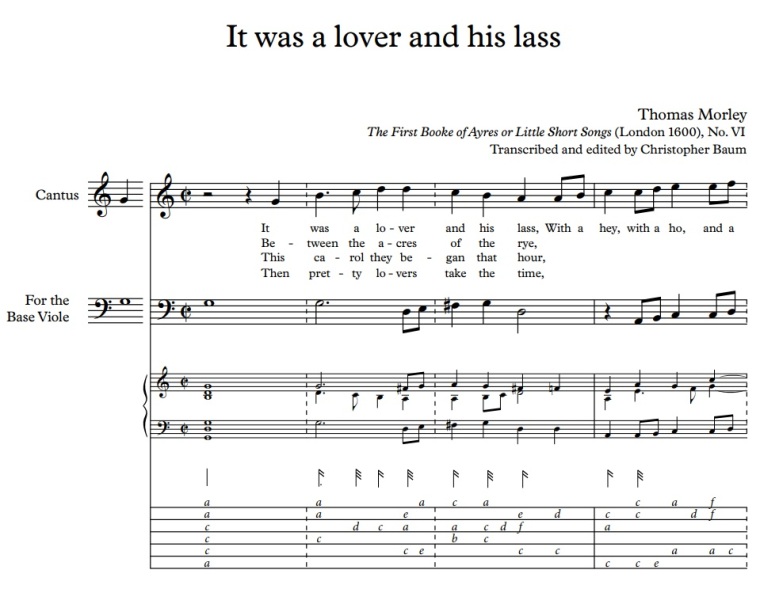
Thomas Morley (c1557 - 1602): It was a lover and his lass, ayre (pubblicato nel First Book of Ayres or Little Short Songs, 1600, n. 6) su testo di William Shakespeare (da Come vi piace, atto V, scena 3ª). Alfred Deller, haute-contre; Desmond Dupré, liuto.
It was a lover and his lass,
With a hey, and a ho, and a hey-nonny-no,
That o’er the green corn-field did pass
In spring-time, the only pretty ring-time,
When birds do sing, hey ding-a-ding ding:
Sweet lovers love the spring.
Between the acres of the rye,
These pretty country folks would lie.
This carol they began that hour,
How that a life was but a flower.
And therefore take the present time,
For love is crowned with the prime.
Thomas Morley è uno dei più importanti compositori di musica profana dell’Inghilterra elisabettiana; insieme con Robert Johnson (c1583-c1634) è autore delle uniche composizioni coeve su versi di Shakespeare che ci siano pervenute. Morley è ricordato, oltre che per le sue composizioni, per aver pubblicato un trattato musicale (A Plain and Easie Introduction to Practicall Musicke, 1597) che ebbe vasta popolarità per oltre duecento anni e che tuttora è considerato fondamentale perché contiene preziose informazioni sulla musica dell’epoca.
Thomas Morley is one of the most important composers of secular music in Elizabethan England; he and Robert Johnson (c1583-c1634) are the authors of the only surviving contemporary musical settings on lyrics by Shakespeare. Morley is remembered, as well as for his compositions, for a musical treatise (A Plain and Easie Introduction to Practicall Musicke, 1597) which had large popularity for almost two centuries and even today is an important reference for information about sixteenth century music.



 English translation: please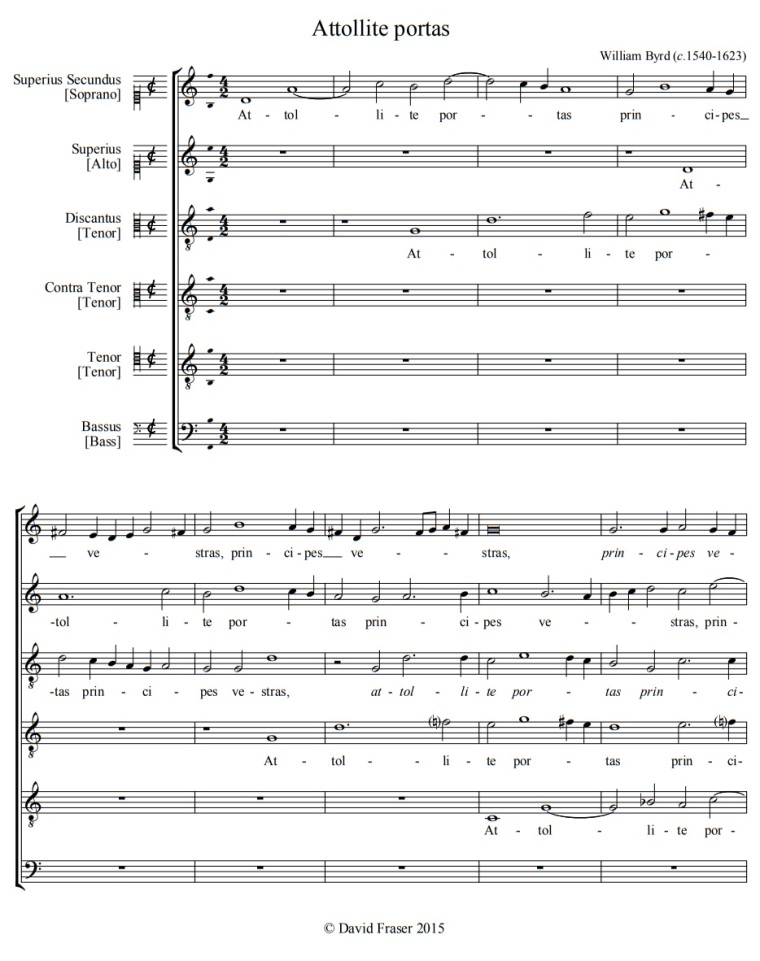

 Nell’Opera del mendicante (The Beggar’s Opera, 1728), scritta da John Gay, con musiche tratte perlopiù dal repertorio popolare e adattate da Johann Christoph Pepusch, trova posto anche la melodia di Greensleeves. Il brano è intonato con rabbia e frustrazione da Macheath subito dopo aver appreso di essere stato condannato a morte. Per «Tyburn Tree» si intende la forca: Tyburn era il villaggio del Middlesex in cui si eseguivano le sentenze capitali.


 Dopo aver ascoltato






 la regina gioiosa