L’isola fortunata

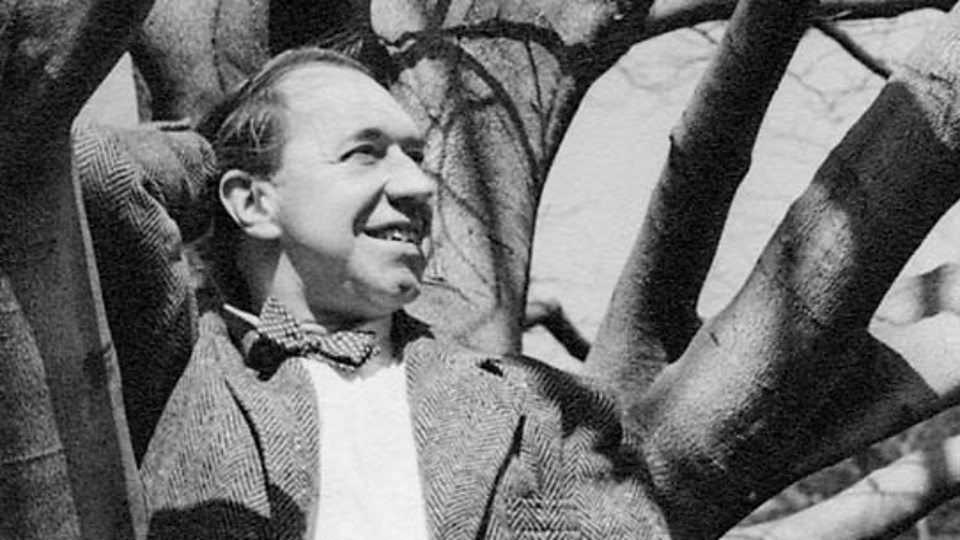
Richard Addinsell (1904 - 14 novembre 1977): The Isle of Apples (c1960-70). BBC Concert Orchestra, dir. Kenneth Alwyn.

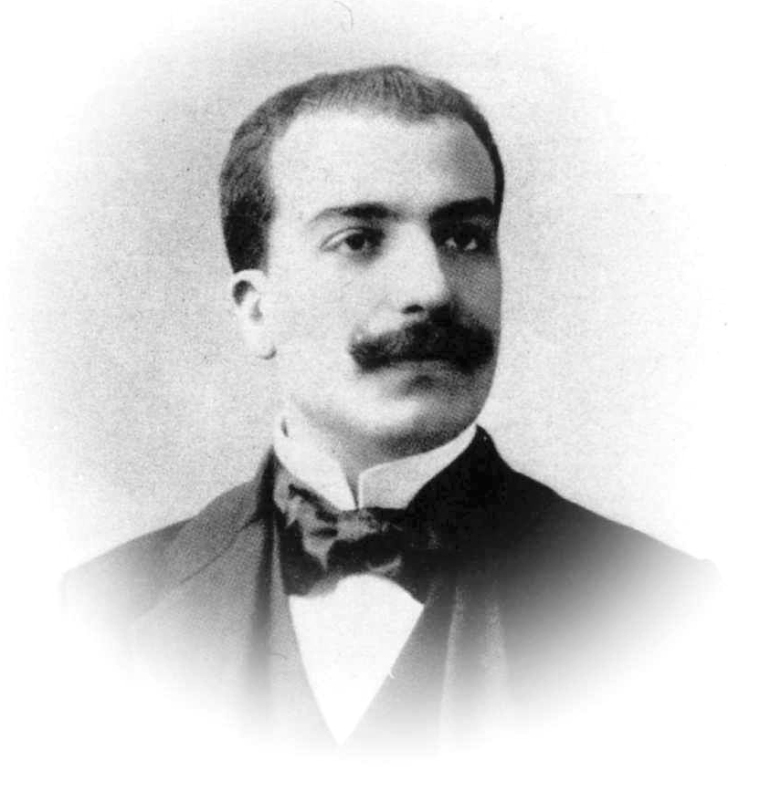
Celebre pressoché solo per il così soprannominato Concerto di Varsavia, che fa parte della colonna sonora di Dangerous Moonlight, un film di guerra diretto da Brian Desmond Hurst nel 1941, Addinsell scrisse diverse altre musiche per il cinema, fra cui quelle per Addio, Mr. Chips! (Goodbye, Mr. Chips, 1939) di Sam Wood.
La partitura di The Isle of Apples fu rinvenuta dopo la morte del compositore. Il titolo di questo breve idillio sinfonico fa probabilmente riferimento alla leggendaria isola di Avalon, citata come «Insula Avallonis» e poi come «Insula Pomorum quae Fortunata vocatur» nell’Historia regum Britanniae di Goffredo di Monmouth. Secondo le leggende arturiane, a Avalon fu forgiata Excalibur, e in seguito l’isola accolse le spoglie mortali di Artù — si è ipotizzato che Addinsell abbia composto The Isle of Apples dopo la scomparsa dell’amica e collaboratrice Clemence Dane (1888 - 1965).

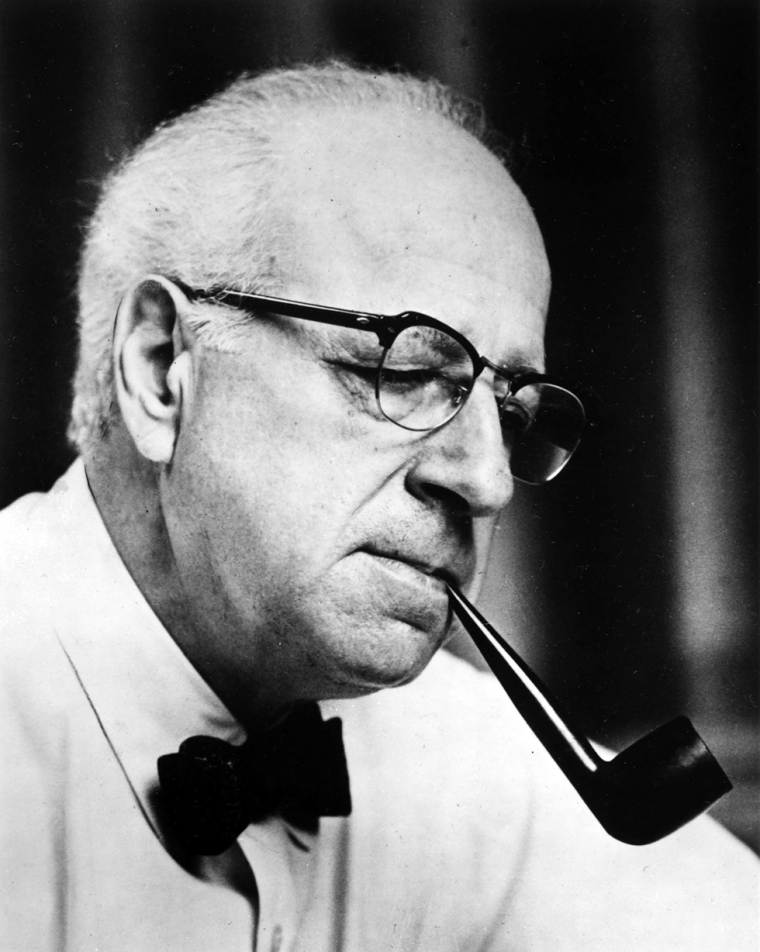
Richard Addinsell

Copland & Dickinson

Aaron Copland (14 novembre 1900 - 1990): Twelve Poems of Emily Dickinson (1950). Barbara Bonney, soprano; André Previn, pianoforte.

  1. Nature, the gentlest mother

    Nature, the gentlest mother
    Impatient of no child,
    The feeblest or the waywardest, —
    Her admonition mild

    In forest and the hill
    By traveller is heard,
    Restraining rampant squirrel
    Or too impetuous bird.

    How fair her conversation,
    A summer afternoon, —
    Her household, her assembly;
    And when the sun goes down

    Her voice among the aisles
    Incites the timid prayer
    Of the minutest cricket,
    The most unworthy flower.

    When all the children sleep
    She turns as long away
    As will suffice to light her lamps;
    Then, bending from the sky,

    With infinite affection
    And infiniter care,
    Her golden finger on her lip,
    Wills silence everywhere.

  2. There came a wind like a bugle [4:00]

    There came a wind like a bugle;
    It quivered through the grass,
    And a green chill upon the heat
    So ominous did pass

    We barred the windows and the doors
    As from an emerald ghost;
    The doom’s electric moccasin
    That very instant passed.

    On a strange mob of panting trees,
    And fences fled away,
    And rivers where the houses ran
    The living looked that day,

    The bell within the steeple wild
    The flying tidings whirled.
    How much can come and much can go,
    And yet abide the world!

  3. Why do they shut me out of heaven? [5:29]

    Why do they shut Me out of Heaven?
    Did I sing too loud?
    But I can say a little “Minor”
    Timid as a Bird!

    Wouldn’t the Angels try me
    Just once more
    Just see if I troubled them
    But don’t shut the door!

    Oh, if I were the Gentleman
    In the “White Robe”
    And they were the little Hand that knocked
    Would I forbid?

    [Why do they shut Me out of Heaven?
    Did I sing too loud?]

  4. The world feels dusty [7:35]

    The World feels Dusty
    When We stop to Die
    We want the Dew then
    Honors taste dry

    Flags vex a Dying face
    But the least Fan
    Stirred by a friend’s Hand
    Cools like the Rain

    Mine be the Ministry
    When they Thirst comes
    Dews of Thyself to fetch
    And Holy Balms

  5. Heart, we will forget him [9:30]

    Heart, we will forget him
    You and I, tonight.
    You may forget the warmth he gave,
    I will forget the light.

    When you have done, pray tell me,
    That I my thoughts may dim;
    Haste! lest while you’re lagging,
    I may remember him!

  6. Dear March, come in! [11:41]

    Dear March, come in!
    How glad I am!
    I looked for you before.
    Put down your hat –
    You must have walked –
    How out of breath you are!
    Dear March, how are you?
    And the rest?
    Did you leave Nature well?
    Oh, March, come right upstairs with me,
    I have so much to tell!

    I got your letter, and the bird’s;
    The maples never knew
    That you were coming, – I declare,
    How red their faces grew!
    But, March, forgive me –
    And all those hills
    You left for me to hue,
    There was no purple suitable,
    You took it all with you.

    Who knocks? that April?
    Lock the door!
    I will not be pursued!
    He stayed away a year, to call
    When I am occupied.
    But trifles look so trivial
    As soon as you have come,
    And blame is just as dear as praise
    And praise as mere as blame.

  7. Sleep is supposed to be [13:53]

    Sleep is supposed to be,
    By souls of sanity,
    The shutting of the eye.

    Sleep is the station grand
    Down which on either hand
    The hosts of witness stand!

    Morn is supposed to be,
    By people of degree,
    The breaking of the day.

    Morning has not occurred!
    That shall aurora be
    East of Eternity;

    One with the banner gay,
    One in the red array, –
    That is the break of day.

  8. When they come back [16:57]

    When they come back if Blossoms do
    I always feel a doubt
    If Blossoms can be born again
    When once the Art is out

    When they begin, if Robins may,
    I always had a fear
    I did not tell, it was their last Experiment
    Last Year,

    When it is May, if May return,
    Had nobody a pang
    Lest in a Face so beautiful
    He might not look again?

    If I am there,
    One does not know
    What Party one may be
    Tomorrow, but if I am there
    I take back all I say

  9. I felt a funeral in my brain [18:48]

    I felt a funeral in my brain,
    And mourners to and fro,
    Kept treading, treading, till it seemed
    That sense was breaking through.

    And when they all were seated
    A service like a drum
    Kept beating, beating, till I thought
    My mind was going numb.

    And then I heard them lift a box,
    And creak across my soul
    With those same boots of lead, again.
    Then space began to toll

    As all the heavens were a bell,
    And Being but an ear,
    And I and silence some strange race,
    Wrecked, solitary, here.

  10. I’ve heard an organ talk sometimes [20:51]

    I’ve heard an Organ talk, sometimes
    In a Cathedral Aisle,
    And understood no word it said
    Yet held my breath, the while

    And risen up and gone away,
    A more Berdardine Girl
    Yet know not what was done to me
    In that old Hallowed Aisle.

  11. Going to heaven! [22:54]

    Going to Heaven!
    I don’t know when,
    Pray do not ask me how, –
    Indeed I’m too astonished
    To think of answering you!
    Going to Heaven! –
    How dim it sounds!
    And yet it will be done
    As sure as flocks go home at night
    Unto the shepherd’s arm!

    Perhaps you’re going too!
    Who knows?
    If you should get there first
    Save just a little place for me
    Close to the two I lost!
    The smallest “robe” will fit me,
    And just a bit of “crown”;
    For you know we do not mind our dress
    When we are going home.

    Going to Heaven!
    I’m glad I don’t believe it
    For it would stop my breath,
    And I’d like to look a little more
    At such a curious earth!
    I am glad they did believe it
    Whom I have never found
    Since the mighty autumn afternoon
    I left them in the ground.

  12. The Chariot [25:15]

    Because I could not stop for Death —
    He kindly stopped for me —
    The carriage held but just ourselves —
    and Immortality.

    We slowly drove — he knew no haste,
    And I had put away
    My labour, and my leisure too
    For His Civility —

    We passed the school, where children played,
    Their lessons scarcely done.
    We passed the fields of gazing grain,
    We passed the setting sun.

    We paused before a house that seemed
    a swelling of the ground;
    The roof was scarcely visible,
    The cornice but a mound.

    Since then ’tis centuries; but each
    Feels shorter than the day
    I first surmised the horses’ heads
    Were toward eternity.

ED

Alleluja

Johann Nepomuk Hummel (14 novembre 1778 - 1837): Sonata n. 2 in mi bemolle maggiore per pianoforte op. 13, Alleluja (c1804). Vincenzo Balzani.

  1. Allegro con brio
  2. Adagio con molta espressione [6:06]
  3. Allegro con spirito [12:35]

« Nel primo movimento il primo tema, molto incisivo e accompagnato da un basso stac­ca­tis­simo, è indicato nella sua ultima apparizione con “Alleluja”. Può darsi, ma non si è trovata fino ad ora la fonte, che si tratti di una citazione da una messa o da un oratorio, ma comunque sia il tono di giubilo dell’Alleluja percorre tutto il primo movimento. Il secondo movimento, in forma bitematica tripartita, è una vera e propria scena lirica intensamente patetica, e il terzo movimento riunisce i caratteri dello scherzo e della marcia in quello che in realtà è un vero e proprio concertato operistico » (Piero Rattalino).

Hummel, Sonata Allelulja

Bateau ivre

Maurice Delage (13 novembre 1879 - 1961): Bateau ivre, poema sinfonico (1954) ispirato dall’omonima poesia di Arthur Rimbaud. Orchestre National de la RTF, dir. Manuel Rosenthal.

Et je voguais, lorsqu’à travers mes liens frêles
Des noyés descendaient dormir, à reculons!

Sinfonia funebre – I

Bernhard Romberg (13 novembre 1767 - 1841): Prima Sinfonia in do minore op. 23, Trauer-Sinfonie (1810); composta in memoria di Luisa di Meclemburgo-Strelitz, regina di Prussia (1776 - 1810). Kölner Akademie, dir. Michael Alexander Willens.

  1. Andante lento maestoso – Allegro
  2. Adagio non troppo – Allegro non troppo [13:01]
  3. Con più moto – Andante lento – Andante gracioso [18:01]

Tourbillon

Oscar Strasnoy (12 novembre 1970): Tourbillon per pianoforte, da Georges Delerue. Alexandre Tharaud, pianoforte.


Jeanne Moreau canta le Tourbillon de la vie di Georges Delerue in Jules et Jim di François Truffaut; il testo è di Cyrus Bassiak (pseudonimo di Serge Rezvani), che nel film suona la chitarra.

Elle avait des bagues à chaque doigt,
Des tas de bracelets autour des poignets,
Et puis elle chantait avec une voix
Qui, sitôt, m’enjôla.

    Elle avait des yeux, des yeux d’opale,
    Qui me fascinaient, qui me fascinaient.
    Y avait l’ovale de son visage pâle
    De femme fatale qui m’fut fatale.

On s’est connus, on s’est reconnus,
On s’est perdus de vue, on s’est r’perdus d’vue
On s’est retrouvés, on s’est réchauffés,
Puis on s’est séparés.

    Chacun pour soi est reparti.
    Dans l’tourbillon de la vie
    Je l’ai revue un soir, aïe aïe aïe
    Ça fait déjà un fameux bail.

Au son des banjos je l’ai reconnue.
Ce curieux sourire qui m’avait tant plu.
Sa voix si fatale, son beau visage pâle
M’émurent plus que jamais.

    Je me suis soûlé en l’écoutant.
    L’alcool fait oublier le temps.
    Je me suis réveillé en sentant
    Des baisers sur mon front brûlant.

On s’est connus, on s’est reconnus.
On s’est perdus de vue, on s’est r’perdus de vue
On s’est retrouvés, on s’est séparés.
Puis on s’est réchauffés.

    Chacun pour soi est reparti.
    Dans l’tourbillon de la vie.
    Je l’ai revue un soir, ah là là
    Elle est retombée dans mes bras.

Quand on s’est connus,
Quand on s’est reconnus,
Pourquoi se perdre de vue,
Se reperdre de vue?
Quand on s’est retrouvés,
Quand on s’est réchauffés,
Pourquoi se séparer?

    Alors tous deux on est repartis
    Dans le tourbillon de la vie
    On a continué à tourner
    Tous les deux enlacés.

Petite Suite

Aleksandr Porfir’evič Borodin (12 novembre 1833 - 1887): Petite Suite per pianoforte (1884). Aldo Ciccolini.

  1. Au Couvent: Andante religioso
  2. Intermezzo: Tempo di menuetto [4:52]
  3. Mazurka I: Allegro [8:06]
  4. Mazurka II: Allegretto [10:54]
  5. Rêverie: Andante [14:32]
  6. Sérénade: Allegretto [16:33]
  7. Finale: Nocturne [18:09]

La stessa composizione nell’orchestrazione di Glazunov. Kungliga fil­har­mo­ni­ska orkestern (Stoccolma), dir. Gennadij Roždestvenskij.

  1. Au Couvent
  2. Intermezzo [4:35]
  3. Mazurka I [9:54]
  4. Mazurka II [13:33]
  5. Rêverie [17:20]
  6. Sérénade [20:23]
  7. Finale: Scherzo – Nocturne – Scherzo: Allegro vivace – Andantino – Allegretto [22:32]

Dagli astri disastri

Barbara Strozzi (1619 - 11 novembre 1677): Che si può fare?, aria per 1 voce e basso continuo (pubblicata nel volume Arie a voce sola op. 8, 1664); testo di Luigi Zorzisto (pseudonimo per anagramma di Giulio Strozzi, padre adottivo della compositrice). Céline Scheen, soprano; Ensemble Artaserse.

Che si può fare?
Le stelle rubelle
Non hanno pietà.
Che s’el cielo non dà
Un influsso di pace al mio penare,
Che si può fare?
Che si può dire?
Da gl’astri disastri
Mi piovano ogn’hor;
Che se perfido amor
Un respiro diniega al mio martire,
Che si può dire?

Così va rio destin forte tiranna,
Gl’innocenti condanna:
Così l’oro più fido
Di costanza e di fè, lasso conviene,
lo raffini d’ogn’hor fuoco di pene.

Sì, sì, penar deggio,
Sì, che darei sospiri,
Deggio trarne i respiri.
In aspri guai per eternarmi
Il ciel niega mia sorte
Al periodo vital
Punto di morte.

Voi spirti dannati
Ne sete beati
S’ogni eumenide ria
Sol’ è intenta a crucciar l’anima mia.

Se sono sparite
Le furie di Dite,
Voi ne gl’elisi eterni
I dì trahete io coverò gl’inferni.

Così avvien a chi tocca
Calcar l’orme d’un cieco,
Al fin trabbocca.

Garibaldi-Polka

Paolo Giorza (11 novembre 1832 - 1914): Garibaldi-Polka per flauto e pianoforte op. 87 (1861). Maurizio Benedetti, flauto; Ilaria Schettini, pianoforte.

Autore della famosa canzone risorgimentale La bella Gigogin, ovvero Dàghela avanti un passo (1858), Giorza compose inoltre alcune opere teatrali, inni, marce militari e ballabili.

Paolo Giorza

Serenata – IX

Dame Elizabeth Violet Maconchy Le Fanu (1907 - 11 novembre 1994): Serenata concertante per violino e orchestra (1962). Manoug Parikian, violino; London Symphony Orchestra, dir. Vernon Handley.

  1. Lento – Andante con moto – Allegro ritmico
  2. Scherzo: Allegro molto
  3. Andante con moto
  4. Allegro vigoroso – Andante tranquillo

Ricordando Ennio Morricone

Ennio Morricone (10 novembre 1928 - 2020): due brani dalla colonna sonora del film Il buono, il brutto, il cattivo (1966) di Sergio Leone. Christine Nonbo Andersen, soprano; Tuva Semmingsen, mezzosoprano; DR SymfoniOrkestret, dir. Sarah Hicks.

  1. Il buono, il brutto, il cattivo
  2. L’estasi dell’oro [2:39]

Il buono, il brutto, il cattivo