
Andrea Falconiero o Falconieri (c1585 - 29 luglio 1656): Canzone a 3, detta l’Infante Arcibizzarra, dal I Libro di canzone, sinfonie, fantasie… (1650). Accademia Bizantina, dir. Ottavio Dantone.
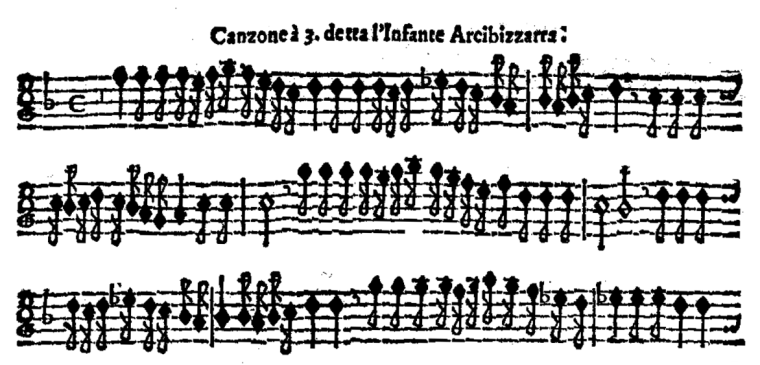
Andrea Falconiero o Falconieri (c1585 - 29 luglio 1656): Canzone a 3, detta l’Infante Arcibizzarra, dal I Libro di canzone, sinfonie, fantasie… (1650). Accademia Bizantina, dir. Ottavio Dantone.
Anonimo (sec. XVII): Barbara Allen, ballad di origine scozzese. Alfred Deller, controtenore; Desmond Dupré, liuto.
In Scarlet town where I was born
There was a fair maid dwellin’,
Made ev’ry youth cry «Well-a-day.»
Her name was Barbara Allen.
All in the merry month of may,
When green buds they were swellin’,
Young Jemmy Grove on his death-bed lay
For love of Barbara Allen.
So slowly, slowly she came up,
And slowly she came nigh him,
And all she said when there she came:
«Young man, I think you’re dyin’.»
When he was dead, and laid in grave,
Her heart was struck with sorrow.
«Oh mother, mother, make my bed:
For I shall die tomorrow.»
Farewell, she said, ye virgins all,
And shun the fault I fell in:
Henceforth take warning by the fall
Of cruel Barbara Allen.

Boris Asaf’ev (29 luglio 1884 - 1949): Sonatina per oboe e pianoforte (1939). Ivan Paisov, oboe; Natal’ja Ščerbakova, pianoforte.

 Johann Theile (29 luglio 1646 - 1724): Suite in la minore dal Musikalisches Kunstbuch (1691). Hamburger Ratsmusik, dir. Simone Eckert.
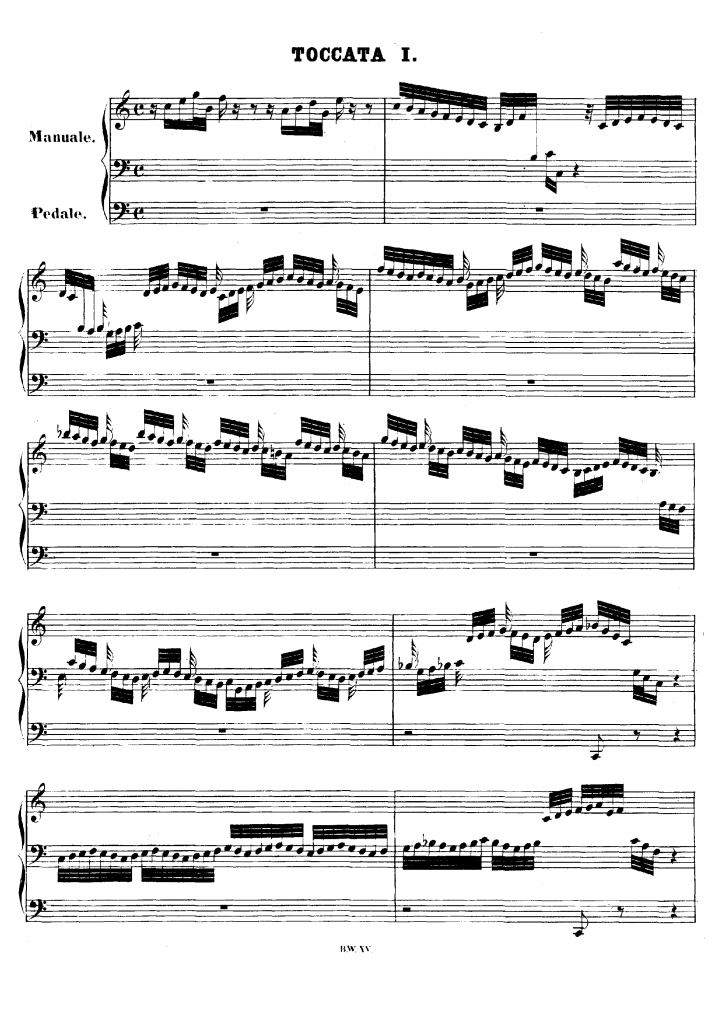
Johann Sebastian Bach (1685 - 28 luglio 1750): Toccata, Adagio e Fuga in do maggiore per organo BWV 564 (c1710-17). E(dward George) Power Biggs (1906 - 1977) .
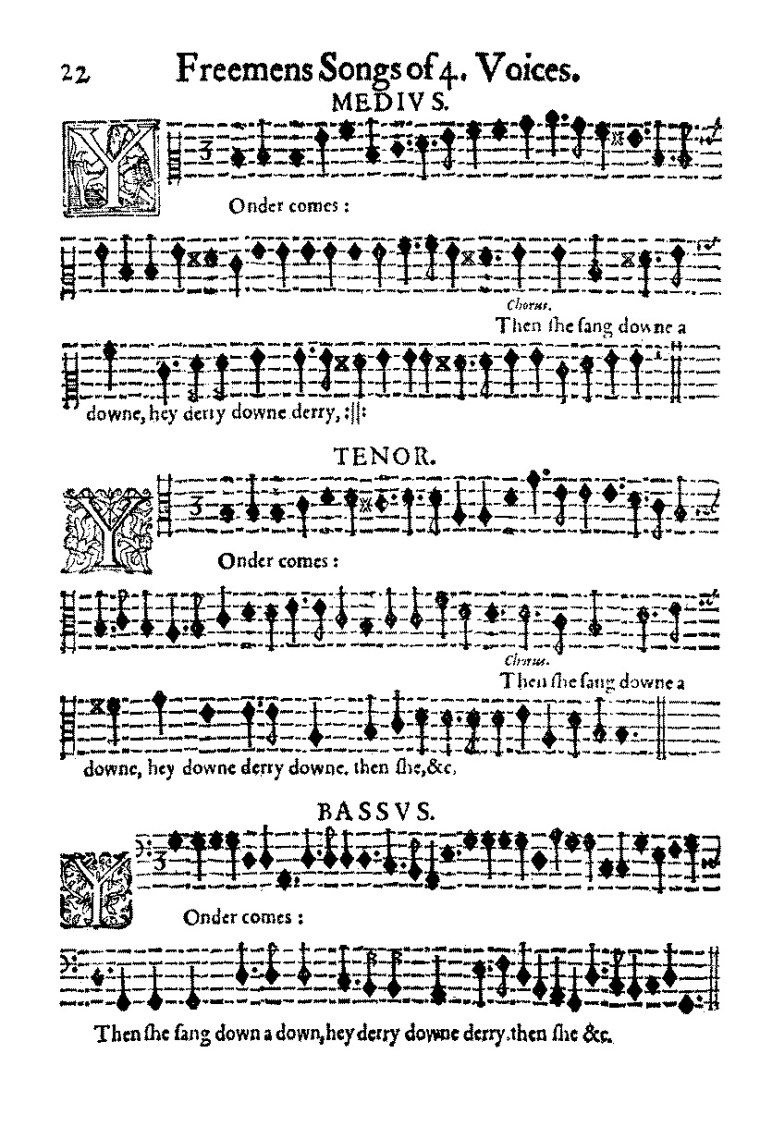
Thomas Ravenscroft (c1582 - c1633): Yonder comes a courteous knight, partsong a 4 (pubblicato in Deuteromelia, 1609, n. 22). Pro Cantione Antiqua.
Notevoli il testo, che presenta alla fine una «morale» davvero curiosa 🙂 , e l’armonizzazione, severa e moderna allo stesso tempo, nonché l’interpretazione dell’ensemble Pro Cantione Antiqua.
Yonder comes a courteous knight,
Lustely raking over the lay;
He was well ware of a bonny lasse,
As she came wand’ring over the way.
Then she sang downe a downe, hey downe derry.
Jove you speed, fayre ladye, he said,
Among the leaves that be so greene;
If I were a king, and wore a crowne,
Full soone, fair lady, shouldst thou be a queen.
Also Jove save you, faire lady,
Among the roses that be so red;
If I have not my will of you,
Full soone, faire lady, shall I be dead.
[Then he lookt east, then hee lookt west,
He lookt north, so did he south;
He could not finde a privy place,
For all lay in the divel’s mouth.]
If you will carry me, gentle sir,
A mayde unto my father’s hall,
Then shall you have your will of me,
Under purple and under paule.
[He set her up upon a steed,
And him selfe upon another,
And all the day he rode her by,
As though they had been sister and brother.]
When she came to her father’s hall,
It was well walled round about;
She rode in at the wicket-gate,
And shut the foure-ear’d foole without.
You had me, quoth she, abroad in the field,
Among the corne, amidst the hay,
Where you might had your will of mee,
For, in good faith, sir, I never said nay.
[Ye had me also amid the field,
Among the rushes that were so browne,
Where you might had your will of me,
But you had not the face to lay me downe.]
He pulled out his nut-browne sword,
And wipt the rust off with his sleeve,
And said: Jove’s curse come to his heart,
That any woman would beleeve!
When you have your owne true-love
A mile or twaine out of the towne,
Spare not for her gay clothing,
But lay her body flat on the ground.
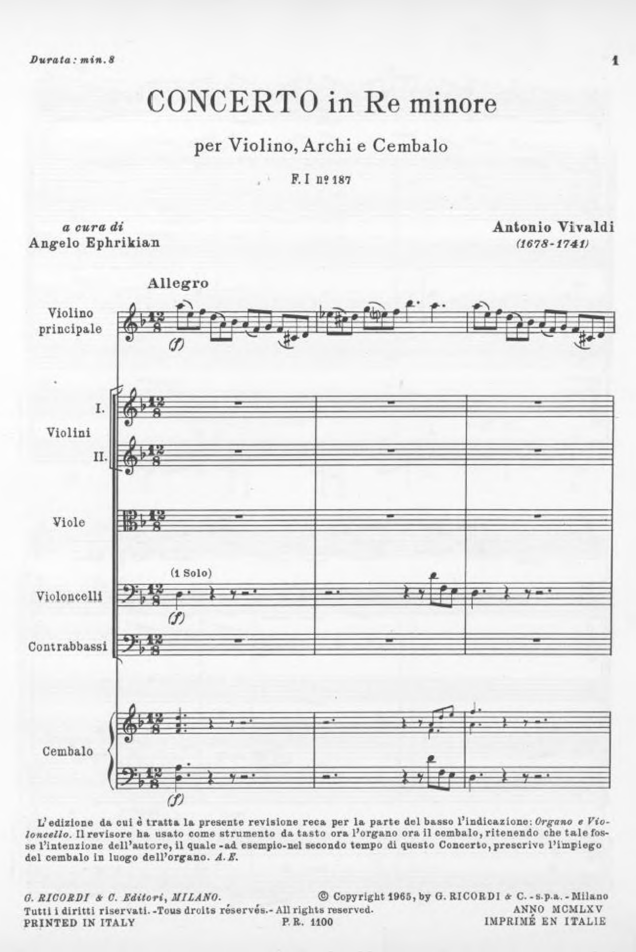
Antonio Vivaldi (1678 - 28 luglio 1741): Concerto in re minore per violino, archi e basso continuo RV 249, n. 8 della raccolta La Stravaganza op. 4 (1716). Concerto Italiano, dir. Rinaldo Alessandrini.
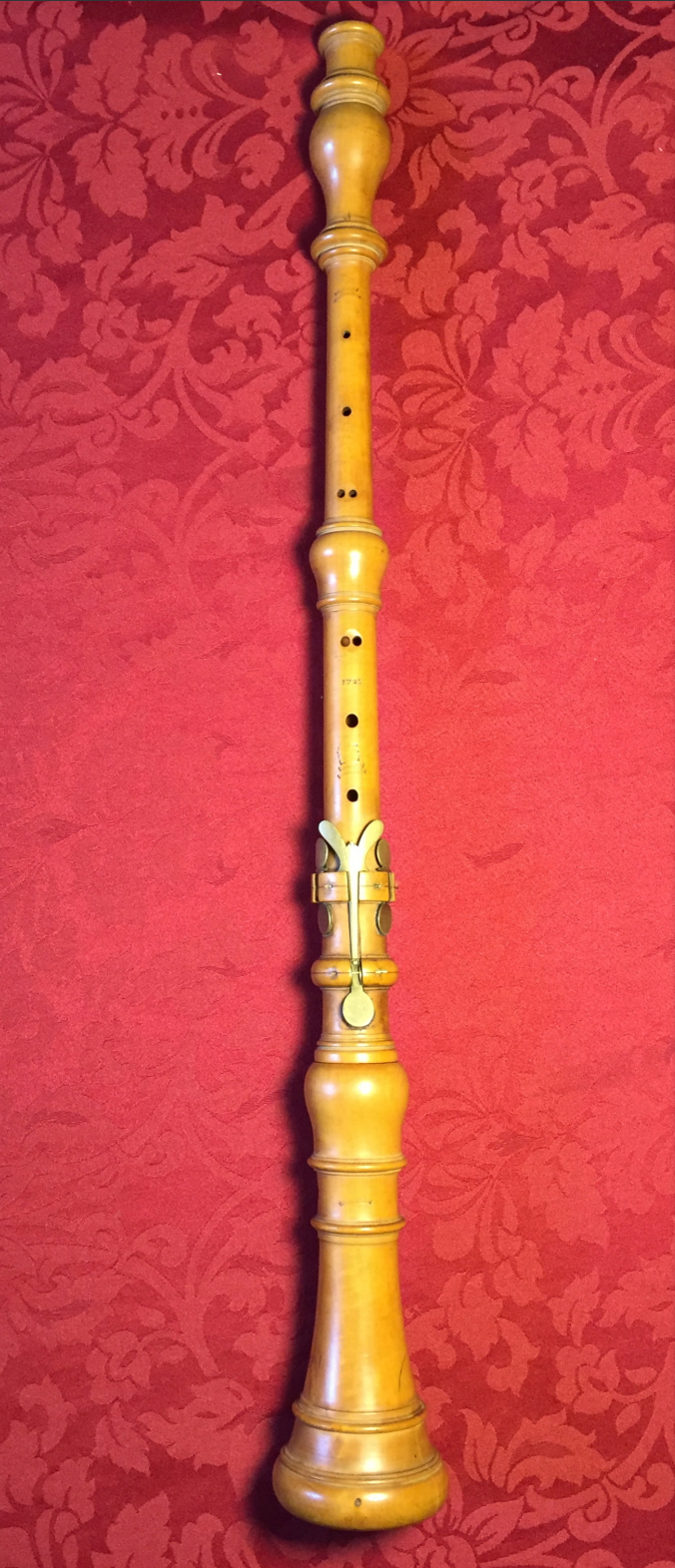
Antonio Vivaldi (1678 - 28 luglio 1741): Concerto in fa maggiore per oboe, archi e continuo RV 457. Ensemble Silente Venti!; Simone Toni, oboe e direzione.
Johann Sebastian Bach (1685 - 28 luglio 1750): Concerto in fa maggiore per oboe, archi e continuo BWV 1053R. Café Zimmermann.
La partitura originale è perduta: il concerto è stato ricostruito sulla base delle cantate Gott soll allein mein Herze haben BWV 169 (il I e il II movimento del concerto corrispondono alla I e alla V parte della cantata) e Ich geh’ und suche mit Verlangen BWV 49 (l’ultimo movimento del concerto corrisponde alla I parte della cantata).
Giuseppe Sarti (1729 - 28 luglio 1802): Sonata n. 4 in sol maggiore per oboe e continuo. Giuseppe Piccinino, oboe; Roberto Cognazzo, clavicembalo.
Francesco Corteccia (27 luglio 1502 - 1571): Vientene, almo riposo, madrigale a 5 voci (pubblicato nel Libro primo de madrigali a cinque & a sei voci, 1547). John Elwes, tenore; Les Sacqueboutiers de Toulouse.
Vientene, almo riposo, ecco ch’io torno
e ne discaccio il giorno,
posate erbette e fronde,
e spogliatevi piagge e arboscelli,
entrate o pastorelli,
entrate o ninfe bionde,
entro al bel nido adorno
ognun s’adagi, e dorma al mio ritorno.
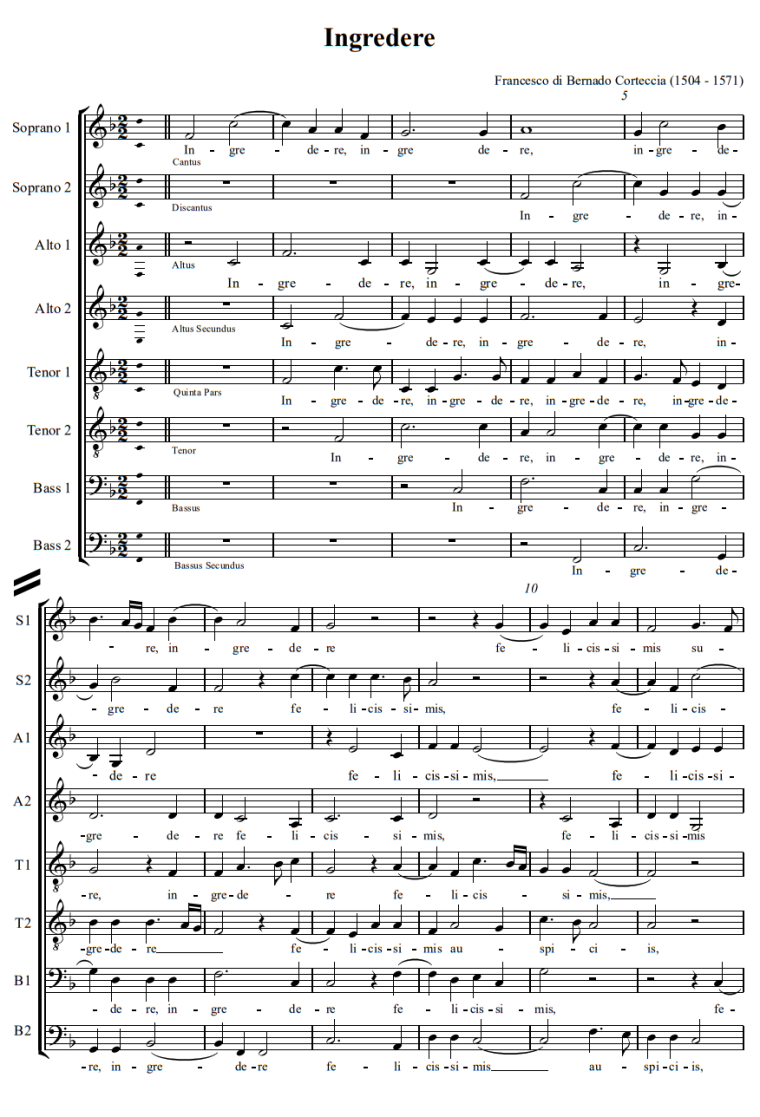
Corteccia: Ingredere, mottetto a 8 voci in 2 cori (pubblicato in Musiche fatte nelle nozze dello illustrissimo Duca di Firenze, il signor Cosimo de’ Medici, et della illustrissima consorte sua, madonna Leonora da Tolletto, 1539, n. 2). Nel primo video, il mottetto è eseguito dall’ensemble del Centre de Musique Ancienne di Ginevra, dallo Studio di Musica Rinascimentale di Palermo e dalla Schola «Jacopo da Bologna» diretti da Gabriel Garrido; nel secondo, Eduardo Antonello esegue tutte le parti con i suoi cromorni.
Ingredere felicissimis, auspiciis urbem tuam Helionora ac optime
prolis fecunda, ita domi similem patri foris avo sobolem producas
ut Mediceo nomini eiusque devotissimis civibus securitatem prestes eternam.
Willem van Otterloo (1907 - 27 luglio 1978): Sinfonia n. 2 (1945-46), revisione di Otto Ketting (2011). Radio Filharmonisch Orkest, dir. James Gaffigan.

Anonimo: She Moved through the Fair, canzone tradizionale irlandese. Alfred Deller, controtenore; Desmond Dupré, liuto.
My young love said to me: My mother won’t mind,
And my father won’t slight you for your lack of kine.
And she stepped away from me and this she did say:
It will not be long, love, ‘til our wedding day.
She stepped away from me and she moved through the fair,
And fondly I watched her move here and move there,
And then she went homeward with one star awake,
As the swan in the evening moves over the lake.
Last night she came to me, she came softly in.
So softly she came that her feet made no din,
And she laid her hand on me, and this she did say:
It will not be long, love, ‘til our wedding day.
La melodia, diffusa in Irlanda e in Scozia, risale probabilmente al basso Medioevo. Il testo è stato pubblicato per la prima volta nella raccolta Irish Country Songs (1909), curata da Herbert Hughes.

 Miklós Rózsa (1907 - 27 luglio 1995): New England Concerto per 2 pianoforti e orchestra (1984). Joshua Pierce e Dorothy Jonas, pianoforti; The Utah Symphony Orchestra, dir. Elmer Bernstein.
Il compositore statunitense di origine magiara Miklós Rózsa è celebre soprattutto per le sue tante colonne sonore cinematografiche di successo: Le quattro piume e Il libro della giungla di Zoltán Korda, La fiamma del peccato, Giorni perduti e Vita privata di Sherlock Holmes di Billy Wilder, Io ti salverò di Alfred Hitchcock, I gangsters e Doppio gioco di Robert Siodmak, La città nuda di Jules Dassin, La costola di Adamo e Sangue misto di George Cukor, Giungla d’asfalto di John Huston, Quo vadis? di Mervyn LeRoy, I cavalieri della tavola rotonda di Richard Thorpe, Brama di vivere di Vincente Minnelli, Ben-Hur di William Wyler, Il re dei re di Nicholas Ray, El Cid di Anthony Mann, Quella sporca dozzina di Robert Aldrich, e numerose altre.
Nel New England Concerto ricorrono temi tratti dalle partiture scritte per i film Lydia (1941) di Julien Duvivier e Prigionieri del destino (Time Out of Mind, 1947) di Robert Siodmak.
Enrique Granados (27 luglio 1867 - 1916): Goyescas – Los majos enamorados, suite per pianoforte op. 11 (1911). Alicia de Larrocha.

 Philipp Jarnach (26 luglio 1892 - 1982): Das Amrumer Tagebuch, tre pezzi per pianoforte op. 30 (1940-42). Esegue l’autore.
A Amrum, una delle isole Frisone Settentrionali, Jarnach aveva soggiornato nel 1939 insieme con la moglie Elisabeth (dedicataria della composizione) durante il viaggio di nozze.
Andrzej Koszewski (26 luglio 1922 - 2015): Serioso-Giocoso per coro misto a 8 voci (1989). Coro da camera 441Hz, dir. Anna Wilczewska.

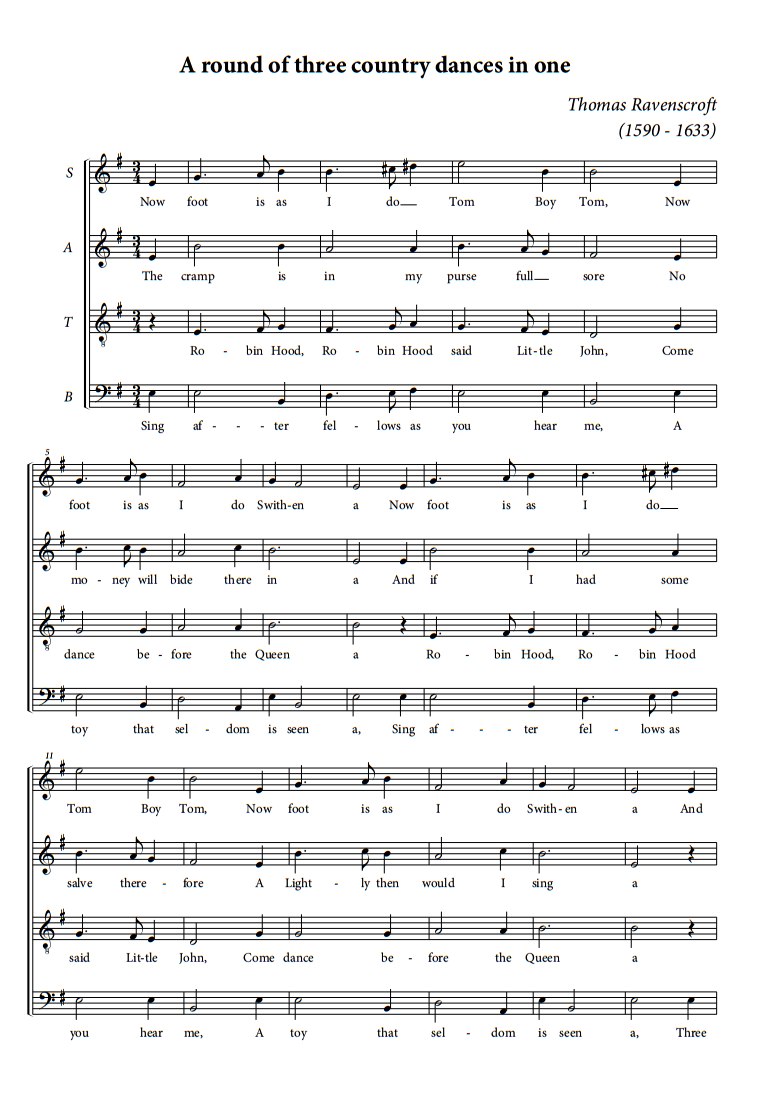
Thomas Ravenscroft (c1582 - c1633): A round of three country dances in one, da Pammelia (1609), eseguito da Donna Stewart e i suoi Doppelgänger 🙂
Ecco un esempio significativo della maestria di Ravenscroft, che costruisce un round (canone) innestando sopra un ground di sua invenzione, con questo testo:
Sing after fellows as you hear me,
A toy that seldom is seen-a:
Three country dances in one to be,
A pretty conceit as I ween-a.
tre diverse country dances, e cioè Robin Hood, The Cramp e Tom boy Tom:
Robin Hood, Robin Hood, said Little John,
Come dance before the Queen-a
In a red petticoat and a green jacket,
a white hose and a green-a.
The cramp is in my purse full sore,
No money will bide therein-a,
And if I had some salve therefore,
O lightly then would I sing-a.
Hey, ho, the cramp-a.
Now foot it as I do Tom boy Tom,
Now foot it as I do Swithen-a,
And Hick, thou must trick it all alone,
Till Robin come leaping in between-a.
Stefano Gervasoni (26 luglio 1962): Dir – In dir per sestetto vocale e sestetto d’archi (2004-2011); testi di Angelus Silesius (Johannes Scheffler, 1624-1677). Ensemble vocale Exaudi; ensemble strumentale L’Instant Donné; dir. James Weeks.
«Nel 2003 ho scritto In dir, per ensemble vocale a sei voci, un ciclo di undici brani con i testi del mistico del XVII secolo Angelus Silesius, poeta e pensatore, raccolti nei sei libri del Cherubinischer Wandersmann. La commissione di un sestetto per archi da parte di Harry Vogt mi ha dato l’idea di scrivere un commento a In dir che di questo pezzo utilizzasse lo stesso materiale musicale e si ponesse rispetto ad esso in rapporto di complementarietà. Di In dir, Dir conserva il numero delle voci e il loro materiale musicale, diventando così una specie di “sotto-testo”, un’esplicitazione in termini puramente musicali del particolare significato teologico o groviglio di nessi filosofico-religiosi dei distici di Silesius. A questo scopo il brano utilizza principi costruttivi direttamente derivati dai testi silesiani, sorta di madrigalismi di tipo evoluto con il testo in absentia. Se In dir è tensione del raggiungimento del divino o dell’essenza della verità in un altrove ignoto o dentro l’ignoto di noi stessi – tentativo che si attua attraverso la parola –, Dir è questo stato o luogo dove tale segreto, il mistero dell’essere, è conservato, e che la parola non sa dire. Per questo, nella mia intenzione i due sestetti dovrebbero costituire le due metà di un unicum, l’“uno” dell’antico mito platonico, l’essere androgino primordiale da Zeus diviso in due metà, ognuna delle quali perennemente sofferente della nostalgia della propria metà perduta e del continuo tentativo di ricongiungersi ad essa. Una complementarietà che si realizza attraverso l’alternanza, mai con la sovrapposizione. Il “Tu” divino, che la parola evoca, coincide nella sua essenza con la scoperta dell’“io” interiore”, ma l’uno e l’altro sono irraggiungibili. In dir e Dir sono complementari perché possono essere eseguiti di seguito (prima il sestetto vocale, poi il sestetto per archi) o alternati secondo l’ordine seguente, in cui i brani di Dir sono presentati in ordine inverso rispetto ai corrispettivi brani di In dir. Oppure potranno essere eseguiti separati, rimandandosi l’un l’altro a distanza.» (Stefano Gervasoni).

Buon compleanno 🙂
Ada Gentile (26 luglio 1947): Perflautoepianoforte (2009). Morena Mestieri, flauto; Anna Bellagamba, pianoforte.

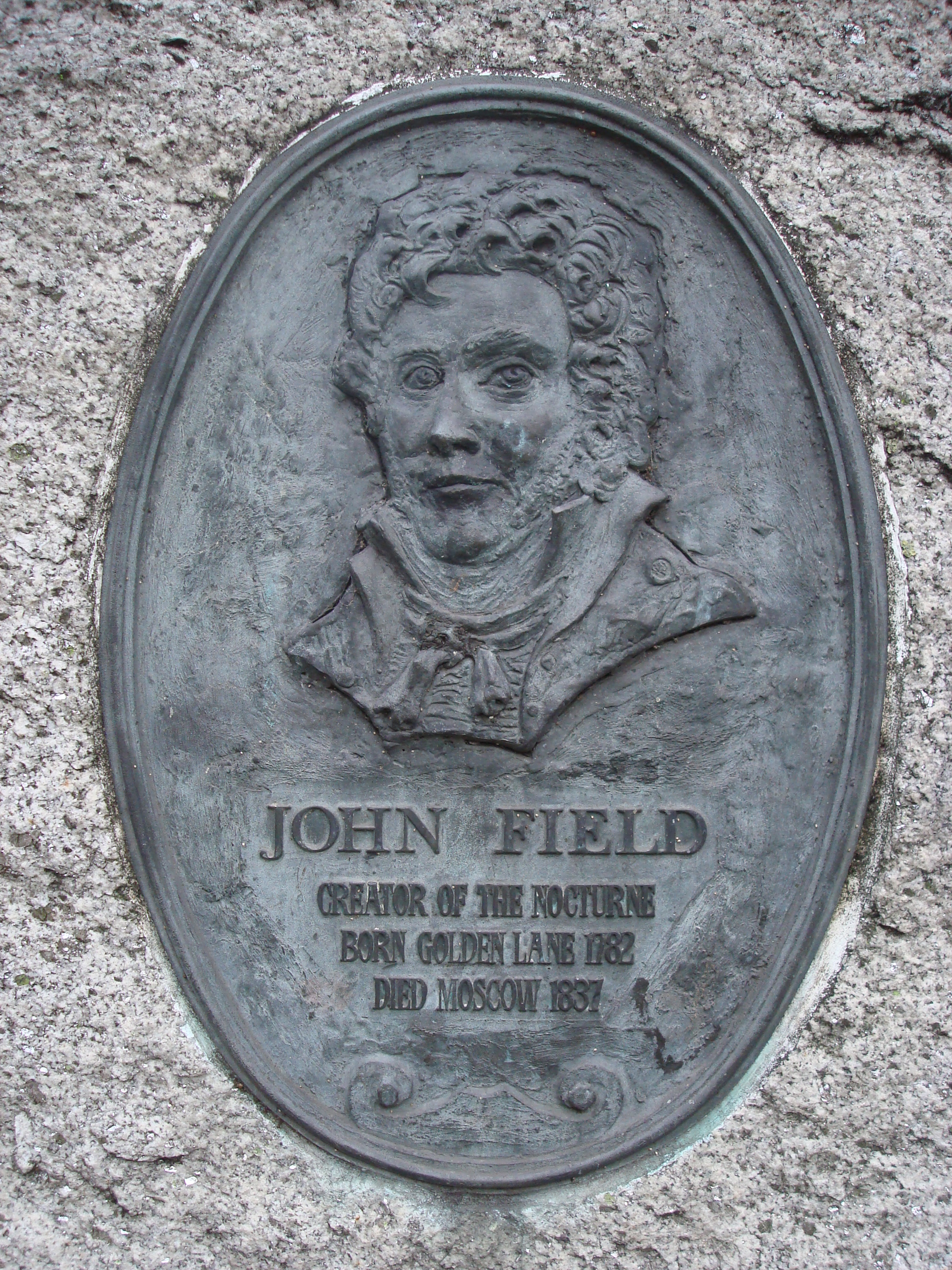
John Field (26 luglio 1782 - 1837): Notturno per pianoforte n. 9 in do minore H 30. John O’Conor.
Marco Betta (25 luglio 1964): Cadentia sidera, fantasia per pianoforte e archi (1990). Stefano Micheletti, pianoforte; Orchestra Sinfonica Abruzzese, dir. Flavio Emilio Scogna.
…et iam nox umida caelo praecipitat suadentque cadentia sidera somnos (Virgilio).

Anonimo: Bushes and Briars, canto tradizionale inglese. Alfred Deller, controtenore; Desmond Dupré, liuto.
La «scoperta» di questo brano si deve a Ralph Vaughan Williams, che l’udì cantare da un pastore nell’Essex e ne pubblicò un arrangiamento per coro maschile a 4 voci a cappella nel 1908.
Through bushes and through briars,
I lately took my way;
All for to hear the small birds sing,
And the lambs to skip and play.
I overheard my own true love,
Her voice it was so clear;
Long time I have been waiting
For the coming of my dear.
Sometimes I am uneasy
And troubled in my mind;
Sometimes I think I’ll go to my love
And tell to him my mind.
And if I should go to my love,
My love he will say «Nay»;
If I show to him my boldness,
He’ll ne’er love me again.
L’arrangiamento di Vaughan Williams eseguito da The Gentlemen of St. John’s.

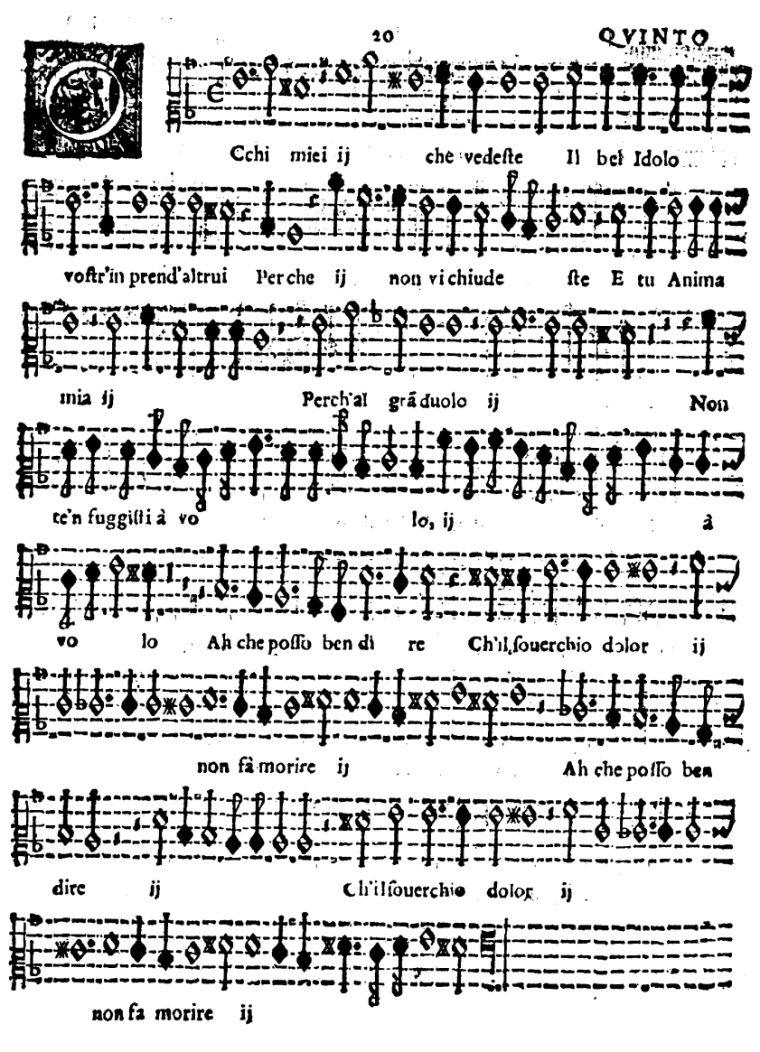
Pomponio Nenna (1556 - 25 luglio 1608): Occhi miei che vedeste, madrigale a 5 voci (pubblicato nel Quarto Libro de madrigali a cinque voci, 1609, n. 20); testo di Battista Guarini. Concerto Italiano, dir. Rinaldo Alessandrini.
Occhi miei che vedeste
Il bell’idolo vostro in preda altrui
Perché non vi chiudeste?
E tu, Anima mia,
Perché al gran duolo
Non t’en fuggisti a volo?
Ah, che posso ben dire
Che il soverchio dolor
Non fa morire.
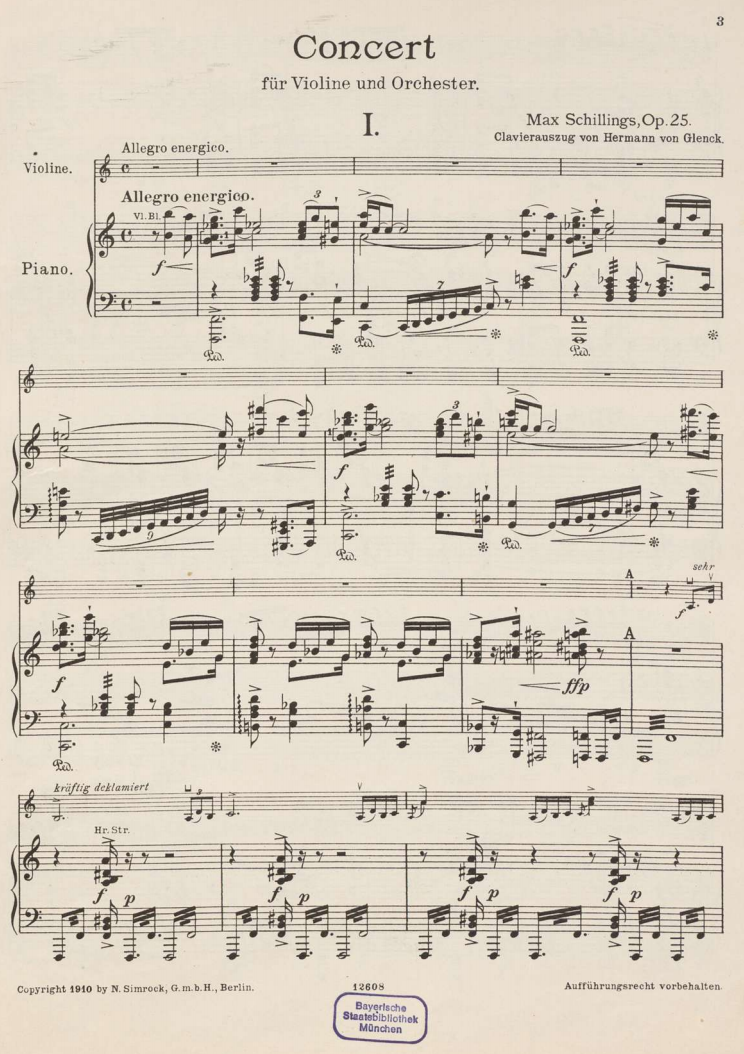
Max von Schillings (1868 - 24 luglio 1933): Primo Concerto in la maggiore per violino e orchestra op. 25 (1910). Ernő Rózsa, violino; Slovenská filharmónia, dir. Alfred Walter.
Joseph Eybler (1765 - 24 luglio 1846): Concerto in si bemolle maggiore per clarinetto e orchestra (1798). Dieter Klöcker, clarinetto; English Chamber Orchestra.

Max von Schillings (1868 – 24 luglio 1933): Ein Zwiegespräch per violino, violoncello e piccola orchestra op. 8 (1897). Elisabeth Glass, violino; Alban Gerhardt, violoncello; Kölner Rundfunkorchester, dir. Jan Stulen.

 Padre Davide da Bergamo O.F.M.Ref. (al secolo Felice Moretti; 1791 - 24 luglio 1863): Gran Sinfonia in do minore. Arturo Sacchetti all’organo Serassi della Chiesa conventuale di San Domenico in Trino Vercellese.
Leith Stevens (1909 - 23 luglio 1970): Concerto in do minore per pianoforte e orchestra, dalla colonna sonora del film L’amore senza volto (Night Song), diretto nel 1947 da John Cromwell. Artur Rubinstein, pianoforte; New York Philharmonic Orchestra, dir. Eugene Ormandy.
Il film, incredibilmente melenso e del tutto inverosimile, racconta l’amore di una ricca ragazza di San Francisco (Merle Oberon) per un povero pianista di nightclub (Dana Andrews) diventato cieco in seguito a un incidente automobilistico. La donna organizza un concorso di composizione mettendo in palio 5000 dollari per il miglior concerto per pianoforte e orchestra, sicura che il suo amato trionferà. Così in effetti avviene: il brano premiato viene eseguito al Carnegie Hall da Rubinstein sotto la bacchetta di Ormandy, e il felice vincitore usa il denaro del premio per farsi operare e riacquistare la vista. L’amore trionfa.
Superfluo aggiungere che il film fu un fiasco. Il critico del «New York Times» Bosley Crowther scrisse fra l’altro che « è proprio il concerto-premio a rivelare impietosamente la sfacciata e totale falsità di Night Song. Perché la musica sciatta e insignificante di Leith Stevens serve solo come pretesto per infilare nelle inquadrature violini, timpani e quartetti di corni. E se il signor Rubinstein e il signor Ormandy possono ingoiare, insieme con il proprio orgoglio, una robaccia del genere, vuol dire che hanno stomaci alquanto robusti ».

Richard Hol (23 luglio 1825 - 1904): Seconda Sinfonia in re minore op. 44 (1866). Radio Symfonie Orkest, dir. Ed Spanjaard.

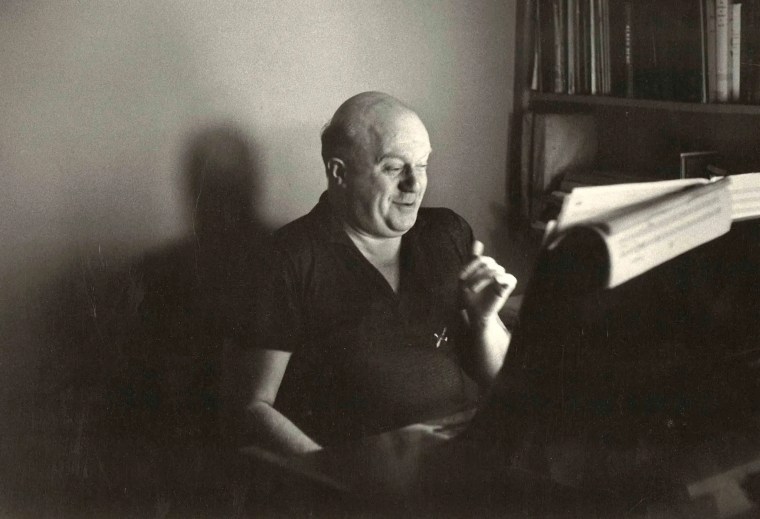
Ben Weber (23 luglio 1916 - 1979): Concerto per pianoforte e orchestra op. 52 (1961). William Masselos, pianoforte; Royal Philharmonic Orchestra, dir. Gerhard Samuel.
La strana vita di Ben Weber, articolo di Roger Tréfousse.
Franz Berwald (23 luglio 1796 - 1868): Sinfonia n. 3 do maggiore, Sinfonie singulière (1845). Kölner Rundfunk-sinfonieorchester, dir. Herbert Blomstedt.

Hai un account WordPress.com? Accedi ora.

