
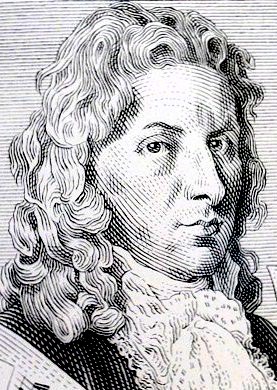
 Jan Václav Stamic (Johann Stamitz; 17 giugno 1717 - 1757): Concerto per organo e orchestra n. 4 in mi bemolle maggiore. Alena Veselá, organo; Orchestra da camera «Dvořák», dir. Vladimir Válek.
- Allegro
- Larghetto [6:13]
- Vivace [11:23]
Jan Václav Stamic (Johann Stamitz; 17 giugno 1717 - 1757): Concerto per organo e orchestra n. 4 in mi bemolle maggiore. Alena Veselá, organo; Orchestra da camera «Dvořák», dir. Vladimir Válek.
Sing all a green willow – Shakespeare’s cut
Anonimo (sec. XVI-XVII): The Willow Song. Duo Mignarda: Donna Stewart, voce; Ron Andrico, liuto.
The poor soul sat sighing by a sycamore tree,
Sing willow, willow, willow,
With his hand in his bosom and his head upon his knee,
O willow, willow, willow shall be my garland.
Sing all a green willow, willow, willow, willow;
Aye me, the green willow must be my garland!
He sighed to his singing, and made a great moan:
I am dead to all pleasure, my true love she is gone.
The mute bird sat by him was made tame by his moans,
The true tears fell from him would have melted the stones.
Come all you forsaken and mourn you with me.
Who speaks of a false love, mine’s falser than she.
Let love no more boast her in palace nor bower.
It buds, but it blasteth ere it be a flower.
Though fair and more false, I die with thy wound.
Thou hast lost the truest lover that goes upon the ground.
Let nobody chide her, her scorns I approve.
She was born to be false, and I to die for her love.
Take this for my farewell and latest adieu,
Write this on my tomb, that in love I was true.

 Dopo aver ascoltato la versione di Rossini e quella di Verdi, ecco la Canzone del salice « originale », ossia il ballad cantato da Desdemona nella 3a scena dell’atto IV dell’Otello scespiriano, come ci è stato tramandato da un manoscritto conservato nella British Library (Add. 15117, databile intorno al 1615). È una bella canzone triste, nello stile malinconico che era di moda nell’Inghilterra elisabettiana. Nei primi versi è ben descritta una persona afflitta da profonda malinconia, in una postura non molto dissimile da quella dell’angelo in una celebre incisione di Dürer (Melencolia I, 1514).
Da sottolineare che il comportamento di Desdemona contravviene alle consuetudini teatrali dell’epoca: era infatti considerato disdicevole che un personaggio di rango elevato si producesse in esibizioni canore sulla scena. Ma Desdemona è in preda a una forte agitazione, teme per la propria vita e teme ancora di più che Otello possa considerarla infedele: per questo motivo il suo canto — come del resto quello di Ofelia impazzita (Amleto IV:5) — poteva essere tollerato.
Con la Canzone del salice Shakespeare ha trovato il modo più efficace di rappresentare il turbamento di Desdemona, pervasa da presentimenti di morte ma ancora profondamente innamorata di Otello: nell’armonia, il continuo alternarsi di modo minore e maggiore rende musicalmente il contrasto dei suoi sentimenti, mentre nel testo la ripetizione insistita della parola willow (il salice è da sempre simbolo della tristezza d’amore) dà l’idea del suo intimo tormento.
 After listening to The Willow Song set to music by Rossini and by Verdi, here is now the « original » version, i.e. the ballad that Desdemona sings in Shakespeare’s Othello (act 4, scene 3): this piece has come down to us through a manuscript which is preserved in the British Library (Add. 15117, datable around 1615). It’s a beautiful sad song, in the melancholy style that was popular in Elizabethan England. The first stanza well describes a person afflicted by a profound melancholy, in a posture not unlike that took by the angel in a Dürer’s famous engraving (Melencolia I, 1514).
It should be noted that Desdemona’s behavior contravenes the theatrical customs of the time: it was in fact considered unbecoming for a high-ranking character to perform singing on stage. But Desdemona is in the throes of a strong agitation, she is in fear for her own life, and fears even more that Othello might believe her unfaithful: for this reason her singing — like that of Ophelia gone mad (Hamlet, act 4, scene 5) — can be tolerated.
With The Willow Song Shakespeare finds the most effective way of representing Desdemona’s turmoil, pervaded by forebodings of death but still deeply in love with Othello: the continuous alternation of minor and major modes musically renders the contrast of her feelings, while the insistent repetition of the word willow (a tree which has always been a symbol of love sadness) illustrates her inner torment.
Emil Sjögren (16 giugno 1853 - 1918): Sonata per violino e pianoforte n. 2 in mi minore op. 24 (1889). Nils-Erik Sparf, violino; Lucia Negro, pianoforte.

 Emil Rabe (1920 - 16 giugno 2013): Toccata per organo (1994). Carson Cooman.
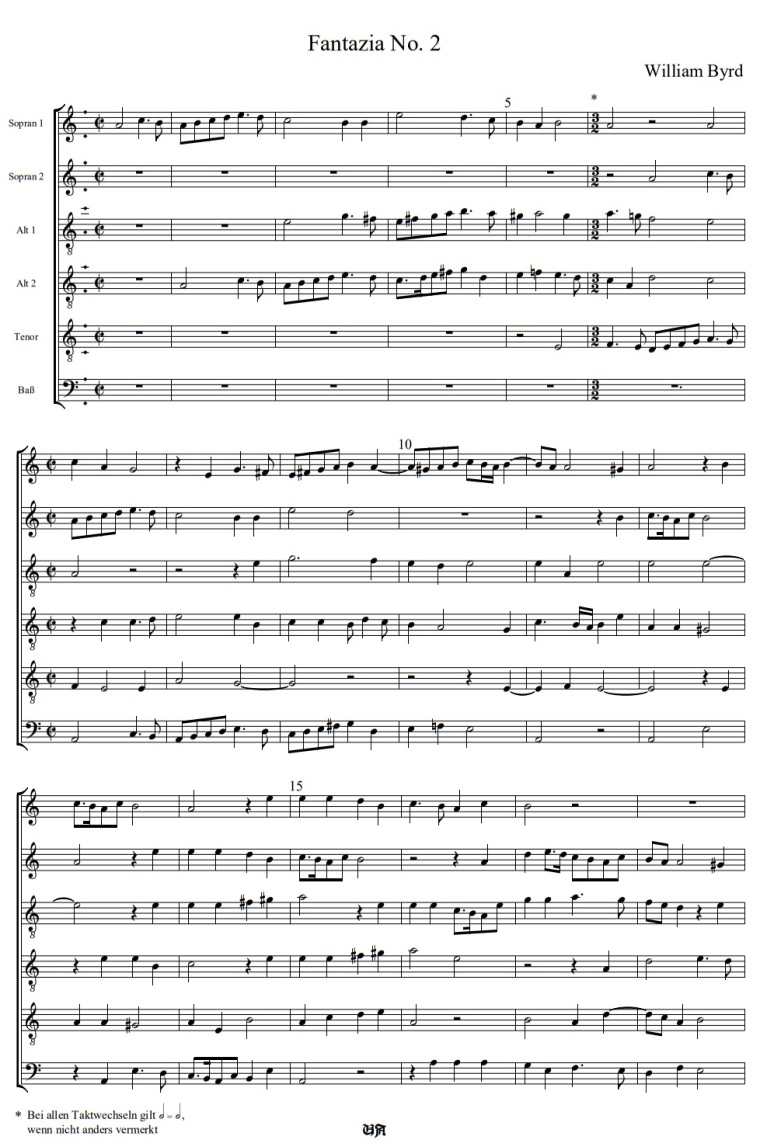
William Byrd (c1540 - 1623): Fantazia (no. 2) for six-part consort (published in Psalmes, songs, and sonnets, 1611). Rose Consort of Viols.
A splendid example of Byrd’s mastery of the art of counterpoint; Greensleeves quote begins at 3:08.
Ferenc Erkel (1810 - 15 giugno 1893): Ünnepi nyitány (Ouverture festiva, 1887). Orchestra filarmonica di Budapest, dir. Ádám Medveczky.

Sing all a green willow – II
Giuseppe Verdi (1813 - 1901): «Mi parea… Piangea cantando – Ave Maria», Canzone del salice dall’atto IV di Otello, dramma lirico in 4 atti su libretto di Arrigo Boito (1887). Maria Callas, soprano; Orchestre de la Societe des Concerts du Conservatoire, dir. Nicola Rescigno.
(La parte di Emilia è espunta.)
DESDEMONA:
Mi parea. M’ingiunse
di coricarmi e d’attenderlo. Emilia,
te ne prego, distendi sul mio letto
la mia candida veste nuzïale.
M’odi. Se pria di te morir dovessi
mi seppellisci con un di quei veli.
[…]
Son mesta tanto.
Mia madre aveva una povera ancella,
innamorata e bella;
era il suo nome
Barbara. Amava
un uom che poi l’abbandonò, cantava
un canzone: «La canzon del salice».
(ad Emilia.)
Mi disciogli le chiome…
Io questa sera ho la memoria piena
di quella cantilena.
Piangea cantando
nell’erma landa,
piangea la mesta…
O salce! salce! salce!
Sedea chinando
sul sen la testa!
O salce! salce! salce!
Cantiamo! il salce funebre
sarà la mia ghirlanda.
(ad Emilia.)
Affrettati; fra poco giunge Otello.
Scorreano i rivi fra le zolle in fior,
gemea quel core affranto,
e dalle ciglia le sgorgava il cor
l’amara onda del pianto.
O salce! salce! salce!
Cantiam la nenia blanda.
Cantiamo! Il salce funebre
sarà la mia ghirlanda.
Scendean augelli a vol dai rami cupi
verso quel dolce canto.
E gli occhi suoi piangevan tanto, tanto,
da impietosir le rupi.
(a Emilia, levandosi un anello dal dito.)
Riponi quest’anello.
(alzandosi.)
Povera Barbara! Solea la storia
con questo semplice suono finir:
Egli era nato per la sua gloria,
io per amarlo…
(ad Emilia interrompendo.)
Ascolta.
(Emilia fa qualche passo.)
Odo un lamento.
Taci. Chi batte a quella porta?
Io per amarlo e per morir.
Emilia, addio. Come m’ardon le ciglia!
È presagio di pianto.
(abbraccia Emilia che esce.)
Buona notte.
(va all’inginocchiatoio.)
Ave Maria, piena di grazia, eletta
fra le spose e le vergini sei tu,
sia benedetto il frutto, o benedetta,
di tue materne viscere, Gesù.
Prega per chi adorando a te si prostra,
prega nel peccator, per l’innocente,
e pe ‘l debole oppresso e pe ‘l possente,
misero anch’esso, tua pietà dimostra.
Prega per chi sotto l’oltraggio piega
la fronte e sotto la malvagia sorte;
per noi tu prega,
sempre e nell’ora della morte nostra.
(resta ancora inginocchiata ed appoggia la fronte
sull’inginocchiatoio come chi ripeta mentalmente
una orazione. Non s’odono che le prime e le ultime
parole della preghiera.)
Ave Maria… nell’ora della morte.
Amen!
(si alza e va a coricarsi.)

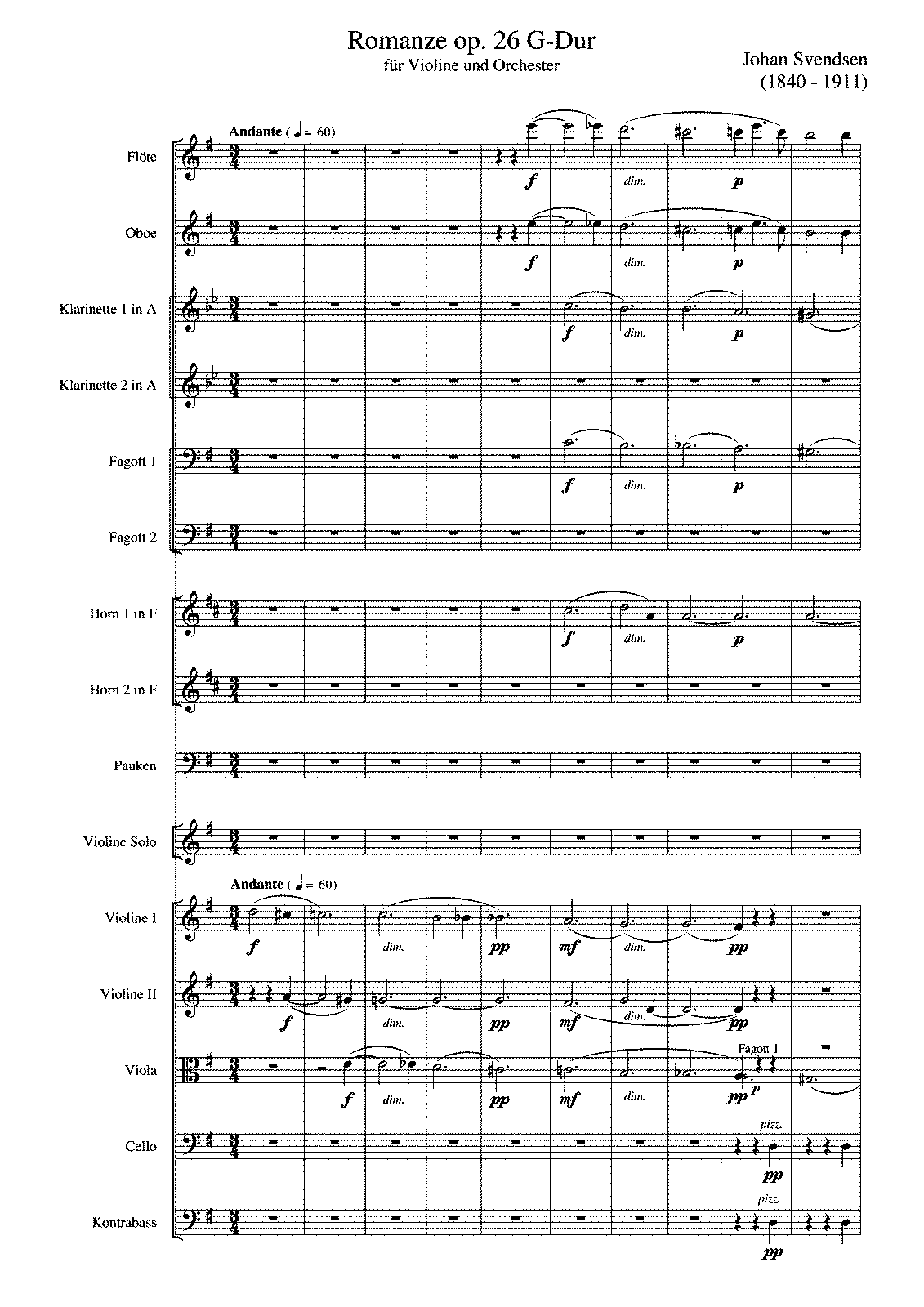
Johan Svendsen (1840 - 14 giugno 1911): Romanza in sol maggiore per violino e orchestra op. 26 (1881). Ørnulf Boye Hansen, violino; Orchestra Filarmonica di Oslo, dir. Øivin Fjelstad.
 Roel van Oosten (14 giugno 1958): Concerto per arpa e orchestra (1999). Godelieve Schrama, arpa; Radio Kamerorkest, dir. Micha Hamel.
I movimento
II movimento [10:24]
III movimento [15:18]
Sing all a green willow – I
Gioachino Rossini (1792 - 1868): «Assisa a pie’ d’un salice – Deh calma, o ciel, nel sonno», Canzone del salice e Preghiera dall’atto III di Otello, ossia Il moro di Venezia, dramma tragico in 3 atti su libretto di Francesco Berio di Salsa (1816). Montserrat Caballé, soprano (Desdemona); Corinna Vozza, mezzosoprano (Emilia); Orchestra della RCA Italiana, dir. Carlo Felice Cillario.
DESDEMONA:
Assisa a pie’ d’un salice,
immersa nel dolore,
gemea trafitta Isaura
dal più crudele amore:
l’aura tra i rami flebile
ne ripeteva il suon.
I ruscelletti limpidi
a’ caldi suoi sospiri,
il mormorio mesceano
de’ lor diversi giri:
l’aura fra i rami flebile
ne ripeteva il suon.
Salce, d’amor delizia!
Ombra pietosa appresta,
(di mie sciagure immemore)
all’urna mia funesta;
né più ripeta l’aura
de’ miei lamenti il suon.
Che dissi!… Ah m’ingannai!… Non è del canto
questo il lugubre fine. M’ascolta… Oh dio!
(un colpo di vento spezza alcuni vetri della finestra.)
EMILIA:
Non paventar; rimira:
impetuoso vento è quel che spira.
DESDEMONA:
Io credeva che alcuno… Oh come il cielo
s’unisce a’ miei lamenti!…
Ascolta il fin de’ dolorosi accenti.
Ma stanca alfin di spargere
mesti sospiri, e pianto,
morì l’afflitta vergine
ahi! di quel salce accanto.
Morì… che duol! l’ingrato…
Poté… ma il pianto oh Dio!
proseguir non mi fa. Parti, ricevi
da’ labbri dell’amica il bacio estremo.
EMILIA:
Oh che dici!… Ubbidisco… oh come io tremo!
DESDEMONA:
Deh calma, o ciel, nel sonno
per poco le mie pene,
fa, che l’amato bene
mi venga a consolar.
Se poi son vani i prieghi,
di mia breve urna in seno
venga di pianto almeno
il cenere a bagnar.
(ella cala la tendina e si getta sul letto.)
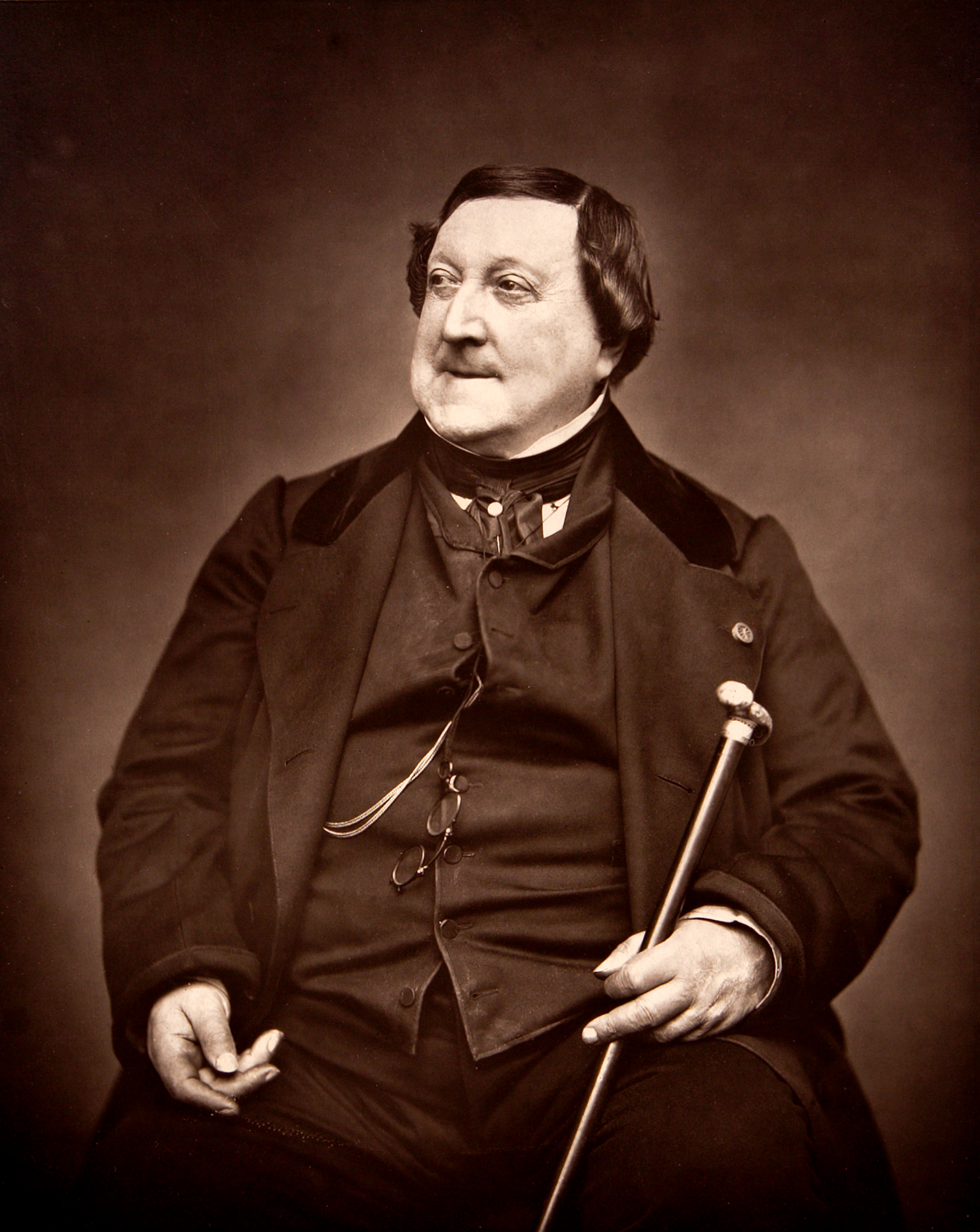
David Diamond (1915 - 13 giugno 2005): Rounds per archi (1944). The New York Classical Players, dir. Dongmin Kim.
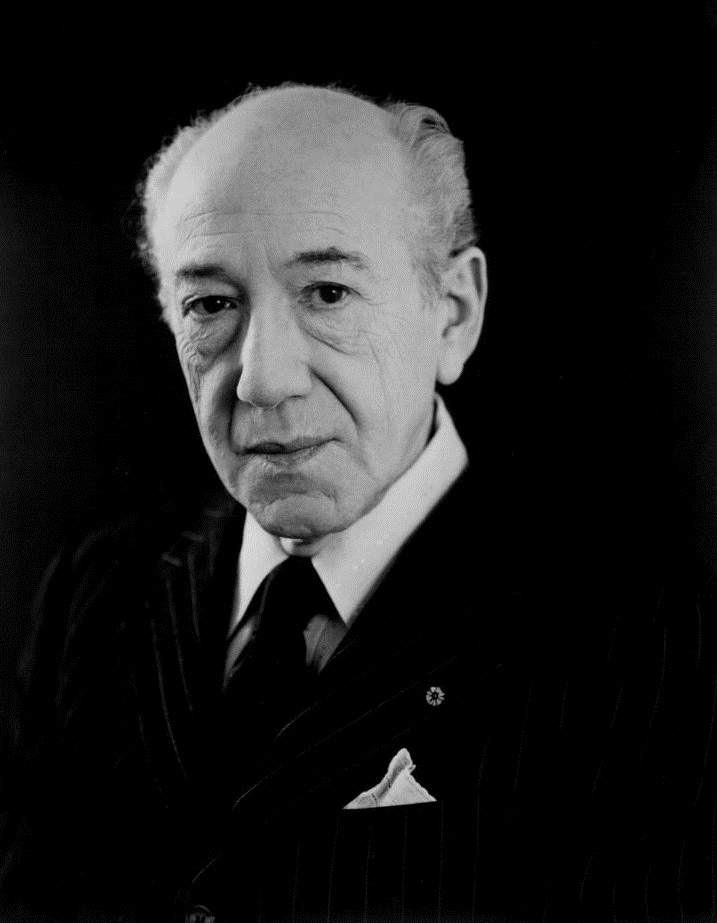
René Leibowitz (1913 - 1972): Greensleeves per arpa e archi. New Symphony Orchestra of London diretta dall’autore (registrazione del 1961).

Carson Cooman (12 giugno 1982): Conductus per organo portativo op. 1066 (2014); dedicato a Ernst Stolz. Esegue l’autore.
Il conductus è una delle forme caratteristiche della scuola polifonica cosiddetta «di Notre-Dame» (XII-XIII secolo).
Il portativo è un piccolo organo trasportabile, in uso fra il XII e la fine del XV secolo, dotato di un mantice, che l’esecutore aziona con la mano sinistra, di una tastiera con 9-12 (a volte 20 o più) tasti e di un numero limitato di canne, solitamente disposte su due file.

John Ireland (1879 - 12 giugno 1962): Decorations (1912-13). John Lenehan, pianoforte.

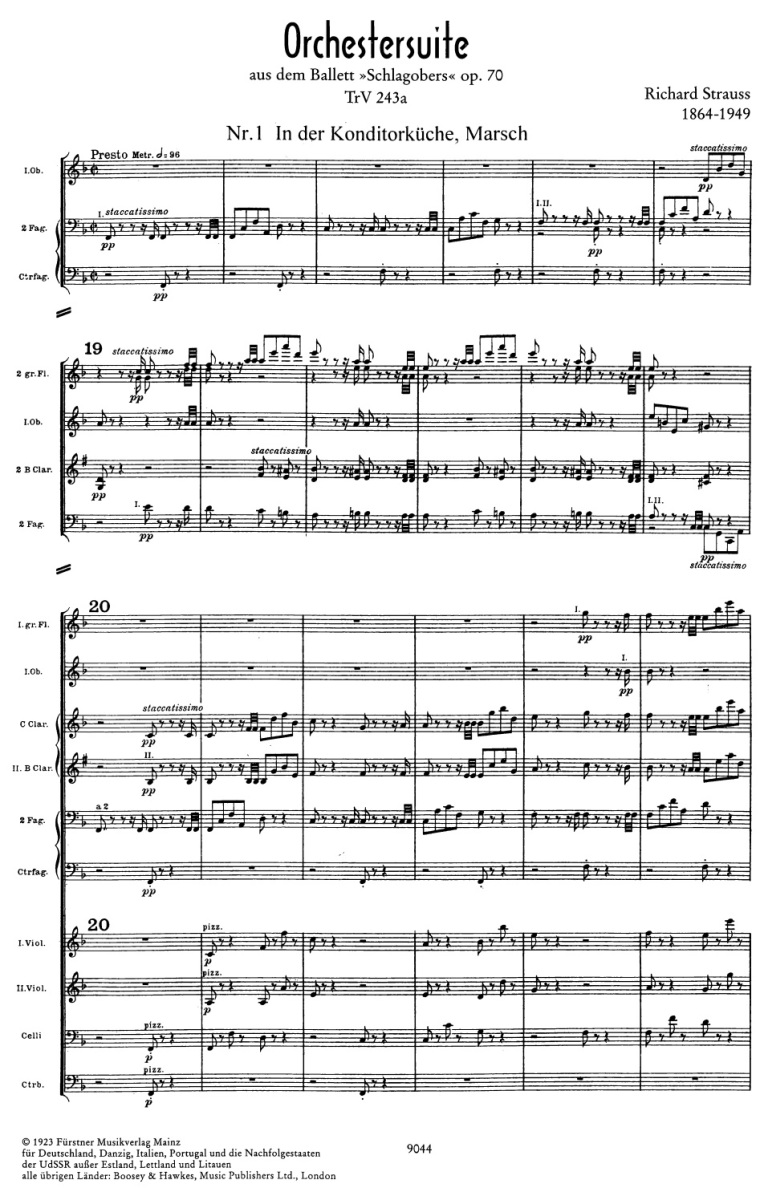
Richard Strauss (11 giugno 1864 - 1949): Suite dal balletto Schlagobers (1921-22). Orkiestra filharmonii narodowej w Warszawie (Orchestra filarmonica di Varsavia), dir. Jacek Kaspszyk.
Il balletto è ambientato a Vienna. Un gruppo di bambini dopo la cresima vengono accompagnati dalle rispettive madrine in una pasticceria del Prater, dove si abbuffano di ogni sorta di dolciumi: ne consegue inevitabile l’indigestione, sicché finiscono in ospedale. Durante la notte, i bambini sognano che tutti i dolcetti divorati il giorno prima prendono vita e danzano. La mattina successiva il medico constata la guarigione dei piccoli, che possono tornare ai loro giochi spensierati.
Giovanni Francesco Anerio (1569 - 11 giugno 1630): Torna la sera bruna, canzonetta spirituale (pubblicata nella raccolta Selva armonica dove si contengono motetti, madrigali, canzonette, dialogi, arie a una, doi, tre & quattro voci, 1617, n. 21) su testo di Agostino Manni. Concerto Romano, dir. Alessandro Quarta.
Torna la sera bruna
E in ciel luce la luna,
Che ’l mortal egro invita
Al sonno della vita.
Salva me, Signor forte,
Dal sonno della morte
E stammi sempre intorno,
Sinché ritorni il giorno.
Sia laude, gloria e canto
Al Padre, al Figlio e al santo
Spirto, che ’l ciel governa
Con legge sempiterna.

Tichon Chrennikov (10 giugno 1913 - 2007): Sonata per violoncello e pianoforte op. 34 (1989). Kyrill Rodin, violoncello; Anatolij Šeludjakov, pianoforte.
I movimento
II movimento [4:27]
III movimento [9:44]
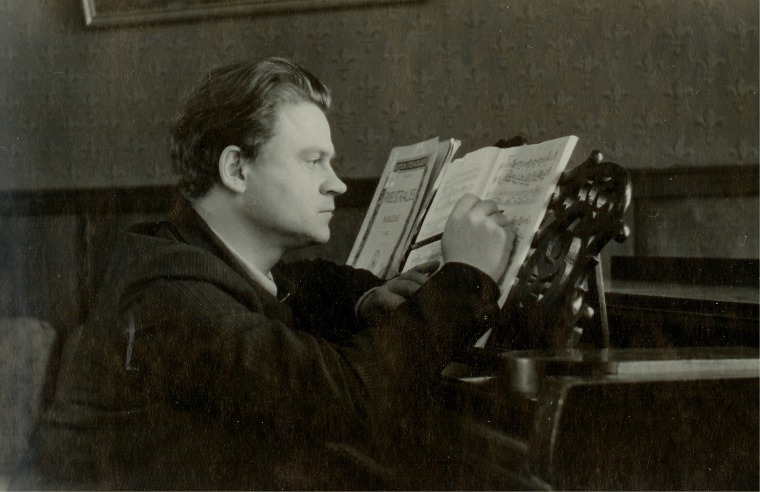
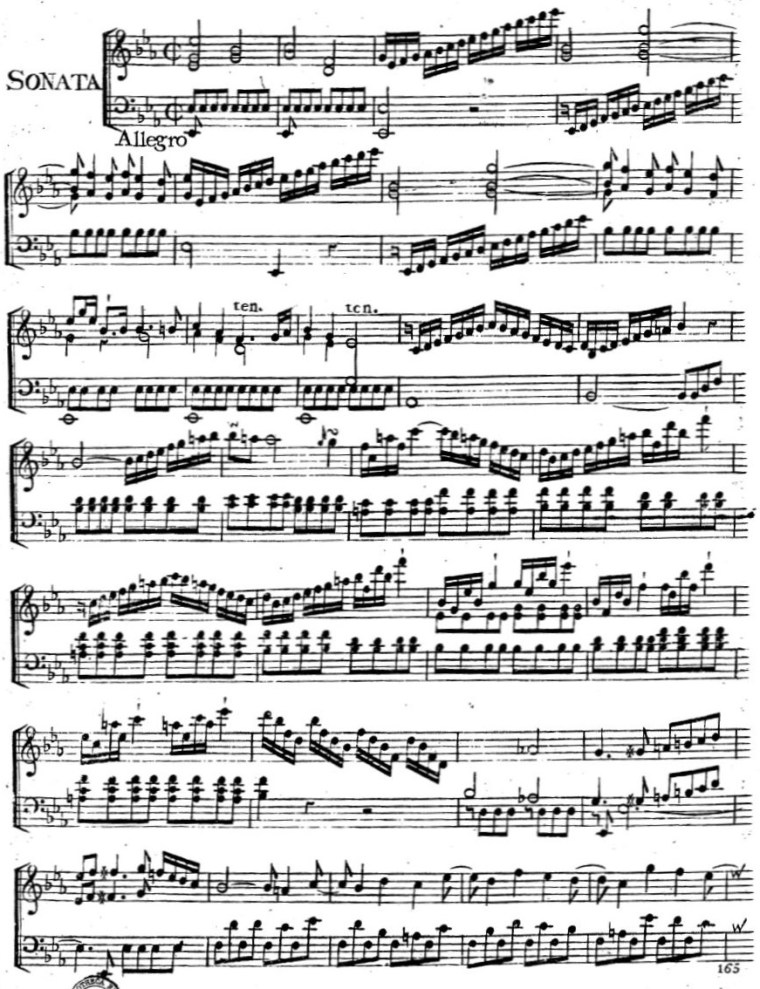
Johann Abraham Peter Schultz (1747 - 10 giugno 1800): Sonata in mi bemolle maggiore per pianoforte op. 2 (1778). Thοmаs Trοndhjеm.
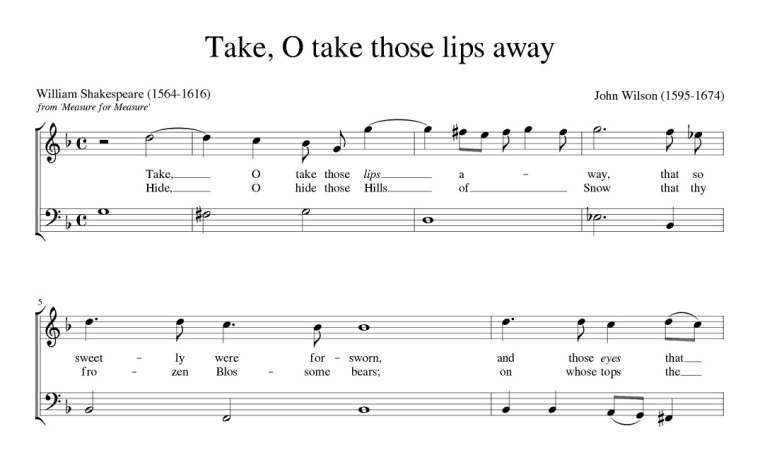
Take those lips away
Take, O take those lips away,
That so sweetly were forsworn;
And those eyes, the break of day,
Lights that do mislead the morn:
But my kisses bring again
Seals of love, though seal’d in vain.
Hide, O hide those hills of snow
That thy frozen bosom bears,
On whose tops the pinks that grow
Are yet of those that April wears,
But first set my poor heart free,
Bound in those icy chains by thee.
La prima strofa si trova nella commedia di Shakespeare Misura per misura (atto IV, scena 1a), rappresentata per la prima volta nel 1604; non sappiamo su quale melodia fosse cantata. Prima e seconda strofa sono nel dramma Rollo Duke of Normandy, or The Bloody Brother, scritto in collaborazione da John Fletcher, Philip Massinger, Ben Jonson e George Chapman in data imprecisabile (comunque non prima del 1612). Non è dato di sapere se la seconda strofe sia un’aggiunta di Fletcher oppure se tanto Shakespeare quanto Fletcher si siano rifatti a una canzone popolare in voga ai loro tempi.
Il testo è stato musicato da diversi autori. Il primo in ordine cronologico fu John Wilson (1595 - 1674), il quale nel 1614 succedette a Robert Johnson quale primo compositore dei King’s Men, la compagnia teatrale cui apparteneva Shakespeare. Ascoltiamo il suo lavoro in… versione shakespeariana (ossia limitata alla sola prima strofa) interpretata da Alfred Deller (voce) e Desmond Dupré (liuto); e poi nella versione integrale cantata dal soprano Anna Dennis, accompagnata da Hanneke van Proosdij al clavicembalo, Elisabeth Reed alla viola da gamba e David Tayler all’arciliuto.
The first stanza is featured in Shakespeare’s play Measure for Measure (act 4, scene 1), first represented in 1604; we do not know to what tune it was sung. Both the stanzas feature in the play Rollo Duke of Normandy, or The Bloody Brother, co-written by John Fletcher, Philip Massinger, Ben Jonson and George Chapman and performed at an unspecified date (though not earlier than 1612). It is not known whether the second stanza is an addition by Fletcher or whether both Shakespeare and Fletcher drew on a popular song in vogue in their time.
These verses have been set to music by various composers. The first in chronological order was John Wilson (1595 - 1674), who in 1614 succeeded Robert Johnson as principal composer for the King’s Men, the theater company to which Shakespeare belonged. Let’s listen to his work in… a Shakespearean version (i.e. the first stanza only) performed by Alfred Deller (voice) and Desmond Dupré (lute); and then in the complete version sung by soprano Anna Dennis, accompanied by Hanneke van Proosdij on harpsichord, Elisabeth Reed on viola da gamba and David Tayler on archlute.
John Weldon (1676 - 1736): Take, O take those lips away per voce e continuo (c1707). Emma Kirkby, soprano; Anthony Rooley, liuto.
Robert Lucas de Pearsall (1795 - 1856), Take, O take those lips away per coro a 5 voci a cappella op. 6 (1830). Cantores Musicæ Antiquæ, dir. Jeffery Kite-Powell.
Mrs H. H. A. Beach (Amy Marcy Cheney Beach, 1867 - 1944): Take, O take those lips away per voce e pianoforte, n. 2 dei Three Shakespeare Songs op. 37 (1897). Virginia Mims, soprano.
Peter Warlock (pseudonimo di Philip Heseltine, 1894 - 1930): Take, O take those lips away per voce e pianoforte (1916-17). Benjamin Luxon, baritono; David Willison, pianoforte.
Roger Quilter (1877 - 1953): Take, O take those lips away per voce e pianoforte, n. 4 dei Five Shakespeare Songs op. 23 (1921). Philippe Sly, basso-baritono; Michael McMahon, pianoforte.
Madeleine Dring (1923 - 1977): Take, O take those lips away per voce e pianoforte (c1950). Michael Hancock-Child, tenore; Ro Hancock-Child, pianoforte.
Emma Lou Diemer (1927): Take, O take those lips away, da Three Madrigals per coro e pianoforte (1960). The Colorado Chorale, dir. Frank Eychaner.
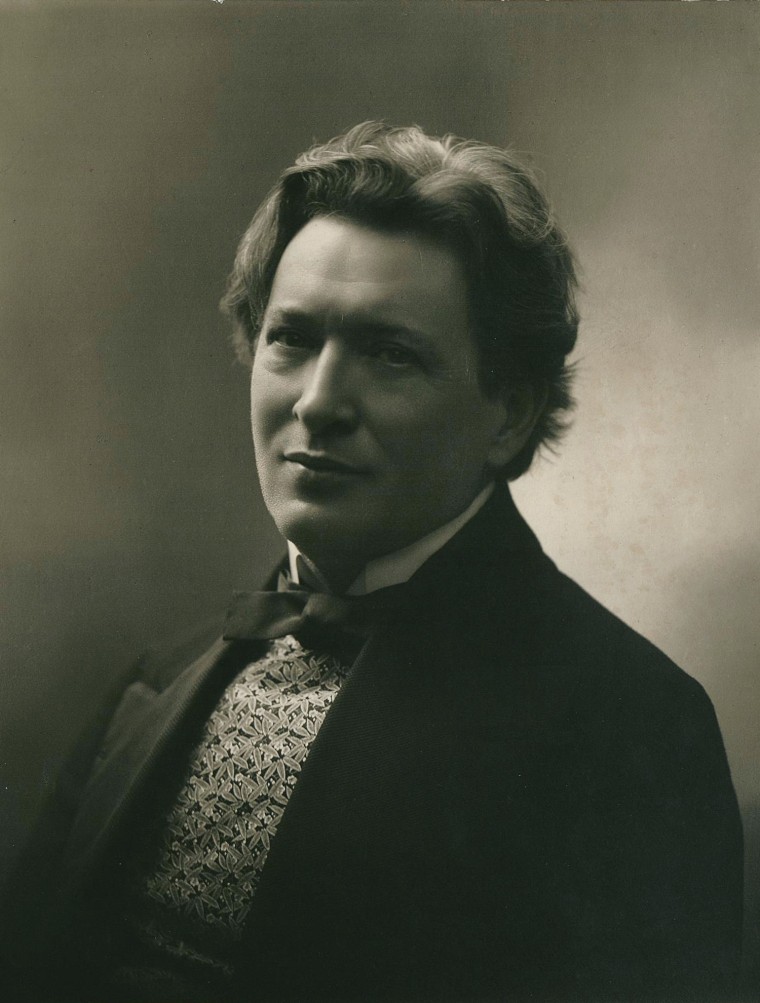
Charles Wuorinen (9 giugno 1938 - 2020): Microsymphony (1992). Philadelphia Orchestra diretta presumibilmente dall’autore.

 Albéric Magnard (9 giugno 1865 - 1914): Sinfonia n. 4 in do diesis minore op. 21 (1913). Orchestre du Capitole de Toulouse, dir. Michel Plasson.
Something rich and strange
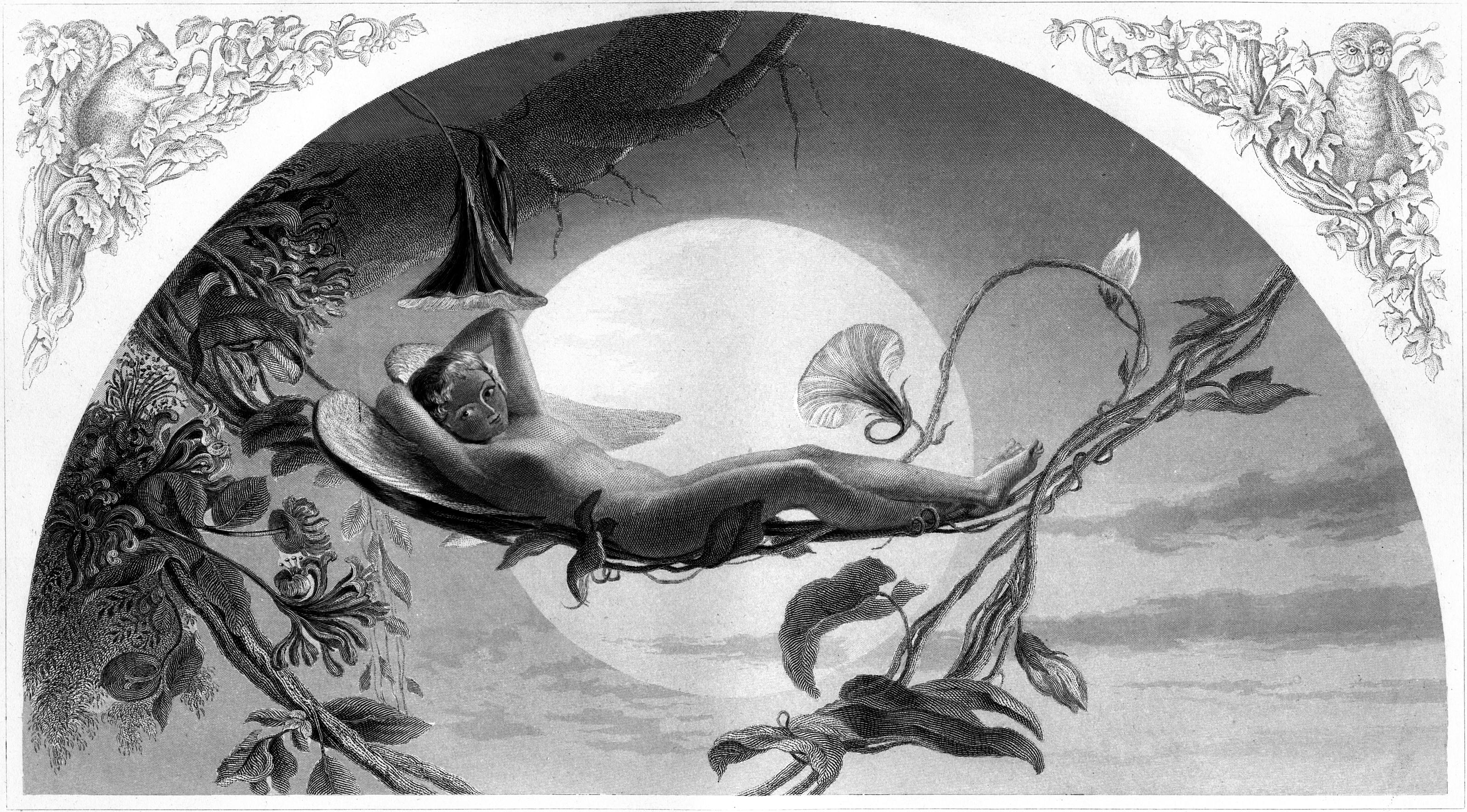
Due brani cantati da Ariele nella Tempesta (1610-11) di William Shakespeare:
– Full fathom five (atto I, scena 2a)
– Where the bee sucks (atto V, scena 1a)
La musica è di Robert Johnson (c1583 - 1633), il quale collaborò con Shakespeare scrivendo brani per i suoi ultimi drammi. Canta Alfred Deller, accompagnato al liuto da Desmond Dupré.
Two pieces sung by Ariel in Shakespeare’s The Tempest (1610-11):
– Full fathom five (act I, 2nd scene)
– Where the bee sucks (act V, 1st scene)
Music is by Robert Johnson (c1583-1633), who worked with Shakespeare providing music for his later plays. Alfred Deller, haute-contre; Desmond Dupré, lute.
Full fathom five thy father lies,
Of his bones are coral made,
Those are pearls that were his eyes:
Nothing of him that doth fade,
But doth suffer a sea-change
Into something rich and strange.
Sea-nymphs hourly ring his knell:
Hark! now I hear them:
Ding-dong, bell.
Where the bee sucks, there suck I,
In a cowslip’s bell I lie,
There I couch when owls do cry,
On the bat’s back I do fly
After summer merrily.
Merrily, merrily shall I live now
Under the blossom that hangs on the bough.
Karel Goeyvaerts (8 giugno 1923 - 1993): Zum Wassermann per 14 esecutori (1984). Ensemble SPECTRA.

Tomaso Albinoni (8 giugno 1671 - 1751): Concerto in si bemolle maggiore per oboe e archi op. 9 n. 11 (1722). Han de Vries, oboe; Alma Musica Amsterdam, dir. Bob van Asperen.

Ferruccio Busoni (1866 - 1924): Turandots Frauengemach, n. 4 delle 6 Elegien per pianoforte BV 249 (1907). Claudius Tanski.
« An amusing circumstance surrounds the fourth Elegy. According to Petri, someone had shown Busoni the melody Greensleeves, and had convinced him, or else Busoni had assumed, that it was an oriental tune » (Larry Sitsky).
Charles-Alexis Chauvet (7 giugno 1837 - 1871): Grand Chœur in do maggiore per organo (1863). Christoph Bartusek.
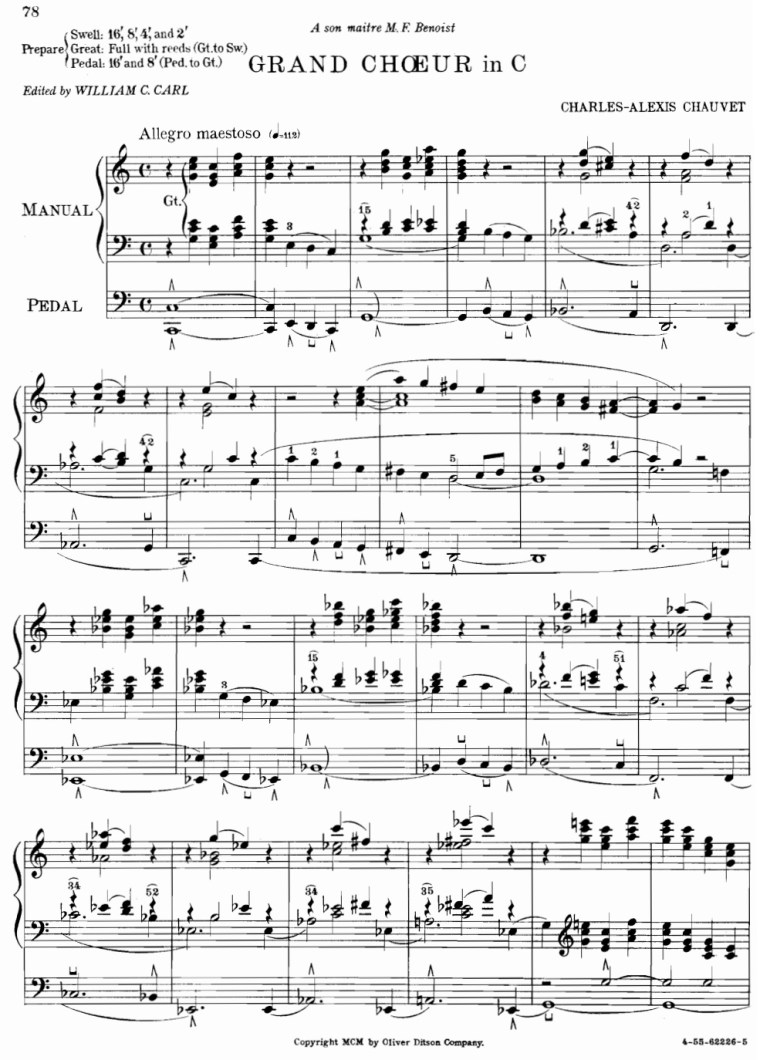
Giuseppe Demachi (7 giugno 1732 - c1791): Sinfonia in mi bemolle maggiore. Kurpfälzisches Kammerorchester, dir. Hans Oskar Koch.

Many sighs about nothing
Thomas Augustine Arne (1710 - 1778): Sigh no more, ladies, dalle musiche di scena (1748) per Much ado about nothing di W. Shakespeare (atto II, scena 3a).
– Versione per voce solista e orchestra d’archi: Alexander Young, tenore; Martin Isepp, clavicembalo; Wiener Rundfunkorchester, dir. Brian Priestman.
– Versione per 3 voci virili (TTB) a cappella: The Hilliard Ensemble.
Sigh no more, ladies, sigh no more.
Men were deceivers ever,
One foot in sea, and one on shore,
To one thing constant never.
Then sigh not so, but let them go,
And be you blithe and merry,
Converting all your sounds of woe
Into hey down derry.
Sing no more ditties, sing no more
Of dumps so dull and heavy.
The fraud of men was ever so
Since summer first was leavy.
Then sigh not so, but let them go,
And be you blithe and merry,
Converting all your sounds of woe
Into hey down derry.

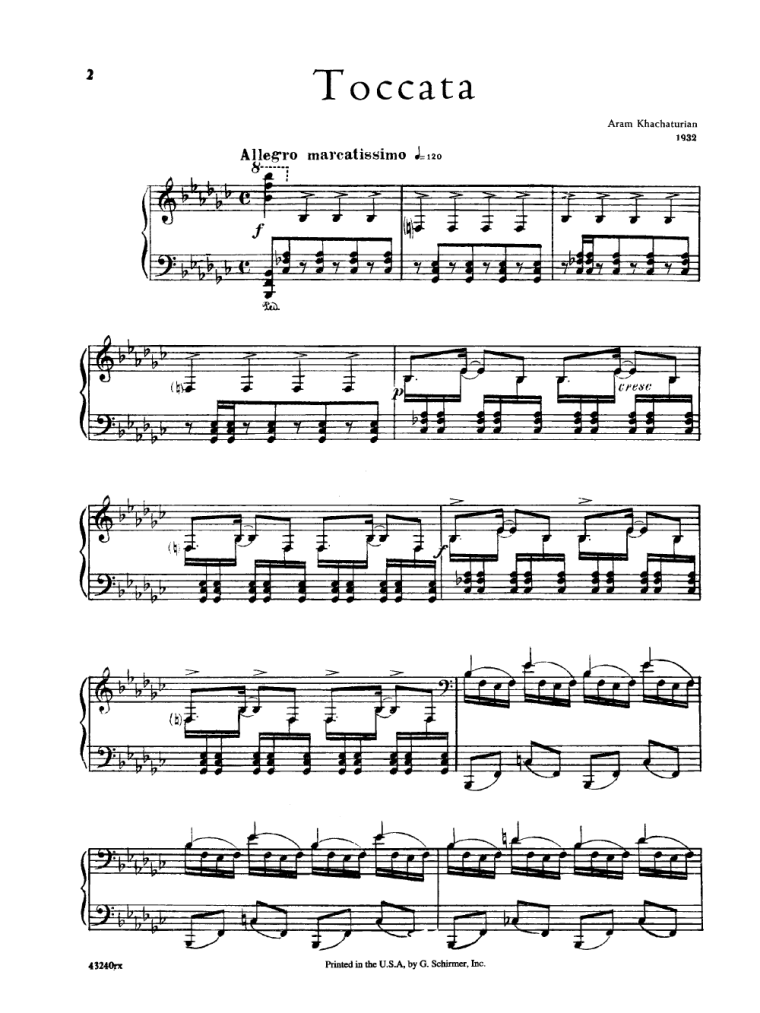
Aram Il’ič Chačaturjan (6 giugno 1903 - 1978): Toccata in mi bemolle minore per pianoforte op. 11 (1932). Murray McLachlan.
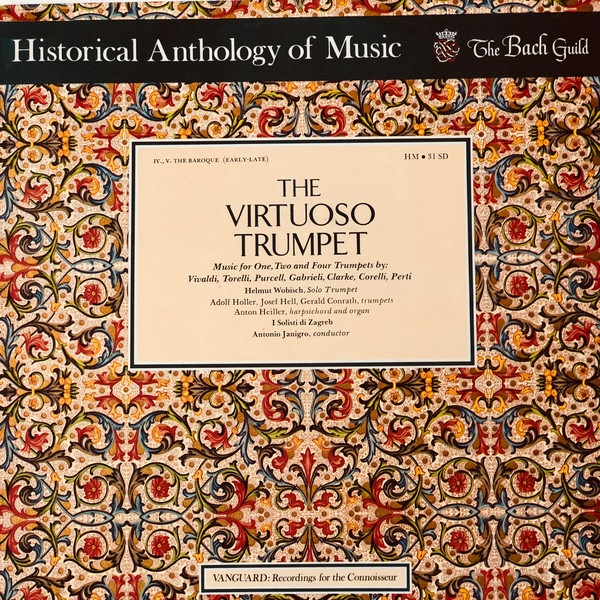
Giacomo Antonio Perti (6 giugno 1661 - 1756): Sonata per 4 trombe, archi e basso continuo. Helmut Wobisch, I tromba; I Solisti di Zagabria, dir. Antonio Janigro (registrazione del 1972).
Have a WordPress.com account? Log in now.

