Shakespeariana – XXII

Musick to heare

Igor Stravinsky (Igor’ Fëdorovič Stravinskij; 1882 - 1971): Three Songs from William Shakespeare for mezzo-soprano, flute, clarinet and viola (1953). Anna Molnár, mezzo-soprano; Annamária Bán, flute; Csaba Pálfi, clarinet; Péter Tornyai, viola.

  1. Musick to heare (Sonnet 8)

    Musick to heare, why hear’st thou musick sadly?
    Sweets with sweets warre not, ioy delights in ioy:
    Why lou’st thou that which thou receaust not gladly,
    Or else receau’st with pleasure thine annoy?
    If the true concord of well tuned sounds,
    By vnions married, do offend thine eare,
    They do but sweetly chide thee, who confounds
    In singlenesse the parts that thou should’st beare:
    Marke how one string sweet husband to an other,
    Strikes each in each by mutuall ordering;
    Resembling sier, and child, and happy mother,
    Who all in one, one pleasing note do sing:
      Whose speechlesse song being many, seeming one,
      Sings this to thee, thou single wilt proue none.

  2. Full fadom five (Ariel’s song from The Tempest) [3:07]

    Full fadom five thy Father lies,
     Of his bones are Corrall made:
    Those are pearles that were his eies,
     Nothing of him that doth fade,
    But doth suffer a Sea-change
    Into something rich, & strange:
    Sea-Nimphs hourly ring his knell.
      Ding dong ding dong.
    Harke now I heare them; ding dong bell.

  3. Spring (cuckoo’s song from Love’s Labour’s Lost) [4:43]

    When Daisies pied, and Violets blew,
    And Cuckow-buds of yellow hew,
    And Ladie-smockes all silver white,
    Do paint the Medowes with delight,
    The Cuckow then on everie tree
    Mockes married men; for thus sings he,
    Cuckow! Cuckow, Cuckow! O worde of feare,
    Unpleasing to a married eare.

La Chasse fantastique

Ernest Guiraud (26 giugno 1837 - 1892): La Chasse fantastique, poema sinfonico (1887) ispirato dalla Légende du beau Pécopin et de la belle Bauldour (1842) di Victor Hugo. Louisville Orchestra, dir. Jorge Mester.

La composizione segue fedelmente la descrizione della caccia nel racconto di Hugo, un passo del quale è citato da Guiraud in esergo sulla partitura:

« Al suono del corno, la foresta s’illumina, nei recessi più remoti, di mille luci straordinarie, di ombre che passano nella boscaglia, di voci lontane che gridano: a caccia! La muta abbaia, i cavalli nitriscono, gli alberi fremono come scossi dal vento. »

La pietate e’l desire

Leone Leoni (c1560 - 24 giugno 1627): Cor mio, deh, non languire, madrigale a 5 voci (pubblicato in Bell’Alba: quinto libro de madrigali a cinque voci, 1602, n. 9) su testo di Battista Guarini. The Consort of Musicke, dir. Anthony Rooley.

Cor mio, deh, non languire,
Che fai teco languir l’anima mia.
Odi i caldi sospiri: a te gl’invia,
La pietate e’l desire.
S’i’ ti potessi dar morendo aita,
Morrei per darti vita.
Ma vivi ohimé, ch’ingiustamente more,
Chi vivo tien ne l’altrui petto il core.

Greensleeves – XI

Valéry Sauvage interpreta la più antica versione conosciuta di Greensleeves (anonima, riportata dal manoscritto noto come William Ballet’s Lute Book, c1590-1603) insieme con le variazioni composte da Francis Cutting (c1550 - 1595/96).

Valéry Sauvage performs the earliest known version of Greensleeves (anonymous, found in a manuscript known as the William Ballet’s Lute Book, c1590-1603) and the variations by Francis Cutting (c1550 - 1595/96).

Sull’arpa a dieci corde e sulla lira

Tobias Michael (23 giugno 1592 - 1657): Das ist ein kostlich Ding per voce, flauto e basso continuo (pubblicato in Musikalische Seelenlust, vol. II, 1636). Ensemble Circa 1500, dir. Nancy Hadden.

Das ist ein köstlich Ding, dem Herren danken
und lobsingen deinem Namen, du Höchster.
Des Morgens deine Gnade und des Nachts deine Wahrheit verkündigen.
Auff den zehen Seiten und Psalter mit Spielen auff der Harffen.
Denn, Herr, du lässest mich frölich singen von deinen Wercken,
und ich rühme die Geschäffte deiner Hände.

Shakespeariana – XXI

…und Julia

Heinrich Sutermeister (1910 - 1995): Symphonic Suite from the opera Romeo und Julia (1940). Royal Philharmonic Orchestra; Rainer Held, conductor.

  1. Fanfares Summon the Guests to a Feast at the Capulets: Presto vivace
  2. Music of the Feast: Più mosso
  3. Juliet Dances with Paris: Andante con grazia
  4. Climax of the Masked Ball: Allegro molto
  5. Sarabande: Andante molto sostenuto
  6. Fairy Mab: Presto grazioso
  7. Finale: Adagio

Shakespeariana – XX

Symphonic Hamlet

Franz Liszt (1811 - 1886): Hamlet, symphonic poem no. 10 (1858). London Philharmonic Orchestra; conductor: Bernard Haitink.


Pëtr Il’ič Čajkovskij (1840 - 1893): Hamlet, ouverture op. 67a (1889). London Symphony Orchestra; conductor: Valerij Gergiev.


Heinz Tiessen (1887 - 1971): Hamlet-Suite op.30 (1922). Rundfunk-Sinfonieorchester Berlin; conductor: Israel Yinon.

  1. Vorspiel
  2. Ophelias Tod [7:12]
  3. Totenmarsch [11:34]

Delacroix, Hamlet Eugène Delacroix: Hamlet et Horatio au cimetière (1839), Paris, Louvre
Aria – I

Jehan Alain (1911 - 20 giugno 1940): Aria per organo JA 138 (1939). Marie-Claire Alain.

Suggestiva composizione dedicata a Noëlie Pierront, che ne diede la 1a esecuzione il 23 marzo 1941 in Saint-Germain-des-Prés a Parigi.
Di questa Aria si trovano in rete alcune registrazioni in una versione per flauto e organo: si tratta di un adattamento non originale, opera del fratello minore di Jehan, Olivier (1918 - 1994).


Disegno di Jehan Alain

Shakespeariana – XIX Greensleeves – X

Falstaff in Love

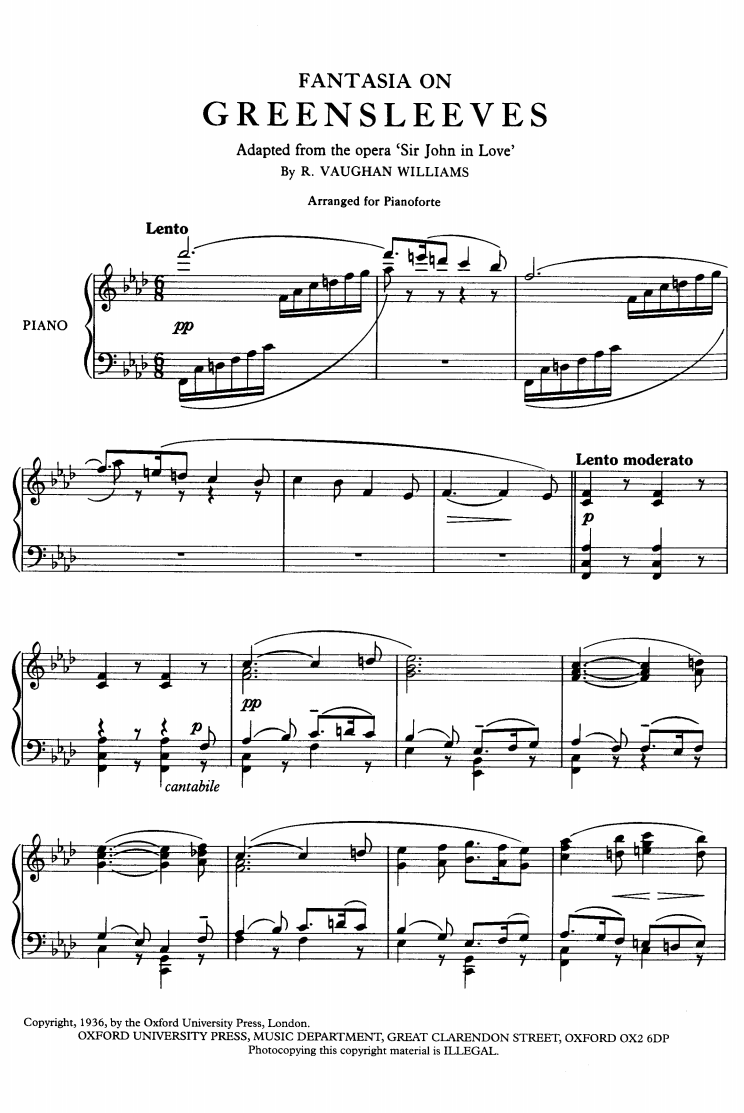
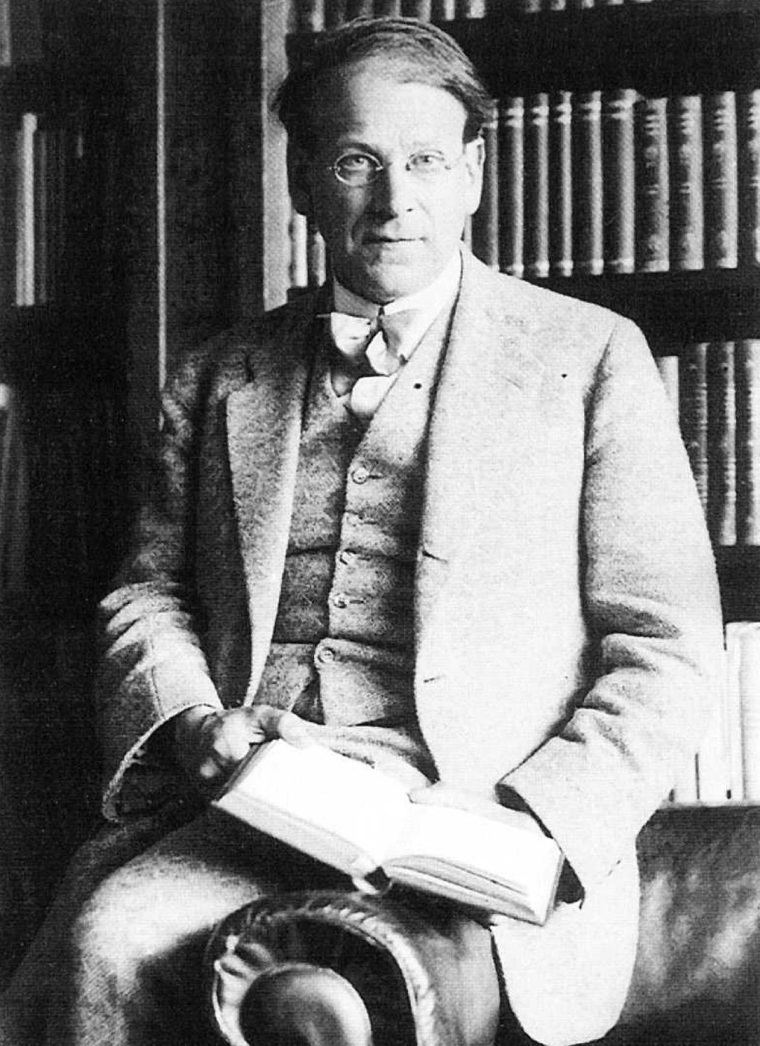
Ralph Vaughan Williams (1872 - 1958): Fantasia on Greensleeves for flute, harp and strings. Philadelphia Orchestra; conductor: Eugene Ormandy.

La Fantasia on Greensleeves è in realtà un arrangiamento, realizzato nel 1934 da Ralph Greaves con l’approvazione di Vaughan Williams, di un brano dell’opera Sir John in Love (1929), basata sulla commedia di Shakespeare Le allegre comari di Windsor. Utilizza non solo il ballad cui si allude nel titolo, ma anche una melodia tradizionale intitolata Lovely Joan, che Vaughan Williams aveva ascoltato nel Suffolk.

The Fantasia on Greensleeves is actually an arrangement, made in 1934 by Ralph Greaves with the approval of Vaughan Williams, of a piece from the opera Sir John in Love (1929), based on Shakespeare’s play The Merry Wives of Windsor. It uses not only the ballad alluded to in the title, but also a traditional tune called Lovely Joan, which Vaughan Williams heard in Suffolk.

Dalla prima all’ultima

Jacques Offenbach (20 giugno 1819 - 1880): Die Rheinnixen, ouverture (1864). The Gulbenkian Orchestra, dir. Michel Swierczewski.

Oltre alle operette per cui è famoso, Offenbach scrisse due opere «serie». La prima, Les Fées du Rhin, composta su libretto di Charles-Louis-Étienne Nuitter, Offenbach vivente fu rappresentata solo a Vienna nel 1864 con il titolo di Die Rheinnixen e libretto tradotto in tedesco da Alfred von Wolzogen; ma fu un allestimento poco fortunato: l’opera andò in scena in forma ridotta a causa di un’indisposizione del tenore Alois Ander, che vi avrebbe dovuto sostenere uno dei ruoli principali. La prima rappresentazione integrale, con il libretto originale francese, è del 2002.
Offenbach riutilizzò due brani delle Fées nella sua seconda e ultima opera, Les contes d’Hoffmann, rappresentata postuma nel 1881. Il più famoso dei due, lo «Chant des Elfes» citato anche nell’ouverture, diventò la barcarola («Belle nuit, ô nuit d’amour») cantata da Nicklausse e Giulietta all’inizio del IV atto, ambientato a Venezia.

Dopo il «Galop infernal» di Orphée aux enfers, questa barcarola è senz’altro la più celebre composizione di Offenbach. Qui è eseguita da Elīna Garanča e Anna Netrebko accompagnate dall’Orchestra filarmonica di Praga diretta da Emmanuel Villaume.

Belle nuit, ô nuit d’amour,
Souris à nos ivresses,
Nuit plus douce que le jour,
Ô belle nuit d’amour!
Le temps fuit et sans retour
Emporte nos tendresses
Loin de cet heureux séjour.
Le temps fuit sans retour.
Zéphyrs embrasés.
Versez-nous vos caresses.
Zéphyrs embrasés,
Donnez-nous vos baisers.

JO
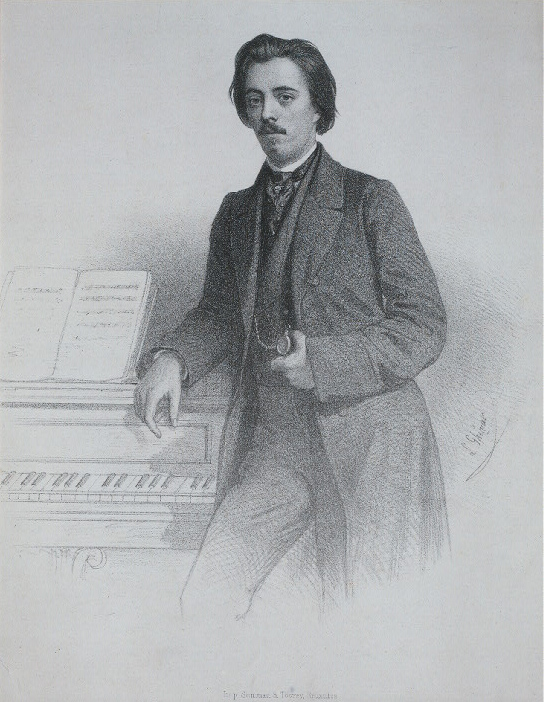
Jacques Offenbach
(disegno di Alexandre Laemlein, 1850. © Gallica-BnF)

Shakespeariana – XVIII

Prospero’s incantations

Egon Wellesz (1885 - 1974): Prosperos Beschwörungen, 5 symphonische Stücke nach Shake­speares „Der Sturm“ op. 53 (1934-36). Wiener Philharmoniker, dir. Bernard Haitink.

  1. Prosperos Beschwörung: Molto sostenuto
  2. Ariel und der Sturm: Leicht bewegt [5:13]
  3. Ariels Gesang: Tranquillo [10:30]
  4. Caliban: Unruhig [16:15]
  5. Ferdinand und Miranda: Sehr breit und ruhevoll – Prosperos Epilog. Misterioso [21:44]

Alhambra-Sonate

Heinrich Schulz-Beuthen (19 giugno 1838 - 1915): Alhambra-Sonate in fa diesis maggiore per pianoforte op. 34 (1878-82). Kirsten Johnson.

  1. Auf dem Wege zur Alhambra
  2. Bei der Marienkirche (Procession) [6:10]
  3. Eintritt in die Alhambra [11:40] – attacca:
  4. Die Abenceragen (Kampfspiel) [16:24] – attacca:
  5. Im Garten Xeneralife (Liebesscene) [22:43]
  6. Nachklänge [32:35]

Rondò moderato

Ignaz Joseph Pleyel (18 giugno 1757 – 1831): Sinfonia concertante in si bemolle maggiore per violino, viola e orchestra op. 35 (1791). Cornelia Loscher, violino; Johannes Flieder, viola; Camerata Pro Musica, dir. Paul Weigold.

  1. Allegro
  2. Rondò: Moderato [12:54]

Le Temps et l’écume

Gérard Grisey (17 giugno 1946 - 1998): Le Temps et l’écume per 4 percussionisti, 2 sintetizzatori e orchestra da camera (1989). Ensemble S; Paulo Alvares e Benjamin Kobler, sintetizzatori; WDR Sinfonieorchester Köln, dir. Emilio Pomarico.