En fais et dictz, en chansons et accords

Claudin de Sermisy (c1490 - 1562): Tant que vivray, chanson a 4 voci (pubblicata nella raccolta Chansons nouvelles, 1527, n. 2) su testo di Clément Marot (L’Adolescence clémentine, Chanson XII). Ensemble «Clément Janequin».

Tant que vivray en âge florissant,
Je serviray d’Amour le dieu [roy] puissant,
En fais et dictz, en chansons et accords.
Par plusieurs jours m’a tenu languissant,
Mais apres dueil m’a faict resjouyssant,
Car j’ay l’amour de la belle au gent corps.
Son alliance
Est ma fiance:
Son cueur est mien,
Mon cueur est sien;
Fy de tristesse,
Vive lyesse,
Puis qu’en amour a tant de bien.

Quand je la veulx servir et honnorer,
Quand par escriptz veulx son nom décorer,
Quand je la veoy et visite souvent,
Les envieulx n’en font que murmurer,
Mais nostre amour n’en sçauroit moins durer:
Aultant ou plus en emporte le vent.
Maulgré envie
Toute ma vie
Je l’aymeray,
Et chanteray:
C’est la première,
C’est la dernière,
Que j’ay servie et serviray.


L’approfondimento
di Pierfrancesco Di Vanni

Claudin de Sermisy, un musicista per quattro re

Claudin de Sermisy viene ricordato come un influente compositore francese del Rinascimento, il cui nome deriva probabilmente dal suo luogo di nascita, Sermaize nell’Oise. La sua lunga e prestigiosa carriera si svolse principalmente al servizio di ben quattro sovrani francesi: Luigi XII, Francesco I, Enrico II e Francesco II, ricoprendo i ruoli di cantore e, successivamente, di maestro di cappella.

Primi passi e formazione. Ingresso nella Cappella Reale e primi benefici
Le informazioni sulla sua infanzia sono scarse, ma è documentato il suo ingresso come enfant de chœur nella Sainte-Chapelle di Parigi già nel 1508. Nel 1510, figura come cantante nella cappella privata della regina Anna di Bretagna. Nel 1514, probabilmente dopo la morte della regina, Sermisy divenne cantore nella cappella reale, servendo sotto Luigi XII e poi Francesco I. La sua carriera ecclesiastica iniziò parallelamente, con la nomina a canonico nella diocesi di Noyon il 30 gennaio 1516. Ottenne anche il beneficio del priorato di Saint-Jean de Bouguennec (diocesi di Nantes) e richiese al papa dispense per cumulare benefici altrimenti inconciliabili.

Presenza in eventi storici e incarichi ecclesiastici. Ritorno a Parigi e ruolo di vice-maestro
Sermisy partecipò come cantante ai negoziati di pace tra il Papa Leone X e Francesco I a Bologna nel dicembre 1515, ricevendo dispense papali e il canonicato a Noyon poco dopo. Si ipotizza la sua presenza anche alle sfarzose celebrazioni dell’incontro del Campo del Drappo d’Oro nel 1520. Successivamente, divenne canonico di Notre-Dame-de-la-Rotonde a Rouen, carica che lasciò nel 1524 per un’altra a Camberon (diocesi di Amiens). Nel 1532, Sermisy tornò a Parigi come vice-maestro della musica della cappella reale, allora diretta dal cardinale de Tournon. In questa veste, era responsabile dell’educazione musicale dei pueri cantus, della conservazione dei libri di musica e del reclutamento dei coristi, percependo un salario annuo iniziale di 400 lire tornesi. Dal 20 settembre 1533, cumulò questa posizione con quella di canonico prebendato della Sainte-Chapelle, mantenendola fino alla morte. Rimase al servizio dei re di Francia almeno fino al 1554, anno in cui gli fu concessa anche la prebenda di Sainte-Catherine de Troyes.

Ultimi anni, prosperità e morte
È possibile che abbia partecipato alle cerimonie del secondo incontro tra i re di Francia e Inghilterra a Boulogne nel 1532. Possedeva una casa a Parigi sufficientemente grande da ospitare i chierici fuggiti da Saint-Quentin nel 1559. Il suo stipendio come vice-maestro aumentò progressivamente (600 lire nel 1543, 700 nel 1547), cui si aggiungevano i cospicui redditi derivanti dai suoi numerosi canonicati (ne ricevette 13) e altre prebende. Claudin de Sermisy morì a Parigi il 13 ottobre 1562, vittima di un’epidemia di peste, e fu sepolto nella cappella bassa della Sainte-Chapelle. Il suo amico ed ex allievo Pierre Certon ne cantò le lodi in un poema.

Opera musicale: un lascito di fama imperitura
Sermisy godette di un’enorme reputazione durante la sua vita, venendo considerato dai contemporanei uno dei massimi maestri del suo tempo, al pari di Josquin Despres. La maggior parte delle sue opere è pubblicata nell’edizione critica Claudin de Sermisy, Opera omnia. La sua cospicua produzione di musica sacra iniziò a essere pubblicata a partire dal 1542, nella seconda fase della sua carriera.
È autore di 13 messe polifoniche (incluso un Requiem), per lo più a quattro voci, oltre a un Kyrie e un Credo isolati. Stampate principalmente tra il 1556 e il 1568 (molte da Nicolas du Chemin a Parigi), sono in gran parte messe-parodia, basate cioè su temi di opere preesistenti. Sermisy attinse spesso ai propri mottetti (Missa «Domini est terra», Missa «Tota pulchra est») e chansons, ma anche a composizioni di altri musicisti (Missa «Voulant honneur», su una chanson di Sandrin). Il suo stile, pur ereditando elementi dalla scuola franco-fiamminga e da Josquin (raggruppamento delle voci a coppie, imitazioni), li alleggerisce con passaggi più omofonici e melodie semplificate, favorendo la chiarezza del testo e mostrando l’influenza dello stile della chanson sulla sua musica sacra.
Si conoscono anche circa 80 mottetti (da 3 a 6 voci, ma prevalentemente a 4), comprese tre lezioni delle tenebre e una decina di magnificat a quattro voci negli otto toni. Questi si trovano in varie raccolte e in tre monografie dedicate (P. Attaingnant, 1542 e 1548; Adrian Le Roy et Robert Ballard, 1555). Compose anche una Passione secondo San Matteo, una delle più antiche passioni polifoniche conservate.
Le sue circa 170 chansons, infine, furono pubblicate prima della sua musica sacra e composte in gran parte prima del 1536. Come musicista di corte, mise in musica poesie di celebri autori come Clément Marot (ben 30), Francesco I, Margherita di Navarra, François de Tournon e altri. Le sue chansons, generalmente brevi e a 4 voci, godettero di un successo immediato. Si caratterizzano per melodie ben delineate, ritmo variegato, un frequente inizio omofonico, scrittura prevalentemente sillabica e un uso molto discreto del figuralismo (tecnica di rappresentazione musicale del testo). Sermisy ricevette elogi da letterati come Maître Mitou (Jean Daniel), Rabelais e Ronsard.

Tant que vicray: analisi
Pubblicata nel 1527 nella raccolta Chansons nouvelles dall’editore Pierre Attaingnant, questa composizione a 4 voci mette in musica un testo del poeta Clément Marot. Incarna perfettamente lo stile della chanson cosiddetta “parigina” del primo XVI secolo: elegante, chiara, melodicamente accattivante e con una stretta aderenza al testo.
La poesia di Marot è un’espressione gioiosa e devota dell’amore cortese. Nella prima strofa, l’amante dichiara la sua intenzione di servire il dio Amore, finché vivrà, attraverso azioni, parole, canti e musica. Riconosce un periodo di sofferenza passata, ma celebra la gioia attuale derivante dall’amore ricambiato della sua bella. La seconda parte della strofa, con versi più brevi, assume un tono più intimo e assertivo, quasi un motto: l’alleanza con l’amata è la sua fiducia, i loro cuori sono uniti. Si conclude con un rifiuto della tristezza e un’esaltazione della letizia, data la grande felicità che l’amore porta.
Nella seconda strofa, invece, l’amante descrive le sue azioni devote verso l’amata: servirla, onorarla, celebrare il suo nome per iscritto e visitarla spesso. Nonostante le maldicenze degli invidiosi, il loro amore è saldo e non ne viene scalfito. La seconda parte, simile alla prima strofa, ribadisce la fedeltà per tutta la vita, nonostante l’invidia altrui. L’amata è la prima e l’ultima che ha servito e servirà.
Il tono è positivo, celebrativo e fiducioso. La struttura di ogni strofa, con una prima parte narrativa seguita da versi più brevi e incisivi, suggerisce una possibile differenziazione musicale. La chanson è in forma strofica, il che significa che la stessa musica viene utilizzata per entrambe le strofe del test. Analizzando una singola strofa, la sua struttura musicale può essere delineata come AABC.
La prima occorrenza della sezione A copre i primi tre versi della poesia. La musica è fluida, con una melodia chiara e memorabile. La seconda occorrenza ripete esattamente la musica precedente per i successivi tre versi. Questa ripetizione musicale rafforza l’unità della prima parte della strofa poetica.
La seconda sezione mette in musica i quattro brevi versi successivi. Si nota un cambiamento di carattere: la musica qui è spesso più concisa e ritmicamente definita, riflettendo la natura più assertiva e quasi sentenziosa del testo. Le frasi sono più brevi e le cadenze più frequenti. I restanti tre versi brevi formano la sezione conclusiva. Questa sezione porta la strofa a una chiusura soddisfacente, spesso con un carattere affermativo e gioioso, in particolare sulla parola lyesse (letizia).
Sermisy impiega quattro voci (tipicamente superius, contratenor altus, tenor e bassus). La caratteristica predominante della tessitura è l’omofonia o, più precisamente, l’omoritmia: tutte le voci tendono a muoversi insieme ritmicamente, cantando le stesse sillabe nello stesso momento. Questo approccio garantisce una straordinaria chiarezza del testo, un tratto distintivo della chanson parigina, in contrasto con la più complessa polifonia imitativa tipica del mottetto o della chanson franco-fiamminga dell’epoca precedente. L’effetto è quello di un’armonia piena e sonora, dove le voci si fondono in accordi chiari e ben definiti.
La melodia principale è affidata alla voce superiore (superius), come consuetudine nella chanson parigina. È aggraziata, cantabile e ben costruita, caratterizzata prevalentemente dal moto per gradi congiunti, con intervalli più ampi usati con parsimonia e generalmente per effetti espressivi o per delineare l’inizio di una nuova frase. La melodia si adatta perfettamente alla prosodia della lingua francese, seguendo l’accentazione naturale delle parole. La sua semplicità apparente nasconde una grande raffinatezza artigianale.
L’armonia è diatonica e prevalentemente consonante. Sermisy utilizza un linguaggio armonico che, pur essendo modale, anticipa per certi versi la tonalità funzionale. Le cadenze sono chiare e ben posizionate, sottolineando la fine di ogni verso poetico e delle sezioni musicali, contribuendo a dare un senso di direzione e coesione all’intera composizione. L’armonia crea un tessuto sonoro ricco ma trasparente, privo di asprezze e molto gradevole all’ascolto.
Il ritmo della chanson segue la declamazione naturale del testo francese. È generalmente fluido e scorrevole. Il metro è prevalentemente binario, ma con la flessibilità tipica della musica rinascimentale, dove il flusso testuale può influenzare sottili variazioni agogiche. Nella sezione B e soprattutto nella C, in corrispondenza dei versi più brevi ed esclamativi, il ritmo diventa leggermente più marcato o vivace.
Sebbene la chanson parigina non faccia un uso estensivo del madrigalismo esplicito come la musica italiana coeva, Sermisy dimostra una sensibile attenzione al significato del testo. Il carattere generale della musica è gioioso, elegante e sereno, rispecchiando perfettamente il tono della poesia di Marot. La parola languissant (languente) nella sezione A è spesso resa con note leggermente più lunghe o un movimento melodico più dolce, suggerendo sottilmente lo stato d’animo. Al contrario, resjouyssant (rallegrante) e soprattutto Vive lyesse (viva la letizia) nella sezione C sono spesso caratterizzate da un andamento melodico e ritmico più brillante e affermativo, talvolta con un profilo melodico ascendente. La struttura chiara e la predominanza omofonica assicurano che il messaggio del poeta sia trasmesso con la massima intelligibilità, che era uno degli obiettivi principali di questo genere.

Nel complesso, Tant que vivray è un capolavoro di concisione, eleganza e grazia melodica. La sua perfetta fusione tra il testo di Marot e la musica ha garantito la sua popolarità duratura, rendendola un’icona della chanson rinascimentale francese. La sua struttura chiara, la tessitura prevalentemente omofonica, l’armonia consonante e la melodia accattivante ne fanno un brano immediatamente apprezzabile, che continua ad affascinare gli ascoltatori anche a distanza di secoli.

Fair, if you expect admiring

Thomas Campian (o Campion; 12 febbraio 1567 - 1620): Fair, if you expect admiring, ayre (pubblicato nel Third Booke of Ayres, 1617, n. 8). Nigel Rogers, tenore; Desmond Dupré, liuto.

Fair, if you expect admiring,
Sweet, if you provoke desiring,
Grace dear love with kind requiting.
Fond, but if thy light be blindness,
Fair, if thou affect unkindness,
Fly, both love and love’s delighting.
Then, when hope is lost and love is scorned,
I’ll bury my desires, and quench the fires that ever yet in vain have burned.

Fates, if you rule lovers’ fortune,
Stars, if men your powers importune,
Yield relief by your relenting.
Time, if sorrow be not endless,
Hope made vain, and pity friendless,
Help to ease my long lamenting.
But if griefs remain still unredressed,
I’ll fly to her again, and she for pity to renew my hopes distressed.

Herzliebstes Bild

Paul Hofhaimer (25 gennaio 1459 - 1537): Herzliebstes Bild, Lied a 3-4 voci (pubblicato per la prima volta nel Liederbuch zu vier Stimmen di Erhard Öglin, 1512, n. 37), qui interpretato a voce sola con accompagnamento di liuto. Bill Ives, tenore; Anthony Rooley, liuto.

Herzliebstes bild,
beweisst dich milt,
mit deiner lieb
und gunstgen mir
des gleych will ich
wann ich han dich,
nach lust und wunsch
meinss hertzen gir,
erwelt für all
in diesem tall,
mit reichem schal,
frey ich mich dein in eren.

The woods so wild

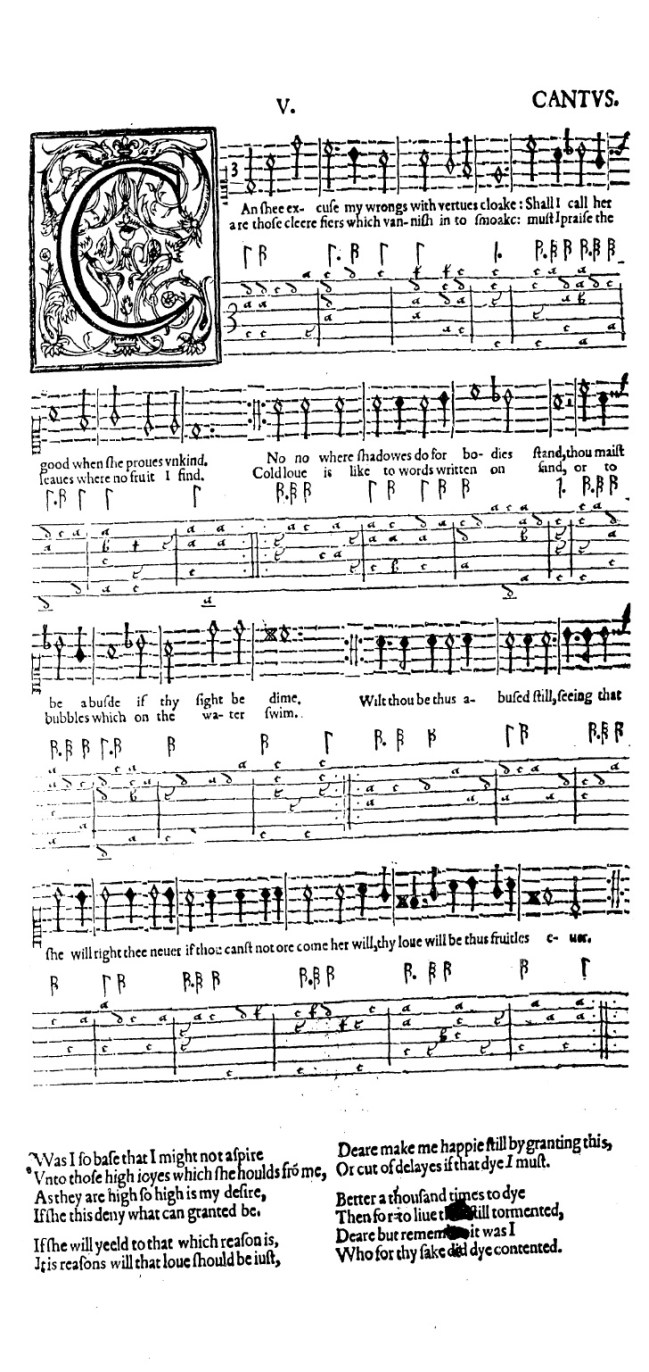
John Dowland (1563 - 1626): Can she excuse my wrongs, ayre, dal First Booke of Songes or Ayres (1597). Emma Kirkby, soprano; Anthony Rooley, liuto.

Can she excuse my wrongs with Virtue’s cloak?
Shall I call her good when she proves unkind?
Are those clear fires which vanish into smoke?
Must I praise the leaves where no fruit I find?
 No, no; where shadows do for bodies stand,
 That may’st be abus’d if thy sight be dim.
 Cold love is like to words written on sand,
 Or to bubbles which on the water swim.
Wilt thou be thus abused still,
Seeing that she will right thee never?
If thou canst not o’ercome her will,
Thy love will be thus fruitless ever.

Was I so base, that I might not aspire
Unto those high joys which she holds from me?
As they are high, so high is my desire,
If she this deny, what can granted be?
 If she will yield to that which reason is,
 It is reason’s will that love should be just.
 Dear, make me happy still by granting this,
 Or cut off delays if that I die must.
Better a thousand times to die
Than for to live thus still tormented:
Dear, but remember it was I
Who for thy sake did die contented.

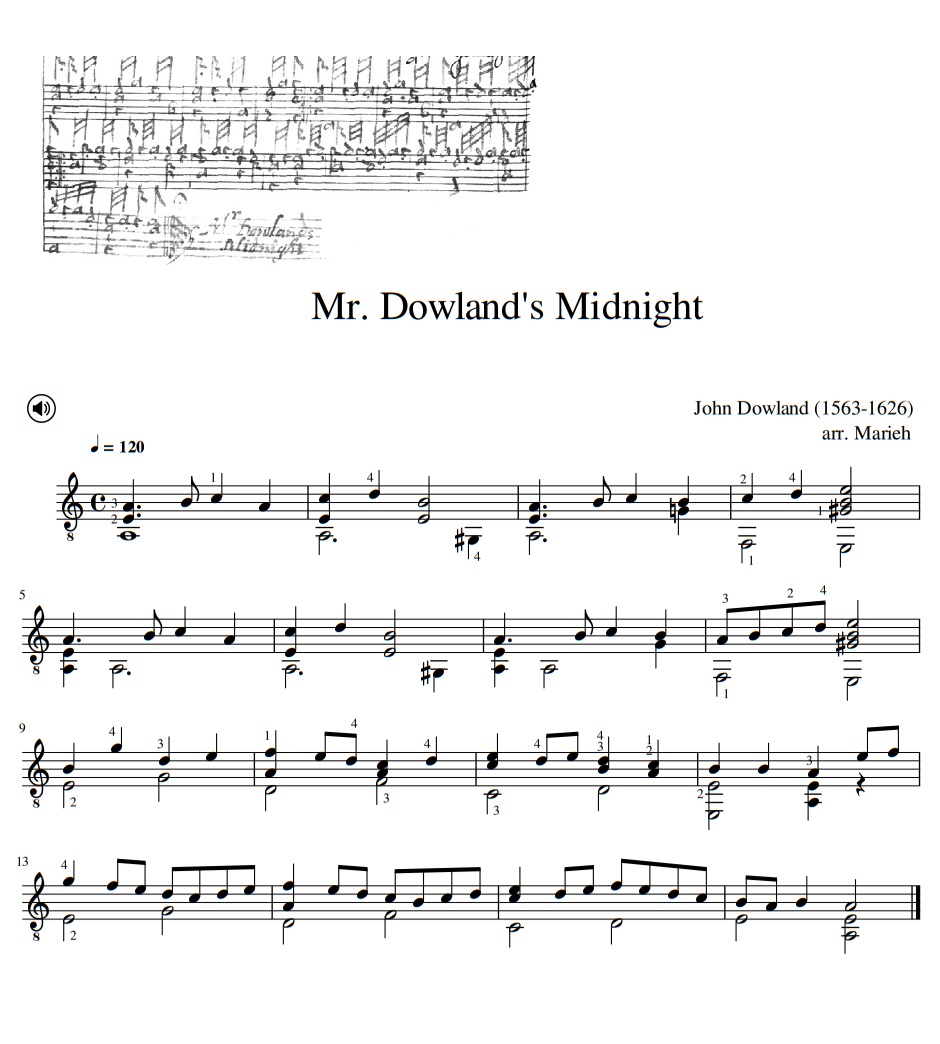
Il testo – adattato a un tema di gagliarda: in qualche fonte, la versione strumentale del brano (qui) reca il titolo The Earl of Essexhis ] Galliard – fa forse riferimento alle vicende di Robert Devereux, 2° conte di Essex (1566-1601), che potrebbe essere l’autore dei versi. È probabile che sia da collegarsi a Robert Devereux la citazione della melodia tradizionale The woods so wild, da Dowland inserita nel terzo periodo, affidata a una voce intermedia (tenore; testo: Wilt thou be thus abused still ecc.): farebbe riferimento al fatto che il conte di Essex soleva ritirarsi in una casa di sua proprietà, sita nei boschi a nord-est di Londra.
The woods so wild è un ballad assai diffuso in epoca Tudor: pare che fosse par­ti­co­lar­mente caro a Enrico VIII. Variazioni sulla melodia si devono a William Byrd (riportate dal Fitzwilliam Virginal Book e dal My Lady Nevell’s Book) e a Orlando Gibbons.


William Byrd (c1540 - 1623): The Woods so Wilde, variazioni. Michael Maxwell Steer, clavicembalo.


Orlando Gibbons (1583 - 1625): The Woods so Wild, variazioni. Michael Maxwell Steer, clavicembalo.


Un’altra interpretazione del brano di Dowland, ove la parte che comprende la citazione della melodia tradizionale è eseguita con un flauto dolce. Karin Gyllenhammar, soprano; Mirjam-Luise Münzel, flauto; David Leeuwarden, liuto; Alina Rotaru, clavicembalo.

Dowland - Can she

Soft skin, unconstant heart

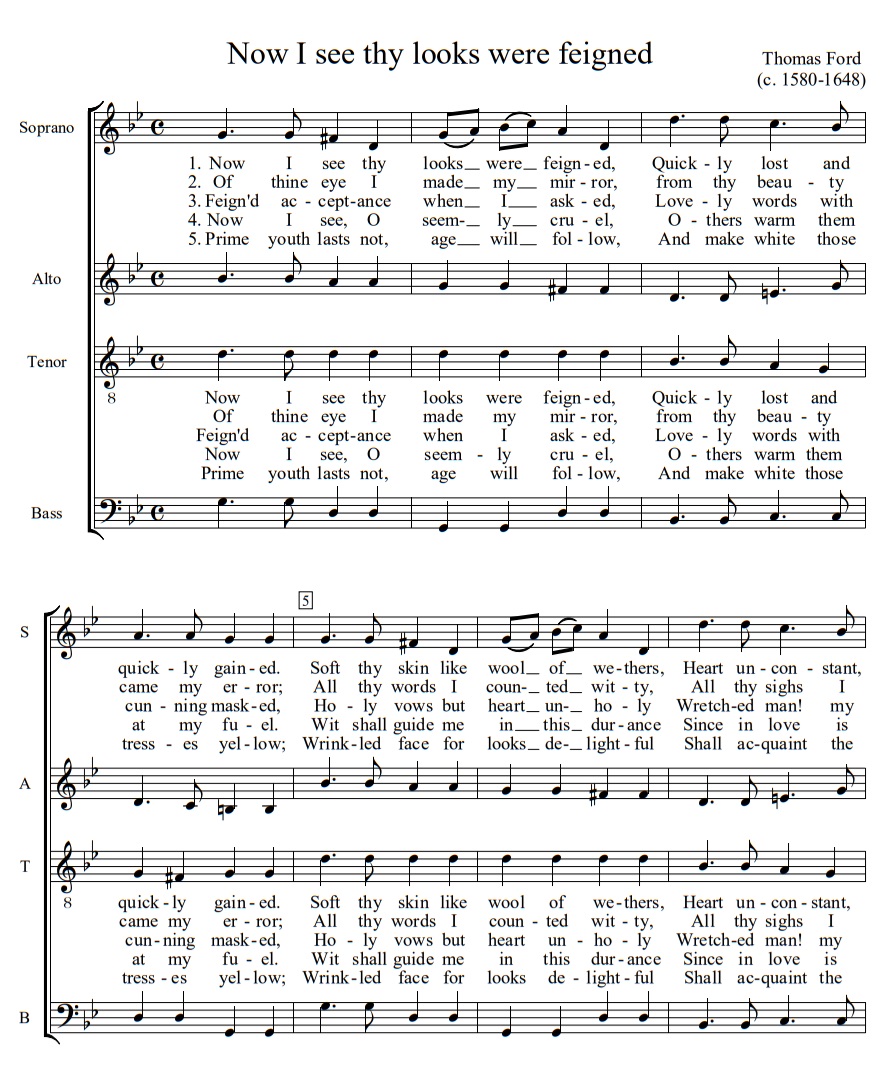
Thomas Ford (c1580 - sepolto il 17 novembre 1648): Now I see thy looks were feigned, madrigale a 4 voci (pubblicato in Musicke of Sundrie Kindes, 1607, vol. I, n. 4). Elisabeth Frèrebeau, Emma Spinelli e Tom Mébarki.

Now I see thy looks were feigned,
Quickly lost and quickly gained.
Soft thy skin like wool of wethers,
Heart unconstant, light as feathers.
Tongue untrusty, subtle-sighted,
Wanton will with change delighted.

Siren pleasant, foe to reason,
Cupid plague thee for thy treason.

Of thine eye I made my mirror,
From thy beauty came my error;
All thy words I counted witty,
All thy sighs I deemed pity;
Thy false tears that me aggrieved
First of all my trust deceived.

Siren pleasant…

Feign’d acceptance when I asked,
Lovely words with cunning masked,
Holy vows but heart unholy
Wretched man! my trust was folly.
Lily-white and pretty winking,
Solemn vows, but sorry thinking.

Siren pleasant…

Now I see, O seemly cruel,
Others warm them at my fuel.
Wit shall guide me in this durance
Since in love is no assurance.
Change thy pasture, take thy pleasure,
Beauty is a fading treasure.

Siren pleasant…

Prime youth lasts not, age will follow,
And make white those tresses yellow;
Wrinkled face for looks delightful
Shall acquaint the dame despiteful;
And when time shall date thy glory
Then too late thou wilt be sorry.

Siren pleasant, foe to reason,
Cupid plague thee for thy treason.

T’aimeroy volontiers

Claude Le Jeune (c1530 - 26 settembre 1600): Brunelette, joliette, m’amourette, chanson a 5 voci (pubblicata postuma nella raccolta Le Printemps, 1603). Ensemble Doulce Mémoire, dir. Denis Raisin-Dadre.

Brunelette, joliette, m’amourette, mon tout,
Tu m’as émé pour un tans,
Et puis tu m’as quité la,
Je ne sait la raison.

  Si tu veus je t’aimeray,
  Sinon je te dezémeray:
  Emér je puis de bon gré
  Contre gré ne puis émér.

Brunelette, joliette, m’amourette, mon tout,
Tu as et grac’ et beauté,
Je t’aimeroy volontiers,
Si volois me t’aimer.

  Si tu veus je t’aimeray…

Brunelette, joliette, m’amourette, mon tout,
Tu m’as volé de mon cueur,
Et ren-le moy je t’en prî’,
Ou m’aseure ton cueur.

  Si tu veus je t’aimeray…

Brunelette, joliette, m’amourette, mon tout,
Si veus le tien me baillér,
Retien le mien il est tien,
Qui n’a cœur ne vit pas.

  Si tu veus je t’aimeray…

Brunelette, joliette, m’amourette, mon tout,
Tu vois, tu m’ois, tu m’entens:
Je veus ton aiz’ et mon bien,
Et je hay le tourment.

  Si tu veus je t’aimeray…

Brunelette, joliette, m’amourette, mon tout,
Ne pense plus m’abuzant
Me marteler le cerveau
D’amour enjalouzés.

  Si tu veus je t’aimeray…

À ma douce rebelle

Claude Goudimel (1514 - 31 agosto 1572): Bonjour mon coeur, chanson a 4 voci (1559) su testo di Pierre de Ronsard. Collegium Vocale Bydgoszcz.

Bonjour mon coeur, bonjour ma douce vie
Bonjour mon oeil, bonjour ma chère amie!
Hé! Bonjour ma toute belle,
Ma mignardise, bonjour
Mes délices, mon amour,
Mon doux printemps, ma douce fleur nouvelle,
Mon doux plaisir, ma douce colombelle,
Mon passereau, ma gente tourterelle!
Bonjour ma douce rebelle.

Jusques à ce que je meure

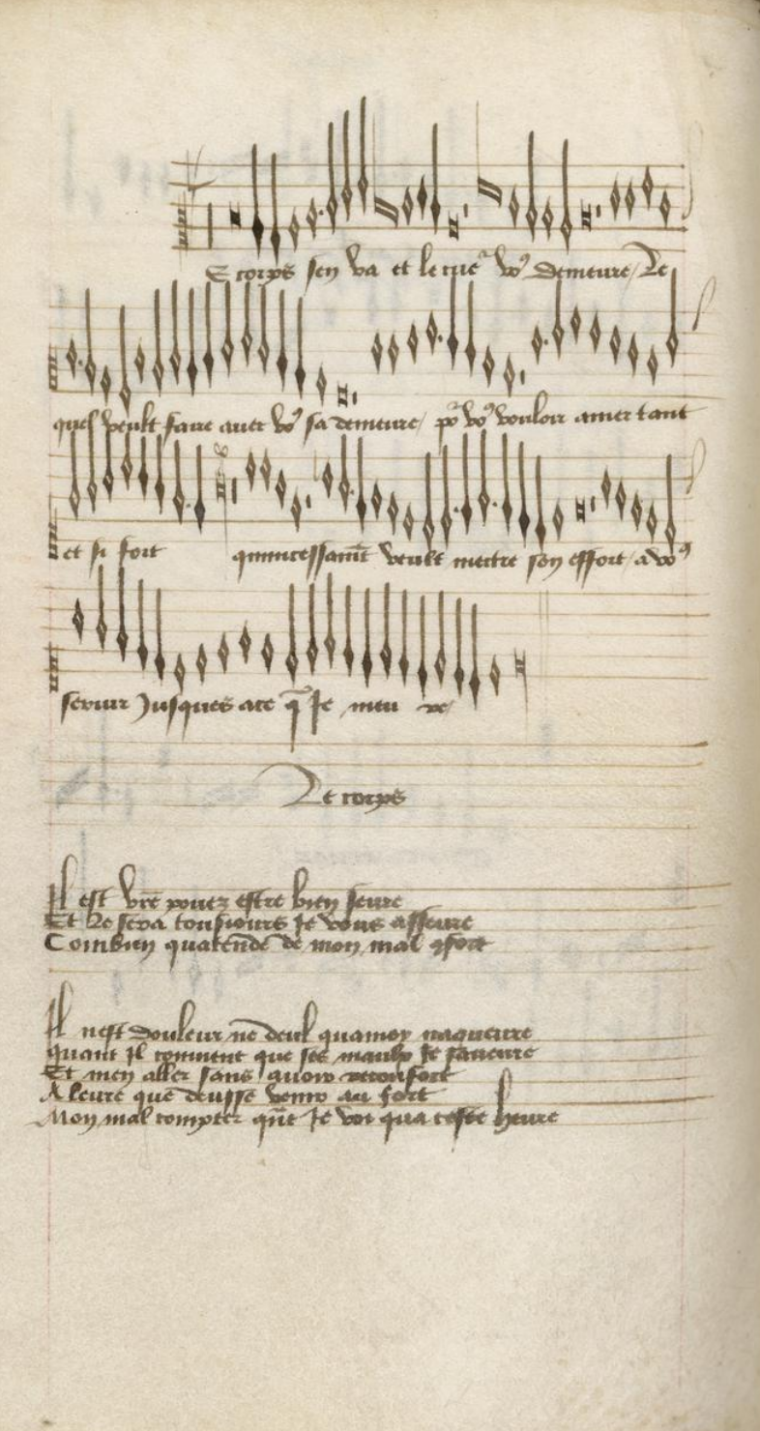
Antoine Busnois (c1430 - 1492): Le corps sen va et le cuer vous demeure, rondeau a 3 voci. Ensemble Asteria: Sylvia Rhyne, soprano; Eric Redlinger, tenore e liuto.

Le corps sen va et le cueur vous demeure
Le quel veult faire avec vous sa demeure
Pour vous vouloir aimer tant et si fort.

 Que incessament veult mectre son effort
 A vous servir jusques à ce que je meure.
 Il est vostre pouez estre bien seure
 Et de cela tousiours je vous asseure
 Combien quatende de mon mal confort.

Le corps sen va et le cueur vous demeure
Le quel veult faire avec vous sa demeure
Pour vous vouloir amer tant et si fort.

 Il nest douleur ne dueil qua moy naqueure
 Quant il convient que ses maulx je saveure
 Et men aller sans avoir resconfort
 Aleure que deusse vivre au fort
 Mon mal compter que je voi qua ceste heure.

Le corps s’en va et le cueur vous demeure
Le quel veult faire avec vous sa demeure
Pour vous vouloir aimer tant et si fort.

Busnois, Le corps s'en va

Se sei con me

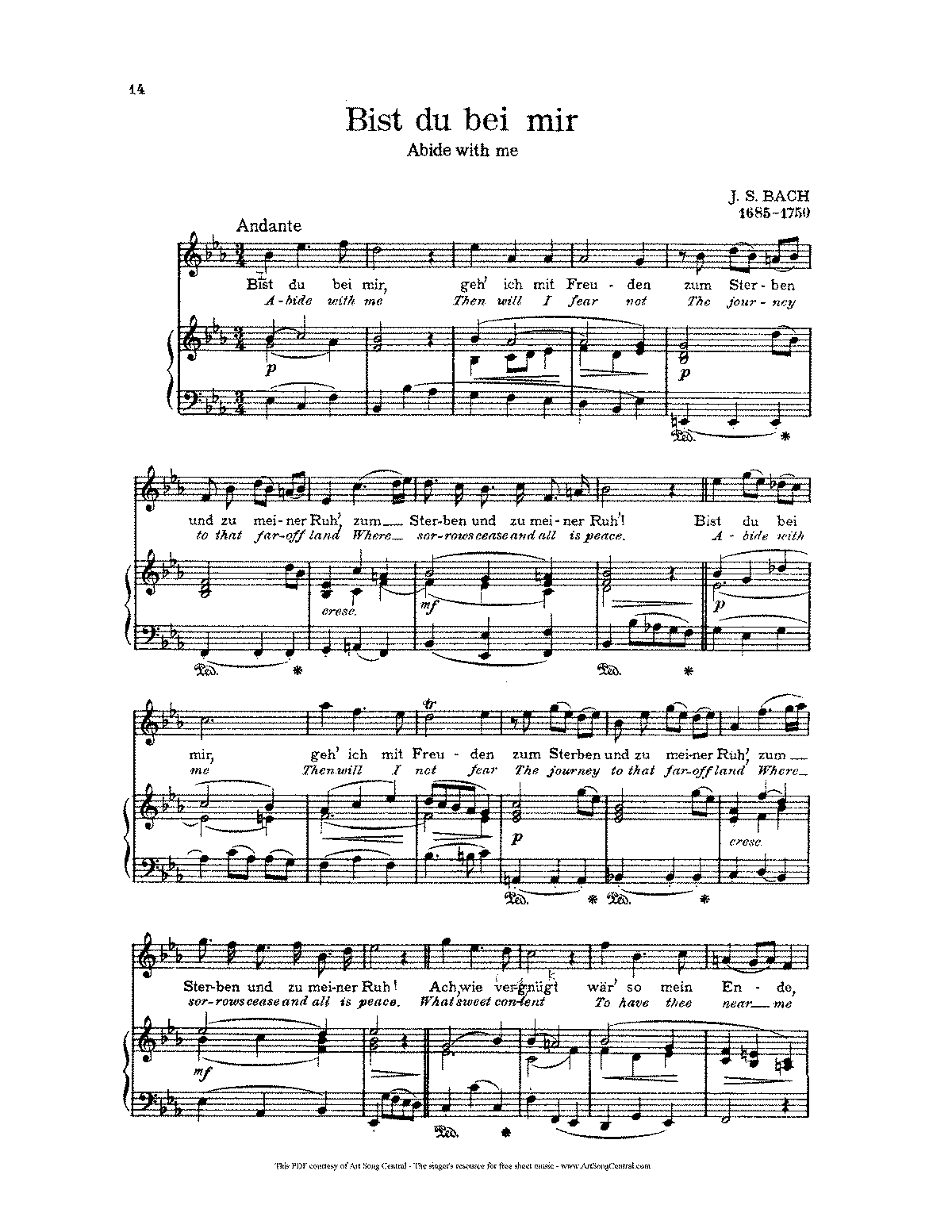
Gottfried Heinrich Stölzel (1690 - 1749): «Bist du bei mir», aria dall’opera Diomedes ovvero Die triumphierende Unschuld (1718). Duo Mignarda: Donna Stewart, voce, e Ron Andrico, liuto.
Johann Sebastian Bach inserì quest’aria, arrangiata per voce e basso continuo, nel Noten­büchlein für Anna Magdalena (1725); nel Bach-Werke-Verzeichnis (BWV) questo arrangia­mento reca il numero 508.

Bist du bei mir, geh ich mit Freuden
zum Sterben und zu meiner Ruh.
Ach, wie vergnügt wär so mein Ende,
es drückten deine schönen Hände
mir die getreuen Augen zu.

What then is love but mourning?

Philip Rosseter (1567 o 1568 - 5 maggio 1623): What then is love but mourning?, ayre (1601). Alfred Deller, haute-contre, e Desmond Dupré, liuto.

What then is love but mourning?
What desire but a selfburning?
Till she that hates doth love return,
 Thus will I mourn,
 Thus will I sing,
Come away, come away my darling.

Beauty is but a blooming,
Youth in his glory entombing,
Time hath a while which none can stay,
 Then come away,
 While thus I sing,
Come away, come away my darling.

Summer in winter fadeth,
Gloomy night heav’nly light shadeth,
Like to the mourn are Venus’ flowers,
 Such are her hours,
 Then will I sing,
Come away, come away my darling.

Riccioli d’argento

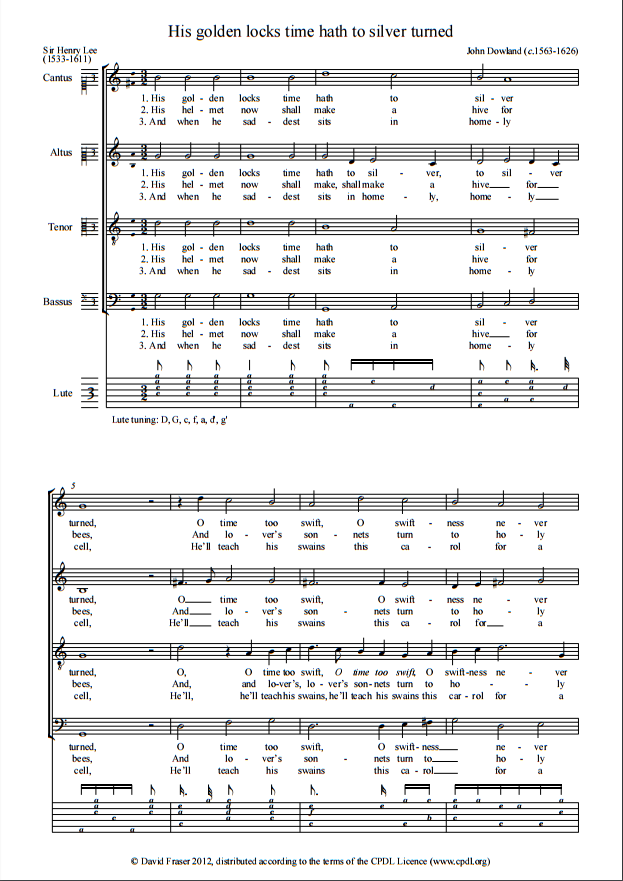
John Dowland (1563 - 1626): His golden locks, dal First Booke of Songes (1597), n. 18. Emma Kirkby, soprano; Anthony Rooley, liuto.

His golden locks Time hath to silver turned.
O Time too swift, O swiftness never ceasing:
His youth ‘gainst Time and Age hath ever spurned,
But spurned in vain; youth waneth by increasing.
Beauty, strength, youth are flowers but fading seen;
Duty, faith, love are roots, and ever green.

His helmet now shall make a hive for bees,
And lovers’ sonnets turn to holy psalms.
A man at arms must now serve on his knees,
And feed on prayers which are Age’s alms.
But though from Court to cottage he depart,
His Saint is sure of his unspotted heart.

And when he saddest sits in homely cell,
He’ll teach his swains this carol for a song:
Blest be the hearts that wish my Sov’reign well.
Curst be the soul that think her [him] any wrong.
Goddess [Ye gods], allow this aged man his right
To be your beadsman now, that was your knight.

His golden locks

Amarilli è il mio amore

Giulio Caccini, detto Giulio Romano (c1550 - 1618): Amarilli, mia bella, madrigale su testo di Battista Guarini (pubblicato nella raccolta Le nuove musiche, 1602, n. 8). Alfred Deller, haute-contre; Desmond Dupré, liuto.

Amarilli, mia bella,
non credi, o del mio cor dolce desio,
d’esser tu l’amor mio?
Credilo pur, e se timor t’assale,
prendi questo mio strale,
aprimi il petto e vedrai scritto in core:
Amarilli, Amarilli, Amarilli è il mio amore.

Del ciel regina – II

Guillaume Dufay (c1397 - 27 novembre 1474): Vergine bella, canzone spirituale su testo di Fran­cesco Petrarca (1ª strofe). Duo Mignarda: Donna Stewart, voce; Ron Andrico, liuto.

Vergine bella, che di sol vestita,
coronata di stelle, al sommo Sole
piacesti sí, che ’n te Sua luce ascose,
amor mi spinge a dir di te parole:
ma non so ’ncominciar senza tu’ aita,
et di Colui ch’amando in te si pose.
Invoco lei che ben sempre rispose,
chi la chiamò con fede:
Vergine, s’a mercede
miseria extrema de l’humane cose
già mai ti volse, al mio prego t’inchina,
soccorri a la mia guerra,
bench’i’ sia terra, et tu del ciel regina.

La Spagnoletta

Anonimo (secolo XVI): La spagnoletta. Valéry Sauvage, liuto.


Anonimo: Spagnoletta, dalla raccolta di danze Il ballarino (1581) di Marco Fabritio Caroso (1526/31 - p1605). Micrologus & Cappella de’ Turchini.


Giulio Caccini, detto Giulio Romano (1546 - 1618): Non ha ’l ciel cotanti lumi, aria a 1 voce e basso continuo (dalle Nuove musiche e nuova maniera di scriverle, 1614); testo forse di Ottavio Rinuccini (1562 - 1621). Montserrat Figueras, soprano; Hopkinson Smith, tiorba; Jordi Savall, viola da gamba; Xenia Schindler, arpa doppia.

Non ha ’l ciel cotanti lumi,
Tante still’ e mari e fiumi,
Non l’April gigli e viole,
Tanti raggi non ha il Sole,
Quant’ha doglie e pen’ogni hora
Cor gentil che s’innamora.

Penar lungo e gioir corto,
Morir vivo e viver morto,
Spem’ incerta e van desire,
Mercé poca a gran languire,
Falsi risi e veri pianti
È la vita degli amanti.

Neve al sol e nebbia al vento,
E d’Amor gioia e contento,
Degli affanni e delle pene
Ahi che ’l fin già mai non viene,
Giel di morte estingue ardore
Ch’in un’alma accende amore.

Ben soll’io che ’l morir solo
Può dar fine al mio gran duolo,
Né di voi già mi dogl’io
Del mio stato acerbo e rio;
Sol Amor tiranno accuso,
Occhi belli, e voi ne scuso.


Giles Farnaby (c1563 - 1640): The Old Spagnoletta (dal Fitzwilliam Virginal Book, n. [CCLXXXIX]). Christopher Hogwood, clavicembalo.


Bernardo Storace (c1637 - c1707): Aria sopra la Spagnoletta (da Selva di varie compositioni d’intavolatura per cimbalo et organo, 1664). Matteo Imbruno all’organo della Oude Kerk di Amsterdam.

Paul’s Wharf

Anonimo (XVII secolo): Pauls Wharfe, contraddanza (da John Playford, The English Dancing Master, Londra 16511, n. 86); arrangiamento per liuto di Pascale Boquet. Valéry Sauvage.


Giles Farnaby (c1563 - 1640): Pawles Wharfe (dal Fitzwilliam Virginal Book, n. [CXIII]). Pieter-Jan Belder, clavicembalo.
Secondo alcuni studiosi, sarebbe proprio Farnaby l’autore della gradevole melodia.


William Brade (1560 - 1630): Ein Schottisch Tanz (da Newe ausserlesene liebliche Branden, Intraden, Mascharaden, Balletten, All’manden, Couranten, Volten, Aufzüge und frembde Tänze, Amburgo 1617). Hespèrion XXI, dir. Jordi Savall.


À ma dame importune

Claudin de Sermisy (c1490 - 1562): Las! je m’y plains, chanson a 4 voci (pubblicata in Trente et sept chansons musicales a quatre parties, 1528, n. 36). Ensemble «Clément Janequin».

Las! Je m’y plains, mauldicte soit fortune,
quant pour aimer je n’ai que desplaisir.
Venez, regretz, venez mon coeur saisir,
et le monstrez a ma dame importune.


Francesco Canova, detto Francesco da Milano, Francesco del Liuto e il Divino (18 agosto 1497 - 1543): Las! je m’y plains di Sermisy intavolata per liuto (1536). Valéry Sauvage.


And now to bed I hie


Francis Pilkington (c1565 - 1638): Rest, sweet nymphs, ayre (dal First Book of Songs or Airs of Four Parts, 1605, n. 6).
– versione per 1 voce e liuto: Valeria Mignaco (soprano) e Alfonso Marin;
– versione a 4 voci a cappella: Laudantes Consort.

Rest, sweet nymphs, let golden sleep
Charm your star brighter eyes,
While my lute the watch doth keep
With pleasing sympathies.
Lulla, lullaby. Lulla, lullaby.
Sleep sweetly, sleep sweetly,
Let nothing affright ye,
In calm contentments lie.

Dream, fair virgins, of delight
And blest Elysian groves,
While the wandring shades of night
Resemble your true loves.
Lulla, lullaby. Lulla, lullaby.
Your kisses, your blisses,
Send them by your wishes,
Although they be not nigh.

Thus, dear damsels, I do give
‘Good night’, and so am gone:
With your hearts’ desires long live,
Still joy, and never moan.
Lulla, lullaby. Lulla, lullaby.
Hath pleased you and eased you,
And sweet slumber seized you,
And now to bed I hie.

See, hear, touch, kiss, die

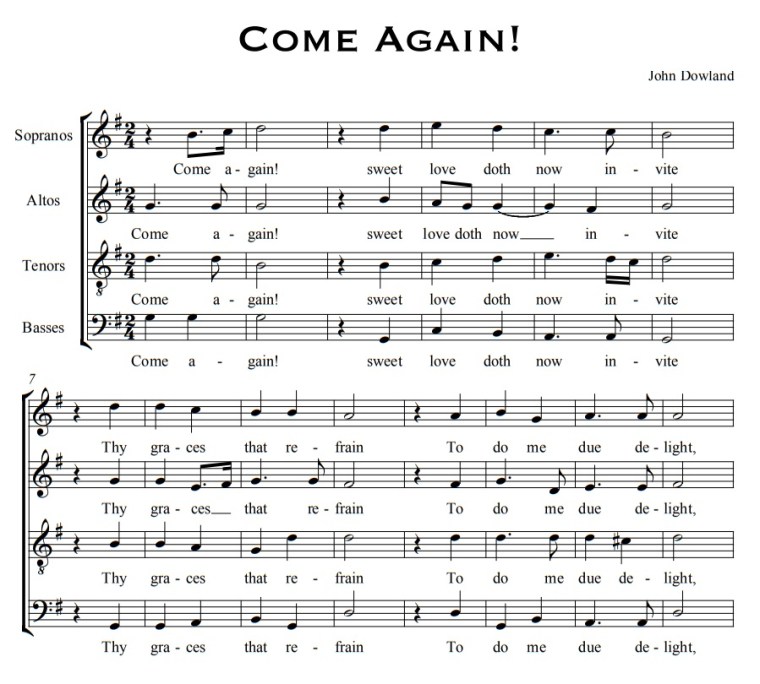
John Dowland (1563 - 1626): Come again, ayre* (dal First Booke of Songes or Ayres of fowre partes with Tableture for the Lute, 1597, n. 17). Paul Agnew, tenore; Christopher Wilson, liuto.

Come again! sweet love doth now invite
Thy graces that refrain
To do me due delight,
To see, to hear, to touch, to kiss, to die,
With thee again in sweetest sympathy.

Come again! that I may cease to mourn
Through thy unkind disdain;
For now left and forlorn
I sit, I sigh, I weep, I faint, I die
In deadly pain and endless misery.

All the day the sun that lends me shine
By frowns do cause me pine
And feeds me with delay;
Her smiles, my springs that makes my joys to grow,
Her frowns the Winters of my woe.

All the night my sleeps are full of dreams,
My eyes are full of streams.
My heart takes no delight
To see the fruits and joys that some do find
And mark the storms are me assign’d.

Out alas, my faith is ever true,
Yet will she never rue
Nor yield me any grace;
Her eyes of fire, her heart of flint is made,
Whom tears nor truth may once invade.

Gentle Love, draw forth thy wounding dart,
Thou canst not pierce her heart;
For I, that do approve
By sighs and tears more hot than are thy shafts
Did tempt while she for triumph laughs.

(*) Per ayre si intende un genere musicale fiorito in Inghilterra tra la fine del Cinquecento e la terza decade del secolo successivo. L’ayre è un brano a più voci (solitamente quattro) con ac­com­pa­gna­mento di liuto; ciò che lo distingue dalle composizioni congeneri del periodo precedente è il fatto che alla voce più acuta è affidata una parte spiccatamente melodica, sul modello della «monodia accompagnata» italiana e dell’air de cour francese. Gli interpreti hanno dunque la possibilità di eseguire un ayre o secondo tradizione, con tutte le parti vocali e con l’ac­com­pa­gna­mento del liuto ad libitum, oppure seguendo la moda dell’epoca, cioè con il canto della sola parte più acuta sostenuto dal liuto. In quest’ultimo caso, al liuto spesso si aggiunge una viola da gamba che ha il compito di irrobustire la linea del basso.

Shakespeariana – XXXVIII Greensleeves – XX 🇬🇧

Lady Greensleeves & Mistress Ford

Anonymous (second half of the sixteenth century, British): Greensleeves. Alfred Deller, countertenor; Desmond Dupre, lute.
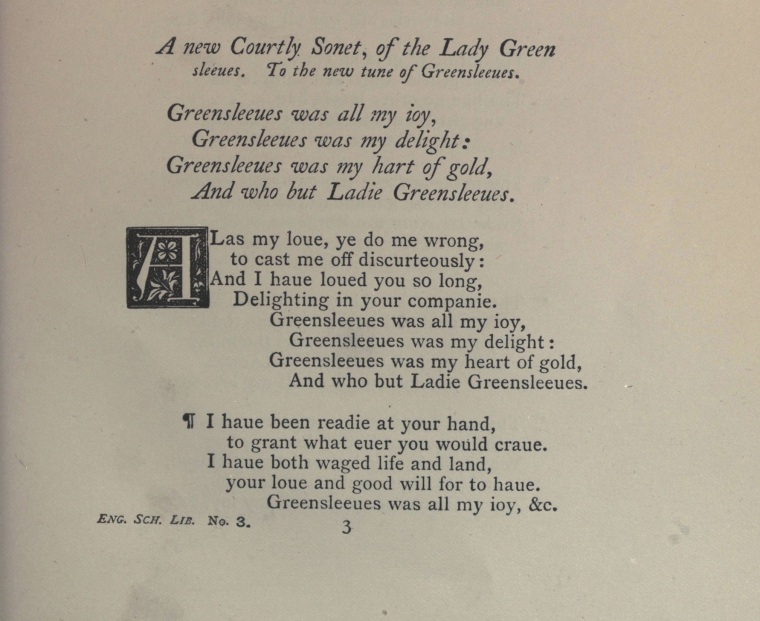
Deller’s interpretation gives us the opportunity to hear both the oldest known version of Greensleeves tune and some stanzas taken from the first known edition of the lyrics, a 1584 collection entitled A Handful of Pleasant Delites. Here is the full text (italicized stanzas are omitted by Deller):

Alas, my love, you do me wrong
To cast me off discourteously,
For I have loved you well and long,
Delighting in your company.

  Greensleeves was all my joy,
  Greensleeves was my delight,
  Greensleeves was my heart of gold,
  And who but my lady Greensleeves.

I have been ready at your hand,
To grant whatever you would crave;
I have both waged life and land,
Your love and good-will for to have.

I bought three kerchers to thy head,
That were wrought fine and gallantly;
I kept them both at board and bed,
Which cost my purse well-favour’dly.

I bought thee petticoats of the best,
The cloth so fine as fine might be:
I gave thee jewels for thy chest;
And all this cost I spent on thee.

Thy smock of silk both fair and white,
With gold embroidered gorgeously;
Thy petticoat of sendall right;
And this I bought thee gladly.

Thy girdle of gold so red,
With pearls bedecked sumptously,
The like no other lasses had;
And yet you do not love me!

Thy purse, and eke thy gay gilt knives,
Thy pin-case, gallant to the eye;
No better wore the burgess’ wives;
And yet thou wouldst not love me!

Thy gown was of the grassy green,
The sleeves of satin hanging by;
Which made thee be our harvest queen;
And yet thou wouldst not love me!

Thy garters fringed with the gold,
And silver aglets hanging by;
Which made thee blithe for to behold;
And yet thou wouldst not love me!

My gayest gelding thee I gave,
To ride wherever liked thee;
No lady ever was so brave;
And yet thou wouldst not love me!

My men were clothed all in green,
And they did ever wait on thee;
All this was gallant to be seen;
And yet thou wouldst not love me!

They set thee up, they took thee down,
They served thee with humility;
Thy foot might not once touch the ground;
And yet thou wouldst not love me!

For every morning, when thou rose,
I sent thee dainties, orderly,
To cheer thy stomach from all woes;
And yet thou wouldst not love me!

Thou couldst desire no earthly thing,
But still thou hadst it readily,
Thy music still to play and sing;
And yet thou wouldst not love me!

And who did pay for all this gear,
That thou didst spend when pleased thee?
Even I that am rejected here,
And thou disdainst to love me!

Well! I will pray to God on high,
That thou my constancy mayst see,
And that, yet once before I die,
Thou wilt vouchsafe to love me!

Greensleeves, now farewell! Adieu!
God I pray to prosper thee!

For I am still thy lover true;
Come once again and love me!

Incipit From a reprint, dated 1878, of A Handful of Pleasant Delites
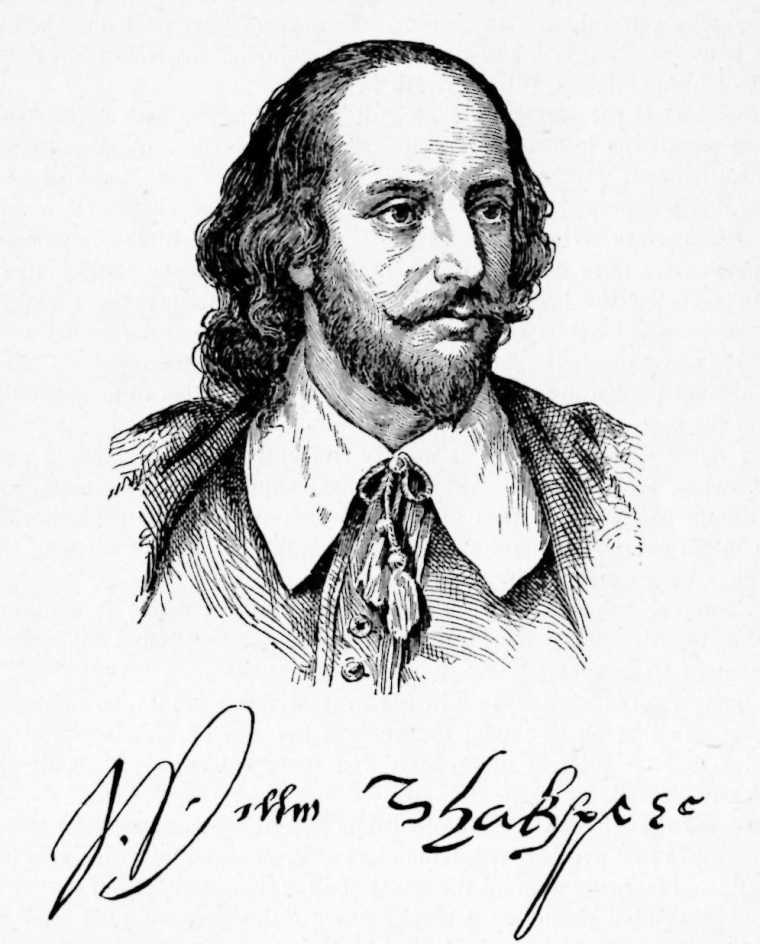

Greensleeves cannot be missing from an anthology of Shakespearean music: the ballad of the beautiful green-sleeved lady is in fact mentioned twice in the comedy The Merry Wives of Windsor (first published in 1602, though believed to have been written in or before 1597). Its plot is well known: the pot-bellied and cash-strapped knight John Falstaff awkwardly tries to seduce two ladies, Mistress Ford and Mistress Page, married to wealthy merchants living in Windsor (in Berkshire); by gaining their favour, Sir John hopes to fix his financial woe, but is quickly unmasked: the wives find he sent them identical love letters and take revenge by playing tricks on Falstaff.
When the hoax comes to light, Mistress Ford comments on the fact with these words (act 2, scene 1):

I shall think the worse of fat men, as long as I have an eye to make difference of men’s liking: and yet he would not swear; praised women’s modesty; and gave such orderly and well-behaved reproof to all uncomeliness, that I would have sworn his disposition would have gone to the truth of his words; but they do no more adhere and keep place together than the Hundredth Psalm to the tune of Green Sleeves.

It’s true: Psalm 100 does not adhere to Greensleeves; but it must be said that this is a purely metrical matter — the verses of the psalm («O be joyful in the Lord, all ye lands» according to the Great Bible, 1539) do not fit at all to the tune of the ballad — and not a sort of moral prohibition. Adapting a sacred text to a familiar secular melody (this is called contrafactum) has never been a problem, and we have already seen (click here) that Greensleeves itself has given its tune to a religious chant.

The last prank against Falstaff takes place in the forest of Windsor, where he is invited to go, dressed as a hunter, for a love rendezvous (act 5, scene 5). «Sir John!» says Mistress Ford, «Art thou there, my deer? my male deer?»; Falstaff replies by stating that «a tempest of provocation» will not be able to distract him from her, even if the sky thunders «to the tune of Green Sleeves»:

My doe with the black scut! Let the sky rain potatoes; let it thunder to the tune of Green Sleeves, hail kissing-comfits and snow eringoes; let there come a tempest of provocation, I will shelter me here.

(A few brief explanations:
potatoes: when the potato was introduced to Europe, precisely at the time of Shake­speare, it was considered an aphrodisiac;
kissing-comfits: perfumed sugar sweets, used to freshen the breath;
eringoes: does not refer to the herbaceous plants of this name, but to the pleurotus eryngii, called king trumpet or king oyster mushroom, considered an aphrodisiac since ancient times.)

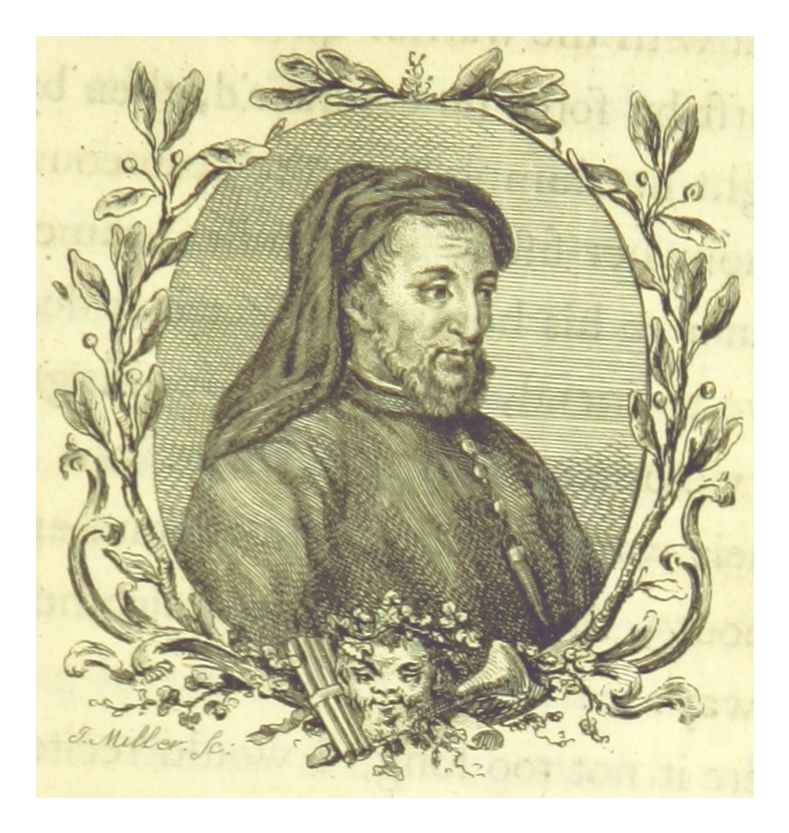
Shakespeare

Shakespeariana – XXXVIII Greensleeves – XX 🇮🇹

Lady Greensleeves & Mistress Ford

Anonimo inglese della seconda metà del Cinquecento: Greensleeves. Alfred Deller, controtenore; Desmond Dupré, liuto.
L’interpretazione di Deller e Dupré ci dà modo di ascoltare la più antica versione conosciuta della melodia e, insieme, alcune strofe tratte dalla prima edizione nota del testo, una raccolta del 1584 intitolata A Handful of Pleasant Delites. Ecco il testo completo (le parti in corsivo sono omesse da Deller):

Alas, my love, you do me wrong
To cast me off discourteously,
For I have loved you well and long,
Delighting in your company.

  Greensleeves was all my joy,
  Greensleeves was my delight,
  Greensleeves was my heart of gold,
  And who but my lady Greensleeves.

I have been ready at your hand,
To grant whatever you would crave;
I have both waged life and land,
Your love and good-will for to have.

I bought three kerchers to thy head,
That were wrought fine and gallantly;
I kept them both at board and bed,
Which cost my purse well-favour’dly.

I bought thee petticoats of the best,
The cloth so fine as fine might be:
I gave thee jewels for thy chest;
And all this cost I spent on thee.

Thy smock of silk both fair and white,
With gold embroidered gorgeously;
Thy petticoat of sendall right;
And this I bought thee gladly.

Thy girdle of gold so red,
With pearls bedecked sumptously,
The like no other lasses had;
And yet you do not love me!

Thy purse, and eke thy gay gilt knives,
Thy pin-case, gallant to the eye;
No better wore the burgess’ wives;
And yet thou wouldst not love me!

Thy gown was of the grassy green,
The sleeves of satin hanging by;
Which made thee be our harvest queen;
And yet thou wouldst not love me!

Thy garters fringed with the gold,
And silver aglets hanging by;
Which made thee blithe for to behold;
And yet thou wouldst not love me!

My gayest gelding thee I gave,
To ride wherever liked thee;
No lady ever was so brave;
And yet thou wouldst not love me!

My men were clothed all in green,
And they did ever wait on thee;
All this was gallant to be seen;
And yet thou wouldst not love me!

They set thee up, they took thee down,
They served thee with humility;
Thy foot might not once touch the ground;
And yet thou wouldst not love me!

For every morning, when thou rose,
I sent thee dainties, orderly,
To cheer thy stomach from all woes;
And yet thou wouldst not love me!

Thou couldst desire no earthly thing,
But still thou hadst it readily,
Thy music still to play and sing;
And yet thou wouldst not love me!

And who did pay for all this gear,
That thou didst spend when pleased thee?
Even I that am rejected here,
And thou disdainst to love me!

Well! I will pray to God on high,
That thou my constancy mayst see,
And that, yet once before I die,
Thou wilt vouchsafe to love me!

Greensleeves, now farewell! Adieu!
God I pray to prosper thee!

For I am still thy lover true;
Come once again and love me!

Incipit Da una ristampa, datata 1878, di A Handful of Pleasant Delites


In una antologia di «musica scespiriana», Greensleeves non può mancare: la canzone della bella signora dalle maniche verdi è infatti menzionata nella commedia The Merry Wives of Windsor (pubblicata per la prima volta nel 1602, ma si ritiene sia stata scritta prima del 1597). La trama è nota: il panciuto e squattrinato cavaliere John Falstaff tenta maldestramente di sedurre due signore, Mistress Ford e Mistress Page, sposate a ricchi borghesi di Windsor (nel Berkshire); ottenendo i loro favori sir John spera di sistemare le proprie finanze, ma viene subito smascherato: le due donne si accorgono di aver ricevuto lettere d’amore identiche, perciò decidono di vendicarsi e ordiscono alcune perfide burle ai danni di Falstaff.
Quando l’imbroglio viene scoperto, questo è il commento di Mistress Ford (atto II, scena 1ª):

I shall think the worse of fat men, as long as I have an eye to make difference of men’s liking: and yet he would not swear; praised women’s modesty; and gave such orderly and well-behaved reproof to all uncomeliness, that I would have sworn his disposition would have gone to the truth of his words; but they do no more adhere and keep place together than the Hundredth Psalm to the tune of Green Sleeves.

È vero, Greensleeves non va d’accordo con il Salmo 100: ma è un impedimento di carattere puramente metrico – i versi («Acclamate il Signore, voi tutti della terra»; nella versione della Great Bible, 1539: «O be joyful in the Lord, all ye lands») non combaciano affatto con la melodia – e non una sorta di divieto morale. L’adattamento di un testo sacro a una melodia profana («travestimento spirituale») non ha mai costituito un problema, e del resto abbiamo già visto (qui) che, nel corso della sua storia pluricentenaria, la stessa Greensleeves ha prestato la propria melodia a un canto religioso.

L’ultima burla ai danni di Falstaff ha luogo nella foresta di Windsor, dove egli viene invitato a recarsi, vestito da cacciatore, per un incontro amoroso (atto V, scena 5ª). «Sir John!», lo apostrofa Mistress Ford, «Art thou there, my deer? my male deer?»; Falstaff risponde affermando che nemmeno una «tempesta di amorose provocazioni», fra le quali la melodia di Greensleeves, riuscirà a distoglierlo da lei:

My doe with the black scut! Let the sky rain potatoes; let it thunder to the tune of Green Sleeves, hail kissing-comfits and snow eringoes; let there come a tempest of provocation, I will shelter me here.

(Qualche breve spiegazione:
potatoes: quando la patata fu introdotta in Europa, appunto all’epoca di Shakespeare, era considerata afrodisiaca;
kissing-comfits: dolcetti di zucchero profumati, usati per rinfrescare l’alito;
eringoes: non si riferisce alle piante erbacee in Italia chiamate calcatreppole, bensì al fungo da noi comunemente noto come cardoncello, nome scientifico pleurotus eryngii, fin dall’Antichità considerato afrodisiaco.)

Shakespeare

Greensleeves – XIX 🇮🇹

Con il suo ensemble, The Broadside Band, Jeremy Barlow ha lavorato a lungo e proficuamente sulle musiche utilizzate da Johann Christoph Pepusch nell’Opera del mendicante (The Beggar’s Opera, 1728) di John Gay: la quale è l’unica ballad opera di cui si parli ancora ai nostri giorni, grazie anche al rifacimento brechtiano del 1928, Die Drei­groschenoper, che adotta però musiche originali composte da Kurt Weill. Per l’Opera del mendicante invece, com’è noto, Pepusch adattò i testi di Gay a melodie che all’epoca avevano una certa notorietà, prendendole a prestito da broadside ballads, arie d’opera, inni religiosi e canti di tradizione popolare.
Oltre a produrre un’edizione completa del lavoro di Gay e Pepusch, Barlow e la sua band hanno inciso (per Harmonia Mundi, 1982) anche un’antologia degli airs più famosi (in tutto nove brani), di ciascuno dei quali proponendo non solo la versione dell’Opera del mendicante ma anche la composizione originale e eventuali altre sue trasformazioni, varianti e parodie.
L’ultima sezione dell’antologia, che qui sottopongo alla vostra attenzione, è dedicato a Greensleeves. Comprende, nell’ordine:

  1. una improvvisazione sul passamezzo antico, eseguita al liuto da George Weigand

  2. Greensleeves, la più antica versione nota della melodia (dal William Ballet’s Lute Book, c1590-1603) con la più antica versione nota del testo (da A Handful of Pleasant Delights, 1584), cantata da Paul Elliott accompagnato al liuto da Weigand [1:13]

    Alas, my love, you do me wrong,
    To cast me off discourteously.
    And I have loved you so long,
    Delighting in your company.

     Greensleeves was all my joy,
     Greensleeves was my delight,
     Greensleeves was my heart of gold,
     And who but my Lady Greensleeves.

    I have been ready at your hand,
    To grant whatever you wouldst crave,
    I have both waged life and land,
    Your love and goodwill for to have.

    Well I will pray to God on high
    That thou my constancy mayst see,
    And that yet once before I die,
    Thou wilt vouchsafe to love me.

    Greensleeves, now farewell, adieu,
    God I pray to prosper thee,
    For I am still thy lover true,
    Come once again and love me.

  3. Greensleeves, la versione più diffusa all’inizio del Seicento, secondo William Cobbold (1560 - 1639) e altri autori, con improvvisazioni eseguite da Weigand alla chitarra barocca e da Rosemary Thorndycraft al bass viol [4:07]

  4. la versione dell’Opera del mendicante che già conosciamo, interpretata ancora da Elliott a solo [5:27]

  5. un misto di tre jigs irlandesi eseguito da Barlow al flauto e da Alastair McLachlan al violino [6:03]:
    A Basket of Oysters (da Moore’s Irish Melodies, 1834)
    A Basket of Oysters or Paddythe Weaver (Aird’s selection, 1788)
    Greensleeves (versione raccolta a Limerick nel 1852)

Greensleeves – XIX 🇬🇧

With his ensemble, The Broadside Band, Jeremy Barlow worked extensively and profitably on the music used by Johann Christoph Pepusch in John Gay’s The Beggar’s Opera (1728): it is the only ballad opera still being talked about in our days, thanks also to Bertolt Brecht’s 1928 remake, Die Dreigroschenoper, which however has original music composed by Kurt Weill. It is not the same for The Beggar’s Opera: Gay’s lyrics were in fact adapted by Pepusch to melodies that at the time already had a certain notoriety, borrowing them from broadside ballads, opera arias, religious hymns and folk songs.
Barlow and his band have recorded a complete edition of Gay and Pepusch’s work, as well as an anthology of its most famous airs (nine pieces in all), of each of which they presented not only The Beggar’s Opera version, but also the original composition and some of its variants and parodies.
The last track of the anthology, the one I submit to your attention here, is dedicated to Greensleeves. It includes, in order:

  1. a lute extemporisation on passamezzo antico ground, performed by George Weigand

  2. Greensleeves, earliest version of melody (from William Ballet’s Lute Book, c1590-1603) with earliest surviving words (A Handful of Pleasant Delights, 1584), sung by Paul Elliott accompanied on lute by Weigand [1:13]

    Alas, my love, you do me wrong,
    To cast me off discourteously.
    And I have loved you so long,
    Delighting in your company.

     Greensleeves was all my joy,
     Greensleeves was my delight,
     Greensleeves was my heart of gold,
     And who but my Lady Greensleeves.

    I have been ready at your hand,
    To grant whatever you wouldst crave,
    I have both waged life and land,
    Your love and goodwill for to have.

    Well I will pray to God on high
    That thou my constancy mayst see,
    And that yet once before I die,
    Thou wilt vouchsafe to love me.

    Greensleeves, now farewell, adieu,
    God I pray to prosper thee,
    For I am still thy lover true,
    Come once again and love me.

  3. Greensleeves, the most widespread version at the beginning of the seventeenth century, according to William Cobbold (1560 - 1639) and other authors, with improvisations performed by Weigand on baroque guitar and by Rosemary Thorndycraft on bass viol [4:07]

  4. The Beggar’s Opera version (we already know it) sung by Elliott a solo [5:27]

  5. a medley of three Irish jigs performed by Barlow on flute and Alastair McLachlan on violin [6:03]:
    A Basket of Oysters (da Moore’s Irish Melodies, 1834)
    A Basket of Oysters or Paddythe Weaver (Aird’s selection, 1788)
    Greensleeves (collected Limerick 1852).

Shakespeariana – XXXIII

English translation: please click here.

Il suon d’argento


Anonimo (probabilmente Richard Edwardes, 1525 - 1566): Where griping grief. Versione per voce (soprano) e liuto: Emma Kirkby e Anthony Rooley. Versione a 4 voci: Deller Consort.

Where griping grief the heart would wound
 And doleful dumps the mind oppress,
There music with her silver sound
 Is wont with speed to give redress
Of troubled minds, for ev’ry sore,
 Sweet music hath a salve in store.

In joy it makes our mirth abound,
 In grief it cheers our heavy sprites,
The careful head relief hath found,
 By music’s pleasant sweet delights;
Our senses, what should I say more,
 Are subject unto Music’s law.

The gods by music have their praise,
 The soul therein doth joy;
For as the Roman poets say,
 In seas whom pirates would destroy,
A dolphin saved from death most sharp,
 Arion playing on his harp.

O heavenly gift, that turns the mind,
 Like as the stern doth rule the ship,
Of music whom the gods assigned,
 To comfort man whom cares would nip,
Since thou both man and beast doth move,
 What wise man then will thee reprove.


Forse figlio illegittimo di Enrico VIII, Richard Edwardes fu poeta, autore drammatico, gen­tiluo­mo della Chapel Royal e maestro del coro di voci bianche della medesima istituzione sotto le regine Maria e Elisabetta I. Nei suoi ultimi anni compilò un’ampia silloge di testi poetici di autori diversi, cui aggiunse, firmandoli, alcuni componimenti propri, e fra questi appunto Where gripyng grief, con il titolo In commendation of Musick. La raccolta, intitolata The Paradise of Dainty Devices, fu pubbli­cata postuma nel 1576, a cura di Henry Disle; dei molti volumi mi­scel­la­nei dati alle stampe in quel periodo fu il più fortunato, tant’è vero che fu ristampato nove volte nei successivi trent’anni.
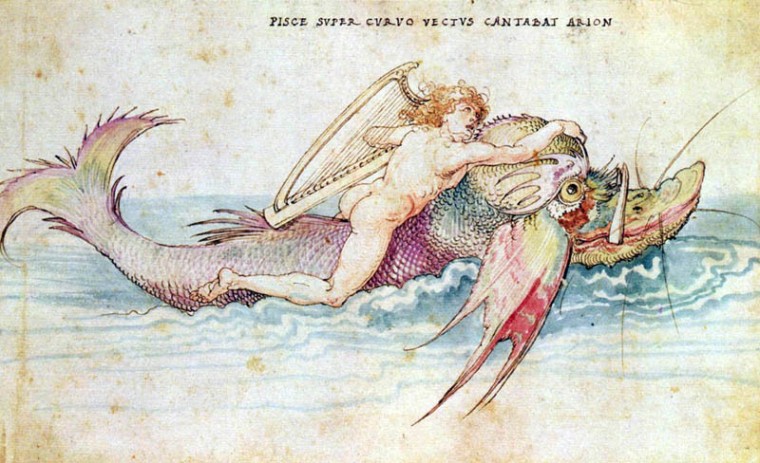
Del testo si trovano, anche nel web, numerose varianti, quasi tutte di poco conto, a cominciare da «When… Then…» invece di «Where… There…» nella prima strofa; ma è chiaramente un errore l’«Anon» che non di rado sostituisce «Arion» all’inizio dell’ultimo verso della terza strofa: Edwardes fa infatti riferimento a Arione di Métimna, l’antico citaredo che secondo Erodoto inventò il ditirambo e che, racconta il mito, si salvò da sicura morte in mare lasciandosi portare a riva da un delfino che aveva ammaliato con il canto.

Dürer: Arion (c1514)
Albrecht Dürer: Arion (c1514)

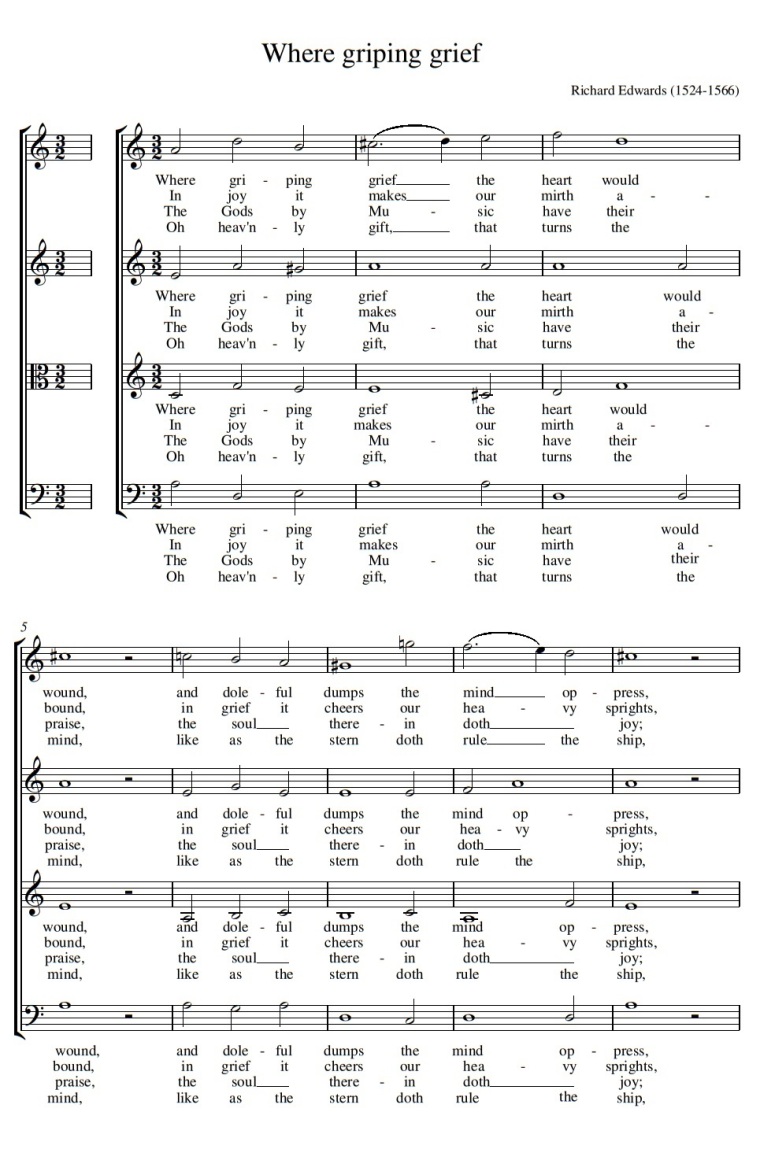
Le due fonti manoscritte che ci hanno tramandato la musica di Where griping grief (il Mulliner Book, raccolta di composizioni per strumento a tastiera databile fra il 1550 e il 1585 circa; e il Brogyntyn Lute Book, c1595) non riportano né il testo né il nome dell’autore: si ritiene probabile che anche la musica sia dello stesso Edwardes. La melodia è finemente cesellata; pur procedendo prevalentemente per gradi congiunti, presenta non pochi intervalli più ampi, fra cui un’insolita (per l’epoca) ottava diminuita — sulle parole «dumps the» nel secondo verso della prima strofa.

Il brano doveva essere abbastanza noto all’epoca di Shakespeare, perché questi lo cita in una scena di Romeo e Giulietta. Alla fine del IV atto, dopo che la Nutrice ha rinvenuto il corpo esanime della giovane Capuleti e un cupo inatteso dolore strazia i suoi familiari, alcuni musicisti, che erano stati convocati per allietare la festa delle nozze di Giulietta con il conte Paride, ripongono mestamente gli strumenti e stanno per andarsene quando sopraggiunge Pietro (servitore della Nutrice) e chiede ai musici di suonare per lui; gli altri rispondono che non è il momento adatto per far musica, sicché Pietro inizia a battibeccare con loro e infine, citando Where griping grief, trova il modo di insolentirli. La scena consiste in una lunga serie di giochi di parole a sfondo musicale, da alcuni critici considerati di bassa lega — tanto che qualche traduttore italiano ha pensato bene di omettere l’intero passo. Ma secondo me la scena non è affatto priva di interesse, ragion per cui la riporto qui di seguito: a sinistra l’originale inglese, a destra non esattamente una traduzione, ma piuttosto una reinterpretazione, con alcune esplicite allusioni a musiche famose ai tempi del Bardo e già note ai frequentatori di questo blog.

PETER
Musicians, O musicians, Heart’s Ease, Heart’s Ease. O, an you will have me live, play Heart’s Ease.
PIETRO
Musici, o musici, Chi passa, Chi passa. Se volete ch’io viva, suonate Chi passa.
FIRST MUSICIAN
Why Heart’s ease?
1° MUSICO
Perché Chi passa?
PETER
O musicians, because my heart itself plays My Heart is Full. O, play me some merry dump to comfort me.
PIETRO
O musici, perché il mio cuore sta danzando un passamezzo che non passa. Prego, suonate qualche allegro lamento per confortarmi.
FIRST MUSICIAN
Not a dump, we. ‘Tis no time to play now.
1° MUSICO
No, niente lamenti. Non è il momento di suonare.
PETER
You will not then?
PIETRO
Non volete suonare?
FIRST MUSICIAN
No.
1° MUSICO
No.
PETER
I will then give it you soundly.
PIETRO
Allora ve le suonerò io, sentirete.
FIRST MUSICIAN
What will you give us?
1° MUSICO
Che cosa sentiremo?
PETER
No money, on my faith, but the gleek. I will give you the minstrel.
PIETRO
Oh, non un tintinnar di monete, ve l’assicuro, ma piuttosto una canzon…atura. Ecco, vi tratterò da menestrelli.
FIRST MUSICIAN
Then I will give you the serving creature.
1° MUSICO
E allora noi ti tratteremo da giullare.
PETER
Then will I lay the serving creature’s dagger on your pate. I will carry no crotchets. I’ll re you, I’ll fa you. Do you note me?
PIETRO
E allora riceverete la sonagliera del giullare sulla zucca. Vi avevo chiesto lamenti e mi date capricci. Così ve le suonerò: prendete nota.
FIRST MUSICIAN
An you re us and fa us, you note us.
1° MUSICO
Se ce le suoni, prenderemo davvero le tue note.
SECOND MUSICIAN
Pray you, put up your dagger and put out your wit.
2° MUSICO
Per favore, riponi la tua sonagliera e va’ adagio.
PETER
Then have at you with my wit. I will dry-beat you with an iron wit and put up my iron dagger. Answer me like men.
(sings)
 When griping grief the heart doth wound
 And doleful dumps the mind oppress,
 Then Music with her silver sound—
Why «silver sound»? Why «Music with her silver sound»? What say you, Simon Catling?
PIETRO
Andrò a mio agio e vi metterò a disagio. I miei adagi non sono meno pesanti della sonagliera. Rispondete dunque, da uomini, ai miei colpi.
(canta)
 Quando ferisce il cuore arduo tormento
 E la mente grava penoso tedio,
 Allora Musica dal suon d’argento…
Perché «suon d’argento»? Perché dice «Musica dal suon d’argento»? Tu che ne dici, Simon Cantino?
FIRST MUSICIAN
Marry, sir, because silver hath a sweet sound.
1° MUSICO
Diamine, signore, perché l’argento ha un dolce suono.
PETER
Prates. What say you, Hugh Rebeck?
PIETRO
Ciance. E tu che dici, Ugo Ribeca?
SECOND MUSICIAN
I say, «silver sound» because musicians sound for silver.
2° MUSICO
Dico: «suon d’argento» perché i musicisti suonano per guadagnarsi dell’argento.
PETER
Prates too. What say you, James Soundpost?
PIETRO
Ciance anche queste. E tu, Giaco Bischero?
THIRD MUSICIAN
Faith, I know not what to say.
3° MUSICO
In fede mia, non so che dire.
PETER
Oh, I cry you mercy, you are the singer. I will say for you. It is «Music with her silver sound» because musicians have no gold for sounding.
(sings)
 Then Music with her silver sound
 With speedy help doth lend redress.
(exit)
PIETRO
Oh, ti chiedo scusa: tu sei quello che canta. Be’, risponderò io per te: dice «Musica col suon d’argento» perché i musicisti non hanno mai oro da far risonare.
(canta)
 Allora Musica dal suon d’argento
 Con lesto soccorso pone rimedio.
(esce)
FIRST MUSICIAN
What a pestilent knave is this same!
1° MUSICO
Che pestifero furfante è costui!
SECOND MUSICIAN
Hang him, Jack! Come, we’ll in here, tarry for the mourners and stay dinner.
(exeunt)
2° MUSICO
Lascialo perdere! Venite, entriamo: aspette­remo quelli che verranno per il funerale e ci fermeremo a pranzo.
(escono)

Shakespeariana – XXXIII

Her silver sound


Anonymous (probably Richard Edwardes, 1525 - 1566): Where griping grief. Two versions:
– as a song for 1 voice (soprano) and lute: Emma Kirkby and Anthony Rooley.
– as a partsong for 4 voices: the Deller Consort.

Where griping grief the heart would wound
 And doleful dumps the mind oppress,
There music with her silver sound
 Is wont with speed to give redress
Of troubled minds, for ev’ry sore,
 Sweet music hath a salve in store.

In joy it makes our mirth abound,
 In grief it cheers our heavy sprites,
The careful head relief hath found,
 By music’s pleasant sweet delights;
Our senses, what should I say more,
 Are subject unto Music’s law.

The gods by music have their praise,
 The soul therein doth joy;
For as the Roman poets say,
 In seas whom pirates would destroy,
A dolphin saved from death most sharp,
 Arion playing on his harp.

O heavenly gift, that turns the mind,
 Like as the stern doth rule the ship,
Of music whom the gods assigned,
 To comfort man whom cares would nip,
Since thou both man and beast doth move,
 What wise man then will thee reprove.


Richard Edwardes, possibly an illegitimate son of Henry VIII, was a poet, playwright, gentleman of the Chapel Royal and choirmaster of the same institution in the reigns of Mary and Elizabeth I. In his later years he compiled an extensive anthology of poems by various authors, adding his own, including Where griping grief (under the title In commendation of Musick). The anthology, titled The Paradise of Dainty Devices, appeared posthumously in 1576, edited by Henry Disle; it was the most successful of the numerous miscellaneous books printed at the end of the sixteenth century: it was in fact reprinted nine times in the following thirty years.

There are, even on the Internet, many variants of Where griping grief, almost all of little importance, such as for example «When… Then…» instead of «Where… There…» in the first line; but the «Anon» which often replaces «Arion» at the beginning of the last line of the third stanza is clearly a mistake: Edwardes in fact refers to Arion of Methymna, a kitharode in ancient Greece credited with inventing the dithyramb: according to the myth, Arion was saved from certain death at sea by being carried ashore by a dolphin that he had enchanted with his own singing.

Dürer: Arion (c1514)
Albrecht Dürer: Arion (c1514)

The two manuscript sources that have handed down the music of Where griping grief (the Mulliner Book, a collection of pieces for keyboard instrument dating between about 1550 and 1585; and the Brogyntyn Lute Book, c1595) do not bear neither the text nor the name of the composer: the music is thought to be probably by Edwardes himself. Where griping grief has a finely chiseled tune; though proceeding mainly in joint degrees, it has several larger intervals, including an unusual (at that time) diminished octave — to the words «dumps the» in the second line of the first stanza.

Where griping grief must have been quite well known in Shakespeare’s time, so much so that its first stanza is quoted in a scene from Romeo and Juliet, at the end of the fourth act, after the Nurse has found the lifeless body of the young Capulet and a gloomy unexpected pain torments his relatives; the news also saddens some musicians, who had been summoned to cheer Juliet’s wedding party: they are putting away their instruments before leaving when Peter (the Nurse’s servant) asks them to play for him; since the musicians have no intention of pleasing him, Peter begins to argue with them and finally, quoting Where griping grief, finds a way to insult them.

PETER

Answer me like men.
(sings)
 When griping grief the heart doth wound
 And doleful dumps the mind oppress,
 Then Music with her silver sound—
Why «silver sound»? Why «Music with her silver sound»? What say you, Simon Catling?

FIRST MUSICIAN

Marry, sir, because silver hath a sweet sound.

PETER

Prates. What say you, Hugh Rebeck?

SECOND MUSICIAN

I say, «silver sound» because musicians sound for silver.

PETER

Prates too. What say you, James Soundpost?

THIRD MUSICIAN

Faith, I know not what to say.

PETER

Oh, I cry you mercy, you are the singer. I will say for you. It is «Music with her silver sound» because musicians have no gold for sounding.
(sings)
 Then Music with her silver sound
 With speedy help doth lend redress.
(exit)

Shakespeariana – XXVIII

Ophelia sings

Anonymous (16th century): How should I your true love know, song of Ophelia from Shakespeare’s play Hamlet, act 4, scene 5. Alfred Deller, countertenor; Desmond Dupré, lute.

How should I your true-love know
From another one?
By his cockle bat and staff
And his sandal shoon.

He is dead and gone, lady,
He is dead and gone;
At his head a grass-green turf,
At his heels a stone.

White his shroud as the mountain snow,
Larded with sweet flowers.
Which bewept to the grave did go
With true-love showers.

Cabanel, Ophelia (1883)
Alexandre Cabanel (1823-1889): Ophelia (1883)

Shakespeariana – XXVI

Calleno custure me

Anonymous (16th century): Calleno custure me, song. Alfred Deller, countertenor; Desmond Dupré, lute.

When as I view your comely grace
  Calleno custure me,
Your golden hairs, your angel’s face,
  Calleno custure me.

Your azure veins much like the skies
Your silver teeth, your crystal eyes.

Your coral lips, your crimson cheeks
That gods and men both love and leeks.

My soul with silence moving sense
Doth wish of God with reverence.

Long life and virtue you possess
To match the gifts of worthiness.


The recurring line (chorus) which gives the song its title is probably an adaptation to the English pronunciation of the Irish Cailín ó chois tSiúre mé, i.e. « I am a girl from the Suir-side » (Suir is a river in Ireland that flows into the Atlantic Ocean near Waterford): a harp composition with this title is mentioned in a seventeenth-century Irish poetic text.
The earliest known source for the tune (no text) is William Ballet’s Lute Book, a composite volume containing lute tablature dating back to the late 16th century and owned by the Library of Trinity College, Dublin. Here the piece is performed by Dorothy Linell:


On this tune William Byrd (c1540 - 1623) composed a short but flavorful set of variations for keyboard instrument, preserved in the Fitzwilliam Virginal Book under the title Callino Casturame (n. [CLVIII]). YouTube offers various performances: I chose those of David Clark Little on the virginal and Lorenzo Cipriani on the organ.


Calleno custure me often appears in anthologies of Shakespearean music: it is in fact mentioned in Henry V (act 4, scene 4) within a pun that sounds a bit silly today, but which bears witness to the song’s popularity in Shakespeare’s time.
The scene takes place before the battle of Azincourt: Pistol, the king’s old party companion, surprises a French soldier, Le Fer, who has infiltrated the English lines. Fearing that Pistol wants to kill him, the Frenchman tries to cajole him, however speaking to him in his own language:
« Je pense que vous êtes gentilhomme de bonne qualité. »
Unable to understand even a syllable, Pistol replies by mimicking Le Fer’s speech, the sound of whose words evidently reminds him of our song:
« Qualtitie calmie custure me!  »
In short, he mimics it with a kind of “meh, meh, meh” but more elegant 🙂
Then Le Fer agrees with Pistol, who frees him for the price of two hundred crowns.

Shakespeariana – XXVI

English translation: please click here.

Calleno custure me

Anonimo del XVI secolo: Calleno custure me. Alfred Deller, controtenore; Desmond Dupré, liuto.

When as I view your comely grace
  Calleno custure me,
Your golden hairs, your angel’s face,
  Calleno custure me.

Your azure veins much like the skies
Your silver teeth, your crystal eyes.

Your coral lips, your crimson cheeks
That gods and men both love and leeks.

My soul with silence moving sense
Doth wish of God with reverence.

Long life and virtue you possess
To match the gifts of worthiness.


Il verso ricorrente che dà titolo alla composizione è probabilmente un adattamento alla pronuncia inglese della frase in gaelico irlandese Cailín ó chois tSiúre mé, ossia « Sono una ragazza delle rive del Suir » (fiume che sfocia nell’Atlantico in prossimità di Waterford): la frase compare quale titolo di una composizione per arpa in un testo poetico irlandese del XVII secolo.
La più antica fonte nota della melodia (priva di testo) è il William Ballet’s Lute Book, una raccolta manoscritta di composizioni intavolate per liuto, risalente al tardo Cinquecento e conservata nella Biblioteca del Trinity College di Dublino. Qui il brano è interpretato da Dorothy Linell:


La melodia è stata rielaborata da William Byrd (c1540 - 4 luglio 1623) in una breve ma saporita serie di variazioni per strumento a tastiera, tramandataci dal Fitzwilliam Virginal Book con il titolo Callino Casturame (n. [CLVIII]). YouTube ne offre numerose interpretazioni: ho scelto quelle di David Clark Little al virginale e Lorenzo Cipriani all’organo.


Resta da segnalare che Caleno custure me figura spesso nelle antologie di musiche scespiriane: è infatti citata nell’Enrico V (atto IV, scena 4a) in un gioco di parole che oggi suona alquanto insulso, ma che testimonia la popolarità della canzone all’epoca del Bardo.
La scena si svolge prima della battaglia di Azincourt: Pistol, vecchio compagno di bagordi del re, sorprende un soldato francese, Le Fer, infiltratosi fra le linee inglesi. Temendo che l’altro voglia ammazzarlo, il francese tenta di blandirlo, parlandogli però nella propria lingua:
« Je pense que vous êtes gentilhomme de bonne qualité. »
Non riuscendo a comprendere nemmeno una sillaba, Pistol risponde scimmiottando la parlata di Le Fer, il suono delle cui parole evidentemente gli rammenta il titolo della nostra canzone:
« Qualtitie calmie custure me!  »
Gli fa insomma il verso, una specie di “gnegnegné” ma più raffinato 🙂
Le Fer poi si accorda con Pistol, che in cambio di duecento scudi lo lascia libero.