
 Roel van Oosten (14 giugno 1958): Concerto per arpa e orchestra (1999). Godelieve Schrama, arpa; Radio Kamerorkest, dir. Micha Hamel.
I movimento
II movimento [10:24]
III movimento [15:18]
Roel van Oosten (14 giugno 1958): Concerto per arpa e orchestra (1999). Godelieve Schrama, arpa; Radio Kamerorkest, dir. Micha Hamel.
I movimento
II movimento [10:24]
III movimento [15:18]
Sing all a green willow – I
Gioachino Rossini (1792 - 1868): «Assisa a pie’ d’un salice – Deh calma, o ciel, nel sonno», Canzone del salice e Preghiera dall’atto III di Otello, ossia Il moro di Venezia, dramma tragico in 3 atti su libretto di Francesco Berio di Salsa (1816). Montserrat Caballé, soprano (Desdemona); Corinna Vozza, mezzosoprano (Emilia); Orchestra della RCA Italiana, dir. Carlo Felice Cillario.
DESDEMONA:
Assisa a pie’ d’un salice,
immersa nel dolore,
gemea trafitta Isaura
dal più crudele amore:
l’aura tra i rami flebile
ne ripeteva il suon.
I ruscelletti limpidi
a’ caldi suoi sospiri,
il mormorio mesceano
de’ lor diversi giri:
l’aura fra i rami flebile
ne ripeteva il suon.
Salce, d’amor delizia!
Ombra pietosa appresta,
(di mie sciagure immemore)
all’urna mia funesta;
né più ripeta l’aura
de’ miei lamenti il suon.
Che dissi!… Ah m’ingannai!… Non è del canto
questo il lugubre fine. M’ascolta… Oh dio!
(un colpo di vento spezza alcuni vetri della finestra.)
EMILIA:
Non paventar; rimira:
impetuoso vento è quel che spira.
DESDEMONA:
Io credeva che alcuno… Oh come il cielo
s’unisce a’ miei lamenti!…
Ascolta il fin de’ dolorosi accenti.
Ma stanca alfin di spargere
mesti sospiri, e pianto,
morì l’afflitta vergine
ahi! di quel salce accanto.
Morì… che duol! l’ingrato…
Poté… ma il pianto oh Dio!
proseguir non mi fa. Parti, ricevi
da’ labbri dell’amica il bacio estremo.
EMILIA:
Oh che dici!… Ubbidisco… oh come io tremo!
DESDEMONA:
Deh calma, o ciel, nel sonno
per poco le mie pene,
fa, che l’amato bene
mi venga a consolar.
Se poi son vani i prieghi,
di mia breve urna in seno
venga di pianto almeno
il cenere a bagnar.
(ella cala la tendina e si getta sul letto.)
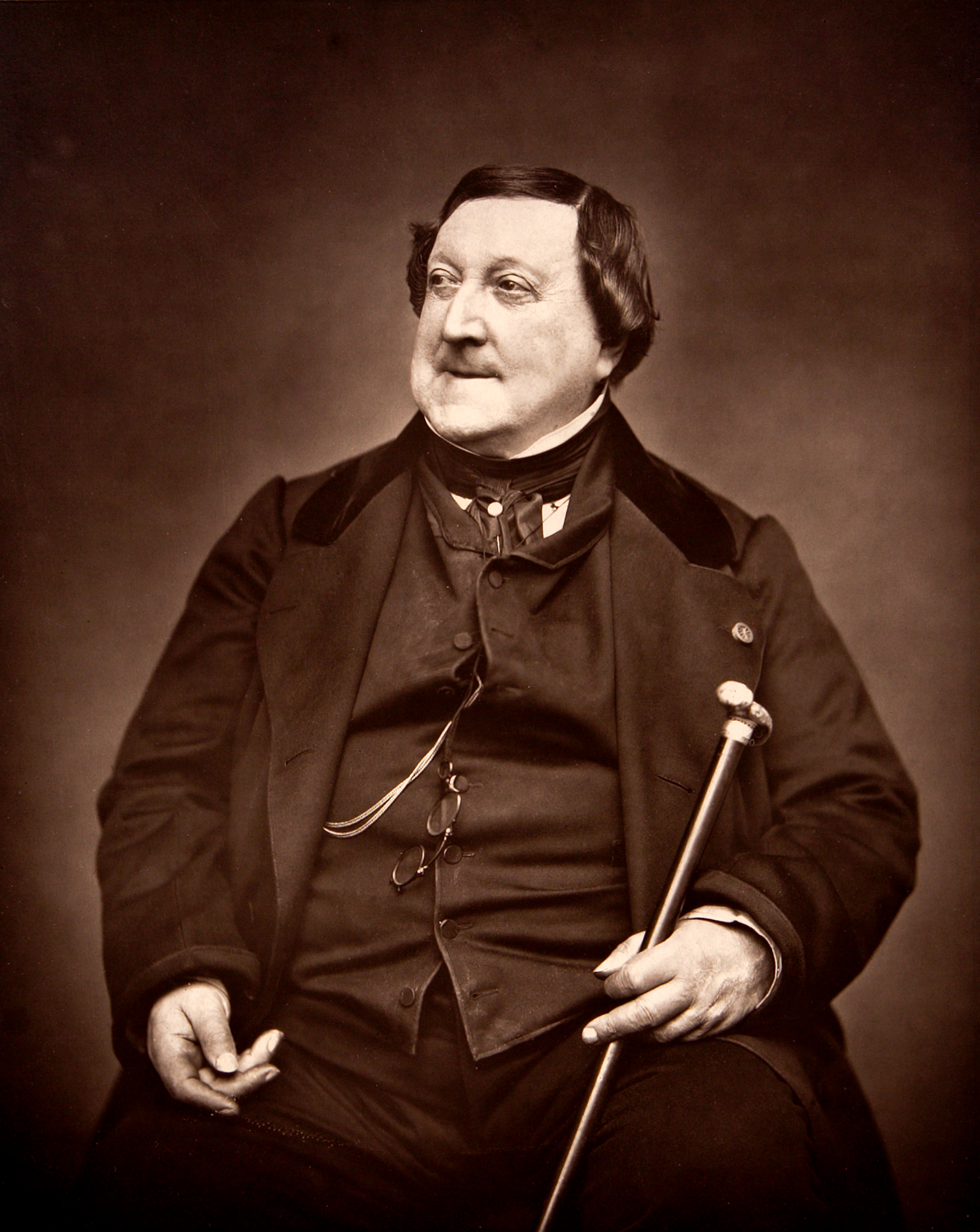
René Leibowitz (1913 - 1972): Greensleeves per arpa e archi. New Symphony Orchestra of London diretta dall’autore (registrazione del 1961).

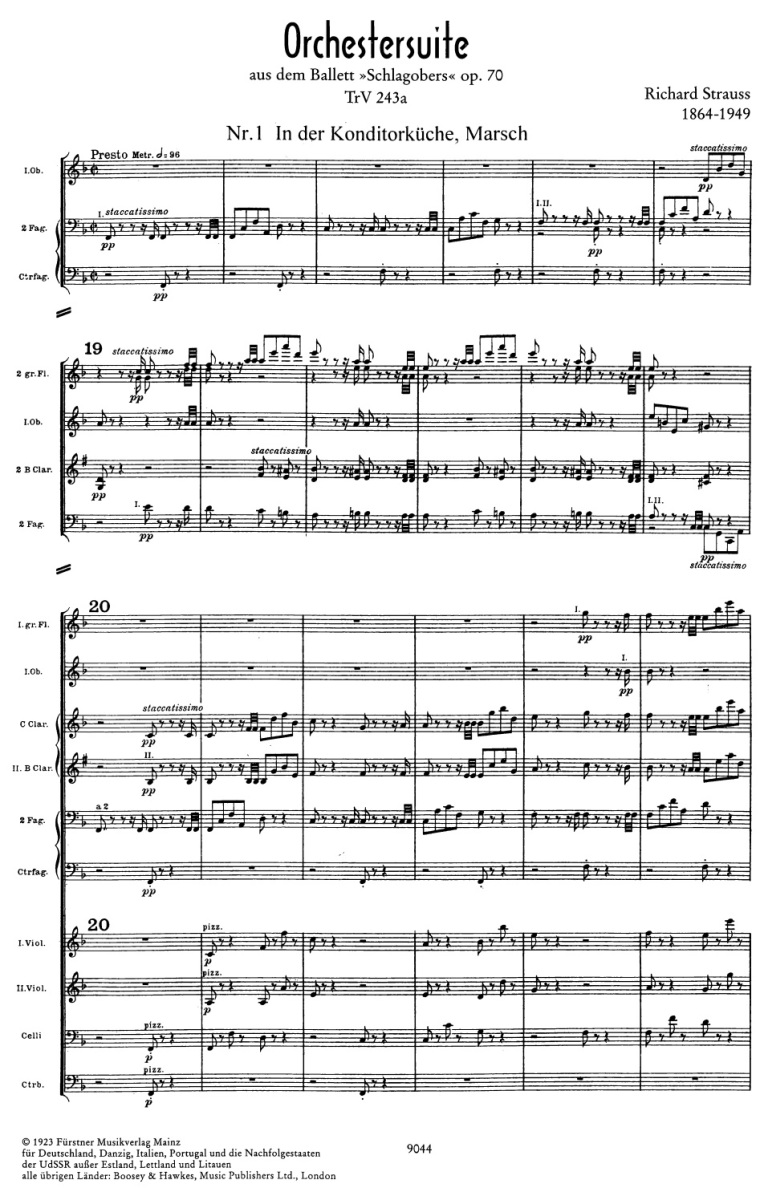
Richard Strauss (11 giugno 1864 - 1949): Suite dal balletto Schlagobers (1921-22). Orkiestra filharmonii narodowej w Warszawie (Orchestra filarmonica di Varsavia), dir. Jacek Kaspszyk.
Il balletto è ambientato a Vienna. Un gruppo di bambini dopo la cresima vengono accompagnati dalle rispettive madrine in una pasticceria del Prater, dove si abbuffano di ogni sorta di dolciumi: ne consegue inevitabile l’indigestione, sicché finiscono in ospedale. Durante la notte, i bambini sognano che tutti i dolcetti divorati il giorno prima prendono vita e danzano. La mattina successiva il medico constata la guarigione dei piccoli, che possono tornare ai loro giochi spensierati.
Charles Wuorinen (9 giugno 1938 - 2020): Microsymphony (1992). Philadelphia Orchestra diretta presumibilmente dall’autore.

 Albéric Magnard (9 giugno 1865 - 1914): Sinfonia n. 4 in do diesis minore op. 21 (1913). Orchestre du Capitole de Toulouse, dir. Michel Plasson.
Tomaso Albinoni (8 giugno 1671 - 1751): Concerto in si bemolle maggiore per oboe e archi op. 9 n. 11 (1722). Han de Vries, oboe; Alma Musica Amsterdam, dir. Bob van Asperen.

Giuseppe Demachi (7 giugno 1732 - c1791): Sinfonia in mi bemolle maggiore. Kurpfälzisches Kammerorchester, dir. Hans Oskar Koch.

Many sighs about nothing
Thomas Augustine Arne (1710 - 1778): Sigh no more, ladies, dalle musiche di scena (1748) per Much ado about nothing di W. Shakespeare (atto II, scena 3a).
– Versione per voce solista e orchestra d’archi: Alexander Young, tenore; Martin Isepp, clavicembalo; Wiener Rundfunkorchester, dir. Brian Priestman.
– Versione per 3 voci virili (TTB) a cappella: The Hilliard Ensemble.
Sigh no more, ladies, sigh no more.
Men were deceivers ever,
One foot in sea, and one on shore,
To one thing constant never.
Then sigh not so, but let them go,
And be you blithe and merry,
Converting all your sounds of woe
Into hey down derry.
Sing no more ditties, sing no more
Of dumps so dull and heavy.
The fraud of men was ever so
Since summer first was leavy.
Then sigh not so, but let them go,
And be you blithe and merry,
Converting all your sounds of woe
Into hey down derry.

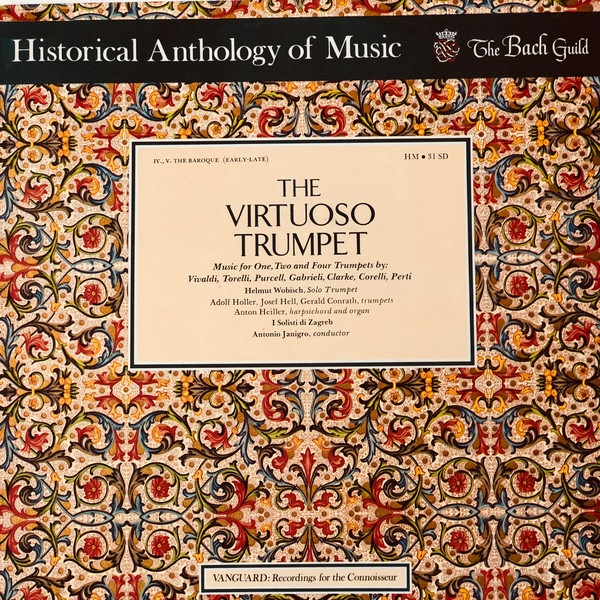
Giacomo Antonio Perti (6 giugno 1661 - 1756): Sonata per 4 trombe, archi e basso continuo. Helmut Wobisch, I tromba; I Solisti di Zagabria, dir. Antonio Janigro (registrazione del 1972).
Shylock
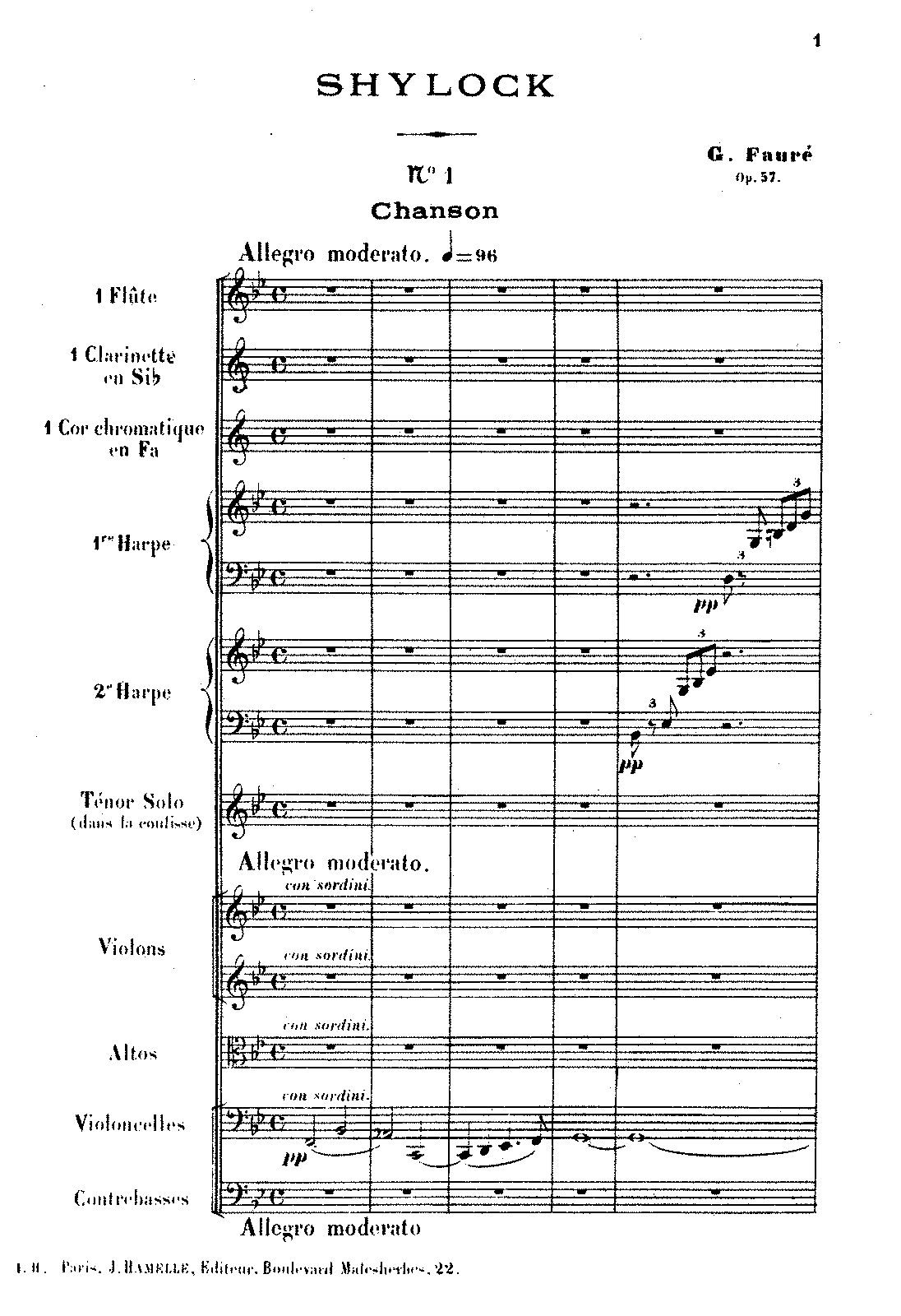
Gabriel Fauré (1845 - 1924): Shylock, suite per tenore e orchestra op. 57 (1889) dalle musiche di scena per la commedia omonima in 3 atti di Edmond Haraucourt (adattamento dal Mercante di Venezia di Shakespeare). Benjamin Bruns, tenore; Sinfonieorchester Basel, dir. Ivor Bolton.
Oh! les filles! Venez, les filles aux voix douces!
C’est l’heure d’oublier l’orgueil et les vertus,
Et nous regarderons éclore dans le mousses,
La fleur des baisers défendus.
Les baisers défendus c’est Dieu qui les ordonne.
Oh! les filles! Il fait le printemps pour les nids,
Il fait votre beauté pour qu’elle nous soit bonne,
Nos désirs pour qu’ils soient unis.
Oh! filles! Hors l’amour rien n’est bon sur la terre,
Et depuis les soirs d’or jusqu’aux matin rosés
Les morts ne sont jaloux, dans leur paix solitaire,
Que du murmure des baisers!
Celle que j’aime a de beauté
Plus que Flore et plus que Pomone,
Et je sais pour l’avoir chanté
Que sa bouche est le soir d’automne
Et son regard la nuit d’été.
Pour marraine elle eut Astarté,
Pour patronne elle a la Madone,
Car elle est belle autant que bonne,
Celle que j’aime.
Elle écoute, rit et pardonne,
N’écoutant que par charité;
Elle écoute, mais sa fierté
N’écoute ni moi ni personne,
Et rien encore n’a tenté
Celle que j’aime.
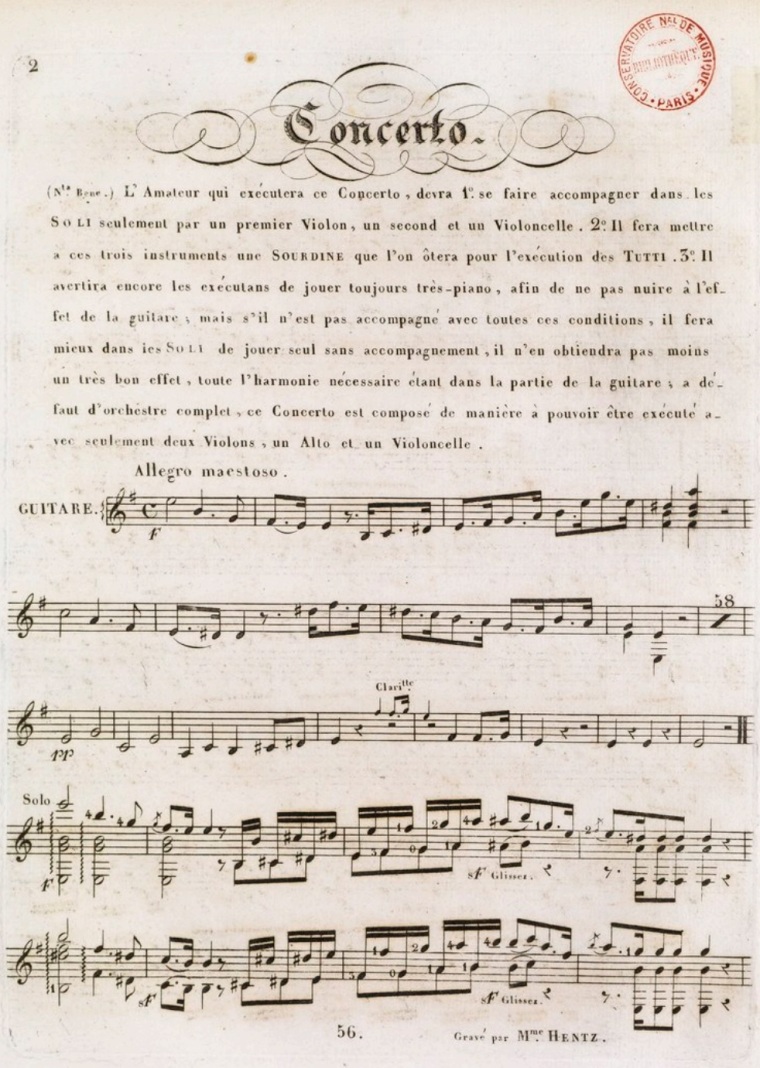
Francesco Molino (4 giugno 1768 - 1847): Grand Concerto in mi minore per chitarra e orchestra. Pepe Romero, chitarra; Academy of St Martin in the Fields, dir. Iona Brown.
Kaija Saariaho (1952 - 2 giugno 2023): Orion per orchestra (2002). Orchestre de Paris, dir. Christoph Eschenbach.

Hamlet and Ophelia
 Guillaume Lekeu (1870 - 1894): Étude symphonique no. 2: Hamlet et Ophélie (1889). Orchestre Philharmonique de Liège, dir. Pierre Bartholomée.
Lekeu: Ophélie (2a versione, 1890). Stessi interpreti.
Michail Ivanovič Glinka (1° giugno 1804 - 1857): Capriccio brillante sopra la «jota aragonesa», ouverture spagnola n. 1 (1845). Orchestra Sinfonica di Stato dell’URSS, dir. Evgenij Svetlanov.
Glinka: Souvenir d’une nuit d’été à Madrid, ouverture spagnola n. 2 (1851). Stessi interpreti.
A Shakespearean Suite
 Josef Bohuslav Foerster (1859 - 1951): Suita ze Shakespeareho per orchestra op. 76 (1908-09). Orchestra sinfonica di Praga, dir. Václav Smetáček.
Louise Farrenc (31 maggio 1804 - 1875): Seconda Sinfonia in op. 35 (1845). Solistes Européens Luxembourg, dir. Christoph König.

Marcel Dupré (3 maggio 1886 - 30 maggio 1971): Sinfonia in sol minore per organo e orchestra op. 25 (1928). Daniel Jay McKinley, organo; Columbus Indiana Philharmonic Orchestra, dir. David Bowden.

Hamlet according to Abbé Vogler
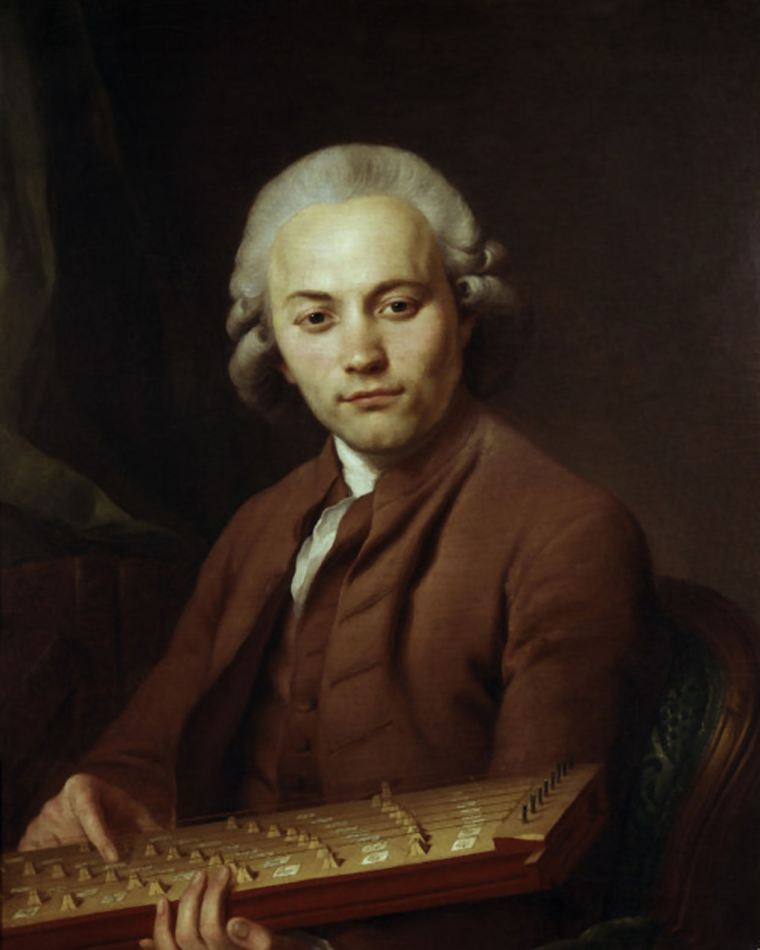
Georg Joseph Vogler (1749 - 1814): Ouverture per l’Amleto di William Shakespeare (Mannheim, 1779). London Mozart Players, dir. Matthias Bamert.
Josef Suk (1874 - 29 maggio 1935): Asrael, sinfonia funebre in do minore op. 27 (1906), in memoria di Antonín Dvořák e di sua figlia Otilka (moglie di Suk). Symphonieorchester des Bayerischen Rundfunks, dir. Rafael Kubelík.

György Ligeti (28 maggio 1923 - 2006): Lontano per orchestra (1967). Wiener Philharmoniker, dir. Claudio Abbado.
Lontano è una delle opere fondamentali di Ligeti, risale al periodo in cui decise di sperimentare procedure compositive totalmente nuove e inusitate. Il titolo (in italiano) fa riferimento a una lontananza intesa in senso non solo spaziale, ma anche “storico” e soprattutto musicale: i suoni giungono all’ascoltatore da una grande distanza, che è quella che Ligeti pone fra ciò che è stato, in ambito musicale, e la propria creazione.
L’epoca di composizione (anni ’60) è la stessa di Atmosphères, brano che è stato inserito da Kubrick, insieme con altre cose di Ligeti, nella colonna sonora di 2001: Odissea nello spazio. Di Lontano si sono serviti lo stesso Kubrick in Shining e Scorsese in Shutter Island.

György Ligeti (28 maggio 1923 - 2006): Atmosphères per orchestra (1961). Orchestre Philharmonique de Radio France, dir. Alan Gilbert.

Luciano Berio (1925 - 27 maggio 2003): Quattro versioni originali della «Ritirata notturna di Madrid» di Boccherini sovrapposte e trascritte per orchestra (1975). Orchestra sinfonica di Milano «Giuseppe Verdi», dir. Riccardo Chailly.
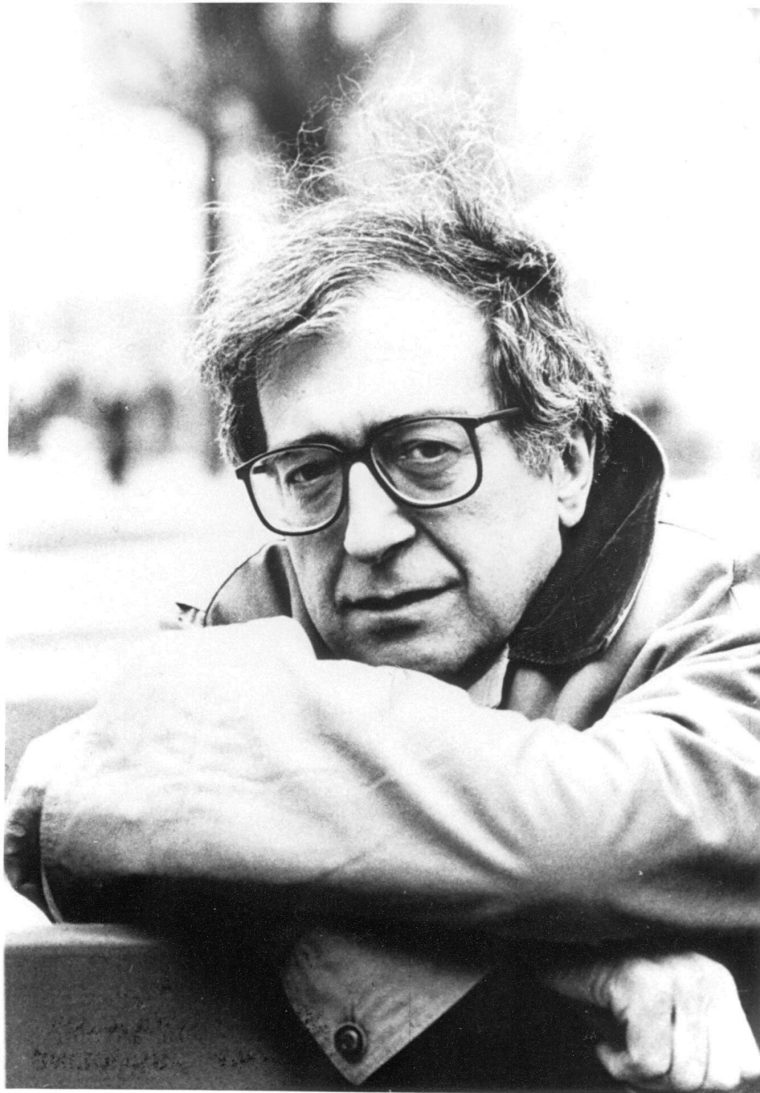
Dame Thea Musgrave (27 maggio 1928): Concerto per orchestra (1967). Royal Scottish National Orchestra, dir. Alexander Gibson.
« It is one of a series of works (including the 2nd and 3rd Chamber Concertos), in which the composer has been preoccupied with the search for “vivid dramatic forms for abstract instrumental music”. This has led her to explore the possibilities for freeing the vertical aspect of the music from the rigid control of the barline – or, in this case, from the conductor’s beat – without losing control of the overall musical content, so that, whatever the arbitrary melodic coincidence, the harmonic sense is always clear. Besides being a virtuoso work for orchestra, this is also a ‘concerto’ in the more usual sense of a conflict between solo and tutti. This conflict is muted at first, becoming more intense as the tempo increases throughout the work, and ending with a fierce musical confrontation.
« The five sections are played without a break. In the opening Adagio, various solo instruments unfold slow, expressive ideas which are later overlaid by more spiky, fanfare-like figurations suggested by the first entry of the trumpet. The tutti background is almost entirely static: basically a single note (E flat) resolving on to closely-spaced chords. The divisions between solo and tutti are intentionally blurred by the changing instrumentation. In the andante velato the sustained background is formed by a series of chords – a continuous, though slow-moving harmonic ostinato – on the strings and brass. Above and around these, as in the first section, legato melodic lines contrast with fragmentary rhythmic fanfares and cadenza-like flourishes. These ‘solo’ elements gradually suffuse the whole texture, encouraging the break-up of the sustained harmonic background – which only then returns to form the final cadence chord.
« In the third section – calmo – a gently shifting, rather neutral background is provided by some of the solo strings, while others interweave freer, more brilliant passages between the staccato chords (always in equal note-lengths) of wind and brass which insist on a return to a regular rhythmic pulse. The tempo quickens as these elements weave into the beginnings of a full orchestral tutti, dramatically interrupted at its first climax by the solo clarinet who, during the course a of a wild and uninhibited cadenza, incites other instruments to join in. This he eventually does, in spite of their initial reluctance and three attempts by the tutti orchestra to take over. In an extended cadenza – Tempo rubato ma fantastico – the clarinet gradually enlarges his concertante group, spurring it on to ever more frenzied activity. During this, the tutti orchestra has little chance to assert itself but, as the soloists reach a climax of complexity, it starts to regain control, – finally submerging the rebellious elements (with the clarinet the last to admit defeat) as it moves into the final presto. The warring instruments resolve to co-operate in this tutti section, although the clarinet cannot resist a few penultimate wistful reminiscences of the opening sections of the work. » (Susan Bradshaw, https://www.wisemusicclassical.com)

Grimaces within a Dream
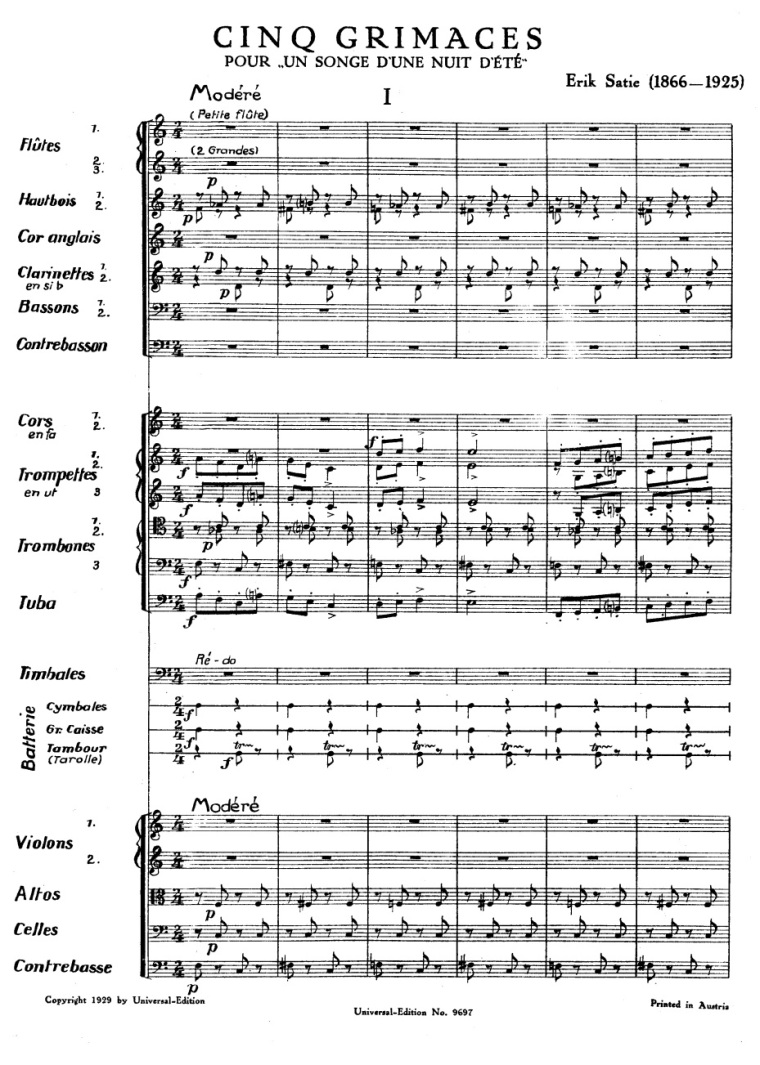
Érik Satie (1866 - 1925): Cinq Grimaces pour «Un Songe d’une nuit d’été» per orchestra op. posth. (1915). Orchestre du Capitole de Toulouse, dir. Michel Plasson.
Francesco d’Avalos (1930 - 26 maggio 2014): Qumrãn, studio per grande orchestra (1966). Orchestra sinfonica di Roma della Rai, dir. Eliahu Inbal (dal vivo: Roma, 1968).

Gustav Holst (1874 - 25 maggio 1934): Suite n. 2 in fa maggiore per banda militare op. 28 n. 2 (1911). University of Michigan Symphony Band, dir. Michael Haithcock.
 Greensleeves è citata nell’ultimo movimento della Suite n. 2 [10:14 e 11:33], in contrappunto con la vivace melodia irlandese intitolata Dargason (parola forse derivata da un termine anglosassone che significa nano o fata); anche Dargason, come Greensleeves, risale al XVI secolo.
Un anno dopo la composizione della Suite n. 2, Holst ne rielaborò il finale e lo inserì quale ultimo movimento nella Saint Paul’s Suite, composta per le sue allieve della Saint Paul’s Girls’ School di Londra, istituto del quale fu direttore musicale dal 1905 al 1934.
 Greensleeves is quoted in the last movement of the Second Suite [10:14 and 11:33], in counterpoint to a lively Irish tune called Dargason (a word possibly derived from an Anglo-Saxon term meaning dwarf or fairy); both Dargason and Greensleeves date from the 16th century.
A year after completing the Second Suite, Holst reworked its Finale and used it as the last movement of the Saint Paul’s Suite, composed for his students at Saint Paul’s Girls’ School in London, where he was musical director from 1905 to 1934.
Gustav Holst: Saint Paul’s Suite per archi op. 29 n. 2 (1912). The Bournemouth Sinfonietta, dir. Richard Studt.

Gustav Holst (1874 - 25 maggio 1934): Sinfonia in fa maggiore op. 8 H.47, The Cotswolds (1900). Ulster Orchestra, dir. JoAnn Falletta.

Johann Rufinatscha (1812 - 25 maggio 1893): Serenata in sol maggiore per archi. Orchester der Akademie Sankt Blasius, dir. Karlheinz Seissl.
Jacob Druckman (1928 - 24 maggio 1996): Chiaroscuro per orchestra (1977). The Juilliard Orchestra, dir. Lukas Foss.
Hai un account WordPress.com? Accedi ora.

