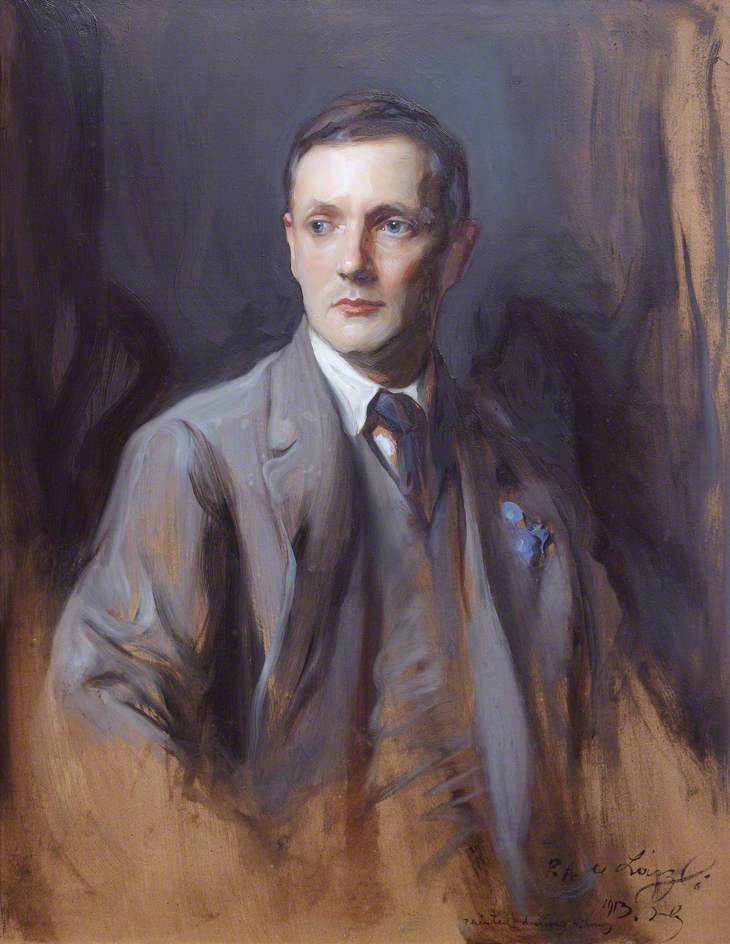
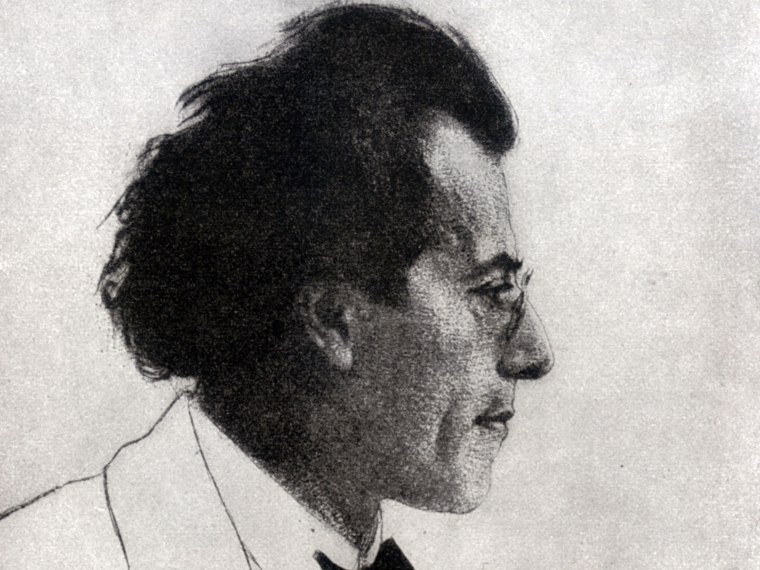
Anton Stepanovič Arenskij (12 luglio 1861 - 1906): Sinfonia n. 1 in si minore op. 4 (1883). Orchestra sinfonica di Stato della Federazione russa, dir. Valerij Poljanskij.
Pavle Merkù (12 luglio 1927 – 2014): Tri uspavanke za Jasno (Tre Ninne-nanne per Jasna) per clarinetto e pianoforte. Andrej Zupan, clarinetto; Jan Sever, pianoforte.
Anonimo (secolo XVI): The oak and the ash, ovvero The Northern Lasse’s Lamentation. Alfred Deller, controtenore; Desmond Dupré, liuto.
A North Country maid up to London had strayed
Although with her nature it did not agree,
She wept, and she sighed, and she bitterly cried:
I wish once again in the North I could be.
Oh the oak and the ash and the bonnie ivy tree,
They flourish at home in my own country.
While sadly I roam, I regret my dear home
Where lads and young lasses are making the hay,
The merry bells ring and the birds sweetly sing,
And maidens and meadows are pleasant and gay.
Oh the oak and the ash and the bonnie ivy tree,
They flourish at home in my own country.
No doubt, did I please, I could marry with ease,
Where maidens are fair many lovers will come.
But he whom I wed must be North Country bred,
And carry me back to my North Country home.
Oh the oak and the ash and the bonny ivy tree,
They flourish at home in my own country.
Una serie di variazioni sulla melodia di The Oak and the Ash, opera di Giles Farnaby (c1563 - 1640), si trova con il titolo Quodlings Delight nel Fitzwilliam Virginal Book (n. [CXIV]). Qui la composizione di Farnaby è interpretata al clavicembalo da Pieter-Jan Belder:
La medesima melodia ha inoltre dato origine a diverse danze popolari, fra cui una contraddanza pubblicata con il numero 52 nella fortunata raccolta The English Dancing Master (16511) di John Playford: il brano reca il suggestivo titolo di Goddesses, probabilmente ispirato da quello di un masque, The Vision of the Twelve Goddesses, scritto da Samuel Daniel e rappresentato nel 1604. Ecco Goddesses in un arrangiamento di Bernard Thomas interpretato dal bravissimo Nicolas Fendt, che suona chitarra rinascimentale, liuto-chitarra, flauto dolce soprano, contralto, tenore e basso, e percussioni:
Giorgio Federico Ghedini (11 luglio 1892 - 1965): Concerto dell’Albatro per voce recitante, violino, violoncello, pianoforte e orchestra (1945) su testi tratti da Moby Dick di Herman Melville (traduzione di Salvatore Quasimodo). Gordon Stanley, voce recitante; Mela Tenenbaum, violino; Dorothy Lawson, violoncello; Cameron Grant, pianoforte; Philharmonia Virtuosi, dir. Richard Kapp.
« Ricordo il primo albatro che vidi.
« Fu durante un lungo colpo di vento in acque remote nei mari antartici.
« Dopo la mia guardia franca del mattino, ero salito sul ponte coperto di nubi e là vidi, gettato sulle boccaporte di maestro, un essere regale, pennuto, di immacolata bianchezza e dal sublime romano rostro adunco.
« A intervalli esso allargava le ali immense da arcangelo, come per abbracciare qualche arca santa. Stupefacenti palpitazioni e sussulti lo scuotevano.
« Attraverso i suoi inesprimibili, stranissimi occhi mi pareva di scorgere segreti che giungevano a Dio.
« A lungo contemplai quel prodigio di penne. Non posso dire, ma soltanto far sentire, le cose che mi guizzarono allora nella mente. »
Anonimo del XVI secolo: Mignonne, allons (pubblicato nel Recueil des plus belles et excellentes chansons en forme de voix de ville, 1576) di Jean Chardevoine; testo di Pierre de Ronsard (ode À Cassandre, 1545). Duo Mignarda: Donna Stewart, voce; Ron Andrico, liuto.
Mignonne, allons voir si la rose
Qui ce matin avait déclose
Sa robe de pourpre au Soleil,
A point perdu cette vesprée,
Les plis de sa robe pourprée,
Et son teint au vôtre pareil.
Las! voyez comme en peu d’espace,
Mignonne, elle a dessus la place
Hélas! ses beautés laissé choir!
Ô vraiment marâtre Nature,
Puis qu’une telle fleur ne dure
Que du matin jusques au soir!
Donc, si vous me croyez, mignonne,
Tandis que vôtre âge fleuronne
En sa plus verte nouveauté,
Cueillez, cueillez votre jeunesse:
Comme à cette fleur la vieillesse
Fera ternir votre beauté.
La Cassandre cui è dedicata l’ode di Ronsard, fra i più celebri componimenti del poeta francese, è Cassandra Salviati, figlia del banchiere fiorentino Bernardo.
Pierre de Ronsard e Cassandra Salviati nel frontespizio della prima edizione degli Amours (Parigi 1552).
Un sentito ringraziamento a Luisa Zambrotta, il cui interessantissimo blog ha richiamato alla mia mente questa struggente chanson.
Eliodoro Sollima (10 luglio 1926 - 2000): Piccolo scherzo su temi di Mozart, trascrizione di Giovanni Sollima per flauto, clarinetto, violino, violoncello e pianoforte. Luigi Sollima, flauto; Calogero Palermo, clarinetto; Salvatore Greco, violino; Giovanni Sollima, violoncello; Giuseppe Andaloro, pianoforte.
Henryk Wieniawski (10 luglio 1835 - 1880): Concerto per violino e orchestra n. 1 in fa diesis minore op. 14 (1852: composto a 17 anni). Ray Chen, violino; WDR Sinfonieorchester Köln, dir. Cristian Măcelaru.
Anonimo del XIII secolo: La quarte estampie royal. Hespèrion XXI, dir. Jordi Savall.
Questa composizione è trascritta nel codice detto Chansonnier du Roi (fr. 844 della Bibliothèque nationale de France, f. 104r ). Di che cosa si tratta? L’estampie (in lingua d’oc estampida, in italiano antico stampita o istampitta) è una delle rarissime forme musicali medievali interamente o prevalentemente strumentali, presumibilmente destinata a accompagnare la danza: il nome deriverebbe dal francone estampir = battere i piedi. La struttura dell’estampie, accuratamente descritta nel trattato del teorico francese Johannes de Groche[i]o (Jean de Grouchy, c1255 - c1320), consiste nel susseguirsi di un certo numero di frasi musicali chiamate puncta (la Quarte estampie royal ne ha 7); ciascun punctum è ripetuto due volte con due differenti conclusioni, dette rispettivamente apertum / ouvert e clausum / clos. Mentre i puncta sono diversi l’uno dall’altro, in genere apertum e clausum si ripetono invariati.
Johannes de Grocheo — l’unico teorico dell’epoca che si occupi della musica popolare, da lui chiamata musica simplex — descrive alcune forme affini all’estampie: una di queste è la ductia, che presenta caratteri di minore complessità. Scrive il nostro trattatista, il quale asseriva convintamente (come già Platone) che la musica abbia il potere di influire sulla psiche: «Si dice che [la ductia] sia efficace nella cura di quella passione chiamata mal d’amore».
Ecco una ductia davvero graziosa, eseguita dall’ensemble Arte Factvm:
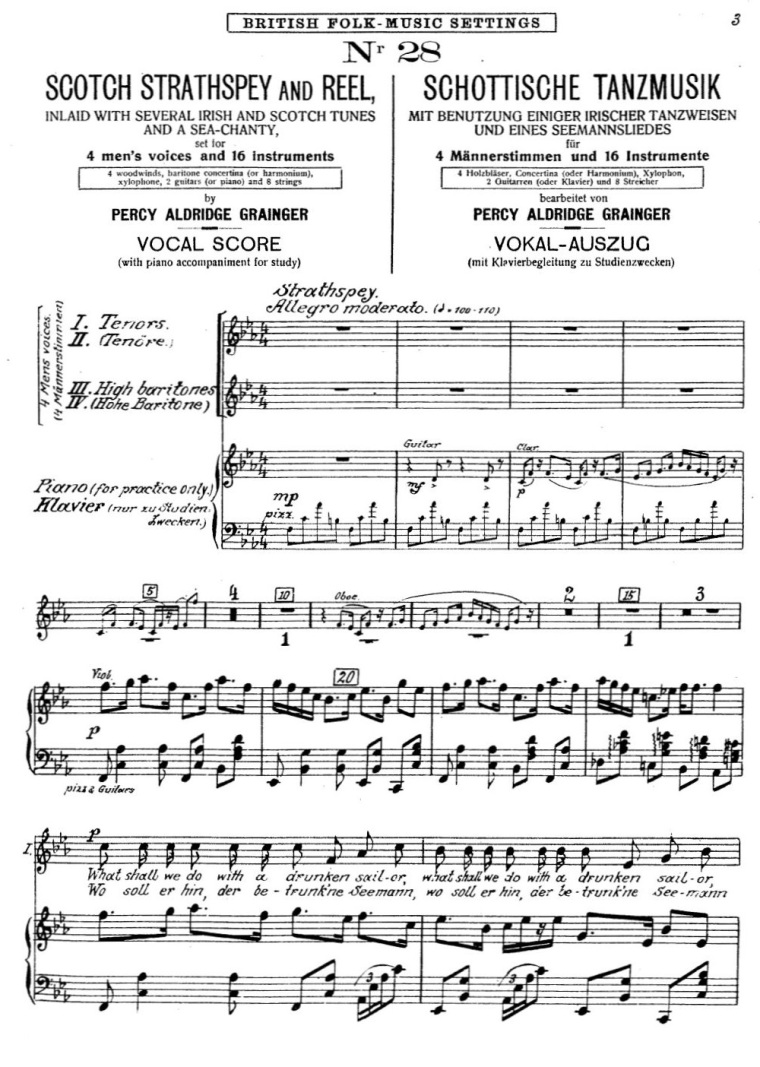
Percy Grainger (8 luglio 1882 - 1961): Scotch Strathspey and Reel per coro e orchestra (1924). The Ambrosian Singers & English Chamber Orchestra, dir. Benjamin Britten. Strathspey e reel sono danze tradizionali britanniche, di origine scozzese, in ritmo binario (2/2 o 4/4), la prima leggermente più lenta della seconda. La composizione di Grainger, il cui titolo completo è Scotch Strathspey and Reel inlaid with Several Irish and Scotch Tunes and Sea-Chanty, si fonda sopra un celebre canto marinaresco, Drunken Sailor (ovvero What Shall We Do with a/the Drunken Sailor? ), con melodia di probabile origine irlandese. Nelle due clip che seguono potete ascoltarlo in due diverse interpretazioni: del gruppo Irish Rovers la prima, più “tradizionale” e corredata dal testo; l’altra, più fantasiosa, è dei King’s Singers.
Ludwig Wenzel Lachnith (7 luglio 1746 - 1820): Sinfonia in si bemolle maggiore. Kurpfälzisches Kammerorchester, dir. Hans Oskar Koch.
Pastorale: Poco andante
Andantino [4:40]
Allemande [8:57]
Oggi Lachnith sarebbe del tutto dimenticato, se non fosse per una sua rivisitazione del Flauto magico andata in scena a Parigi nel 1801 con il titolo Les Mystères d’Isis ; si tratta di un adattamento del capolavoro mozartiano al gusto francese dell’epoca: nell’immediato ebbe un grande successo di pubblico, ma suscitò molte critiche anche postume, fra cui quella di Berlioz, feroce e al tempo stesso assai spassosa.
Anonimo (XVII secolo): Blew-cap for me. Ellen Hargis, soprano; Paul O’Dette, cittern.
Il testo fu pubblicato per la prima volta intorno al 1634 con il titolo Blew cap for me. Or, A Scottish lasse her resolute chusing shee’l have bonny blew-cap, all other refusing. To a curious new Scottish tune called Blew-cap.
There lives a blithe Lasse in Faukeland towne,
and shee had some suitors, I wot not how many;
But her resolution she had set down,
that shee’d have a Blew-cap gif e’re she had any:
An English man,
when our good king was there,
Came often unto her,
and loved her deere:
But still she replide, «Sir,
I pray let me be,
Gif ever I have a man,
Blew-cap for me.»
A Frenchman, that largely was booted and spur’d,
long lock’t, with a Ribon, long points and breeches,
Hee’s ready to kisse her at every word,
and for further exercise his fingers itches:
«You be pritty wench,
Mistris, par ma foy;
Be gar, me doe love you,
then be not you coy.»
But still she replide, «Sir,
I pray let me be;
Gif ever I have a man,
Blew-cap for me.»
An Irishman, with a long skeane in his hose,
did tinke to obtaine her it was no great matter;
Up stayres to her chamber so lightly he goes,
that she ne’re heard him until he came at her.
Quoth he, «I do love you,
by fate and by trote,
And if you will have me,
experience shall shote.»
But still she replide, «Sir,
I pray let me be;
Gif ever I have a man,
Blew-cap for me.»
A Dainty spruce Spanyard, with haire black as jett,
long cloak with round cape, a long Rapier and Ponyard;
Hee told her if that shee could Scotland forget,
hee’d shew her the Vines as they grow in the Vineyard.
«If thou wilt abandon
this Country so cold,
Ile shew thee faire Spaine,
and much Indian gold.»
But stil she replide, «Sir,
I pray let me be;
Gif ever I have a man,
Blew-cap for me.»
A haughty high German of Hamborough towne,
a proper tall gallant, with mighty mustachoes;
He weepes if the Lasse upon him doe but frowne,
yet he’s a great Fencer that comes to ore-match us.
But yet all his fine fencing
could not get the Lasse;
She deny’d him so oft,
that he wearyed was;
For still she replide, «Sir,
I pray let me be;
Gif ever I have a man,
Blew-cap for me.»
At last came a Scottish-man (with a blew-cap),
and he was the party for whom she had tarry’d;
To get this blithe bonny Lasse ‘twas his gude hap,–
they gang’d to the Kirk, & were presently marry’d.
I ken not weele whether
it were Lord or Leard;
They caude him some sike
a like name as I heard;
To chuse him from au
she did gladly agree,–
And still she cride, «Blew-cap,
th’art welcome to mee.»
La melodia è presente nella prima edizione (1651) della raccolta The English Dancing Master, curata da John Playford, con il titolo Blew Cap (n. 2). Qui è eseguita dai City Waites diretti da Lucie Skeaping:
Gian Carlo Menotti (7 luglio 1911 - 2007): Primo Concerto per pianoforte e orchestra (1945). Earl Wild, pianoforte; Symphony of the Air, dir. Jorge Mester.
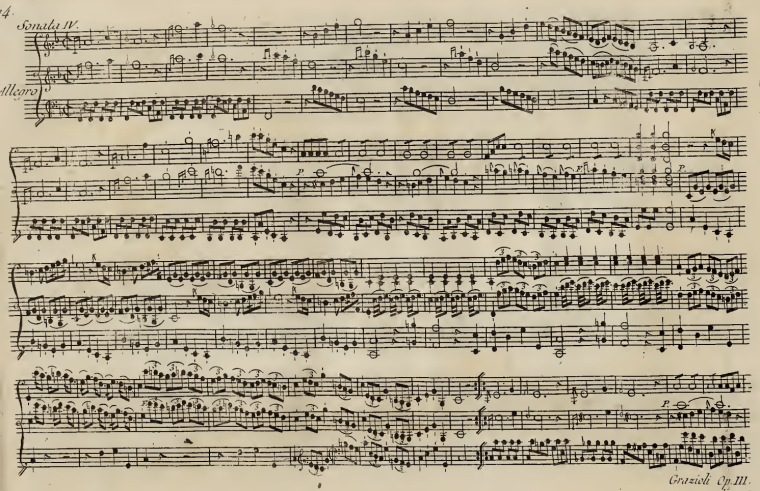
Giovanni Battista Grazioli (6 luglio 1746 - 1828): Sonata in fa maggiore per clavicembalo e violino obbligato op. 3 n. 4 (1781-84). Enrico Zanovello, clavicembalo; Enrico Casazza, violino.
Allegro
Rondò: Allegretto [4:45]
Oltre che per un celebre Adagio (dalla Sonata op. 1 n. 11), Grazioli è noto per aver ispirato Al Bano e Michael Jackson 😀
Anonimo (sec. XVII): Cold and raw ovvero The Maid who Sold her Barley o anche The Farmer’s Daughter, ballad di probabile origine scozzese. The Baltimore Consort.
Cold and raw the North did blow, bleak in a morning early;
All the trees were hid with snow, cover’d with winter fearly.
As I came riding o’er the slough, I met with a farmer’s daughter,
Rosie cheeks, and bonny brow, geud faith, made my mouth to water.
Down I vail’d my bonnet low, meaning to show my breeding,
She return’d a graceful bow, her visage far exceeding:
I ask’d her where she went so soon, and long’d to begin a parley:
She told me to the next market town, a purpose to sell her barley.
«In this purse, sweet soul!» said I, «twenty pound lies fairly,
Seek no farther one to buy, for I’se take all thy barley:
Twenty more shall purchase delight, thy person I love so dearly,
If thou wilt lig by me all night, and gang home in the morning early.»
«If forty pound would buy the globe, this thing I’s not do, sir;
Or were my friends as poor as Job, I’d never raise’em so, sir:
For shou’d you prove to-night my friend, we’se get a young kid together,
And you’d be gone e’r nine months end, & where shall I find the father?»
«Pray what would my parents say, if I should be so silly,
To give my maidenhead away, and lose my true love, Billy!
Oh this would bring me to disgrace, and therefore I say you nay, sir;
And if that you would me embrace, first marry, & then you may, sir!»
I told her I had wedded been, fourteen years and longer,
Else I’d chuse her for my queen, and tye the knot yet stronger.
She bid me then no farther roame, but manage my wedlock fairly,
And keep my purse for poor spouse at home, for some other should have her barley.
Then as swift as any roe, she rode away and left me;
After her I could not go, of joy she quite bereft me:
Thus I my self did disappoint, for she did leave me fairly,
My words knock’d all things out of joint, I lost both the maid and the barley.
Il testo è compreso nella monumentale silloge Wit and Mirth, or Pills to Purge Melancholy curata da Thomas D’Urfey, la cui 1a edizione risale al 1698; nel corso degli anni è stato associato a musiche diverse: la versione del Baltimore Consort adotta la melodia di Stingo, or The Oyle of Barley, un jig (danza) tratta dalla raccolta The English dancing master (16511, n. 10) di John Playford; stingo e oil of barley sono due modi di dire popolari con i quali all’epoca si indicava una birra forte a gradazione elevata. Ecco Stingo nell’interpretazione dei Musicians of Swanne Alley:
La melodia doveva essere assai popolare nel primo Settecento, tant’è vero che Pepusch la utilizzò per rivestire di musica l’aria «If any Wench Venus’s Girdle wear», cantata da Mrs Peachum nella 4a scena del I atto della Beggar’s Opera di John Gay (rappresentata per la 1a volta nel 1728). Qui è eseguita dall’ensemble The Broadside Band diretto da Jeremy Barlow, con Patrizia Kwella voce solista:
If any Wench Venus’s Girdle wear,
Though she be never so ugly;
Lilies and Roses will quickly appear,
And her Face look wond’rous smugly.
Beneath the left Ear so fit but a Cord,
(A Rope so charming a Zone is!)
The Youth in his Cart hath the Air of a Lord,
And we cry, There dies an Adonis!
All’aria di Mrs Peachum la Broadside Band fa seguire [a 1:17] una breve serie di variazioni per violino e basso continuo sulla medesima melodia, pubblicate con il titolo Up in the Morning Early dal compositore e violinista scozzese William McGibbon (1690 - 1756).
Pietro Torri (c1650 - 6 luglio 1737): «Quando il flebile usignolo», aria per soprano dal II atto dell’opera L’Ippolito (1731). Ann Hallenberg, mezzosoprano; Baroque Ensemble Musikdorf Ernen, dir. e violino principale Ada Pesch.
Quando il flebile usignolo
Lasciar deve a forza il nido
Si rivolge in altro lido
E spiegando afflitto il volo
Va sfogando il suo dolor.
Władysław Szpilman (1911 - 6 luglio 2000): Concertino per pianoforte e orchestra, composto nel Ghetto di Varsavia nel 1940. L’esegue l’autore con l’Orchestra della Radio polacca (Polska orkiestra radiowa), dir. Stefan Rachon; registrazione del 1972.
Ennio Morricone (1928 - 6 luglio 2020): Voci dal silenzio per voce recitante, voci registrate, coro e orchestra (2002). The Canticum Novum Singers e Roma Sinfonietta diretti dall’autore.
« L’ho composta sull’onda dell’emozione per la tragedia dell’11 settembre. Poi si è trasformata con il passare del tempo, è diventata un canto per tutte le tragedie, per tutte le stragi del mondo » (Ennio Morricone).
Thomas Ravenscroft (c1582 - c1635): The three ravens. Versione per 1 voce e liuto: Alfred Deller e Desmond Dupré; versione per 4 voci e viol consort: Theatre of Voices diretto da Paul Hillier (voce solista Else Torp) e Fretwork.
Nell’interpretazione di Deller, le strofe sono accorpate a due a due.
There were three ravens sat on a tree,
down a down, hay down, hay down,
There were three ravens sat on a tree,
with a down,
There were three ravens sat on a tree,
They were as black as black could be,
with a down, derry, derry, derry, down, down.
And one of them said to his mate:
Where shall we our breakfast take?
Down, [down] in yonder green field,
There lies a knight slain with his shield.
His hounds they lie down at his feet,
So well they their master keep.
His hawks they fly so eagerly,
There’s no fowl dare him come nie.
Down there comes a fallow doe,
As great with young as she might go.
She lift up his bloody head,
And kissed his wounds that were so red.
She got him up upon her back,
And carried him to earthen lake.
She buried him before the prime.
She was dead herself ere even-song time.
God send every gentleman
Such hawks, such hounds, and such a leman.
Non si hanno molte notizie su Ravenscroft, che però fu molto ammirato e stimato dai musicisti suoi contemporanei. Più che per le sue composizioni originali, è noto per un cospicuo numero di raffinati arrangiamenti di melodie tradizionali — qual è appunto The three ravens — che Ravenscroft pubblicò in tre diverse raccolte: Pammelia (1609), Deuteromelia: or The Second part of Musicks melodie (1609) e Melismata (1611).
Il nome di Ravenscroft comparirà spesso in questo blog 😉
Edward Frederick Brewtnall (1846-1902): The Three Ravens, acquerello su carta, c1883
Michel Yost (1754 - 5 luglio 1786): Concerto n. 7 in si bemolle maggiore per clarinetto e orchestra. Dieter Klöcker, clarinetto; Pražský komorní orchestr.