

Ripubblico questo breve articolo, dedicato a due piccoli gioielli della musica medievale, perché mi pare che abbia suscitato interesse. Alla prima delle due composizioni il presente blog deve il suo nome.
1. La danza gioiosa
A l’entrada del temps clar è uno dei più celebri brani del repertorio musicale medievale. È una balada (canzone a ballo) su testo in lingua d’oc, risalente al XII o all’inizio del XIII secolo, tramandataci dal manoscritto detto Chansonnier de Saint-Germain-des-Prés, oggi alla Bibliothèque Nationale de France, reliquia di considerevole importanza in quanto si tratta di una delle più antiche fonti di musica profana che ci siano pervenute: databile intorno agli anni 1230, è all’incirca contemporaneo del codice dei Carmina Burana.
In quanto assai famosa, A l’entrada del temps clar è stata anche assai maltrattata. YouTube ne offre numerose interpretazioni, e molte sono quelle insensatamente… fracassone, ove con grida più o meno sguaiate e abbondanza di percussioni si vorrebbero rendere evidenti le presunte origini e i pretesi caratteri popolareschi della composizione. Ma tutto questo sembra poco attendibile. All’epoca, la musica “popolare” — cioè, alla lettera, la musica del popolo, che chiamiamo così per contrapporla a quella eseguita nelle chiese e nelle corti aristocratiche — non era reputata degna di nota: le probabilità che un brano del repertorio popolare potesse essere preso in considerazione dal compilatore dello Chansonnier de Saint-Germain-des-Prés sono pressoché nulle. Del resto, nel manoscritto parigino la nostra balada, quantunque anonima, è inclusa nel gruppo dei componimenti trobadorici, e sappiamo bene che l’arte dei trovatori è tutto fuorché popolaresca. L’analisi del brano rivela tratti compositivi alquanto raffinati, tanto nel testo quanto nella melodia.
Dopo aver ascoltato tutto quanto YouTube ha da proporre in merito, di A l’entrada del temps clar ho infine scelto due interpretazioni che mi paiono interessanti per motivi differenti. La prima si trova in uno dei dischi che la Casa editrice Fratelli Fabbri allegò alla Storia della musica pubblicata nel 1964; ha tutto il fascino della semplicità: è esclusivamente cantata (non sono in grado di risalire ai nomi degli interpreti) e l’unico tipo di elaborazione musicale consiste nel canto antifonale, ossia nel contrapporre la voce solista femminile al coro maschile, affidando alternativamente all’una e all’altro strofe e refrain, seguendo una prassi esecutiva molto antica, denominata appunto alternatim. La seconda interpretazione adotta il medesimo criterio ma aggiunge alle voci un cospicuo numero di strumenti: l’ensemble è lo Studio der frühen Musik diretto da Thomas Binkley, ove spicca il bel timbro tenorile di Nigel Rogers.
Il testo è stato variamente interpretato, sia in senso letterale sia come allegoria, in qualche caso facendo riferimento a antichi riti pagani che celebravano la fine dell’inverno. «All’entrata del tempo chiaro», ossia all’inizio della primavera, una bella regina fiorente (aurilhosa, cioè «aprilosa»: ecco un bel neologismo di ottocento anni fa; piacque molto a Ezra Pound) invita tutti i giovani a unirsi a lei in una danza gioiosa, incurante della gelosia dell’anziano re, il quale tenta di disturbare la danza perché es en cremetar, ovvero teme fortemente — e a ragione — che la regina voglia curarsi non di un vecchio, bensì di «un leggiadro giovincello che ben sappia sollazzare la donna savorosa». E chi la vede danzare potrà a buon diritto dire che al mondo non esiste alcuna che sia pari alla regina gioiosa.
A l’entrada del temps clar, eya,
Per joia recomençar, eya,
E per jelos irritar, eya,
Vol la regina mostrar
Qu’el’es si amorosa.
A la vi’, a la via, jelos!
Laissatz nos, laissatz nos
Balar entre nos, entre nos.
El’ a fait pertot mandar, eya,
Non sia jusqu’a la mar, eya,
Piucela ni bachalar, eya,
Que tuit non vengan dançar
En la dansa joiosa.
A la vi’…
Lo reis i ven d’autra part, eya,
Per la dança destorbar, eya,
Que el es en cremetar, eya,
Que om no li volh emblar
La regin’aurilhosa.
A la vi’…
Mais per nient lo vol far, eya,
Qu’ela n’a sonh de vielhart, eya,
Mais d’un leugier bachalar, eya,
Qui ben sapcha solaçar
La domna saborosa.
A la vi’…
Qui donc la vezes dançar, eya,
E son gent cors deportar, eya,
Ben pogra dir de vertat, eya,
Qu’el mont non aja sa par
La regina joiosa.
A la vi’, a la via, jelos,
Laissatz nos, laissatz nos
Balar entre nos, entre nos.
2. Il fiore della vita
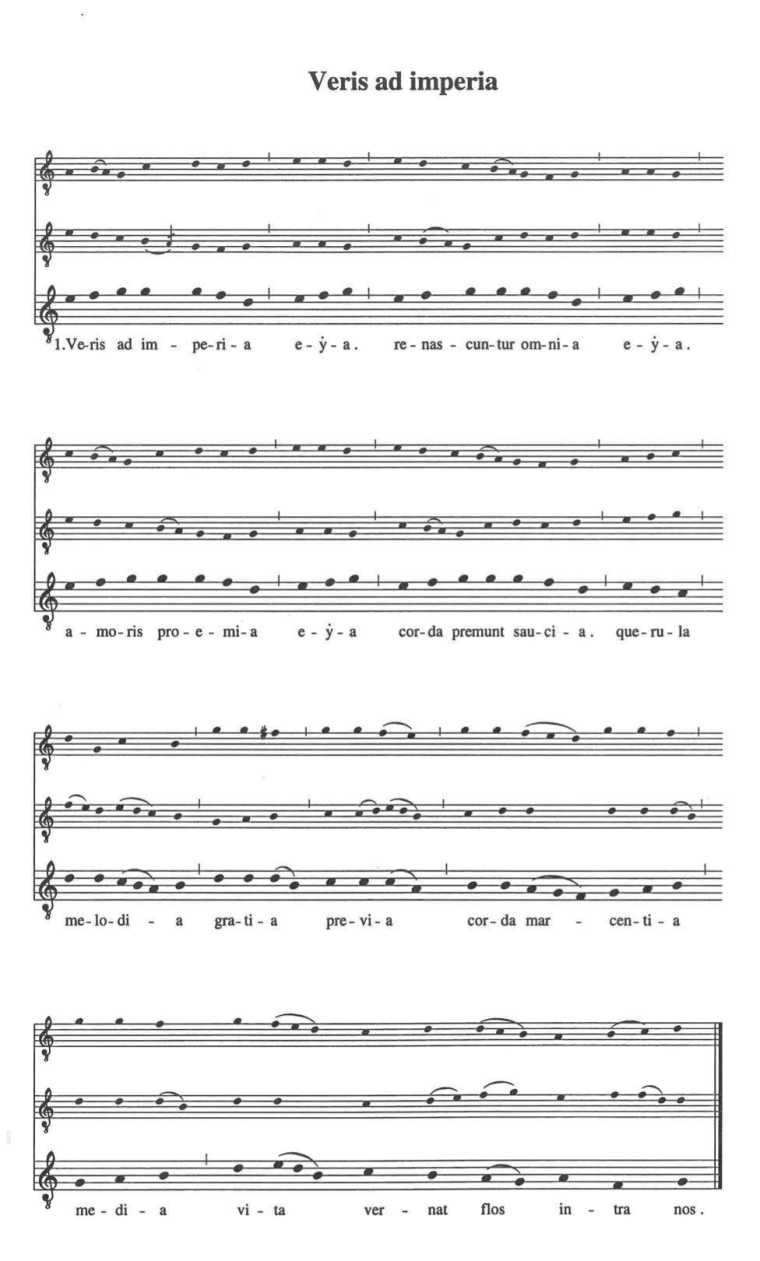
Se A l’entrada del temps clar è famosa, non altrettanto noto è che la sua melodia fu utilizzata da un anonimo esponente della cosiddetta Scuola di Notre-Dame come base per la composizione di un conductus a 3 voci. Il brano in questione s’intitola Veris ad imperia e ci è pervenuto tramite un altro importante manoscritto duecentesco, detto Antiphonarium mediceum in quanto conservato presso la Biblioteca Medicea Laurenziana di Firenze, ma redatto a Parigi e interamente dedicato al repertorio della celebre scuola polifonica che fiorì nella capitale francese. Nell’ambito di tale repertorio, Veris ad imperia è uno dei non molti componimenti che adottano come tenor un canto non liturgico; si tratta anzi a tutti gli effetti di una composizione profana che parla di amori terreni e non spirituali, quelli che sbocciano in primavera e feriscono i cuori.
Fra le non molte interpretazioni di questo delizioso conductus proposte da YouTube ho scelto quella, agile e spigliata, del già citato Studio der frühen Musik diretto da Thomas Binkley.
Veris ad imperia, eya,
Renascuntur omnia, eya,
Amoris proemia, eya,
Corda premunt saucia
Querula melodia.
Gratia previa,
Corda marcentia
Media.
Vite vernat flos intra nos.
Suspirat Lucinia, eya,
Nostra sibi conscia, eya,
Impetrent suspiria, eya,
Quod sequatur venia,
Dirige vita via
Gratia previa
Vie dispendia
Gravia.
Vite vernat flos intra nos.


 Julia Smith (1905 – 18 aprile 1989): Concerto in mi minore per pianoforte e orchestra (1938, rev. 1971). Larry Waltz, pianoforte; Dallas Civic Orchestra, dir. Lee Schaend.













 la regina gioiosa