The Protestation & Love’s Constancy

The Protestation: A Sonnet
(Thomas Carew, 1595 - 1640)

No more shall meads be deck’d with flowers,
Nor sweetness dwell in rosy bowers,
Nor greenest buds on branches spring,
Nor warbling birds delight to sing,
Nor April violets paint the grove,
If I forsake [When once I leave] my Celia’s love.

The fish shall in the ocean burn,
And fountains sweet shall bitter turn;
The humble oak no flood shall know,
When floods shall highest hills o’er-flow;
Blacke Lethe shall oblivion leave,
If e’er my Celia I deceive.

Love shall his bow and shaft lay by,
And Venus’ doves want wings to fly;
The sun refuse to show his light,
And day shall then be turn’d to night;
And in that night no star appear,
If once I leave my Celia dear.

Love shall no more inhabit earth,
Nor lovers more shall love for worth,
Nor joy above in heaven dwell,
Nor pain torment poor souls in hell;
Grim death no more shall horrid prove,
If e’er I leave bright Celia’s love.


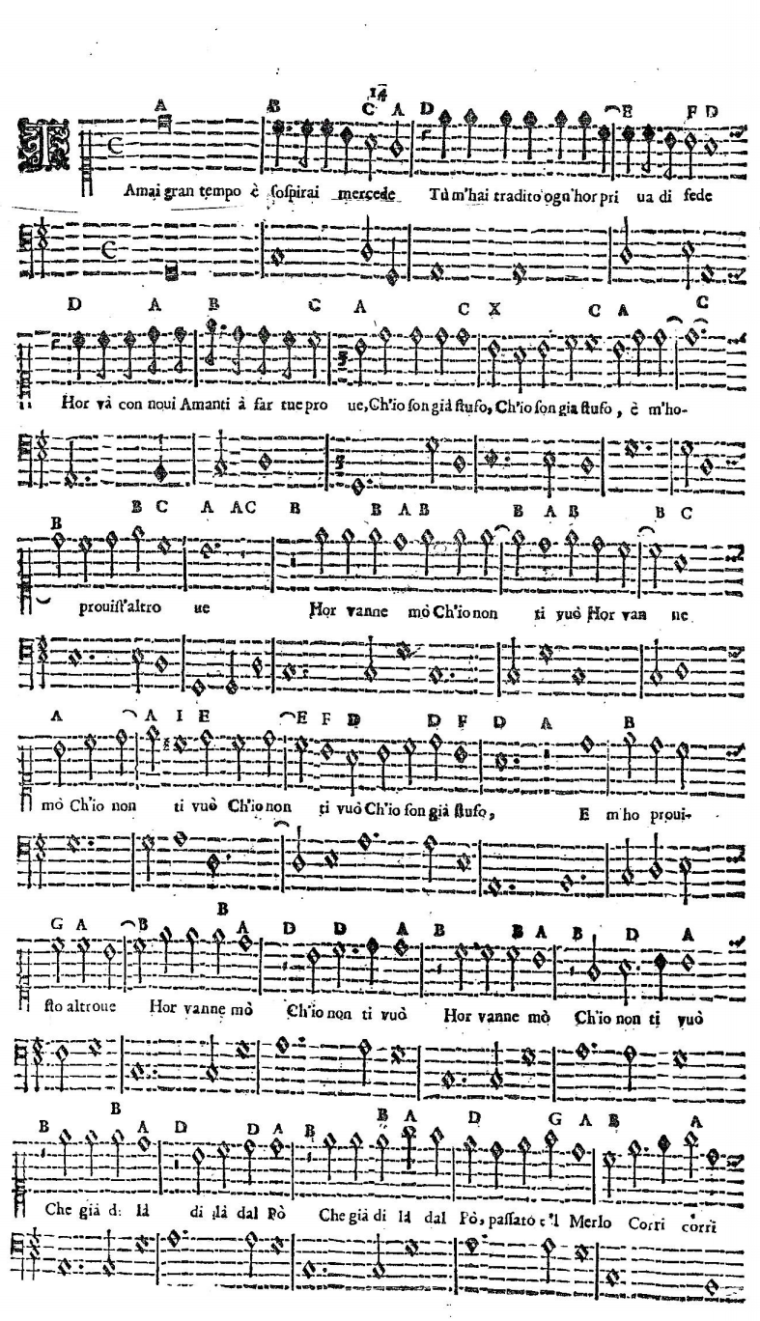
Love’s Constancy, sul testo di Carew, è fra le composizioni più note di Nicholas Lanier (1588 - 24 febbraio 1666); in rete se ne trovano varie interpretazioni: vi propongo l’ascolto di quelle che mi paiono le più interessanti.

Amanda Sidebottom, soprano, e Erik Ryding, liuto.


Anna Dennis, soprano; Hanneke van Proosdij, clavicembalo; Elisabeth Reed, viola da gamba; David Tayler, chitarra barocca.


La performance del soprano Ellen Hargis accompagnata da Paul O’Dette alla tiorba è accessibile soltanto su YouTube, in quanto il proprietario del video ne ha disattivata la visione in altri siti web. Potete ascoltarla qui.


Anton van Dyck: ritratto di Nicholas Lanier

Anton van Dyck: ritratto di Nicholas Lanier

Venere e Adone

John Blow (battezzato il 23 febbraio 1649 – 1708): Venus and Adonis, «masque for the entertainment of the king» (Carlo II) in 1 prologo e 3 atti su libretto di autore ignoto (c1683). Sophie Daneman (Venus) e Elin Manahan Thomas (Cupid), soprani; Roderick Williams (Adonis), baritono; Theatre of the Ayre, dir. Elizabeth Kenny.


Libretto

DRAMATIS PERSONAE:

 VENUS
 ADONIS
 CUPID
 FIRST SHEPHERD
 SECOND SHEPHERD
 SHEPHERDESS
 HUNTSMAN
 SHEPHERDS, SHEPHERDESSES, HUNTSMEN AND GRACES
 LITTLE CUPIDS


OVERTURE: Maestoso – Allegro – Tempo I

THE PROLOGUE [3:40]

The curtain is drawn where is discovered Cupid with a bow in one hand and an arrow in the other and arrows by his side and around him Shepherds and Shepherdesses.

CUPID’S ENTRY (Vivace)
[Cupid bows and sings:]
Behold my arrows and my bow
And I desire my art to show:
No one bosom shall be found
Ere I have done, without a wound,
But it would be the greatest art
To shoot myself into your heart;
Thither with both my wings I move,
Pray entertain the God of Love.

SHEPHERDESS
Come, Shepherds all, let’s sing and play,
Be willing, lovesome, fond and gay.

SHEPHERD
She who those soft hours misuses
And a begging Swain refuses
When she would the time recover
May she have a feeble lover.

SHEPHERDESS
The best of the Celestial Pow’rs
Is come to give us happy hours.

2nd SHEPHERD
Oh, let him not from hence remove

SHEPHERDESS
Till ev’ry bosom’s full of love.

CUPID
Courtiers, there is no faith in you,
You change as often as you can:
Your women they continue true
But till they see another man.

SHEPHERD
Cupid hast thou many found
Long in the same fetters bound?

CUPID
At court I find constant and true
Only an aged lord or two.

SHEPHERD
Who do their Empire longest hold

CUPID
The foolish ugly and the old …
In these sweet groves love is not taught
Beauty and pleasure is not bought;
To warm desires the women nature moves
And ev’ry youthful swain by nature loves …

CHORUS
In these sweet groves [etc.]
[While this Chorus is singing a Shepherd and Shepherdess dance to it.]

CUPID
Lovers to the close shades retire,
Do what your kindest thoughts inspire.
[Exeunt omnes. The Curtain closes.]


FIRST ACT [12:00]

THE ACT TUNE (Lento)
The Curtain opens and discovers Venus and Adonis sitting together upon a Couch, embracing one another.

ADONIS
Venus!

VENUS
Adonis!

ADONIS
Venus, when shall I taste soft delights
And on thy bosom lie?
Let’s seek the shadiest covert of this grove
And never, never disappoint expecting love.

VENUS
Adonis, thy delightful youth
Is full of beauty and of truth.
With thee the Queen of Love employs
The hours design’d for softer joys.

ADONIS
My Venus still has something new
Which forces lovers to be true.

VENUS
Me my lovely youth shall find
Always tender, ever kind.

HUNTER’S MUSIC
[They rise from the Couch when they hear the Music.]

VENUS
Hark, hark, the rural music sounds,
Hark, hark the hunters, hark, hark the hounds!
They summon to the chase, haste haste away.

ADONIS
Adonis will not hunt today.
I have already caught the noblest prey.

VENUS
No, my shepherd, haste away,
Absence kindles new desire,
I would not have my lover tire …
My shepherd, will you know the art
By which I keep a conquer’d heart?
I seldom vex a lover’s ears
With business or with jealous fears.
I give him freely all delights
With pleasant days and easy nights.

ADONIS
Yet there is a sort of men
Who delight in heavy chains
Upon whom ill-usage gains
And they never love till then.

VENUS
Those are fools of mighty leisure
Wise men love the easiest pleasure.
I give you freely all delights
With pleasant days and easy nights.

ADONIS
Adonis will not hunt today.

VENUS
No, my shepherd, haste away.
[Enter Huntsmen to Adonis, and sing this Chorus.]

HUNTSMEN
Come follow, follow, follow,
Come follow to the noblest game.
Here the spritely youth may purchase fame.

HUNTSMAN
A mighty boar our spear and darts defies,
He foams and rages, see, see, he wounds
The stoutest of our Cretan hounds,
He roars like thunder and he lightens from his eyes.

ADONIS
You who the slothful joys of city hate
And, early up, for rougher pleasures wait,
Next the delight which heav’nly beauty yields
Nothing, oh nothing is so sweet
As for our huntsmen, that do meet
With able coursers and good hounds to range the fields.

HUNTSMEN
Lachne has fastened first but she is old;
Bring hither Ladon, he is strong and bold,
Heigh Lachne, heigh Melampus; oh, they bleed,
Your spears, your spears, Adonis thou shalt lead.
[Exeunt singing. Entry: A dance by a Huntsman. The Curtain closes.]


SECOND ACT [24:46]

THE ACT TUNE (Allegretto)
The Curtain opens and Venus and Cupid are seen standing with Little Cupids round about them.

CUPID
You place with such delightful care
The fetters which your lovers wear;
None can be weary to obey
When you their eager wishes bless,
[Cupid points to the little Cupids]
The crowding Joys each other press
And round you smiling Cupids play.

VENUS
Flattering boy, hast thou been reading
Thy lessons and refined arts
By which thou may’st set ableeding
A-thousand, thousand tender hearts?

CUPID
Yes, but mother, teach me to destroy
All such as scorn your wanton boy.

VENUS
Fit well your arrows when you strike
And choose for all what each may like.
But make some love, they know not why,
And for the ugly and ill-humour’d die;
Such as scorn Love’s fire,
Force them to admire.

THE CUPID>’S LESSON
[The little Cupids repeat their lesson after Cupid.]

CUPID
The insolent, the arrogant,
The M-E-R-: Mer; C-E: Ce; N-A: Na; R-Y: Ry;
The mercenary, the vain and silly.
The jealous and uneasy, all such as tease ye …
Choose for the formal fool
Who scorns Love’s mighty school,
One that delights in secret glances
And a great reader of romances.
For him that’s faithless, wild and gay,
Who with Love’s pain does only play,
Take some affected, wanton she,
As faithless and as wild as he.

VENUS
But, Cupid, how shall I make Adonis constant still?

CUPID
Use him very ill …
[Venus laughs]
To play, my Loves, to play;
Venus makes it holiday.

A DANCE OF CUPIDS (Allegro leggiero)
After the dance the little Cupids piay together at hide and seek and hot cockles till Cupid frightens them off the stage with a Vizard Mask, and then they come on again, peeping, when Cupid calls the Graces.

VENUS
Call, call the Graces.

CUPID
Come, all ye Graces! ‘Tis your duty
To keep the Magazine of Beauty.
[Enter the Graces.]

GRACES
Mortals below, Cupids above,
Sing the praises of the Queen of Love.
The world for that bright Beauty dies;
Sing the triumphs of her conqu’ring eyes.
Hark, ev’n Nature sighs. This joyful night
She will beget desire and yield delight.

THE GRACES’ DANCE (L’istesso tempo)

GAVATT (Allegro)

SARABAND FOR THE GRACES (Lento)

A GROUND (Maestoso)

While the Graces dance, the Cupids dress Venus, one combing her head, another ties a bracelet of pearls round her waist etc. After the dances the Curtain closes upon them.


THIRD ACT [41:00]

THE ACT TUNE (Sostenuto)
The Curtain opens and discovers Venus standing in a melancholy posture. A mourning Cupid goes across the stage and shakes an arrow at her.

VENUS
Adonis, uncall’d-for sighs
From my sad bosom rise,
And grief has the dominion of my eyes.
A mourning Love passed by me now that sung
Of tombs and urns and ev’ry mournful thing:
Return, Adonis, ‘tis for thee I grieve.
[Venus leans against the side of the stage and weeps. Adonis is led in wounded.]

ADONIS
I come, as fast as Death will give me leave.
Behold the wound made by th’ Aedalian boar;
Faithful Adonis now must be no more.

VENUS
Ah, blood and warm life his rosy cheeks forsake.
Alas, Death’s sleep thou art too young to take.
My groans shall reach the heav’ns; oh, pow’rs above
Take pity on the wretched Queen of Love!

ADONIS
Oh, I could well endure the pointed dart,
Did it not make the best of lovers part.

VENUS
Ye cruel gods, why should not I
Have the great privilege to die?

ADONIS
Love, mighty Love, does my kind bosom fire;
Shall I for want of vital heat expire?
No, no, warm life returns, and Death’s afraid
This heart (Love’s faithful kingdom) to invade.

VENUS
No, the grim Monster gains the day;
With thy warm blood life steals away.

ADONIS
I see fate calls; let me on your soft bosom lie.
There I did wish to live, and there I beg to die.
[Adonis dies.]

VENUS
Ah, Adonis my love, ah, Adonis …
With solemn pomp let mourning Cupids bear
My soft Adonis through the yielding air …
He shall adorn the heav’ns, here I will weep
Till I am fall’n into as cold a sleep.

OMNES
Mourn for thy servant, mighty God of Love,
Weep for your huntsman, oh forsaken grove.
Mourn, Echo, mourn, thou shalt no more repeat
His tender sighs and vows when he did meet
With the wretched Queen of Love
In this forsaken grove.

THE END.


John Blow

Nobile gioventù

Georg Muffat (1653 - 23 febbraio 1704): Nobilis Juventus, suite in re minore per archi e basso continuo (da Florilegium secundum, 1698, Fasciculus I). The Academy of Ancient Music, dir. Christopher Hogwood.

  1. Ouverture
  2. Entrée d’Espagnols [3:22]
  3. Air pour des Hollandois [4:35]
  4. Gigue pour des Anglois [5:45]
  5. Gavotte pour des Italiens [7:28]
  6. Menuet pour des François I-II [8:55]

Allegretto scherzando

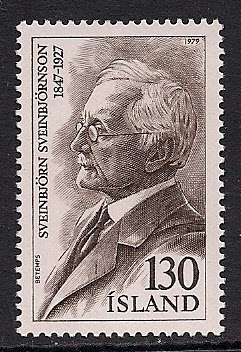
Sveinbjörn Sveinbjörnson (1847 - 23 febbraio 1927): Trio per pianoforte e archi in mi minore. Nína Margrét Gunnarsdóttir, pianoforte; Auður Hafsteinsdóttir, violino; Sigurgeir Agnarsson, violoncello.

  1. Allegro
  2. Andantino [5:11]
  3. Allegretto scherzando [9:33]
  4. Allegro [12:56]

Sonata quasi in do

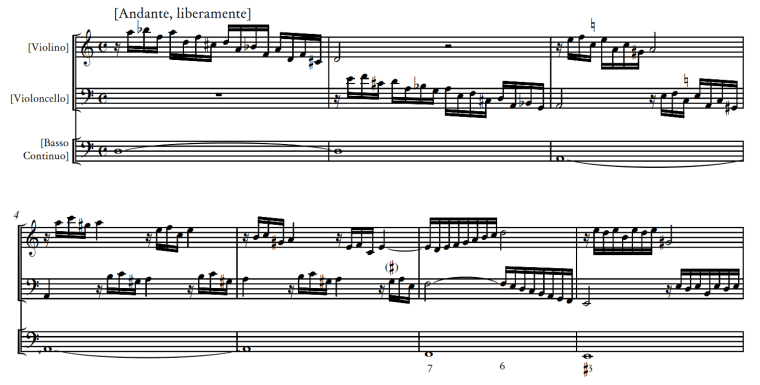
Padre Terenzio Zardini (1923 - 23 febbraio 2000): Sonata I (quasi in do) per organo (1971). Pier Damiano Peretti all’organo Mascioni della Basilica di Monte Berico (Vicenza).

  1. Fantasia
  2. Discantus [5:29]
  3. Toccata [8:28]

«È apparsa, in questo inizio di secolo, la tendenza ad ampliare il campo delle affinità tonali con l’allon­ta­na­mento conseguente dall’atmosfera diatonica: un irrequieto evitare tutto ciò che sa di statico e di cadenzale, cioè di „previsto“, non tanto per rinnegarlo, ma perché se ne sente la distanza estetica e spirituale. […] Con il cromatismo di fine Ottocento il centro armonico era divenuto incerto ed oscillante, era presente sì, ma spesso mascherato se non sopraffatto. A questo eccesso di cromatismo bisognava reagire. La via era una sola: procedere ancora più in là; ogni ritorno indietro è un errore storico ed estetico. […] Ecco allora la più radicale ribellione: l’atonalismo» (P. Terenzio Zardini).

Zardini Peretti

Serenata – XVII

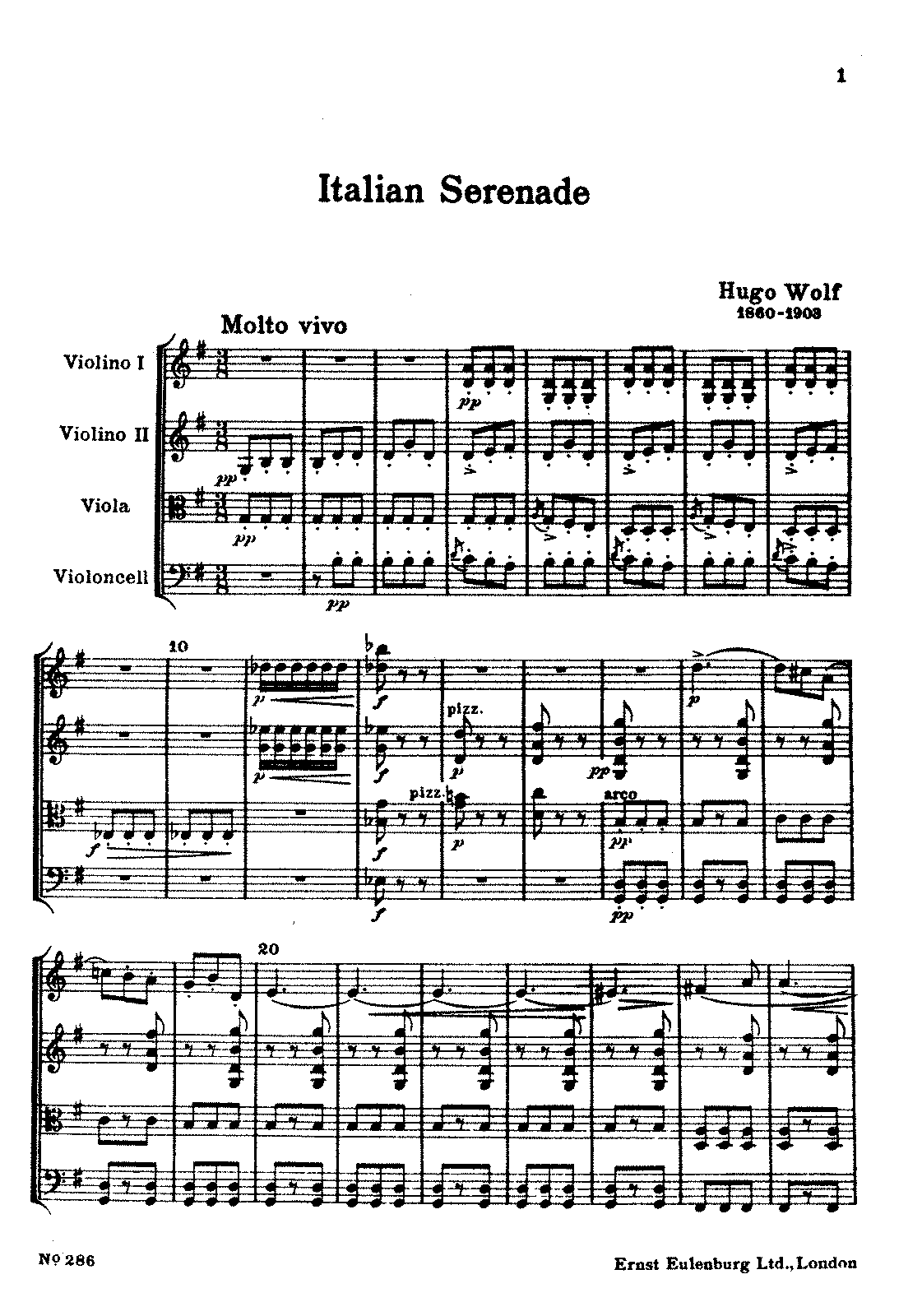
Hugo Wolf (1860 - 22 febbraio 1903): Italienische Serenade per quartetto d’archi (1887). The Doric String Quartet: Alex Redington e Jonathan Stone, violini; Hélène Clément, viola; John Myerscough, violoncello.


Lo stesso brano nella trascrizione per orchestra eseguita da Wolf nel 1892. Orpheus Chamber Orchestra.

Clavicembalo con pedaliera

Luc Beauséjour interpreta la Toccata e Fuga in re minore, composta forse da J. S. Bach (BWV 565) o più probabilmente da Johann Peter Kellner (*), suonando un clavicembalo provvisto di due manuali e una pedaliera.

L’esistenza di strumenti consimili è documentata a partire dal Quattrocento: un clavichordum cum calcatorio è citato nel trattato enciclopedico Liber XX Artium (c1460) di Paulus Paulirinus ovvero Pavel Žídek; il disegno di un clavicordo con pedaliera si trovava in una copia manoscritta, ora perduta, risalente al 1467 dei Flores musice del teorico trecentesco Hugo von Reutlingen.
L’epoca di maggior diffusione del clavicembalo con pedaliera è comunque il Settecento, quando fu soprattutto usato dagli organisti per esercitarsi; ma è probabile che proprio per questo tipo di strumento Bach abbia composto le sei Triosonaten BWV 525-530.
Verso la metà dell’Ottocento ebbe una certa diffusione il pianoforte con pedaliera, strumento per il quale Schumann scrisse gli Studi op. 56, gli Schizzi op. 58 e le Fugen über BACH op. 60; anche Alkan e Gounod dedicarono alcune composizioni al pianoforte con pedaliera.

(*) Sull’argomento si veda l’ultima parte dell’articolo Falsi celebri.

BWV 565

Sonate & santi

Benedikt Anton Aufschnaiter (21 febbraio 1665 - 1742): Dulcis Fidium Harmonia, 8 sonate per archi op. 4 (1703). Ars Antiqua Austria, dir. Gunar Letzbor.

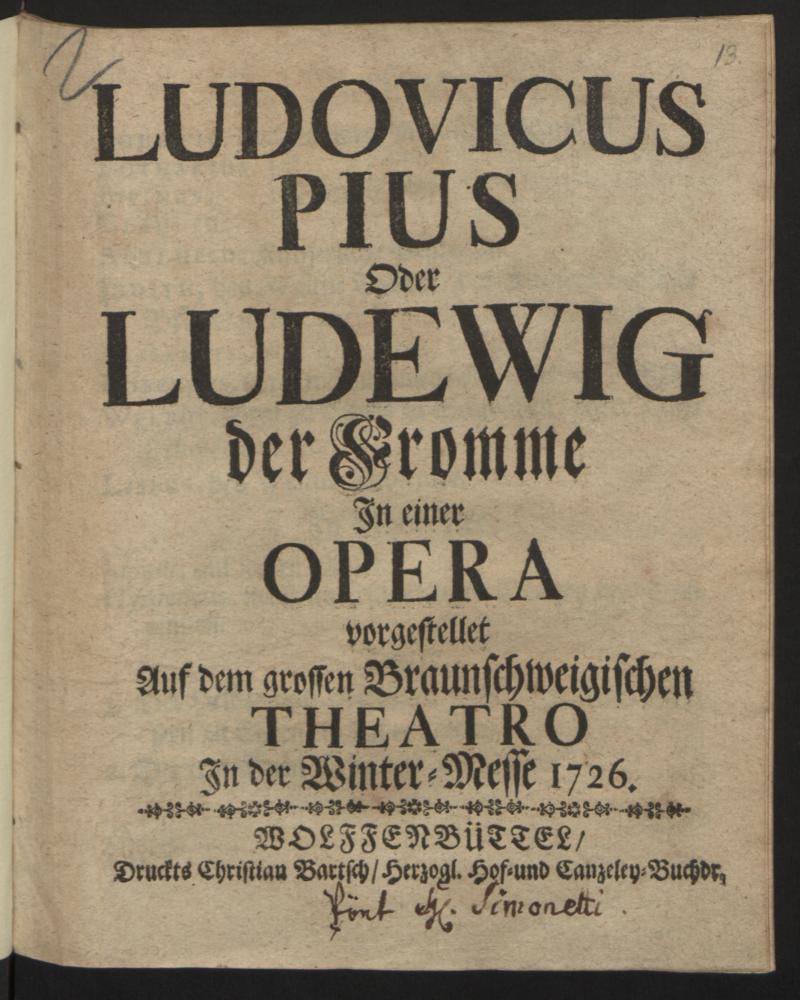
  • Sonata I S. Gregorii
  • Sonata II S. Ambrosii
  • Sonata III S. Augustini
  • Sonata IV S. Hieronymi
  • Sonata V S. Matthaei
  • Sonata VI S. Marci
  • Sonata VII S. Lucae
  • Sonata VIII S. Johannis

Valse lente – I

Ernő Dohnányi (1877 - 1960): Walzer per pianoforte (1925) da Coppélia (1870) di Léo Delibes (21 febbraio 1836 - 1891). Superlativa interpretazione del grande pianista magiaro Géza Anda (1921 - 1976), registrata nel 1954.
Nella composizione di Dohnányi sono in realtà rielaborate due diverse valses tratte dal balletto di Delibes: la prima, celeberrima, si trova nel I atto ed è nota come «Valse de Swanilda» (titolo che non compare sulla partitura):

Nella sezione centrale Dohnányi utilizza il tema della «Valse de la poupée», dal II atto:

Léo Delibes


Ernő Dohnányi

L’organista virtuoso

Charles-Marie Widor (21 febbraio 1844 - 1937): Toccata dalla Quinta Sinfonia per organo op. 42 n. 1 (1879). Daniel Chorzempa all’organo Cavaillé-Coll della Basilica di Saint-Sernin a Tolosa.
Il brano più famoso di Widor non è esattamente il tipo di composizione organistica che prediligo, ma devo riconoscere che l’interpretazione di Daniel Chorzempa è assolutamente straordinaria, sia per la precisione dell’articolazione sia per la nettezza del suono. Chapeau.

Gelosia

Jacob Gade (1879 - 20 febbraio 1963): Jalousie, tango tsigane (1925). Sønderjyllands Symfoni­orkester, dir. Frans Rasmussen.

Il brano fu composto per accompagnare la proiezione di un film muto – Don X, figlio di Zorro (Don Q Son of Zorro) di Donald Crisp, protagonisti Douglas Fairbanks e Mary Astor – e in breve tempo ottenne un successo internazionale.

Concertante per cinque

Vojtech Matyáš Jírovec, ovvero Adalbert Mathias Gyrowetz (20 febbraio 1763 - 1850): Sinfonia concertante in sol maggiore per violino, violoncello, flauto, oboe, fagotto e orchestra op. 34 (1798). Bruno Bělčík, violino; František Host, violoncello; František Čech, flauto; Jiří Mihule, oboe; Jiří Formáček, fagotto; Dvořákův komorní orchestr, dir. Vladimír Válek.

  1. Allegro moderato
  2. Larghetto [9:24]
  3. Rondò [16:02]

Dal Diario di Virginia Woolf

Dominick Argento (1927 - 20 febbraio 2019): From the Diary of Virginia Woolf, ciclo di composizioni per canto e pianoforte (1974). Janet Baker, mezzosoprano, e Martin Isepp, pianoforte (primi interpreti).
I testi sono tratti da A Writer’s Diary: Being Extracts from the Diary of Virginia Woolf, pubblicato nel 1954; il ciclo valse a Dominick Argento il Premio Pulitzer per la musica nel 1975. In merito a questo lavoro del compositore statunitense sono disponibili in rete un’accurata analisi di Noelle Woods e una guida all’interpretazione curata da Jacquelyn Matava.

I. The Diary (April, 1919)

What sort of diary should I like mine to be? Something… so elastic that it will embrace anything, solemn, slight or beautiful that comes into my mind. I should like it to resemble some deep old desk… in which one flings a mass of odds and ends without looking them through. I should like to come back, after a year or two, and find that the collection had sorted itself and refined itself and coalesced, as such deposits so mysteriously do, into a mould, transparent enough to reflect the light of our life…

II. Anxiety (October, 1920) [3:56]

Why is life so tragic; so like a little strip of pavement over an abyss. I look down; I feel giddy; I wonder how I am ever to walk to the end. But why do I feel this: Now that I say it I don’t feel it. The fire burns; we are going to hear the Beggar’s Opera. Only it lies all about me; I can’t keep my eyes shut… And with it all how happy I am—if it weren’t for my feeling that it’s a strip of pavement over an abyss.

III. Fancy (February, 1927) [5:53]

Why not invent a new kind of play; as for instance:
Woman thinks…
He does.
Organ plays.
She writes.
They say:
She sings.
Night speaks
They miss

IV. Hardy’s Funeral (January, 1928) [8:34]

Yesterday we went to Hardy’s funeral. What did I think of? Of Max Beerbohm’s letter… or a lecture… about women’s writing. At intervals some emotion broke in. But I doubt the capacity of the human animal for being dignified in ceremony. One catches a bishop’s frown and twitch; sees his polished shiny nose; suspects the rapt spectacled young priest, gazing at the cross he carries, of being a humbug; …next here is the coffin, an overgrown one; like a stage coffin, covered with a white satin cloth; bearers elderly gentlemen rather red and stiff, holding to the corners; pigeons flying outside, …procession to poets corner; dramatic “In sure and certain hope of immortality” perhaps melodramatic… Over all this broods for me some uneasy sense of change and mortality and how partings are deaths; and then a sense of my own fame… and a sense of the futility of it all.

V. Rome (May, 1935) [15:03]

Rome: tea. Tea in café. Ladies in bright coats and white hats. Music. Look out and see people like movies… Ices. Old man who haunts the Greco… Fierce large jowled old ladies…talking about Monaco (; about) Talleyrand. Some very poor black wispy women. The effect of dowdiness produced by wispy hair. (Rome. Sunday café… Very cold…) The Prime Minister’s letter offering to recommend me for the Companion of Honour. No.

VI. War (June, 1940) [18:19]

This, I thought yesterday, may be my last walk… the war — our waiting while the knives sharpen for the operation — has taken away the outer wall of security. No echo comes back. I have no surroundings… Those familiar circumvolutions — those standards — which have for so many years given back an echo and so thickened my identity are all wide and wild as the desert now. I mean, there is no “autumn”, no winter. We pour to the edge of a precipice… and then? I can’t conceive that there will be a 27th June 1941.

VII. Parents (December, 1940) [24:13]

How beautiful they were, those old people — I mean father and mother — how simple, how clear, how untroubled. I have been dipping into old letters and father’s memoirs. He loved her: oh and was so candid and reasonable and transparent… How serene and gay even, their life reads to me: no mud; no whirlpools. And so human — with the children and the little hum and song of the nursery. But if I read as a contemporary I shall lose my child’s vision and so must stop. Nothing turbulent; nothing involved; no introspection.

VIII. Last Entry (March, 1941) [28:57]

No: I intend no introspection. I mark Henry James’ sentence: observe perpetually. Observe the oncome of age. Observe greed. Observe my own despondency. By that means it becomes serviceable. Or so I hope. I insist on spending this time to the best advantage. I will go down with my colours flying… Occupation is essential. And now with some pleasure I find that it’s seven; and must cook dinner. Haddock and sausage meat. I think it is true that one gains a certain hold on sausage and haddock by writing them down.
[…to come back after a year or two, and find that the collection had sorted itself and refined itself and coalesced, as such deposits so mysteriously do, into a mould transparent enough to reflect the light of our life.]

VW
DA