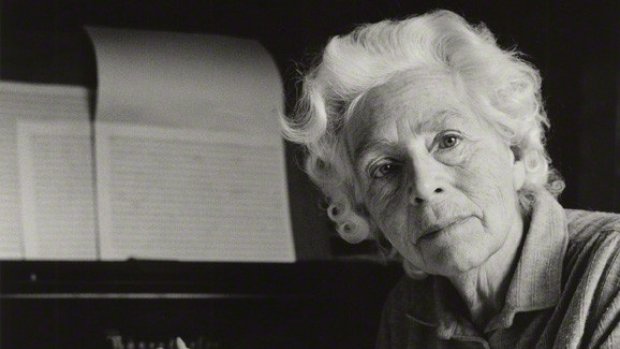
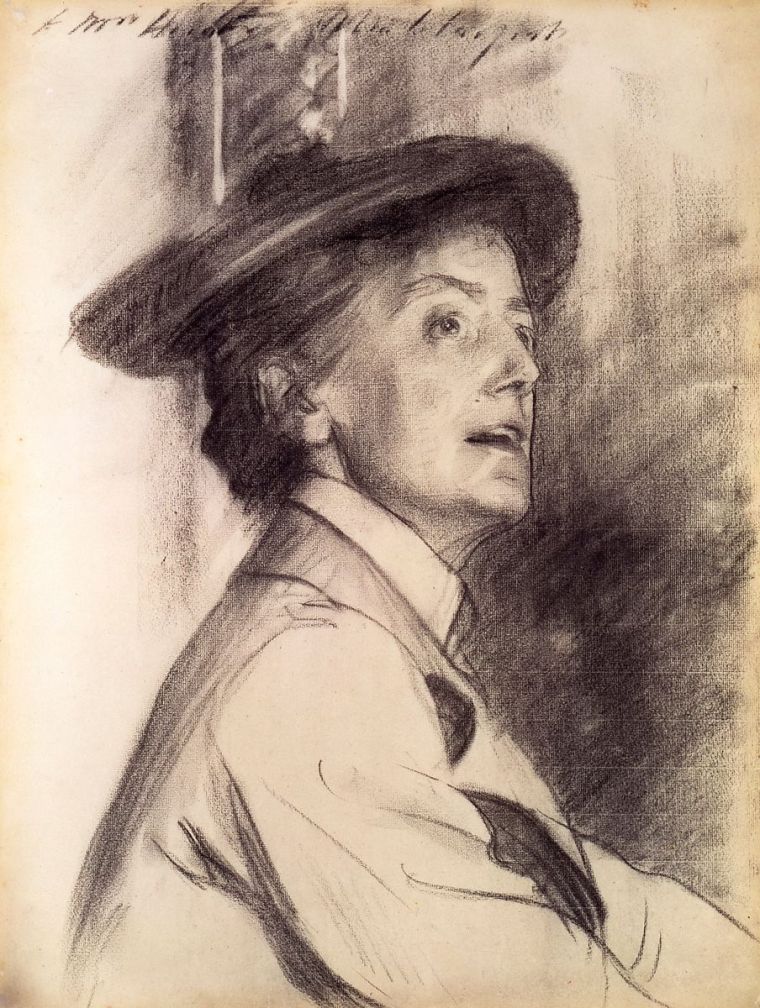
Heinrich Sutermeister (1910 - 16 marzo 1995): Sérénade pour Montreux (1970). Sinfonietta Schaffhausen, dir. Paul K. Haug.
-
Nocturne: Moderato assai e sostenuto
-
Carillon et Hymne: Vivo, giocoso [6:08]

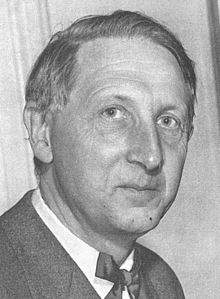
Heinrich Sutermeister (1910 - 16 marzo 1995): Sérénade pour Montreux (1970). Sinfonietta Schaffhausen, dir. Paul K. Haug.
Nocturne: Moderato assai e sostenuto
Carillon et Hymne: Vivo, giocoso [6:08]

Louis Moreau Gottschalk (1829 - 1869): Le Mancenillier, «West Indian Serenade» per pianoforte op. 11 (1849). Alan Marks.

Benedikt Anton Aufschnaiter (battezzato il 21 febbraio 1665 - 1742): Serenada della pace in do maggiore per 3 oboi, fagotto, 4 trombe, timpani, archi e basso continuo.

Knudåge Riisager (1897 - 26 dicembre 1974): Serenade per flauto, violino e violoncello op. 26b (1936). Mads Johansen, flauto; Per Lund Madsen, violino; Ingemar Brantelid, violoncello.
Benedikt Anton Aufschnaiter (21 febbraio 1665 - 1742): Serenata a 5 in la minore, n. 4 della raccolta Concors discordia op. 2 (1695). L’Orfeo Barockorchester, dir. Michi Gaigg.

Francesco Antonio Bonporti (1672 - 19 dicembre 1749): Serenata IV in la minore (c1720). Luigi Mangiocavallo, violino; Claudio Ronco, violoncello; Marco Mencoboni, clavicembalo.
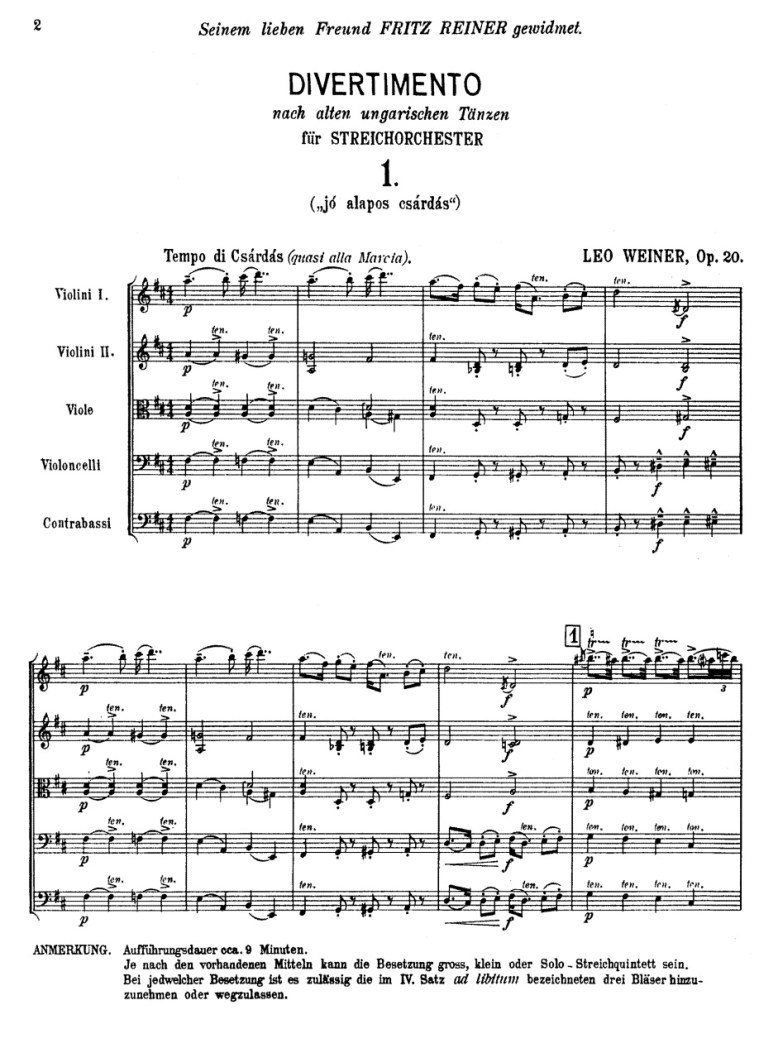
Leó Weiner (16 aprile 1885 - 1960): Divertimento nach alten hungarischen Tänzen per orchestra d’archi op. 20 (c1930). Zagrebački solisti.

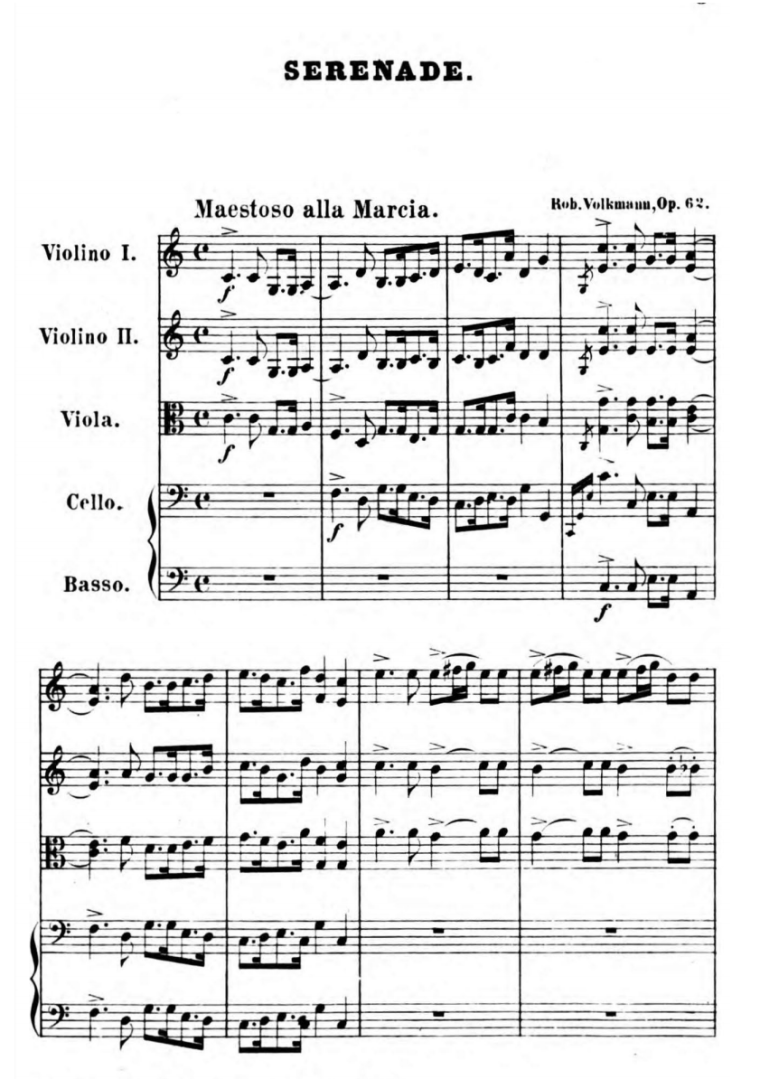
Robert Volkmann (6 aprile 1815 - 1883): Serenata in do maggiore per archi op. 62 (1869). Pannon Chamber Orchestra, dir. János Petró.

P.D.Q. Bach ovvero Peter Schickele (1935 - 2024): Eine kleine Nichtmusik (1977). The New York Pick-up Ensemble, dir. Peter Schickele.
Ecco un quodlibet alquanto irriverente. Se non riuscite a individuare tutte le composizioni citate, oltre ovviamente alla serenata quasi omonima (K 525) di Mozart, ne potete trovare qui di seguito i titoli, elencati in ordine di apparizione 😀
I movimento:
– Anonimo: Turkey in the Straw [0:06]
– Liszt: Concerto per pianoforte e orchestra n. 1 [0:29]
– Brahms: Sinfonia n. 3, IV movimento [0:32]
– Mozart: duetto «Là ci darem del mano» dal Don Giovanni [0:39]
– Mozart: Concerto per pianoforte n. 23, I movimento [0:46]
– Mozart: «Voi che sapete» dalle Nozze di Figaro [0:53]
– Anonimo: Canto dei battellieri del Volga [0:58]
– Anonimo: D’ye ken John Peel? (canzone tradizionale inglese) [1:17]
– Mozart: Sinfonia n. 1, I movimento [1:25]
– Anonimo: El jarabe tapatio [1:33]
– Mozart: «Voi che sapete» dalle Nozze di Figaro [1:40]
– Rachmaninov: Concerto per pianoforte n. 2, I movimento [1:47]
– Sousa: The Thunderer [2:11]
– Beethoven: Sinfonia n. 7, IV movimento [2:14]
– Mozart: Sinfonia n. 41 (Jupiter), IV movimento [2:32]
– Dvořák: Sinfonia n. 9 (Dal Nuovo Mondo), I movimento [2:37]
– Brahms: Sinfonia n. 3, IV movimento [2:40]
– Brahms: Sinfonia n. 4, I movimento [2:50]
– Händel: «For Unto Us a Child Is Born» dal Messiah [3:03]
– Beethoven: Sinfonia n. 5, IV movimento [3:13]
– Emmett: I wish I was in Dixie [3:23]
– Šostakovič: Sinfonia n. 9, I movimento [3:35]
– Čajkovskij: «Marcia» dallo Schiaccianoci [3:44]
II movimento:
– Foster: Jeannie with the light brown hair [4:01]
– Čajkovskij: Nur wer die Sehnsucht kennt [4:38]
– Anonimo: Mary had a little lamb (canzoncina infantile) [4:52]
– Čajkovskij: scena dal Lago dei cigni [5:07]
– Beethoven: Concerto per pianoforte n. 3, I movimento [5:20]
– Rimskij-Korsakov: Shahrazad, Leitmotiv del violino solista [5:20]
– Franck: Sinfonia in re minore, I movimento [5:20]
– Mendelssohn: Frühlingslied, n. 6 dei Lieder ohne Worte op. 62 [5:33]
– Brahms: Sinfonia n. 4, I movimento [5:40]
– Anonimo (forse Davide Rizzio): Auld Lang Syne [5:53]
– Verdi: «Vedi, le fosche notturne spoglie» dal Trovatore [6:16]
– Wagner: Preludio da Tristan und Isolde [6:31]
– Anonimo: Alouette (canzoncina infantile) [6:48]
– Tema B-A-C-H (SI♭-LA-DO-SI) [7:04]
– Rachmaninov: Concerto per pianoforte n. 2, III movimento [7:12]
III movimento:
– Anonimo: Here We Go Loopty Loo (canzoncina infantile) [7:53]
– Beethoven: Sinfonia n. 5, I movimento [8:14]
– Von Tilzer: Take Me Out to the Ball Game (inno ufficioso del baseball negli Stati Uniti) [8:36]
– Musorgskij: tema dell’incoronazione da Boris Godunov [8:55]
– Anonimo: Oh, Dear, What Can the Matter Be? (canzoncina infantile) [9:12]
– Rimskij-Korsakov: Shahrazad, tema del giovane principe [9:23]
IV movimento:
– Foster: Oh, Susanna [9:56]
– Rossini: galop dalla sinfonia del Guillaume Tell [10:11]
– Schubert: Marcia militare [10:15]
– Franck: Sinfonia in re minore, III movimento [10:19]
– Sullivan: «Miyasama» da The Mikado [10:19]
– Grieg: «Nell’antro del re della montagna» da Peer Gynt [10:23]
– Schubert: Erlkönig [10:26]
– Musorgskij: tema dell’incoronazione da Boris Godunov [10:26]
– Anonimo: Ah!, vous dirai-je, maman (canzoncina infantile) [10:32]
– Franck: Sinfonia in re minore, III movimento [10:36]
– Foster: Old Black Joe (canto tradizionale) [10:44]
– Mozart: Sinfonia n. 29, IV movimento [10:50]
– Stravinskij: dal finale di Pétrouchka [10:55]
– Humperdinck: Hänsel und Gretel, atto I, scena 1a [11:03]
– Offenbach: «Galop enfernal» da Orphée aux enfers [11:07]
– Schumann: Sinfonia n. 1 (Frühlingssymphonie), I movimento [11:11]
– Anonimo: Travadja La Moukère [11:15]
– Musorgskij: «La Grande Porta di Kiev» dai Quadri di un’esposizione [11:19]
– Autore incerto: Westminster Quarters [11:20]
– Beethoven: Sinfonia n. 5, I movimento [11:20]
– R. Strauss: Till Eulenspiegels lustige Streiche [11:30]

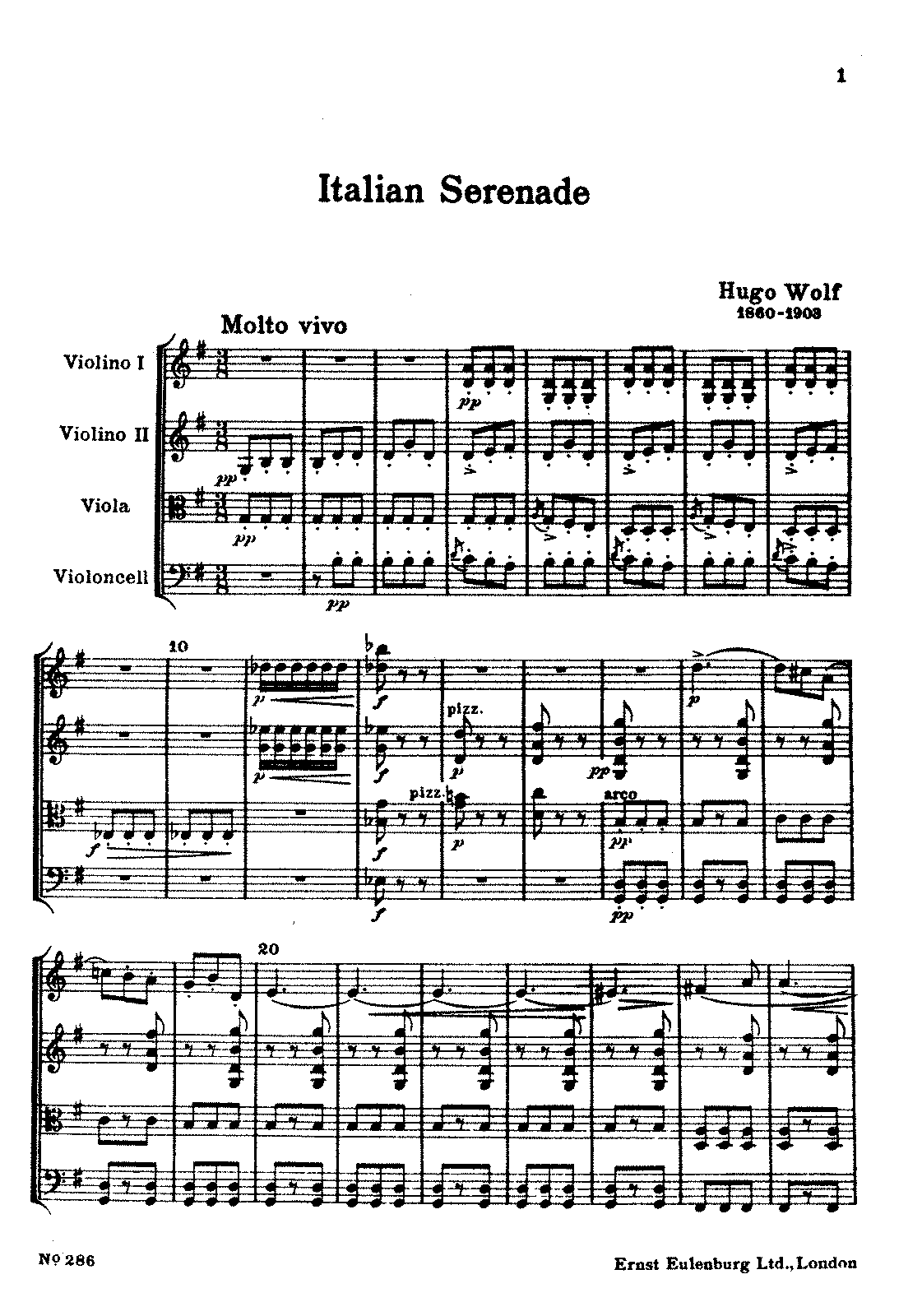
Hugo Wolf (1860 - 22 febbraio 1903): Italienische Serenade per quartetto d’archi (1887). The Doric String Quartet: Alex Redington e Jonathan Stone, violini; Hélène Clément, viola; John Myerscough, violoncello.
Lo stesso brano nella trascrizione per orchestra eseguita da Wolf nel 1892. Orpheus Chamber Orchestra.
![]()
João de Sousa Carvalho (22 febbraio 1745 - 1799 o 1800): Ouverture per la serenata Perseo (1778). Sinfonia B, dir. César Viana.

Anton Diabelli (1771 - 1858): Grande Sérénade n. 4 in re magg. per flauto, viola e chitarra op. 95. Bruno Meier, flauto; Nicolas Corti, viola; Han Jonkers, chitarra.

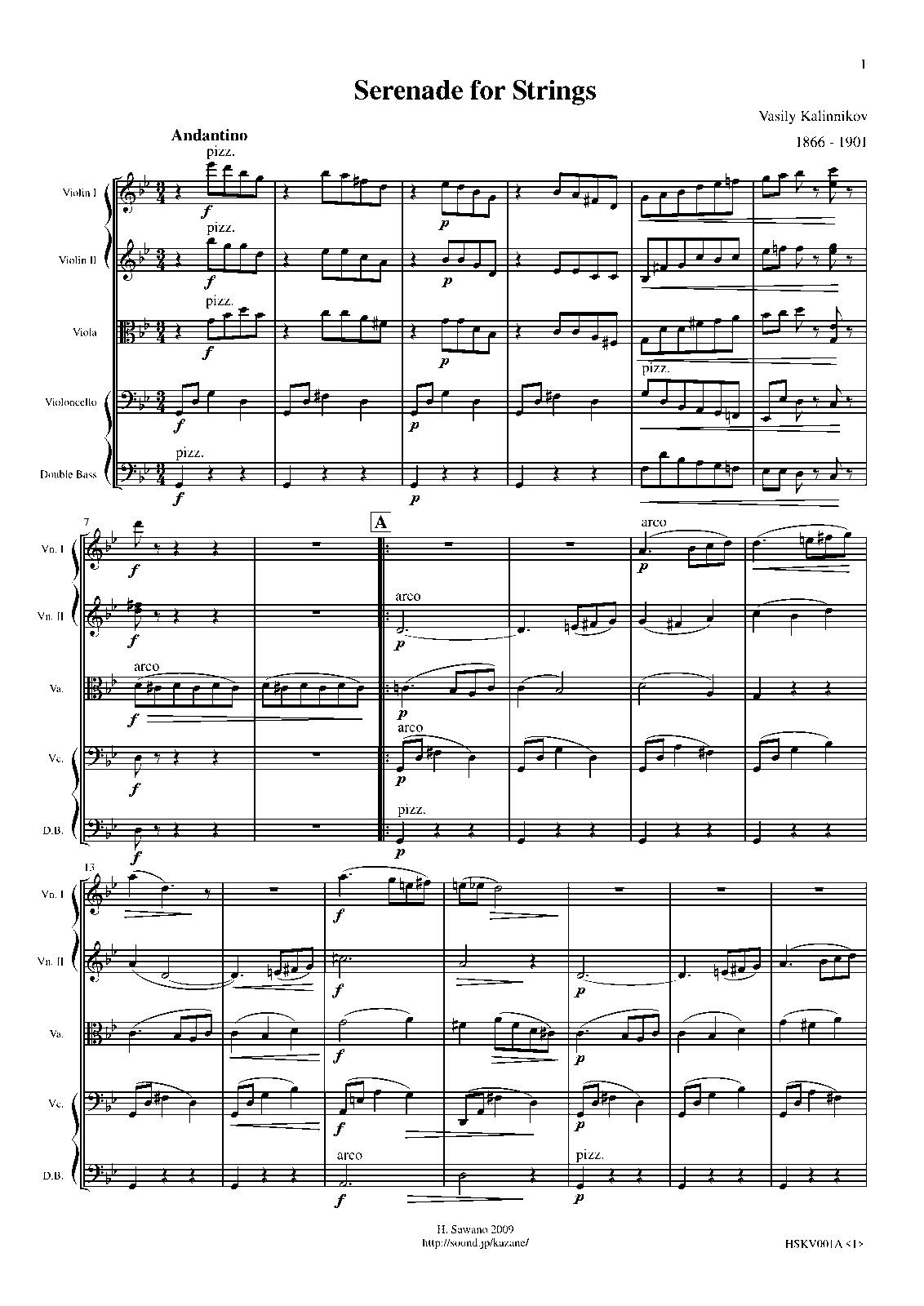
Vasilij Sergeevič Kalinnikov (13 gennaio 1866 - 11 gennaio 1901): Serenata in sol minore per archi (1891). Orchestra sinfonica dell’URSS, dir. Evgenij Svetlanov.
![]()
Joseph Bodin de Boismortier (23 dicembre 1689 - 1755): Deuxième Sérénade ou Simphonie françoise. Le Concert Spirituel, dir. Hervé Niquet.

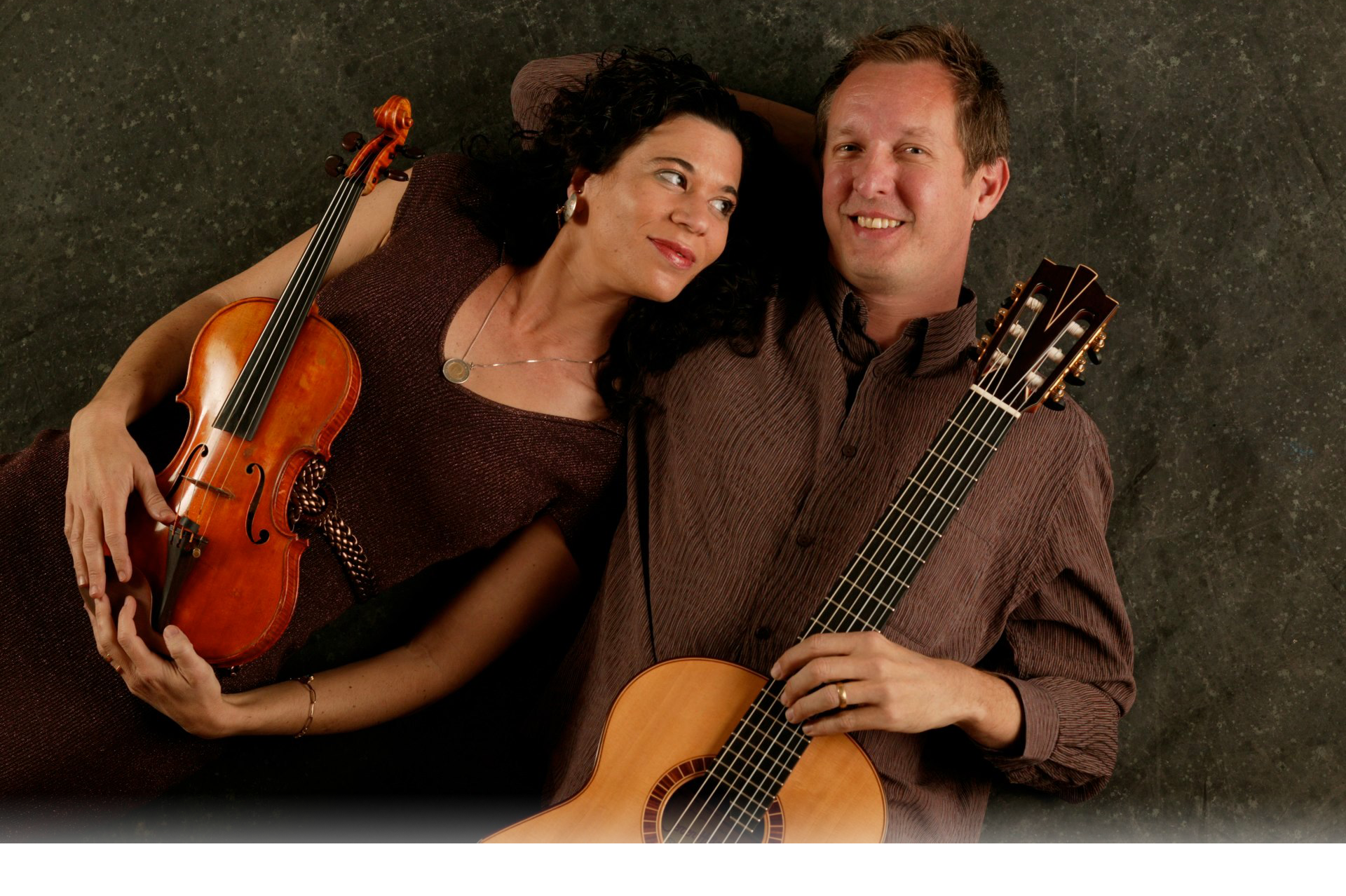
Bruno Bartolozzi (1911 - 12 dicembre 1980): Serenata per violino e chitarra (1952). Duo46: Beth Ilana Schneider-Gould, violino; Matt Gould, chitarra.

Duo46

John Fernström (6 dicembre 1897 - 1961): Den kapriciöse trubaduren, serenata in 4 parti per piccola orchestra op. 21 (1931). Sveriges Radios Symfoniorkester, dir. Stefan Solyom.

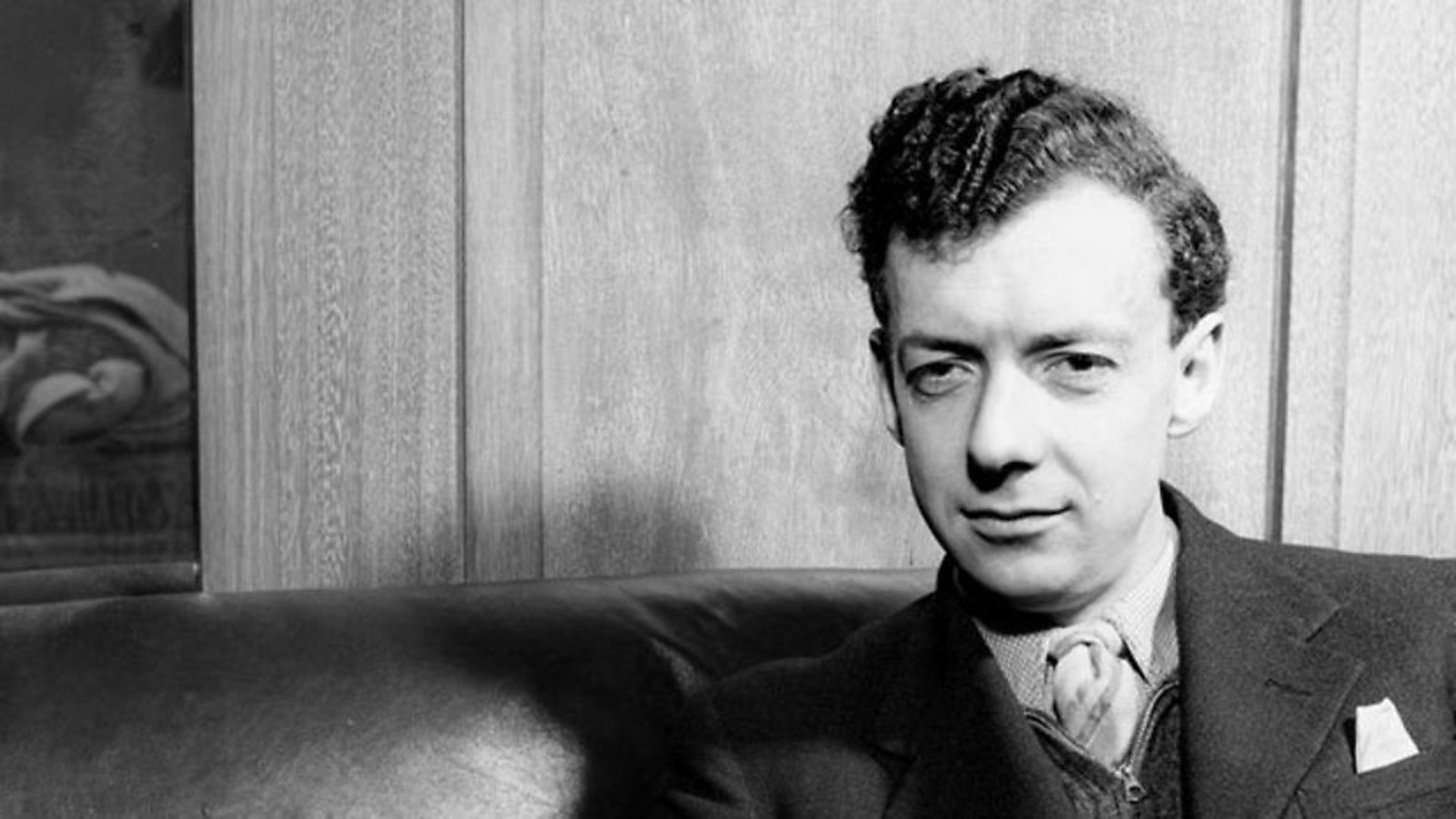
Benjamin Britten (22 novembre 1913 - 1976): Serenade per tenore, corno e archi op. 31 (1943). Peter Pears, tenore; Dennis Brain, corno; BBC Symphony Orchestra, direttore John Hollingsworth.
testo di Charles Cotton (1630-1687): quattro strofe da The Evening Quatrains
The day’s grown old; the fainting sun
Has but a little way to run,
And yet his steeds, with all his skill,
Scarce lug the chariot down the hill.
The shadows now so long do grow,
That brambles like tall cedars show;
Mole hills seem mountains, and the ant
Appears a monstrous elephant.
A very little, little flock
Shades thrice the ground that it would stock;
Whilst the small stripling following them
Appears a mighty Polypheme.
And now on benches all are sat,
In the cool air to sit and chat,
Till Phoebus, dipping in the west,
Shall lead the world the way to rest.
testo di Alfred Tennyson (1809-1892): Blow, bugle, blow
The splendour falls on castle walls
And snowy summits old in story:
The long light shakes across the lakes,
And the wild cataract leaps in glory:
Blow, bugle, blow, set the wild echoes flying,
Bugle blow; answer, echoes, dying, dying, dying.
O hark, O hear! how thin and clear,
And thinner, clearer, farther going!
O sweet and far from cliff and scar
The horns of Elfland faintly blowing!
Blow, let us hear the purple glens replying:
Blow, bugle; answer, echoes, dying, dying, dying.
O love, they die in yon rich sky,
They faint on hill or field or river:
Our echoes roll from soul to soul,
And grow for ever and for ever.
Blow, bugle, blow, set the wild echoes flying,
And answer, echoes, answer, dying, dying, dying.
testo di William Blake (1757-1827): The Sick Rose)
O Rose, thou art sick!
The invisible worm,
That flies in the night
In the howling storm,
Has found out thy bed
Of crimson joy:
And his dark, secret love
Does thy life destroy.
testo di autore anonimo del secolo XV, noto come Lyke-Wake Dirge
This ae nighte, this ae nighte,
Every nighte and alle,
Fire and fleet and candle‑lighte,
And Christe receive thy saule.
When thou from hence away art past,
Every nighte and alle,
To Whinny‑muir thou com’st at last;
And Christe receive thy saule.
If ever thou gavest hosen and shoon,
Every nighte and alle,
Sit thee down and put them on;
And Christe receive thy saule.
If hosen and shoon thou ne’er gav’st nane
Every nighte and alle,
The whinnes sall prick thee to the bare bane;
And Christe receive thy saule.
From Whinny‑muir when thou may’st pass,
Every nighte and alle,
To Brig o’ Dread thou com’st at last;
And Christe receive thy saule.
From Brig o’ Dread when thou may’st pass,
Every nighte and alle,
To Purgatory fire thou com’st at last;
And Christe receive thy saule.
If ever thou gavest meat or drink,
Every nighte and alle,
The fire sall never make thee shrink;
And Christe receive thy saule.
If meat or drink thou ne’er gav’st nane,
Every nighte and alle,
The fire will burn thee to the bare bane;
And Christe receive thy saule.
This ae nighte, this ae nighte,
Every nighte and alle,
Fire and fleet and candle‑lighte,
And Christe receive thy saule.
testo di Ben Jonson (1572-1637): Hymn to Diana (dalla commedia satirica Cynthia’s Revels, or The Fountain of Self-Love, 1600)
Queen and huntress, chaste and fair,
Now the sun is laid to sleep,
Seated in thy silver chair,
State in wonted manner keep:
Hesperus entreats thy light,
Goddess excellently bright.
Earth, let not thy envious shade
Dare itself to interpose;
Cynthia’s shining orb was made
Heav’n to clear when day did close:
Bless us then with wishèd sight,
Goddess excellently bright.
Lay thy bow of pearl apart,
And thy crystal shining quiver;
Give unto the flying hart
Space to breathe, how short so-ever:
Thou that mak’st a day of night,
Goddess excellently bright.
testo di John Keats (1795-1821): Sonnet To Sleep
O soft embalmer of the still midnight!
Shutting, with careful fingers and benign,
Our gloom-pleas’d eyes, embower’d from the light,
Enshaded in forgetfulness divine;
O soothest Sleep! if so it please thee, close,
In midst of this thine hymn, my willing eyes.
Or wait the Amen, ere thy poppy throws
Around my bed its lulling charities;
Then save me, or the passed day will shine
Upon my pillow, breeding many woes;
Save me from curious conscience, that still hoards
Its strength for darkness, burrowing like a mole;
Turn the key deftly in the oiled wards,
And seal the hushed casket of my soul.

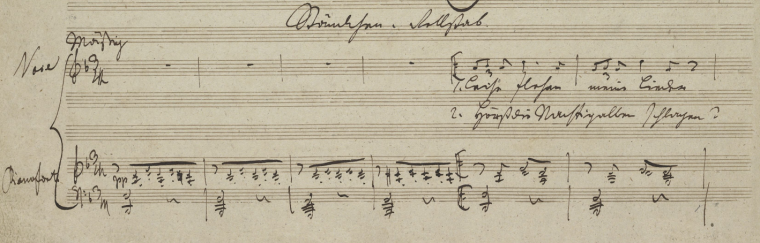
Franz Schubert (1797 - 19 novembre 1828): Ständchen, Lied D 957/4 (1828) su testo di Ludwig Rellstab. Peter Schreier, baritono; Walter Olbertz, pianoforte.
Leise flehen meine Lieder
Durch die Nacht zu Dir;
In den stillen Hain hernieder,
Liebchen, komm’ zu mir!
Flüsternd schlanke Wipfel rauschen
In des Mondes Licht;
Des Verräthers feindlich Lauschen
Fürchte, Holde, nicht.
Hörst die Nachtigallen schlagen?
Ach! sie flehen Dich,
Mit der Töne süßen Klagen
Flehen sie für mich.
Sie verstehn des Busens Sehnen,
Kennen Liebesschmerz,
Rühren mit den Silbertönen
Jedes weiche Herz.
Laß auch Dir das Herz bewegen,
Liebchen, höre mich!
Bebend harr’ ich Dir entgegen!
Komm’, beglücke mich!

Aleksandr Porfir’evič Borodin (12 novembre 1833 - 1887): Petite Suite per pianoforte (1884). Aldo Ciccolini.
La stessa composizione nell’orchestrazione di Glazunov. Kungliga filharmoniska orkestern (Stoccolma), dir. Gennadij Roždestvenskij.

Dame Elizabeth Violet Maconchy Le Fanu (1907 - 11 novembre 1994): Serenata concertante per violino e orchestra (1962). Manoug Parikian, violino; London Symphony Orchestra, dir. Vernon Handley.

Richard Heuberger (1850 - 28 ottobre 1914): Nachtmusik per archi op. 7 (1877). Südwestdeutsches Kammerorchester, dir. Paul Angerer.
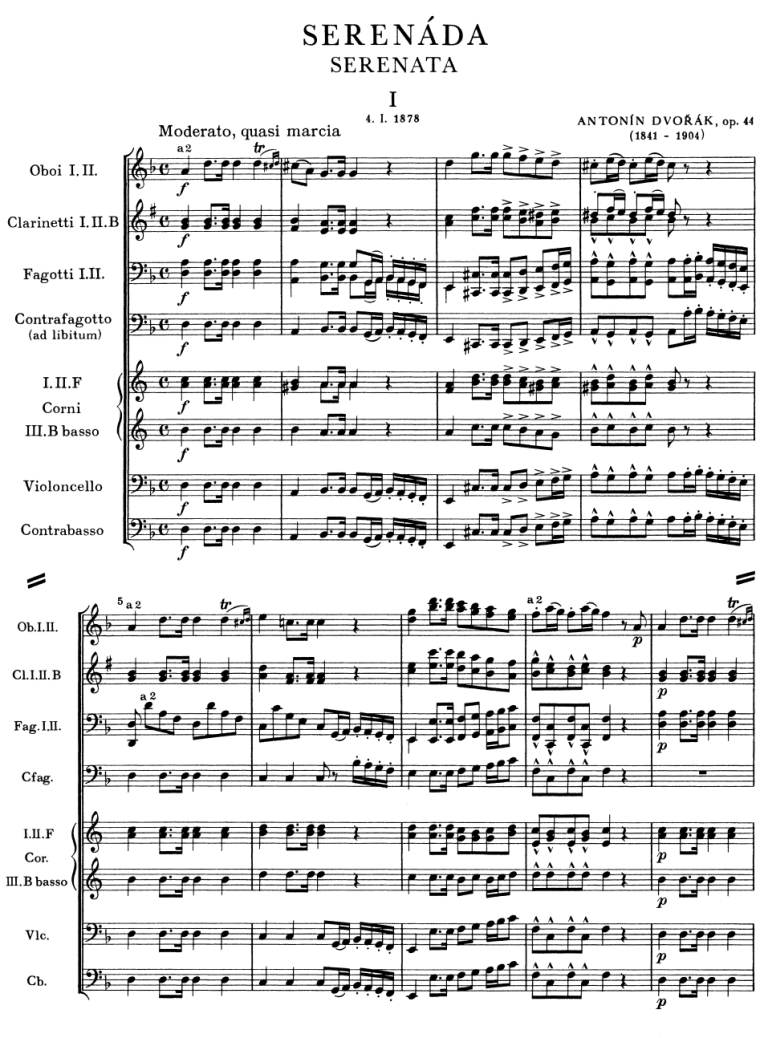
Antonín Dvořák (8 settembre 1841 - 1904): Serenata in re minore per 10 strumenti a fiato (2 oboi, 2 clarinetti, 2 fagotti, controfagotto ad libitum e 3 corni), violoncello e contrabbasso op. 44 (1878). Membri dell’Orchester des Bayerischen Rundfuks, dir. Rafael Kubelík.

Ignacio Cervantes (31 luglio 1847 - 1905): Serenata cubana. Yleana Bautista, pianoforte.
![]()
Emil Hartmann (1836 - 18 luglio 1898): Serenata in la maggiore-minore per clarinetto, violoncello e pianoforte op. 24 (1877). Trio Aurora.

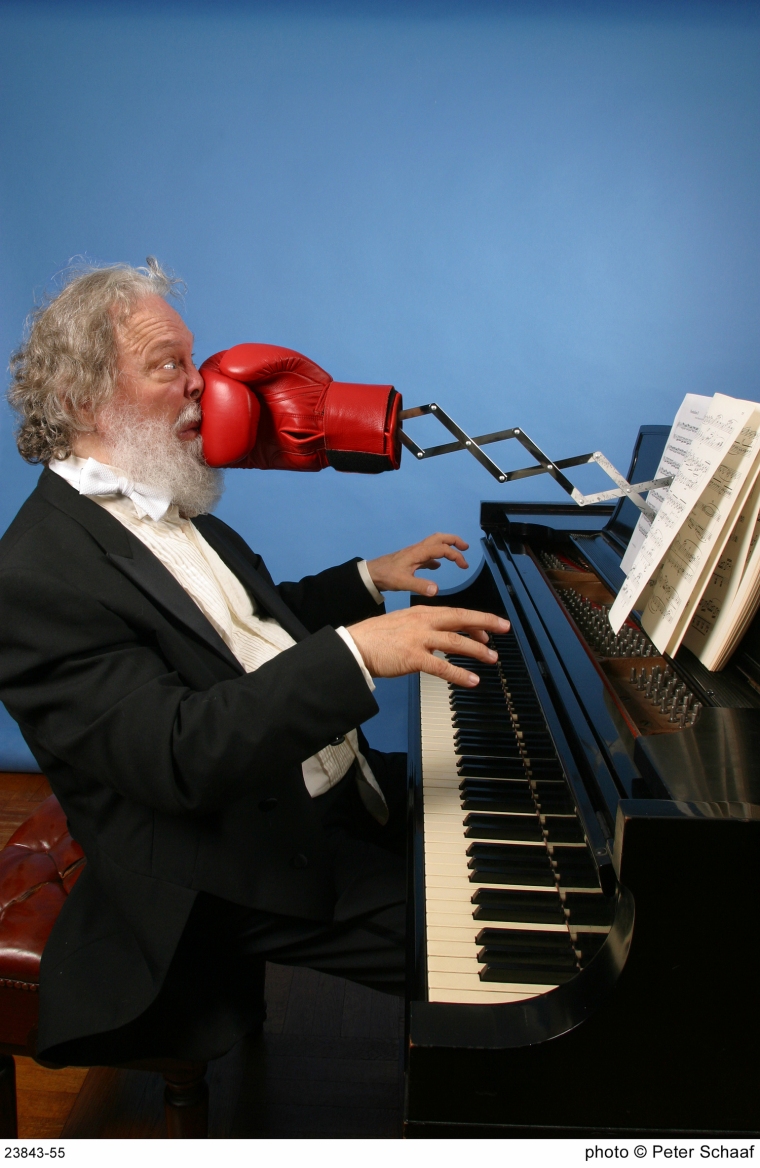
P.D.Q. Bach (alias Peter Schickele; 17 luglio 1935 - 2024): Grand Serenade for an Awful Lot of Winds and Percussion (1992). Turtle Mountain Naval Base Tactical Wind Ensemble, dir. Peter Schickele.
Grand Entrance : la solennità un po’ statica, severa ma non seria, del I movimento è punteggiata dai versi di alcuni pennuti che incautamente si sono introdotti nell’auditorium; non vorrei dirlo, ma… insomma… peggio per loro.
Simply Grand Minuet : in questo minuetto reboante la banda si fa accompagnare dal suono di ance e bocchini staccati dai rispettivi aerofoni; l’effetto nel complesso ricorda un po’ i richiami da caccia: forse i suonatori vorrebbero catturare altri volatili da sacrificare sull’altare di P.D.Q.
Romance in the Grand Manner : in sostanza è una suggestiva armonizzazione di Old Folks at Home ovvero Swanee River, celeberrimo minstrel song composto da Stephen Foster nel 1851.
Rondo Mucho Grando : il brano più esteso della suite è introdotto da un triplice rullo di timpano e tamburo militare, che si risolve in uno spaventoso crasho grosso quando l’armamentario delle percussioni rovina (fortuitamente?) a terra. Il tema principale del rondò, semplice e orecchiabile (più o meno), s’incrocia di continuo con segnali militari (carica!), con la fanfara che all’ippodromo annuncia l’inizio delle corse e con suggestioni blues. La sezione centrale si apre con una citazione di You Gotta Be a Football Hero, subito metamorfizzato nel tema iniziale del Quartetto n. 7 (op. 59 n. 1) di Beethoven. Una sirena sancisce la fine delle ostilità.
Grand Entrance: in his static solemnity, stern but not serious, the 1st movement is dotted by the cries of some birds who recklessly entered the auditorium; I don’t want to say it, but– well– worse for them.
Simply Grand Minuet: playing this booming minuet the band is accompanied by reeds and mouthpieces detached from their respective aerophones; the overall effect is somewhat reminiscent of hunting calls: maybe our players would like to capture other birds to be sacrificed on the altar of P.D.Q.
Romance in the Grand Manner: it substantially is a suggestive harmonization of Old Folks at Home or Swanee River, a famous minstrel song composed by Stephen Foster in 1851.
Rondo Mucho Grando: the most extensive movement of the Serenade is introduced by a triple roll performed by timpani and snare drum, which results in a frightening crasho grosso when all the percussion instruments fall (fortuitously?) to the ground. The main theme of the Rondo, (almost) simple and catchy, constantly intersects with military signals (charge!), the fanfare that announces the start of races at the hippodrome and bluesy tones. The middle section opens with a quote from You Gotta Be a Football Hero, which is immediately metamorphosed into the first theme of Beethoven’s Quartet no. 7 (op. 59 n. 1). A siren marks the end of hostilities.

Arnold Schoenberg (1874 - 13 luglio 1951): Serenata per baritono e 7 strumenti (clarinetto, clarinetto basso, mandolino, chitarra, violino, viola, violoncello) op. 24 (1921-23); testo di Francesco Petrarca (Sonetto 217, Canzoniere CCLVI) nella traduzione di Stefan George. Derrik Olsen, baritono; membri del SWR Sinfonieorchester Baden-Baden und Freiburg, dir. Hans Rosbaud.
O könnt’ ich je der Rach’ an ihr genesen,
die mich durch Blick und Rede gleich zerstöret,
und dann zu grösserm Leid sich von mir kehret,
die Augen bergend mir, die süssen, bösen!
So meiner Geister matt bekümmert Wesen
sauget mir aus allmählich und verzehret
und brülend, wie ein Leu, ans Herz mir fähret
die Nacht, die ich zur Ruhe mir erlesen!
Die Seele, die sonst nur der Tod verdränget,
trent sich von mir, und ihrer Haft entkommen,
fliegt sie zu ihr, die drohend sie empfänget.
Wohl hat es manchmal Wunder mich genommen
wenn die nun spricht und weint und sie umfänget,
dass fort sie schläft, wenn solches sie vernommen.
Far potess’io vendetta di colei
che guardando et parlando mi distrugge,
et per piú doglia poi s’asconde et fugge,
celando gli occhi a me sí dolci et rei.
Cosí li afflicti et stanchi spirti mei
a poco a poco consumando sugge,
e ‘n sul cor quasi fiero leon rugge
la notte allor quand’io posar devrei.
L’alma, cui Morte del suo albergo caccia,
da me si parte, et di tal nodo sciolta,
vassene pur a lei che la minaccia.
Meravigliomi ben s’alcuna volta,
mentre le parla et piange et poi l’abbraccia,
non rompe il sonno suo, s’ella l’ascolta.

Leoš Janáček (3 luglio 1854 - 1928): Suita (o Serenada) per orchestra op. 3 (1891). Janáčkova filharmonie Ostrava, dir. Otakar Trhlík.
Appassionato studioso delle tradizioni musicali della propria terra, Janáček ne adotta gli elementi caratteristici — come per esempio le formule ripetitive — in varie composizioni. Il delizioso Allegretto della Suita op. 3 era già stato inserito, come II movimento, con strumentazione leggermente diversa, nella serie delle Danze dei lachi (1889).
Leoš Janáček con la moglie Zdenka Schulzová nel 1881.
Wolfgang Amadeus Mozart (1756 - 1791): «Deh, vieni alla finestra» da Don Giovanni, atto II. Cesare Siepi.
Deh, vieni alla finestra, o mio tesoro,
Deh, vieni a consolar il pianto mio.
Se neghi a me di dar qualche ristoro,
Davanti agli occhi tuoi morir vogl’io!
Tu ch’hai la bocca dolce più del miele,
Tu che il zucchero porti in mezzo al core!
Non esser, gioia mia, con me crudele!
Lasciati almen veder, mio bell’amore!
Georges Bizet (1838-1875): «Près des remparts de Séville» (seguidilla) da Carmen, atto I. Maria Callas, con Nicolai Gedda.
Près des remparts de Séville
Chez mon ami Lillas Pastia,
J’irai danser la séguedille
Et boire du Manzanilla!
J’irai chez mon ami Lillas Pastia!
Oui, mais toute seule on s’ennuie,
Et les vrais plaisir sont à deux;
Donc pour me tenir compagnie
J’emmènerai mon amoureux!
Mon amoureux… il est au diable…
Je l’ai mis à la porte hier!
Mon pauvre coeur, très consolable,
Mon coeur est libre comme l’air!
J’ai des galants à la douzaine,
Mais ils ne sont pas à mon gré;
Voici la fin de la semaine:
Qui veut m’aimer? je l’aimerai!
Qui veut mon âme?… elle est à prendre!
Vous arrivez au bon moment!
Je n’ai guère le temps d’attendre,
Car avec mon nouvel amant,
Près des remparts de Séville
Chez mon ami Lillas Pastia,
J’irai danser la séguedille
Et boire du Manzanilla.
Jean Françaix (23 maggio 1912-1997): Mozart new-look, petite fantaisie pour contrebasse et instruments à vent sur la sérénade de Don Giovanni (1983). Enrico Fagone, contrabbasso; Orchestra della Svizzera Italiana.
Il tema mozartiano è accompagnato da citazioni della seguidilla dalla Carmen di Bizet — «afin de saupoudrer d’un peu de démocratie l’aristocratie du Maître salzbourgeois», spiega Françaix.

Ethel Smyth (23 aprile 1858 - 1944): Serenata in re maggiore per orchestra (1889). BBC Philharmonic Orchestra, dir. Odaline de la Martinez.

.
Bruno Maderna (21 aprile 1920 - 1973): Serenata per un satellite per gruppo da camera (1969). Ex Novo Ensemble, dir. Carlo Ambrosio.
.