
Franz Xaver Schnizer (o Schnitzer; 1740 - 9 maggio 1785); Sonata in re maggiore op. 1 n. 4 (1773). Franz Lehrndorfer allo Heilig Geist-Orgel dell’Abbazia di Ottobeuren.
- Allegro non molto
- Andante [2:59]
- Presto [6:58]
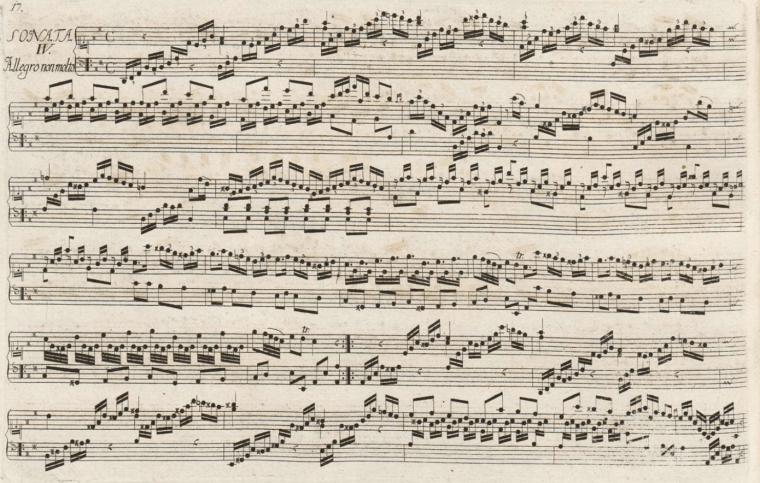

Franz Xaver Schnizer (o Schnitzer; 1740 - 9 maggio 1785); Sonata in re maggiore op. 1 n. 4 (1773). Franz Lehrndorfer allo Heilig Geist-Orgel dell’Abbazia di Ottobeuren.
Hugo Alfvén (1º maggio 1872 - 8 maggio 1960): Aftonen (Sera) per coro (1942) su testo di Hermann Sätherberg. The Real Group.
Skogen står tyst, himlen är klar
Hör, huru tjusande vallhornet lullar
Kvällssolens bloss sig stilla sänker
Sänker sig ner uti den lugna, klara våg
Ibland dälder, gröna kullar
eko kring nejden far.
(Il bosco è slilenzioso, il cielo è sereno, ascolta l’incantevole ninnananna dal corno del pastore. Il bagliore rosso del sole scende silente nella sera, sprofonda fra le onde calme e luminose. Fra valli e verdi colline l’eco risuona qua e là.)

Hugo Alfvén (1º maggio 1872 - 8 maggio 1960): Sonata in do minore per violino e pianoforte op. 1 (1898). Mircea Saulesco, violino; Janos Solyom, pianoforte.

Hugo Alfvén (1º maggio 1872 - 8 maggio 1960): Sinfonia n. 2 in re maggiore op. 11 (1897–98). Sveriges Radios Symfoniorkester, dir. Evgenij Svetlanov.

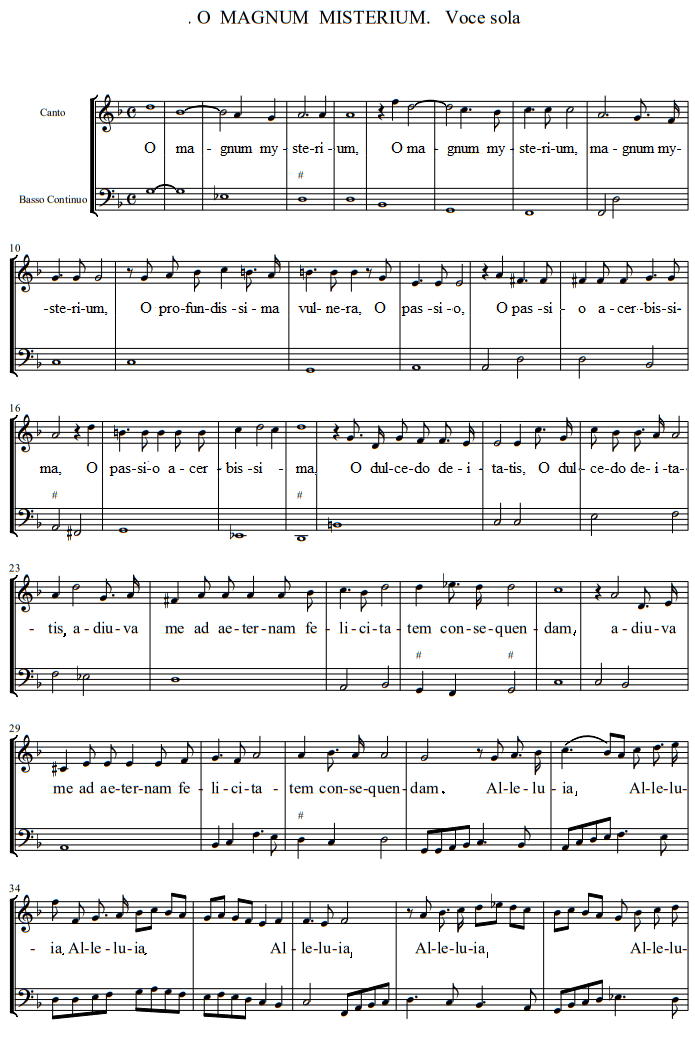
Lucrezia Orsina Vizzana (1590 - 7 maggio 1662): O magnum mysterium, mottetto a voce sola e basso continuo. Cristina Radu, soprano; Steffen Schlandt, organo; Stefan Neagoe, violoncello.
O magnum mysterium,
O profundissima vulnera,
O passio acerbissima,
O dulcedo deitatis,
Adiuva me ad aeternam felicitatem consequendam.
Alleluia.
Carl Heinrich Graun (7 maggio 1704 - 1759): Concerto in do minore per clavicembalo e orchestra. Waldemar Döling, clavicembalo; orchestra da camera Sofia Soloists, dir. Emil Tabakov.
Karel Filip Stamic (Carl Philipp Stamitz; 7 maggio 1745 - 1801): Concerto in fa maggiore per pianoforte e orchestra. Felicja Blumental, pianoforte; Württembergisches Kammerorchester Heilbronn, dir. Jörg Faerber.
Johannes Brahms (7 maggio 1833 - 1897): Secondo Concerto in si bemolle maggiore per pianoforte e orchestra op. 83 (1881). Emil Gilels, pianoforte; Chicago Symphony Orchestra, dir. Fritz Reiner.
Pëtr Il’ič Čajkovskij (7 maggio 1840 - 1893): Secondo Concerto in sol maggiore per pianoforte e orchestra op. 44 (1880). Michail Pletnëv, pianoforte; Orchestra sinfonica della Radio di Mosca, dir. Vladimir Fedoseev.

Giaches de Wert (c1535 - 6 maggio 1596): Vox in Rama audita est, dal Secondo Libro de motetti a cinque voci (1581). Coro Currende, dir. Erik van Nevel.
Vox in Rama audita est,
ploratus et ululatus multus:
Rachel plorans filios suos,
noluit consolari, quia non sunt.
Un grido s’è udito in Rama, un pianto e un lamento grande: Rachele piange i suoi figli, non vuole essere consolata, perché non sono più (Matteo 2:18).

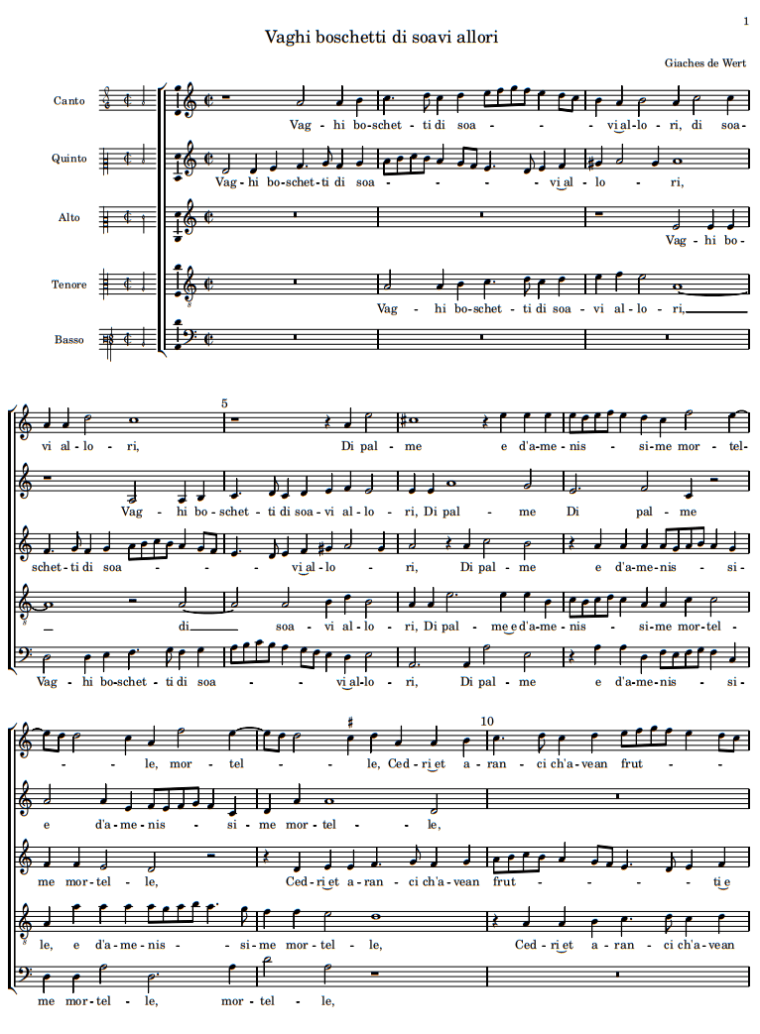
Giaches de Wert (c1535 - 6 maggio 1596): Vaghi boschetti di soavi allori, madrigale a 5 voci (dal Settimo libro de madrigali a cinque voci, 1581, n. 6) su testo di Ludovico Ariosto (Orlando furioso VI:21). La Compagnia del Madrigale.
Vaghi boschetti di soavi allori,
di palme e d’amenissime mortelle,
cedri et aranci ch’avean frutti e fiori
contesti in varie forme e tutte belle,
facean riparo ai fervidi calori
de’ giorni estivi con lor spesse ombrelle;
e tra quei rami con sicuri voli
cantando se ne giano i rosignuoli.
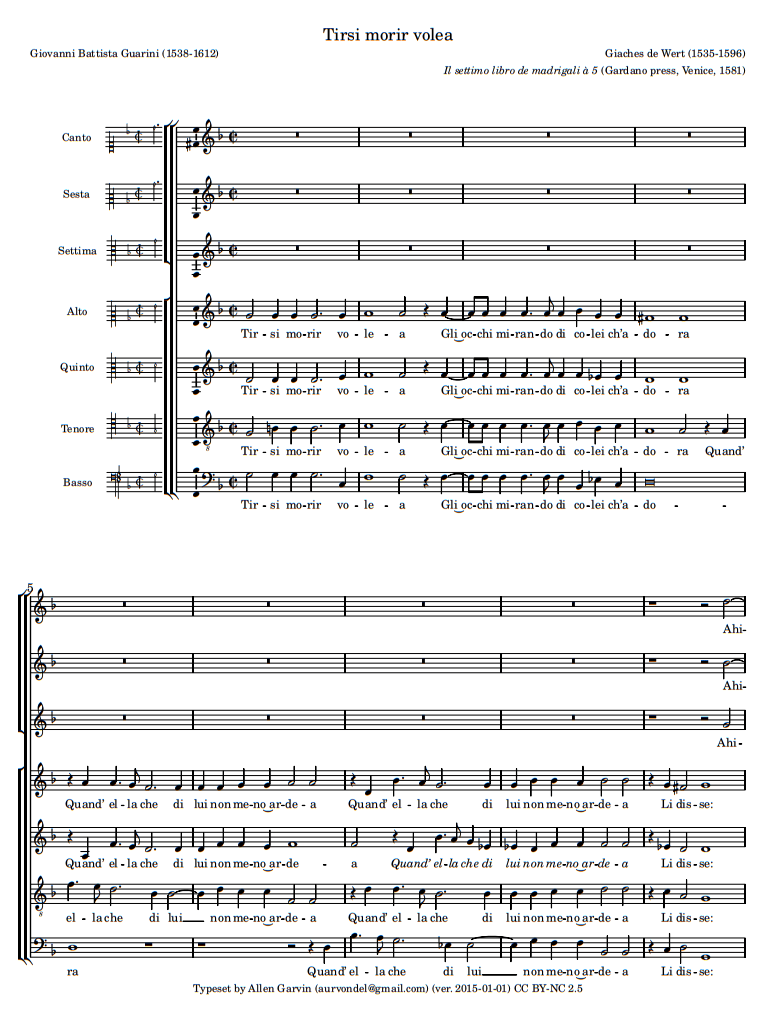
Giaches de Wert (c1535 - 6 maggio 1596): Tirsi morir volea, madrigale a 7 voci (dal Settimo Libro de madrigali, 1581) su testo di Battista Guarini. Ensemble Voces Suaves.
Tirsi morir volea,
Gl’occhi mirando di colei ch’adora;
Quand’ella, che di lui non meno ardea,
Gli disse: «Ahimè, ben mio,
Deh, non morir ancora,
Che teco bramo di morir anch’io.»
Frenò Tirsi il desio,
Ch’ebbe di pur sua vit’allor finire;
E sentea morte,e non poter morire.
E mentr’il guardo suo fisso tenea
Ne’ begl’occhi divini
E’l nettare amoroso indi bevea,
La bella Ninfa sua, che già vicini
Sentea i messi d’Amore,
Disse, con occhi languidi e tremanti:
«Mori, cor mio, ch’io moro.»
Cui rispose il Pastore:
«Ed io, mia vita, moro.»
Così moriro i fortunati amanti
Di morte sì soave e sì gradita,
Che per anco morir tornaro in vita.
Giaches de Wert (c1535 - 6 maggio 1596): Mia benigna fortuna, madrigale 5 voci (pubblicato nel Nono Libro de madrigali a cinque et sei voci, 1588, n. 7) su testo di Francesco Petrarca (Canzoniere CCCXXXII). Huelgas Ensemble, dir. Paul van Nevel.
Mia benigna fortuna e ‘l viver lieto,
i chiari giorni et le tranquille notti
e i soavi sospiri e ‘l dolce stile
che solea resonare in versi e ‘n rime,
vòlti subitamente in doglia e ‘n pianto,
odiar vita mi fanno, et bramar morte.
Crudel, acerba, inexorabil Morte,
cagion mi dài di mai non esser lieto,
ma di menar tutta mia vita in pianto,
e i giorni oscuri et le dogliose notti.
I mei gravi sospir’ non vanno in rime,
e ‘l mio duro martir vince ogni stile.
%20Luk%20Van%20Eeckhout%20LR.jpg "Huelgas Ensemble")
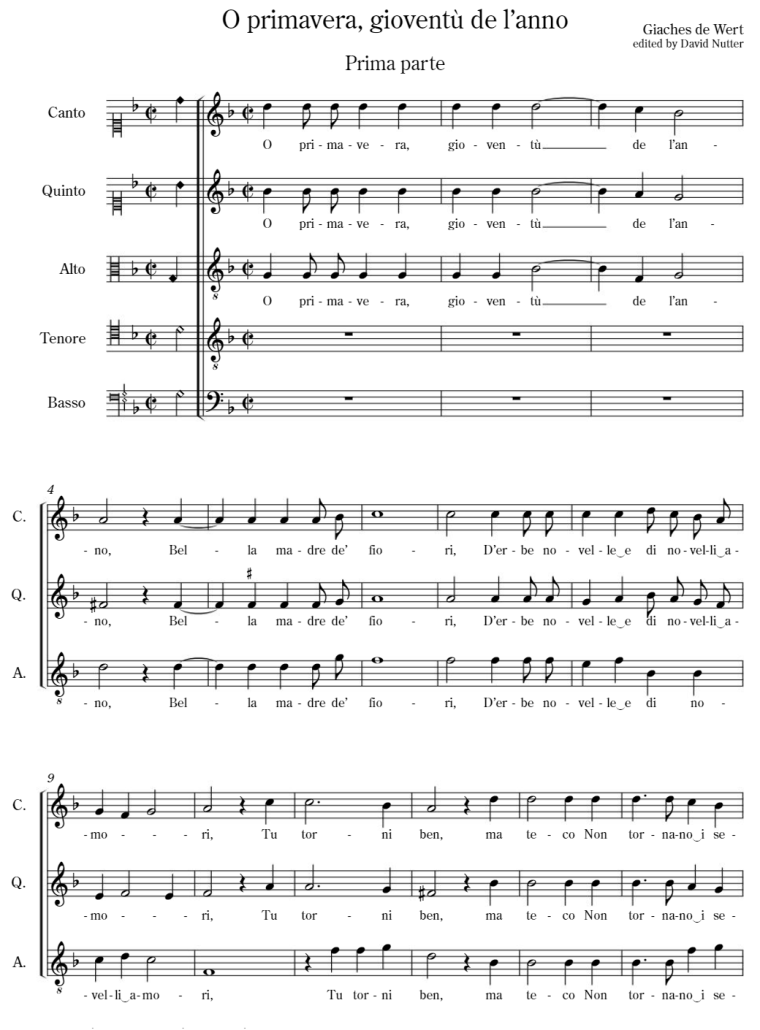
Giaches de Wert (c1535 - 6 maggio 1596): O primavera, gioventù de l’anno, madrigale a 5 voci (dall’Undecimo libro de madrigali a cinque voci, 1595, n. 2) su testo di Battista Guarini (Il pastor fido, atto III), parte 1a. Francesca Benetti, tiorba e direzione; Tanja Vogrin, arpa; Giovanna Baviera, viola da gamba; Rui Staehelin, liuto; Ricardo Leitão Pedro, chitarra barocca.
O primavera, gioventù de l’anno,
Bella madre de’ fiori,
D’herbe novelle e di novelli amori,
Tu torni ben, ma teco
Non tornano i sereni
E fortunati dì de le mie gioie;
Tu torni ben, tu torni,
Ma teco altro non torna
Che del perduto mio caro tesoro
La rimembranza misera, e dolente.
Tu quella se’, tu quella
Ch’eri pur dianzi sì vezzosa e bella;
Ma non son io già quel ch’un tempo fui
Sì caro à gli occhi altrui.
Stanisław Moniuszko (5 maggio 1819 - 1872): Bajka. Opowieść zimowa (Una favola. Racconto d’inverno), ouverture-fantasia in la minore per orchestra (1848). Sinfonia Varsovia, dir. Marc Minkowski.

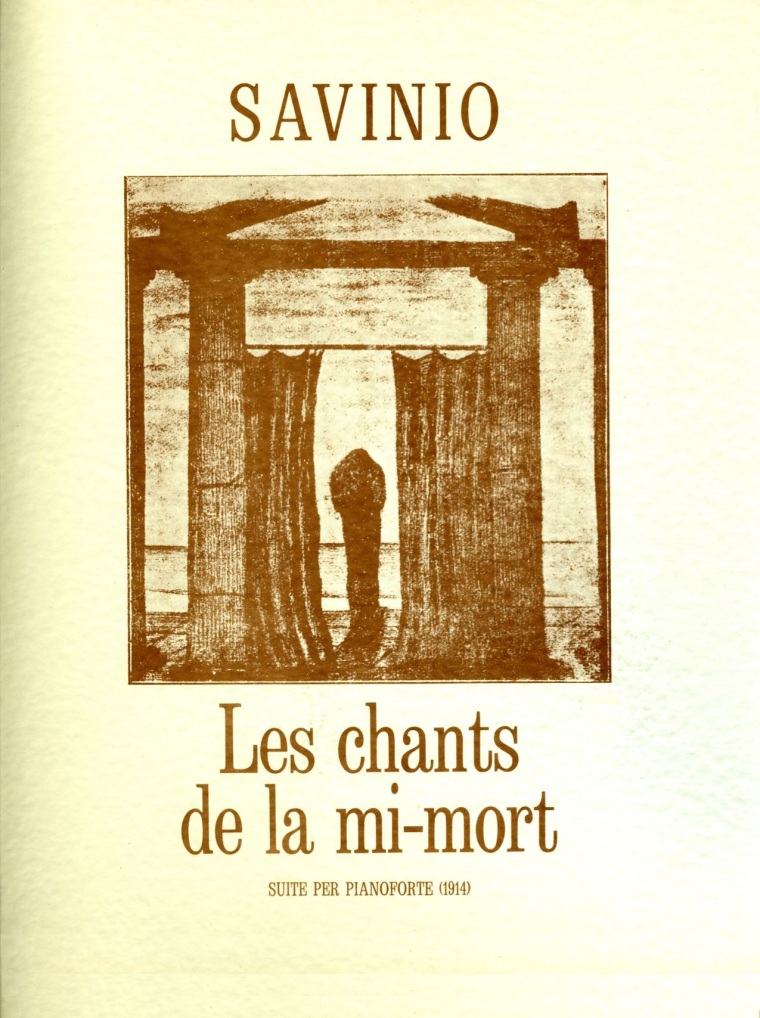
Alberto Savinio (pseudonimo di Andrea Francesco Alberto de Chirico; 1891 - 5 maggio 1952): Les chants de la mi-mort, suite per pianoforte (1914). Fausto Bongelli.
Qui una interessante pagina web su Alberto Savinio.
 Pier Adolfo Tirindelli (5 maggio 1858 - 1937): O Primavera!, romanza per voce e pianoforte (1906) su testo di Olga Bonetti. Carlo Bergonzi, tenore; John Wustman, pianoforte.
O Primavera, libera e gioconda,
Primavera che ridi sulla Terra,
i germi schiudi, il cantico disserra,
d’amore e gioia l’anima m’inonda!
O Primavera, cantano i virgulti
le nozze ardenti della Terra e il Sole;
dammi i tuoi raggi, dammi le viole;
di nova vita l’anima sussulti!
Sotto la neve, inaridito, il core
gemeva afflitto in un’eterna sera,
O Primavera, fonde il tuo bacio il gel.
O Primavera, dammi l’amore!
Zygmunt Stojowski (4 maggio 1870 - 1946): Sinfonia in re minore op. 21 (1897). Polska orkiestra radiowa, dir. Łukasz Borowicz.

Claudio Merlotti alias Merulo (1533 - 4 maggio 1604): Canzon La Pazza a 4. Massimiliano Raschietti all’organo del Duomo del SS. Corpo di Cristo in Valvasone (Vincenzo Colombo, 1532-35).

Marianna Martines (4 maggio 1744 - 1812): Terza Sonata in la maggiore per clavicembalo (c1765). Nicoleta Paraschivescu.

Giorgio Mainerio (c1535 - 4 maggio 1582): cinque danze dal Primo Libro de balli a quatro voci accommodati per cantar et sonar d’ogni sorte de instromenti (1578). Early Music Consort of London, dir. David Munrow.
Mainerio: Schiarazula marazula, ballo a 4 voci (op. cit.). Ensemble Trictilla e Lucia Sciannimanico.
Si tratta di un ballo friulano le cui origini si perdono nel Medioevo. Era cantato sopra un testo di cui, a parte le due parole che ne costituiscono il titolo, si è persa ogni traccia, ma in documento del 1624 si attesta che il ballo e il canto erano eseguiti per evocare la pioggia.

Evgenij Svetlanov (1928 - 3 maggio 2002): La Daugava, poema sinfonico (1952). Orchestra sinfonica di Stato dell’URSS diretta dall’autore (in concerto, 1976).
La Daugava o Dvina occidentale è un fiume lungo 1020 km: nasce nel Rialto del Valdaj, attraversa Russia, Bielorussia e Lettonia, e infine sfocia nel golfo di Riga, nel Mar Baltico.

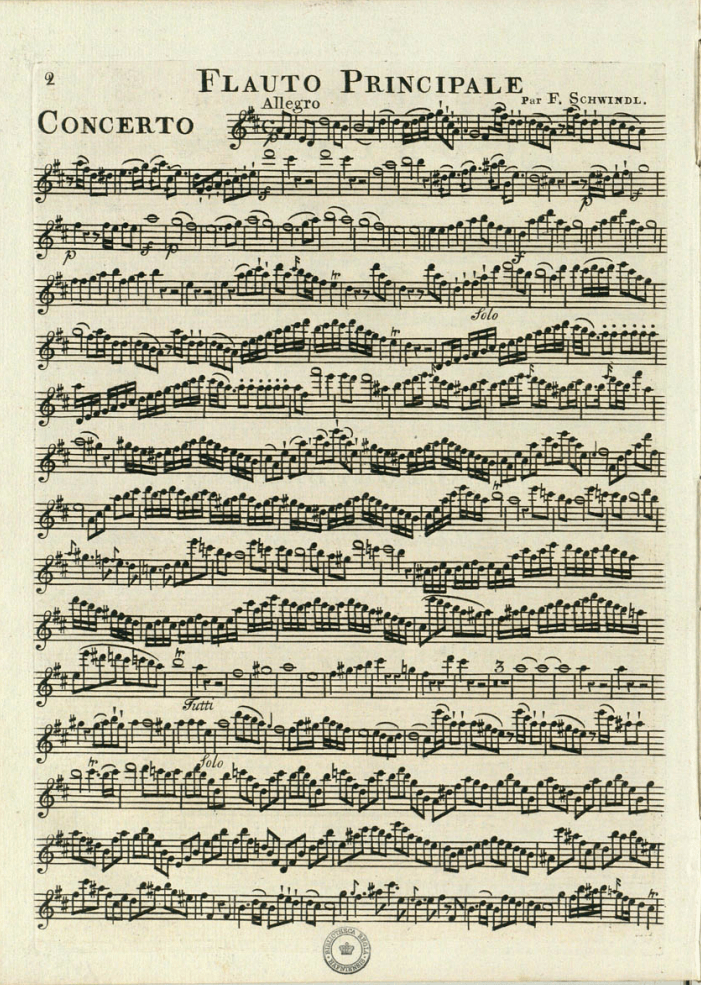
Friedrich Schwindl (3 maggio 1737 - 1786): Concerto in re maggiore per flauto e orchestra. Ricards Bröhl, flauto; Rheinisches Kammerorchester Köln, dir. Jan Corazolla.
Marcel Dupré (3 maggio 1886 - 1971): Cortège et Litanie op. 19 n. 2 (1923). Esegue l’autore all’organo di Saint-Sulpice in Parigi.

Leonhard Paminger (1495 - 3 maggio 1567): Discumbentibus illis, mottetto a 4 voci (pubblicato in Novum et insigne opus musicum II, 1538, n. 41). Paminger-Ensemble.
Discumbentibus illis undecim apostolis,
apparuit Jesus, et exprobavit illis,
quod his qui ipsum vidissent resurrexisse non credidissent,
et dicebat illis:
Ite in universum mundum, et praedicate Evangelium omni creaturae.
Qui crediderit, et baptizatus fuerit, salvus erit. Alleluia.
Qui vero non crediderit, condemnabitur.
Signa eos qui in me credunt, haec sequentur:
Per nomen meum daemonia ejicient, linguis loquent novis, serpentes tollent.
Et si quid laetale biberint, non eis nocebit,
super aegros manus imponent, et bene habebunt.
Itaque Dominus quidem postquam locutus est, assumptus est in coelum,
et sedet ad dextris Dei. llli vero egressi praedicaverunt ubique Domino.

Maurice Emmanuel (2 maggio 1862 - 1938): Le Poème du Rhône, poema sinfonico op. 30 ispirato da Frédéric Mistral (1938); rimasta incompiuta alla morte del compositore, l’orchestrazione è stata ultimata da Marguerite Béclard d’Harcourt. Staatsorchester Rheinische Philharmonie, dir. Gilles Nopre.

Maurice Emmanuel (2 maggio 1862 - 1938): Seconda Sinfonia in la maggiore op. 25, Bretonne (1930-31). Staatsorchester Rheinische Philharmonie, dir. James Lockhart.

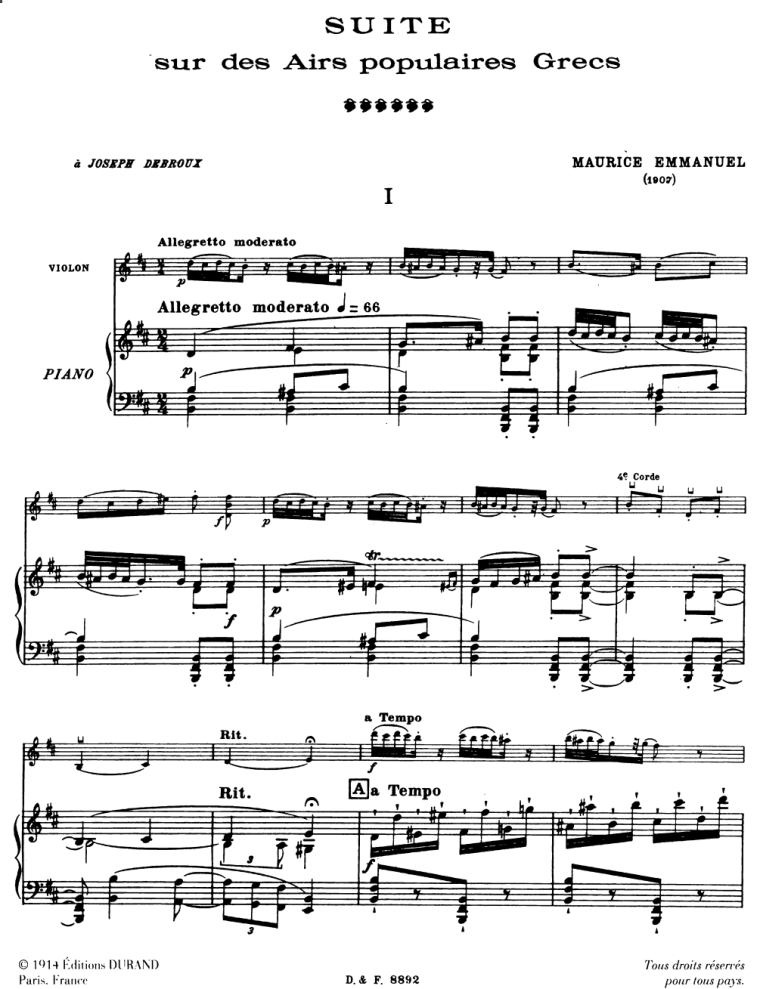
Maurice Emmanuel (2 maggio 1862 - 1938): Suite sur des airs populaires grecs per violino e pianoforte op. 10 (1907). Camille Théveneau, violino; Florent Ling, pianoforte.
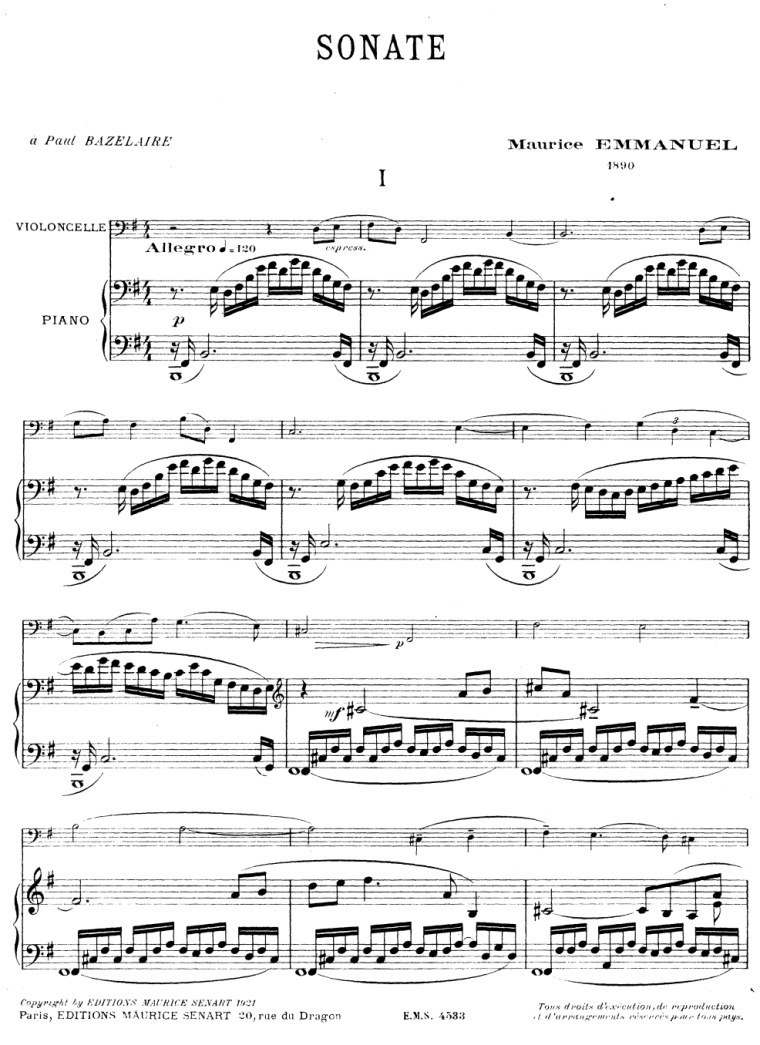
Maurice Emmanuel (2 maggio 1862 - 1938): Sonata per violoncello e pianoforte op. 2 (1890). Anssi Karttunen, violoncello; David Lively, pianoforte.
Milij Alekseevič Balakirev (1837 - 1910): Quasi Valse, II movimento della Suite in si minore per orchestra (1901-08). Orchestra Sinfonica Accademica di Stato dell’URSS, dir. Evgenij Svetlanov.
Giulio Ricordi (1840 - 1912): Quasi valzer, n. 12 (Dicembre) dell’Almanacco musicale per pianoforte (1885). Roberto Piana.
Aleksandr Nikolaevič Skrjabin (1872 - 1915): Quasi-valse op. 47 (1905). Joseph Moog, pianoforte.
Nikolaj Metner (o Medtner; 1880 - 1951): Allegro con grazia (quasi valse), ultimo degli 8 Stimmungsbilder op. 1 (1896-97). Ekaterina Deržavina, pianoforte.
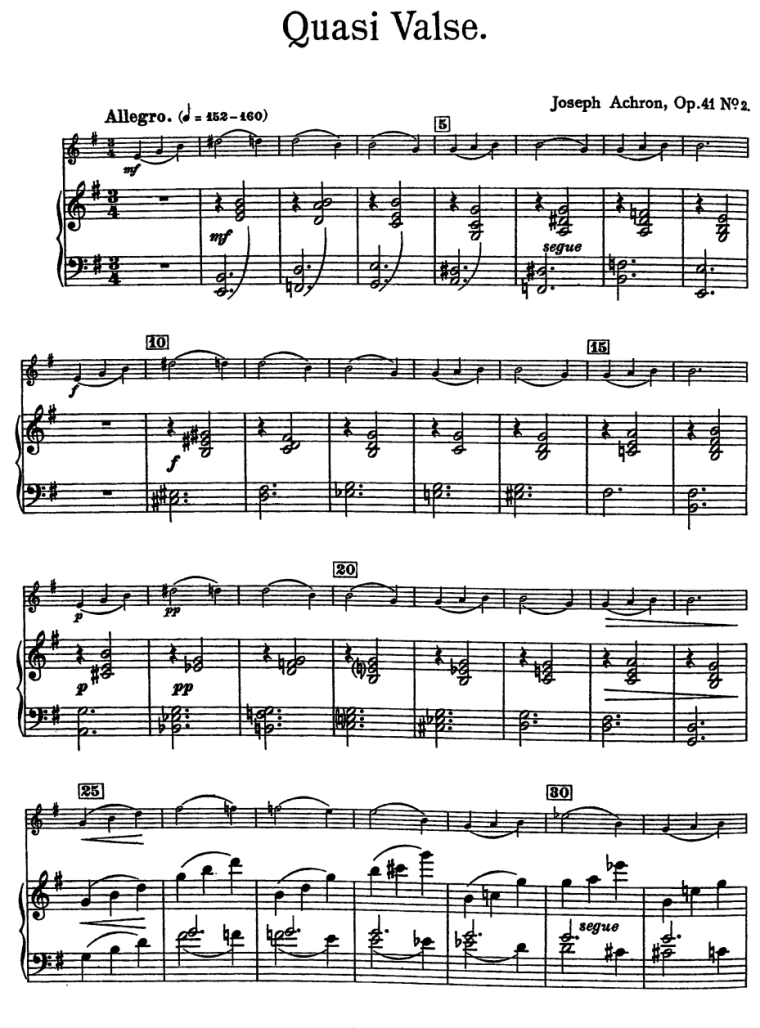
Iosif Jul’evič Achron (1º maggio 1886 - 1943): Quasi Valse, II movimento della Suite bizarre per violino e pianoforte op. 41 (c1917). Ingolf Turban, violino; Jaša Nemcov, pianoforte.
Alessandro Poglietti (? - 1683): Toccata fatta sopra l’assedio di Filipsburgo. Fernando De Luca, clavicembalo.
La cittadina di Philippsburg, nel Baden-Württemberg, fu assediata più volte nel corso della sua storia. L’episodio cui fa riferimento la composizione di Poglietti risale al 1676: Philippsburg, occupata dai francesi fin dal 1644, il 1° maggio viene cinta d’assedio dalle truppe imperiali guidate da Carlo V di Lorena; strenuamente difesa per oltre quattro mesi dal generale Charles de Faultrier du Fay, la piazzaforte capitola il 9 settembre.

 Vilém Blodek (1834 - 1° maggio 1874): Sinfonia in re minore (1859). Plzeňský rozhlasový orchestr, dir. Bohumír Liška.
Antonín Dvořák (1841 - 1° maggio 1904): Dumka e Furiant per pianoforte op. 12, B. 136-137 (1876). Inna Porošina.
La dumka (diminutivo di duma, pensiero) è un canto popolare slavo di origine ucraina: ha carattere narrativo e elegiaco, andamento lento o moderato e tonalità minore. Il furiant è una danza tradizionale boema, vivace e energica, di andamento rapido; caratteristica saliente è l’ambiguità ritmica determinata dall’innesto di elementi binari sul ritmo ternario di base (emiolia).


 la regina gioiosa