John Dunstable (o Dunstaple; c1390 - 24 dicembre 1453): Quam pulchra es, mottetto a 3 voci. The Hilliard Ensemble.
Quam pulchra es et quam decora,
carissima, in deliciis;
statura tua assimilata est palmae,
et ubera tua botris;
caput tuum ut Carmelus,
collum tuum sicut turris eburnea.
Veni, dilecte mi,
ingrediamur in agrum;
videamus si flores fructus parturierunt,
si floruerunt mala punica;
ibi dabo tibi ubera mea.
Alleluia.
John Dunstable: Descendi in ortum meum, mottetto a 4 voci. ArsNovaSacra Vocal Ensemble.
Descendi in ortum meum,
ut viderem poma convallium
et inspicerem si floruissent vineae
et germinassent mala punica.
Revertere Sunamitis ut intueamur te.
Michele Novaro (23 dicembre 1818 - 1885): Venezia, ode per canto e pianoforte (1849) su testo di Arnaldo Fusinato. Leonardo De Lisi, tenore; Vito Maggiolino, pianoforte.
È fosco l’aere, è l’ora bruna,
è tutta in gemiti la mia laguna,
in solitaria malinconia
ti guardo e lagrimo,
Venezia mia!
Tra i rotti nugoli dell’occidente
i raggi perdonsi del sol morente,
è mesto sibilo per l’aria bruna
l’ultimo gemito della laguna.
Passa una gondola della città.
«Ehi, dalla gondola, qual novità?»
«Il morbo infuria, il pan ci manca,
sul ponte sventola bandiera bianca!»
Oh! no, non splendere su tanti guai,
Sole d’Italia, non splender mai;
e sulla veneta spenta fortuna
si eterni il gemito della laguna.
Venezia! l’ultima ora è venuta;
illustre martire, tu sei perduta…
Il morbo infuria, il pan ti manca,
sul ponte sventola bandiera bianca!
Ma non le ignivome palle roventi,
né i mille fulmini su te stridenti,
troncaro ai liberi tuoi dì lo stame…
Viva Venezia!
Muore di fame!
Sulle tue pagine scolpisci, o Storia,
l’altrui nequizie e la sua gloria,
e grida ai posteri tre volte infame
chi vuol Venezia morta di fame!
Viva Venezia!
L’ira nemica la sua risuscita
virtude antica;
ma il morbo infuria, ma il pan le manca…
Sul ponte sventola bandiera bianca!
Ed ora infrangasi qui sulla pietra,
finché è ancor libera,
questa mia cetra.
A te, Venezia,
l’ultimo canto,
l’ultimo bacio,
l’ultimo pianto!
Ramingo ed esule in suol straniero,
vivrai, Venezia, nel mio pensiero;
vivrai nel tempio qui del mio core,
come l’imagine del primo amore.
Ma il vento sibila,
ma l’onda è scura,
ma tutta in tenebre
è la natura:
le corde stridono,
la voce manca…
Sul ponte sventola
bandiera bianca!
Michele Novaro musicò anche l’attuale inno nazionale italiano: ne abbiamo parlato qui.
Tomás de Torrejón y Velasco Sánchez (23 dicembre 1644 - 1728): Cuando el bien que adoro, duo para la ascensión del Señor, villancico a 2 voci e basso continuo. Ensemble Elyma e Coro de niños cantores de Córdoba (Argentina), dir. Gabriel Garrido.
Cuando el bien que adoro
me deja sin mí,
y se ausenta al alto eterno cenit,
¿Qué puedo hacer, si en mi amor
es preciso el sentir?
Vivir, morir.
– Sí.
Vivir para penar:
más fineza es vivir y penar.
– No.
Morir para vivir:
mas fineza es morir de vivir,
si en mi amor es preciso el sentir.
Cuando el bien que adoro
me deja sin mí,
y se ausenta al eterno cenit,
yo quiero vivir,
yo quiero morir.
Coplas:
Mas segura es mi opinión
en esta armoniosa lid,
pues morir por lo que adoro
es de mi amor blasón más feliz.
Viviéndolo logras mi afecto
hacer continuo el sentir,
que no está bien con las penas
quien solicita apartarlas de sí.
Cuando mi amado se ausenta
¿Cómo le puedo seguir,
si no es rindiendo la vida
con que la vida consiste en morir?.
No le considere ausente,
pues sé que se queda en mí,
que no puede separarse
lo que una vez el amor llegó a unir.
Johann Heinrich Rolle (23 dicembre 1716 - 29 dicembre 1785): Der Friede Gottes, mottetto a 4 voci (c1770). Kammerchor Michaelstein, dir. Sebastian Göring.
Der Friede Gottes, welcher höher ist denn alle Vernunft,
bewahre eure Herzen und Sinne in Christo Jesu zum ewigen Leben.
Amen.
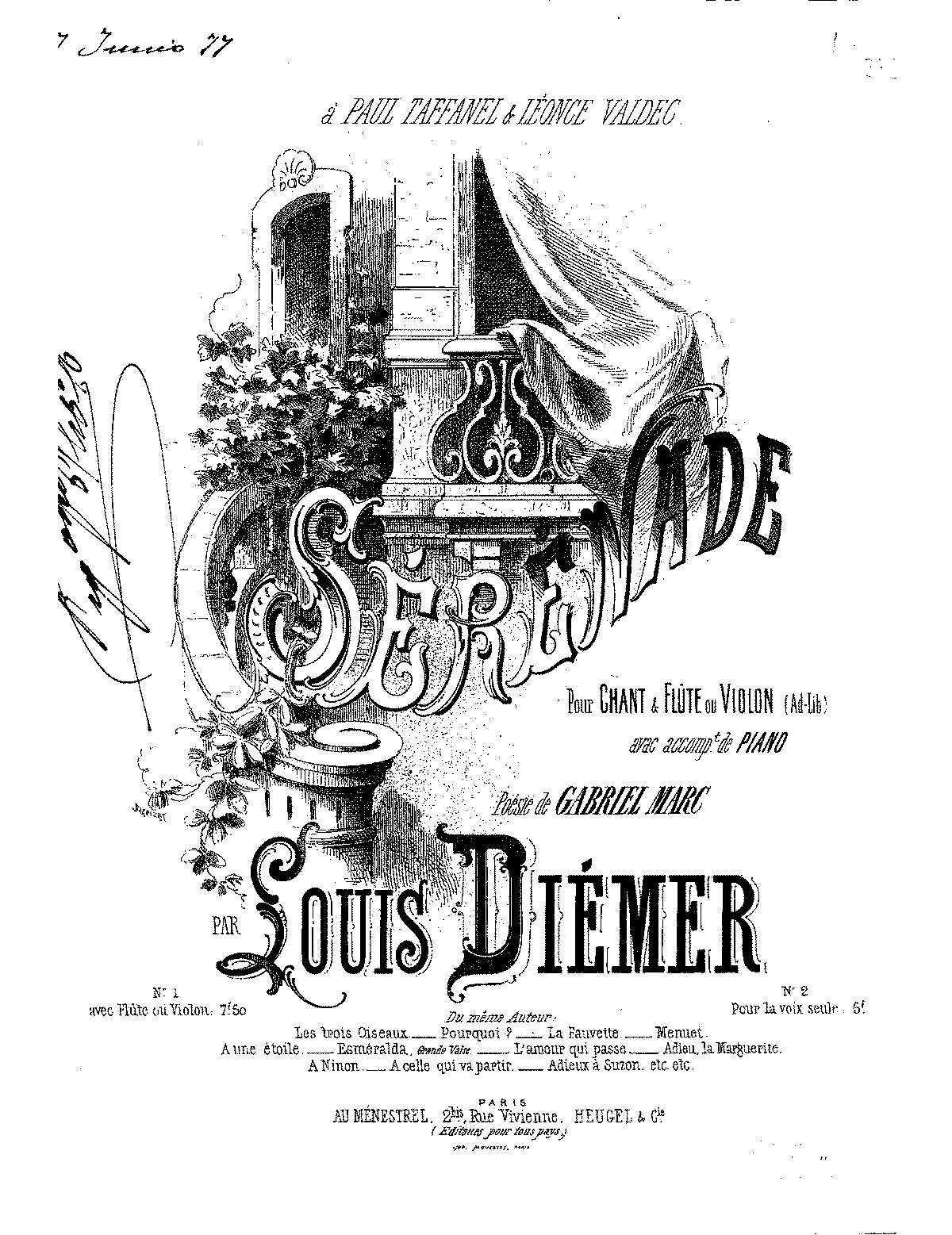
Louis Diémer (1843 - 21 dicembre 1919): Sérénade per voce, flauto o violino ad libitum e pianoforte (c1877) su testo di Gabriel Marc (da Soleils d’octobre, 1868). MeredìEnsemble: Ronja Weyhenmeyer, soprano; Andrea Salvi, flauto; Ani Ter-Martirosyan, pianoforte.
Si j’étais, ô mon amoureuse,
La brise au souffle parfumé,
Pour frôler ta bouche rieuse,
Je viendrais craintif et charmé.
Si j’étais l’abeille qui vole,
Ou le papillon séducteur,
Tu ne me verrais pas, frivole,
Te quitter pour une autre fleur.
Si j’étais la rose charmante
Que ta main place sur ton cœur
Si près de toi toute tremblante
Je me fanerais de bonheur.
Mais en vain je cherche à te plaire,
J’ai beau gémir et soupirer.
Pour être aimé que puis-je faire?
T’aimer, te le dire et pleurer!
Manuel de Sumaya (o Zumaya; 1678 - 21 dicembre 1755): Celebren, publiquen, entonen y canten, villancico a 7. Chanticleer e Chanticleer Sinfonia, dir. Joseph Jennings.
Celebren, publiquen,
entonen y canten,
celestes Amphiones,
con métricos ayres,
las dichas, las glorias,
los gozos, las paces,
con q’hoy a su Reyna
la corte flamante
recibe gloriosa,
admite gozosa,
y aplaude triunfante.
Y al elevarle la angélica milicia,
a dichas, a glorias,
a gozos, a paces,
cada cual reverente la espera,
deseoso en su clase,
por Pura, por Reyna,
por Virgen, por Madre.
Las tres altas jerarquías,
en fiel controversia amable,
amorosos solicitan
a la que sube triunfante.
Los Seraphines alegan
q’en su coro ha de quedarse,
pues si a ellos toca amar,
en amar es Mar de mares.
Celebren, publiquen…
Cada querubín porfía,
su plenitud admirable,
que esta Ave, de gracia llena,
que está de gracia llena.
Los Mercurios soberanos,
del Cielo nuncios brillantes,
exclaman que aquesta Aurora
anunció al mundo las paces.
Louis-Nicolas Clérambault (19 dicembre 1676 - 1749): Le Soleil, vainqueur des nuages, «cantate allégorique sur le rétablissement de la santé du Roi» (1720). Mireille Delunsch, soprano; Les Musiciens du Louvre, dir. Marc Minkowski.
Symphonie
Récitatif: «Les Persans assemblés dans leurs vastes campagnes»
Les Persans, assemblés dans leurs vastes campagnes
Au lever du Soleil qui doroit les montagnes,
Se promettoient le plus beau jour,
Leurs yeux goûtoient déja les fruits de sa présence,
Sans cesse ils bénissoient l’instant de sa naissance,
Et leurs cœurs par ces chants exprimoient leur amour.
Air: «Poursuis ta brillante carrière»
Poursuis ta brillante carrière,
Règne, divin Soleil, règne sur les Mortels,
Les biens que répand la lumière
Dans tous les cœurs t’élevent des Autels.
C’est peu que d’éclairer le monde,
Ton cours utile et glorieux
Deviens une source féconde
De mille trésors précieux:
Poursuis ta brillante carrière,
Regne, divin Soleil, regne sur les Mortels,
Les biens que répand la lumière,
Dans tous les cœurs t’élevent des Autels.
Récitatif: «Mais le jour s’obscurcit»
Mais le jour s’obscurcit, Dieux! quels nuages sombres
Dérobent tout à coup la splendeur qui nous luit.
Le plus noir Aquilon que la Thrace ait produit
Répand par tout s’épaisses ombres
Et fait céder le jour aux horreurs de la nuit.
Symphonie et Air: «Arrête, destin redoutable»
Arrête, destin redoutable,
Suspens la rigueur de tes coups,
Rends-moi cet objet adorable,
Qui seul fait nos biens les plus doux.
Veux-tu nous punir de nos crimes,
Que ces monts renversez sur nous,
De la terre ouvre les âbimes:
Frape, nous t’offrons tes victimes,
Épuise sur nous ton couroux.
Arrête, destin redoutable,
Suspens la rigueur de tes coups,
Rends-moi cet objet adorable,
Qui seul fait nos biens les plus doux.
Récitatif: «Nos vœux sont exaucés»
Nos vœux sont exaucés… goûtons-en les présages,
Par l’éclat lumineux qui brille dans les airs…
Des traits de feux dissipent les nuages…
Et les rayons par tout s’ouvrant mille passages
Vont le rendre plus pur aux yeux de l’Univers.
Air: «Préparons d’éclatantes fêtes»
Préparons d’éclatantes fêtes,
Formons les plus aimables jeux:
De festons couronnons nos têtes,
Chantons, chantons ce jour heureux,
Il rend le Soleil à nos vœux.
Il fait le destin de la Terre;
De lui dépendent nos beaux jours,
Rien ne trouble plus son cours,
Qu’aux monstres déclarant la guerre:
Il règne, il triomphe toujours.
Préparons d’éclatantes fêtes,
Formons les plus aimables jeux:
De festons couronnons nos têtes,
Chantons, chantons ce jour heureux,
Il rend le Soleil à nos vœux.
Joan Cererols (1618 - 1680): Serafín, villancico per doppio coro a 8 voci e basso continuo. La Capella Reial de Catalunya e Hespèrion XXI, dir. Jordi Savall.
Serafín que con dulce harmonía
la vida que nace requebrando estás;
cántale glorias mirándole en penas
que, amante y quejoso, su alivio es un ‘ay’.
Tan fragrantes, lucientes y bellas
en cielo y en tierra distantes se ven
las estrellas vestir de colores,
las flores brillar y las selvas arder.
Hoy el hombre suspenso y absorto
ignora, cobarde, lo mismo que ve:
pues mirar tan divino lo humano
en cosa que apenas se puede entender.
Una noche de siglos tan largos
dobladas las luces habrá menester
y por eso amanecen dos soles
que bañan de luz el portal de Belén.
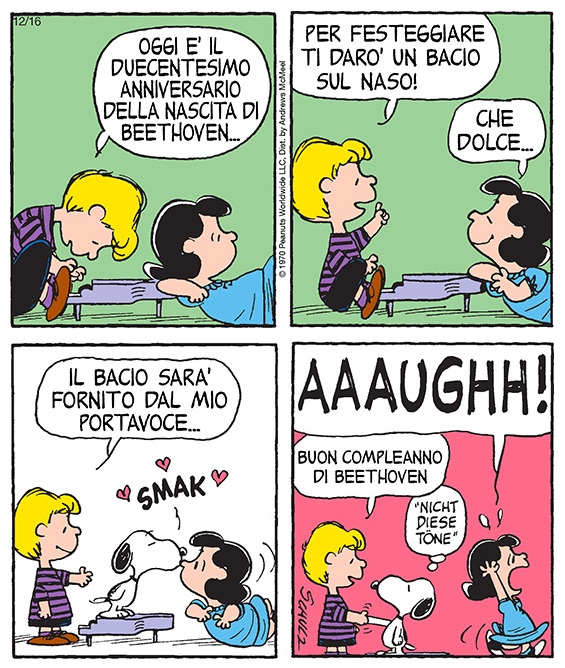
Ludwig van Beethoven (c16 dicembre 1770 - 1827): Der Kuß (Il bacio), arietta per voce e pianoforte op. 128 (1822) su testo di Christian Felix Weisse. Fritz Wunderlich, tenore; Hubert Giesen, pianoforte (in concerto, Festival di Salisburgo 1965).
Ich war bei Chloen ganz allein,
Und küssen wollt’ ich sie;
Jedoch sie sprach,
Sie würde schrein:
Es sei vergebne Müh’.
Ich wagt’ es doch und küßte sie,
Trotz ihrer Gegenwehr.
Und schrie sie nicht?
Jawohl, sie schrie,
Doch lange hinterher.
(Ero tutto solo con Cloe e volevo baciarla; ma lei disse che avrebbe gridato: fatica sprecata.
Osai ugualmente e la baciai, nonostante la sua riluttanza. E non gridò? Ma certo, gridò, però molto tempo dopo.)
Jan Antonín Koželuh (14 dicembre 1738 - 1814): Missa pastoralis. Salome Losová, soprano; Yvona Škvárová, contralto; Miroslav Švejda, tenore; Miroslav Podskalský, basso; Coro della Radio di Praga e Orchestra sinfonica di Praga (Symfonický orchestr hlavního města Prahy FOK), dir. Bohumil Kulínský.
Enrico VIII d’Inghilterra (1491 - 1547): Pastime with good company, partsong a 3 voci. The King’s Singers.
Testo (in inglese moderno):
Pastime with good company
I love and shall until I die.
Grudge who likes, but none deny,
So God be pleased, thus live will I.
For my pastance:
Hunt, sing, and dance.
My heart is set!
All goodly sport
For my comfort.
Who shall me let?
Youth must have some dalliance,
Of good or ill some pastance.
Company I think then best –
All thoughts and fantasies to digest.
For idleness
Is chief mistress
Of vices all.
Then who can say
But mirth and play
Is best of all?
Company with honesty
Is virtue – vices to flee.
Company is good and ill,
But every man has his free will.
The best ensue,
The worst eschew,
My mind shall be.
Virtue to use,
Vice to refuse,
Thus shall I use me!
Uomo di vasta cultura, il secondo re della dinastia Tudor si cimentò anche nella creazione di brani musicali. Pastime with good company è la più famosa fra le sue composizioni.
Enrico VIII è anche tradizionalmente considerato l’estensore del testo di Greensleeves, che sarebbe stato scritto per Anna Bolena. L’attribuzione appare tuttavia assai poco attendibile, in quanto i più antichi documenti relativi a Greensleeves risalgono agli ultimi anni del Cinquecento, quando il presunto autore era morto da decenni. D’altra parte, è davvero curioso che al sovrano siano stati attribuiti i versi e non anche la melodia, considerato che le non irrilevanti qualità del sovrano in ambito musicale erano ben note.
Carl Friedrich Zelter (11 dicembre 1758 - 1832): Es war ein König in Thule, Lied (1812) su testo di Wolfgang Goethe. Bettina Pahn, soprano; Tini Mathot, Hammerklavier.
Es war ein König in Thule,
Gar treu bis an das Grab,
Dem sterbend seine Buhle
einen gold’nen Becher gab.
Es ging ihm nichts darüber,
Er leert’ ihn jeden Schmaus;
Die Augen gingen ihm über,
So oft er trank daraus.
Und als er kam zu sterben,
Zählt’ er seine Städt’ im Reich,
Ließ alles seinem Erben,
Den Becher nicht zugleich.
Er saß bei’m Königsmahle,
Die Ritter um ihn her,
In hoher Väter Saale,
Dort auf dem Schloß am Meer.
Dort stand der alte Zecher,
Trank letzte Lebensgluth,
Und warf den heil’gen Becher
Hinunter in die Flut.
Er sah ihn stürzen, trinken
Und sinken tief in das Meer,
die Augen täten ihm sinken,
Trank nie einen Tropfen mehr.
C’era un re, a Thule, fedele fino alla tomba; la sua bella, morendo, gli diede una coppa d’oro.
Niente gli era più caro: ne beveva in ogni banchetto, e alzava gli occhi quando beveva.
E quando fu sul punto di morire contò le città del regno: agli eredi lasciò ogni cosa, ma non la coppa.
Sedeva al banchetto regale, i cavalieri intorno a lui, nella sala degli avi, nel castello sul mare.
Là stava il vecchio bevitore: bevve l’ultimo ardore di vita e poi gettò la sacra coppa tra i flutti.
La vide cadere, riempirsi e affondare nel mare profondo. I suoi occhi si spensero, mai più bevve un sorso.
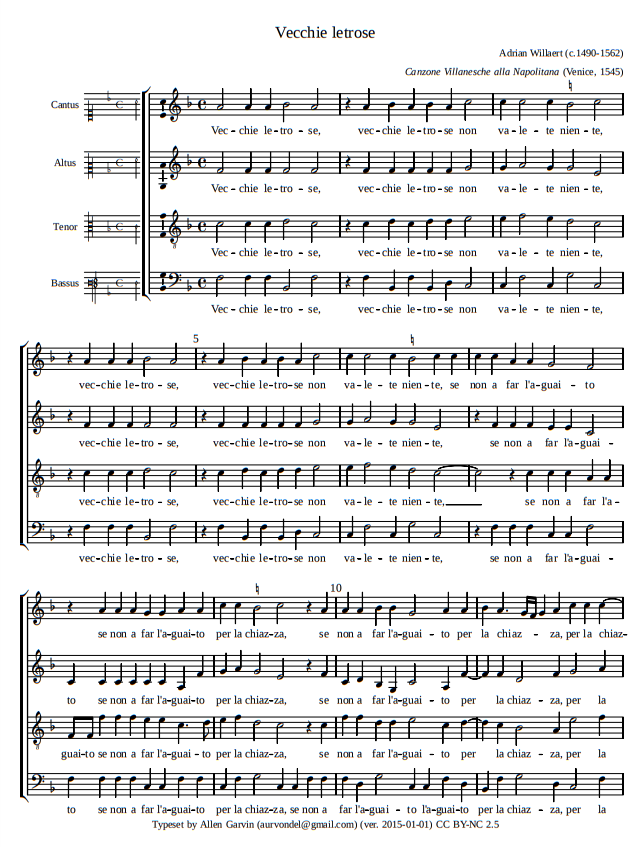
Adrian Willaert (1490 - 7 dicembre 1562): Vecchie letrose, frottola (villanella) a 4 voci (pubblicata in Canzone villanesche alla napolitana, 1545, n. 5). La Capella Reial de Catalunya e Hespèrion XXI, dir. Jordi Savall.
Vecchie letrose, non valete niente
Se non a far l’aguaito per la chiazza.
Tira, tira, tir’alla mazza,
Vecchie letrose, scannaros’e pazze!
Secondo il GDLI (Grande Dizionario della Lingua Italiana, Utet, noto anche come il Battaglia, dal nome del suo fondatore), letroso è termine regionale antico per “ostinato”, “cocciuto” o “scontroso”. Il testo si riferisce abbastanza chiaramente a vecchie megere che non hanno niente da fare se non spettegolare ai danni di chi passa per la loro strada, dunque un’accettabile interpretazione del testo potrebbe essere: « vecchie scontrose (o cocciute), non sapete far altro che spiare chi passa per la piazza. Prendetele a bastonate, ’ste vecchie scontrose, scandalose e pazze »
Due diversissime interpretazioni della canzonetta a 4 voci Fa’ una canzone di Orazio Vecchi (6 dicembre 1550 - 1605). Ensemble Arduo d’Amore e duo Munia Cabal – Rómulo Vega-González.
Fa’ una canzone senza note nere,
Se mai bramasti la mia grazia havere,
Falla d’un tuono ch’invita al dormire,
Dolcemente, dolcemente facendola finire.
Per entro non vi spargere durezze
Ché le mie orecchie non vi sono avezze.
Né vi far cifra o segno contra segno:
Sopra ogni cosa quest’è ‘l mio disegno.
Con questo stile il fortunato Orfeo
Proserpina la giù placar poteo.
Questo è lo stile che quetar già feo
Con dolcezza a Saul lo spirto reo.
O du eselhafter Martin!
o du Martinischer Esel!
du bist so faul als wie ein Gaul,
der weder Kopf noch Haxen hat.
Mit dir ist gar nichts anzufangen;
ich seh dich noch am Galgen hangen.
Du dummer Paul, halt du nurs Maul,
Ich scheiß dir aufs Maul,
so hoff’ ich wirst doch erwachen.
O lieber Lipperl, ich bitte dich recht schön,
o leck mich doch geschwind im Arsch!
O, lieber Freund, verzeihe mir,
den Arsch petschier ich dir.
Lipperl! Lipperl! verzeihe mir!
Oh, asinoso Martin!
Oh, Martinoso asino!
Sei pigro come un cavallo
senza muso né garretti.
Con te non c’è rimedio;
ti vedo già penzolar dalla forca.
Stupido Paul, chiudi quella bocca.
Ti caco in bocca,
così magari ti sveglierai.
Oh caro Lipperl, te lo chiedo gentilmente,
baciami il culo, svelto!
Oh caro amico, perdonami,
però ti sigillo il culo.
Lipperl! Lipperl! Perdonami!
Wolfgang Amadeus Mozart
* 27 gennaio 1756 – † 5 dicembre 1791
Henry Lawes (5 dicembre 1595 - 1662): Slide soft, you silver floods, ayre. Anna Prohaska, soprano; Simon Martyn-Ellis, liuto.
Slide soft, you silver floods
And ev’ry Spring
Within these shady woods.
Let no bird sing,
But from this grove a turtle dove
Be seen to couple with his love.
But silence on each dale and mountain dwell,
Whilst that I weeping bid my love farewell.
You nymphs of Thetis’ train,
You mermaids fair
That on these shores do plane
Your seagreen hair,
As you in trammels knit your locks
Weep ye, and force the craggy rocks.
In heavy murmurs through broad shores tell
How that I weeping bid my love farewell.
Sir Hamilton Harty (4 dicembre 1879 - 1941): The Children of Lir, poema sinfonico (1938). Heather Harper, soprano; Ulster Orchestra, dir. Bryden Thomson.
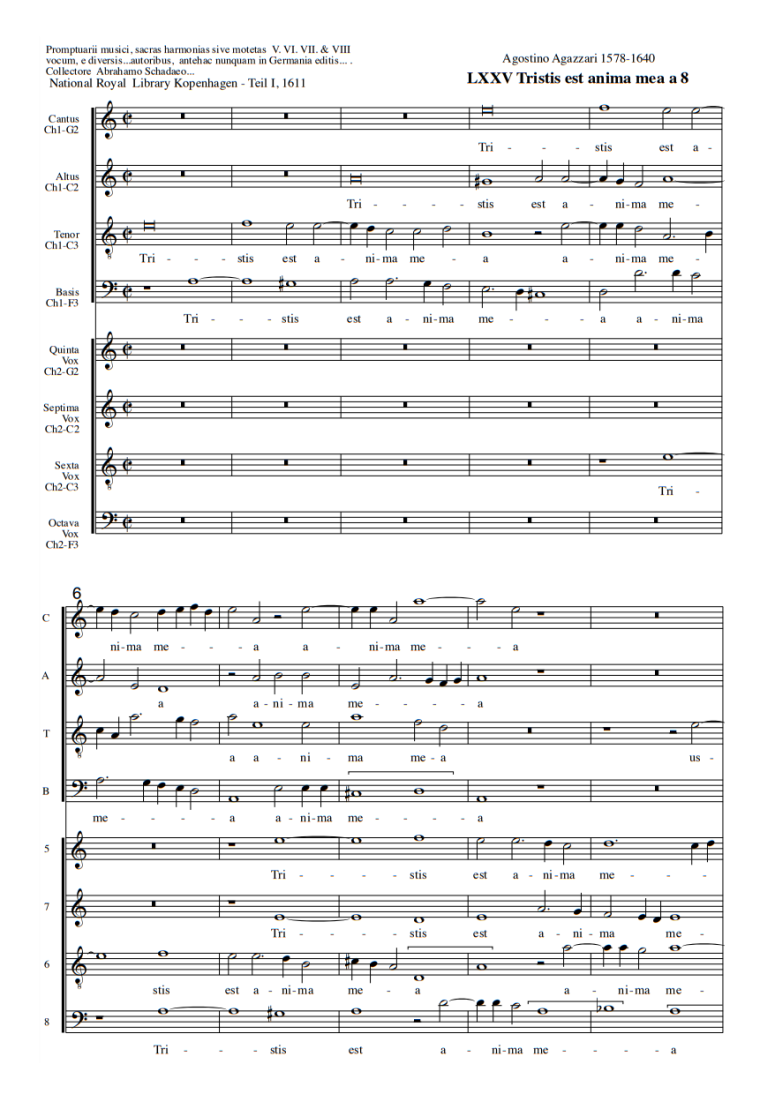
Agostino Agazzari (2 dicembre 1578 - 1640): Tristis est anima mea, mottetto a 8 voci (pubblicato in Promptuarii musici Pars Prima, 1611, n. 75). Basilica Consort, dir. Michael Hedley.
Tristis est anima mea usque ad mortem;
sustinete hic, et vigilate mecum:
nunc videbitis turbam, quæ circumdabit me.
Vos fugam capietis, et ego vadam immolari pro vobis.
Tristis est anima mea è uno dei due brani di Agazzari inclusi nel Florilegium Portense, ampia silloge di mottetti a 4-8 voci, concepita a uso didattico per il Ginnasio di Schulpforta (monastero cisterciense sito presso Naumburg, in Sassonia-Anhalt). La raccolta — il cui titolo latino significa appunto «Antologia di Pforta» — era stata iniziata da Sethus Calvisius quando dirigeva il coro del Ginnasio, e poi ultimata e data alle stampe dal suo successore Erhard Bodenschatz; nella sua redazione definitiva (2 volumi, 1618 e 1621) comprende in tutto 265 mottetti di autori italiani, tedeschi e franco-fiamminghi. Ha una certa importanza per gli storici della musica in quanto costituì una fonte primaria per i compositori della Chiesa luterana. Nel 1729, a Lipsia, Johann Sebastian Bach acquistò per conto della Chiesa di san Tommaso un esemplare del Florilegium Portense, che fu poi utilizzato nelle varie chiese della città sassone fino al 1793.
Francesco Paolo Tosti (1846 - 2 dicembre 1916): Ideale, romanza (1882) su testo di Carmelo Errico. Luciano Pavarotti, tenore; John Wustman, pianoforte.
Io ti seguii com’iride di pace
lungo le vie del cielo.
Io ti seguii come un’amica face
della notte nel velo.
E ti sentii nella luce, nell’aria,
nel profumo dei fiori,
e fu piena, la stanza solitaria,
di te, dei tuoi splendori.
In te rapito, al suon della tua voce,
lungamente sognai,
e della terra, ogni affanno, ogni croce,
in quel giorno scordai.
Torna, caro ideal,
torna un istante a sorridermi ancora
e in me risplenderà, nel tuo sembiante,
una novella aurora, una novella aurora.
In te rapito, al suon della tua voce,
lungamente sognai,
e della terra, ogni affanno, ogni croce,
in quel giorno scordai.
Torna, caro ideal,
torna un istante a sorridermi ancora
e in me risplenderà, nel tuo sembiante,
una novella aurora, una novella aurora.
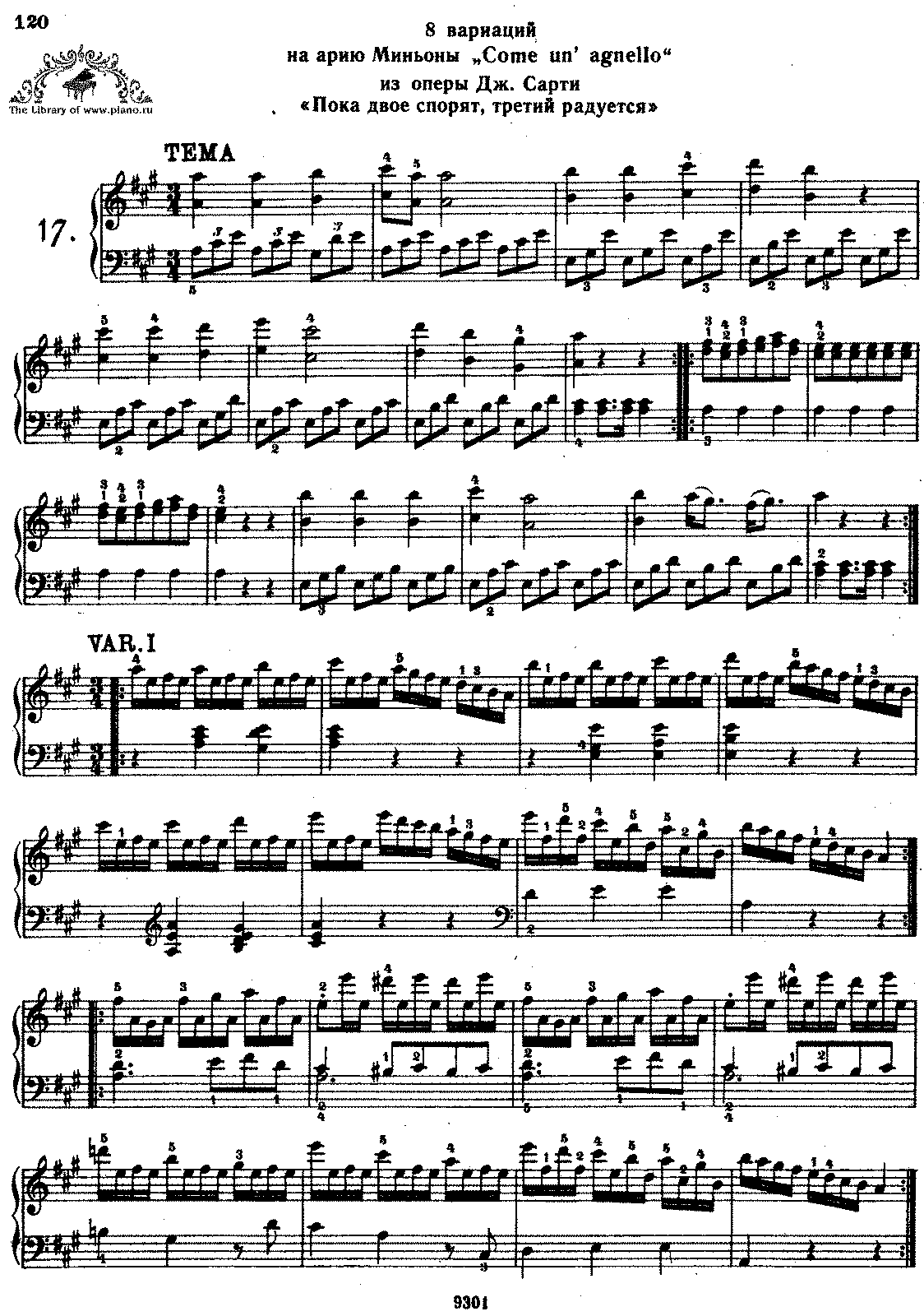
Giuseppe Sarti (battezzato il 1° dicembre 1729 - 1802): «Come un agnello», aria di Mingone (basso) dal I atto del dramma giocoso Fra i due litiganti il terzo gode (1782). Roberto Scaltriti, basso; Les Talens Lyriques, dir. Christophe Rousset.
Come un agnello
Che va al macello
Belando andrai
Per la città.
Io colla bella
Mia rondinella
Andrò rondando
Di qua, di là.
Io già m’aspetto
Sentirmi dire:
Guarda che amabile
Sposo perfetto!
Di là ripetere:
Viva 1a sposa.
O incomparable,
O impareggiabile
Coppia vezzosa,
Il ciel concedavi
Felicità.
Anonimo: 8 Variazioni su «Come un agnello» per pianoforte, attribuite a Wolfgang Amadeus Mozart (K 460, K6 454a). Rosemary Thomas.
È molto improbabile che questa serie di variazioni sia opera del salisburghese; i curatori dell’ultima edizione delle opere complete mozartiane la considerano infatti spuria. Tuttavia, il tema di Sarti era ben noto a Mozart, che lo cita nella seconda delle Danze tedesche per orchestra K 509 e nel Don Giovanni. In effetti, i due musicisti si erano conosciuti di persona: Wolfgang ne scrive in una lettera al padre datata 9-12 giugno 1784, raccontando fra l’altro di aver composto alcune variazioni sopra un’aria di Sarti e aggiungendo che quest’ultimo le aveva gradite molto.
Un manoscritto conservato presso una collezione privata elvetica contiene due variazioni su «Come un agnello», quasi certamente di Mozart, ma stilisticamente molto diverse dalle Variazioni K 460.
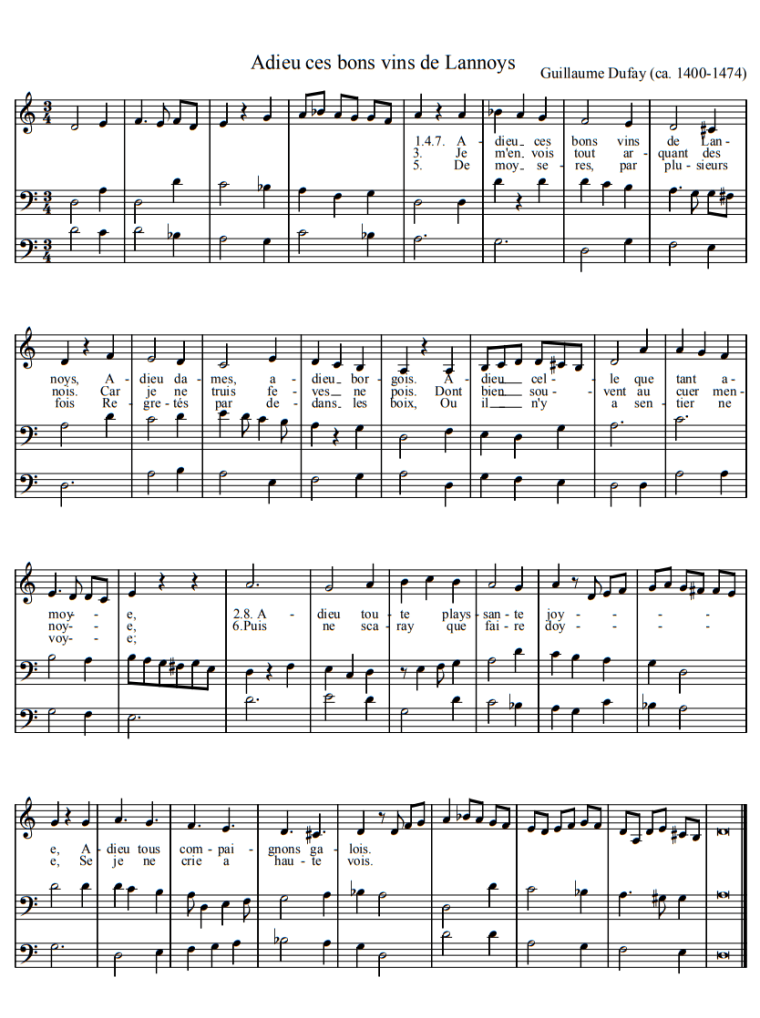
Guillaume Dufay (1397 - 27 novembre 1474): Adieu ces bons vins de Lannoys, rondeau a 3 voci (1427). The Orlando Consort.
Adieu ces bon vins de Lannoys,
Adieu dames, adieu borgois,
Adieu celle que tant amoye,
Adieu toute playssante joye,
Adieu tout compaignons galois.
Je m’en vois tout arquant des nois
Car je ne truis feves ne pois,
Dont bien souvent au cuer m’ennoye.
Adieu ces bon vins de Lannoys,
Adieu dames, adieu borgois,
Adieu celle que tant amoye.
De moy serés par plusieurs fois
Regretés par dedans les bois
Ou il n’y a sentier ne voye;
Puis ne scaray que faire doye,
Se je ne crie a haute vois:
Adieu ces bon vins de Lannoys,
Adieu dames, adieu borgois,
Adieu celle que tant amoye,
Adieu toute playssante joye,
Adieu tout compaignons galois.
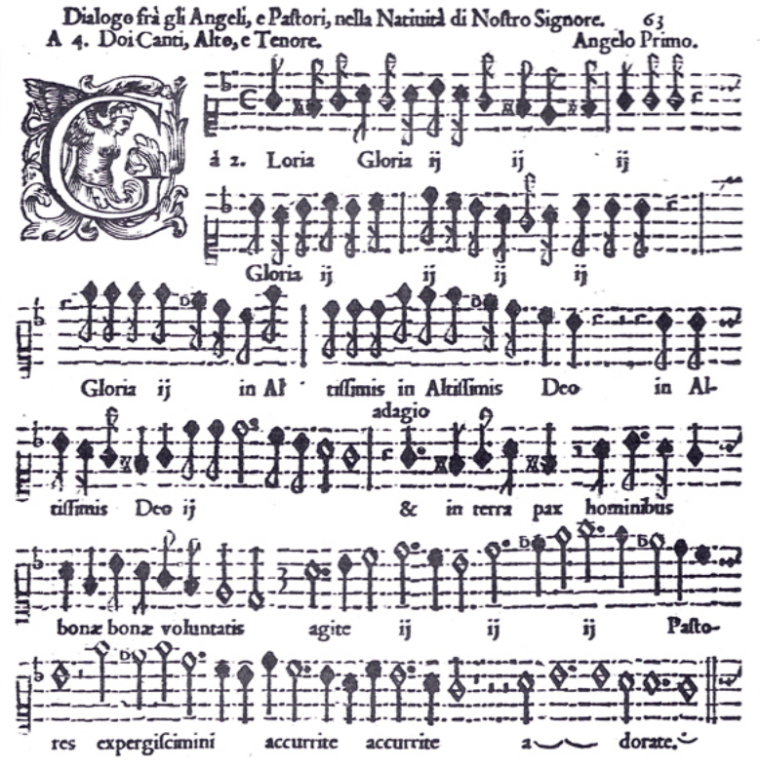
Chiara Margarita Cozzolani (27 novembre 1602-1678): Gloria in altissimis Deo (da Salmi a otto voci concertati… op. 3, 1650). Cappella Artemisia: Monica Piccinini e Silvia Vajente, soprani; Elena Biscuola e Candace Smith, mezzosoprani; Maria Christina Cleary, arpa barocca, Miranda Aureli, organo; dir. Candace Smith.
Benedetto Pallavicino (1550/51 - 26 novembre 1601): Amor, i’ parto, madrigale a 5 voci (dal Sesto Libro dei Madrigali a 5 voci, 1600, n. 4) su testo di Battista Guarini. Daltrocanto, dir. Dario Tabbia.
Amor, i’ parto e sento nel partire
Al penar, al morire,
Ch’io parto da colei ch’è la mia vita.
Se ben ella gioisce
Quando il mio cor languisce?
O durezza incredibile e infinita
D’anima, che’l suo core
Può lasciar morto, e non sentir dolore.
Ben mi trafigge, Amore,
L’aspra mia pena, il mio dolor pungente;
Ma più mi duol il duol ch’ella non sente.
Sethus Calvisius (Seth Kalwitz; 1556 - 24 novembre 1615): Unser Leben währet siebzig Jahr, mottetto a 8 voci; testo: Salmo LXXXIX (90), versetto 10. Gesine Adler, soprano; Vocalconsort Leipzig, dir. Gregor Meyer; Ensemble NOEMA.
Unser Leben währet siebzig Jahr’,
und wenn es hoch kommt, so sind’s achtzig Jahr’;
und wenn es köstlich gewesen ist,
so ist es Müh’ und Arbeit gewesen;
denn es fähret schnell dahin,
als flögen wir davon.
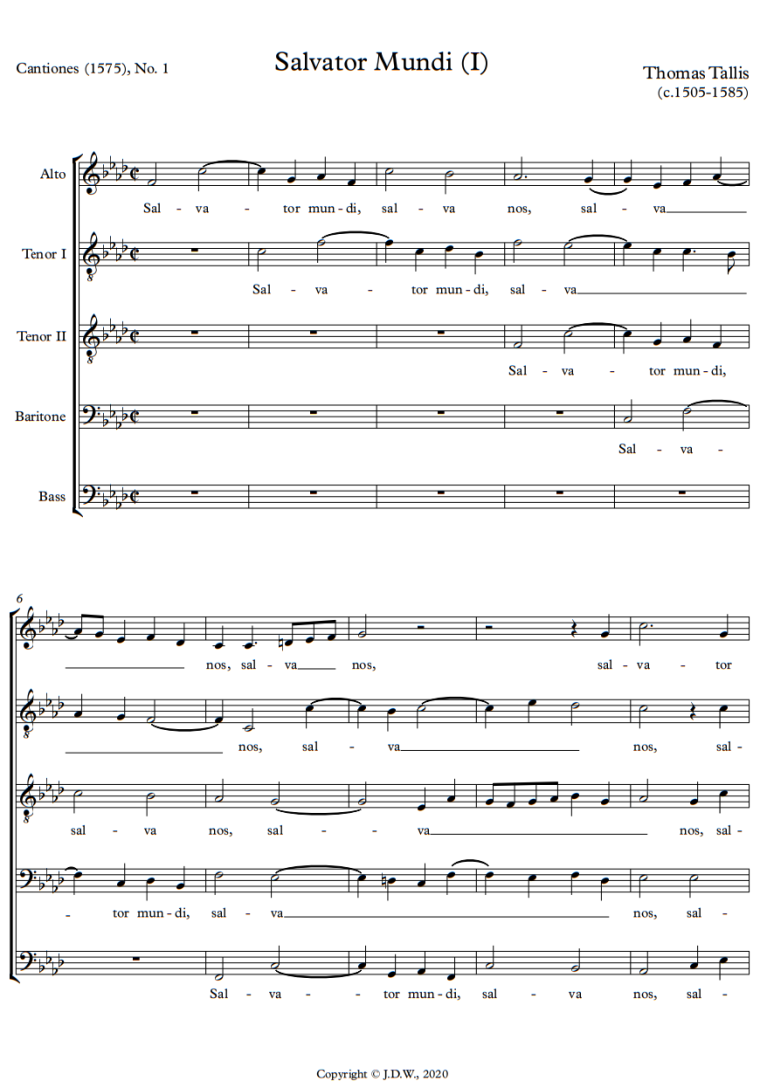
Thomas Tallis (c1505 - 23 novembre 1585): Salvator mundi, mottetto a 5 voci (pubblicato in Cantiones quae ab argumento sacrae vocantur, 1575, n. 1). The Sixteen, dir. Harry Christophers.
Salvator mundi, salva nos,
qui per crucem et sanguinem redemisti nos,
auxiliare nobis te deprecamur, Deus noster.
Thomas Attwood (23 novembre 1765 - 1838): Turn thy face from my sins (Salmo LI, versetti 11-13). St. John’s College Choir (solista: Iestyn Davies).
Turn thy face from my sins, and put out all my misdeeds.
Make me a clean heart, O God, and renew a right spirit within me.
Cast me not away from thy presence, and take not thy Holy Spirit from me.
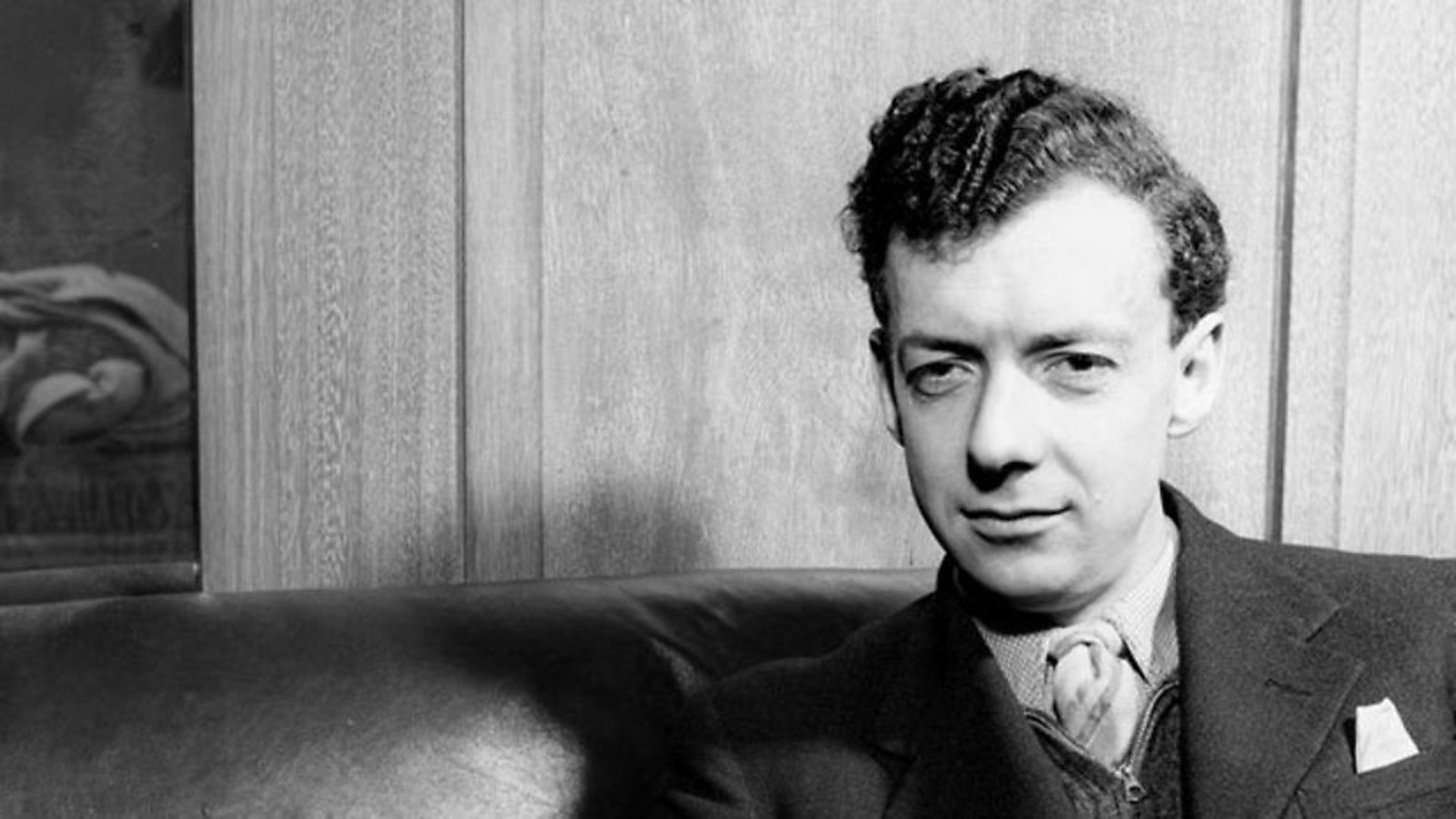
Benjamin Britten (22 novembre 1913 - 1976): Serenade per tenore, corno e archi op. 31 (1943). Peter Pears, tenore; Dennis Brain, corno; BBC Symphony Orchestra, direttore John Hollingsworth.
Prologue (assolo del corno)
Pastoral [1:19]
testo di Charles Cotton (1630-1687): quattro strofe da The Evening Quatrains
The day’s grown old; the fainting sun
Has but a little way to run,
And yet his steeds, with all his skill,
Scarce lug the chariot down the hill.
The shadows now so long do grow,
That brambles like tall cedars show;
Mole hills seem mountains, and the ant
Appears a monstrous elephant.
A very little, little flock
Shades thrice the ground that it would stock;
Whilst the small stripling following them
Appears a mighty Polypheme.
And now on benches all are sat,
In the cool air to sit and chat,
Till Phoebus, dipping in the west,
Shall lead the world the way to rest.
Nocturne [5:16]
testo di Alfred Tennyson (1809-1892): Blow, bugle, blow
The splendour falls on castle walls
And snowy summits old in story:
The long light shakes across the lakes,
And the wild cataract leaps in glory:
Blow, bugle, blow, set the wild echoes flying,
Bugle blow; answer, echoes, dying, dying, dying.
O hark, O hear! how thin and clear,
And thinner, clearer, farther going!
O sweet and far from cliff and scar
The horns of Elfland faintly blowing!
Blow, let us hear the purple glens replying:
Blow, bugle; answer, echoes, dying, dying, dying.
O love, they die in yon rich sky,
They faint on hill or field or river:
Our echoes roll from soul to soul,
And grow for ever and for ever.
Blow, bugle, blow, set the wild echoes flying,
And answer, echoes, answer, dying, dying, dying.
Elegy [8:50]
testo di William Blake (1757-1827): The Sick Rose)
O Rose, thou art sick!
The invisible worm,
That flies in the night
In the howling storm,
Has found out thy bed
Of crimson joy:
And his dark, secret love
Does thy life destroy.
Dirge [13:43]
testo di autore anonimo del secolo XV, noto come Lyke-Wake Dirge
This ae nighte, this ae nighte,
Every nighte and alle,
Fire and fleet and candle‑lighte,
And Christe receive thy saule.
When thou from hence away art past,
Every nighte and alle,
To Whinny‑muir thou com’st at last;
And Christe receive thy saule.
If ever thou gavest hosen and shoon,
Every nighte and alle,
Sit thee down and put them on;
And Christe receive thy saule.
If hosen and shoon thou ne’er gav’st nane
Every nighte and alle,
The whinnes sall prick thee to the bare bane;
And Christe receive thy saule.
From Whinny‑muir when thou may’st pass,
Every nighte and alle,
To Brig o’ Dread thou com’st at last;
And Christe receive thy saule.
From Brig o’ Dread when thou may’st pass,
Every nighte and alle,
To Purgatory fire thou com’st at last;
And Christe receive thy saule.
If ever thou gavest meat or drink,
Every nighte and alle,
The fire sall never make thee shrink;
And Christe receive thy saule.
If meat or drink thou ne’er gav’st nane,
Every nighte and alle,
The fire will burn thee to the bare bane;
And Christe receive thy saule.
This ae nighte, this ae nighte,
Every nighte and alle,
Fire and fleet and candle‑lighte,
And Christe receive thy saule.
Hymn [17:42]
testo di Ben Jonson (1572-1637): Hymn to Diana (dalla commedia satirica Cynthia’s Revels, or The Fountain of Self-Love, 1600)
Queen and huntress, chaste and fair,
Now the sun is laid to sleep,
Seated in thy silver chair,
State in wonted manner keep:
Hesperus entreats thy light,
Goddess excellently bright.
Earth, let not thy envious shade
Dare itself to interpose;
Cynthia’s shining orb was made
Heav’n to clear when day did close:
Bless us then with wishèd sight,
Goddess excellently bright.
Lay thy bow of pearl apart,
And thy crystal shining quiver;
Give unto the flying hart
Space to breathe, how short so-ever:
Thou that mak’st a day of night,
Goddess excellently bright.
Sonnet [19:42]
testo di John Keats (1795-1821): Sonnet To Sleep
O soft embalmer of the still midnight!
Shutting, with careful fingers and benign,
Our gloom-pleas’d eyes, embower’d from the light,
Enshaded in forgetfulness divine;
O soothest Sleep! if so it please thee, close,
In midst of this thine hymn, my willing eyes.
Or wait the Amen, ere thy poppy throws
Around my bed its lulling charities;
Then save me, or the passed day will shine
Upon my pillow, breeding many woes;
Save me from curious conscience, that still hoards
Its strength for darkness, burrowing like a mole;
Turn the key deftly in the oiled wards,
And seal the hushed casket of my soul.
Epilogue (replica del Prologue eseguita dietro le quinte)


 Michele Novaro (23 dicembre 1818 - 1885): Venezia, ode per canto e pianoforte (1849) su testo di Arnaldo Fusinato. Leonardo De Lisi, tenore; Vito Maggiolino, pianoforte.














 la regina gioiosa