
Erland von Koch (26 aprile 1910 - 2009): Sinfonia n. 5, Lapponica (1977). Sveriges Radios Symfoniorkester, dir. Stig Westerberg.
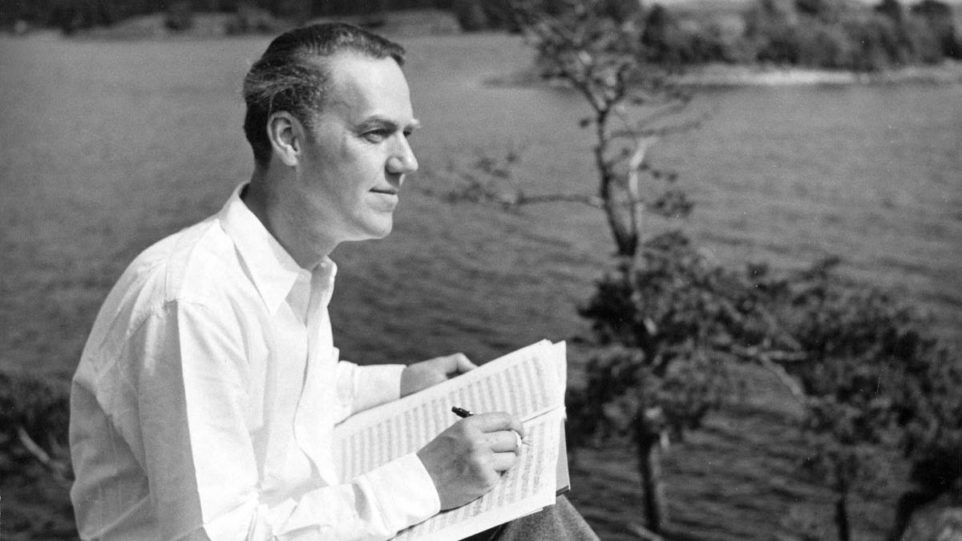
Erland von Koch (26 aprile 1910 - 2009): Sinfonia n. 5, Lapponica (1977). Sveriges Radios Symfoniorkester, dir. Stig Westerberg.
Bernardo Ottani (1736 - 26 aprile 1827): Ouverture per il dramma giocoso L’amore senza malizia (1768) su libretto di Pietro Chiari. Orchestre des Pays de Savoie, dir. Reinhard Goebel.

John Knowles Paine (1839 - 25 aprile 1906): Poseidon and Amphitrite – An Ocean Fantasy, poema sinfonico op. 44 (1888). Ulster Orchestra, dir. JoAnn Falletta.
«This work was suggested by the memory of summer days at the seaside amid the changing moods of ocean life, calm and sunshine, murmuring breezes and rippling waves alternately with surge and storm.»

 John Foulds (1880 - 25 aprile 1939): April – England per orchestra (1926), n. 1 delle Impressions of Time and Place op. 48. Academy of St Martin in the Fields, dir. sir Neville Marriner.
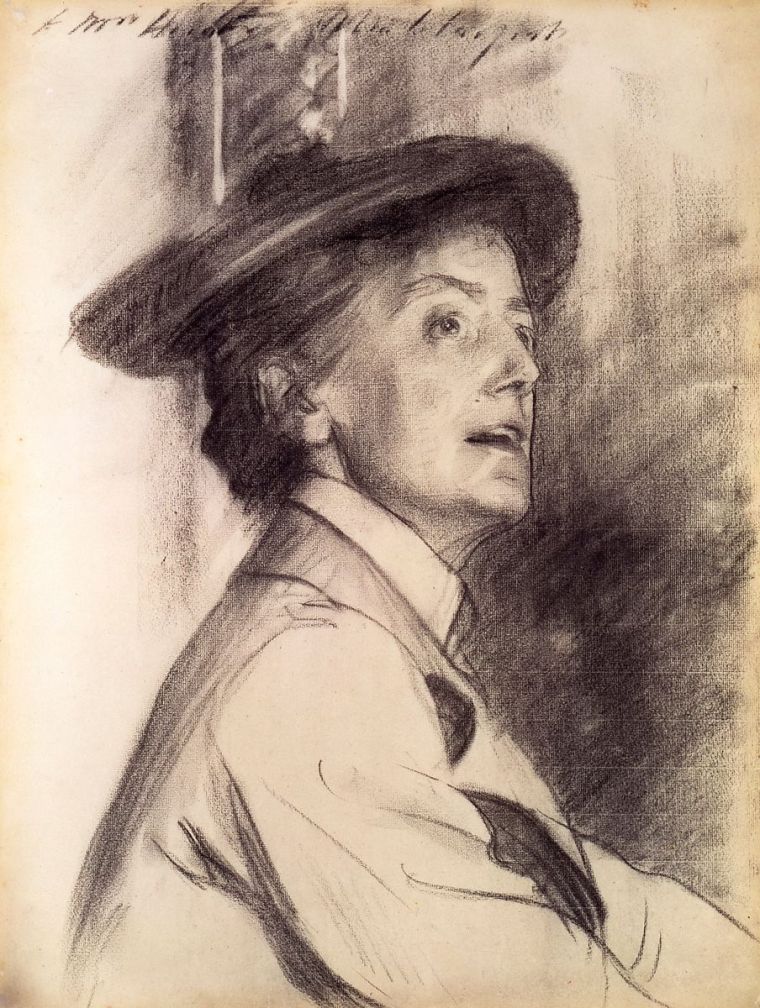
Dame Ethel Smyth (23 aprile 1858 - 1944): Concerto in la maggiore per violino, corno e orchestra (1927). Saschko Grawiloff, violino; Marie Luise Neunecker, corno; NDR Radiophilharmonie, dir. Uri Mayer.
Giuseppe Torelli (22 aprile 1658 - 1709): Concerto in re maggiore per tromba e archi, Estienne Roger 188. Marco Toro, tromba; Cameristi della Scala, dir. Giulio Prandi.

Josef Starzer (1726 - 22 aprile 1787): Divertimento in do maggiore per archi. Camerata Bern, dir. e violino solista Thomas Füri.

 Randall Thompson (21 aprile 1899 - 1984): Prima Sinfonia (1931). New England England Conservatory Symphony Orchestra, dir. Gunther Schuller.
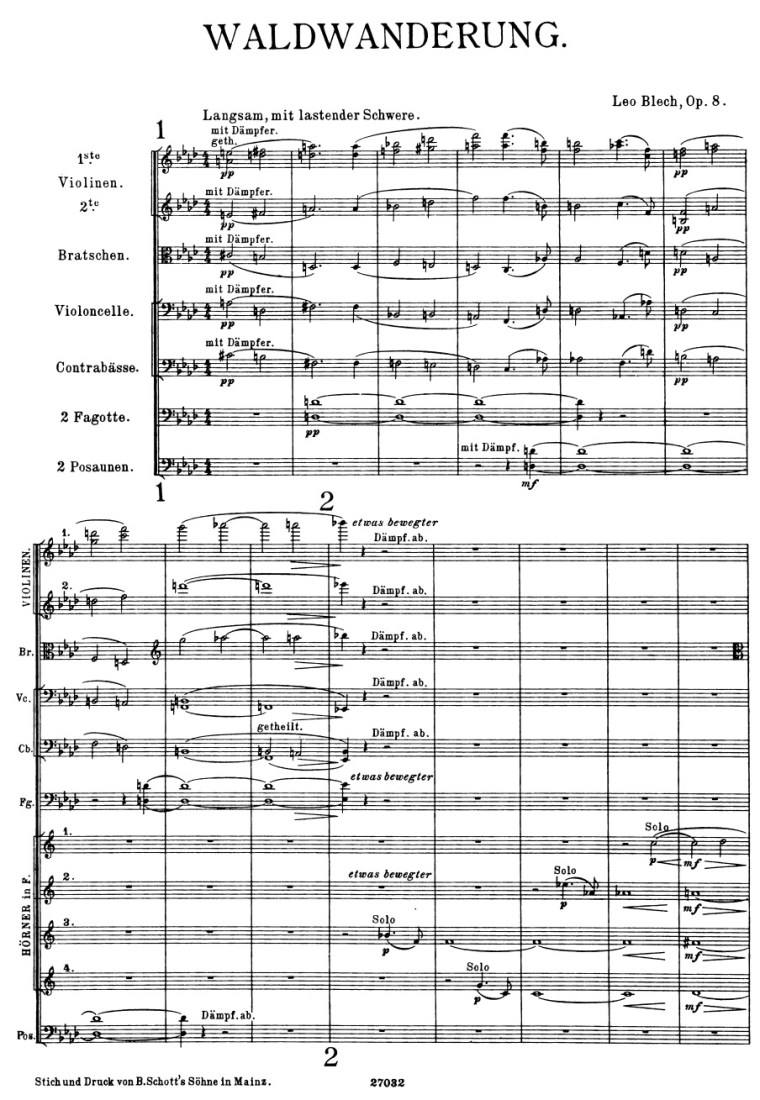
Leo Blech (21 aprile 1871 - 1958): Waldwanderung, «Stimmungsbild für Orchester» op. 8 (1901). Großes Rundfunkorchester Berlin, dir. Günter Blumhagen.
Bruno Maderna (21 aprile 1920 - 1973): Quadrivium per quattro gruppi orchestrali (1969). Orchestra della Fondazione Arena di Verona, dir. Carlo Miotto.

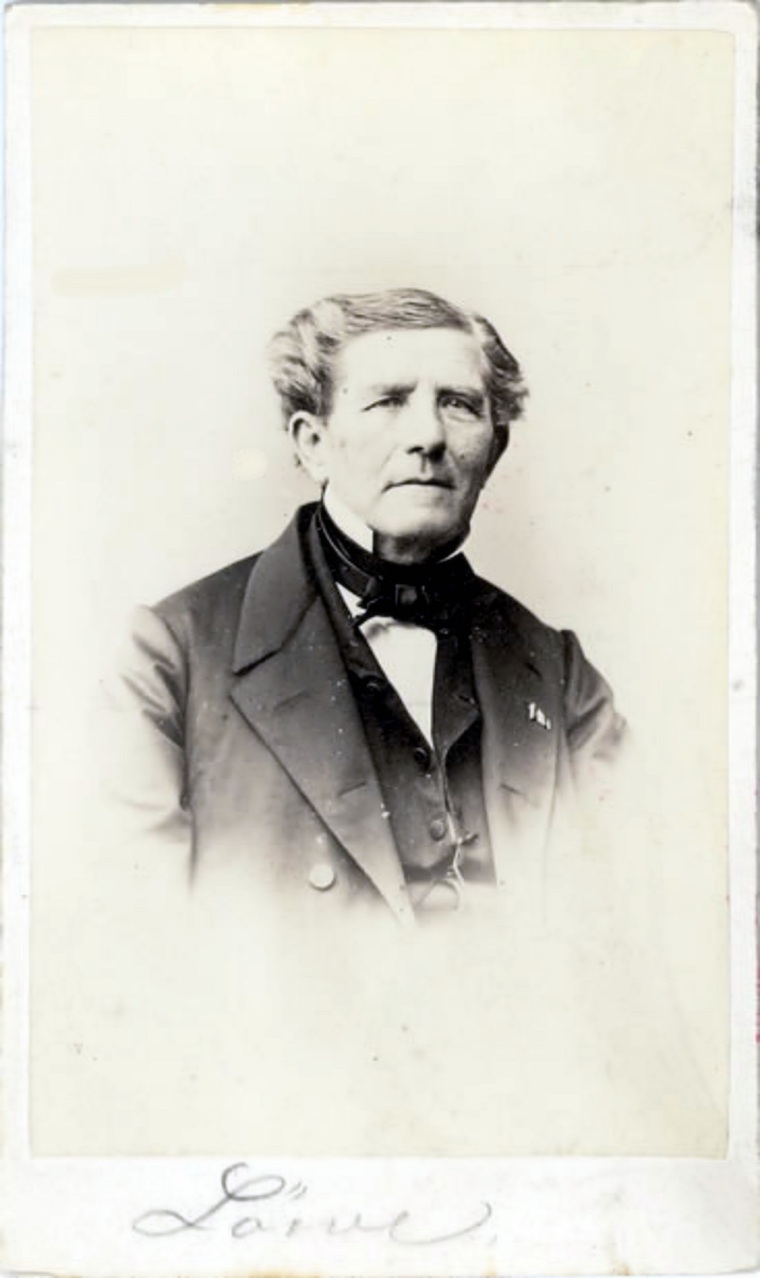
Carl Loewe (1796 - 20 aprile 1869): Concerto per pianoforte e orchestra n. 2 in la maggiore (c1830). Ewa Kupiec, pianoforte; Orchestre national de Lorraine, dir. Jacques Houtmann.
Nikolaj Jakovlevič Mjaskovskij (20 aprile 1881 - 1950): Sinfonia n. 17 in sol diesis minore op. 41 (1937). Orchestra sinfonica di Stato della Federazione russa, dir. Evgenij Svetlanov.

Lord Berners (Gerald Hugh Tyrwhitt-Wilson, XIV barone Berners; 1883 - 19 aprile 1950): The Triumph of Neptune, suite dal balletto (1926). Royal Liverpool Philharmonic Orchestra, dir. Barry Wordsworth.

Feliks Michajlovič Blumenfel’d (19 aprile 1863 - 1931): Sinfonia in do minore op. 39, À la mémoire des chers défunts (1909). Orchestra sinfonica di Mosca, dir. Igor’ Golovšin.

Germaine Tailleferre (19 aprile 1892 - 1983): Ballade per pianoforte e orchestra (1920). Rosario Marciano, pianoforte; Grand orchestre symphonique de Radio Luxembourg, dir. Louis de Froment.
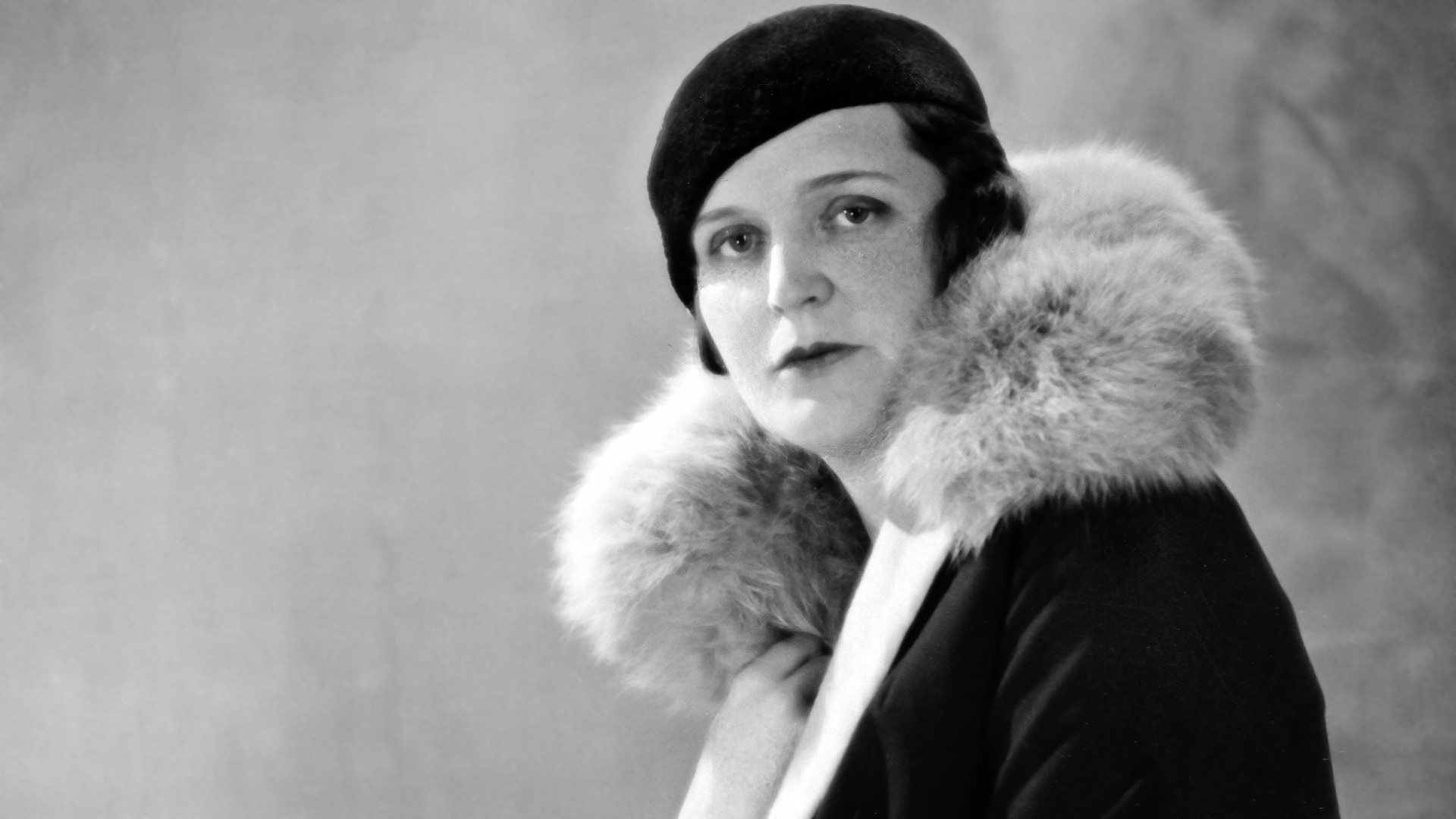
Miklós Rózsa (18 aprile 1907 - 1995): Spellbound Concerto per pianoforte e orchestra (1946), basato sulla musica composta da Rózsa per il film di Alfred Hitchcock Io ti salverò (Spellbound, 1945). Leonard Pennario, pianoforte; the Hollywood Bowl Symphony Orchestra diretta dall’autore (registrazione del 1960).

 Julia Smith (1905 – 18 aprile 1989): Concerto in mi minore per pianoforte e orchestra (1938, rev. 1971). Larry Waltz, pianoforte; Dallas Civic Orchestra, dir. Lee Schaend.
Jean-Féry Rebel (18 aprile 1666 - 1747): Fantaisie per orchestra (1729). Bremer Barockorchester. Coreografia: Alta Danza.

Johann Gottlieb Naumann (17 aprile 1741 - 1801): Ouverture per la tragedia lirica Gustaf Wasa (1786). Dresdner Instrumental-Concert, dir. Peter Kopp.

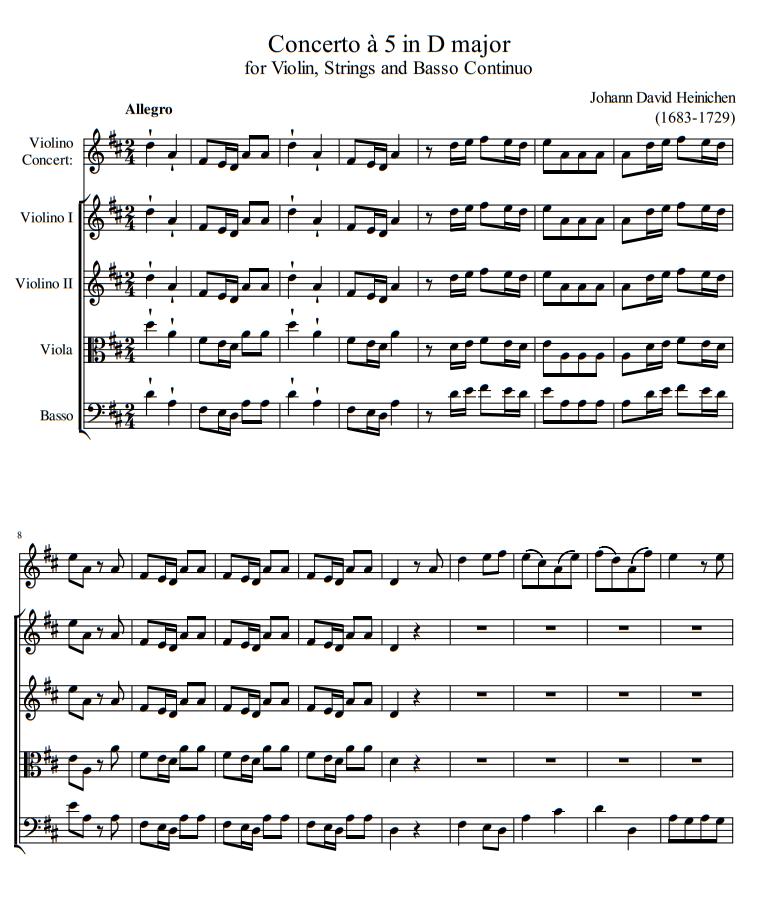
Johann David Heinichen (17 aprile 1683 - 1729): Concerto in re maggiore per violino e archi S 224 (c1725). Il fondamento, dir. Paul Dombrecht.
Sir Eugene Aynsley Goossens (1893 - 1962): Concerto per oboe e orchestra in 1 movimento op. 45 (1927). Albrecht Mayer, oboe; Bamberger Symphoniker, dir. Jakub Hrůša.

Philipp Heinrich Erlebach (1657 - 17 aprile 1714): Ouverture [Suite] IV in re minore per 2 violini, 2 viole e continuo (pubblicata in VI Ouvertures… nach französischer Art, 1693). Capricornus Consort Basel, dir.Peter Barczi.
Il traquenard è una danza francese diffusasi nel ’600, ma di origini verosimilmente più antiche; caratterizzata dal ritmo puntato, prende nome dall’andatura irregolare del cavallo che trotta con le zampe anteriori e contemporaneamente galoppa con le posteriori.

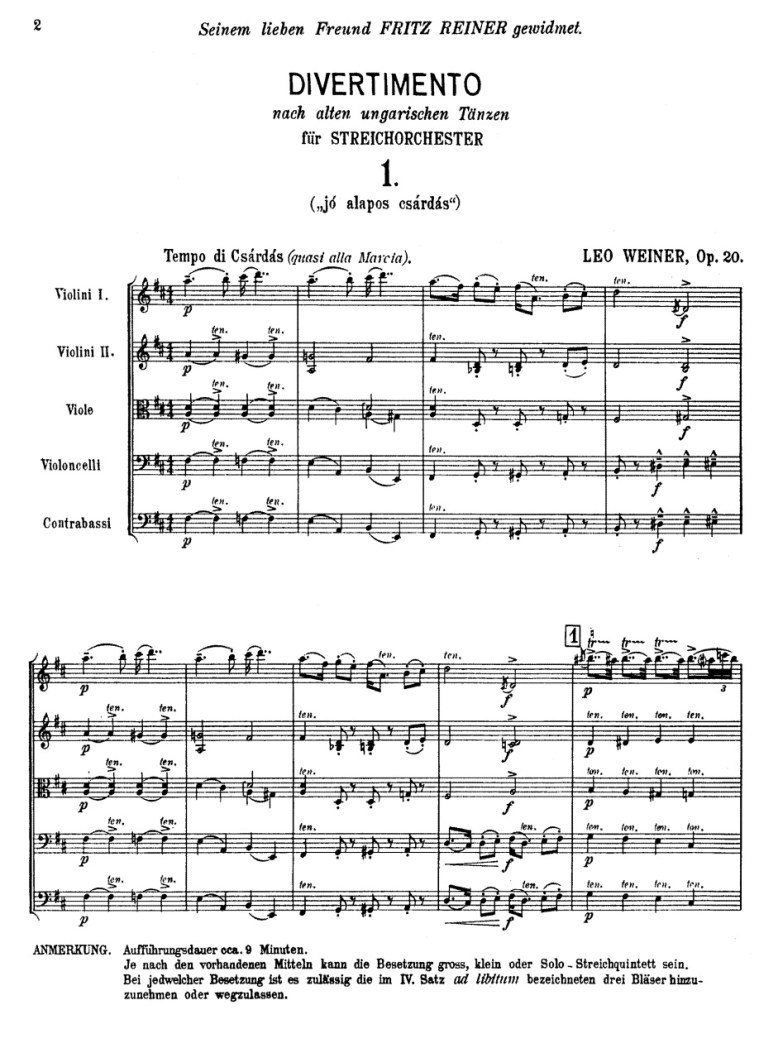
Leó Weiner (16 aprile 1885 - 1960): Divertimento nach alten hungarischen Tänzen per orchestra d’archi op. 20 (c1930). Zagrebački solisti.
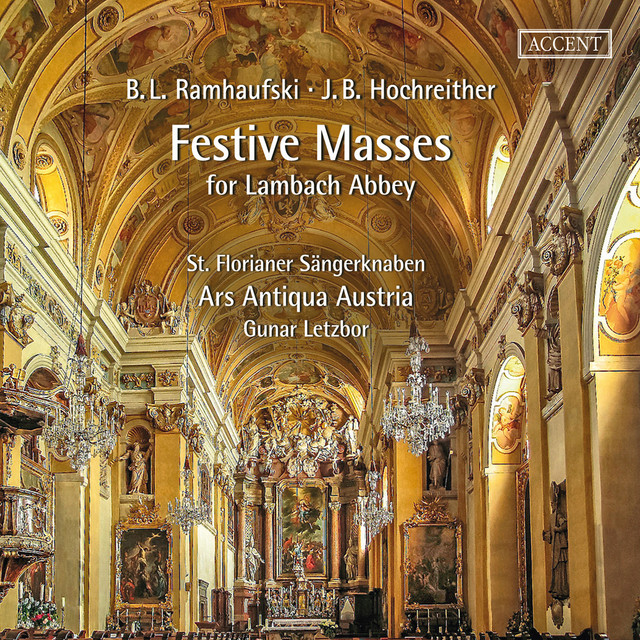
Joseph Balthasar Hochreither (16 aprile 1669 - 1731): Missa ad multos annos per soli, coro e orchestra (1705); composta per la consacrazione di Maximilian Pagl quale abate di Lambach (Alta Austria). Sankt Florianer Sängerknaben e Ars Antiqua Austria, dir. Gunar Letzbor.
Pēteris Vasks (16 aprile 1946): Concerto per violino e archi Tālā gaisma (Luce lontana; 1996-97). Marc Bouchkov, violino; hr-Sinfonieorchester Frankfurt, dir. Stanislav Kočanovskij.

Karel Bendl (16 aprile 1838 - 1897): Ouverture del balletto Česká svatba (Nozze boeme, 1881). Plzeňský rozhlasový orchestr, dir. Stanislav Vaněk.
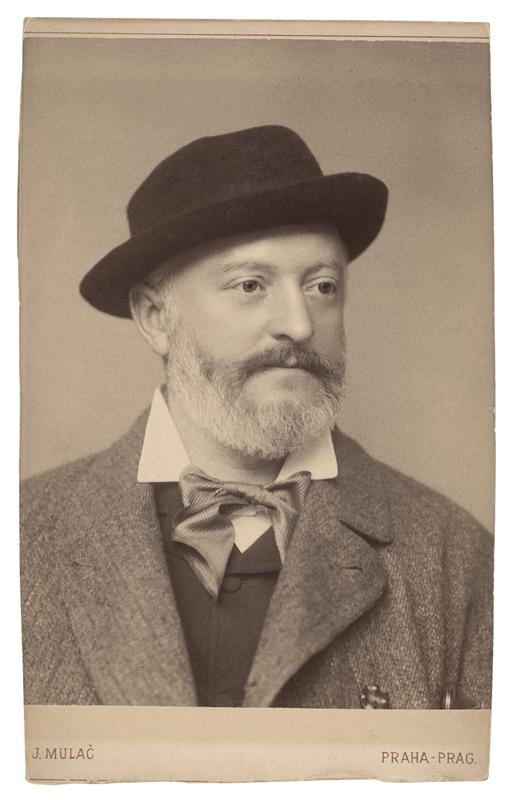
Johann Friedrich Fasch (15 aprile 1688 - 1758): Concerto in fa maggiore per 2 oboi, fagotto, 2 corni da caccia, violino, archi e basso continuo FaWV L:F2 (c1740). Les Amis de Philippe, dir. Ludger Rémi.

Antonio Smareglia (1854 - 15 aprile 1929): Ouverture di Oceàna, commedia fantastica in 3 atti su libretto di Silvio Benco (1903). Orchestra della Radiotelevisione di Vilnius, dir. Silvano Frontalini.
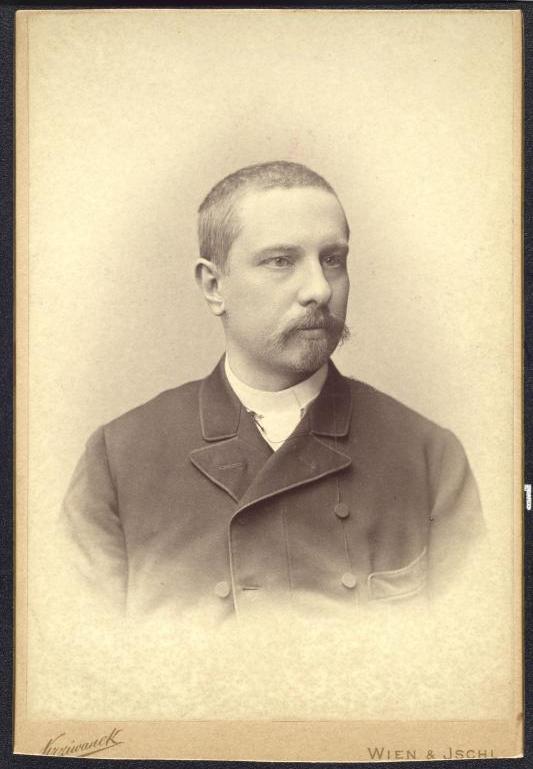
Giuseppe Bonno (1711 - 15 aprile 1788): Concerto in sol maggiore per flauto e orchestra. Sieglinde Größinger, flauto; Ensemble Klingekunst.

Georg Friedrich Händel (1685 - 14 aprile 1759): «See, the conqu’ring hero comes!», coro (n. 58) dall’oratorio Judas Maccabaeus HWV 63 (1747) su testo di Thomas Morell. Wandsworth School Boys Choir, English Chamber Orchestra, dir. sir Charles Mackerras.
Youths :
See, the conqu’ring hero comes!
Sound the trumpets! Beat the drums!
Sports prepare! The laurel bring !
Songs of triumph to him sing!
Virgins :
See the godlike youth advance!
Breathe the flutes and lead the dance!
Myrtle wreaths and roses twine
to deck the hero’s brow divine!
Israelites :
See, the conqu’ring hero comes!
Sound the trumpets! Beat the drums!
Sports prepare! The laurel bring!
Songs of triumph to him sing!
See, the conqu’ring hero comes!
Sound the trumpets! Beat the drums!
Ludwig van Beethoven (1770 - 1827): 12 Variationen über ein Thema aus dem Oratorium «Judas Maccabäus» von Händel per violoncello e pianoforte WoO 45 (1796). Yo-Yo Ma, violoncello; Emanuel Ax, pianoforte.


 la regina gioiosa