
Jean-Féry Rebel (18 aprile 1666 - 1747): Fantaisie per orchestra (1729). Bremer Barockorchester. Coreografia: Alta Danza.
- Grave
- Chaconne [1:51]
- Loure [5:06]
- Tambourin [7:03]
- Chaconne [8:38]

Jean-Féry Rebel (18 aprile 1666 - 1747): Fantaisie per orchestra (1729). Bremer Barockorchester. Coreografia: Alta Danza.
Johann Gottlieb Naumann (17 aprile 1741 - 1801): Ouverture per la tragedia lirica Gustaf Wasa (1786). Dresdner Instrumental-Concert, dir. Peter Kopp.

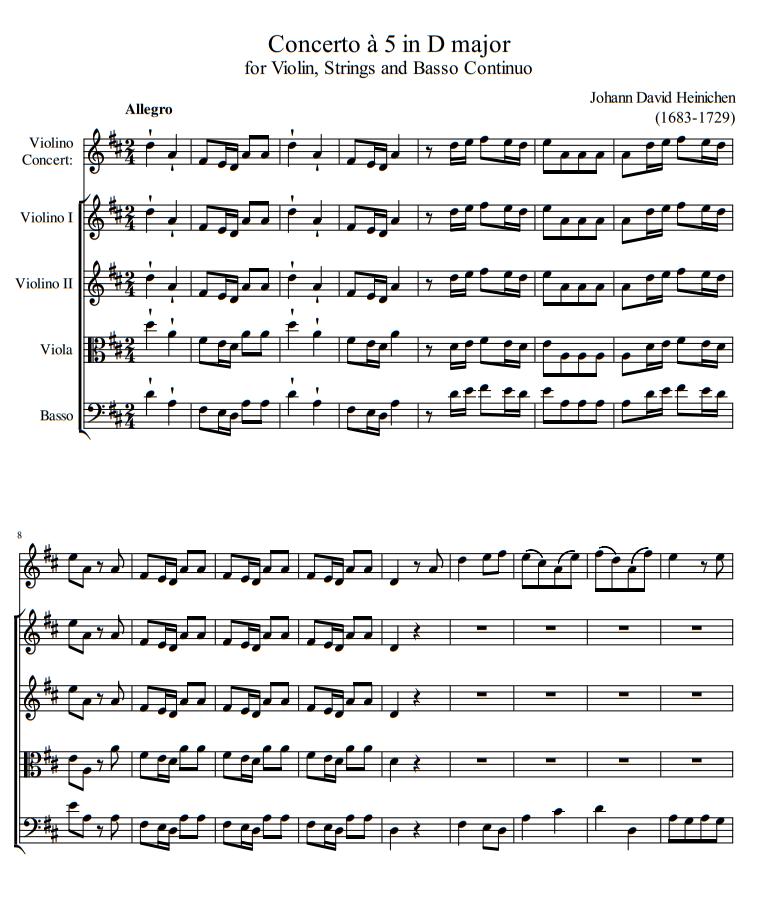
Johann David Heinichen (17 aprile 1683 - 1729): Concerto in re maggiore per violino e archi S 224 (c1725). Il fondamento, dir. Paul Dombrecht.
Sir Eugene Aynsley Goossens (1893 - 1962): Concerto per oboe e orchestra in 1 movimento op. 45 (1927). Albrecht Mayer, oboe; Bamberger Symphoniker, dir. Jakub Hrůša.

Philipp Heinrich Erlebach (1657 - 17 aprile 1714): Ouverture [Suite] IV in re minore per 2 violini, 2 viole e continuo (pubblicata in VI Ouvertures… nach französischer Art, 1693). Capricornus Consort Basel, dir.Peter Barczi.
Il traquenard è una danza francese diffusasi nel ’600, ma di origini verosimilmente più antiche; caratterizzata dal ritmo puntato, prende nome dall’andatura irregolare del cavallo che trotta con le zampe anteriori e contemporaneamente galoppa con le posteriori.

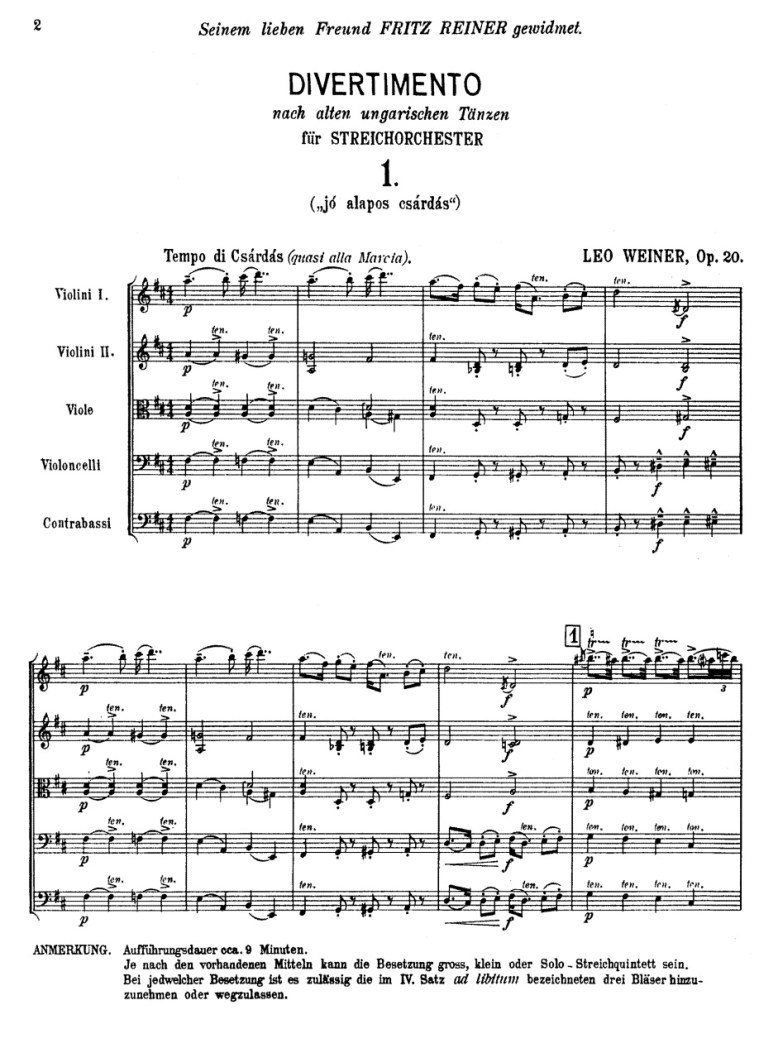
Leó Weiner (16 aprile 1885 - 1960): Divertimento nach alten hungarischen Tänzen per orchestra d’archi op. 20 (c1930). Zagrebački solisti.
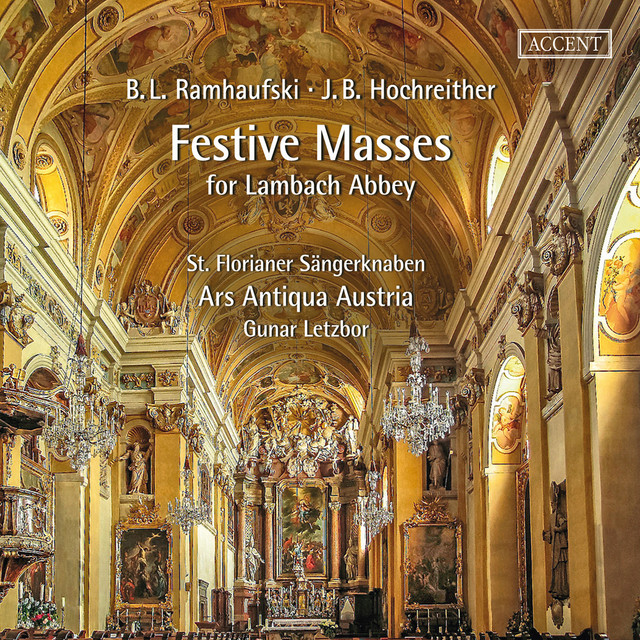
Joseph Balthasar Hochreither (16 aprile 1669 - 1731): Missa ad multos annos per soli, coro e orchestra (1705); composta per la consacrazione di Maximilian Pagl quale abate di Lambach (Alta Austria). Sankt Florianer Sängerknaben e Ars Antiqua Austria, dir. Gunar Letzbor.
Pēteris Vasks (16 aprile 1946): Concerto per violino e archi Tālā gaisma (Luce lontana; 1996-97). Marc Bouchkov, violino; hr-Sinfonieorchester Frankfurt, dir. Stanislav Kočanovskij.

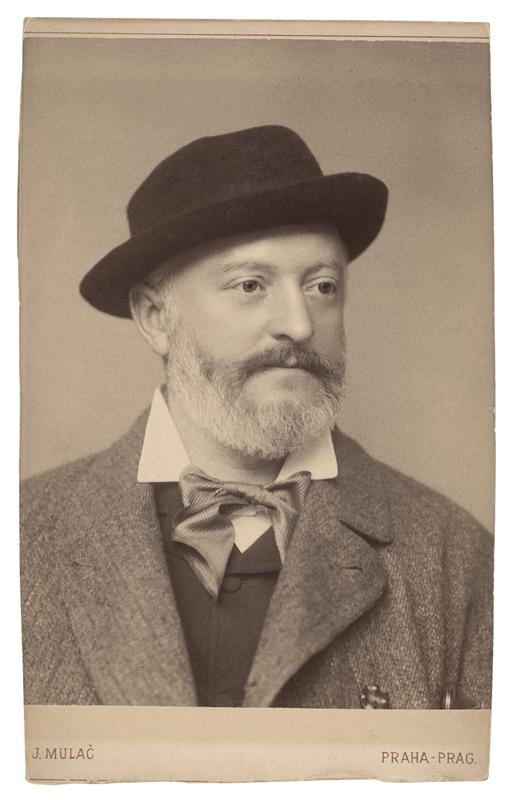
Karel Bendl (16 aprile 1838 - 1897): Ouverture del balletto Česká svatba (Nozze boeme, 1881). Plzeňský rozhlasový orchestr, dir. Stanislav Vaněk.
Johann Friedrich Fasch (15 aprile 1688 - 1758): Concerto in fa maggiore per 2 oboi, fagotto, 2 corni da caccia, violino, archi e basso continuo FaWV L:F2 (c1740). Les Amis de Philippe, dir. Ludger Rémi.

Antonio Smareglia (1854 - 15 aprile 1929): Ouverture di Oceàna, commedia fantastica in 3 atti su libretto di Silvio Benco (1903). Orchestra della Radiotelevisione di Vilnius, dir. Silvano Frontalini.
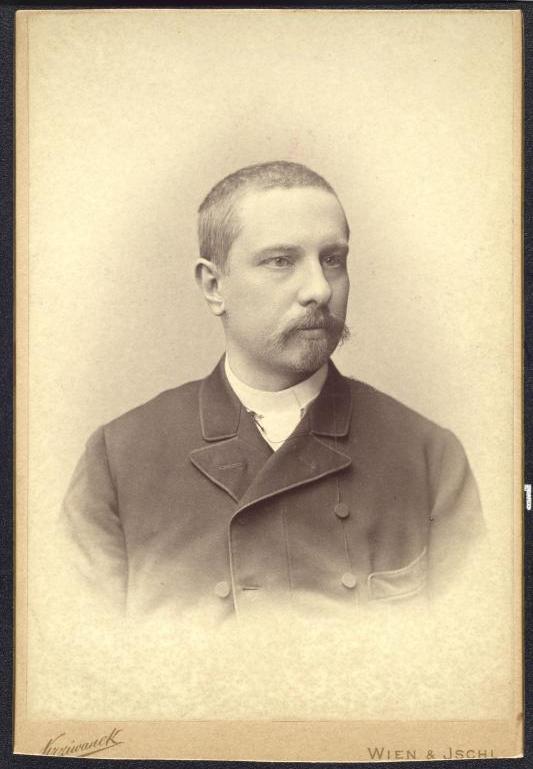
Giuseppe Bonno (1711 - 15 aprile 1788): Concerto in sol maggiore per flauto e orchestra. Sieglinde Größinger, flauto; Ensemble Klingekunst.

Georg Friedrich Händel (1685 - 14 aprile 1759): «See, the conqu’ring hero comes!», coro (n. 58) dall’oratorio Judas Maccabaeus HWV 63 (1747) su testo di Thomas Morell. Wandsworth School Boys Choir, English Chamber Orchestra, dir. sir Charles Mackerras.
Youths :
See, the conqu’ring hero comes!
Sound the trumpets! Beat the drums!
Sports prepare! The laurel bring !
Songs of triumph to him sing!
Virgins :
See the godlike youth advance!
Breathe the flutes and lead the dance!
Myrtle wreaths and roses twine
to deck the hero’s brow divine!
Israelites :
See, the conqu’ring hero comes!
Sound the trumpets! Beat the drums!
Sports prepare! The laurel bring!
Songs of triumph to him sing!
See, the conqu’ring hero comes!
Sound the trumpets! Beat the drums!
Ludwig van Beethoven (1770 - 1827): 12 Variationen über ein Thema aus dem Oratorium «Judas Maccabäus» von Händel per violoncello e pianoforte WoO 45 (1796). Yo-Yo Ma, violoncello; Emanuel Ax, pianoforte.

Carlo Coccia (14 aprile 1782 - 13 aprile 1873): Sinfonia in sol maggiore. Orchestra «Carlo Coccia», dir. Giаnnа Frаttа.

Emanuele Barbella (14 aprile 1718 - 1777): Ninna-nonna, per prender sonno per archi. Cappella della Pietà de’ Turchini, dir. Antonio Florio.

Siegfried Matthus (13 aprile 1934 - 2021): Phantastische Zauberträume per quartetto di sassofoni e orchestra (2005). Ebonit Saxophone Quartet; Bayerisches Landesjugendorchester, dir. Anna Duczmal Mrós.

Sir William Sterndale Bennett (13 aprile 1816 - 1875): The Naiades, ouverture op. 15 (1836). Philharmonia Orchestra, dir. Nicholas Braithwaite.

 Miloš Sokola (18 aprile 1913 - 1976): Sinfonia variazione (1976). Orchestra filarmonica ceca, dir. Libor Pešek.
Pietro Nardini (12 aprile 1722 - 1793): Concerto in la maggiore per violino e archi op. 1 n. 5 (c1765). Orchestra da camera Milano Classica, violino solista e direttore Mauro Rossi.

Felice Giardini (12 aprile 1716 - 1796): Concerto in re maggiore per violino e orchestra op. 15 n. 2 (1771). Giuliano Carmignola, violino; Accademia dell’Annunciata, dir. Riccardo Doni.

Karl Joseph Toeschi (1731 - 12 aprile 1788): Sinfonia in re maggiore. Neue Hofkapelle München, dir. Christoph Hammer.
Anonimo: Їхав козак за Дунай (Ikhav kozak za Dunaj, Cavalcò un cosacco al di là del Danubio), canto tradizionale ucraino, qui interpretato dal cantante e virtuoso di bandura Taras Kompaničenko, da Kiev, con il suo ensemble. Il testo è attribuito al poeta ucraino Semen Klimovskij (1705 - 1785).
Portato nell’Europa occidentale dai soldati dell’esercito zarista in guerra contro Napoleone, questo canto divenne noto nei Paesi di lingua tedesca con il titolo Schöne Minka; nella prima metà dell’Ottocento ispirò diversi compositori.
Carl Maria von Weber (1786 - 1826): [9] Variations sur un air russe per pianoforte op. 40, J. 179 (1814-15). Alexander Paley.
Johann Nepomuk Hummel (1778 - 1837): Variazioni per flauto, violoncello e pianoforte op. 78 n. 2 (1818). Ilma Ensemble: Rosa Sanz, flauto; David Olivares, violoncello; Hernán Milla, pianoforte.
Aleksandr Aleksandrovič Aljab’ev (1787 - 1851): Variazioni sul tema ucraino «Cavalcò un cosacco al di là del Danubio» per violino e orchestra. Aleksandr Trostjanskij, violino; Orchestra Musica Viva, dir. Aleksandr Rudin.
Ludwig van Beethoven (1770 - 1827): Air cosaque: Schöne Minka, ich muß scheiden per canto, violino, violoncello e pianoforte, n. 16 dei Lieder verschiedener Völker WoO 158 (1816-18). Dorothee Wohlgemuth, soprano; Georg Poplutz, tenore; Martin Haunhorst, violino; Bernhard Schwarz, violoncello; Rainer Maria Klaas, pianoforte.
Schöne Minka, ich muß scheiden, ach du fühlest nicht das Leiden,
fern auf freudelosen Heiden, fern zu sein von dir!
Finster wird der Tag mir scheinen, einsam werd ich gehn und weinen;
auf den Bergen, in den Hainen ruf ich, Minka, dir.
Nie werd ich von dir mich wenden; mit den Lippen, mit den Händen
werd ich Grüße zu dir senden von entfernten Höhn.
Mancher Mond wird noch vergehen, ehe wir uns wiedersehen;
ach, vernimm mein letztes Flehen: bleib mir treu und schön!
Du, mein Olis, mich verlassen? Meine Wange wird erblassen;
alle Freuden werd ich hassen, die sich freundlich nahn.
Ach, den Nächten und den Tagen werd ich meinen Kummer klagen;
alle Lüfte werd ich fragen, ob sie Olis sahn!
Tief verstummen meine Lieder, meine Augen schlag ich nieder;
aber seh ich dich einst wieder, dann wird’s anders sein.
Ob auch all die frischen Farben deiner Jugendblüte starben:
ja, mit Wunden und mit Narben bist du, Süßer mein!
Beethoven: Air russe: Schöne Minka, variazioni per flauto e pianoforte op. 107 n. 7 (1817-18). Jean-Pierre Rampal, flauto; Robert Veyron-Lacrois, pianoforte.
Auguste Franchomme (10 aprile 1808 - 1884): Air russe varié pour violoncelle avec accompagnement de quintuor op. 32 (1845). Anner Bylsma, violoncello; L’Archibudelli.
Ma non è finita. Ritroviamo il tema musicale in brani molto più recenti, come per esempio questa canzone proposta negli anni 1940 da Dinah Shore (statunitense di origini russe) e più tardi ripresa da Sandie Shaw:
Alla fine, proporrei di tornare a est per ascoltare il Coro Kubanskij:
|
Їхав козак за Дунай. Та було б, та було б не ходити, Постій, постій, козаче, Лучше було б, лучше було б не ходити «Білих ручок не ламай. Та було б, та було б не ходити… «Не хочу я нічого Лучше було б, лучше було б не ходити… |
Cavalcò un cosacco al di là del Danubio. Sarebbe stato meglio non partire, Aspetta, aspetta, cosacco, Sarebbe stato meglio non partire, Non torcerti quelle mani bianche, Sarebbe stato meglio non partire… Non voglio nessun altro, Sarebbe stato meglio non partire… |

Nino Rota (1911 - 10 aprile 1979): Concerto per arpa e orchestra in mi bemolle maggiore op. 98 (1947). Luisa Prandina, arpa; I Virtuosi Italiani, dir. Marzio Conti.

Johann Kaspar Kerll (9 aprile 1627 - 1693): Missa superba. Constanze Backes e Dorothee Mields, soprani; Jürgen Banholzer, controtenore; Hans Jörg Mammel e Hermann Oswald, tenori; Markus Flaig, basso; Balthasar-Neumann-Chor e Ensemble, dir. Thomas Hengelbrock.

Nikolaj Andreevič Rimskij-Korsakov (1844 - 1908): La grande Pasqua russa, ouverture op. 36 (1888). Anima Eterna Orchestra, dir. Jos van Immerseel.
Il titolo originale è Светлый праздник, «la festa luminosa»: così è detta la Pasqua in russo.

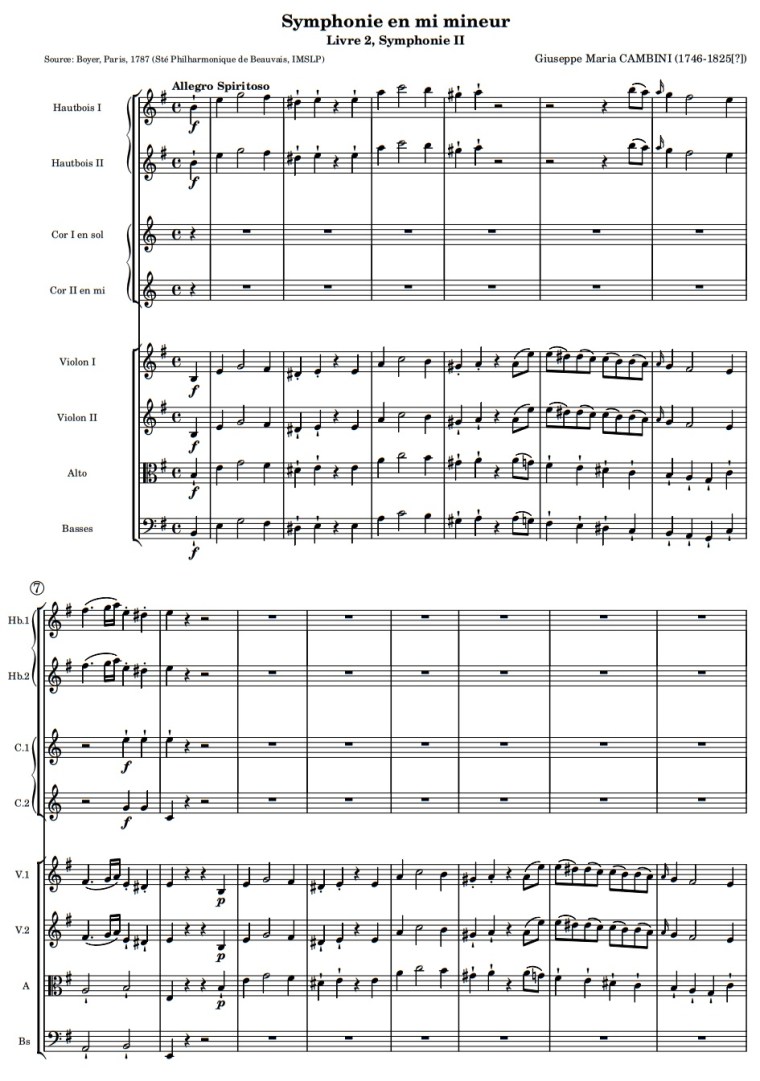
Giuseppe Cambini (1746 - 1818 o 1825): Sinfonia in mi minore (c1787). Academia Montis Regalis, dir. Luigi Mangiocavallo.
Jan Novák (8 aprile 1921 - 1984): Capriccio per violoncello e orchestra (1958). Michaela Fukačová, violoncello; Státní filharmonie Brno, dir. Petr Vronský.

Franz Ries (7 aprile 1846 - 1932): La Capricciosa, versione per violino e orchestra. Janos Maté, violino; Münchner Rundfunkorchester, dir. Willy Mattes.

 Ignaz Holzbauer (1711 - 7 aprile 1783): La tempête, «symphonie à grand orchestre» op. 4 n. 3 (1769). Kurpfälzisches Kammerorchester, dir. Johannes Schlaefli.
Lino Liviabella (7 aprile 1902 - 1964): Suite fiabesca per orchestra da camera (1948). Orchestra della Radiotelevisione della Svizzera italiana, dir. Otmar Nussio (registrazione del 1963).

Have a WordPress.com account? Log in now.

