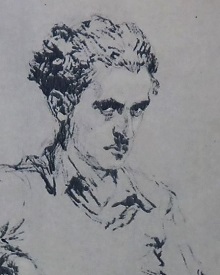
 Roberto Lupi (28 novembre 1908 - 1971): Varianti per viola e pianoforte (1944). Bruno Giuranna, viola; Ornella Vannucci Trevese, pianoforte.
Categoria: pianoforte
Varianti – I
Fryderyk Chopin (1810 - 1849): Berceuse per pianoforte op. 57 (1843-44). Arturo Benedetti Michelangeli.
Non sappiamo con precisione quando Chopin cominciò a lavorare alla Berceuse, ma certo la composizione dovette essere molto tormentata: ci sono pervenuti abbozzi pieni di cancellature e correzioni, e il manoscritto in bella copia, contenente cioè la versione «definitiva», manca in realtà delle due misure iniziali, che evidentemente Chopin aggiunse all’ultimo momento, subito prima che l’opera fosse stampata. Sappiamo inoltre che originariamente il brano doveva intitolarsi Varianti, e che il nome fu mutato nell’attuale dietro suggerimento di alcuni amici del musicista; «il termine Varianti è certo il più indicato per definire la forma della Berceuse, che non consiste in un tema con variazioni ma piuttosto nel divenire di un tema» (Piero Rattalino). La Berceuse è in effetti un’opera «sperimentale», fra le più interessanti creazioni dell’ultimo periodo di Chopin. La mano sinistra — che «è il direttore d’orchestra», come diceva Fryderyk ai propri allievi — disegna al basso un «ostinato» sul quale una breve frase melodica si dissolve in sedici variazioni (o varianti) che si succedono senza soluzione di continuità, in un continuo fiorire di meravigliosi arabeschi: «ed ecco che abbiamo una ninnananna che scoraggia chiunque dall’idea di scriverne un’altra» (Arthur Hedley). L’insieme è straordinariamente dolce, di una delicatezza ineffabile (non vi sono indicazioni dinamiche che oltrepassino il piano) e fa pensare a una magica improvvisazione. Poco prima della fine, una strana dissonanza — un do♭ — aggiunge un’aura di mistero, poi il brano si chiude in un mormorio sommesso.
Costellazioni – II
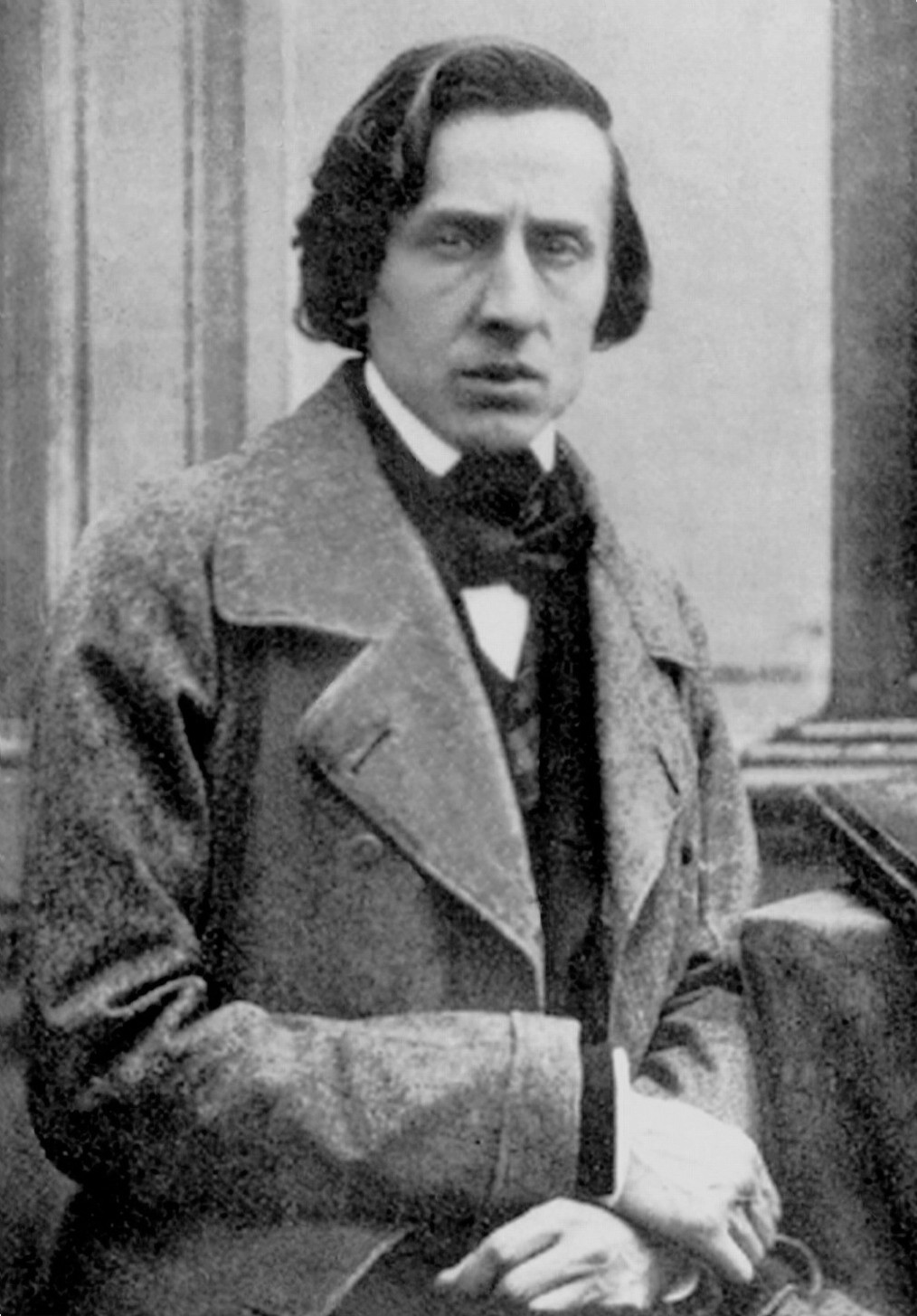
Riccardo Malipiero (1914 - 27 novembre 2003): Costellazioni per pianoforte (1965). José Raúl López.
Ausklang
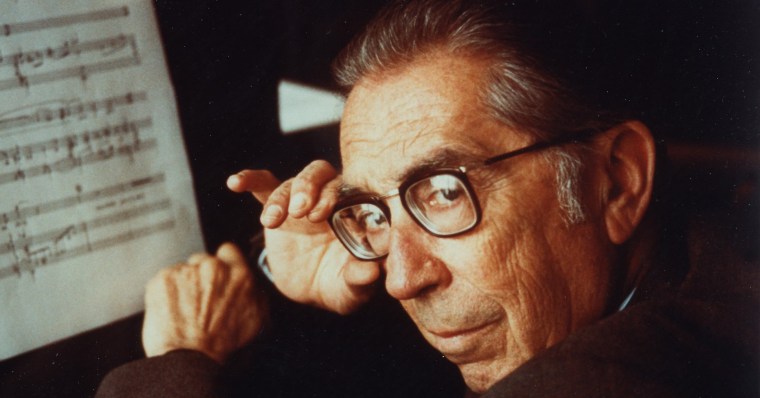
Helmut Lachenmann (27 novembre 1935): Ausklang per pianoforte e orchestra (1984-85). Ueli Wiget, pianoforte; Ensemble Modern Orchestra, dir. Markus Stenz.

La Romanesca secondo Servais
Adrien-François Servais (1807 - 26 novembre 1866): La Romanesca, «fameux air de danse de la fin du XVIème siècle» per violoncello e pianoforte. Yutaka Hayashi, violoncello; Yusuke Satake, pianoforte.

Biancaneve e le sette note
Earl Wild (26 novembre 1915 - 2010): Reminiscences of Snow White per pianoforte (1995). Tomomi Sato.
Si tratta di una fantasia sulle musiche composte da Frank Churchill (1901 - 1942) per il film d’animazione Biancaneve e i sette nani (Snow White and the Seven Dwarfs, 1937) di Walt Disney.
 Earl Wild
Sonata-fantasia
Aleksandr Gol’denvejzer (1875 - 26 novembre 1961): Sonata-fantasia (Скорбная песнь, Canto funebre) per pianoforte op. 37 (1957-59). Jonathan Powell.


Il dipinto nel video è Composizione VII (1913) di Vasilij Kandinskij.
Vivace, rapsodico, con spirito
Sandro Fuga (26 novembre 1906 - 1994): Sonata per violoncello e pianoforte n. 1 (1936). Massimo Macrì, violoncello; Giacomo Fuga, pianoforte.
- Calmo sereno
- Grave e sostenuto [10:51]
- Vivace, rapsodico, con spirito [19:07]
Variazioni in do minore
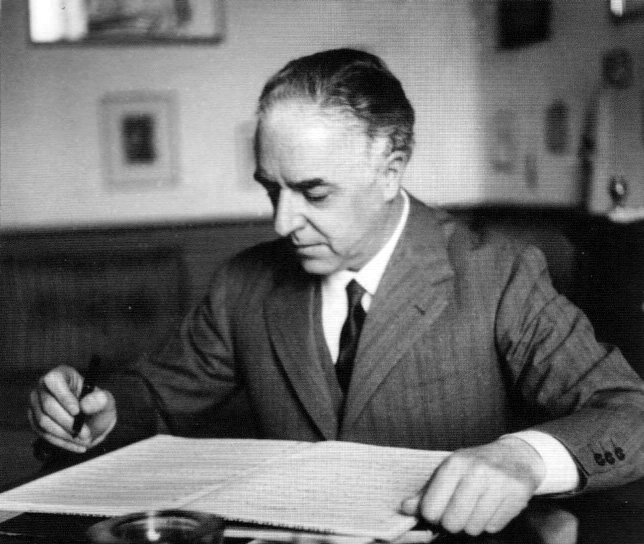
Sergej Ivanovič Taneev (25 novembre 1856 - 1915): Tema e variazioni in do minore per pianoforte (1874). Viktor Bunin.

Tango Fantastique (Emma Lou Diemer 95)
 Emma Lou Diemer (24 novembre 1927): Sonata n. 3 per pianoforte (1996-99). Jeong-In Kim.
- Serenade/toccata
- Interlude [7:34]
- Tango Fantastique [13:13]
Notturno-Fantasia
Viktor Stepanovič Kosenko (23 novembre 1896 - 1938): Notturno-Fantasia in do diesis minore per pianoforte op. 4 (1919). Violina Petryčenko.

A sei mani
Angelo Panzini (22 novembre 1820 - 1886): Divertimento per pianoforte a sei mani sopra motivi dell’opera Il trovatore di Giuseppe Verdi (1854). Donato Biscione, Nicoletta Sciangalepore, Marianna Rossi.
Čajkovskij: Le Stagioni – 11
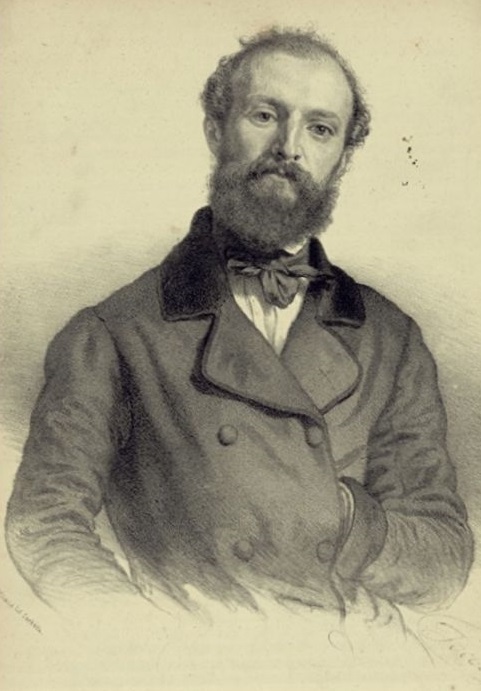
Pëtr Il’ič Čajkovskij (1840 - 1893): Времена года / Les Saisons op. 37a (1875-76), 11. Ноябрь: На тройке / Novembre: Troïka. Versione originale: Valentyna Lysycja, pianoforte. Trascrizione per orchestra di Aleksandr Gauk (1893 - 1963): Orchestra da camera di Mosca, dir. Constantine Orbelian.
Questa composizione fu pubblicata nel 1876, sul numero di novembre del periodico sanpietroburghese «Нувеллист» (Nuvellist), associata a versi di N. A. Nekrasov:
|
Не гляди же с тоской на дорогу, И за тройкой вослед не спеши, И тоскливую в сердце тревогу Поскорей навсегда затуши. |
Non guardare la strada con malinconia, non aver fretta di recuperare il ritardo con la trojka, e cancella per sempre la tristezza che brucia nel tuo cuore. |


Allegro animato – II
Francesco Cilea (1866 - 20 novembre 1950): Sonata in re maggiore per violoncello e pianoforte op. 38 (1888). Massimo Macrì, violoncello; Giacomo Fuga, pianoforte.
- Allegro moderato
- Alla romanza [5:43]
- Allegro animato [11:32]

Gotham Lullaby (Meredith Monk 80)
Meredith Monk (20 novembre 1942) esegue Gotham Lullaby al Lensic Center for the Performing Arts di Santa Fe (New Mexico) nel 2004.

Sinfonia di danze
Daniel-Lesur (nome d'arte di Daniel-Jean-Yves Lesur; 19 novembre 1908 - 2002): Symphonie de danses per archi, timpani e pianoforte (1958). Orchestre National de l’ORTF, dir. Louis de Froment (dal vivo, 1965).

Per flauto e pianoforte – III
Luigi Cortese (19 novembre 1899 - 1976): Introduzione e Allegro per flauto e pianoforte op. 40 (1960). Chia-Lin Ko, flauto; Casey Rafn, pianoforte.

Da un luogo tranquillo
Betty Beath (19 novembre 1932): From a Quiet Place per viola e pianoforte (1997). Patricia Pollett, viola; Colin Spiers, pianoforte.
- –
- – [5:10]
- – [14:04]
«I wrote From a Quiet Place for Patricia Pollett. I very much admire her musicianship. In performance she and her instrument are as one. I allowed this piece to come from that quiet place in which there is response to the intuitive within. Another influence was the vibrating, infinitely sweet, sometimes robust and dynamic sounds of Nepalese Singing Bowls. From a Quiet Place may be described as a meditative piece. I hoped to create a work in which simplicity, line and tone were important elements and I see the piano, which is performed here with great sensitivity by Colin Spiers, as fundamental in creating harmonic interest. It gives warmth and richness to the musical fabric.
«The work comprises three movements, which may be considered and performed as separate pieces. The first movement establishes a dialogue between viola and piano, the second moves through moods of tranquillity to exultation and final serenity, the third is a joyful, animated response to the pleasures of life» (Betty Beath).
Serenata – X
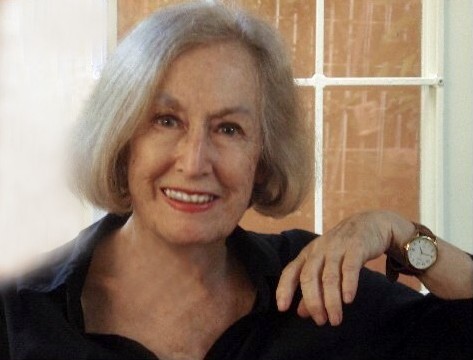
Franz Schubert (1797 - 19 novembre 1828): Ständchen, Lied D 957/4 (1828) su testo di Ludwig Rellstab. Peter Schreier, baritono; Walter Olbertz, pianoforte.
Leise flehen meine Lieder
Durch die Nacht zu Dir;
In den stillen Hain hernieder,
Liebchen, komm’ zu mir!
Flüsternd schlanke Wipfel rauschen
In des Mondes Licht;
Des Verräthers feindlich Lauschen
Fürchte, Holde, nicht.
Hörst die Nachtigallen schlagen?
Ach! sie flehen Dich,
Mit der Töne süßen Klagen
Flehen sie für mich.
Sie verstehn des Busens Sehnen,
Kennen Liebesschmerz,
Rühren mit den Silbertönen
Jedes weiche Herz.
Laß auch Dir das Herz bewegen,
Liebchen, höre mich!
Bebend harr’ ich Dir entgegen!
Komm’, beglücke mich!
Casa, dolce casa
Quando, per pura curiosità, ho cercato “home sweet home” nel web, sono rimasto alquanto sorpreso: nei primi 150 risultati della ricerca eseguita tramite Google, non compare nemmeno una volta il nome di Henry Bishop.
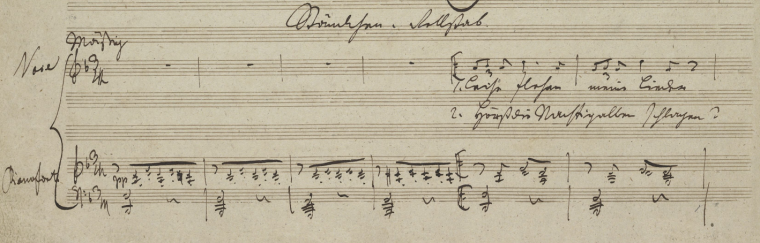
“Musicista?” chiederete voi. Certo: sir Henry Rowley Bishop (18 novembre 1786 - 1855) scrisse un gran numero di cantate, balletti e opere liriche; fra queste ultime si annovera Clari, or The Maid of Milan (1823), composta su libretto dello statunitense John Howard Payne: fa parte dell’opera l’aria «Mid pleasures and palaces» nota, per via del refrain, appunto con il titolo Home! Sweet Home! Qui potete ascoltarla nell’interpretazione del soprano Greta Bradman accompagnata dall’arpista Suzanne Handel:
Mid pleasures and palaces though we may roam,
Be it ever so humble, there’s no place like home;
A charm from the skies seems to hallow us there,
Which seek thro’ the world, is ne’er met elsewhere.
Home! Home!
Sweet, sweet home!
There’s no place like home,
There’s no place like home!
An exile from home splendor dazzles in vain.
Oh, give me my lowly thatched cottage again,
The birds singing gaily that came at my call
And gave me the peace of mind, dearer than all.
Home! Home!
Sweet, sweet home!
There’s no place like home,
there’s no place like home!
Home! Sweet Home! venne pubblicato come brano a sé stante, in un primo tempo con la dicitura «composed and partly founded on a Sicilian Air» (in seguito Bishop ammise di aver inventato questo particolare a scopo promozionale). Divenne subito incredibilmente popolare: in breve tempo ne furono vendute oltre centomila copie. Nel 1852, curata dall’autore, ne uscì una nuova edizione a stampa come parlour ballad (cioè, in sostanza, una romanza da camera), e in questa veste ottenne ampio successo anche negli Stati Uniti: difatti, ancora oggi è spesso presente nelle antologie di musiche risalenti agli anni della guerra di secessione (1861-1865).
La vasta popolarità di cui Home! Sweet Home! godette nel corso dell’Ottocento è testimoniata dal fatto che la sua melodia è citata in varie composizioni dell’epoca. Già nel 1827 venne utilizzata dallo svedese Franz Berwald (1796 - 1868) nella sezione mediana, Andante con variazioni, del suo Konzertstück per fagotto e orchestra op. 2 — qui interpretato da Patrik Håkansson con l’Orchestra sinfonica di Gävle diretta da Petri Sakari:
[l’Andante con variazioni ha inizio a 5:43]
Altra citazione celebre si trova all’inizio della «scena della pazzia» (aria «Cielo, a’ miei lunghi spasimi», atto II, scena 3ª) nella tragedia lirica Anna Bolena, rappresentata nel 1830, di Donizetti (1797 - 1848) — ascoltate Maria Callas:
Risale al 1855 circa l’opus 72 di Sigismond Thalberg (1812 - 1871), Home! Sweet Home! Air Anglais varié per pianoforte; nel video qui sotto è eseguito da Dennis Hennig:
Un’altra breve serie di variazioni, per cornetta a pistoni sola, si deve a Jean-Baptiste Arban (1825 – 1889); per ascoltarla (o riascoltarla) — potete farlo leggendo (o rileggendo) allo stesso tempo uno spassoso racconto di Jerome K. Jerome — cliccate qui.
Voglio menzionare ancora, per finire, la Fantaisie sur deux mélodies anglaises per organo op. 43 di Alexandre Guilmant (1837 - 1911): in questa composizione, del 1887 circa, Home! Sweet Home! è associato a un altro famosissimo brano inglese, Rule, Britannia! di Thomas Arne (1710 - 1778). Ecco la Fantaisie di Guilmant eseguita da Bernhard Schneider all’organo Klais della Chiesa di Sankt Aegidien in Braunschweig:
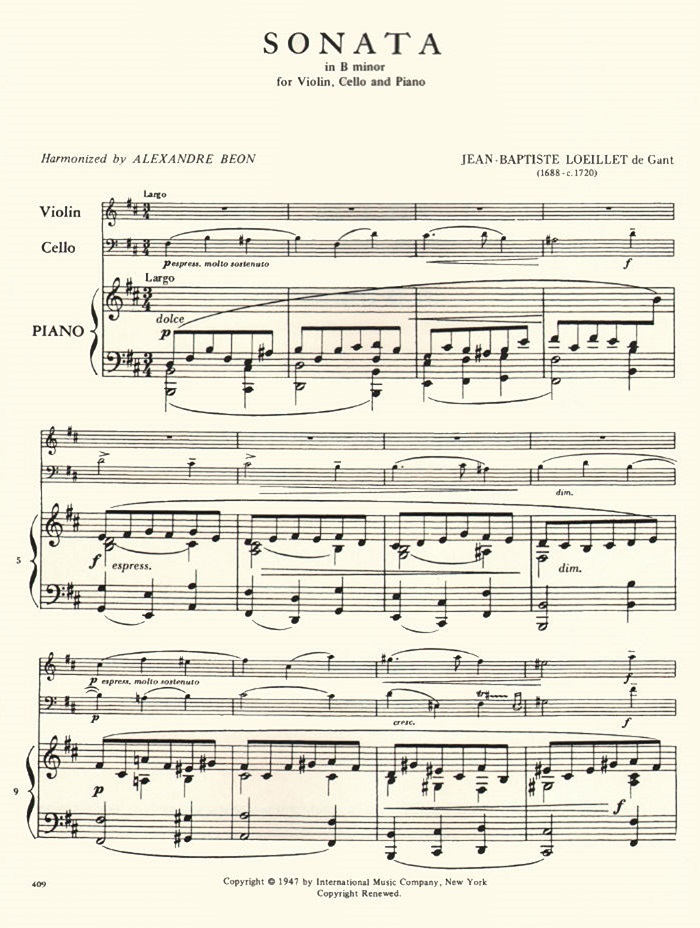
Due Jean-Baptiste Loeillet
Jean-Baptiste Loeillet, detto «Loeillet di Londra» (18 novembre 1680 - 1730): Triosonata in fa maggiore op. 2 n. 2 (1725). Ensemble Pro Musica Antiqua.
- Largo
- Allegro
- Largo
- Allegro
Jean-Baptiste Loeillet, detto «Loeillet di Gand» (1688 - c1720): Triosonata in la minore op. 1 n. 1 (1710). Daniel Rothert, flauto dolce; Vanessa Young, violoncello; Ketil Haugsand, clavicembalo.
- Largo
- Allegro
- Adagio
- Giga: Allegro
I due Jean-Baptiste erano cugini di primo grado. In passato l’omonimia creò qualche problema di attribuzione: nel 1909 il compositore francese Alexandre Béon (1862 - 1912) arrangiò per violino, violoncello e pianoforte una triosonata del Loeillet di Londra e l’attribuì al Loeillet di Gand. L’arrangiamento in questione è molto bello; eccolo nell’interpretazione dell’Eroica Trio:
- Largo
- Allegro con spirito [4:18]
- Adagio [6:00]
- Allegro [7:16]
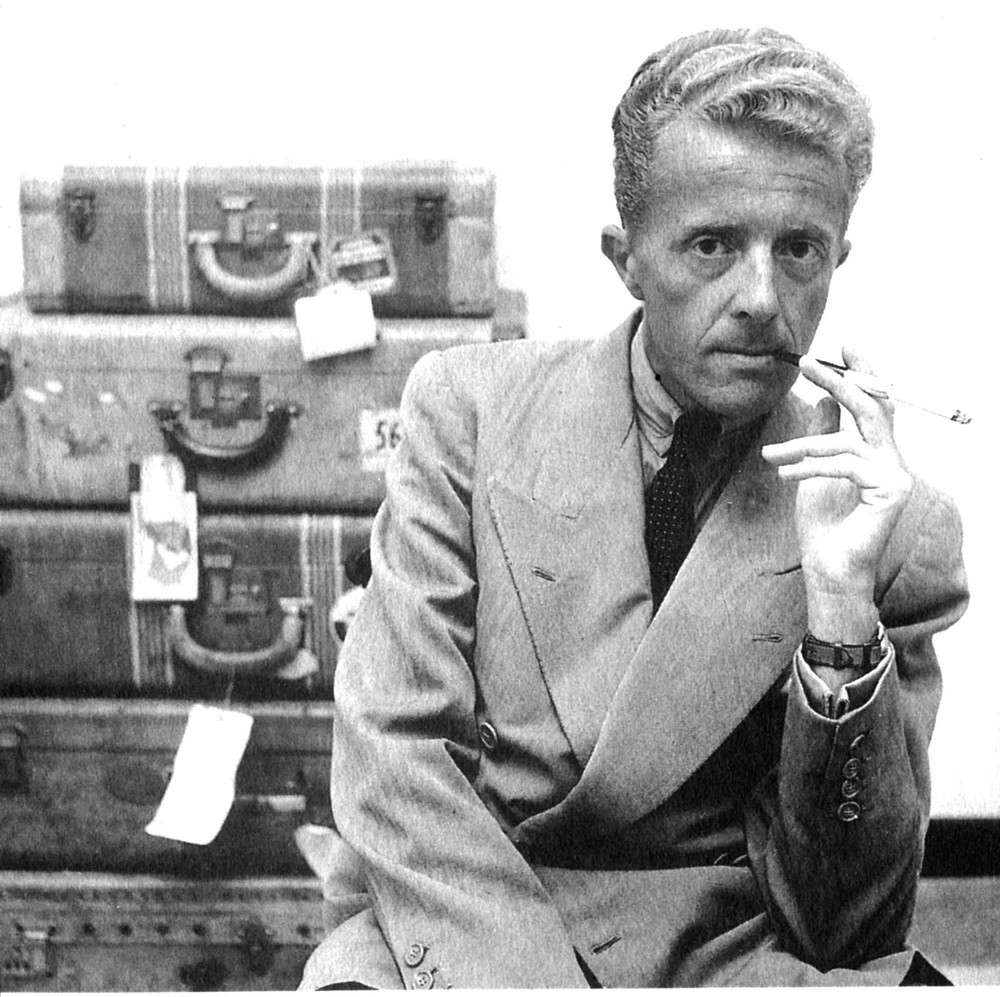
Sonatina fragmentaria
Paul Bowles (1910 - 18 novembre 1999): Sonatina fragmentaria (1933). Oksana Lutsyshyn.
- Adagio misterioso
- Allegro
- Adagio
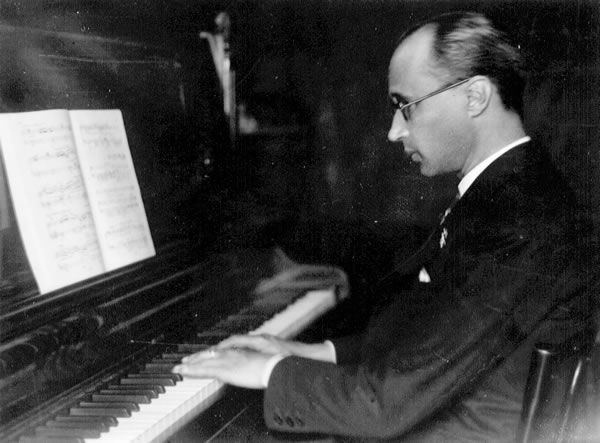
Senza parole – II
 Eduard Marxsen (1806 - 18 novembre 1887): Lied ohne Worte in si maggiore per pianoforte op. 37. Anthony Spiri.
Impronte
Domenico Alaleona (16 novembre 1881 - 1928): La città fiorita, cinque «impronte» per pianoforte (1918). Fausto Bongelli.
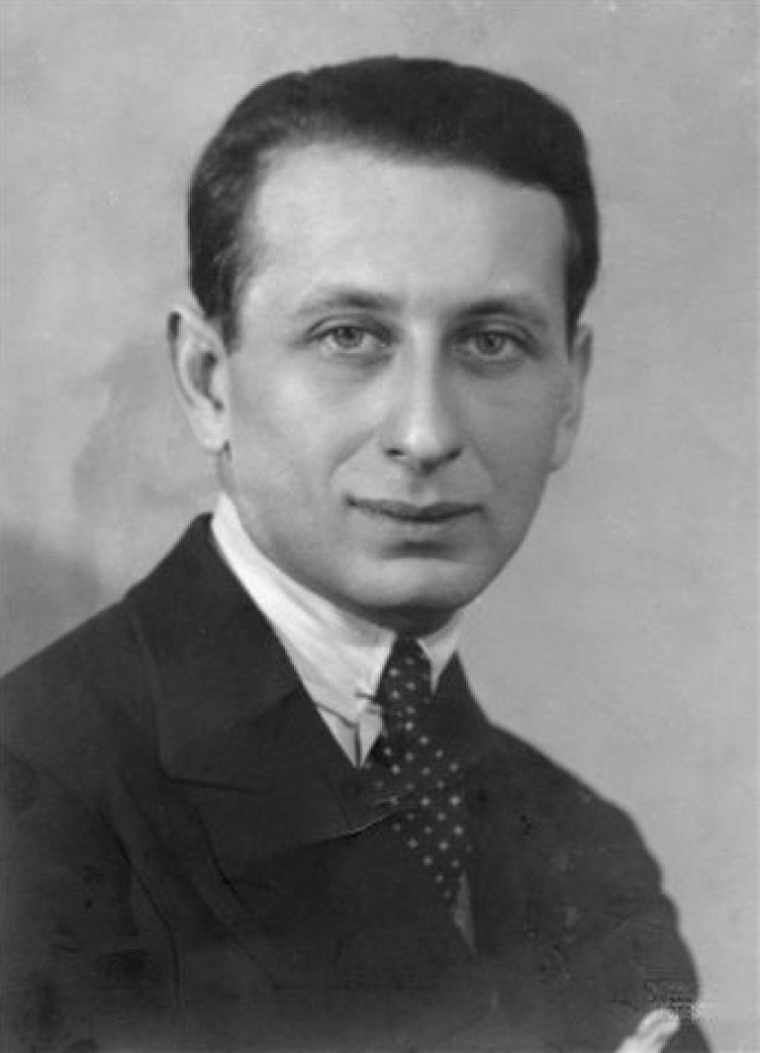
Sonatine transatlantique
Alexandre Tansman (1897 - 15 novembre 1986): Sonatine transatlantique per pianoforte (1930). Daniel Blumenthal.
- Fox-Trot: Allegro
- Spiritual and Blues: Lento [3:13]
- Charleston: Molto vivo [8:37]
Immagini per pianoforte
 Andrij Jakovyč Štoharenko (Andrej Jakovič Štogarenko; 1902 - 15 novembre 1992): Образы / Immagini per pianoforte (1970). Ludmila Kasjanenko.
Copland & Dickinson
Aaron Copland (14 novembre 1900 - 1990): Twelve Poems of Emily Dickinson (1950). Barbara Bonney, soprano; André Previn, pianoforte.
- Nature, the gentlest mother
Nature, the gentlest mother
Impatient of no child,
The feeblest or the waywardest, —
Her admonition mildIn forest and the hill
By traveller is heard,
Restraining rampant squirrel
Or too impetuous bird.How fair her conversation,
A summer afternoon, —
Her household, her assembly;
And when the sun goes downHer voice among the aisles
Incites the timid prayer
Of the minutest cricket,
The most unworthy flower.When all the children sleep
She turns as long away
As will suffice to light her lamps;
Then, bending from the sky,With infinite affection
And infiniter care,
Her golden finger on her lip,
Wills silence everywhere. - There came a wind like a bugle [4:00]
There came a wind like a bugle;
It quivered through the grass,
And a green chill upon the heat
So ominous did passWe barred the windows and the doors
As from an emerald ghost;
The doom’s electric moccasin
That very instant passed.On a strange mob of panting trees,
And fences fled away,
And rivers where the houses ran
The living looked that day,The bell within the steeple wild
The flying tidings whirled.
How much can come and much can go,
And yet abide the world! - Why do they shut me out of heaven? [5:29]
Why do they shut Me out of Heaven?
Did I sing too loud?
But I can say a little “Minor”
Timid as a Bird!Wouldn’t the Angels try me
Just once more
Just see if I troubled them
But don’t shut the door!Oh, if I were the Gentleman
In the “White Robe”
And they were the little Hand that knocked
Would I forbid?[Why do they shut Me out of Heaven?
Did I sing too loud?] - The world feels dusty [7:35]
The World feels Dusty
When We stop to Die
We want the Dew then
Honors taste dryFlags vex a Dying face
But the least Fan
Stirred by a friend’s Hand
Cools like the RainMine be the Ministry
When they Thirst comes
Dews of Thyself to fetch
And Holy Balms - Heart, we will forget him [9:30]
Heart, we will forget him
You and I, tonight.
You may forget the warmth he gave,
I will forget the light.When you have done, pray tell me,
That I my thoughts may dim;
Haste! lest while you’re lagging,
I may remember him! - Dear March, come in! [11:41]
Dear March, come in!
How glad I am!
I looked for you before.
Put down your hat –
You must have walked –
How out of breath you are!
Dear March, how are you?
And the rest?
Did you leave Nature well?
Oh, March, come right upstairs with me,
I have so much to tell!I got your letter, and the bird’s;
The maples never knew
That you were coming, – I declare,
How red their faces grew!
But, March, forgive me –
And all those hills
You left for me to hue,
There was no purple suitable,
You took it all with you.Who knocks? that April?
Lock the door!
I will not be pursued!
He stayed away a year, to call
When I am occupied.
But trifles look so trivial
As soon as you have come,
And blame is just as dear as praise
And praise as mere as blame. - Sleep is supposed to be [13:53]
Sleep is supposed to be,
By souls of sanity,
The shutting of the eye.Sleep is the station grand
Down which on either hand
The hosts of witness stand!Morn is supposed to be,
By people of degree,
The breaking of the day.Morning has not occurred!
That shall aurora be
East of Eternity;One with the banner gay,
One in the red array, –
That is the break of day. - When they come back [16:57]
When they come back if Blossoms do
I always feel a doubt
If Blossoms can be born again
When once the Art is outWhen they begin, if Robins may,
I always had a fear
I did not tell, it was their last Experiment
Last Year,When it is May, if May return,
Had nobody a pang
Lest in a Face so beautiful
He might not look again?If I am there,
One does not know
What Party one may be
Tomorrow, but if I am there
I take back all I say - I felt a funeral in my brain [18:48]
I felt a funeral in my brain,
And mourners to and fro,
Kept treading, treading, till it seemed
That sense was breaking through.And when they all were seated
A service like a drum
Kept beating, beating, till I thought
My mind was going numb.And then I heard them lift a box,
And creak across my soul
With those same boots of lead, again.
Then space began to tollAs all the heavens were a bell,
And Being but an ear,
And I and silence some strange race,
Wrecked, solitary, here. - I’ve heard an organ talk sometimes [20:51]
I’ve heard an Organ talk, sometimes
In a Cathedral Aisle,
And understood no word it said
Yet held my breath, the whileAnd risen up and gone away,
A more Berdardine Girl
Yet know not what was done to me
In that old Hallowed Aisle. - Going to heaven! [22:54]
Going to Heaven!
I don’t know when,
Pray do not ask me how, –
Indeed I’m too astonished
To think of answering you!
Going to Heaven! –
How dim it sounds!
And yet it will be done
As sure as flocks go home at night
Unto the shepherd’s arm!Perhaps you’re going too!
Who knows?
If you should get there first
Save just a little place for me
Close to the two I lost!
The smallest “robe” will fit me,
And just a bit of “crown”;
For you know we do not mind our dress
When we are going home.Going to Heaven!
I’m glad I don’t believe it
For it would stop my breath,
And I’d like to look a little more
At such a curious earth!
I am glad they did believe it
Whom I have never found
Since the mighty autumn afternoon
I left them in the ground. - The Chariot [25:15]
Because I could not stop for Death —
He kindly stopped for me —
The carriage held but just ourselves —
and Immortality.We slowly drove — he knew no haste,
And I had put away
My labour, and my leisure too
For His Civility —We passed the school, where children played,
Their lessons scarcely done.
We passed the fields of gazing grain,
We passed the setting sun.We paused before a house that seemed
a swelling of the ground;
The roof was scarcely visible,
The cornice but a mound.Since then ’tis centuries; but each
Feels shorter than the day
I first surmised the horses’ heads
Were toward eternity.

Alleluja
Johann Nepomuk Hummel (14 novembre 1778 - 1837): Sonata n. 2 in mi bemolle maggiore per pianoforte op. 13, Alleluja (c1804). Vincenzo Balzani.
- Allegro con brio
- Adagio con molta espressione [6:06]
- Allegro con spirito [12:35]
« Nel primo movimento il primo tema, molto incisivo e accompagnato da un basso staccatissimo, è indicato nella sua ultima apparizione con “Alleluja”. Può darsi, ma non si è trovata fino ad ora la fonte, che si tratti di una citazione da una messa o da un oratorio, ma comunque sia il tono di giubilo dell’Alleluja percorre tutto il primo movimento. Il secondo movimento, in forma bitematica tripartita, è una vera e propria scena lirica intensamente patetica, e il terzo movimento riunisce i caratteri dello scherzo e della marcia in quello che in realtà è un vero e proprio concertato operistico » (Piero Rattalino).

Quintetto con fagotto
Johann Evangelist Brandl (14 novembre 1760 - 1837): Quintetto in do maggiore per violino, viola, violoncello, fagotto e pianoforte op. 61 (1800). Calamus Ensemble.
- Allegro ma non troppo
- Adagio [10:29]
- Menuetto: Vivace [15:35]
- Finale: Allegro [20:13]

Un petit train de plaisir
Gioachino Rossini (1792 - 13 novembre 1868): Un petit train de plaisir (Comique : Imitatif) per pianoforte. Il Maestro Antonio Ballista esegue il brano leggendone le didascalie esplicative.