William Byrd (c1540 - 4 luglio 1623); The Bells, variazioni per strumento a tastiera (dal Fitzwilliam Virginal Book, n. LXIX). Andreas Staier, clavicembalo.
Lo stesso brano eseguito da Stefan Müller all’organo della chiesa abbaziale di Wettingen (Argovia).
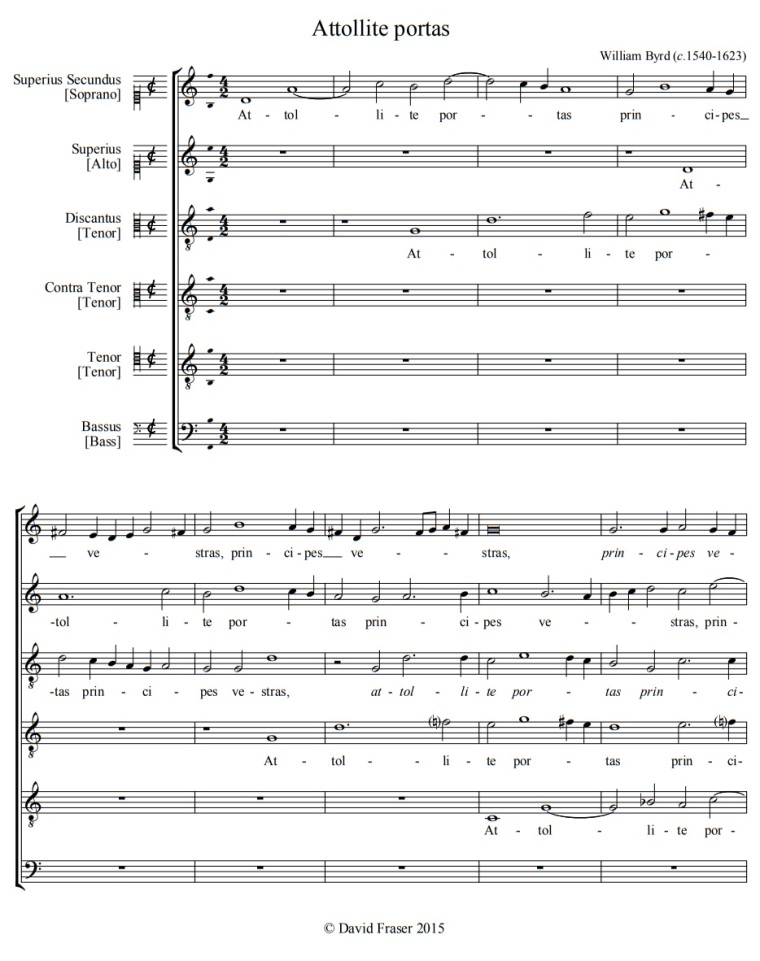
William Byrd (c1540 - 4 luglio 1623): Attollite portas, mottetto a 6 voci (pubblicato in Cantiones quae ab argumento sacrae vocantur, 1575, n. 11); testo: Salmo XXIV:7-8, 10 e dossologia. Ensemble Alamire, dir. David Skinner.
Attollite portas, principes, vestras, et elevamini, portæ æternales, et introibit rex gloriæ.
Quis est iste rex gloriæ? Dominus fortis et potens, Dominus potens in prælio.
Quis est iste rex gloriæ? Dominus virtutum ipse est rex gloriæ.
Gloria Patri et Filio et Spiritui Sancto,
Sicut erat in principio et nunc et semper,
Et in sæcula sæculorum. Amen.
William Byrd (c1540 - 4 luglio 1623): The Earl of Salisbury Pavan (1612 o prima). Simone Stella, spinetta.
Il titolo di questo post non fa riferimento a una raccolta di pezzi facili, bensì al mio primo incontro con la musica di Byrd, che avvenne, eoni fa, appunto per il tramite di questa bella pavana. Brano assai apprezzato da diversi musicisti, britannici e no, alcuni dei quali l’hanno elaborato per organici differenti: oltre alla trascrizione di sir Barbirolli (I movimento della sua Elizabethan Suite) ne segnalo una per quartetto d’archi di John Liberatore e un’altra, piena di pathos, concepita per un ampio complesso sinfonico da Leopold Stokowski:
Da sottolineare il fatto che Stokowski ha utilizzato come sezione centrale un’altra composizione di Byrd, una giga tratta dal Fitzwilliam Virginal Book (n. CLXXXI), e non una delle due gagliarde associate alla pavana nella prima edizione a stampa (il volume antologico Parthenia, del 1612).
What Child is this?, Christmas carol to the tune of Greensleeves (arranged by Marco Frisina), lyrics by William Chatterton Dix (1837 - 1898). Rossella Mirabelli, alto; Choir of the Diocese of Rome conducted by Mgr. Frisina.
What child is this, who, laid to rest,
On Mary’s lap is sleeping,
Whom angels greet with anthems sweet
While shepherds watch are keeping?
This, this is Christ the King,
Whom shepherds guard and angels sing;
Haste, haste to bring Him laud,
The babe, the son of Mary!
Why lies He in such mean estate
Where ox and ass are feeding?
Good Christian, fear: for sinners here
The silent Word is pleading.
Nails, spear shall pierce him through,
The Cross be borne for me, for you;
Hail, hail the Word Made Flesh,
The babe, the son of Mary!
So bring Him incense, gold, and myrrh;
Come, peasant, king, to own Him!
The King of Kings salvation brings;
Let loving hearts enthrone Him!
Raise, raise the song on high!
The virgin sings her lullaby.
Joy! joy! for Christ is born,
The babe, the son of Mary!
What Child is this? è probabilmente il più celebre adattamento spirituale della melodia di Greensleeves. Il testo fa parte del poemetto The Manger Throne, scritto da Dix nel 1865. L’idea dell’adattamento è quasi certamente di John Stainer, organista e compositore britannico (1840 - 1901), e risale al 1871.
What Child is this? is probably the most famous spiritual adaptation of Greensleeves tune. Lyrics is part of the poem The Manger Throne, written by Dix in 1865. The idea of the adaptation is almost certainly by John Stainer, British organist and composer (1840 - 1901), and dates back to 1871.
Vincenzo Galilei (1520 - 2 luglio 1591): Contrapunto primo e Contrapunto secondo [2:13] a 2 voci, dal trattato Il Fronimo (1584). Thierry Meunier e Jean-Marie Poirier, liuti.
Christoph Willibald Gluck (2 luglio 1714 - 1787): Alessandro (Les amours d’Alexandre et de Roxane), balletto (1764). Musica Antiqua Köln, dir. Reinhard Goebel.
Alberto Colla (2 luglio 1968): Moonbow, notturno IV per pianoforte (2009). Gianluca Cascioli.
« Il IV Notturno per pianoforte è ispirato a un fenomeno naturale: il moonbow (arco lunare o notturno), un arcobaleno prodotto dalla luce riflessa dalla superficie della luna invece che da quella diretta del sole. Può essere avvistato nelle notti di vivida luce lunare, ma è comunque un fenomeno etereo, impalpabile, estremamente sfuggevole, a causa della fioca luce che lo genera. È sempre situato dalla parte del cielo opposta rispetto alla posizione del satellite. Dato che la nostra percezione dei colori in condizioni di poca luminosità è bassa, gli arcobaleni lunari sono percepiti come soffusi archi bianchi » (Alberto Colla).
Thomas Augustine Arne (1710 - 1778): When icicles hang by the wall, song of winter from Shakespeare’s play Love’s Labour’s Lost, act 5, scene 2. Julia Gooding, soprano; ensemble Passacaglia.
When icicles hang by the wall
And Dick the shepherd blows his nail
And Tom bears logs into the hall
And milk comes frozen home in pail,
When blood is nipp’d and ways be foul,
Then nightly sings the staring owl,
Tu-whit;
Tu-who, a merry note,
While greasy Joan doth keel the pot.
When all aloud the wind doth blow
And coughing drowns the parson’s saw
And birds sit brooding in the snow
And Marian’s nose looks red and raw,
When roasted crabs hiss in the bowl,
Then nightly sings the staring owl,
Tu-whit;
Tu-who, a merry note,
While greasy Joan doth keel the pot.
Johann Sebastian Bach (1685 - 1750): Chromatische Fantasie und Fuge in re minore BWV 903 (c1717-23). Chiara Massini, clavicembalo, e Andrea Bacchetti, pianoforte.
La Fuga ha inizio rispettivamente a [6:09] e a [7:00]
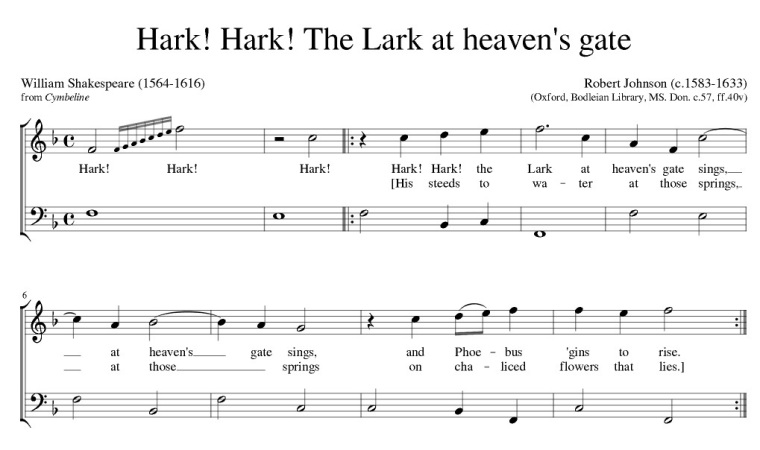
Hark! hark! the lark, Cloten’s song in Shakespeare’s play Cymbeline, King of Britain (c1609), act 2, scene 3. Emma Kirkby, soprano; Anthony Rooley, lute.
Hark! hark! the lark at heaven’s gate sings,
And Phoebus ’gins arise,
His steeds to water at those springs
On chalic’d flowers that lies;
And winking Mary-buds begin
To ope their golden eyes;
With everything that pretty is,
My lady sweet, arise:
Arise, arise!
This setting of Hark! hark! the lark survives in a music manuscript owned by the Bodleian Library, University of Oxford (MS Don. c.57, f. 40v), and has been attributed to Robert Johnson (c1583 - 1633). Johnson became lutenist to king James I in 1604 and was closely associated with Shakespeare’s company, to which he provided songs for various plays including The Winter’s Tale (1610) and The Tempest (1611).
Antonio Martín y Coll (? - c1734): Diferencias sobre las folias. Jordi Savall e Hespèrion XXI.
Giovanni Girolamo Kapsberger (c1580 - 1651): 19 Partite sopra la Folia. Sandro Volta, chitarrone.
Don Gregorio Paniagua Rodríguez: Fons vitae. Dementia praecox angelorum. Supra solfamireut (1982). Gregorio Paniagua e Atrium Musicae de Madrid.
Vangelis (Evangelos Odysseas Papathanassiou; 1943 - 2022): «Conquest of Paradise», dalla colonna sonora del film 1492 – La conquista del paradiso (1492: Conquest of Paradise) diretto nel 1992 da Ridley Scott.
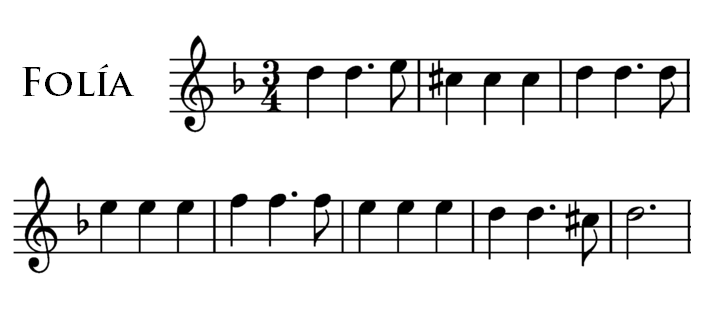
Anche il brano da Vangelis, come le altre composizioni di cui propongo l’ascolto in questa pagina, si fonda sulla Follia, un antico tema musicale (si ritiene che abbia origini portoghesi risalenti al XVI secolo) che nel corso del periodo barocco fu rielaborato da numerosi compositori europei, da Frescobaldi a Corelli, da Lully a Marais, da Alessandro Scarlatti a Vivaldi, da Johann Sebastian Bach (nella Bauernkantate BWV 212) al figlio di questi Carl Philipp Emanuel.
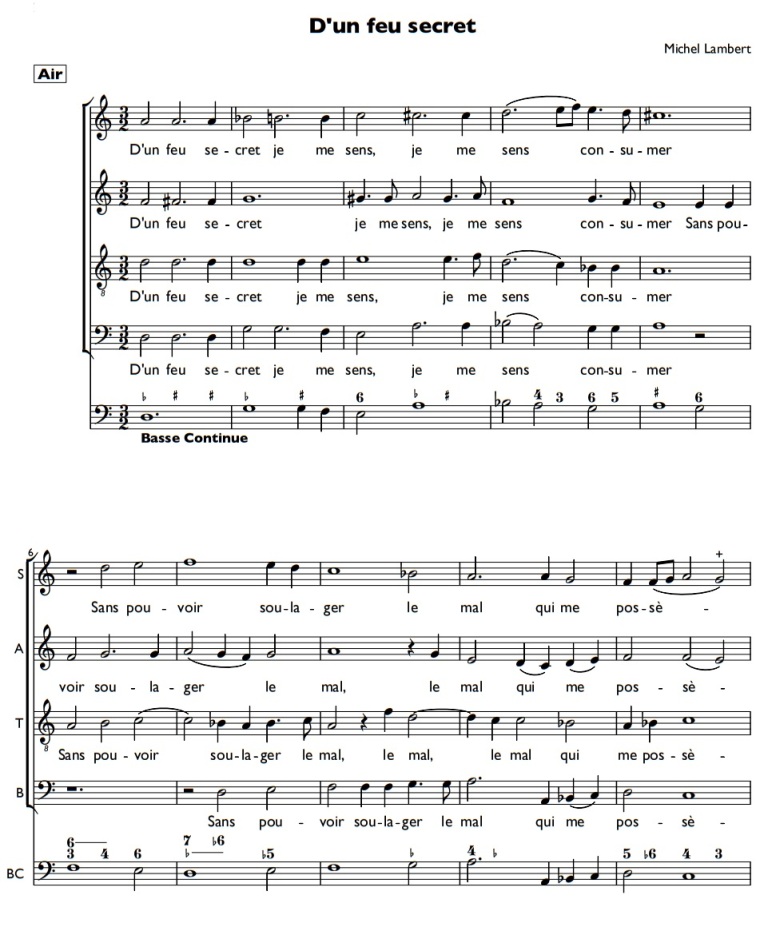
Michel Lambert (1610 - 29 giugno 1696): D’un feu secret je me sens consommer, air de cour (pubblicato in Airs à une, II. III. et IV. parties avec la basse-continue, 1689, p. 53). Les Arts Florissants, dir. William Christie.
D’un feu secret je me sens consommer
Sans pouvoir soulager le mal qui me possède;
Je pourrois bien guérir si je cessois d’aymer,
Mais j’ayme mieux le mal que le remède.
Quand je mourrois, pourroit-on me blasmer?
Qui commence d’ayme, ne doit-il pas poursuivre?
Quand on sçaura, Philis, que j’ay cessé d’aymer,
On sçaura bien que j’ay cessé de vivre.
The Beggar’s Opera, Air XXVII: Greensleeves. Roger Daltrey as Macheath.
Since Laws were made for ev’ry Degree,
To curb Vice in others, as well as me,
I wonder we han’t better Company,
Upon Tyburn Tree!
But Gold from Law can take out the Sting;
And if rich Men like us were to swing,
’Twould thin out the Land, such Numbers to string
Upon Tyburn Tree!
Nell’Opera del mendicante (The Beggar’s Opera, 1728), scritta da John Gay, con musiche tratte perlopiù dal repertorio popolare e adattate da Johann Christoph Pepusch, trova posto anche la melodia di Greensleeves. Il brano è intonato con rabbia e frustrazione da Macheath subito dopo aver appreso di essere stato condannato a morte. Per «Tyburn Tree» si intende la forca: Tyburn era il villaggio del Middlesex in cui si eseguivano le sentenze capitali.
In The Beggar’s Opera (1728), written by John Gay, with music drawn mostly from traditional repertoire and arranged by Johann Christoph Pepusch, the tune of Greensleeves also finds its place. This piece is sung in anger and frustration by Macheath soon after learning that he was sentenced to death. «Tyburn Tree» means the gallows: Tyburn was the Middlesex village where capital punishment was carried out.
Cesare Ciardi (28 giugno 1818 – 1877): Gran Concerto in re maggiore per flauto e pianoforte op. 129 (1859). Maurizio Bignardelli, flauto; Paola Quattrone, pianoforte.
Jean-Jacques Beauvarlet-Charpentier (28 giugno 1734 - 1794): Pange lingua, «hymne pour la Fête-Dieu au Très-Saint-Sacrement», dal Journal d’orgue… n. 7 (c1785). Jean-Luc Perrot all’organo Callinet (1837) della Chiesa di Notre-Dame in Saint-Étienne.
Pyotr Ilyich Tchaikovsky (1840 - 1893): Romeo and Juliet, overture-fantasy in B minor for orchestra, after Shakespeare’s tragedy, 1st version (1869). London Symphony Orchestra; Geoffrey Simon, conductor.
Tchaikovsky: Romeo and Juliet, definitive version (1880). London Symphony Orchestra; Valerij Gergiev, conductor.
This piece has no opus number: the reason is that Tchaikovsky honestly did not want to claim full authorship, since main themes and some elements of the structure were suggested to him by Mily Balakirev.
Magnus Lindberg (27 giugno 1958): Secondo Concerto per pianoforte orchestra (2012). Yefim Bronfman, pianoforte; New York Philharmonic Orchestra, dir. Alan Gilbert.
Igor Stravinsky (Igor’ Fëdorovič Stravinskij; 1882 - 1971): Three Songs from William Shakespeare for mezzo-soprano, flute, clarinet and viola (1953). Anna Molnár, mezzo-soprano; Annamária Bán, flute; Csaba Pálfi, clarinet; Péter Tornyai, viola.
Musick to heare (Sonnet 8)
Musick to heare, why hear’st thou musick sadly?
Sweets with sweets warre not, ioy delights in ioy:
Why lou’st thou that which thou receaust not gladly,
Or else receau’st with pleasure thine annoy?
If the true concord of well tuned sounds,
By vnions married, do offend thine eare,
They do but sweetly chide thee, who confounds
In singlenesse the parts that thou should’st beare:
Marke how one string sweet husband to an other,
Strikes each in each by mutuall ordering;
Resembling sier, and child, and happy mother,
Who all in one, one pleasing note do sing:
Whose speechlesse song being many, seeming one,
Sings this to thee, thou single wilt proue none.
Full fadom five (Ariel’s song from The Tempest) [3:07]
Full fadom five thy Father lies,
Of his bones are Corrall made:
Those are pearles that were his eies,
Nothing of him that doth fade,
But doth suffer a Sea-change
Into something rich, & strange:
Sea-Nimphs hourly ring his knell.
Ding dong ding dong.
Harke now I heare them; ding dong bell.
Spring (cuckoo’s song from Love’s Labour’s Lost) [4:43]
When Daisies pied, and Violets blew,
And Cuckow-buds of yellow hew,
And Ladie-smockes all silver white,
Do paint the Medowes with delight,
The Cuckow then on everie tree
Mockes married men; for thus sings he,
Cuckow! Cuckow, Cuckow! O worde of feare,
Unpleasing to a married eare.
Ernest Guiraud (26 giugno 1837 - 1892): La Chasse fantastique, poema sinfonico (1887) ispirato dalla Légende du beau Pécopin et de la belle Bauldour (1842) di Victor Hugo. Louisville Orchestra, dir. Jorge Mester.
La composizione segue fedelmente la descrizione della caccia nel racconto di Hugo, un passo del quale è citato da Guiraud in esergo sulla partitura:
« Al suono del corno, la foresta s’illumina, nei recessi più remoti, di mille luci straordinarie, di ombre che passano nella boscaglia, di voci lontane che gridano: a caccia! La muta abbaia, i cavalli nitriscono, gli alberi fremono come scossi dal vento. »



 What Child is this? è probabilmente il più celebre adattamento spirituale della melodia di Greensleeves. Il testo fa parte del poemetto The Manger Throne, scritto da Dix nel 1865. L’idea dell’adattamento è quasi certamente di John Stainer, organista e compositore britannico (1840 - 1901), e risale al 1871.
  What Child is this? is probably the most famous spiritual adaptation of Greensleeves tune. Lyrics is part of the poem The Manger Throne, written by Dix in 1865. The idea of the adaptation is almost certainly by John Stainer, British organist and composer (1840 - 1901), and dates back to 1871.
 Louis Durey (1888 - 3 luglio 1979): Sonatina per flauto e pianoforte op. 25 (1920). Daniela Dottori, flauto; Luca Moscardi, pianoforte.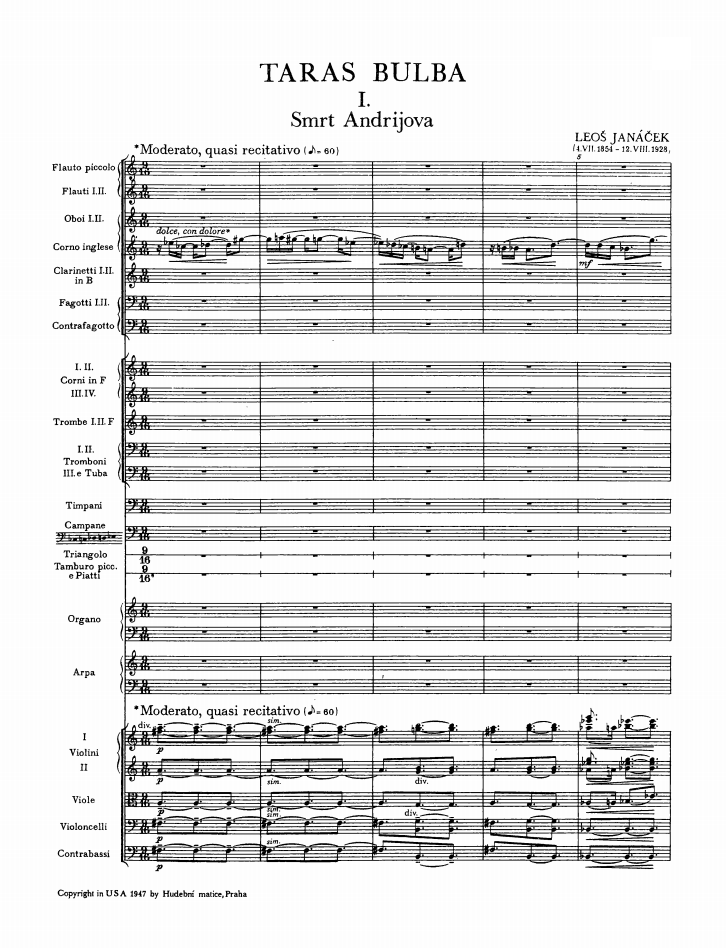


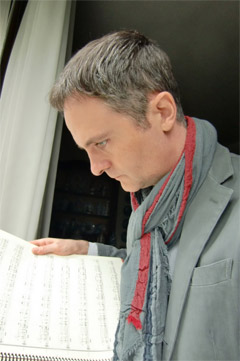 Alberto Colla (2 luglio 1968): Moonbow, notturno IV per pianoforte (2009). Gianluca Cascioli.






 la regina gioiosa