Ricco sol di pentimento

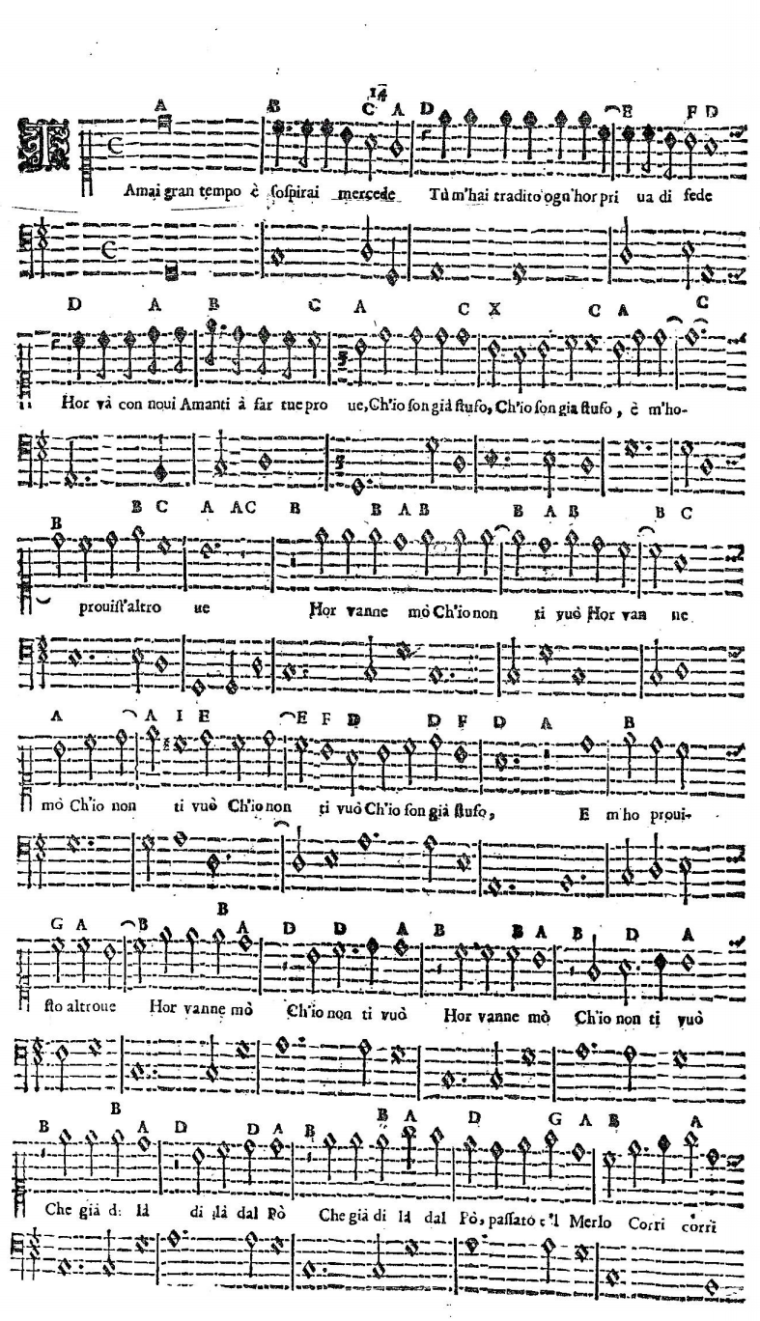
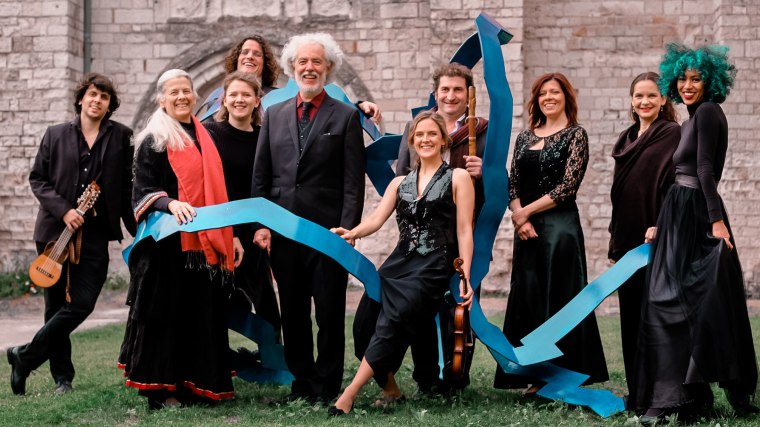
Stefano Landi (battezzato il 26 febbraio 1587 - 1639): T’amai gran tempo, aria a 1 voce e basso continuo (pubblicata nel ASecondo Libro d’arie musicali ad una voce, 1627, n. 11). Marco Beasley, voce; ensemble L’Arpeggiata, dir. Christina Pluhar.

T’amai gran tempo e sospirai mercede.
Tu m’hai tradito ogn’hor, priva di fede.
Hor và con novi amanti a far tue prove,
ch’io son già stufo e m’ho provvisto altrove.
Hor vanne mò
Ch’io non ti vo’,
Ch’io son già stufo
E m’ho provvisto altrove.
Hor vanne mò
Ch’io non ti vo’
Che già di là,
Di là dal Po, passato è ‘l Merlo…
Corri, corri a vederlo!

Mille volte io piangeva, e tu ridevi.
Mille volte io rideva, e tu piangevi.
Così cortese, i più felici amanti
Schermisti cruda in giochi, in risi, in pianti.
Hor grida mò,
Ch’io sordo stò,
Ch’io son già stufo
E m’ho provvisto altrove.
Hor vanne mò
Ch’io non ti vo’
Che già di là,
Di là dal Po, passato è ‘l Merlo…
Corri, corri a vederlo!

Ti fui fedele allor che fui gradito.
E qui lasciar ti vuò, se m’hai tradito.
Hor vanne a porre a nuovi amanti il vischio,
ch’io son già sciolto, e più non sento il fischio,
Hor crepa mò,
Ch’io non ti vo’,
Ch’io son già stufo
E m’ho provvisto altrove.
Hor vanne mò
Ch’io non ti vo’
Che già di là
Di là dal Po, passato è ‘l Merlo…
Corri, corri a vederlo!

Se talento ti vien di dar martello,
Guardati il volto, che non è più quello:
Hor le tue labbra d’oro e ‘l crin d’argento
Ricco mi fanno sol di pentimento.
Hor non più, no
T’adorerò,
Ch’io non ti vo’,
Ch’io son già stufo
E m’ho provvisto altrove.
Hor vanne mò
Ch’io non ti vo’
Che già di là
Di là dal Po, passato è ‘l Merlo…
Corri, corri a vederlo!

Leggenda – II

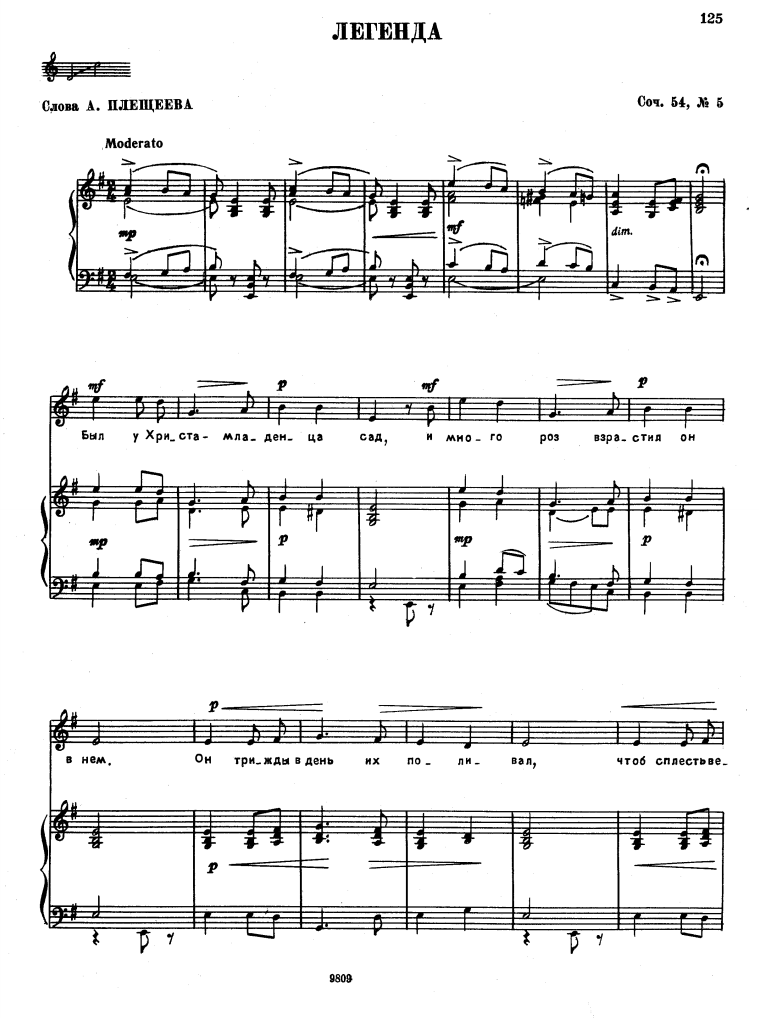
Pëtr Il’ič Čajkovskij (1840 - 1893): Leggenda per voce e pianoforte op. 54 n. 5 (1883). Nicolai Gedda, tenore; Geoffrey Parsons, pianoforte.
Il testo è costituito da una traduzione russa, eseguita da Aleksej Nikolaevič Pleščeev (1825-1893), di una poesia, un tantino antisemita, di Richard Henry Stoddard (1825-1903) intitolata Roses and Thorns (vedi oltre).


Lo stesso brano nell’orchestrazione di Čajkovskij, interpretato (con testo inglese) da Peter Pears con l’English Chamber Orchestra diretta da Benjamin Britten.


Versione per coro a cappella eseguita dal Coro da camera del Ministero della cultura dell’URSS diretto da Valerij Kuzmič Poljanskij. Registrazione del 1988.


Anton Stepanovič Arenskij (1861 - 25 febbraio 1906): Variazioni per archi sopra un tema di Čajkovskij op. 35a (1894). London Symphony Orchestra, dir. John Barbirolli. Registrazione del 1947.

R. H. Stoddard: Roses and Thorns (1857).

The young child Jesus had a garden,
Full of roses, rare and red:
And thrice a day he watered them,
To make a garland for his head.

When they were full-blown in the garden,
He called the Jewish children there,
And each did pluck himself a rose,
Until they stripped the garden bare.

«And now how will you make your garland?
For not a rose your path adorns.»
«But you forget», he answered them,
«That you have left me still the thorns.»

They took the thorns, and made a garland,
And placed it on his shining head;
And where the roses should have shone
Were little drops of blood instead!


Aleksej Nikolaevič Pleščeev: Легенда (Leggenda, 1877).

Был у Христа-младенца сад,
И много роз взрастил он в нём;
Он трижды в день их поливал,
Чтоб сплесть венок себе потом.

Когда же розы расцвели,
Детей еврейских созвал он;
Они сорвали по цветку,
И сад был весь опустошён.

«Как ты сплетешь теперь венок?
В твоём саду нет больше роз!»
«Вы позабыли, что шипы
Остались мне», сказал Христос.

И из шипов они сплели
Венок колючий для него,
И капли крови вместо роз
Чело украсили его.

Marco da Gagliano + Girolamo Frescobaldi

Marco da Gagliano (1582 - 25 febbraio 1643): Missa in Assumptione Beatae Mariae Virginis a 6 voci (pubbl. 1614). Insieme vocale e strumentale L’homme armé, dir. Fabio Lombardo.

  1. Kyrie
  2. Gloria [5:03]
  3. Credo [8:00]
  4. Ave Maria [13:23]
  5. Sanctus [16:19]
  6. Frescobaldi: Toccata per l’Elevazione [18:09]
  7. Pater Noster [24:41]
  8. Agnus Dei [26:15]
  9. Ite missa est [29:30]

Visione veneziana

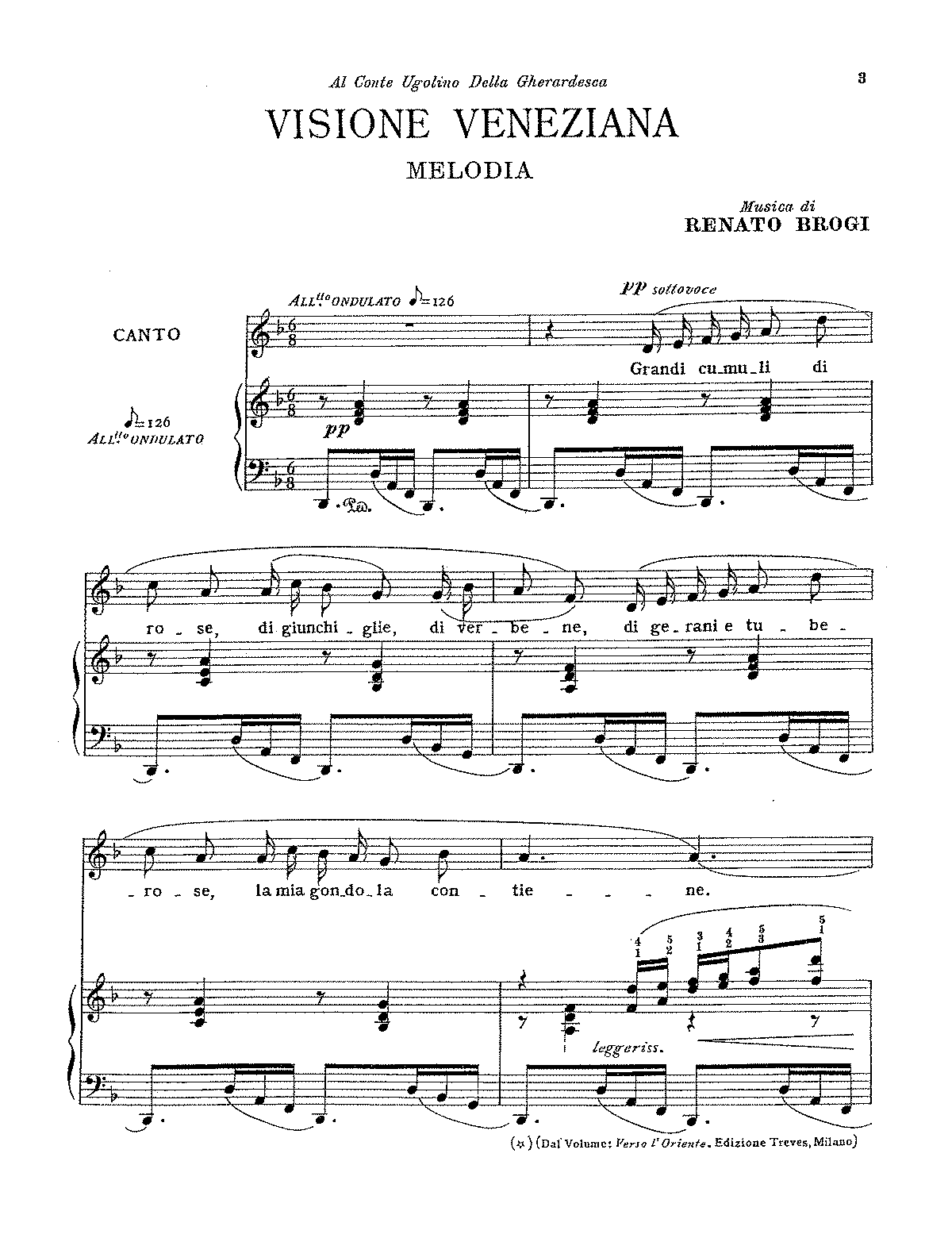
Renato Brogi (25 febbraio 1873 - 1924): Visione veneziana, romanza per voce e orchestra (c1912) su testo di Angiolo Orvieto. Cesare Siepi, basso; Orchestra da camera di Torino della Radio italiana, dir. Cesare Gallino (registrazione del 1948).

Grandi cumuli di rose,
di giunchiglie, di verbene,
di gerani e tuberose,
la mia gondola contiene.

Essa fila nell’aurora
che sorride sul canale,
che i palazzi grigi sfiora
col suo bacio d’immortale.

Presso ad una testa bionda
che fra le verbene affonda
e di rose s’incorona,
il mio capo s’abbandona.

E la gondola ci culla
tutti e due soavemente;
ma la pallida fanciulla
nulla vede e nulla sente.

Chiuse son le lunghe ciglia
sovra il sogno mattutino;
ella sembra una giunchiglia
sotto il cielo cilestrino.

Nell’aurora, fra gli odori
dei bei cumuli di fiori,
questa gondola mi porta,
con la mia diletta, morta.

Brogi, Visione veneziana

The Protestation & Love’s Constancy

The Protestation: A Sonnet
(Thomas Carew, 1595 - 1640)

No more shall meads be deck’d with flowers,
Nor sweetness dwell in rosy bowers,
Nor greenest buds on branches spring,
Nor warbling birds delight to sing,
Nor April violets paint the grove,
If I forsake [When once I leave] my Celia’s love.

The fish shall in the ocean burn,
And fountains sweet shall bitter turn;
The humble oak no flood shall know,
When floods shall highest hills o’er-flow;
Blacke Lethe shall oblivion leave,
If e’er my Celia I deceive.

Love shall his bow and shaft lay by,
And Venus’ doves want wings to fly;
The sun refuse to show his light,
And day shall then be turn’d to night;
And in that night no star appear,
If once I leave my Celia dear.

Love shall no more inhabit earth,
Nor lovers more shall love for worth,
Nor joy above in heaven dwell,
Nor pain torment poor souls in hell;
Grim death no more shall horrid prove,
If e’er I leave bright Celia’s love.


Love’s Constancy, sul testo di Carew, è fra le composizioni più note di Nicholas Lanier (1588 - 24 febbraio 1666); in rete se ne trovano varie interpretazioni: vi propongo l’ascolto di quelle che mi paiono le più interessanti.

Amanda Sidebottom, soprano, e Erik Ryding, liuto.


Anna Dennis, soprano; Hanneke van Proosdij, clavicembalo; Elisabeth Reed, viola da gamba; David Tayler, chitarra barocca.


La performance del soprano Ellen Hargis accompagnata da Paul O’Dette alla tiorba è accessibile soltanto su YouTube, in quanto il proprietario del video ne ha disattivata la visione in altri siti web. Potete ascoltarla qui.


Anton van Dyck: ritratto di Nicholas Lanier

Anton van Dyck: ritratto di Nicholas Lanier

Venere e Adone

John Blow (battezzato il 23 febbraio 1649 – 1708): Venus and Adonis, «masque for the entertainment of the king» (Carlo II) in 1 prologo e 3 atti su libretto di autore ignoto (c1683). Sophie Daneman (Venus) e Elin Manahan Thomas (Cupid), soprani; Roderick Williams (Adonis), baritono; Theatre of the Ayre, dir. Elizabeth Kenny.


Libretto

DRAMATIS PERSONAE:

 VENUS
 ADONIS
 CUPID
 FIRST SHEPHERD
 SECOND SHEPHERD
 SHEPHERDESS
 HUNTSMAN
 SHEPHERDS, SHEPHERDESSES, HUNTSMEN AND GRACES
 LITTLE CUPIDS


OVERTURE: Maestoso – Allegro – Tempo I

THE PROLOGUE [3:40]

The curtain is drawn where is discovered Cupid with a bow in one hand and an arrow in the other and arrows by his side and around him Shepherds and Shepherdesses.

CUPID’S ENTRY (Vivace)
[Cupid bows and sings:]
Behold my arrows and my bow
And I desire my art to show:
No one bosom shall be found
Ere I have done, without a wound,
But it would be the greatest art
To shoot myself into your heart;
Thither with both my wings I move,
Pray entertain the God of Love.

SHEPHERDESS
Come, Shepherds all, let’s sing and play,
Be willing, lovesome, fond and gay.

SHEPHERD
She who those soft hours misuses
And a begging Swain refuses
When she would the time recover
May she have a feeble lover.

SHEPHERDESS
The best of the Celestial Pow’rs
Is come to give us happy hours.

2nd SHEPHERD
Oh, let him not from hence remove

SHEPHERDESS
Till ev’ry bosom’s full of love.

CUPID
Courtiers, there is no faith in you,
You change as often as you can:
Your women they continue true
But till they see another man.

SHEPHERD
Cupid hast thou many found
Long in the same fetters bound?

CUPID
At court I find constant and true
Only an aged lord or two.

SHEPHERD
Who do their Empire longest hold

CUPID
The foolish ugly and the old …
In these sweet groves love is not taught
Beauty and pleasure is not bought;
To warm desires the women nature moves
And ev’ry youthful swain by nature loves …

CHORUS
In these sweet groves [etc.]
[While this Chorus is singing a Shepherd and Shepherdess dance to it.]

CUPID
Lovers to the close shades retire,
Do what your kindest thoughts inspire.
[Exeunt omnes. The Curtain closes.]


FIRST ACT [12:00]

THE ACT TUNE (Lento)
The Curtain opens and discovers Venus and Adonis sitting together upon a Couch, embracing one another.

ADONIS
Venus!

VENUS
Adonis!

ADONIS
Venus, when shall I taste soft delights
And on thy bosom lie?
Let’s seek the shadiest covert of this grove
And never, never disappoint expecting love.

VENUS
Adonis, thy delightful youth
Is full of beauty and of truth.
With thee the Queen of Love employs
The hours design’d for softer joys.

ADONIS
My Venus still has something new
Which forces lovers to be true.

VENUS
Me my lovely youth shall find
Always tender, ever kind.

HUNTER’S MUSIC
[They rise from the Couch when they hear the Music.]

VENUS
Hark, hark, the rural music sounds,
Hark, hark the hunters, hark, hark the hounds!
They summon to the chase, haste haste away.

ADONIS
Adonis will not hunt today.
I have already caught the noblest prey.

VENUS
No, my shepherd, haste away,
Absence kindles new desire,
I would not have my lover tire …
My shepherd, will you know the art
By which I keep a conquer’d heart?
I seldom vex a lover’s ears
With business or with jealous fears.
I give him freely all delights
With pleasant days and easy nights.

ADONIS
Yet there is a sort of men
Who delight in heavy chains
Upon whom ill-usage gains
And they never love till then.

VENUS
Those are fools of mighty leisure
Wise men love the easiest pleasure.
I give you freely all delights
With pleasant days and easy nights.

ADONIS
Adonis will not hunt today.

VENUS
No, my shepherd, haste away.
[Enter Huntsmen to Adonis, and sing this Chorus.]

HUNTSMEN
Come follow, follow, follow,
Come follow to the noblest game.
Here the spritely youth may purchase fame.

HUNTSMAN
A mighty boar our spear and darts defies,
He foams and rages, see, see, he wounds
The stoutest of our Cretan hounds,
He roars like thunder and he lightens from his eyes.

ADONIS
You who the slothful joys of city hate
And, early up, for rougher pleasures wait,
Next the delight which heav’nly beauty yields
Nothing, oh nothing is so sweet
As for our huntsmen, that do meet
With able coursers and good hounds to range the fields.

HUNTSMEN
Lachne has fastened first but she is old;
Bring hither Ladon, he is strong and bold,
Heigh Lachne, heigh Melampus; oh, they bleed,
Your spears, your spears, Adonis thou shalt lead.
[Exeunt singing. Entry: A dance by a Huntsman. The Curtain closes.]


SECOND ACT [24:46]

THE ACT TUNE (Allegretto)
The Curtain opens and Venus and Cupid are seen standing with Little Cupids round about them.

CUPID
You place with such delightful care
The fetters which your lovers wear;
None can be weary to obey
When you their eager wishes bless,
[Cupid points to the little Cupids]
The crowding Joys each other press
And round you smiling Cupids play.

VENUS
Flattering boy, hast thou been reading
Thy lessons and refined arts
By which thou may’st set ableeding
A-thousand, thousand tender hearts?

CUPID
Yes, but mother, teach me to destroy
All such as scorn your wanton boy.

VENUS
Fit well your arrows when you strike
And choose for all what each may like.
But make some love, they know not why,
And for the ugly and ill-humour’d die;
Such as scorn Love’s fire,
Force them to admire.

THE CUPID>’S LESSON
[The little Cupids repeat their lesson after Cupid.]

CUPID
The insolent, the arrogant,
The M-E-R-: Mer; C-E: Ce; N-A: Na; R-Y: Ry;
The mercenary, the vain and silly.
The jealous and uneasy, all such as tease ye …
Choose for the formal fool
Who scorns Love’s mighty school,
One that delights in secret glances
And a great reader of romances.
For him that’s faithless, wild and gay,
Who with Love’s pain does only play,
Take some affected, wanton she,
As faithless and as wild as he.

VENUS
But, Cupid, how shall I make Adonis constant still?

CUPID
Use him very ill …
[Venus laughs]
To play, my Loves, to play;
Venus makes it holiday.

A DANCE OF CUPIDS (Allegro leggiero)
After the dance the little Cupids piay together at hide and seek and hot cockles till Cupid frightens them off the stage with a Vizard Mask, and then they come on again, peeping, when Cupid calls the Graces.

VENUS
Call, call the Graces.

CUPID
Come, all ye Graces! ‘Tis your duty
To keep the Magazine of Beauty.
[Enter the Graces.]

GRACES
Mortals below, Cupids above,
Sing the praises of the Queen of Love.
The world for that bright Beauty dies;
Sing the triumphs of her conqu’ring eyes.
Hark, ev’n Nature sighs. This joyful night
She will beget desire and yield delight.

THE GRACES’ DANCE (L’istesso tempo)

GAVATT (Allegro)

SARABAND FOR THE GRACES (Lento)

A GROUND (Maestoso)

While the Graces dance, the Cupids dress Venus, one combing her head, another ties a bracelet of pearls round her waist etc. After the dances the Curtain closes upon them.


THIRD ACT [41:00]

THE ACT TUNE (Sostenuto)
The Curtain opens and discovers Venus standing in a melancholy posture. A mourning Cupid goes across the stage and shakes an arrow at her.

VENUS
Adonis, uncall’d-for sighs
From my sad bosom rise,
And grief has the dominion of my eyes.
A mourning Love passed by me now that sung
Of tombs and urns and ev’ry mournful thing:
Return, Adonis, ‘tis for thee I grieve.
[Venus leans against the side of the stage and weeps. Adonis is led in wounded.]

ADONIS
I come, as fast as Death will give me leave.
Behold the wound made by th’ Aedalian boar;
Faithful Adonis now must be no more.

VENUS
Ah, blood and warm life his rosy cheeks forsake.
Alas, Death’s sleep thou art too young to take.
My groans shall reach the heav’ns; oh, pow’rs above
Take pity on the wretched Queen of Love!

ADONIS
Oh, I could well endure the pointed dart,
Did it not make the best of lovers part.

VENUS
Ye cruel gods, why should not I
Have the great privilege to die?

ADONIS
Love, mighty Love, does my kind bosom fire;
Shall I for want of vital heat expire?
No, no, warm life returns, and Death’s afraid
This heart (Love’s faithful kingdom) to invade.

VENUS
No, the grim Monster gains the day;
With thy warm blood life steals away.

ADONIS
I see fate calls; let me on your soft bosom lie.
There I did wish to live, and there I beg to die.
[Adonis dies.]

VENUS
Ah, Adonis my love, ah, Adonis …
With solemn pomp let mourning Cupids bear
My soft Adonis through the yielding air …
He shall adorn the heav’ns, here I will weep
Till I am fall’n into as cold a sleep.

OMNES
Mourn for thy servant, mighty God of Love,
Weep for your huntsman, oh forsaken grove.
Mourn, Echo, mourn, thou shalt no more repeat
His tender sighs and vows when he did meet
With the wretched Queen of Love
In this forsaken grove.

THE END.


John Blow

Dal Diario di Virginia Woolf

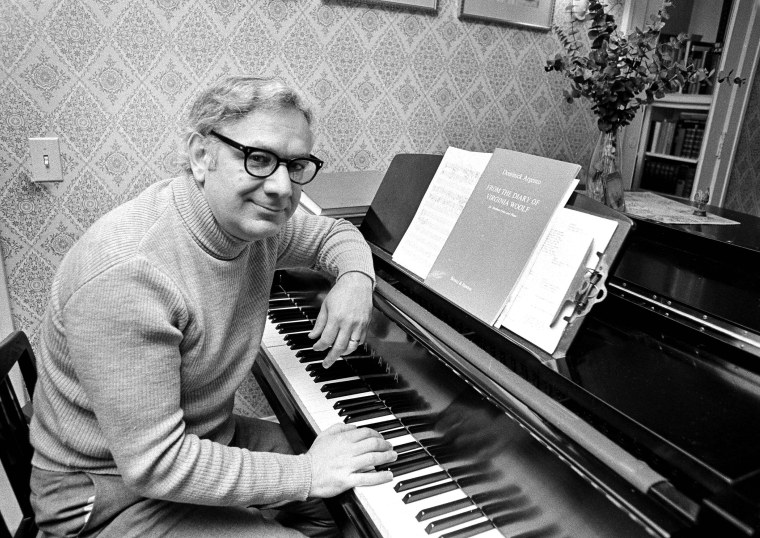
Dominick Argento (1927 - 20 febbraio 2019): From the Diary of Virginia Woolf, ciclo di composizioni per canto e pianoforte (1974). Janet Baker, mezzosoprano, e Martin Isepp, pianoforte (primi interpreti).
I testi sono tratti da A Writer’s Diary: Being Extracts from the Diary of Virginia Woolf, pubblicato nel 1954; il ciclo valse a Dominick Argento il Premio Pulitzer per la musica nel 1975. In merito a questo lavoro del compositore statunitense sono disponibili in rete un’accurata analisi di Noelle Woods e una guida all’interpretazione curata da Jacquelyn Matava.

I. The Diary (April, 1919)

What sort of diary should I like mine to be? Something… so elastic that it will embrace anything, solemn, slight or beautiful that comes into my mind. I should like it to resemble some deep old desk… in which one flings a mass of odds and ends without looking them through. I should like to come back, after a year or two, and find that the collection had sorted itself and refined itself and coalesced, as such deposits so mysteriously do, into a mould, transparent enough to reflect the light of our life…

II. Anxiety (October, 1920) [3:56]

Why is life so tragic; so like a little strip of pavement over an abyss. I look down; I feel giddy; I wonder how I am ever to walk to the end. But why do I feel this: Now that I say it I don’t feel it. The fire burns; we are going to hear the Beggar’s Opera. Only it lies all about me; I can’t keep my eyes shut… And with it all how happy I am—if it weren’t for my feeling that it’s a strip of pavement over an abyss.

III. Fancy (February, 1927) [5:53]

Why not invent a new kind of play; as for instance:
Woman thinks…
He does.
Organ plays.
She writes.
They say:
She sings.
Night speaks
They miss

IV. Hardy’s Funeral (January, 1928) [8:34]

Yesterday we went to Hardy’s funeral. What did I think of? Of Max Beerbohm’s letter… or a lecture… about women’s writing. At intervals some emotion broke in. But I doubt the capacity of the human animal for being dignified in ceremony. One catches a bishop’s frown and twitch; sees his polished shiny nose; suspects the rapt spectacled young priest, gazing at the cross he carries, of being a humbug; …next here is the coffin, an overgrown one; like a stage coffin, covered with a white satin cloth; bearers elderly gentlemen rather red and stiff, holding to the corners; pigeons flying outside, …procession to poets corner; dramatic “In sure and certain hope of immortality” perhaps melodramatic… Over all this broods for me some uneasy sense of change and mortality and how partings are deaths; and then a sense of my own fame… and a sense of the futility of it all.

V. Rome (May, 1935) [15:03]

Rome: tea. Tea in café. Ladies in bright coats and white hats. Music. Look out and see people like movies… Ices. Old man who haunts the Greco… Fierce large jowled old ladies…talking about Monaco (; about) Talleyrand. Some very poor black wispy women. The effect of dowdiness produced by wispy hair. (Rome. Sunday café… Very cold…) The Prime Minister’s letter offering to recommend me for the Companion of Honour. No.

VI. War (June, 1940) [18:19]

This, I thought yesterday, may be my last walk… the war — our waiting while the knives sharpen for the operation — has taken away the outer wall of security. No echo comes back. I have no surroundings… Those familiar circumvolutions — those standards — which have for so many years given back an echo and so thickened my identity are all wide and wild as the desert now. I mean, there is no “autumn”, no winter. We pour to the edge of a precipice… and then? I can’t conceive that there will be a 27th June 1941.

VII. Parents (December, 1940) [24:13]

How beautiful they were, those old people — I mean father and mother — how simple, how clear, how untroubled. I have been dipping into old letters and father’s memoirs. He loved her: oh and was so candid and reasonable and transparent… How serene and gay even, their life reads to me: no mud; no whirlpools. And so human — with the children and the little hum and song of the nursery. But if I read as a contemporary I shall lose my child’s vision and so must stop. Nothing turbulent; nothing involved; no introspection.

VIII. Last Entry (March, 1941) [28:57]

No: I intend no introspection. I mark Henry James’ sentence: observe perpetually. Observe the oncome of age. Observe greed. Observe my own despondency. By that means it becomes serviceable. Or so I hope. I insist on spending this time to the best advantage. I will go down with my colours flying… Occupation is essential. And now with some pleasure I find that it’s seven; and must cook dinner. Haddock and sausage meat. I think it is true that one gains a certain hold on sausage and haddock by writing them down.
[…to come back after a year or two, and find that the collection had sorted itself and refined itself and coalesced, as such deposits so mysteriously do, into a mould transparent enough to reflect the light of our life.]

VW
DA

Illic sedimus et flevimus

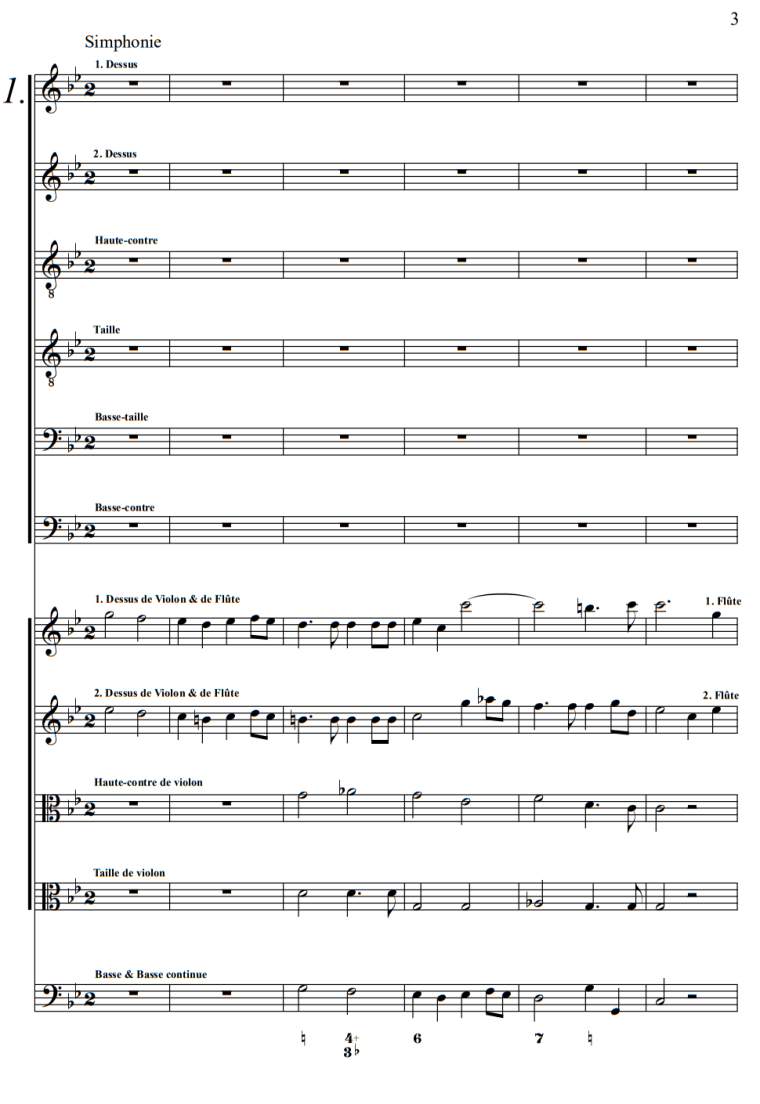
Charles-Hubert Gervais (19 febbraio 1671 - 1744): Super flumina Babylonis, grand motet (Salmo 136) per soli, coro e orchestra. Marie Perbost e Déborah Cachet, soprani; Nicholas Scott, haute-contre; Paco Garcia, tenore; Benoît Arnould, baritono; Choeur du Concert Spirutuel e ensemble Les Ombres, dir. Margaux Blanchard e Sylvain Sartre.

  1. Simphonie – Super flumina Babylonis, illic sedimus et flevimus: dum recordaremur tui, Sion
  2. In salicibus in medio eius suspendimus organa nostra [3:08]
  3. Quia illic interrogaverunt nos, qui captivos duxerunt nos, verba canticorum [5:02]
  4. Et qui abduxerunt nos : hymnum cantate nobis de canticis Sion. Quomodo cantabimus canticum Domini in terra aliena? [5:33]
  5. Si oblitus fuero tui, Ierusalem, oblivioni detur dextera mea. Adhæreat lingua mea faucibus meis, si non meminero tui, si non proposuero Jerusalem, in principio lætitiæ meæ [7:59]
  6. Memor esto, Domine filiorum Edom, in die Jerusalem qui dicunt: [10:58]
  7. Exinanite, exinanite usque ad fundamentum in ea [13:16]
  8. Filia Babilonis misera : beatus qui retribuet tibi retributionem tuam quam retribuisti nobis [14:08]
  9. Beatus qui tenebit, et allidet parvulos tuos ad petram [15:18]

Of Rage and Remembrance (Corigliano 85)

John Corigliano (16 febbraio 1938):
I. Of Rage and Remembrance, ciaccona (composta sulla base del III movimento della Sinfonia n. 1) per voci e orchestra su testo di William M. Hoffman (1991).

This is the season of stone:
Dead leaves on a garden wall,
Dried berries in bone-cold air,
A brittle moon,
An ashen sun.
Bear it,
Bear it, you tell me.
This is the season of stone.
Was there a time before the sorrow –
Days of double darkness,
Nights of blinding light?
Is there life outside the terror –
Waking from an airless dream
To the silence of an empty room?
This is the season of stone,
You tell me,
When dead leaves lace the garden wall,
And berries dry in the bone-cold air.
And the brittle moon rules
The ashen sun.
Bear it,
Bear it, you tell me.
This is the season of stone.
But remember the crack of the ice-locked lake,
And the fog on the hyacinth roads.
Remember the breeze through the fields at dawn,
Cascading the trees and our youth-dark hair.
I remember, I remember.
Remember.
Giulio Sorrentino, cellist,
You were the radiance of my youth.
Freddy. Fortunato Arico,
Giulio’s teacher,
goodbye.
Paul Jacobs, brilliant pianist and dry wit,
Farewell.
J. J. Mitchell, muse of poets and painters,
60
Adieu.
Jacques Chwat, a cabalist and agnostic,
You walked among the living,
Guided by the dead.
Maya zhizn, maya maledost,
Prashchai, prashchai.1
Mark Pearson and Jim Moses: friends, lovers, died in ’88.
Shalom.
Robert Jacobson:
A tall, kind man with a dazzling smile
Opera was his passion.
Adios.
Nikos Kafkalis: I’ll never forget you!
Goodbye. Farewell.
Anthony Holland: man of the theatre,
Oh, Tony, I miss you so!
Lebewohl.
Farewell.
Adios.
Goodbye.
This is the season of stone.
Bear it, bear it, you tell me:
But remember the crack of the ice-locked lake,
And the fog on the hyacinth roads.
Remember the breeze through the fields at dawn,
Cascading the trees and our youth-dark hair.
I remember the scent of mint and thyme,
I remember the heat,
I remember the wine.
I remember the joy.
Remember.
Though I live to be a thousand years,
I’ll never forget you.
Gahm kee-aylaykh b’gay tzahlmohvess
Loh-eeraw raw kee-ahtaw eemodee

II. Sinfonia n. 1 (1988-89):
    1. Apologue: Of Rage and Remembrance (Ferocious) [13:07]
    2. Tarantella [26:46]
    3. Chaconne: Giulio’s Song (Adagio) [35:00] – attacca:
    4. Epilogue (Adagio) [48:50]
 
Michelle DeYoung, mezzosoprano; Michael Accinno, voce bianca; Robert P. Baker e Michael Forest, tenori; Jason Stearns e James Shaffran, baritoni; National Symphony Orchestra, dir. Leonard Slatkin.

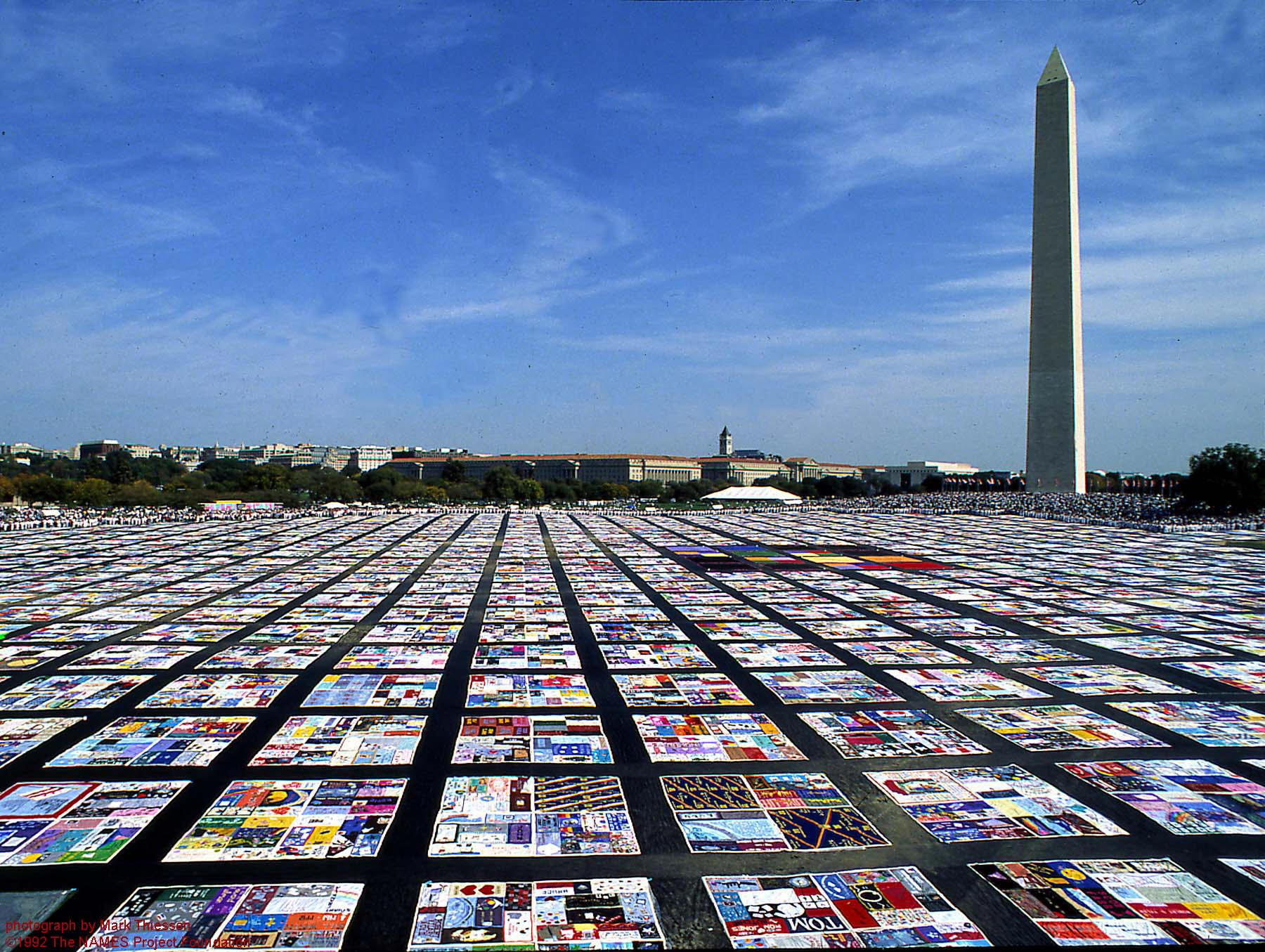
Ispirata, in parte, dal NAMES Project AIDS Memorial Quilt, la Sinfonia è dedicata alla memoria di amici del compositore morti di AIDS. Alcune annotazioni di John Corigliano e la partitura completa si trovano qui.

AIDS Memorial Quilt
L’AIDS Memorial Quilt

Io mi son giovinetta

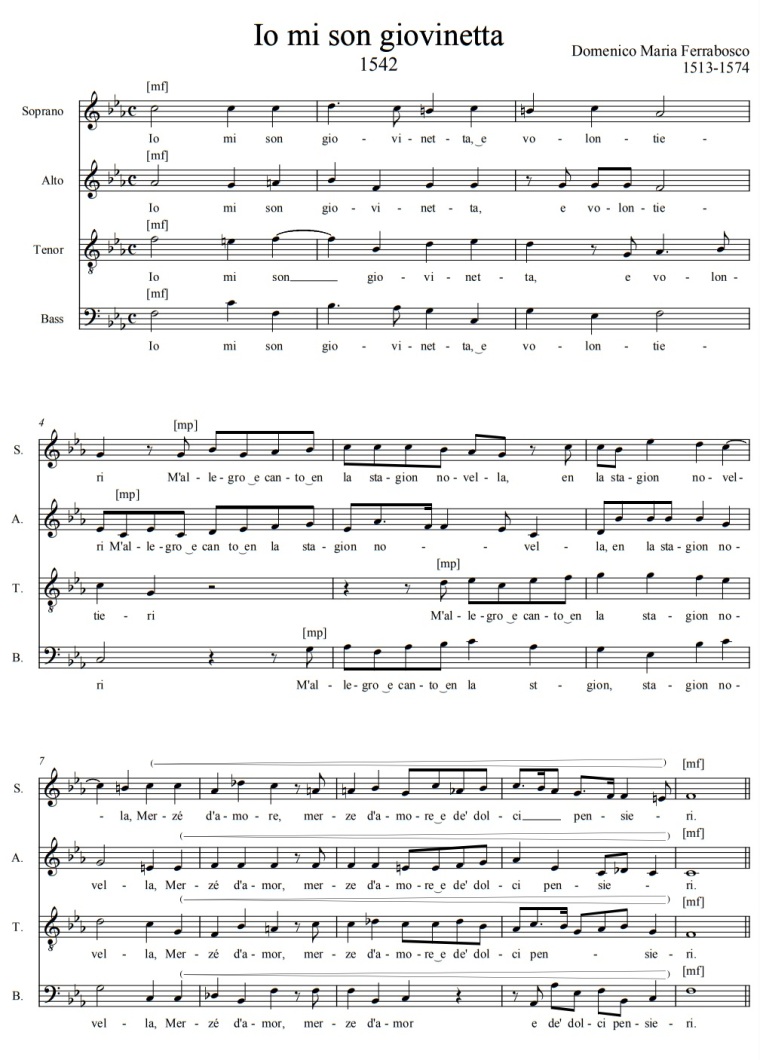
Domenico Ferrabosco (14 febbraio 1513 - febbraio 1574): Io mi son giovinetta, madrigale a 4 voci (pubblicato nel Primo Libro di madrigali de diversi eccellentissimi autori a misura di breve, 1542, n. 26) su testo di Giovanni Boccaccio. Gesualdo Consort Amsterdam, dir. Harry van der Kamp.

Io mi son giovinetta, e volentieri
M’allegro e canto in la stagion novella,
Merzè d’Amore e de’ dolci pensieri.
Io vo pe’ verdi prati riguardando
I bianchi fiori e’ gialli et i vermigli,
Le rose in su le spine e i bianchi gigli;
E tutti quanti gli vo somigliando
Al viso di colui che me amando
Ha presa e terrà sempre.


Andrea Gabrieli (1510 - 1585): Io mi son giovinetta di Domenico Ferrabosco intavolato per strumento a tastiera (pubblicazione postuma nel Terzo Libro de ricercari di Andrea Gabrieli, 1596, n. 11). Filippo Pantieri, clavicembalo.


Scipione Stella (1558 o 1559 - 1622): Io mi son giovinetta del Ferrabosco. Paola Erdas, clavicembalo.


Il madrigale di Domenico Ferrabosco eseguito su strumenti a percussioni da Tore Jamne (1966-).

Sinfonia del fuoco – I

Ildebrando Pizzetti (1880 - 13 febbraio 1968): Sinfonia del fuoco per baritono, coro e orchestra su testo di Gabriele d’Annunzio, composta per la scena del sacrificio nel film Cabiria (1914) di Giovanni Pastrone. Boris Statsenko, baritono; Städtischer Opernchor Chemnitz, Robert-Schumann-Philharmonie, dir. Oleg Caetani.

Invocazione a Moloch

IL PONTEFICE:
Re delle due zone, t’invoco,
respiro del fuoco profondo,
gènito di te, primo nato!

IL CORO:
Eccoti i cento puri fanciulli,
inghiotti! Divora! Sii sazio!
Karthada ti dona il suo fiore.

IL PONTEFICE:
Odimi, creatore vorace,
che tutto generi e struggi,
fame insaziabile, m’odi!

IL CORO:
Eccoti la carne più pura!
Eccoti il sangue più mite!
Karthada ti dona il suo fiore.

IL PONTEFICE:
Consuma il sacrificio tu stesso
nelle tue fauci di fiamma,
o padre e madre, o tu dio e dea!

IL CORO:
O padre e madre, o padre e figlio,
o tu dio e dea! Creatore vorace!
Fame ardente, ruggente…

Never weather-beaten saile


Thomas Campian (o Campion; 12 febbraio 1567 - 1620): Never weather-beaten saile, ayre (pubblicato nel First Book of Ayres, 1613, n. 11). Ensemble Phoenix Munich e Stile Antico.

Never weather-beaten saile more willing bent to shore.
Never tired pilgrim’s limbs affected slumber more,
Than my wearied sprite now longs to fly out of my troubled breast:
O come quickly, sweetest Lord, and take my soul to rest.

Ever blooming are the joys of Heaven’s high Paradise.
Cold age deafs not there our ears nor vapour dims our eyes:
Glory there the sun outshines whose beams the blessed only see:
O come quickly, glorious Lord, and raise my sprite to thee.

Vivo in doglie e moro in pene

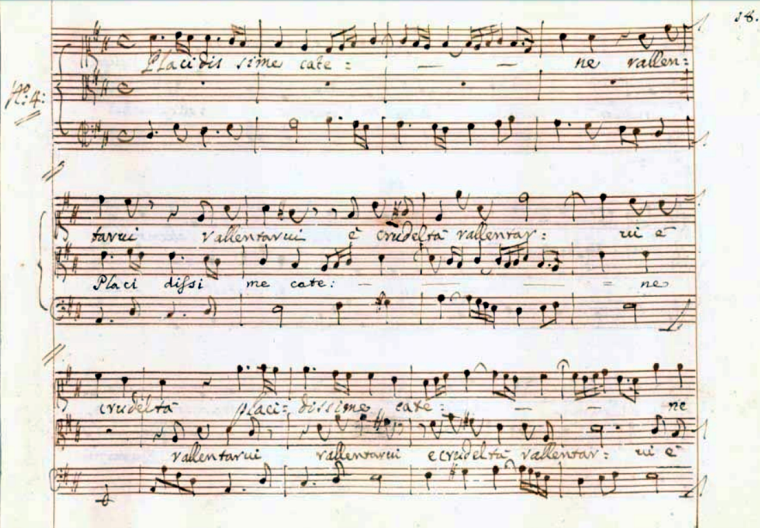
Agostino Steffani (1655 - 12 febbraio 1728): Placidissime catene, duetto da camera (1699). Carolyn Watkinson, mezzosoprano; Paul Esswood, controtenore; Wouter Möller, violoncello; Alan Curtis, clavicembalo.

Placidissime catene,
rallentarvi è crudeltà.
Ha perduto ogni suo bene
chi ritorna in libertà.
Vivo in doglie e moro in pene
se i miei lacci Amor disfà.

Affanni, pene e guai
voi non farete mai
ch’io mi disciolga, no!
Amor, fa’ quanto sai:
dalla prigion ch’amai
mai, mai non fuggirò.

Placidissime catene

Gran miracolo d’Amore

Alfonso Fontanelli (15 febbraio 1557 - 11 febbraio 1622): Io parto e nel partire, madrigale a 5 voci (pubblicato nel Primo Libro di madrigali senza nome, 1595, n. 13); testo di Annibale Pocaterra. Ensemble Per Passione.

Io parto, e nel partire,
Ahi, fier’empia partita,
Parte’l mio cor da me, parte la vita.
E spiro, o gran miracolo d’Amore!
Col nuovo essempio mio ben si può dire
C’huom viva senza core
E che lasci la vita huom che non more.

Il vino

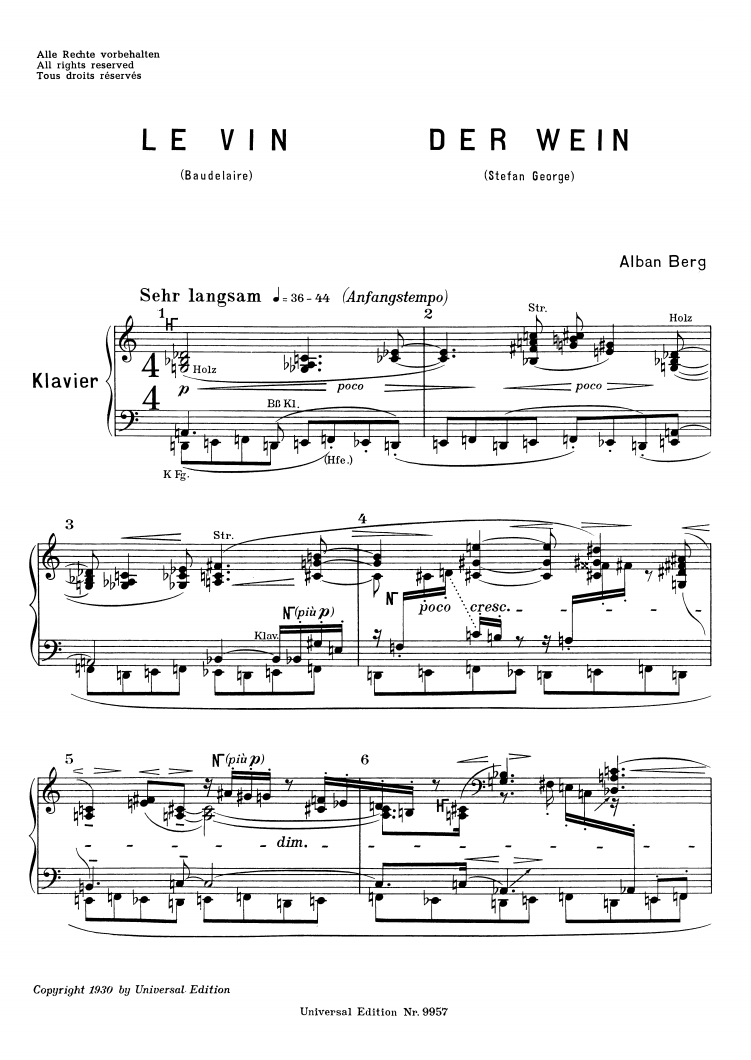
Alban Berg (9 febbraio 1885 - 1935): Der Wein / Le Vin, aria da concerto per soprano e orchestra (1929) su poesie di Charles Baudelaire nella traduzione di Stefan George. Dorothy Dorow, soprano; Wiener Philharmoniker, dir. Karl Böhm.

Berg scelse di musicare la prima e le ultime due delle cinque poesie di Baudelaire che costi­tuiscono il ciclo Le Vin, inserito nella raccolta Les Fleurs du mal (1857). La musica è adattata sia ai versi francesi sia alla traduzione tedesca che ne diede Stefan George nel 1901. Invertendo l’ordine originale delle due ultime poesie, Berg crea una forma tripartita ad arco, nella quale elementi e modi espressivi che caratterizzano la prima lirica tornano nella terza, mentre la seconda a sua volta è in forma di scherzo tripartito.

1. Die Seele des Weines ‒ L’Âme du vin

Des Weines Geist begann im Faß zu singen:
«Mensch, teurer Ausgestoßener, dir soll
Durch meinen engen Kerker durch erklingen
Ein Lied von Licht und Bruderliebe voll.

Ich weiß: am sengend heißen Bergeshange
Bei Schweiß und Mühe nur gedeih ich recht
Da meine Seele ich nur so empfange,
Doch bin ich niemals undankbar und schlecht.

Und dies bereitet mir die größte Labe,
Wenn eines Arbeitmatten Mund mich hält,
Sein heißer Schlund wird mir zum kühlen Grabe,
Das mehr als kalter Keller mir gefällt.

Hörst du den Sonntagsgesang aus frohem Schwarme?
Nun kehrt die Hoffnung prickelnd in mich ein:
Du stülpst die Ärmel, stützest beide Arme,
Du wirst mich preisen und zufrieden sein.

Ich mache deines Weibes Augen heiter,
Und deinem Sohne leih´ ich frische Kraft;
Ich bin für diesen zarten Lebensstreiter
Das Öl, das Fechtern die Gewandtheit schafft.

Und du erhältst von diesem Pflanzenseime,
Den Gott, der ewige Sämann, niedergießt,
Damit in deiner Brust die Dichtkunst keime,
die wie ein seltener Baum zum Himmel sprießt.»

Un soir, l’âme du vin chantait dans les bouteilles:
«Homme, vers toi je pousse, ô cher déshérité,
Sous ma prison de verre et mes cires vermeilles,
Un chant plein de lumière et de fraternité!

Je sais combien il faut, sur la colline en flamme,
De peine, de sueur et de soleil cuisant
Pour engendrer ma vie et pour me donner l’âme;
Mais je ne serai point ingrat ni malfaisant.

Car j’éprouve une joie immense quand je tombe
Dans le gosier d’un homme usé par ses travaux,
Et sa chaude poitrine est une douce tombe
Où je me plais bien mieux que dans mes froids caveaux.

Entends-tu retentir les refrains des dimanches
Et l’espoir qui gazouille en mon sein palpitant?
Les coudes sur la table et retroussant tes manches,
Tu me glorifieras et tu seras content.

J’allumerai les yeux de ta femme ravie;
À ton fils je rendrai sa force et ses couleurs
Et serai pour ce frêle athlète de la vie
L’huile qui raffermit les muscles des lutteurs.

En toi je tomberai, végétale ambroisie,
Grain précieux jeté par l’éternel Semeur,
Pour que de notre amour naisse la poésie
Qui jaillira vers Dieu comme une rare fleur!»

2. Der Wein der Liebenden ‒ Le Vin des amants

Prächtig ist heute die Weite −
Stränge und Sporen beiseite −
Reiten wir auf dem Wein
In den Feeenhimmel hinein!

Engel für ewige Dauer
Leidend im Fieberschauer ·
Durch des Morgens blauen Kristall
Fort in das leuchtende All!

Wir lehnen uns weich auf den Flügel
Des Windes der eilt ohne Zügel.
Beide voll gleicher Lust

Laß Schwester uns Brust an Brust
Fliehn ohne Rast und Stand
In meiner Träume Land!

Aujourd’hui l’espace est splendide!
Sans mors, sans éperons, sans bride,
Partons à cheval sur le vin
Pour un ciel féerique et divin!

Comme deux anges que torture
Une implacable calenture,
Dans le bleu cristal du matin
Suivons le mirage lointain!

Mollement balancés sur l’aile
Du tourbillon intelligent,
Dans un délire parallèle,

Ma soeur, côte à côte nageant,
Nous fuirons sans repos ni trêves
Vers le paradis de mes rêves!

3. Der Wein des Einsamen ‒ Le Vin du solitaire

Der sonderbare Blick der leichten Frauen
Der auf uns gleitet wie das weisse Licht
Des Mondes auf bewegter Wasserschicht −
Will er im Bade seine Schönheit schauen −

Der lezte Taler an dem Spielertisch
Ein frecher Kuß der hagern Adeline
Erschlaffenden Gesang der Violine
Der wie der Menschheit fernes Qualgezisch:

Mehr als dies alles schätz ich, tiefe Flasche,
Den starken Balsam den ich aus dir nasche
Und der des frommen Dichters Müdheit bannt.

Du giebst ihm Hoffnung, Liebe, Jugendkraft
Und Stolz − dies Erbteil aller Bettlerschaft −
Der uns zu Helden macht und Gottverwandt.

Le regard singulier d’une femme galante
Qui se glisse vers nous comme le rayon blanc
Que la lune onduleuse envoie au lac tremblant,
Quand elle y veut baigner sa beauté nonchalante;

Le dernier sac d’écus dans les doigts d’un joueur;
Un baiser libertin de la maigre Adeline;
Les sons d’une musique énervante et câline,
Semblable au cri lointain de l’humaine douleur,

Tout cela ne vaut pas, ô bouteille profonde,
Les baumes pénétrants que ta panse féconde
Garde au coeur altéré du poète pieux;

Tu lui verses l’espoir, la jeunesse et la vie,
– Et l’orgueil, ce trésor de toute gueuserie,
Qui nous rend triomphants et semblables aux Dieux!

Berg, Der Wein

Come al solito

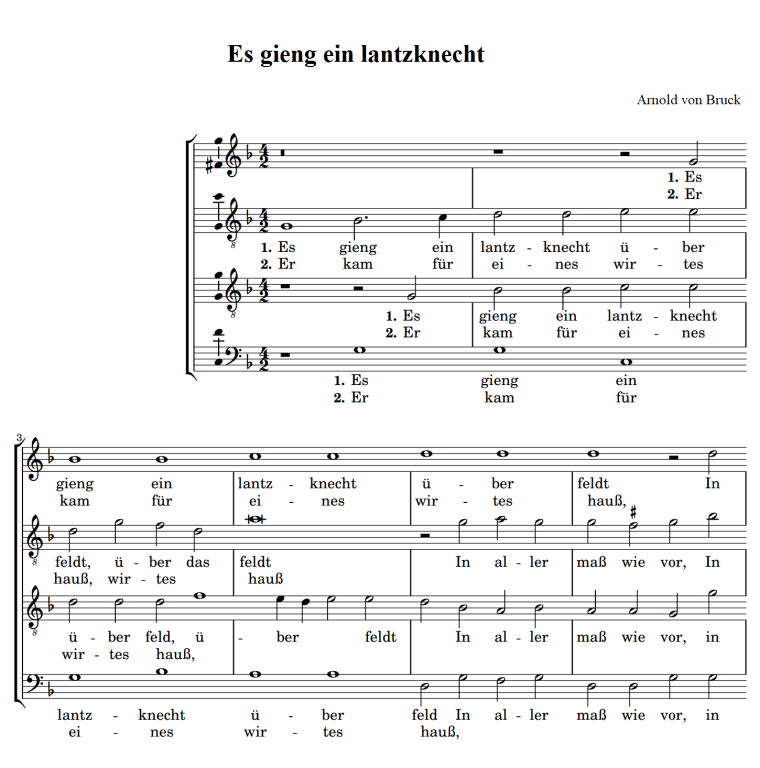
Arnold von Bruck (c1500 - 6 febbraio 1554): Es gieng ein lantzknecht a 4 voci (pubblicato in Der ander theil Kurtzweiliger guter frischer Teutscher Liedlein zu singen vast lustig, 1540, n. 47). Convivium Musicum e Ensemble Villanella.
Un lanzichenecco se ne va qua e là, come al solito non ha né da bere né denaro, e come al solito vorrebbe molto di più…

Es gieng ein lantzknecht über feldt
In aller maß wie vor,
Er het kein beutel noch kein gelt
Und dennoch noch vil weyter mer
in aller maß wie vor.
Beyne gut Heinrich ochsen kolben
huppen beim
encian specian lor òl rûbenkreut tanzapfen
docken breyte pleter
die sein innen hol.

Er kam für eines wirtes hauß,
In aller maß wie vor,
Die wirtin schawt zum fenster auß
Und dennoch noch vil weyter mer…

In inferno nulla est redemptio

Alessandro Melani (4 febbraio 1639 - 1703): Peccantem me quotidie a 2 voci e basso continuo (pubblicato in Concerti spirituali a 2, 3 e 5 voci… opera terza, 1682). Elisabetta Vuocolo, contralto; Alessandro Ravasio, basso; I Musici del Gran Principe, dir. Samuele Lastrucci.

Peccantem me quotidie
et non poenitentem,
timor mortis conturbat me,
quia in inferno nulla est redemptio,
commissa mea pavesco et ante te erubesco
dum veneris iudicare noli me condemnare
quia peccavi nimis in vita mea.
Deus in nomine tuo salvus me fac
et in virtute tua libera me.
Miserere mei, Deus, et salva me
quia peccavi nimis in vita mea.

Questa è la mia gioia

Johann Ludwig Bach (4 febbraio 1677 - 1731): Das ist meine Freude, mottetto per doppio coro e basso continuo. Jeune Chœur du Limousin e ensemble Chronochromie, dir. Jean-Michel Hasler.

Das ist meine Freude,
daß ich mich zu Gott halte
und meine Zuversicht
setze auf den Herren.
Das ist meine Freude.

Del ciel regina – I

Giovanni Pierluigi da Palestrina (1525 - 2 febbraio 1594): Vergine bella, madrigale spirituale a 5 voci (1581) su testo di Fran­cesco Petrarca (1ª strofe). Ensemble Officium, dir. Wilfried Rombach.

Vergine bella, che di sol vestita,
coronata di stelle, al sommo Sole
piacesti sí, che ’n te Sua luce ascose,
amor mi spinge a dir di te parole:
ma non so ’ncominciar senza tu’ aita,
et di Colui ch’amando in te si pose.
Invoco lei che ben sempre rispose,
chi la chiamò con fede:
Vergine, s’a mercede
miseria extrema de l’humane cose
già mai ti volse, al mio prego t’inchina,
soccorri a la mia guerra,
bench’i’ sia terra, et tu del ciel regina.

Palestrina, Vergine bella

Per la regina d’Olanda

Girolamo Crescentini (2 febbraio 1762 - 1846): Sei Ariette composte per la Regina d’Olanda (1800). Marina Comparato, mezzosoprano; Gianni Fabbrini, fortepiano.

1. Sino all’ultimo momento

Sino all’ultimo momento
 sarà tuo questo mio core.
 Non temer mio dolce amore,
t’amerò fra l’ombre ancor.

2. Alma dell’alma mia [2:30]

Alma dell’alma mia,
 mio solo nume amato,
 a te m’unisce il fato,
non so che più bramar.
Pieno di gioia e amore,
 pieno di dolce speme,
 a te sarò mio bene
fido e costante ognor.

3. Povero core [4:59]

Quando sarà quel dì
 ch’io non ti senta in seno
sempre tremar così
 povero core
stelle che crudeltà,
 un sol piacer non v’è
che quando mio si fa
 non sia dolore.

4. Mi lagnerò tacendo [7:18]

Mi lagnerò tacendo
 della mia sorte amara
 ma ch’io non t’ami o cara
non lo sperar da me.
Crudel in che t’offendo
 se resta in questo petto
 il misero diletto
di sospirar per te?

5. Deh frena le lagrime [10:22]

Deh frena le lagrime
 mia vita, mio bene,
 partir mi conviene,
mi sento morir.
Se il fiero destino
 mi vuole infelice,
 almen la mia Nice
mi serbi la fè.

6. Che chiedi, che brami [12:53]

Che chiedi, che brami,
ti spiega se m’ami
 mio dolce tesor,
 mio solo pensier.
Se l’idol che adoro
 non vedo contento,
 mi sembra tormento
l’istesso piacer.

Girolamo Crescentini

Lamento della Ninfa

Claudio Monteverdi (1567 - 1643): Lamento della Ninfa, da Madrigali guerrieri et amorosi (VIII Libro di madrigali, 1638, n. 22), su testo di Ottavio Rinuccini. Emma Kirkby, soprano; Paul Agnew e Andrew King, tenori; Alan Ewing, basso; The Consort of Musicke, dir. Anthony Rooley.
Lo stesso testo messo in musica da Antonio Brunelli, ma Monteverdi ne dà un’interpretazione completamente diversa.

Non havea Febo ancora
recato al mondo il dì,
che del suo albergo fuora
una donzella uscì.

  Miserella, ah più no, no,
  tanto gel soffrir non può.

Sul pallidetto volto
scorgeasi il suo dolor,
spesso gli venia sciolto
un gran sospir dal cor.

Si calpestando i fiori
errava hor qua, hor là,
e i suoi perduti amori
così piangendo va.

Amor, dicea, e il pie’
mirando il ciel fermò,
dove, dov’ è la fe’
che ‘l traditor giurò?

Se il ciglio ha più sereno
colei che ‘l mio non è,
già non gli alberga in seno
amor si nobil fè.

Fa’ ch’ei ritorni mio
Amor com’ei pur fu,
o tu m’ancidi, ch’io
non mi tormenti più.

Né mai più dolci baci
da quella bocca havrà,
né più soavi, ah taci,
taci, che troppo il sa.

Poiché di lui mi struggo,
dove stima non fa,
che sì, che sì ch’io ‘l fuggo
ch’ancor mi pregherà?

Sì tra sdegnosi pianti
sfogava il suo dolor;
sì dei gentili amanti
misto è col gelo amor.

Monteverdi

Misto è col gelo amor

Antonio Brunelli (1577 - 1630): Non havea Febo ancora su testo di Ottavio Rinuccini (pubblicato in Scherzi, arie, canzonette, e madrigali a una, due e tre voci… libro secondo op. 10, 1614). Furio Zanasi, baritono; Ensemble La Chimera, dir. Eduardo Egüez.

Non havea Febo ancora
recato al mondo il dì,
che del suo albergo fuora
una donzella uscì.

  Miserella, ah più no, no,
  tanto gel soffrir non può.

Sul pallidetto volto
scorgeasi il suo dolor,
spesso gli venia sciolto
un gran sospir dal cor.

Si calpestando i fiori
errava hor qua, hor là,
e i suoi perduti amori
così piangendo va.

Amor, dicea, e il pie’
mirando il ciel fermò,
dove, dov’ è la fe’
che ‘l traditor giurò?

Se il ciglio ha più sereno
colei che ‘l mio non è,
già non gli alberga in seno
amor si nobil fè.

Fa’ ch’ei ritorni mio
Amor com’ei pur fu,
o tu m’ancidi, ch’io
non mi tormenti più.

Né mai più dolci baci
da quella bocca havrà,
né più soavi, ah taci,
taci, che troppo il sa.

Poiché di lui mi struggo,
dove stima non fa,
che sì, che sì ch’io ‘l fuggo
ch’ancor mi pregherà?

Sì tra sdegnosi pianti
sfogava il suo dolor;
sì dei gentili amanti
misto è col gelo amor.

Il catalogo è questo

Giuseppe Gazzaniga (1743 - 1º febbraio 1818): «Dell’Italia, ed Alemagna», aria di Pasquariello dal I atto del dramma giocoso Don Giovanni o sia Il convitato di pietra (1786) su libretto di Giovanni Bertati. Alfredo García, baritono; María Rodríguez, soprano; Real Orquesta Sinfónica de Sevilla, dir. Pablo González.

PASQUARIELLO
Per me… sentite… vi dirò… siccome…

DONNA ELVIRA
Non confonderti.

PASQUARIELLO
Oibò: non v’è pericolo.
Siccome io dico, che Alessandro il Grande…

DONNA ELVIRA
E che c’entra Alessandro!

PASQUARIELLO
C’entra; e statevi cheta.
Siccome, io dico, che Alessandro il Grande
non era giammai sazio
di far nuove conquiste, il mio padrone
se avesse ancora cento spose, e cento,
sazio non ne sarìa, né mai contento;
egli è il Grande Alessandro delle femmine;
onde per far le sue amorose imprese
spesso, spesso cangiar suol di paese.

DONNA ELVIRA
Dunque ha dell’altre femmine?

PASQUARIELLO
Ih, ih! Se voi volete averle in vista
ecco signora mia, quest’è la lista.
(getta una lista di alcuna braccia di carta)
Dell’Italia, ed Alemagna
ve n’ho scritte cento, e tante.
Della Francia, e della Spagna
ve ne sono non so quante:
fra madame, cittadine,
artigiane, contadine,
cameriere, cuoche, e guattere;
perché basta che sian femmine
per doverle amoreggiar.
Vi dirò ch’è un uomo tale,
se attendesse alle promesse,
che il marito universale
un dì avrebbe a diventar.
Vi dirò che egli ama tutte,
che sian belle, o che sian brutte:
delle vecchie solamente
non si sente ad infiammar.

PASQUARIELLO
Vi dirò…

DONNA ELVIRA
Tu m’hai seccata.

PASQUARIELLO
Vi dirò…

DONNA ELVIRA
Non più: va’ via.

(insieme)
PASQUARIELLO
Vi dirò che si potria
fin domani seguitar.

DONNA ELVIRA
Il mio cor da gelosia
tutto sento a lacerar.


Wolfgang Amadeus Mozart (1756 - 1791): «Mada­mina, il ca­talogo è que­sto», aria di Leporello dal I atto del dramma giocoso in 2 atti Il dissoluto punito ossia il Don Giovanni K 527 (1787) su libretto di Lorenzo Da Ponte. Ferruccio Furlanetto, basso; Orchester der Wiener Staatsoper, dir. Zubin Mehta.

Questo non picciol libro è tutto pieno
dei nomi di sue belle.
Ogni villa, ogni borgo, ogni paese
è testimon di sue donnesche imprese.

Madamina, il catalogo è questo
 delle belle che amò il padron mio;
 un catalogo egli è che ho fatt’io:
 osservate, leggete con me.
In Italia seicento e quaranta,
 in Lamagna duecento e trentuna,
 cento in Francia, in Turchia novantuna,
 ma in Ispagna son già mille e tre.
V’ha fra queste contadine,
 cameriere, cittadine,
 v’han contesse, baronesse,
 marchesane, principesse,
 e v’han donne d’ogni grado,
 d’ogni forma, d’ogni età.

Nella bionda egli ha l’usanza
 di lodar la gentilezza;
 nella bruna, la costanza;
 nella bianca, la dolcezza.
Vuol d’inverno la grassotta,
 vuol d’estate la magrotta;
 è la grande maestosa,
 la piccina è ognor vezzosa.
Delle vecchie fa conquista
 pe’l piacer di porle in lista:
 ma passion predominante
 è la giovin principiante.
Non si picca se sia ricca,
 se sia brutta, se sia bella:
 purché porti la gonnella,
 voi sapete quel che fa.

Songs from Liquid Days

Philip Glass (31 gennaio 1937): Songs from Liquid Days per voci e ensemble strumentale (1985) su testi di Paul Simon, Suzanne Vega, David Byrne e Laurie Anderson. Philip Glass Ensemble, dir. Michael Riesman.

  1. Changing Opinion, testo di Paul Simon. Con Bernard Fowler, voce
  2. Lightning, testo di Suzanne Vega. Con Janice Pendarvis, voce
  3. Freezing, testo di Suzanne Vega. Con The Kronos Quartet; Linda Ronstadt, voce
  4. Liquid Days (Part One), testo di David Byrne. Con The Roches, voci
  5. Open the Kingdom (Liquid Days, Part Two), testo di David Byrne. Con Douglas Perry, voce
  6. Forgetting, testo di Laurie Anderson. Con The Kronos Quartet; Linda Ronstadt e The Roches, voci

I. Changing opinion (Paul Simon)

Gradually
we became aware
of a hum in the room
an electrical hum in the room.
It went mmmmmm

We followed it from
corner to corner.
We pressed out ears
against the walls.
We crossed diagonals
and put our hands on the floor.
It went mmmmmm.

Sometimes it was
a murmur.
Sometimes it was
a pulse.
Sometimes it seemed
to disappear.
But then with a quarter-turn
of the head.
it would roll around the sofa.
A nimbus humming cloud
mmmmmm

Maybe it’s the hum
of a calm refrigerator
cooling on a big night.
Maybe it’s the hum
of our parents’ voices
long ago in a soft light
mmmmmm.
Maybe it’s the hum
of changing opinion
or a foreign language
in prayer.
Maybe it’s the mantra
of the walls and wiring.
Deep breathing
in soft air
mmmmmm

II. Lightning (Suzanne Vega)

Lightning struck a while ago
And it’s blazing much too fast
But give it rain of waiting time
And it will surely pass
Blow over
And it’s happening so quickly
As I feel the flaming time
And I grope about the embers
To relieve my stormy mind
Blow over

Shaken this has left me
And laughing and undone
With a blinding bolt of sleeplessness
That’s just begun
And a windy crazy running
Through the nights and through the days
And a crackling
Of the time burned away
Burned away

Now I feel it in my blood
All hot and sharp and white
With a whipcrack and a thunder
And a flash of flooding light
But there’ll be a thick and smoky
Silence in the air
When the fire finally dies
And I’m wondering who’ll be left there.

In the ashes of time
Burned away
Burned away

III. Freezing (Suzanne Vega)

If you had no name
If you had no history
If you have no books
If you had no family

If it were only you
Naked on the grass
Who would you be then?
This is what he asked
And I said I wasn’t really sure
But I would probably be
Cold

And now I’m freezing
Freezing

IV. Liquid Days (Part One) (David Byrne)

Oh Round Desire
Oh Red Delight
The River is Blood
The Time is Spent
Love likes me
Love takes it shoes off and sits on the couch
Love has an answer for everything
Love smiles gently…and crosses its legs well here we are well here we are

Sleep
Sleep

Sleep…Being in Air
Sleep…Turning to speak
Sleep…Losing our Way
Sleep…Pour it all Out

We are old Friends
I offer Love a Beer
Love watches Television
Love needs a bath
Love could use a shave
Love rolls out of the chair and wiggles on the floor
Jumps Up
I’m Laughing at Love
Drink Me
Drink Me
Drink Me
Drink Me

Drive…Why do You Ask?
Breaths…Still is the Night
Drive…It is much Further
Sleep…Than We Thought

In Liquid Days
Land Travel(s) Hard
Fly Home Daughter
Cover Your Ears

V. Open the Kingdom (Liquid Days, Part Two) (David Byrne)

Days of fishes
Distant roar
Turning to speak
Turning to hear

Open the Kingdom
Open the Kingdom
Open the Kingdom
Open the Kingdom…

In my way
In my way
Being most uncertain
And This Remains

Still for better
Birds of Voices
The Field of Living

I am Asking

I am Asking

I am Asking

Returning Love
Returning With Love
Then it was
Written with Love

VI. Forgetting (Laurie Anderson)

A man wakes up to the sound of rain
From a dream about his lovers
Who pass through his room.

They brush lightly by, these lovers.
They pass. Never touching.
These passing lovers move through his room.

The man is awake now
He can’t get to sleep again.
So he repeats these words
Over and over again:
Bravery. Kindness. Clarity.
Honesty. Compassion. Generosity.
Bravery. Honesty. Dignity.
Clarity. Kindness. Compassion.

Alta speranza mia

Scipione Dentice (29 gennaio 1560 - 1633): Vergine dolc’e pia, lauda a 4 voci (pubblicata in Nuove laudi ariose della Beatissima Vergine, 1600, n. 1). Ensemble Progetto Musica, dir. Giulio Monaco.

Vergine dolc’e pia,
alta speranza mia
a’ miei prieghi t’inchina
ben ch’io sia terra
e tu del ciel Regina.

Vergine da ch'io l'ami
n’altro mai che lui brami,
arda sempre il mio coro,
arda e sfavilli
del tuo santo amore.

Berceuse d’Armorique

Poldowski (pseudonimo di Régine Wieniawski; 1879 - 28 gennaio 1932): Berceuse d’Armorique (1914) su testo di Anatole Le Braz. Angelique Zuluaga, soprano; Gwendolyn Mok, pianoforte.

Dors, petit enfant, dans ton lit bien clos:
Dieu prenne en pitié les bons matelots!

  Chante ta chanson, chante, bonne vieille!
  La lune se lève et la mer s’éveille.

Au Pays du Froid, la houle des fjords
Chante sa berceuse en berçant les morts.

Dors, petit enfant, dans ton lit bien doux,
Car tu t’en iras comme ils s’en vont tous.

Tes yeux ont dèjà la couleur des flots.
Dieu prenne en pitié les bons matelots!

Mia colomba

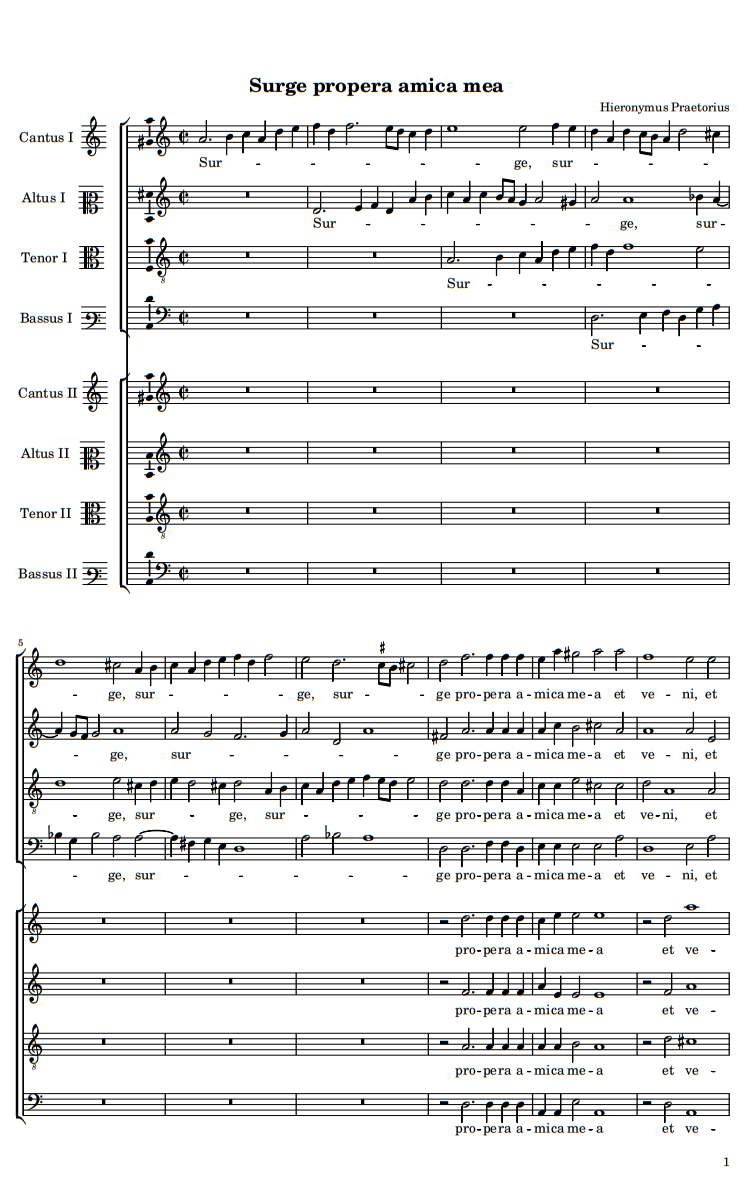
Hieronymus Praetorius (1560 - 27 gennaio 1629): Surge, propera, amica mea, mottetto per doppio coro a 8 voci (da Sacrae cantiones de praecipuis festis totius anni, 1599, n. 25), testo liberamente tratto dal Canticum canticorum II:10 passim. Balthasar-Neumann-Chor e Balthasar-Neumann-Ensemble, dir. Pablo Heras-Casado.

Surge, propera, amica mea, et veni.
Iam hiems transiit;
imber abiit et recessit.
Flores apparuerunt in terra nostra.
Tempus putationis advenit.

Surge, propera, speciosa mea, et veni,
formosa mea, columba mea,
in foraminibus petrae,
in caverna maceriae,
ostende mihi faciem tuam.
Sonet vox tua in auribus meis,
vox enim tua dulcis
et facies tua decora.

Canzonetta su la ciaccona

Marco Marazzoli, detto Marco dall’Arpa (c1602 - 26 gennaio 1662): Dal cielo cader vid’io, «canzonetta su la ciaccona». Jakub Józef Orliński – controtenore; L’Arpeggiata, dir. Christina Pluhar.

Dal cielo cader vid’io
due stelle più luminose,
e sul volto al idol mio
di sua mano Amor le pose.

  Di due luci allo splendore
  arda pur lieto un amante,
  e costante
  gli offra in dono il proprio core.

  Ma non speri in tanto ardore
  col seren dáltre faville,
  avvampar quelle pipille
  che dan lume al mio desio.

Dal cielo cader vid’io
due stelle più luminose,
e sul volto al idol mio
di sua mano Amor le pose.

  Sotto l’arco d’un bel ciglio
  splenderanno in bravi giri,
  due zaffiri
  da far caro ogni periglio.

  Ma d’Amore è van consiglio
  ch’ardan mai di foco pieni,
  vaghi rai così sereni
  come un guardo ch’io desio.

Dal cielo cader vid’io
due stelle più luminose,
e sul volto al idol mio
di sua mano Amor le pose.

Due canzoni

Due canzoni per ricordare Jeanne Moreau (23 gennaio 1928 – 31 luglio 2017). Una terza si trova qui.


Each man kills the thing he loves, dalla colonna sonora del film Querelle de Brest (Querelle, 1982) di Rainer Werner Fassbinder; musica di Peer Raben, testo di Oscar Wilde (da The Ballad of Reading Gaol, 1897).

Each man kills the thing he loves
By each let this be heard,
Some do it with a bitter look,
Some with a flattering word,
The coward does it with a kiss,
The brave man with a sword!

Some kill their love when they are young,
And some when they are old;
Some strangle with the hands of Lust,
Some with the hands of Gold:
The kindest use a knife, because
The dead so soon grow cold.

Some love too little, some too long,
Some sell, and others buy;
Some do the deed with many tears,
And some without a sigh:
For each man kills the thing he loves,
Yet each man does not die.


India Song, musica di Carlos D’Alessio, testo di Marguerite Duras; dalla colonna sonora del film omonimo, diretto da Duras nel 1975.

Chanson,
Toi qui ne veux rien dire,
Toi qui me parles d’elle
Et toi qui me dis tout.
Ô, toi,
Que nous dansions ensemble,
Toi qui me parlais d’elle,
D’elle qui te chantait,
Toi qui me parlais d’elle,
De son nom oublié,
De son corps, de mon corps,
De cet amour là,
De cet amour mort.
Chanson,
De ma terre lointaine,
Toi qui parleras d’elle,
Maintenant disparue,
Toi qui me parles d’elle,
De son corps effacé,
De ses nuits, de nos nuits,
De ce désir là,
De ce désir mort.
Chanson,
Toi qui ne veux rien dire,
Toi qui me parles d’elle,
Et toi qui me dis tout,
Et toi qui me dis tout.

Jeanne