Thomas Ravenscroft (c1582 - c1633): A wooing song of a yeoman of Kent’s son, partsong a 1-4 voci (da Melismata, 1611, n. 22). Pro Cantione Antiqua.
I have house and land in Kent,
And if you’ll love me, love me now;
Twopence-halfpenny is my rent,
I cannot come every day to woo. Twopence-halfpenny is his rent, And he cannot come every day to woo.
Ich am my vather’s eldest zonne,
My mother eke doth love me well,
For ich can bravely clout my shoone,
And ich full well can ring a bell. For he can bravely clout his shoone, And he full well can ring a bell.
My vather he gave me a hog,
My mouther she gave me a zow;
I have a God-vather dwels thereby,
And he on me bestowed a plow. He has a God-vather dwells thereby, And he on him bestowed a plough.
One time I gave thee a paper of pins,
Another time a tawdry-lace;
And if thou wilt not grant me love,
In truth ich die bevore thy face. And if thou wilt not grant his love, In truth he’ll die bevore thy vace.
Ich have been twice our Whitson-lord,
Ich have had ladies many vair,
And eke thou hast my heart in hold
And in my mind zeems passing rare. And eke thou hast his heart in hold And in his mind seems passing rare.
Ich will put on my best white slops
And ich will wear my yellow hose,
And on my head a good grey hat,
And in’t ich stick a lovely rose. And on his head a good grey hat, And in’t he’ll stick a lovely rose.
Wherefore cease off, make no delay,
And if you’ll love me, love me now;
Or else ich zeek zome oderwhere,
For I cannot come every day to woo. Or else he’ll zeek zome oderwhere, For he cannot come every day to woo.
La melodia è, nella parte iniziale, molto simile a quella di The Three Ravens, i versi portano a tutt’altro contesto. Anche in questo caso Ravenscroft dimostra di essere un musicista di vaglia, la sua armonizzazione è elegante e moderna, e la bravura degli interpreti fa il resto.
È possibile far sì che in un breve articoletto siano menzionati Ludwig van Beethoven, grande compositore tedesco nato a Bonn nel 1770, e George Armstrong Custer, famoso militare statunitense caduto in battaglia oltre cent’anni più tardi? Sì, è possibile se l’articolo è dedicato a Garyone, una canzone tradizionale irlandese (in Italia è però diffusa l’erronea convinzione che sia scozzese) le cui origini risalgono alla seconda metà del XVIII secolo. Esperti linguisti assicurano che il titolo Garyone (anche Garyowen, Garryowen, Garry Owen, Garry Owens) sia derivato dalla locuzione irlandese garrai Eóins, ossia «il giardino di Eóin» (variante gaelica di John).
Intorno al 1810, di Garyone Beethoven eseguì due diverse elaborazioni per canto, violino, violoncello e pianoforte, scritte su commissione di George Thomson (1757 – 1851), compositore e stampatore attivo a Edimburgo: questi aveva avviato un vasto progetto editoriale che prevedeva la pubblicazione di melodie tradizionali irlandesi, scozzesi e gallesi armonizzate e arrangiate da alcuni fra i più celebri musicisti dell’epoca: oltre a Beethoven, parteciparono all’impresa anche Franz Joseph Haydn e Johann Nepomuk Hummel.
Le due versioni beethoveniane di Garyone adottano un testo di tal Trevor Toms, From Garyone, my happy home ; edite a stampa nel 1814 e nel 1816, sono comprese nel catalogo delle opere di Beethoven fra le composizioni prive di numero d’opus (WoO = Werke ohne Opuszahl ) rispettivamente come WoO 152/22 e WoO 154/7.
From Garyone, my happy home,
Full many a weary mile I’ve come,
To sound of fife and beat of drum,
And more shall see it never.
‘Twas there I turn’d my wheel so gay,
Could laugh, and dance, and sing, and play,
And wear the circling hours away
In mirth or peace for ever.
But Harry came, a blithesome boy,
He told me I was all his joy,
That love was sweet, and ne’er could cloy,
And he would leave me never:
His coat was scarlet tipp’d with blue,
With gay cockade and feather too,
A comely lad he was to view;
And won my heart for ever.
My mother cried, dear Rosa, stay,
Ah! Do not from your parents stray;
My father sigh’d, and nought would say,
For he could chide me never:
Yet cruel, I farewell could take,
I left them for my sweetheart’s sake,
And came, ‘twas near my heart to break
From Garyone for ever.
Buit poverty is hard to bear,
And love is but a summer’s wear,
And men deceive us when they swear
They’ll love and leave us never:
Now sad I wander through the day,
No more I laugh, or dance, or play,
But mourn the hour I came away
From Garyone for ever.
Garyone ispirò anche Mauro Giuliani (1781 – 1829), che ne fece la prima delle sue 6 Arie nazionali irlandesi variate per chitarra op. 125 (c1827); qui è eseguita da William Carroll:
Diffusasi a Limerick nel tardo Settecento come canzone conviviale, Garyone ottenne rapidamente successo tra le file dell’esercito britannico, per il tramite del 5° Reggimento di lancieri (Royal Irish Lancers). Da allora fu adottata quale emblema musicale da numerose altre unità militari, suonata e cantata durante le guerre napoleoniche e poi in Crimea. Attraversò anche l’Oceano Atlantico e giunse negli Stati Uniti, dove nel 1851 fu scelta come canto di marcia dal 2° Reggimento di volontari irlandesi e più tardi dal 7° Reggimento di cavalleria, creato per affrontare le guerre indiane e affidato, fra gli altri, proprio a George Armstrong Custer. Una scena del film agiografico dedicato da Hollywood a questo discusso personaggio (They Died with Their Boots On, 1941, in Italia La storia del generale Custer ; la regia è di Raoul Walsh, protagonista Errol Flynn) racconta in modo romanzato l’episodio — come, del resto, tutta la storia:
We can dare or we can do
United men and brothers too
Their gallant footsteps to pursue
And change our country’s story.
Our hearts so stout have got us fame
For soon tis’ known from whence we came
Where’er we go they dread the name
Of Garryowen in glory.
And when the mighty day comes round
We still shall hear their voices sound
Our clans shall roar along the ground
For Garryowen in glory.
To emulate their high renown
To strike our false oppressor down
And stir the old triumphant sound
With Garryowen in glory.
Anonimo: The Water is Wide ovvero Waly, waly, canto di origine scozzese che risale probabilmente all’inizio del XVIII secolo; la versione pubblicata da Cecil Sharp nel volume Folk Songs From Somerset (1906) è quella più frequentemente eseguita. Gli interpreti sono Alfred Deller (controtenore) e Desmond Dupré (liuto).
The water is wide, I cannot get o’er
And neither have I wings to fly,
O give me a boat that will carry two
And both can row, my love and I.
O down in the meadows the other day
A-gathering flow’rs, both fine and gay,
A-gathering flow’rs, both red and blue,
I little thought what love can do.
I lean’d my back up against some oak,
Thinking that he was a trusty tree.
But first he bended and then he broke,
And so did my false love to me.
A ship there is and she sails the sea,
She’s loaded deep as deep can be,
But not so deep as the love I’m in.
I know not if I sink or swim.
O love is handsome and love is fine,
And love’s a jewel while it is new;
But when it is old it groweth cold
And fades away like morning dew.
Georg Friedrich Händel (1685 - 1759): «Ombra mai fu», aria dal I atto dell’opera Serse HWV 40 (1738). Andreas Scholl, controtenore; Akademie für Alte Musik Berlin.
Per comporre il Serse Händel si avvalse non solo del libretto di Nicolò Minato rimaneggiato da Silvio Stampiglia che era servito a Giovanni Bononcini 44 anni prima, ma anche di alcune delle musiche dello stesso Bononcini. L’opera non ebbe molta fortuna e fu cancellata dal cartellone dopo sei sole rappresentazioni. Nel corso dell’Ottocento, però, l’aria che apre il I atto fu riscoperta e, riarrangiata come brano strumentale per organici diversi, divenne una delle composizioni più famose del musicista sassone con il titolo Largo di Händel. Eccone una versione sinfonica (London Symphony Orchestra diretta da George Szell) e una organistica (Alexander Jörk):
Giovanni Bononcini (18 luglio 1670 - 1747): «Ombra mai fu», aria dal I atto dell’opera Xerse (1694), libretto di Nicolò Minato rimaneggiato da Silvio Stampiglia. Armin Gramer, controtenore; Hubert Hoffmann, arciliuto; Anna Zauner-Pagitsch, arpa.
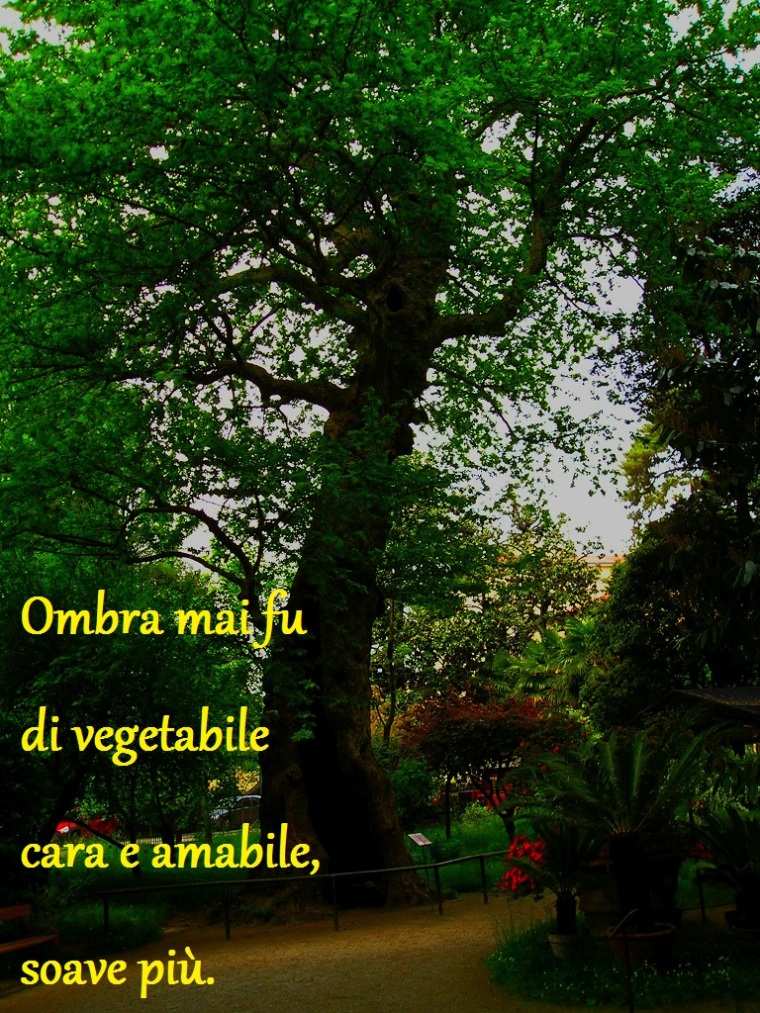
Atto I, scena 1a. Belvedere accanto ad un bellissimo giardino, in mezzo di cui v’è un platano.
Xerse sotto il platano.
Recitativo:
Frondi tenere e belle,
del mio platano amato,
per voi risplenda il Fato.
Tuoni, lampi e procelle
non v’oltraggino mai la cara pace
né giunga a profanarvi mostro rapace.
Arioso:
Ombra mai fu
di vegetabile
cara e amabile,
soave più.
Francesco Cavalli (1602 - 1676): «Ombra mai fu», aria dal I atto dell’opera Il Serse (o Xerse, 1654), libretto di Nicolò Minato. Flavio Ferri-Benedetti, controtenore; Neue Hofkapelle Graz, dir. Michael Hell.
Atto I, scena 1a. Villaggio delizioso dietro le mura della città, con veduta di bosco.
Xerse sotto un platano.
Ombra mai fu
di vegetabile
cara e amabile,
soave più.
Bei smeraldi crescenti,
frondi tenere, e belle,
di turbini, o procelle
importuni tormenti,
non v’affliggano mai la cara pace,
né giunga a profanarvi austro rapace.
Ombra mai fu…
Mai con rustica scure
bifolco ingiurioso
tronchi ramo frondoso,
e se reciso pure
fia che ne resti alcuno, in stral cangiato,
o lo scocchi Diana, o ‘l dio bendato.
Thomas Campion (o Campian; 1567 - 1620): Shall I come, sweet Love, to thee, ayre (pubblicato nel Third Booke of Ayres, 1617, n. 8). Alfred Deller, controtenore; Robert Spencer, liuto.
Deller morì a Bologna il 16 luglio 1979.
Shall I come, sweet Love, to thee
When the evening beams are set?
Shall I not excluded be,
Will you find no feigned let?
Let me not, for pity, more
Tell the long hours at your door.
Who can tell what thief or foe,
In the covert of the night,
For his prey will work my woe,
Or through wicked foul despite?
So may I die unredressed
Ere my long love be possesed.
But to let such dangers pass,
Which a lover’s thoughts disdain,
’Tis enough in such a place
To attend love’s joys in vain:
Do not mock me in thy bed,
While these cold nights freeze me dead.
Herbert Hughes (1882 - 1937): Down by the Salley Gardens, melodia tradizionale irlandese (Maids of Mourne Shore) adattata a un testo di William Butler Yeats (da The Wanderings of Oisin and Other Poems, 1889). Alfred Deller, controtenore; Desmond Dupré, liuto.
Down by the salley gardens my love and I did meet;
She passed the salley gardens with little snow-white feet.
She bid me take love easy, as the leaves grow on the tree;
But I, being young and foolish, with her would not agree.
In a field by the river my love and I did stand,
And on my leaning shoulder she laid her snow-white hand.
She bid me take life easy, as the grass grows on the weirs;
But I was young and foolish, and now am full of tears.
Arnold Schoenberg (1874 - 13 luglio 1951): Serenata per baritono e 7 strumenti (clarinetto, clarinetto basso, mandolino, chitarra, violino, viola, violoncello) op. 24 (1921-23); testo di Francesco Petrarca (Sonetto 217, Canzoniere CCLVI) nella traduzione di Stefan George. Derrik Olsen, baritono; membri del SWR Sinfonieorchester Baden-Baden und Freiburg, dir. Hans Rosbaud.
Marsch: Durchaus gleichmässiges Marschtempo
Menuett: Nicht schnell, aber gesangvoll
Variationen: Andante
Sonnet Nr 217 von Petrarca: Rasch
O könnt’ ich je der Rach’ an ihr genesen,
die mich durch Blick und Rede gleich zerstöret,
und dann zu grösserm Leid sich von mir kehret,
die Augen bergend mir, die süssen, bösen!
So meiner Geister matt bekümmert Wesen
sauget mir aus allmählich und verzehret
und brülend, wie ein Leu, ans Herz mir fähret
die Nacht, die ich zur Ruhe mir erlesen!
Die Seele, die sonst nur der Tod verdränget,
trent sich von mir, und ihrer Haft entkommen,
fliegt sie zu ihr, die drohend sie empfänget.
Wohl hat es manchmal Wunder mich genommen
wenn die nun spricht und weint und sie umfänget,
dass fort sie schläft, wenn solches sie vernommen.
Far potess’io vendetta di colei
che guardando et parlando mi distrugge,
et per piú doglia poi s’asconde et fugge,
celando gli occhi a me sí dolci et rei.
Cosí li afflicti et stanchi spirti mei
a poco a poco consumando sugge,
e ‘n sul cor quasi fiero leon rugge
la notte allor quand’io posar devrei.
L’alma, cui Morte del suo albergo caccia,
da me si parte, et di tal nodo sciolta,
vassene pur a lei che la minaccia.
Meravigliomi ben s’alcuna volta,
mentre le parla et piange et poi l’abbraccia,
non rompe il sonno suo, s’ella l’ascolta.
Annie Laurie, ballad scozzese attribuita a William Douglas (1672? - 1748) con melodia di Alicia Scott (nata Alicia Ann Spottiswoode, 1810 - 1900). Interpreti Deanna Durbin (registrazione del 1936: Durbin aveva 14 anni) e, in un arrangiamento di Alice Parker e Robert Shaw, il Westminster Choir diretto da Joseph Flummerfelt.
Maxwelton’s braes are bonnie,
Where early fa’s the dew,
‘Twas there that Annie Laurie
Gi’ed me her promise true.
Gi’ed me her promise true —
Which ne’er forgot will be,
And for bonnie Annie Laurie
I’d lay me down and dee.
Her brow is like the snaw-drift,
Her neck is like the swan,
Her face it is the fairest,
That ‘er the sun shone on.
That ‘er the sun shone on —
And dark blue is her e’e,
And for bonnie Annie Laurie
I’d lay me down and dee.
Like dew on gowans lying,
Is the fa’ o’ her fairy feet,
And like winds, in simmer sighing,
Her voice is low and sweet.
Her voice is low and sweet —
And she’s a’ the world to me;
And for bonnie Annie Laurie
I’d lay me down and dee.
Secondo la tradizione, l’amore fra William Douglas, capitano dei Royal Scots, e Annie, figlia di Robert Laurie, primo baronetto di Maxwellton, fu osteggiato dal padre di lei, forse perché Annie era all’epoca molto giovane, o forse perché Douglas era fedele alla causa giacobita. Comunque sia, si sa per certo che Douglas infine si consolò fra le braccia di una ereditiera del Lanarkshire, Elizabeth Clerk di Glenboig: i due convolarono a nozze nel 1706 a Edimburgo. Tre anni dopo, Annie sposò Alexander Fergusson, 14° Laird di Craigdarroch; ebbe una vita relativamente felice e morì ottantunenne nel 1764.
Non è certo che il testo della ballata sia stato scritto da William Douglas: è probabile che il vero autore sia lo scrittore e giornalista scozzese Allan Cunningham (1784 - 1842), il quale collaborò alla stesura del Ballad Book curato da Charles Kirkpatrick Sharpe (1781? - 1851), la cui edizione originale, del 1823, contiene la prima pubblicazione a stampa di Annie Laurie. Il testo fu poi rimaneggiato da Alicia Scott per adattarlo alla musica da lei stessa precedentemente composta per un’altra poesia scozzese, Kempye Kaye.
Il fantasma della camera azzurra
(Storia di mio zio)
— Non voglio impaurirvi — iniziò mio zio, con tono di voce particolarmente solenne, per non dire che faceva gelare il sangue nelle vene — e, se preferite che non ne parli, non lo farò; ma il fatto è che proprio questa casa, dove siamo ora riuniti, è infestata.
— Non me lo dica! — esclamò Mister Coombes.
— Che mi dice a fare di non dirglielo, se l’ho appena detto? — ribatté lo zio con una certa stizza. — Lei dice cose assurde! Vi dico che questa casa è infestata. Regolarmente, la Vigilia di Natale, la Camera azzurra [a casa dello zio chiamavano Camera azzurra la stanza vicina a quella dei bambini, perché quasi tutto il servizio da toletta era di quel colore] è infestata dal fantasma di un criminale, un uomo che una volta uccise con un pezzo di carbone uno di quei cantanti che, a Natale, vanno di casa in casa.
— Come fece? — chiese Mister Coombes, con curiosità e impazienza. — Fu difficile?
— Non so come fece — rispose lo zio, — non mi spiegò il procedimento. Il cantante era in piedi dentro l’entrata principale e stava cantando una ballata. Si presume che, quando aprì la bocca per il si bemolle, il criminale abbia lanciato il pezzo di carbone da una delle finestre e questo si sia infilato nella gola del cantante e l’abbia soffocato.
— Bisogna essere un bravo tiratore, ma vale certamente la pena di provare — mormorò pensosamente Mister Coombes.
— Ma quello non fu il suo unico crimine, ahimé! — aggiunse lo zio. — Prima, aveva ucciso un solista di cornetta.
— No! Ma è un fatto veramente accaduto? — chiese Mister Coombes.
— Certo che è un fatto veramente accaduto — rispose lo zio, irritato. — Almeno, per quanto si possa parlare di fatti in casi di questo tipo. Com’è pignolo, stasera. Le prove indiziarie erano schiaccianti. Il poveretto, il solista di cornetta, si trovava in questa zona da appena un mese. Il vecchio Mister Bishop, che allora gestiva il Jolly Sand Boys, e dal quale ho saputo la storia, diceva di non aver mai visto un solista di cornetta più operoso e attivo. Il solista di cornetta conosceva solo due motivi, ma Mister Bishop diceva che quell’uomo non avrebbe potuto suonare con più energia, né per più ore al giorno, se ne avesse conosciuti quaranta. I due motivi che suonava erano Annie Laurie e Home! Sweet Home! e, per ciò che concerne l’esecuzione della prima melodia, Mister Bishop diceva che l’avrebbe capita anche un bambino. Questo musicista, questo povero artista senza amici, aveva l’abitudine di venire regolarmente a suonare in questa strada, proprio qui di fronte, due ore ogni sera. Una sera, fu visto entrare proprio in questa casa, evidentemente in risposta a un invito, ma non fu mai visto uscirne!
— I cittadini provarono a offrire una ricompensa per il suo ritrovamento? — chiese Mister Coombes.
— Neanche mezzo penny — replicò lo zio.
— Un’altra estate — continuò lo zio, — venne qui una banda musicale tedesca, che voleva (così annunciarono, al loro arrivo) fermarsi fino all’autunno. Due giorni dopo il loro arrivo, tutta la compagnia, dei pezzi d’uomini così sani e vigorosi che faceva piacere guardarli, fu invitata a cena da questo criminale e, dopo aver passato a letto le ventiquattr’ore successive, lasciò la città: degli uomini finiti, gravemente ammalati di dispepsia. Il medico condotto, che li aveva assistiti, disse che, secondo lui, difficilmente anche uno solo di loro sarebbe stato in grado di suonare di nuovo un’aria.
— Lei… lei non conosce la ricetta, vero? — chiese Mister Coombes.
— Sfortunatamente no — replicò lo zio, — ma si disse che l’ingrediente principale fosse pasticcio di carne di maiale del buffet della stazione. Ho dimenticato gli altri crimini di quest’uomo — continuò lo zio, — prima li conoscevo tutti, ma la mia memoria non è più quella di una volta. Non penso, comunque, di fare torto alla sua memoria se affermo che non fu del tutto estraneo alla morte, e poi al seppellimento, di un signore che suonava l’arpa con le dita dei piedi; e che non aveva la coscienza pulita neppure circa la tomba solitaria di un forestiero sconosciuto che venne una volta in questa zona, un contadinello italiano che suonava l’organetto di Barberia. Ogni anno, la Vigilia di Natale — disse lo zio in tono basso e solenne, rompendo lo strano silenzio sgomento che, come un’ombra, sembrava essersi lentamente infiltrato, furtivo, nella stanza, per poi avvolgerla completamente, — il fantasma di questo criminale infesta la Camera azzurra, proprio in questa casa. Là, da mezzanotte fino al canto del gallo, tra grida selvagge soffocate e gemiti e risate di scherno e il suono spettrale di orridi tonfi, sostiene una fiera lotta fantasma con gli spiriti del solista di cornetta e del cantante assassinato, aiutati, ogni tanto, dalle ombre della banda musicale tedesca, mentre il fantasma dell’arpista strangolato suona folli melodie spettrali, con dita di piedi fantasma, sullo spettro di un’arpa rotta.
Lo zio disse che la Camera azzurra era praticamente inutile, come camera da letto, la Vigilia di Natale.
— Ascoltate! — disse lo zio alzando una mano verso il soffitto, in segno di ammonimento, mentre noi trattenevamo il respiro e ascoltavamo. — Ascoltate! Credo che siano loro: nella Camera azzurra!
da Jerome K. Jerome, Storie di fantasmi per il dopocena
(Told After Supper, 1891. Qui il testo originale.)
Jean-Baptiste Arban (1825 - 1889): Variazioni per cornetta a pistoni su Home! Sweet Home! di sir Henry Bishop (1786 - 1855).
Cataldo Amodei (1649 - 13 luglio 1693): Tra l’herbette il pie sciogliea, cantata per voce e basso continuo (1685). Emma Kirkby, soprano; Jakob Lindberg, liuto; Lars Ulrik Mortensen, clavicembalo.
Aria
Tra l’herbette il piè sciogliea
Strepitoso un fiumicello
Al cui sen l’onde accrescea
Col suo pianto un pastorello.
Recitativo
Tacquero in aria i venti
Si dolsero le selve,
E ‘l suon de’ suoi lamenti
Con rauchi gridi accompagnar le belve.
Ond’ei con queste voci
Poiché gl’occhi turbati al ciel affisse,
De’ suoi tormenti atroci
Fè preludio un sospiro, e così disse:
Aria
Cristalli fugaci
Ch’all’umide sponde
Stampate con l’onde
Vestigi di baci.
Se con rauco mormorio
Voi sciogliete il piede errante
Per pietà d’un mesto Amante
Raccogliete il pianto mio.
E con l’onde correnti
De’ vostri molli argenti
Anche le stille amare
Delle lagrime mie portate al mare.
Recitativo
Fermate omai fermate
Il precipizio vostro acque tranquille
E se per questa riva
Stampasse orme remote il piè di Fille
Voi con lingua d’argento
Alla beltà ch’adoro
Sussurrando narrate il mio lamento.
Aria
Voi con suon dolente e basso
Ammollite un cor di pietra,
Che percosso alfin si spetra
Al giocciolar dell’onde ancora un sasso.
Recitativo
Lasso, ma che deliro?
Folle, ma che vaneggio?
A chi narro i miei pianti?
Alle piante insensate al sordo Fiume;
E con flebili accenti
Scongiuro ai sassi, e mi querelo ai venti.
Aria
Aurette veloci
Foriere del dì
Al suon di mie voci
Fermatevi qui
Se Filli mi sprezza
Di me che sarà?
Se un’empia bellezza
D’un cor che l’adora
Tiranna si fa
Date morte a quest’alma o libertà.
Con questi amari accenti
Quando il vecchio Silen dal bosco udillo,
Su la sponda d’un rio pianse Mirtillo.
Arnold Schoenberg (1874 - 13 luglio 1951): Secondo Quartetto per archi, con soprano, op. 10 (1908); testi di Stefan George (da Der siebente Ring, 1907). Bethany Beardslee, soprano; The Sequoia String Quartet.
Mässig
Sehr rasch [7:00]
Litanei: Langsam [13:17]
Tief ist die trauer die mich umdüstert,
Ein tret ich wieder, Herr! in dein haus.
Lang war die reise, matt sind die glieder,
Leer sind die schreine, voll nur die qual.
Durstende zunge darbt nach dem weine.
Hart war gestritten, starr ist mein arm.
Gönne die ruhe schwankenden schritten,
Hungrigem gaume bröckle dein brot!
Schwach ist mein atem rufend dem traume,
Hohl sind die hände, fiebernd der mund.
Leih deine kühle, lösche die brände.
Tilge das hoffen, sende das licht!
Gluten im herzen lodern noch offen,
Innerst im grunde wacht noch ein schrei.
Töte das sehnen, schliesse die wunde!
Nimm mir die liebe, gib mir dein glück!
Entrückung: Sehr langsam [18:57]
Ich fühle luft von anderem planeten.
Mir blassen durch das dunkel die gesichter
Die freundlich eben noch sich zu mir drehten.
Und bäum und wege die ich liebte fahlen
Dass ich sie kaum mehr kenne und du lichter
Geliebter schatten—rufer meiner qualen—
Bist nun erloschen ganz in tiefern gluten
Um nach dem taumel streitenden getobes
Mit einem frommen schauer anzumuten.
Ich löse mich in tönen, kreisend, webend,
Ungründigen danks und unbenamten lobes
Dem grossen atem wunschlos mich ergebend.
Mich überfährt ein ungestümes wehen
Im rausch der weihe wo inbrünstige schreie
In staub geworfner beterinnen flehen:
Dann seh ich wie sich duftige nebel lüpfen
In einer sonnerfüllten klaren freie
Die nur umfängt auf fernsten bergesschlüpfen.
Der boden schüffert weiss und weich wie molke.
Ich steige über schluchten ungeheuer.
Ich fühle wie ich über letzter wolke
In einem meer kristallnen glanzes schwimme—
Ich bin ein funke nur vom heiligen feuer
Ich bin ein dröhnen nur der heiligen stimme.
Thomas Ravenscroft (c1582 - c1633): We be souldiers three, partsong a 3 voci (pubblicato nella raccolta Deuteromelia, 1609, n. 3). Deller Consort, dir. Alfred Deller.
We be souldiers three, Pardona moy ie vous an pree,
Lately come forth of the low country,
With never a penny of mony.
Here, Good fellow, I’ll drinke to thee,
To all good Fellowes where ever they be.
And he that will not pledge me this
Payes for the shot what ever it is.
Charge it againe boy, charge it againe,
As long as there is [you have] any incke in thy [your] pen.
Ecco un’altra armonizzazione a tre voci di Ravenscroft, moderna e elegante quanto rozzo e grossolano, per contrasto, è il testo. Quest’ultimo fa con tutta probabilità riferimento alle disavventure di tre soldati che hanno combattuto nei Paesi bassi allora sotto la dominazione spagnola, in quella che fu poi chiamata guerra degli ottant’anni (1568-1648): riparati in terra britannica senza il becco di un quattrino, i nostri prodi sono costretti a elemosinare da bere. Alcune parole del testo, come charge e shot, sono ambivalenti: in un campo di battaglia hanno un certo significato, un altro assai diverso in una taverna.
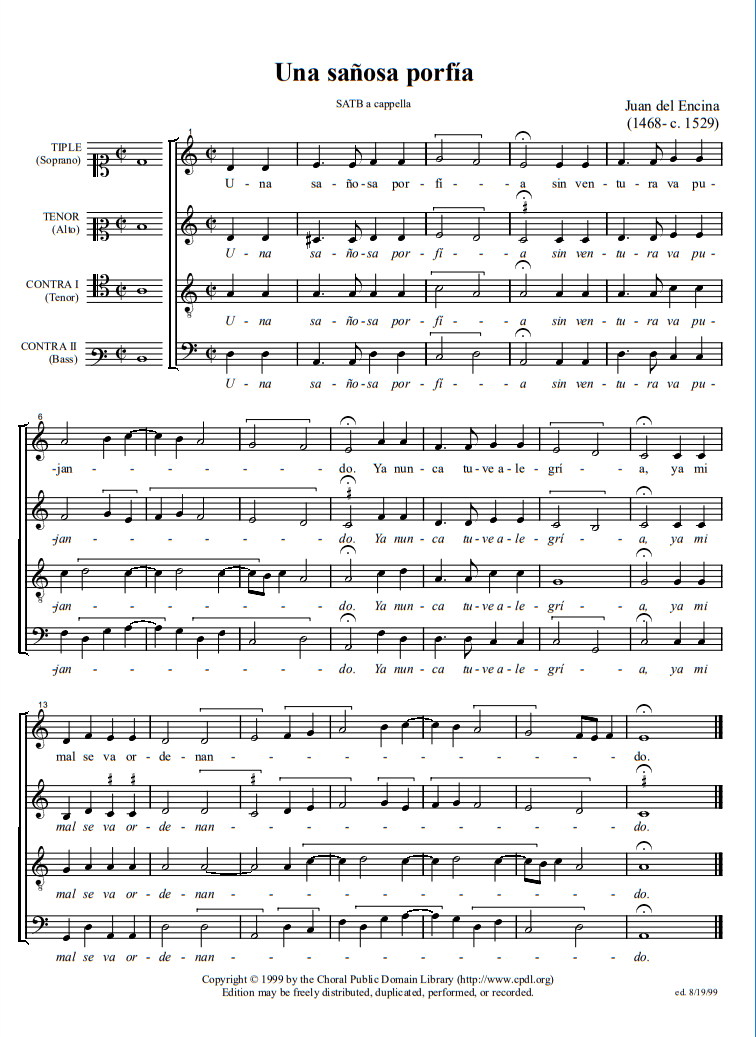
Juan del Encina (12 luglio 1468 - 1529): Una sañosa porfía, romance a 4 voci (dal Cancionero de Palacio, 1465, n. 327). La Capella Reial de Catalunya e Hespèrion XX, dir. Jordi Savall.
Una sañosa porfía
sin ventura va pujando.
Ya nunca tuve alegría
ya mi mal se va ordenando.
Ya fortuna disponía
quitar mi próspero mando
Qu’el bravo León d’España
mal me viene amenazando.
Su espantosa artillería
Los adarves derribando
mis villas y mis castillos
mis ciudades va ganando.
La tierra y el mar gemían
que viene señoreando
sus pendones y estandartes
y banderas levantando.
La muy gran caballería
hela, viene relumbrando
sus huestes y peonaje
all aire viene turbando.
Correme la morería
los campos viene talando
mis compañas y caudillos
viene venciendo y matando.
Las mezquitas de Mahoma
en iglesias consagrando,
las moras lleva cativas
con alaridos llorando.
Al cielo dan apellido
Viva el gran Rey don Fernando
viva la muy gran leona
Alta Reina prosperando.
Una generosa Virgen
esfuerzo les viene dando
un famoso caballero
delante viene volando.
Con una cruz colorada
y una espada relumbrando
d’un rico manto vestido
toda la gente guiando.
Anonimo (secolo XVI): The oak and the ash, ovvero The Northern Lasse’s Lamentation. Alfred Deller, controtenore; Desmond Dupré, liuto.
A North Country maid up to London had strayed
Although with her nature it did not agree,
She wept, and she sighed, and she bitterly cried:
I wish once again in the North I could be.
Oh the oak and the ash and the bonnie ivy tree,
They flourish at home in my own country.
While sadly I roam, I regret my dear home
Where lads and young lasses are making the hay,
The merry bells ring and the birds sweetly sing,
And maidens and meadows are pleasant and gay.
Oh the oak and the ash and the bonnie ivy tree,
They flourish at home in my own country.
No doubt, did I please, I could marry with ease,
Where maidens are fair many lovers will come.
But he whom I wed must be North Country bred,
And carry me back to my North Country home.
Oh the oak and the ash and the bonny ivy tree,
They flourish at home in my own country.
Una serie di variazioni sulla melodia di The Oak and the Ash, opera di Giles Farnaby (c1563 - 1640), si trova con il titolo Quodlings Delight nel Fitzwilliam Virginal Book (n. [CXIV]). Qui la composizione di Farnaby è interpretata al clavicembalo da Pieter-Jan Belder:
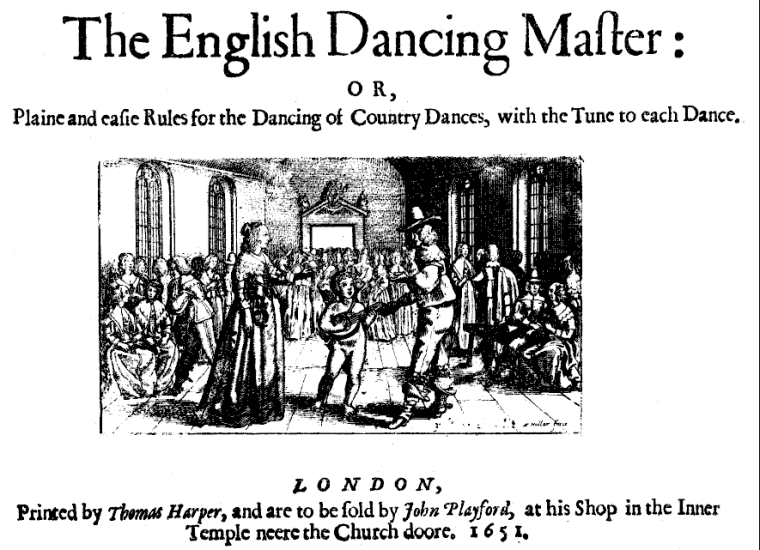
La medesima melodia ha inoltre dato origine a diverse danze popolari, fra cui una contraddanza pubblicata con il numero 52 nella fortunata raccolta The English Dancing Master (16511) di John Playford: il brano reca il suggestivo titolo di Goddesses, probabilmente ispirato da quello di un masque, The Vision of the Twelve Goddesses, scritto da Samuel Daniel e rappresentato nel 1604. Ecco Goddesses in un arrangiamento di Bernard Thomas interpretato dal bravissimo Nicolas Fendt, che suona chitarra rinascimentale, liuto-chitarra, flauto dolce soprano, contralto, tenore e basso, e percussioni:
Anonimo del XVI secolo: Mignonne, allons (pubblicato nel Recueil des plus belles et excellentes chansons en forme de voix de ville, 1576) di Jean Chardevoine; testo di Pierre de Ronsard (ode À Cassandre, 1545). Duo Mignarda: Donna Stewart, voce; Ron Andrico, liuto.
Mignonne, allons voir si la rose
Qui ce matin avait déclose
Sa robe de pourpre au Soleil,
A point perdu cette vesprée,
Les plis de sa robe pourprée,
Et son teint au vôtre pareil.
Las! voyez comme en peu d’espace,
Mignonne, elle a dessus la place
Hélas! ses beautés laissé choir!
Ô vraiment marâtre Nature,
Puis qu’une telle fleur ne dure
Que du matin jusques au soir!
Donc, si vous me croyez, mignonne,
Tandis que vôtre âge fleuronne
En sa plus verte nouveauté,
Cueillez, cueillez votre jeunesse:
Comme à cette fleur la vieillesse
Fera ternir votre beauté.
La Cassandre cui è dedicata l’ode di Ronsard, fra i più celebri componimenti del poeta francese, è Cassandra Salviati, figlia del banchiere fiorentino Bernardo.
Pierre de Ronsard e Cassandra Salviati nel frontespizio della prima edizione degli Amours (Parigi 1552).
Un sentito ringraziamento a Luisa Zambrotta, il cui interessantissimo blog ha richiamato alla mia mente questa struggente chanson.
Anonimo (XVII secolo): Blew-cap for me. Ellen Hargis, soprano; Paul O’Dette, cittern.
Il testo fu pubblicato per la prima volta intorno al 1634 con il titolo Blew cap for me. Or, A Scottish lasse her resolute chusing shee’l have bonny blew-cap, all other refusing. To a curious new Scottish tune called Blew-cap.
There lives a blithe Lasse in Faukeland towne,
and shee had some suitors, I wot not how many;
But her resolution she had set down,
that shee’d have a Blew-cap gif e’re she had any:
An English man,
when our good king was there,
Came often unto her,
and loved her deere:
But still she replide, «Sir,
I pray let me be,
Gif ever I have a man,
Blew-cap for me.»
A Frenchman, that largely was booted and spur’d,
long lock’t, with a Ribon, long points and breeches,
Hee’s ready to kisse her at every word,
and for further exercise his fingers itches:
«You be pritty wench,
Mistris, par ma foy;
Be gar, me doe love you,
then be not you coy.»
But still she replide, «Sir,
I pray let me be;
Gif ever I have a man,
Blew-cap for me.»
An Irishman, with a long skeane in his hose,
did tinke to obtaine her it was no great matter;
Up stayres to her chamber so lightly he goes,
that she ne’re heard him until he came at her.
Quoth he, «I do love you,
by fate and by trote,
And if you will have me,
experience shall shote.»
But still she replide, «Sir,
I pray let me be;
Gif ever I have a man,
Blew-cap for me.»
A Dainty spruce Spanyard, with haire black as jett,
long cloak with round cape, a long Rapier and Ponyard;
Hee told her if that shee could Scotland forget,
hee’d shew her the Vines as they grow in the Vineyard.
«If thou wilt abandon
this Country so cold,
Ile shew thee faire Spaine,
and much Indian gold.»
But stil she replide, «Sir,
I pray let me be;
Gif ever I have a man,
Blew-cap for me.»
A haughty high German of Hamborough towne,
a proper tall gallant, with mighty mustachoes;
He weepes if the Lasse upon him doe but frowne,
yet he’s a great Fencer that comes to ore-match us.
But yet all his fine fencing
could not get the Lasse;
She deny’d him so oft,
that he wearyed was;
For still she replide, «Sir,
I pray let me be;
Gif ever I have a man,
Blew-cap for me.»
At last came a Scottish-man (with a blew-cap),
and he was the party for whom she had tarry’d;
To get this blithe bonny Lasse ‘twas his gude hap,–
they gang’d to the Kirk, & were presently marry’d.
I ken not weele whether
it were Lord or Leard;
They caude him some sike
a like name as I heard;
To chuse him from au
she did gladly agree,–
And still she cride, «Blew-cap,
th’art welcome to mee.»
La melodia è presente nella prima edizione (1651) della raccolta The English Dancing Master, curata da John Playford, con il titolo Blew Cap (n. 2). Qui è eseguita dai City Waites diretti da Lucie Skeaping:
Anonimo (sec. XVII): Cold and raw ovvero The Maid who Sold her Barley o anche The Farmer’s Daughter, ballad di probabile origine scozzese. The Baltimore Consort.
Cold and raw the North did blow, bleak in a morning early;
All the trees were hid with snow, cover’d with winter fearly.
As I came riding o’er the slough, I met with a farmer’s daughter,
Rosie cheeks, and bonny brow, geud faith, made my mouth to water.
Down I vail’d my bonnet low, meaning to show my breeding,
She return’d a graceful bow, her visage far exceeding:
I ask’d her where she went so soon, and long’d to begin a parley:
She told me to the next market town, a purpose to sell her barley.
«In this purse, sweet soul!» said I, «twenty pound lies fairly,
Seek no farther one to buy, for I’se take all thy barley:
Twenty more shall purchase delight, thy person I love so dearly,
If thou wilt lig by me all night, and gang home in the morning early.»
«If forty pound would buy the globe, this thing I’s not do, sir;
Or were my friends as poor as Job, I’d never raise’em so, sir:
For shou’d you prove to-night my friend, we’se get a young kid together,
And you’d be gone e’r nine months end, & where shall I find the father?»
«Pray what would my parents say, if I should be so silly,
To give my maidenhead away, and lose my true love, Billy!
Oh this would bring me to disgrace, and therefore I say you nay, sir;
And if that you would me embrace, first marry, & then you may, sir!»
I told her I had wedded been, fourteen years and longer,
Else I’d chuse her for my queen, and tye the knot yet stronger.
She bid me then no farther roame, but manage my wedlock fairly,
And keep my purse for poor spouse at home, for some other should have her barley.
Then as swift as any roe, she rode away and left me;
After her I could not go, of joy she quite bereft me:
Thus I my self did disappoint, for she did leave me fairly,
My words knock’d all things out of joint, I lost both the maid and the barley.
Il testo è compreso nella monumentale silloge Wit and Mirth, or Pills to Purge Melancholy curata da Thomas D’Urfey, la cui 1a edizione risale al 1698; nel corso degli anni è stato associato a musiche diverse: la versione del Baltimore Consort adotta la melodia di Stingo, or The Oyle of Barley, un jig (danza) tratta dalla raccolta The English dancing master (16511, n. 10) di John Playford; stingo e oil of barley sono due modi di dire popolari con i quali all’epoca si indicava una birra forte a gradazione elevata. Ecco Stingo nell’interpretazione dei Musicians of Swanne Alley:
La melodia doveva essere assai popolare nel primo Settecento, tant’è vero che Pepusch la utilizzò per rivestire di musica l’aria «If any Wench Venus’s Girdle wear», cantata da Mrs Peachum nella 4a scena del I atto della Beggar’s Opera di John Gay (rappresentata per la 1a volta nel 1728). Qui è eseguita dall’ensemble The Broadside Band diretto da Jeremy Barlow, con Patrizia Kwella voce solista:
If any Wench Venus’s Girdle wear,
Though she be never so ugly;
Lilies and Roses will quickly appear,
And her Face look wond’rous smugly.
Beneath the left Ear so fit but a Cord,
(A Rope so charming a Zone is!)
The Youth in his Cart hath the Air of a Lord,
And we cry, There dies an Adonis!
All’aria di Mrs Peachum la Broadside Band fa seguire [a 1:17] una breve serie di variazioni per violino e basso continuo sulla medesima melodia, pubblicate con il titolo Up in the Morning Early dal compositore e violinista scozzese William McGibbon (1690 - 1756).
Pietro Torri (c1650 - 6 luglio 1737): «Quando il flebile usignolo», aria per soprano dal II atto dell’opera L’Ippolito (1731). Ann Hallenberg, mezzosoprano; Baroque Ensemble Musikdorf Ernen, dir. e violino principale Ada Pesch.
Quando il flebile usignolo
Lasciar deve a forza il nido
Si rivolge in altro lido
E spiegando afflitto il volo
Va sfogando il suo dolor.
Thomas Ravenscroft (c1582 - c1635): The three ravens. Versione per 1 voce e liuto: Alfred Deller e Desmond Dupré; versione per 4 voci e viol consort: Theatre of Voices diretto da Paul Hillier (voce solista Else Torp) e Fretwork.
Nell’interpretazione di Deller, le strofe sono accorpate a due a due.
There were three ravens sat on a tree,
down a down, hay down, hay down,
There were three ravens sat on a tree,
with a down,
There were three ravens sat on a tree,
They were as black as black could be,
with a down, derry, derry, derry, down, down.
And one of them said to his mate:
Where shall we our breakfast take?
Down, [down] in yonder green field,
There lies a knight slain with his shield.
His hounds they lie down at his feet,
So well they their master keep.
His hawks they fly so eagerly,
There’s no fowl dare him come nie.
Down there comes a fallow doe,
As great with young as she might go.
She lift up his bloody head,
And kissed his wounds that were so red.
She got him up upon her back,
And carried him to earthen lake.
She buried him before the prime.
She was dead herself ere even-song time.
God send every gentleman
Such hawks, such hounds, and such a leman.
Non si hanno molte notizie su Ravenscroft, che però fu molto ammirato e stimato dai musicisti suoi contemporanei. Più che per le sue composizioni originali, è noto per un cospicuo numero di raffinati arrangiamenti di melodie tradizionali — qual è appunto The three ravens — che Ravenscroft pubblicò in tre diverse raccolte: Pammelia (1609), Deuteromelia: or The Second part of Musicks melodie (1609) e Melismata (1611).
Il nome di Ravenscroft comparirà spesso in questo blog 😉
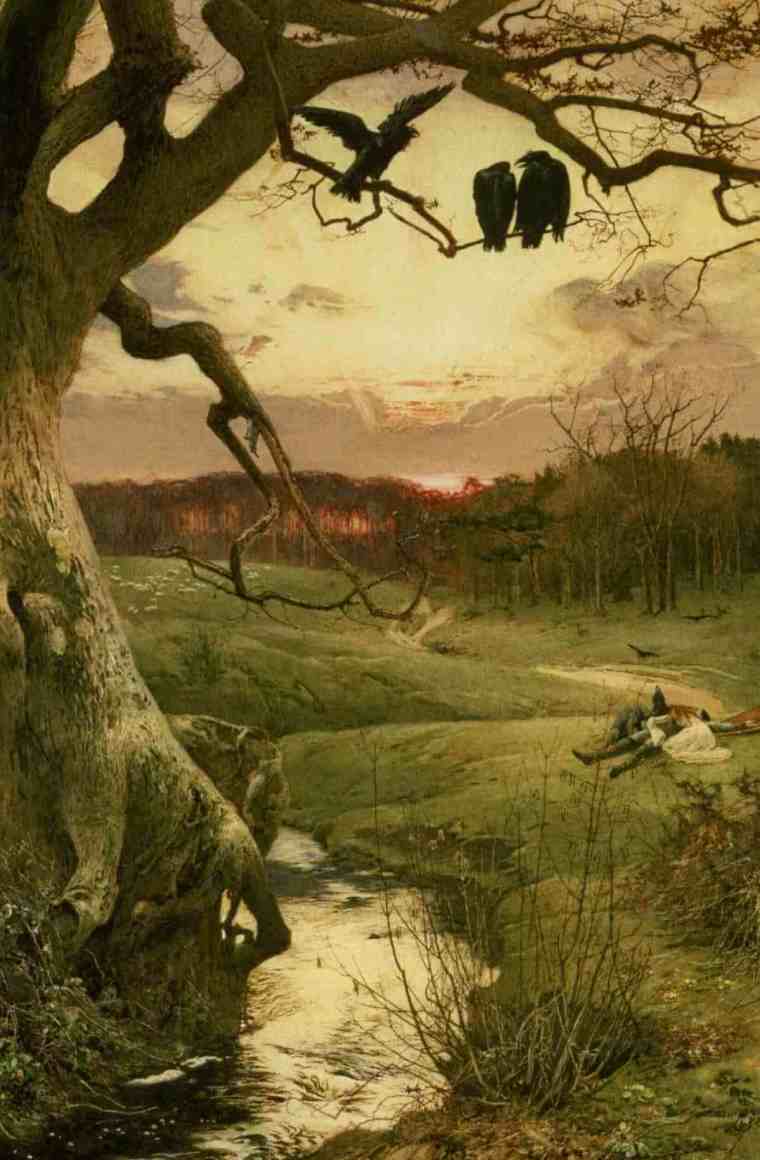
Edward Frederick Brewtnall (1846-1902): The Three Ravens, acquerello su carta, c1883
Anonimo (sec. XVI) Greensleeves, ballad (versione per voce e liuto); gli interpreti sono Donna Stewart e Ron Andrico, ossia il duo Mignarda, che ritroveremo più volte in un prossimo futuro. Buone emozioni a tutti 🙂
Alas, my love, you do me wrong
To cast me off discourteously,
And I have loved you so long,
Delighting in your company.
Greensleeves was all my joy,
Greensleeves was my delight,
Greensleeves was my heart of gold,
And who but my lady Greensleeves.
I have been ready at your hand,
To grant whatever you would crave;
I have both waged life and land,
Your love and good-will for to have.
I bought thee petticoats of the best,
The cloth so fine as fine might be:
I gave thee jewels for thy chest;
And all this cost I spent on thee.
Thy crimson stockings all of silk,
With gold all wrought above the knee,
Thy pumps as white as was the milk,
And yet thou wouldst not love me.
Well! I will pray to God on high,
That thou my constancy mayst see,
And that, yet once before I die,
Thou wilt vouchsafe to love me!
John Stafford Smith (1750 - 1836): The Anacreontic Song, or To Anacreon in Heav’n, canto bacchico su testo di Ralph Tomlinson composto a Londra intorno al 1775. Jacob Wright, voce solista; Jerry Blackstone, direttore.
To Anacreon, in Heav’n, where he sat in full glee,
A few sons of harmony sent a petition,
That he their inspirer and patron would be;
When this answer arrived from the jolly old Grecian –
Voice, fiddle and flute, no longer be mute.
I’ll lend ye my name, and inspire you to boot,
And, besides, I’ll instruct you, like me, to entwine,
The myrtle of Venus with Bacchus’s vine.
The news through Olympus immediately flew;
When Old Thunder pretended to give himself airs –
If these mortals are suffer’d their scheme to pursue,
The devil a goddess will stay above stairs.
Hark! already they cry in transports of joy.
Away to the Sons of Anacreon we’ll fly…
And there with good fellows, we’ll learn to entwine,
The myrtle of Venus with Bacchus’s vine.
The yellow-hair’d god, and his nine fusty maids,
From Helicon’s banks will incontinent flee.
Idalia will boast but of tenantless shades,
And the biforked hill a mere desert will be.
My Thunder, no fear on’t shall soon do its errand,
And dam’me! I’ll swing the ringleaders, I warrant.
I’ll trim the young dogs for thus daring to twine,
The myrtle of Venus with Bacchus’s vine.
Apollo rose up; and said, Pr’ythee ne’er quarrel,
Good King of the gods, with my vot’ries below!
Your thunder is useless – then, shewing his laurel,
Cry’d, Sic evitabile fulmen, you know!
Then over each head my laurels I’ll spread;
So my sons from your crackers no mischief shall dread,
Whilst snug in their club-room, they jovially twine,
The myrtle of Venus with Bacchus’s vine.
Next Momus got up, with his risible phiz;
And swore with Apollo he’d cheerfully join –
The full tide of harmony still shall be his,
But the song, and the catch, and the laugh shall be mine;
Then, Jove, be not jealous of these honest fellows.
Cry’d Jove, We relent, since the truth you now tell us;
And swear by Old Styx that they long shall entwine,
The myrtle of Venus with Bacchus’s vine.
Ye sons of Anacreon, then, join hand in hand;
Preserve unanimity, friendship and love.
‘Tis your’s to support what’s so happily plan’d;
You’ve the sanction of gods, and the fiat of Jove.
While thus we agree, our toast let it be.
May our club flourish happy, united, and free!
And long may the sons of Anacreon entwine,
The myrtle of Venus with Bacchus’s vine.
Sul modello dell’Anacreontic Song di Tomlinson è esemplata l’ode Defence of Fort McHenry, composta da Francis Scott Key per celebrare la vittoria dei soldati statunitensi e della popolazione di Baltimora sulla flotta inglese il 14 settembre 1814. In seguito il testo di Francis Scott Key, adattato alla musica di John Stafford Smith, divenne un canto patriottico, e nel 1931 fu ufficialmente adottato quale inno nazionale degli Stati Uniti d’America, oggi noto con il titolo The Star-Spangled Banner.
Quadro II: La versione di Igor’
The Star-Spangled Banner nella versione orchestrale curata da Igor’ Stravinskij nei primi anni 1940. National Symphony Orchestra, dir. Gianandrea Noseda.
Una pubblica esecuzione di questa versione si sarebbe dovuta tenere a Boston nel gennaio del 1944, con la Boston Symphony Orchestra diretta dal compositore stesso, ma fu depennata dal programma del concerto a causa di un curioso incidente: la polizia locale avvertì Stravinskij dell’esistenza di una legge che proibiva la manomissione, parziale o integrale, dell’inno nazionale, aggiungendo che ogni trasgressione sarebbe stata punita con un’ammenda di 100 dollari.
(La polizia di Boston era però in errore: una legge c’era davvero, ma si limitava a vietare l’uso dell’inno come musica da ballo o da intrattenimento.)
In effetti Stravinskij aveva modificato l’armonizzazione originale: perciò, per quanto dispiaciuto, rinunciò a dirigere il brano.
Quadro III: Le variazioni di Paine
John Knowles Paine (1839 - 1906): Concert Variations on «The Star-Spangled Banner» per organo op. 3 n. 2 (1861). Andrew Meagher.
Quadro IV: Lo yankee vagabondo
Giacomo Puccini (1858-1924): «Dovunque al mondo», da Madama Butterfly (1904), atto I. Luciano Pavarotti e Michel Sénéchal, tenori; Robert Kerns, baritono; Chor der Wiener Staatsoper e Wiener Philharmoniker diretti da Herbert von Karajan.
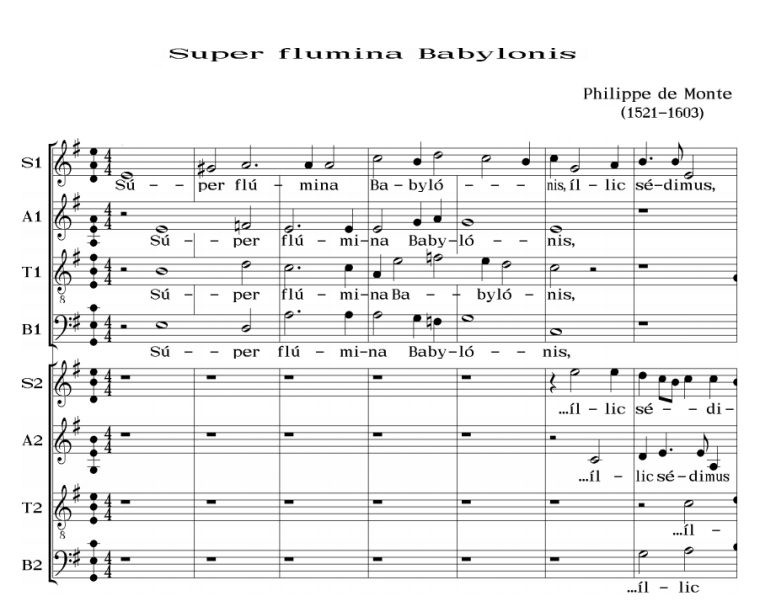
Philippe de Monte (1521 - 4 luglio 1603): Super flumina Babylonis, mottetto per doppio coro a 8 voci sul testo del Salmo 137 (modificato). The Sixteen, dir. Harry Christophers.
Super flumina Babylonis illic sedimus et flevimus dum recordaremur tui, Sion.
Illic interrogaverunt nos qui captivos abduxerunt nos verba cantionum.
Quomodo cantabimus canticum Domini in terra aliena?
In salicibus in medio ejus suspendimus organa nostra.
Claudio Saracini detto il Palusi (1° luglio 1586 - 1630): Da te parto, cor mio, aria a 1 voce e basso continuo (pubblicata nella raccolta Le seconde musiche, 1620, n. 7). Nigel Rogers, tenore; Colin Tilney, clavicembalo; Jordi Savall, viola da gamba.
Da te parto, cor mio.
Io vado, anima mia.
Peregrin sconosciuto
d’ignoti lidi ad habitar l’arene,
erme campagne, abbandonati horrori
saran delle mie pene de miei passati ardori!
Dell’idol mio perduto
ecco misera e flebil’e dolente
del mio duol dal mio ardir memori ardente.
Giovanni Maria Sabino (battezzato il 30 giugno 1588 – 1649): Vespro a 5 voci e stumenti (con due mottetti di Antonino e Francesco Sabino, nipoti Giovanni Maria). Ensemble barocco «Giovanni Maria Sabino», dir. Paolo Valerio.
Michel Lambert (1610 - 29 giugno 1696): Vos mespris chaque jour, air de cour (pubblicato in Airs à une, II. III. et IV. parties avec la basse-continue, 1689, p. 186). Stephan van Dyck, tenore; ensemble Musica Favola.
Vos mespris chaque jour me causent mille alarmes,
Mais je chéris mon sort, bien qu’il soit rigoureux,
Hélas! si dans mes maux je trouve tant de charmes,
Je mourrois de plaisir si j’estois plus heureux.
Nicolas Bernier (28 giugno 1644 - 1734): Laudate Dominum, grand motet. Les Pages & Les Chantres du Centre de Musique Baroque de Versailles; The English Concert, dir. Olivier Schneebeli.
– Leonardo da Vinci (1452 - 1519): Tre rebus
– Serafino Aquilano (1466 - 1500): Tu dormi, io veglio
– Franchino Gaffurio (1451 - 25 giugno 1522): Imperatrix reginarum
– Francesco Spinacino (sec. XV - p1507): Adieu mes amours e La Bernardina (trascrizioni per liuto, da Josquin)
Renata Fusco, soprano; Massimo Lonardi, liuto.
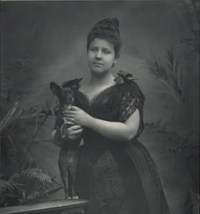
Maude Valérie White (23 giugno 1855 - 1937): How Do I Love Thee?, song per voce e pianoforte su testo di Elizabeth Barrett Browning (Sonnet 43) ampiamente rimaneggiato dalla compositrice. Ximena Bernal, mezzosoprano; Felipe Calle, pianoforte.
Testo del song:
How do I love thee? Let me count the ways.
I love thee to the depth and breadth and height
My soul can reach,
(I love thee purely)
I love thee to the level of every day’s
Most quiet need,
(I love thee with the breath) of all my life!
and, if God choose,
I shall but love thee better after death.
Testo originale di Elizabeth Barrett Browning:
How do I love thee? Let me count the ways.
I love thee to the depth and breadth and height
My soul can reach, when feeling out of sight
For the ends of being and ideal grace.
I love thee to the level of every day’s
Most quiet need, by sun and candle-light.
I love thee freely, as men strive for right.
I love thee purely, as they turn from praise.
I love thee with the passion put to use
In my old griefs, and with my childhood’s faith.
I love thee with a love I seemed to lose
With my lost saints. I love thee with the breath,
Smiles, tears, of all my life; and, if God choose,
I shall but love thee better after death.
L’esempio più antico di onomatopea musicale che io conosca è l’imitazione del canto del cuculo su cui si fonda il brano che vedete qui sopra, scritto su una pagina del codice Harley 978 della British Library: la cosiddetta « rota di Reading » (dal nome dell’abbazia in cui il manoscritto era un tempo conservato), ossia Sumer is icumen in. Non conosciamo il nome dell’autore, ma è possibile che si tratti di « W. de Wycombe », precentore del priorato di Leominster, Herefordshire, il cui nome è così riportato sul manoscritto.
Questo celebre canone (rota = round) risale a quasi ottocento anni fa ed è la più antica composizione polifonica a sei voci che ci sia pervenuta. Il testo, in inglese medio (Middle English), descrive la natura all’inizio dell’estate:
Sumer is icumen in,
Lhude sing cuccu!
Groweþ sed and bloweþ med
And springþ þe wde nu.
Sing cuccu!
Awe bleteþ after lomb,
Lhouþ after calue cu.
Bulluc sterteþ, bucke uerteþ,
Murie sing cuccu!
Cuccu, cuccu, wel singes þu cuccu;
Ne swik þu nauer nu.
Pes : Sing cuccu nu.
È arrivata l’estate,
canta a piena voce, cucù!
Germoglia il seme e fiorisce il prato,
il bosco rinasce a nuova vita.
Canta, cucù!
La pecora bela per il suo agnello,
il vitello muggisce alla mucca,
salta il toro, il cervo emette fiati,
canta con gioia, cucù!
Cucù, cucù, come canti bene, cucù!
Ora non smettere più.
Pes : Canta, cucù, adesso.
Indicazioni per l’esecuzione del canone (scritte con inchiostro nero):
Hanc rotam cantare possunt quatuor socii. A paucioribus autem quam a tribus aut saltem duobus non debet dici, preter eos qui dicunt pedem. Canitur autem sic. Tacentibus ceteris, unus inchoat cum hiis qui tenent pedem. Et cum venerit ad primam notam post crucem, inchoat alius, et sic de ceteris. Singuli vero repausent ad pausaciones scriptas, et non alibi, spacio unius longe note.
Possono cantare questa rota quattro persone. Non può essere eseguita da meno di tre o al minimo due, oltre a quelli che cantano il pes. Per cantare si procede in questo modo. Mentre gli altri stanno zitti, uno inizia la rota insieme con i due che cantano il pes. Ma quando il primo arriva alla prima nota dopo la croce, un secondo cantore inizia da capo. Gli altri seguono allo stesso modo. Ogni cantore deve rimanere in silenzio, per la durata di una longa, dov’è indicata la pausa, ma non altrove.
Indicazioni per l’esecuzione del pes (in rosso):
1ª voce: Hoc repetit unus quociens opus est, faciens pausacionem in fine.
Una voce ripete questa parte tante volte quante sono necessarie, facendo una pausa alla fine.
2ª voce: Hoc dicit alius, pausans in medio, et non in fine, sed immediate repetens principium.
Un’altra voce canta questa parte facendo una pausa a metà, ma non alla fine, e poi ricominciando immediatamente.
Oltre che sul testo in medio inglese scritto con inchiostro nero, il canone può essere cantato sul testo latino scritto in rosso:
Perspice christicola,
Que dignacio,
Celicus agricola
Pro vitis vicio.
Filio
Non parcens exposuit
Mortis exicio.
Qui captivos semivivos
A supplicio
Vite donat,
Et secum coronat
In coeli solio.
Guarda, o cristiano,
quale onore:
l’agricoltore celeste
per il vizio della vite,
il figlio
non risparmiando, lo espose
al destino della morte.
A voi peccatori, semivivi
per il peccato,
Egli dona la vita
e vi incorona con sé
al soglio celeste.
Sumer is icumen in eseguito dallo Hilliard Ensemble.
Sumer is icumen in, trascrizione in notazione moderna


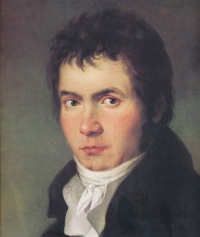 È possibile far sì che in un breve articoletto siano menzionati Ludwig van Beethoven, grande compositore tedesco nato a Bonn nel 1770, e George Armstrong Custer, famoso militare statunitense caduto in battaglia oltre cent’anni più tardi? Sì, è possibile se l’articolo è dedicato a Garyone, una canzone tradizionale irlandese (in Italia è però diffusa l’erronea convinzione che sia scozzese) le cui origini risalgono alla seconda metà del XVIII secolo.
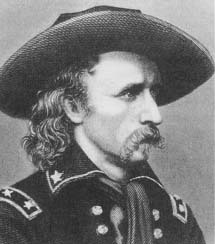 Esperti linguisti assicurano che il titolo Garyone (anche Garyowen, Garryowen, Garry Owen, Garry Owens) sia derivato dalla locuzione irlandese garrai Eóins, ossia «il giardino di Eóin» (variante gaelica di John).




 Pierre de Ronsard e Cassandra Salviati nel frontespizio della prima edizione degli Amours (Parigi 1552).

 Pietro Torri (c1650 - 6 luglio 1737): «Quando il flebile usignolo», aria per soprano dal II atto dell’opera L’Ippolito (1731). Ann Hallenberg, mezzosoprano; Baroque Ensemble Musikdorf Ernen, dir. e violino principale Ada Pesch.
  Edward Frederick Brewtnall (1846-1902): The Three Ravens, acquerello su carta, c1883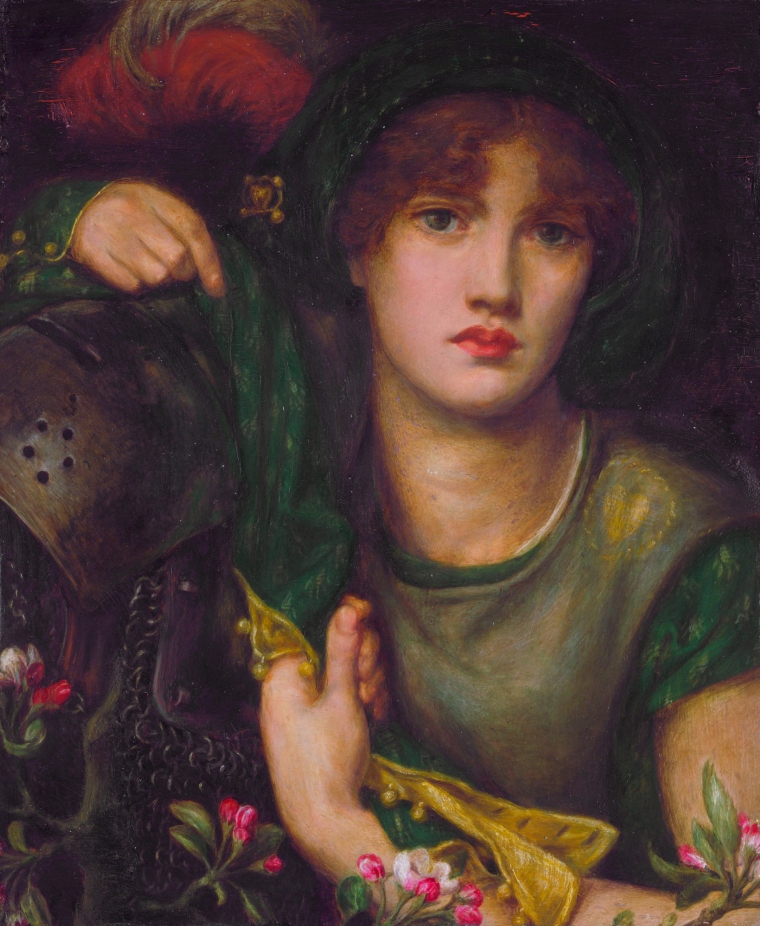



 Maude Valérie White (23 giugno 1855 - 1937): How Do I Love Thee?, song per voce e pianoforte su testo di Elizabeth Barrett Browning (Sonnet 43) ampiamente rimaneggiato dalla compositrice. Ximena Bernal, mezzosoprano; Felipe Calle, pianoforte.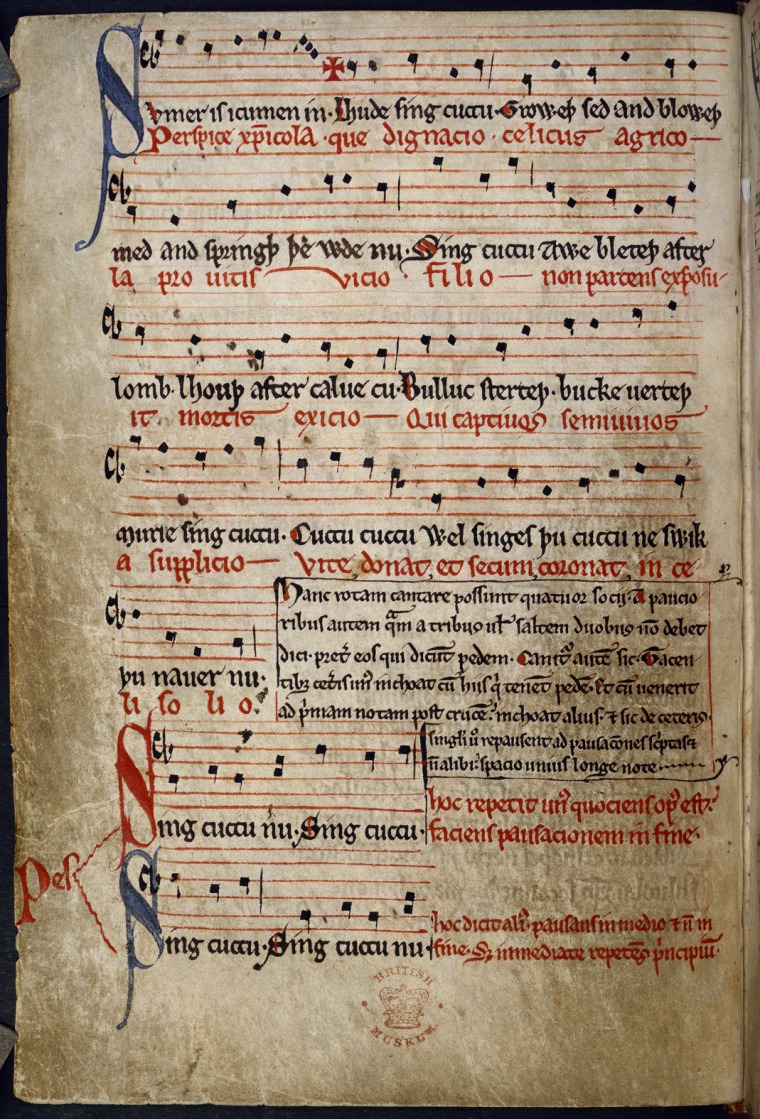

 la regina gioiosa